
Reading a wine label mostly means checking three key data points: geographic origin, alcohol percentage and vintage. Australia had 116 registered wine geographical indications by 2021, and a protected regional claim generally requires at least 85 per cent of the grapes to come from that named area.
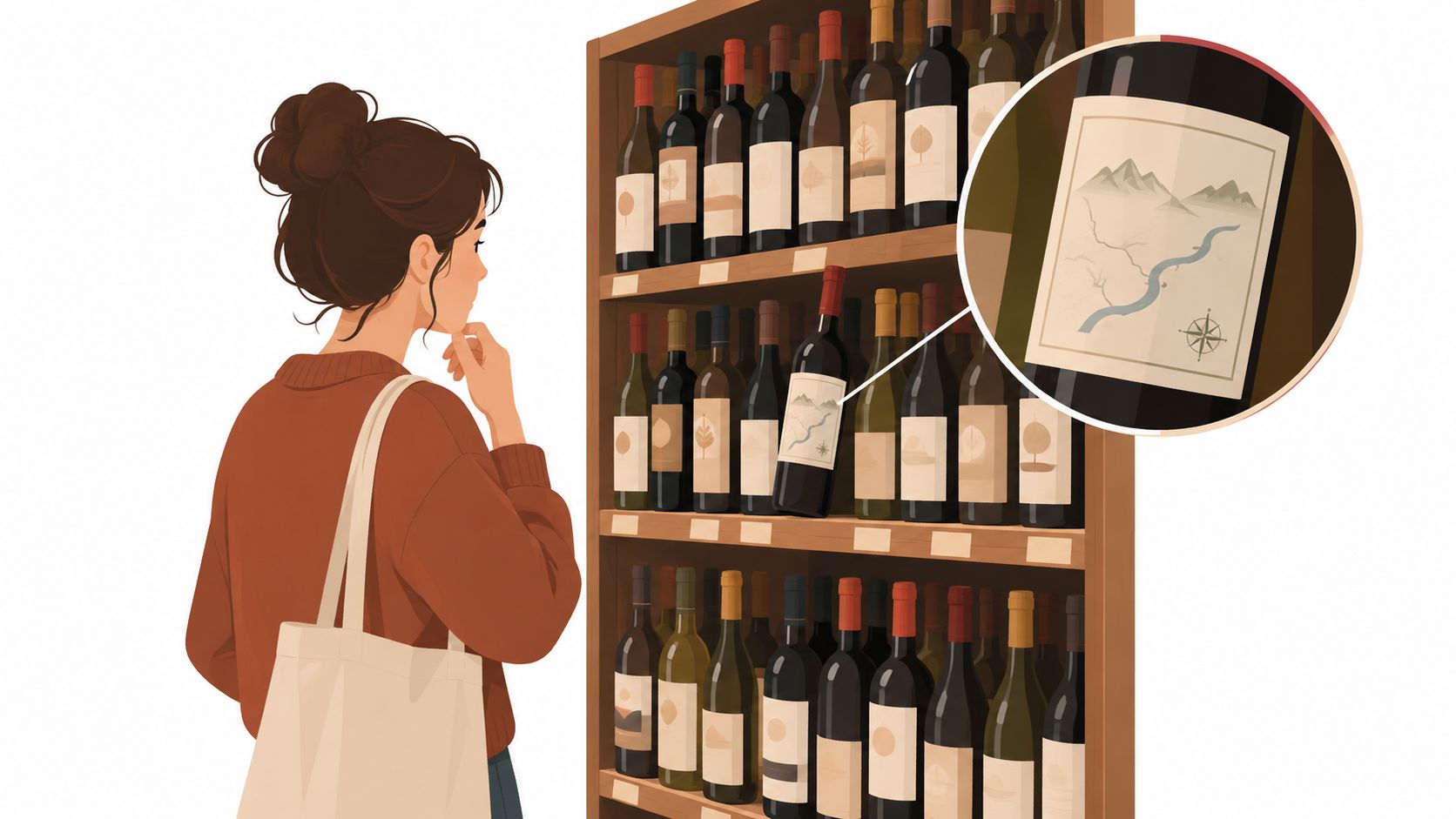
You're standing in a bottle shop, or scrolling through an online wine list, and several bottles are competing for attention. One has an elegant illustration, another has a bold block of colour, and a third promises reserve quality in polished lettering. The front label may catch your eye, but the quieter details tell you what you're really buying.
A little label knowledge helps you compare wines by origin, composition, alcohol strength and traceability, rather than by design alone. You don't need to memorise every regulation. You need a reliable way to separate a useful fact from a persuasive phrase.
Why a Wine Label Is a Practical Map
A wine label works like a map because each detail points to a different part of the bottle's story. The producer identifies who made it, the variety suggests the grape or blend, the region indicates where the grapes came from, the vintage identifies the harvest year when one is stated, and the alcohol declaration gives you a useful clue about strength and likely weight.
The front label is often built for recognition. A memorable name or striking illustration can help a bottle stand out, but it won't tell you whether the wine is a narrow regional expression or a broader Australian blend. Turn the bottle around and you'll often find the practical information that supports a more thoughtful choice.
Start with the details that change your decision
Suppose you're choosing between two red wines. One names McLaren Vale, while the other uses a broad Australian origin statement. The first gives you a more specific provenance signal. The second may represent fruit sourced across a wider area, which can give the producer more flexibility in blending and style.
That difference doesn't automatically make one bottle better. It tells you what kind of comparison you're making. A regional wine invites you to think about place and local identity, while a broad blend may be designed around a consistent house style rather than a single district.
Alcohol by volume adds another practical reference point. It won't predict flavour perfectly, because sweetness, acidity, tannin and winemaking choices also matter, but it helps you understand the bottle's strength. Vintage can also help you distinguish wines made from different harvests, although not every wine carries a vintage statement.
Practical rule: Read the label in the order of your decision. If origin matters most, start with the region. If alcohol strength matters, check ABV and standard drinks before you study the tasting language.
Confidence comes from comparison
Label literacy saves you from treating every premium-looking bottle as a premium choice. It also helps you avoid rejecting a wine just because its front design is plain. Once you know where to look, the bottle becomes less mysterious and your preferences become easier to describe.
You might realise that you prefer regional Shiraz with a stated vintage, or that you want a lighter style with a lower alcohol declaration. You may discover that you care more about a clearly identified origin than about words such as reserve or estate. Those are useful preferences because they can guide your next purchase.
A wine with label clarity doesn't remove the pleasure or surprise from wine. It gives you a sensible starting point, so curiosity replaces guesswork.
Geographical Indications and Regional Names
A shopper comparing two Australian Shiraz bottles may see McLaren Vale on one label and South-eastern Australia on another. Those names do more than suggest a style or evoke a setting. They indicate different levels of legally recognised grape origin.
A Geographical Indication, or GI, identifies wine as coming from a country, region or locality whose quality, reputation or other characteristic is substantially connected with that place, according to research on the legal meaning of Australian wine GIs.The legal meaning of geographical indications in Australian wine
Australia has maintained a national wine GI framework since 1994. By 2021, it included 116 registered wine GIs, organised across countries, states, zones, regions and subregions.The Australian wine GI framework and its regional hierarchy This structure works like a set of nested maps. A broader name gives wider geographic information, while a narrower name points to a more specific area.
How the hierarchy works
| GI Level | What It Communicates |
|---|---|
| Country | A broad national origin |
| State | Origin within an Australian state |
| Zone | A defined area within a state |
| Region | A more specific wine-growing area |
| Subregion | A narrower recognised area within a region |
McLaren Vale belongs to South Australia's GI hierarchy. Its appearance on a bottle connects the wine to a defined geographic boundary and to the rules that govern Australian GI claims. It signals grape provenance, rather than merely indicating that a winery operates nearby.
For a protected regional claim, at least 85 per cent of the grapes must come from the named GI under the standard Australian rule. The permitted remainder can support controlled blending within the applicable requirements, so the claim does not mean every grape came from that area. It does establish a substantial connection between the wine and the named place. Wine Australia explains the origin and record-keeping requirements for these claims in its guide to Australian wine geographical indications.
What a regional name can and cannot tell you
A regional name tells you where the grapes supporting the claim originated. It does not describe the producer's full winemaking method or guarantee a particular level of sweetness, tannin, oak or quality. Grape variety, vintage and cellar decisions continue to shape the wine in your glass.
The comparison is useful at the shelf. McLaren Vale Shiraz gives a more specific origin claim than South-eastern Australia. Both names can appear on legitimate Australian wines, but the first provides a narrower geographic reference.
Treat a regional name as a technical label attribute, not decorative marketing. For help reading the other information on a bottle, see this practical guide to understanding Australian wine labels.
Ask, “What does this regional claim tell me about origin?” That question keeps geographic identity useful without turning a place name into a guarantee of personal enjoyment.
Mandatory Label Elements Every Shopper Should Check
Australian wine labels include information designed to support traceability, safe consumption and product comparison. Wine Australia's guidance identifies mandatory elements including alcohol by volume, package volume, the standard-drink declaration, supplier name and physical address, relevant allergen information, and a lot identifier linked to a production or bottling batch.Australian wine label requirements from Wine Australia
These details may look administrative, but they answer practical questions. How strong is the wine? How much is in the bottle? Who supplied it? Could the wine contain a relevant allergen? Which batch does this bottle belong to?
Read the back label as a quick technical check
Alcohol by volume, usually shown as ABV, tells you the concentration of alcohol in the wine. It doesn't provide a complete flavour prediction, but it gives you a useful comparison between bottles and helps you think about strength when planning a meal or serving.
Package volume tells you how much wine the container holds. This matters when comparing different formats or working out how much wine you're serving. The standard-drink declaration converts the bottle's alcohol concentration and volume into a practical measure for responsible consumption, rather than leaving you to estimate from the ABV alone.
Supplier details identify the business responsible for supplying the product and provide a physical address. This is a quiet but important sign that the label is doing more than selling an image. Allergen information must appear where relevant substances, including sulphites, milk, casein or egg white, have been used. If you want more background on one commonly discussed wine allergen, explore this explanation of sulphites in wine.
Don't ignore the lot code
The lot identifier links the bottle to a particular production or bottling batch. If a targeted withdrawal or recall becomes necessary, that code can help identify the affected stock without automatically removing unrelated bottles.
You don't need to decode the lot number yourself. Check that it's present and legible, particularly when you're buying a premium regional wine, giving a bottle as a gift, or recording something you may want to purchase again. It adds a layer of accountability that tasting notes and label artwork can't provide.
A short scan is usually enough:
- Check ABV and volume: Compare strength and format before you judge value.
- Find standard drinks: Use the declaration to understand the serving implications.
- Locate the supplier: Confirm who stands behind the product.
- Look for allergens: Read the statement if this information matters to you or your guests.
- Spot the lot identifier: Treat it as the bottle's batch reference.
The same principle applies beyond wine. Producers and retailers working across beverage categories may find practical guidance on DTC and wholesale tips for custom beer useful when thinking about how product information, packaging and sales channels work together. For the wine shopper, however, the key lesson is simple: technical label details aren't clutter. They're part of the product's evidence.
Varietal Versus Regional Claims on the Label
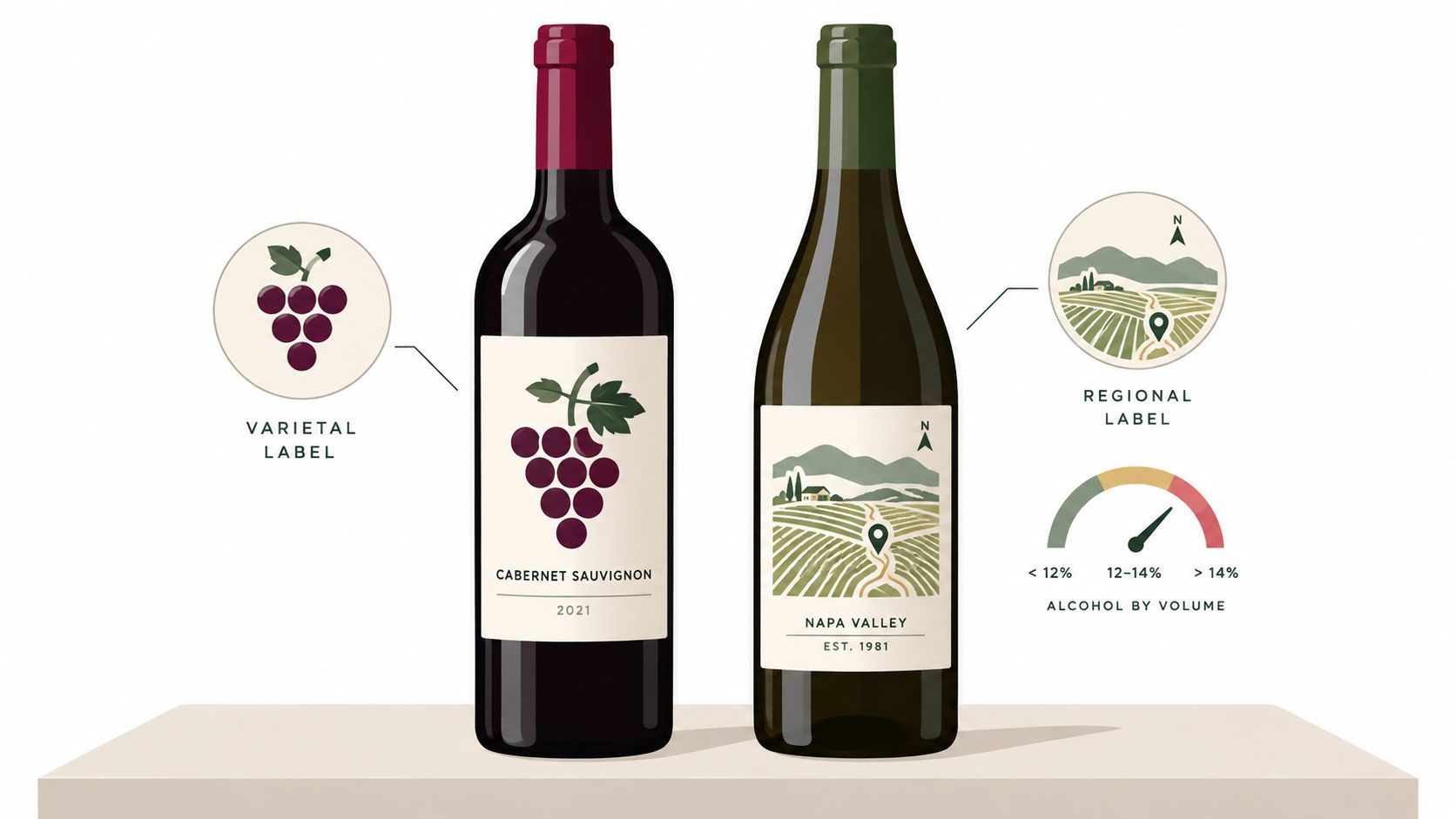
A shopper comparing two bottles may see Cabernet Sauvignon on one label and McLaren Vale on another. These words point to different parts of the wine's identity. The grape variety describes what was grown and made into wine, while the region identifies the recognised place connected with the grapes.
That difference changes how you compare the bottles. A variety-led label invites you to compare grape character across regions. A region-led label invites you to consider provenance, climate and the style associated with that Australian place. Neither claim automatically tells you whether the wine will be oaky, sweet or full-bodied.
Variety, vintage and GI are separate claims
Australian labelling rules treat variety, vintage and GI claims as distinct technical attributes. If a producer places several of these claims on the label, the wine must meet the applicable requirements for each. Read the label as a group of separate statements, not as one broad marketing impression.
A variety claim gives you a useful starting point. Cabernet Sauvignon may lead you towards a particular grape profile, while Shiraz, Pinot Grigio or Sauvignon Blanc points towards another. The variety does not settle every question about texture or winemaking, but it gives you a sensible basis for comparing bottles.
A regional claim answers a different question. McLaren Vale identifies a recognised Australian origin under the geographical indication, or GI, system. A broader statement such as Australian wine covers a wider sourcing area. That does not make the wine less serious. Fruit from several regions may be combined to create a consistent house style, maintain supply or balance different components.
A GI links a named geographical area with wine made from grapes connected to that place. It describes origin and the qualities, reputation or other characteristics associated with the area. It is not a guarantee that every bottle from the GI will taste identical. Vintage conditions, grape variety and winemaking still influence the result.
Use the label to choose the right comparison
Start with the claim you want to compare. Two McLaren Vale wines share regional provenance, but a McLaren Vale Shiraz and a McLaren Vale Cabernet Sauvignon may differ substantially in structure, aroma and food suitability. Compare their varieties and vintages before drawing conclusions from the region alone.
A regional wine and a broader Australian blend also belong in different comparison groups. Front-label design and brand presentation can make them look similar, yet their origin claims describe different sourcing models.
This short video offers another visual way to consider the information wine labels present and how those claims shape a shopper's reading process.
Write the main claims in separate columns: origin, variety, vintage and alcohol. This simple method stops one appealing phrase from carrying too much weight. A wine with a strong regional identity may not match your taste, while a broad-origin blend may deliver the style you want.
When More Label Information Can Mislead
A crowded wine label can feel like a detailed map, yet not every signpost carries the same legal weight. In Australia, a Geographical Indication (GI) claim points to a legally defined grape-growing origin. By contrast, terms about sustainability, production methods or alcohol style may describe a certification, a producer's own position or a product category with less familiar boundaries.
The difference matters at the shelf. A place name can help establish where the grapes came from, while a phrase such as “sustainably made” may require further checking before you know what standard, if any, supports it.
A 2025 Wine Australia market bulletin reported that 56 per cent of consumers considered certified sustainable production very or somewhat important. Wine Australia's bulletin on sustainability and no- and low-alcohol wine labelling That interest is meaningful, but environmental wording on a bottle does not automatically represent the same level of verification.
Separate certification from assertion
A certification mark can show that a producer has met the requirements of a defined scheme. A general statement about environmental care may describe the producer's own practice or position. Both can help you understand the product, but they are not interchangeable.
Look for the name or identity of the certification or programme. If the label gives no indication of the standard behind the claim, treat the wording as a prompt for investigation rather than proof of a particular environmental result. Wine Australia operator research also describes naming conventions for sustainability and related claims as fragmented and inconsistent, so broad terms can be difficult to compare directly.
Three questions keep the claim in proportion: what is being claimed, who defines it, and does the bottle identify a certification scheme? This avoids dismissing every sustainability statement while also preventing a green-coloured symbol from doing more persuasive work than the evidence supports.
More information helps only when you can tell what kind of information it is.
Low alcohol isn't one single style
Terms such as zero alcohol, low alcohol, light and reduced alcohol may sound similar, but they can refer to different products and production methods. Start with the actual alcohol declaration, then consider the style you want. Alcohol reduction can affect perceived body, sweetness, aroma, calories and food pairing, so a lower-alcohol product is not merely a standard wine with a smaller figure printed on the label.
The same caution applies to scores and medals. They can show that a wine received attention, but they do not replace your preferences or explain every feature of the bottle. This guide to what wine scores can and can't tell you helps place those external signals in context.
Read extra claims as questions. The clearest label is the one that lets you distinguish a regulated declaration, a certified claim and a producer's description.
How to Choose Wines Confidently Using the Label
A good bottle-shop routine should be quick enough to use while you're standing in front of a shelf. Begin with origin, then check the variety and vintage, move to alcohol and standard drinks, and finish by examining any sustainability or low-alcohol wording.
Use a four-part label scan
First, locate the geographic origin. If the label names McLaren Vale, you're looking at a specific Australian GI claim supported by regional grape-origin rules. If it uses a broader Australian statement, understand that you're comparing a wider provenance category. Neither option is automatically superior, but they represent different sourcing stories.
Next, identify the variety and vintage. A McLaren Vale Shiraz and a McLaren Vale Cabernet Sauvignon share a regional reference but not a grape profile. A stated vintage gives you a harvest-year reference, so keep it separate from the producer name and region when comparing bottles.
Then, check ABV, volume and standard drinks. These details help you compare strength and format without guessing. They're particularly useful when you're choosing for a dinner, buying several bottles, or selecting a wine for someone who prefers a particular alcohol level.
Finally, examine extra claims. Treat sustainability marks, organic references and low-alcohol descriptions according to the evidence printed with them. If a phrase sounds appealing but doesn't tell you what standard or process it represents, don't let it outweigh the origin and technical information you can verify.
Put the routine into practice
Imagine choosing between a premium McLaren Vale red and a broad Australian blend. The regional wine may appeal because you want a more specific provenance claim and a stated grape variety. The broader blend may suit you better if you value a familiar house style and don't need the label to identify a narrow region.
Now imagine choosing between two McLaren Vale bottles from the same variety. Compare vintage, ABV, volume and standard drinks before allowing the price or front design to decide. You may still choose the more attractive label, but you'll be choosing it with a clearer understanding of what differs between the bottles.
Keep a note of wines you enjoy and record the label facts that seem relevant. Over time, you'll build a personal reference point for regions, varieties, alcohol levels and producers. Label reading then becomes instinctive, not a test you have to pass before buying wine.
You don't need perfect certainty. You need enough reliable information to make a deliberate choice and learn from the result.
McLaren Vale Cellars brings together premium wines from South Australia's McLaren Vale region, including curated selections, sample packs and value-focused mixed cases for different tastes and occasions. Visit McLaren Vale Cellars to explore regional wines alongside practical tasting guides and choose your next bottle with the label details in mind.
Comments (0)
There are no comments for this article. Be the first one to leave a message!