
Ever picked up a bottle of wine, glanced at the label, and seen that little phrase, "Contains Sulfites"? If it gave you a moment's pause, you're in good company. That legally required warning has created more confusion and myths than just about anything else in the world of wine.
But what if sulfites weren't some mysterious, nasty additive? What if they were actually the unsung heroes protecting the very wine you're about to enjoy?
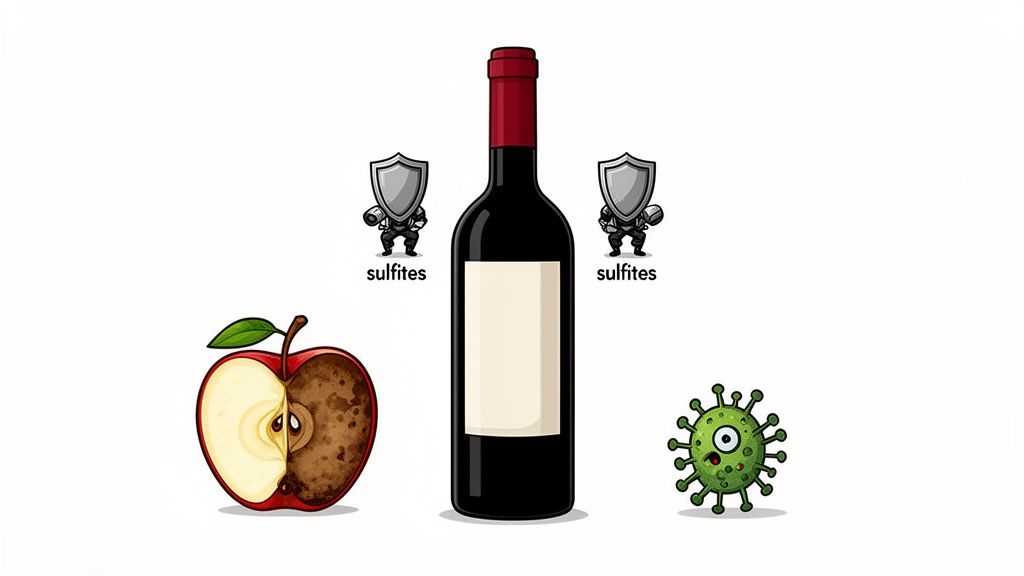
Let’s clear the air. In the simplest terms, sulfites are natural compounds that act as a preservative, keeping your wine fresh, stable, and tasting exactly as it should. Think of them as the wine's personal security detail, standing guard against anything that could spoil the party.
Your Quick Guide to Sulfites in Wine
While winemakers often add a little extra for protection, sulfites are also a completely natural byproduct of fermentation. That means pretty much every wine on the planet has them, whether the label mentions it or not.
Chemically, they're known as sulfur dioxide (SO₂), but they're far from being some scary, modern chemical. Winemakers have been using them for centuries. Even the ancient Romans would burn sulfur candles inside their empty amphorae to stop their precious vino from turning into vinegar. It's an age-old trick for a very good reason.
They play two critical roles in making sure the bottle that lands on your doorstep is as delicious as the winemaker intended.
The Dual Role of Sulfites
At its heart, the job of a sulfite is to preserve the quality and freshness of the wine. It does this in two very specific ways:
- It’s an Antioxidant: Sulfites are brilliant at preventing oxidation—that’s the same chemical reaction that makes a sliced apple go brown when left out on the counter. Without them, a wine’s vibrant colour would dull and its beautiful fruity aromas would simply fade away.
- It’s an Antimicrobial Shield: They also stop unwanted bacteria and wild yeasts from running rampant in the bottle. This is absolutely crucial for preventing spoilage and ensuring the wine is stable and perfectly safe to drink.
By protecting the wine from both oxygen and rogue microbes, sulfites give it the stability it needs to travel from our McLaren Vale vineyards to your glass without losing its soul.
This guide will demystify sulfites for good. We'll get into where they come from, why they're used, and what it all means for you as a wine lover. By the end, that little warning on the label will look less like a red flag and more like a sign of a well-made, protected bottle of wine.
The Two Sides of Sulfites: Natural vs. Added
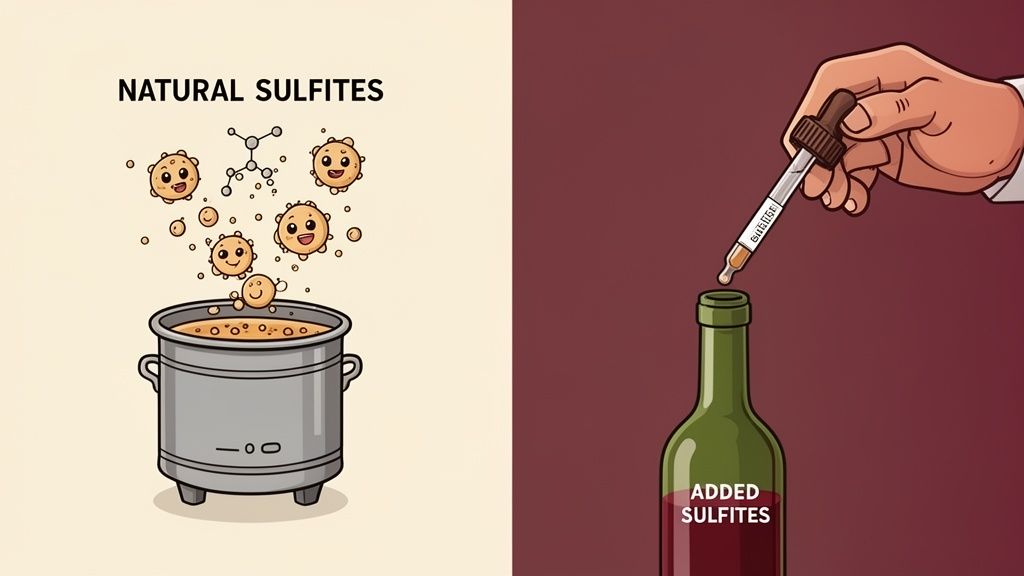
When we talk about sulfites in wine, it’s important to know they come from two completely different places. One is Mother Nature’s own work, and the other is a deliberate choice by the winemaker. Grasping this difference is the key to understanding why they're in almost every bottle you’ll ever open.
First up are the naturally occurring sulfites. During fermentation—that magical process where yeast turns grape sugar into alcohol—a tiny amount of sulfur dioxide is created as a byproduct. It’s a completely normal, unavoidable part of making wine.
This means even a bottle that proudly says "no added sulfites" will still have some. It’s simply impossible to make wine without this natural contribution, which is why a truly "sulfite-free" wine doesn't really exist.
Why Winemakers Add More
So, if sulfites are already in the mix, why add more? Think of a winemaker like a chef who needs to protect their masterpiece. Added sulfites are their most trusted tool for quality control, shielding the wine from two major threats that can ruin an entire batch.
- Oxidative Damage: Oxygen is wine's arch-nemesis. Just like a sliced apple turns brown and mushy, too much oxygen exposure can flatten a wine's fruity flavours, dull its colour, and make it taste stale. Added sulfites act as a powerful antioxidant, essentially sacrificing themselves to soak up oxygen and keep the wine fresh.
- Microbial Spoilage: Wild yeasts and rogue bacteria are everywhere in a winery. If they get a foothold, they can cause all sorts of problems, from creating funky, off-flavours to turning the wine into vinegar. Sulfites act as an antimicrobial agent, stopping these unwanted microbes in their tracks.
The decision to add sulfites isn’t about adding some foreign chemical; it’s about preserving the true character of the grapes and ensuring the wine you drink is clean, stable, and expressive.
This is standard practice for creating consistent, high-quality wines that taste just as good months or years after they've left the cellar. It's less of an "additive" and more of a guardian of flavour.
Putting It All into Perspective
The amount of sulfites in a wine can vary quite a bit. Fermentation naturally produces a small amount, usually somewhere between 10-50mg/L. To keep the wine stable, winemakers might add anywhere from 20-200mg/L more.
According to the Australian Wine Research Institute (AWRI), typical levels are around 73mg/L in red wines and 123mg/L in white wines—well within the legal limits.
For those curious about winemaking styles that focus on minimal intervention, you might enjoy our guide that explains organic, biodynamic, and natural wine. These producers often rely more on the natural resilience of the grapes, though they still benefit from the protective qualities of sulfites, just in smaller amounts.
Decoding Australian Wine Labels and Regulations
Ever spotted the phrase ‘Contains Sulfites’ on a bottle of wine and felt a flicker of uncertainty? You’re not alone. Let’s pull back the curtain on what that little phrase really means, so you can read any Australian wine label like a pro.
Here in Australia, our wine industry is guided by some of the world's strictest rules, all designed to keep you safe and informed. The main player here is Food Standards Australia New Zealand (FSANZ). Think of them as the guardians of what goes into our food and drinks, setting the legal limits for everything, including sulfites in wine. This ensures every bottle you pour meets incredibly high safety standards, giving you complete peace of mind.
Understanding the Numbers on the Label
So, what are the actual rules? For most of the dry red and white wines we all love, the regulations are pretty clear-cut.
In Australia, the maximum legal limit for total sulfites in wines with less than 35g/L of residual sugar is 250mg/kg. That’s actually a fair bit stricter than other major wine-producing countries. The US, for example, allows up to 350mg/L.
But the number that actually triggers that mandatory warning label is way, way lower.
If a wine has 10mg/kg or more of added sulfites, it must legally carry the ‘Contains Sulfites’ warning. This threshold is so low that it captures virtually every wine on the market, since even the natural fermentation process creates some sulfites.
Seeing this label isn’t a red flag for a "chemical-heavy" wine. Far from it. It’s simply a commitment to transparency for the tiny fraction of people with a genuine sulfite sensitivity. The fact that you see it everywhere just shows how essential sulfites are for crafting stable, delicious wine that travels from the winery to your table in perfect condition. For those curious about how this compares across the wider beverage industry, there's some great info on navigating ingredient labels on Australian beverages.
What This Means For You
At the end of the day, Australian regulations are on your side. That little warning label is a sign of a well-regulated industry that values transparency, not something to be feared. It simply lets you know exactly what’s in your bottle, down to the smallest components.
Now that you know what the label signifies, you can move past any hesitation and focus on what really matters—the beautiful wine in your glass. For a deeper dive into decoding what's on the bottle, check out our complete guide to understanding Australian wine labels, where we break down everything from region to vintage.
Are Sulfites Really Causing Your Wine Headaches?
It’s the age-old question every wine lover has pondered after a rough morning: are sulfites the culprit behind that dreaded wine headache? Let's tackle this persistent myth head-on.
The surprising truth is that for the vast majority of people, the answer is a clear no. A true sulfite sensitivity is incredibly rare, mainly affecting a small slice of the population, most of whom already live with severe asthma. For them, a reaction usually involves breathing difficulties, not a throbbing head. For everyone else, science just doesn't back up the claim.
So, if sulfites are off the hook, what’s really to blame? The evidence points to a few far more likely suspects naturally present in your glass.
The Real Culprits Behind Wine Headaches
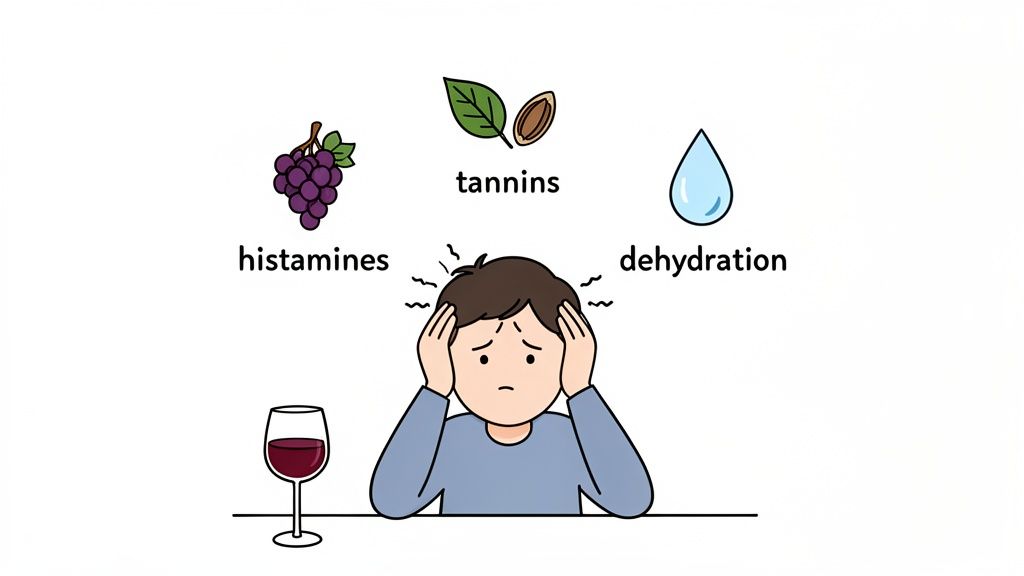
When you feel a headache creeping in after enjoying a glass of red, it’s often due to a cocktail of factors that have nothing to do with sulfur dioxide. These naturally occurring compounds are the ones to watch.
- Histamines: Found in many fermented foods (like aged cheese and cured meats), histamines are concentrated in the skins of red grapes. For some people, these compounds can trigger allergy-like symptoms, including headaches.
- Tannins: These are the phenolic compounds that give red wine its structure, grip, and slightly bitter taste. While they add complexity and help a wine age, they can also kick-start the release of neurotransmitters that may lead to headaches in sensitive individuals.
- Dehydration: This is probably the most common and overlooked cause of them all. Alcohol is a diuretic, meaning it makes you lose more fluid than you take in. A couple of glasses without sipping on some water is a classic recipe for a headache.
The most common cause of a wine headache is often simple dehydration or a reaction to natural compounds like histamines, not sulfites. Blaming sulfites is like blaming the salt in a meal for making you thirsty instead of the meal itself.
Putting Sulfite Levels into Perspective
To really get why sulfites are an unlikely cause, it helps to see how the levels in wine stack up against other common foods. You might be shocked to learn how many more sulfites you consume from everyday snacks.
Consider this: a handful of bright orange dried apricots can contain over 10 times more sulfites than a glass of wine. Many deli meats, juices, and even hot chips are also preserved with far higher levels of sulfites. If you can enjoy these foods without a headache, it’s highly improbable that the tiny amount in your wine is the problem.
The next time that "Contains Sulfites" label gives you pause, remember the bigger picture. Focus on staying hydrated and notice if certain types of wine—particularly bold reds high in histamines and tannins—affect you differently. This empowers you to pinpoint the real cause and stop blaming sulfites unnecessarily.
How to Find and Choose Low Sulfite Wines
If you're sensitive to sulfites or just prefer to keep your intake to a minimum, finding the right bottle is much easier than you might think. The goal isn't to avoid sulfites completely—we know they're a natural part of wine, after all—but to make smart choices that suit you. Let’s get practical.
A great place to start is with wines that naturally need less help from preservatives. Think about robust reds, like a classic McLaren Vale Shiraz. These wines are packed with tannins, which are powerful natural antioxidants. The tannins act like a built-in defence system, meaning the winemaker doesn't need to add as many sulfites to keep the wine fresh and stable.
Reading Between the Lines
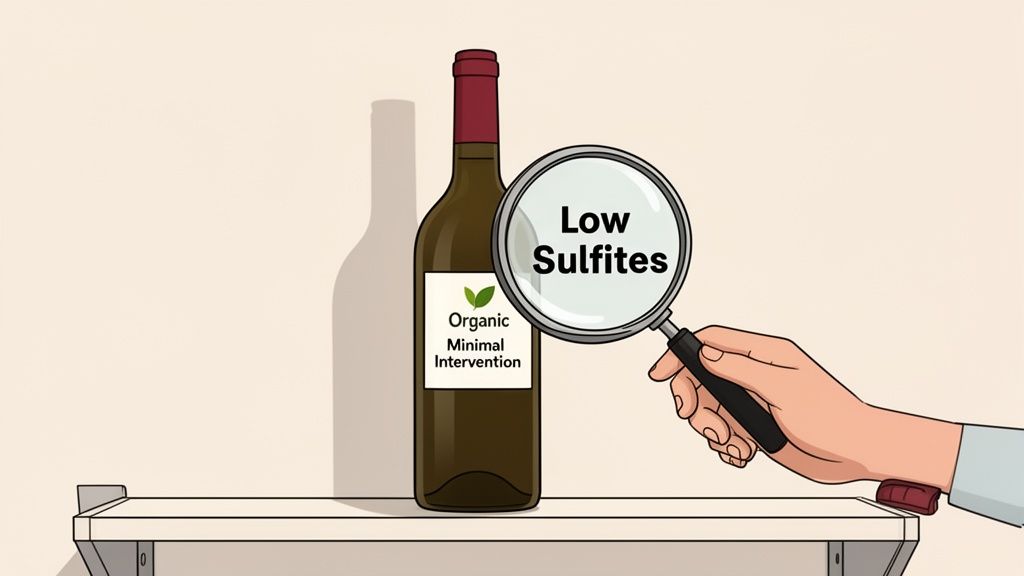
Learning to spot a few key terms on the label will also point you toward lower-sulfite options. While not all of these phrases are strictly regulated, they usually signal a winemaker’s philosophy of letting the grapes do the talking.
- Organic and Biodynamic: This is your most reliable bet. In Australia, certified organic and biodynamic wines have strict limits on added sulfites, far lower than what's allowed in conventional wines.
- Minimal Intervention: This term suggests a hands-off approach in the winery. The winemaker has used fewer additions and manipulations, which almost always means using less sulfur dioxide.
- Preservative Free or No Added Preservatives: This is a dead giveaway for a very low sulfite wine. For a deep dive into what this label really means, check out our detailed guide on preservative-free wine.
Choosing low-sulfite wines isn't about compromising on quality. In fact, it often leads you to beautifully crafted bottles from producers who are obsessed with vineyard health and a pure expression of their fruit. These wines are celebrated for their vibrancy and character.
Even with these labels, the actual sulfite content can vary. For example, one analysis of retail wines found that bottles labelled ‘Preservative Free’ had as little as 8mg/L of sulfites. In contrast, wines marked ‘Low Preservative’ had anywhere from 62mg/L to 90mg/L—still well below the conventional limits. You can see the full breakdown of the analysis here to understand how these claims stack up. Armed with this knowledge, you can walk the wine aisle with confidence and pick a bottle that’s perfect for you.
Time to Pour with Confidence
Now that we've pulled back the curtain on sulfites, you can approach your next glass with a fresh perspective. Here at McLaren Vale Cellars, we believe the best wine experiences happen when you feel confident about what's in your bottle. This is where the fun really begins—turning knowledge into pure enjoyment.
Our cellar is filled with incredible wines from producers who pour their heart and soul into every vintage, many of whom take a "less is more" approach in the winery. Let's bridge that gap between learning and tasting, and find you a bottle you'll absolutely love.
Finding Your Perfect Match
Knowing what you now know, navigating our selection is a breeze. If you're keen to try wines with lower added preservatives, a great place to start is with our bold, structured reds. Grapes like Shiraz and Cabernet Sauvignon are naturally gifted with tannins, which are powerful antioxidants that help preserve the wine, meaning the winemaker doesn't need to add as many sulfites.
Another fantastic avenue to explore is our collection of organic and biodynamic wines. These winemakers follow incredibly strict rules that place tight limits on sulfite additions. The result? Wines that are bursting with life and offer a pure, vibrant taste of the vineyard.
A wine journey should be one of discovery, not guesswork. With our Taste Guarantee, you can explore new styles and producers completely risk-free. If a wine isn't quite for you, we'll help find one that is.
Here are a few ideas to get you started on your tasting adventure:
- Explore a Minimal Intervention Shiraz: Look for winemakers who celebrate their hands-off philosophy. These wines are often incredibly lively and fruit-forward, with naturally lower sulfite levels.
- Try an Organic Grenache: A true McLaren Vale specialty, Grenache is famous for its bright red fruits and softer tannins. It’s a delicious and seriously approachable low-sulfite option.
- Discover a Biodynamic White: Experience the clean, crisp profile of a white wine made with meticulous attention to vineyard health and minimal tinkering in the cellar.
Find your next favourite bottle today, and let our fast, reliable delivery bring the best of McLaren Vale right to your doorstep. We’re here to help you drink confidently. Cheers to that
A Few Lingering Questions About Sulfites
Even after breaking it all down, a few common questions always seem to pop up. Let's tackle them head-on to clear up any lingering confusion.
Are Red Wines or White Wines Higher in Sulfites?
You might be surprised to learn that, as a general rule, white wines need a bit more sulfite protection than reds. It all comes down to the grapes themselves.
Red wines get their colour and structure from fermenting with their skins, which are packed with natural preservatives called tannins. Think of tannins as the wine's own personal security team, guarding it against spoilage. With that built-in help, winemakers can often get away with adding fewer sulfites.
White wines, on the other hand, are made without the skins, so they don't have that tannic shield. This makes them more delicate and prone to oxidation, meaning they need a little extra help to stay fresh and vibrant. Sweet white wines often get the highest dose, as sulfites are essential for stopping any leftover sugar from kicking off a second fermentation in the bottle.
Does Organic Wine Mean No Sulfites?
Not quite. It’s a common misconception, but all wine has at least some sulfites because they’re a natural by-product of fermentation. There's simply no way to make wine without them.
However, choosing an organic wine is one of the surest ways to get a wine with very low added sulfites.
Certified organic and biodynamic winemakers have to follow much stricter rules. In Australia, the legal limit for added sulfites in an organic dry red is often less than half the amount allowed in a conventional wine.
Can I Remove Sulfites From My Wine?
There are gadgets out there that claim to remove or neutralise sulfites right in your glass, but their results can be hit-or-miss. More importantly, using them can be a bit like taking a beautiful painting and wiping it with a wet cloth – you risk stripping away the delicate aromas and flavours the winemaker worked so hard to create.
You might end up with a wine that's a dull shadow of its intended self.
A much better approach is to simply look for wines made with a "less is more" philosophy from the get-go. By choosing winemakers who practice minimal intervention, you get to enjoy the wine exactly as it was meant to be, with all its character and integrity intact.
At McLaren Vale Cellars, we make it easy to find wines that match your preferences. Explore our curated selection of minimal-intervention and organic wines with confidence, thanks to our Taste Guarantee. Discover your next favourite bottle today.


Comments (0)
There are no comments for this article. Be the first one to leave a message!