
You're standing in a bottle shop, scanning labels. One says organic. Another says biodynamic. Then you spot natural wine, and suddenly the easy part, choosing red or white, feels simple compared with working out what that word means.
That confusion is normal in Australia. “Natural” sounds clear, but in wine it often isn't. Some bottles use the term to signal a serious farming and winemaking philosophy. Others use it more loosely. The result is that curious drinkers can feel as if they've joined a conversation halfway through.
I'm coming at this as someone shaped by McLaren Vale, where the environment teaches you quickly that wine starts long before the cellar. It starts in the soil, in the weather, in the health of the vines, and in the decisions a grower makes when nature doesn't follow a script. Natural wine matters because it asks a simple question. How much can a winemaker step back and let the vineyard speak?
That sounds romantic, but it's also practical. If you've ever wondered whether natural wine is cloudy by default, whether it tastes weird, or whether it's just a marketing phrase, the Australian context matters. Here, the term carries no formal legal definition, so understanding the ideas behind it is far more useful than memorising buzzwords.
An Introduction to the Natural Wine Movement
Natural wine didn't appear because drinkers suddenly wanted something obscure. It grew because more people started asking what was in their glass, how grapes were farmed, and whether a wine could taste vivid without heavy correction in the winery.
At its heart, natural wine is a return to restraint. Not to the past in a nostalgic sense, but to a style of winemaking that leans on healthy fruit, native fermentation, and fewer interventions. Instead of polishing every rough edge away, the producer tries to preserve texture, energy, and a sense of place.
In Australia, that idea has found especially fertile ground in regions where growers already care a lot about site. McLaren Vale is a strong example. It's a place where old shiraz vines, coastal influence, and varied geology encourage wines with personality. That matters because natural wine only really works when the vineyard is doing the heavy lifting.
Natural wine isn't one flavour or one look. It's a set of choices about how much the producer interferes with what the vineyard gives them.
Some bottles are bright and juicy. Some are savoury and earthy. Some are crystal clear, others a little hazy. The common thread isn't style. It's intent.
A lot of readers come to this topic expecting a tidy rulebook. Natural wine resists that. It's less like a checklist and more like a philosophy with recurring principles. That can be frustrating if you want a quick label shortcut, but it's also what makes the category exciting. You're not just buying a taste. You're buying a way of farming and making wine.
Uncorking the Definition of Natural Wine
The simplest answer to what is natural wine is this. It's wine made with a minimal-intervention mindset, often summed up as nothing added, nothing taken away.
That phrase sounds neat, but it needs unpacking. In practice, natural winemakers usually avoid commercial yeast, avoid or drastically limit added sulphites, skip acidification, and often leave the wine unfined and unfiltered. The goal is to preserve what comes from the vineyard rather than sculpting the wine into a predetermined style.

Philosophy first, regulation second
Here's where many Australian drinkers get tripped up. In Australia, “natural wine” is not a legally defined or certified term, so producers can use it without formal verification, unlike certified organic claims, as explained in this overview of low-intervention vs natural wines in Australia.
That means the term tells you something about the producer's stated ethos, but not automatically about compliance with a formal standard. If you want a deeper dive into how to read past the hype, this guide on discovering the essence of natural wine is a useful companion.
A certified organic label has a clearer framework behind it. A natural wine label doesn't. So when you see “natural” on a bottle, treat it as the start of your questions, not the end.
What natural wine usually rejects
Conventional winemaking can involve a broad toolkit of adjustments and additives. Natural wine, by contrast, tries to work with fewer tools.
A natural producer will often avoid:
- Commercial yeast that pushes fermentation toward a predictable flavour profile
- Additions such as acid or sugar adjustments
- Heavy polishing through fining and filtration
- Routine preservative use when the aim is to bottle with little or no added sulphur
That doesn't make conventional wine “fake”. It reflects a different winemaking philosophy. One approach aims for consistency and control. The other accepts more variation in pursuit of transparency and expression.
Practical rule: If a bottle says “natural”, look for signs of the producer's actual practice, such as organic farming, wild fermentation, or no added sulphur, rather than relying on the word alone.
Why people care about it
When natural wine is done well, it can feel startlingly alive. Fruit tastes less engineered. Texture can feel more layered. The wine often carries a stronger sense of season and site.
The trade-off is that minimal intervention demands excellent fruit and careful handling. Without lots of technical correction, the vineyard has nowhere to hide. That's why the best natural wines don't begin in branding. They begin with healthy grapes.
From Soil to Cellar How Natural Wine Is Made
Natural wine isn't made by doing nothing. It's made by doing the right things early, then resisting the urge to over-correct later. The hard work happens in two places: the vineyard and the cellar.
In the vineyard
If you want to understand natural wine, start with farming. You can't make stable, expressive low-intervention wine from tired vines or compromised fruit. Healthy grapes are the whole foundation.
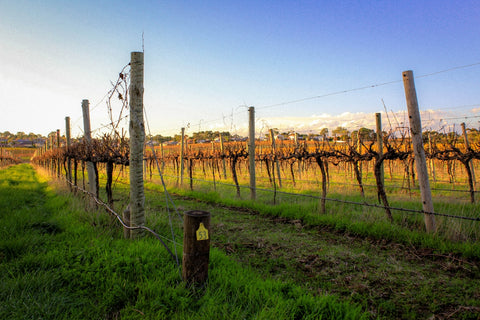
McLaren Vale is especially relevant here. The region has the highest concentration of certified organic and biodynamic vineyards in Australia, with over 1,182 hectares certified under Sustainable Winegrowing Australia, according to Wine Australia's McLaren Vale regional profile. That concentration matters because natural wine relies on exactly this kind of low-intervention farming culture.

Natural growers usually focus on a few core habits:
- Living soils. Instead of treating the vineyard like a factory floor, they try to build soil structure and microbial life.
- No synthetic shortcuts. Organic systems avoid synthetic pesticides and fertilisers.
- Close observation. Low-intervention farming asks the grower to notice disease pressure, canopy growth, and fruit condition before small issues become big ones.
- Careful picking. Many producers prefer hand-harvesting because it allows selective picking of clean, healthy bunches.
Biodynamic farming sits within this broader conversation. If you want a practical breakdown of what biodynamic farming involves, that guide explains the core idea well: the vineyard is treated as a connected living system rather than a crop in isolation.
A useful analogy is sourdough. You can't bake great sourdough from poor flour and neglect. Natural wine works the same way. The less you intend to manipulate the final result, the more important the raw material becomes.
In the winery
Once the fruit arrives, the question becomes how little needs to be done.
Natural winemakers often ferment with wild yeast, meaning the ambient yeasts from the vineyard and winery begin the process rather than a selected commercial strain. That can create more complexity, but it also introduces less predictability. Fermentation may take longer and behave less uniformly.
Many producers also avoid:
| Winemaking choice | Conventional aim | Natural wine approach |
|---|---|---|
| Commercial yeast | Predictable flavour and timing | Native fermentation where possible |
| Acid or sugar adjustment | Balance and standardisation | Let the fruit's natural chemistry lead |
| Fining | Clarify and soften | Leave more texture in the wine |
| Filtration | Stability and brightness | Bottle with less stripping of character |
The visual result can be a wine that's slightly cloudy. The sensory result can be more grip, more savoury detail, and more movement across the palate. The risk is greater too. Without corrective layers, flaws show up more readily if the fruit or cellar work isn't clean.
Why the cellar work feels different in the glass
A natural wine often tastes less “made up” and more “grown”. That isn't mystical language. It usually means the fruit profile feels less standardised and the texture less polished.
Some wines are energetic and crunchy, almost crackling with freshness. Others feel softer, more textural, and a touch wild around the edges. Even within one region, there's no single house style because native ferment and minimal handling allow more variation from vineyard to vineyard.
Great natural wine tastes intentional, not careless. Minimal intervention is discipline, not neglect.
That's the key distinction. A hands-off philosophy still demands skilled decisions. The producer just chooses fewer interventions, and chooses them later.
A Glossary for the Grape Curious
Wine language can turn simple ideas into a fog. A few terms come up again and again in natural wine conversations, and they're easy to mix up.
Organic, biodynamic and sustainable
These three overlap, but they don't mean the same thing.
Organic refers to farming without synthetic pesticides and fertilisers under a recognised standard. It's mainly about what the grower doesn't use.
Biodynamic includes organic principles but goes further, treating the vineyard as an interconnected farm organism. It tends to carry a stronger philosophical and whole-system focus.
Sustainable is broader. It often includes environmental care, resource management, and long-term viability, but it doesn't automatically mean organic or natural.
Here's a quick comparison:
| Term | Main focus | Certification clarity |
|---|---|---|
| Organic | Inputs used in farming | Generally clearer |
| Biodynamic | Whole-farm living system | Generally clearer |
| Sustainable | Long-term environmental and operational care | Broader and more variable |
| Natural | Minimal intervention in vineyard and winery | No legal definition in Australia |
Sulphites and SO2
Sulphites frighten a lot of people because they sound industrial, but in wine they mainly act as a preservative. They help protect wine from oxidation and spoilage.
Natural wines aim for zero or negligible sulphur dioxide, often less than 10 mg/L total SO2, while conventional Australian wines can legally contain over 150 mg/L, as outlined by Organic Wine's explanation of natural wines and sulphur levels.
That doesn't mean sulphur is automatically bad. It means natural winemakers choose to avoid or minimise it because they want a more unmediated wine and are willing to accept the extra risk that comes with that choice.
Wild yeast and spontaneous fermentation
Wild yeast means fermentation begins with naturally occurring yeasts from the grapes and winery environment. Think of it as the difference between using a packet mix and baking from a live starter culture. One offers more control. The other can offer more individuality.
Spontaneous ferments can be thrilling, but they can also be slower and less tidy. That's part of why natural wine often feels less uniform from bottle to bottle.
Unfined and unfiltered
Fining removes particles or softens texture using agents that bind to solids. Filtration physically strains out material before bottling.
When a wine is unfined and unfiltered, it may appear hazy and feel fuller or more textured. That haze isn't always a fault. It can be a sign that the producer chose not to polish the wine to conventional clarity standards.
A little cloudiness can be a stylistic choice. A good natural wine should still feel balanced, clean, and drinkable.
Myths and Realities Separating Fact from Funk
The biggest myth about natural wine is also the one that scares people off fastest. People assume it will be cloudy, sour, unstable, and smell like cider left in the sun.
Some natural wines do lean into funkier aromas and textures. But treating that as the whole category is outdated, especially in Australia.
Not all natural wine is funky
In Australia, up to 30% of natural wine sales now come from producers making “stealth natural” wines, wines that use minimal-intervention methods while still tasting familiar and clean to conventional drinkers, according to this discussion of natural wine myths and styles.
That's a major shift. It means many producers are applying natural principles without chasing the most extreme flavour markers. You can find bright, polished shiraz or cabernet that still reflects low-intervention thinking.

If you've avoided the category because you think it's all kombucha-adjacent, it's worth revisiting. This explainer on organic, biodynamic and natural wine differences helps sort out why these styles can taste so different.
Funk can be style or fault
Nuance is important. A savoury, earthy, slightly wild aroma can be part of a wine's intended personality. But instability, oxidation, or obvious spoilage isn't automatically “more authentic” just because the bottle is natural.
Natural wine supporters sometimes over-romanticise flaws. Conventional wine drinkers sometimes overreact to anything unfamiliar. Both camps miss the point. The best measure is simple. Is the wine pleasurable, balanced, and expressive?
Natural doesn't mean better for everyone
Another myth is that natural wine is automatically superior. It isn't. Some bottles are profound. Some are messy. The same is true in every category.
What natural wine does offer is a different set of priorities:
- More vineyard transparency rather than standardisation
- Fewer additions rather than technical correction
- More variation from bottle to bottle and vintage to vintage
- Potentially shorter stability window in some styles
Some drinkers love that liveliness. Others prefer the precision of more conventionally made wines. There's no moral prize for choosing one over the other.
The right question isn't “Is natural wine better?” It's “Do I enjoy what this producer is trying to express?”
That shift makes tasting far more useful than ideology.
Your Guide to Buying and Enjoying Natural Wine
Buying natural wine gets easier once you stop looking for a perfect label term and start looking for clues. Producer honesty matters more than fashionable wording.

What to look for on the bottle
Start with the back label or product notes. Look for mentions of wild fermentation, no added sulphur, organic or biodynamic farming, and whether the wine is unfined or unfiltered. These details tell you more than the word “natural” on its own.
If the producer talks clearly about site, farming, and cellar choices, that's usually a good sign. If the label leans only on vague wellness language, be cautious.
McLaren Vale is a smart place to begin your search because the region's more than 55 soil types, dating back 550 million years, create strong conditions for site-expressive low-intervention wines, as noted in this piece on McLaren Vale's defining regional facts. In plain terms, the region gives producers plenty of character to preserve.
How to taste it without overthinking
Natural wine rewards curiosity more than formal technique. Pour a glass and notice three things first:
- Aroma. Is it bright, savoury, floral, earthy, or reductive?
- Texture. Does it feel silky, grippy, juicy, or slightly spritzy?
- Energy. Does the wine feel lifted and alive, or flat and tired?
Don't panic if the first sniff is a bit unusual. Some natural wines open up beautifully with air. Others are best served a little cooler than many people expect, especially lighter reds and skin-contact whites.
A short visual guide can help if you're new to the style:
Food, serving and storage
Natural wines often shine at the table because their acidity and texture make them versatile. Juicy reds work well with chargrilled lamb, roast veg, and tomato-based dishes. Textural whites suit salty snacks, seafood, and soft cheeses. Skin-contact styles can handle spice better than many standard whites.
Once opened, some natural wines can change quickly because they aren't buffered by the same level of preservatives as conventional bottles. Good closure matters. If you want a straightforward refresher on simple wine preservation methods, that guide covers the basics clearly.
For readers interested in bottles made with minimal additions, this article on preservative-free wine adds helpful context around what that phrase usually means in practice.
Frequently Asked Questions About Natural Wine
Is natural wine the same as vegan wine
No. They can overlap, but they aren't the same thing.
A natural wine is defined by minimal-intervention farming and winemaking ideals. A vegan wine depends on whether animal-derived fining agents were used. Many natural wines are vegan because producers often skip fining altogether, but you shouldn't assume it unless the producer states it.
Why is natural wine sometimes more expensive
The cost often reflects labour and risk rather than trendiness. Natural producers commonly farm with more hands-on attention, sort fruit carefully, and accept less room for technical rescue in the cellar. Small-scale production can also limit economies of scale.
That doesn't mean every expensive bottle is justified. It means the work behind thoughtful low-intervention wine is often demanding.
How long does natural wine last after opening
Usually, not as long as a heavily protected conventional wine, though it varies widely by style and producer. A fresh, delicate bottle may fade faster. A sturdier red or skin-contact wine might hold up better.
The safest approach is simple. Re-cork it promptly, keep it cool, and drink it sooner rather than later. If the wine changes a little overnight, that isn't always a problem. Sometimes it becomes more expressive.
If you're ready to taste these ideas for yourself, explore the range at McLaren Vale Cellars. It's a great place to compare styles from one of Australia's most exciting wine regions, whether you're chasing bright low-intervention bottles, classic McLaren Vale reds, or a mixed case that helps you learn by drinking.
Comments (0)
There are no comments for this article. Be the first one to leave a message!