
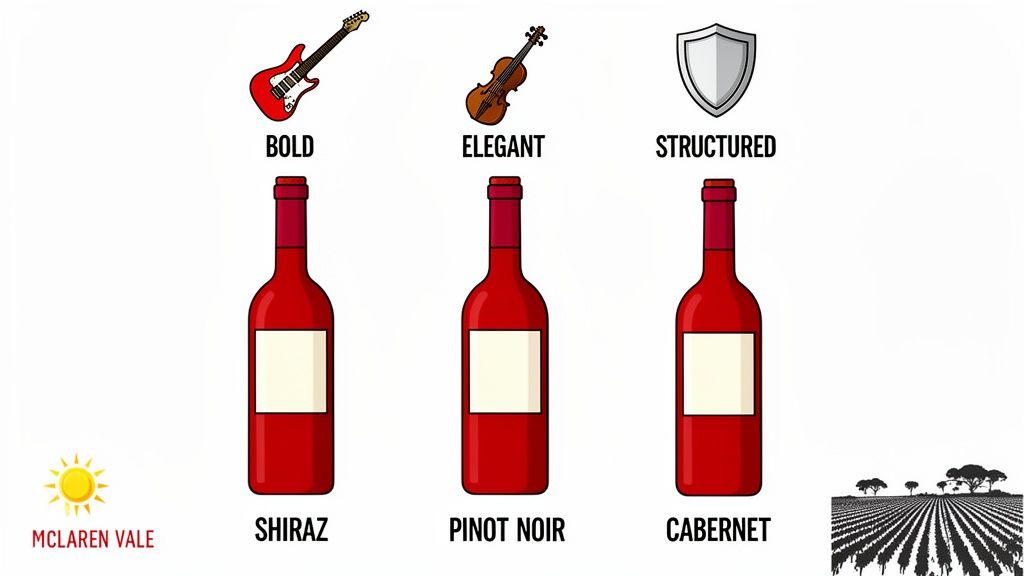
Diving into the world of red wine can feel a bit like learning a new language, but it’s far simpler than you might think. Just think of red wine types like music genres: some are bold and powerful like rock and roll (a classic McLaren Vale Shiraz), while others are subtle and complex like a classical symphony (Pinot Noir).
That 'genre' is almost entirely down to the grape, which shapes everything from the wine's flavour to how it feels in your mouth.
Your Guide to Understanding Red Wine Types
Consider this guide your friendly translator for the wonderfully diverse universe of red wines. We're here to demystify the basics, get rid of any intimidation, and set you up to confidently find bottles that you'll genuinely love.
Our journey doesn't start with complicated winemaking jargon. It starts with one simple, crucial concept: grape varietals.
It’s no different from apples. You know a Granny Smith is going to be tart and crisp, while a Red Delicious is softer and sweeter. Wine grapes have their own distinct personalities in the exact same way. A Shiraz grape is worlds apart from a Pinot Noir grape, and that single difference is what drives the final character of the wine.
What Shapes a Red Wine's Style
The grape is definitely the star of the show, but it doesn't perform in a vacuum. A wine's final personality is shaped by a few key factors all working together. Think of it like a recipe: the grape is the main ingredient, but the way you cook it and the spices you add can make all the difference.
Here's what's at play:
- Grape Variety: This sets the stage, determining the core flavours, tannin levels (that drying sensation), acidity, and colour. A thick-skinned Cabernet Sauvignon grape will always create a deeper-coloured, more structured wine than a delicate, thin-skinned Pinot Noir.
- Region and Climate (Terroir): Where the grape is grown gives it a unique accent. A Shiraz from the sunny, warm climate of McLaren Vale will be ripe, bold, and full of fruit. But take that same grape (called Syrah) to the cooler Northern Rhône in France, and it becomes more savoury, peppery, and earthy.
- Winemaking Techniques: The decisions made in the winery add the final layers. Ageing in oak barrels can add notes of vanilla and spice, while fermenting in stainless steel keeps the flavours fresh and fruity.
Understanding these three elements, grape, place, and process, is the key to unlocking the world of red wine. It’s how you move from simply drinking wine to truly appreciating the story in every glass.
With this simple framework, you can start to predict what a wine might taste like before you even pop the cork. It gives you the confidence to walk into a bottle shop or scan a wine list and find the perfect red for any occasion.
Exploring Full-Bodied and Powerful Reds
Now we’re stepping into the realm of the heavyweights. These are the red wines that fill your glass with deep colour, intense flavour, and a rich, lasting presence.
Think of them as the bass notes in an orchestra, providing depth, power, and structure. They're the bottles that command attention, perfect for a hearty meal or a contemplative evening.
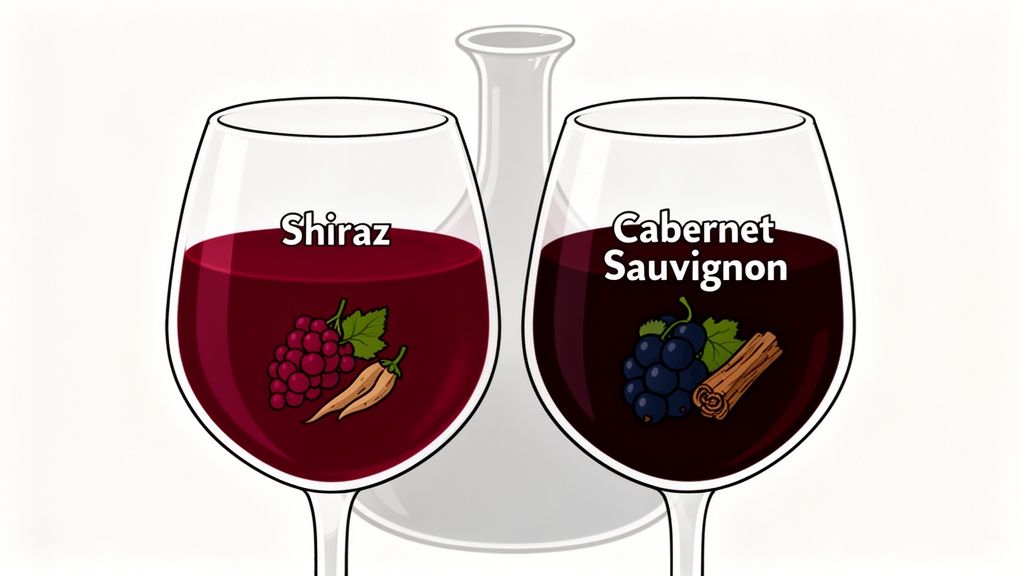
Full-bodied reds get their robust character from grapes with thicker skins. More skin contact means more colour, more flavour compounds, and more tannins, those natural compounds that create that pleasantly drying sensation on your gums. Grapes grown in warmer, sunnier climates also tend to produce riper, more concentrated fruit, leading to higher alcohol and a weightier feel on the palate.
We’ll focus on two undisputed titans of this style: Shiraz and Cabernet Sauvignon. While both are powerful, they express their strength in wonderfully different ways.
Shiraz: The Bold and Spicy Powerhouse
Shiraz is the quintessential bold red, famous for its opulent dark fruit flavours and signature spicy kick. A glass of quality Shiraz is a full-on sensory experience, often bursting with notes of blackberry, dark plum, and black cherry. These are layered with hints of black pepper, liquorice, and sometimes even a savoury, meaty character.
This grape truly finds its most iconic Australian expression in the sun-drenched vineyards of South Australia, especially here in McLaren Vale. The warm climate and ancient soils combine to produce Shiraz of incredible concentration and complexity.
In fact, McLaren Vale Shiraz is the undisputed king of red wines in this region, commanding a whopping 51% of the area's total red grape crush in recent years. This variety is the backbone of McLaren Vale's premium reputation, responsible for those bold, peppery, and flavour-packed wines that have put us on the global map.
What to Expect from a McLaren Vale Shiraz: Imagine a wine that feels smooth and velvety in your mouth, yet finishes with a satisfying warmth and a lingering peppery spice. It’s a wine that is both powerful and generous, making it an unforgettable drinking experience.
If you're keen to dive deeper into this iconic varietal, check out our detailed guide on what is Shiraz wine and what makes it so special.
Cabernet Sauvignon: The Structured and Noble Classic
Where Shiraz is bold and exuberant, Cabernet Sauvignon is structured and confident. Often called the 'King of Red Grapes', it's renowned for its firm tannins, deep colour, and a complex flavour profile that evolves beautifully with age.
Think of Cabernet Sauvignon as a finely tailored suit—everything is in its right place. Its classic tasting notes include blackcurrant (cassis), dark cherry, and blackberry, often accompanied by non-fruit characteristics like cedar, tobacco, graphite, and subtle hints of mint or eucalyptus.
This grape's firm tannins give it an impressive structure and a slightly grippy texture when young. But these tannins are also a natural preservative, allowing the wine to age gracefully for years, sometimes even decades. Over time, they soften, revealing more nuanced, earthy flavours.
Unlocking the Full Potential of Bold Reds
To get the absolute best from these powerful red wines, a little preparation goes a long way. Their complex aromas and structured tannins can benefit significantly from exposure to air before you pour a glass.
The Power of Decanting
Decanting simply means pouring the wine from the bottle into another container (a decanter) before serving. This serves two key purposes for bold reds:
- Aeration: Exposing the wine to oxygen helps to soften its tannins, making it feel smoother and less astringent. It also "opens up" the wine, allowing its intricate aromas and flavours to fully express themselves. A young, powerful Shiraz or Cabernet can transform after just 30-60 minutes in a decanter.
- Removing Sediment: Older red wines often develop a natural deposit called sediment. While harmless, it can be gritty. Carefully decanting the wine leaves this sediment behind in the bottle, ensuring a clean, clear glass.
Perfect Pairings for Powerful Wines
The intensity of full-bodied reds makes them a brilliant match for equally flavourful foods. Their structure and tannins are fantastic at cutting through rich, fatty dishes, cleansing the palate with each sip.
Here are some classic food pairing ideas:
- For Shiraz: Think big, smoky flavours. Barbecued ribs, grilled sausages, a hearty beef stew, or a classic Aussie meat pie are all sublime matches.
- For Cabernet Sauvignon: The firm structure calls for rich, savoury dishes. A perfectly grilled steak, slow-roasted lamb, mushroom-based sauces, or aged hard cheeses like cheddar are ideal partners.
By understanding the distinct personalities of Shiraz and Cabernet Sauvignon, you can confidently select a bottle that will stand up to a rich meal or provide a deeply satisfying glass on its own.
Discovering Medium-Bodied and Versatile Reds
Not every meal or occasion calls for a powerhouse red. Sometimes, you just need the perfect all-rounder, a wine that’s adaptable, food-friendly, and effortlessly delicious. Welcome to the world of medium-bodied reds, the true chameleons of the wine cellar.
If full-bodied reds are the main course, think of these versatile wines as the ultimate supporting act that can easily steal the show. They strike a beautiful balance, sitting right between the delicate nature of light-bodied wines and the sheer intensity of the heavyweights. Their tannins are present but gentle, and their fruit flavours are bright without ever being overwhelming.
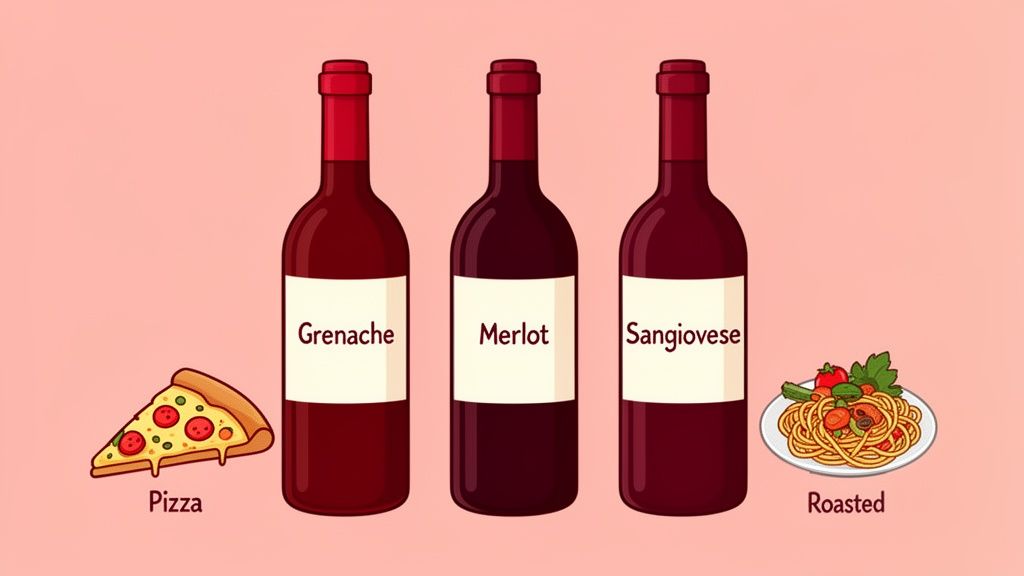
Let's put the spotlight on three absolute stars of this category: Grenache, Merlot, and Sangiovese. Each brings its own unique personality to the table, yet all share a remarkable gift for pairing with a massive range of foods, making them essential additions to any wine rack.
Grenache: The Bright and Spicy Rising Star
Grenache is a grape that wears its heart on its sleeve, practically bursting with juicy, vibrant flavours of red fruits like strawberry, raspberry, and cherry. This is often layered with a lovely hint of white pepper or cinnamon spice, adding a welcome kick of complexity to its super approachable profile.
With its softer tannins and bright acidity, Grenache is incredibly easy to drink. It’s a fantastic next step for anyone who has been enjoying bolder wines like Shiraz and is on the hunt for something with a bit more freshness and lift.
While it originally hails from Spain (where it's known as Garnacha), Grenache has found a spectacular second home here in Australia, particularly in McLaren Vale. In our region, old, gnarly bush vines produce grapes with an incredible concentration of flavour. Grenache is a true rising star, consistently punching well above its weight.
It's a quiet hero in McLaren Vale, covering 402 hectares of dry-grown bush vines and enjoying a real renaissance with new plantings. It plays a vital role alongside Shiraz and Cabernet in shaping the region's red wine character. You can dig into more details in the latest McLaren Vale vintage reports.
Tasting Analogy: If a bold Shiraz is like a rich, dark chocolate brownie, a McLaren Vale Grenache is like a delicious raspberry and white chocolate muffin, still satisfying, but brighter, fruitier, and wonderfully spiced.
Merlot: The Smooth and Plummy Crowd-Pleaser
Merlot is loved for one thing above all else: its smooth, velvety texture and lush, plummy fruit character. It's the very definition of a crowd-pleasing red, offering flavours of black cherry, plum, and raspberry, often with subtle hints of chocolate, bay leaf, and vanilla if it's seen some time in oak.
Its biggest appeal is that rounded, supple mouthfeel. The tannins in Merlot are typically softer and far less aggressive than those in Cabernet Sauvignon, making it immediately approachable and easy to enjoy without needing years in the cellar. This gentle structure is exactly what makes it such a food-pairing champion.
Because of its adaptable nature, Merlot can handle an impressive array of dishes. Its soft profile won't overpower chicken or pork, yet it has enough body to stand up to a good burger or a plate of pasta with meat sauce. It truly is one of the most versatile red wines you can find.
Sangiovese: The Savoury Italian Classic
Let's take a trip to the heart of Italy. Sangiovese is the grape behind the famous wines of Chianti, and it offers a completely different, more savoury take on a medium-bodied red. While it still has plenty of red fruit, think sour cherry and red plum, its signature lies in its earthy and herbal notes.
You'll often find intriguing flavours of tomato leaf, dried herbs, leather, and clay in a glass of Sangiovese. What truly defines it, however, is its zesty, high acidity.
This acidity is the secret to its incredible food-pairing ability. It acts just like a squeeze of lemon on a rich dish, cutting through fat and refreshing your palate with every single sip. This makes it the ultimate partner for Italian cuisine, especially tomato-based pasta sauces and, of course, pizza.
Pairing Medium-Bodied Reds with Food
The real beauty of these wines is their flexibility. They are the answer to that age-old question, "What wine goes with this?"
- Grenache: Perfect for charcuterie boards, roasted pork with herbs, or even slightly spicy dishes like a mild curry.
- Merlot: An all-star with roast chicken, shepherd's pie, mushroom risotto, or a classic cheeseburger.
- Sangiovese: The go-to for pizza, lasagna, bolognese, and anything with a rich tomato sauce or parmesan cheese.
These medium-bodied reds prove that balance is a beautiful thing. They offer complexity without being overbearing, making them the perfect 'just right' bottles for elevating a casual weeknight meal or complementing a more refined dinner.
Embracing Light Bodied and Elegant Reds
We've explored the rich and powerful, but now it’s time to shift gears to the graceful and nuanced side of red wine. This is where you’ll discover that brilliance doesn't always have to be bold. These elegant reds are all about subtlety, perfume, and finesse.
If a full-bodied McLaren Vale Shiraz is a cosy leather armchair, a light-bodied Pinot Noir is like a soft silk scarf, lighter, more ethereal, and intricately detailed. These wines come from thin-skinned grapes, which means less pigment and fewer tannins. The result? A paler colour in the glass and a smoother, gentler feel on the palate.
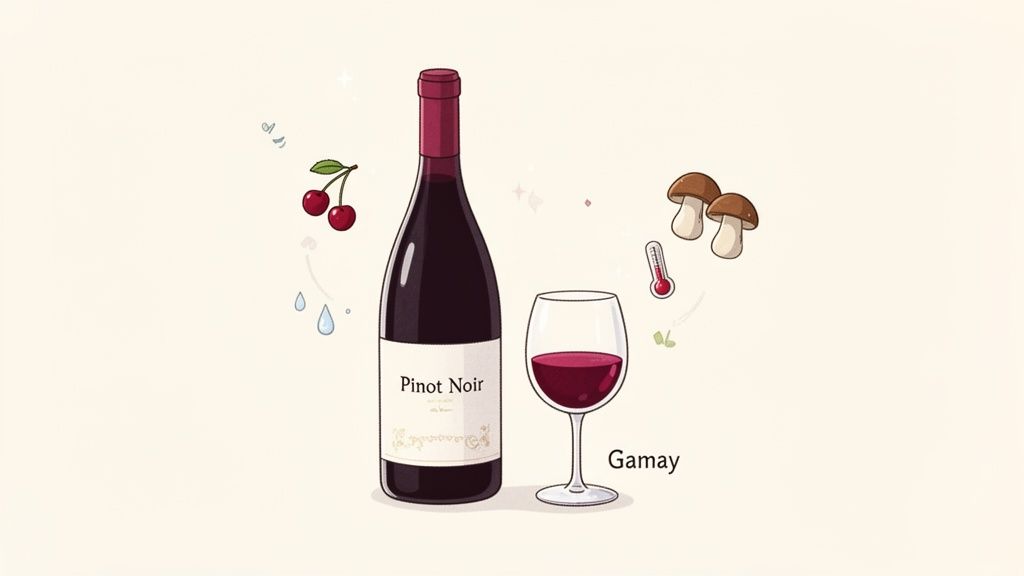
Let's meet two of the most celebrated stars of this style: Pinot Noir and Gamay.
Pinot Noir: The Heartbreak Grape
Pinot Noir is famous for its captivating aromas and equally infamous for being an absolute pain to grow. It’s a fickle grape that demands a cool climate and meticulous care, but when the stars align, the result is one of the most rewarding drinking experiences in the world.
It offers a stunning perfume of fresh red fruits like cherry, raspberry, and cranberry, layered with complex savoury notes. Give it some time to age, and it can develop intriguing earthy characters of forest floor, mushrooms, and truffles.
On the palate, Pinot Noir is all about elegance. It has bright, refreshing acidity and soft, silky tannins, creating a wine that feels light on its feet yet possesses a surprisingly long and complex finish.
This blend of delicacy and depth makes Pinot Noir one of the most versatile food-pairing wines you can find.
Gamay: The Juicy and Vibrant Sipper
Often living in the shadow of its more famous cousin Pinot Noir (both grow in France's Burgundy region), Gamay is a wonderfully cheerful and approachable light-bodied red. It’s best known as the grape behind the fun-loving wines of Beaujolais.
Gamay is all about bright, juicy, and uncomplicated fun. It bursts with vibrant flavours of red cherry, raspberry, and even a hint of banana or bubble gum, a unique trait that comes from a special winemaking process called carbonic maceration.
This technique ferments the grapes whole, creating a wine that's exceptionally low in tannin and brimming with fresh, fruity character. It’s the kind of red wine you can, and absolutely should, serve with a slight chill.
Serving and Pairing Elegant Reds
One of the best things about light-bodied reds is their sheer versatility, especially with food and serving temperature. They open up a whole new dimension of red wine enjoyment.
Serving Temperature
Forget the old rule of "room temperature." Lighter reds truly shine when served slightly chilled, around 12–14°C. Just pop the bottle in the fridge for 20–30 minutes before you pour, it lifts the fresh aromas and makes the wine even more refreshing.
Perfect Food Matches
The high acidity and gentle tannins of these wines make them fantastic partners for a wide range of dishes that would be steamrolled by a bigger red.
- Pinot Noir: A classic match for roast chicken, duck, pork, and earthy dishes like mushroom risotto or anything with a splash of truffle oil.
- Gamay: Just brilliant with charcuterie, cheese boards, picnic foods, and even fish like grilled salmon or tuna.
Embracing these lighter styles reveals that red wine can be just as perfect for a warm afternoon as it is for a chilly evening, offering elegance and refreshment in every single glass.
Understanding Red Wine Blends
If single grape varieties are talented solo artists, then red wine blends are the supergroups of the wine world. Winemakers play the role of master producer, carefully combining different grapes to create something far more complex and balanced than any single variety could be on its own.
The magic of blending is all about harmony. Think of it like a band: one grape might bring the bold fruit melody, another provides the structural bassline of tannins, and a third adds a surprising layer of aromatic spice. When it all comes together, the final wine is a seamless composition where every component shines. You can dive deeper into this fascinating process in our guide to the art and science of wine blending.
The Classic GSM Blend
One of the most celebrated red blends, especially here in McLaren Vale, is the GSM. This classic trio is the perfect example of how different grapes can elevate each other.
- Grenache (G): This is the juicy, vibrant heart of the blend. It brings bright flavours of raspberry and strawberry, a soft texture, and a beautiful hint of white pepper spice.
- Shiraz (S): This grape provides the power and depth. It adds deep blackberry and plum notes, a full body, and that signature peppery kick that gives the wine its backbone.
- Mourvèdre (M): Often called Mataro in Australia, this grape is the soul of the blend. It contributes earthy, savoury notes, firm tannins, and deep colour, adding complexity and the potential to age gracefully.
Together, they create a wine that’s fruity yet structured, spicy yet smooth, a true testament to a blend being greater than the sum of its parts.
Cabernet Merlot: A Perfect Partnership
Another world-famous pairing is the timeless combination of Cabernet Sauvignon and Merlot. This blend is a masterclass in balance, popular in Bordeaux and a huge favourite right here in Australia.
Cabernet Sauvignon brings the muscle with its powerful structure, firm tannins, and classic notes of blackcurrant and cedar. Merlot, on the other hand, is the softer, more generous partner, offering plush, plummy fruit and a rounded, velvety mouthfeel. When they're blended, the gentle Merlot tames Cabernet's powerful tannins, making the wine lush and much more approachable when young.
A great blend is like a conversation between grapes. Each one gets to speak, but it’s what they create together that tells the most interesting story.
In McLaren Vale, while Shiraz is king, Cabernet Sauvignon plays a crucial supporting role, especially in these classic blends. As the second-most prominent red variety, it claims a vital 20% share of the region's red vines with 1,288 hectares planted. This highlights just how important Cabernet is for delivering that cassis-rich depth Aussie wine lovers crave, both on its own and as part of a team. You can discover more insights about McLaren Vale's grape varieties on Wine Australia.
How to Choose, Serve, and Store Red Wine
Knowing the different red wine types is one thing, but getting the absolute most out of every single bottle comes down to a few practical skills. Choosing, serving, and storing your wine the right way can easily turn a good glass into a great one, making sure you enjoy it exactly as the winemaker intended.
This isn’t about stuffy rules or complicated rituals. It’s all about simple, real-world advice that makes the whole experience better, whether you're grabbing a bottle for a weeknight pizza or opening something special for a celebration.
How to Choose the Right Red Wine
Walking into a bottle shop can feel a bit overwhelming, but the wine label is your cheat sheet. It holds all the clues you need to make a confident choice without needing to be an expert.
Just focus on these key details to get a quick read on what’s inside:
- Producer: Who made the wine? A reputable name from a region like McLaren Vale is often a good sign of quality.
- Grape Variety: This is your biggest clue to the wine's style. Is it a bold Shiraz, a structured Cabernet, or a vibrant Grenache?
- Region: Where are the grapes from? A McLaren Vale Shiraz will be rich and fruit-forward, while a French Syrah (the same grape) might be more earthy and savoury.
- Vintage: The year the grapes were harvested. While not critical for everyday drinking, it can give you an idea of the wine's age and character.
Quick Tip: Don't just automatically grab the cheapest bottle. Often, spending just a few extra dollars moves you into a completely different quality tier, offering far better value for your money.
The Ideal Way to Serve Red Wine
Getting the serving right is hands down the easiest way to elevate your wine experience. It really just boils down to three simple things: temperature, air, and glassware.
Temperature is Everything
The biggest myth about red wine is that you should serve it at "room temperature." That idea comes from old European cellars, which were much, much cooler than our modern Aussie homes. Serving a red too warm makes it taste flat, flabby, and boozy.
- Full-bodied reds (Shiraz, Cabernet): Aim for 16-18°C.
- Light-bodied reds (Pinot Noir, Gamay): Serve them slightly cooler, around 12-14°C.
A quick 15-20 minutes in the fridge before you pop the cork is all it takes to bring most reds down to their perfect temperature. This simple step allows all their beautiful aromas and flavours to really shine.
Letting it Breathe
Decanting, or even just letting a wine breathe in the glass, allows a little oxygen to soften its tannins and open up its aromas. Bold, young reds benefit the most from about 30 minutes of air before you start drinking.
Storing Wine for Later
Proper storage is crucial for protecting your wine, whether it's for a few days or a few years. The main enemies of wine are heat, light, and big temperature swings. For long-term cellaring, you can find in-depth advice in our complete guide to wine storage.
For the short term, after you've opened a bottle, just recork it tightly and stick it in the fridge. It will stay fresh for a good 2-3 days. Storing it upright is best, as it minimises the surface area exposed to oxygen.
Common Questions About Red Wine
Diving into the world of red wine can feel a bit like learning a new language. You hear terms thrown around and see names on bottles that raise more questions than answers. Don't worry, we've all been there. Here are a few of the most common questions we get asked, with simple answers to get you exploring with confidence.
What Is the Difference Between Shiraz and Syrah?
This is a classic, and the answer is simple: they're the exact same grape. The name on the label is really the winemaker's way of giving you a heads-up about the style of wine in the bottle.
‘Syrah’ is the name you’ll see in the Old World, especially France. It signals a more elegant, savoury, and often peppery style of wine. Think leaner, more restrained. On the other hand, ‘Shiraz’ is the name we use here in Australia, and it points to a bolder, richer, more fruit-driven style, exactly like the iconic reds that put McLaren Vale on the map.
What Are Tannins in Red Wine?
You’ve probably heard people talk about tannins, but what are they? Tannins are natural compounds found in grape skins, seeds, and stems. They aren't a flavour; they're a texture.
Ever had a strong cup of black tea that leaves your mouth feeling dry? That’s tannin at work. In wine, tannins provide structure, complexity, and the backbone that allows a wine to age gracefully. A high-tannin wine like a big Cabernet Sauvignon feels firm and grippy, while a low-tannin wine like Grenache feels much softer and smoother.
Think of tannins as the skeleton of a red wine. They provide the framework that holds all the fruit and flavour together, helping it stand tall and evolve over time.
Should You Put Red Wine in the Fridge?
Absolutely! In fact, most red wines are served way too warm. That old saying about serving reds at ‘room temperature’ comes from a time of chilly European cellars, not our modern heated homes.
A quick stint in the fridge can work wonders. Popping a bottle of red in for about 15–20 minutes before you pour is a brilliant move. This brings it down to the ideal temperature of around 16–18°C, allowing the beautiful aromas and flavours to sing instead of being drowned out by the warmth of the alcohol.
How Do I Find a Good Value Red Wine?
Finding great value isn't about finding the cheapest bottle, it's about getting incredible quality for the price you pay. A great place to start is by looking at regions famous for a particular grape, like Shiraz from McLaren Vale, where you know the baseline quality is going to be excellent.
Another trick is to buy in larger amounts. Grabbing a dozen or half-dozen deal can bring the per-bottle price down significantly. And don't shy away from lesser-known grapes from top-notch regions; they often deliver fantastic bang for your buck without the premium price tag of their more famous neighbours.
Ready to explore the best red wine types McLaren Vale has to offer? From iconic Shiraz to elegant Grenache, McLaren Vale Cellars has a curated selection to suit every palate. Discover our value-packed dozens and half-case deals today. Browse our full range at https://www.mclarenvalecellars.com.
Comments (0)
There are no comments for this article. Be the first one to leave a message!