
A warm afternoon, friends are on their way, and you're deciding what to open. A red feels a little heavy for the table, but you'd like something with more character than a simple, chilled white. Pinot Noir rosé can fit that middle ground: bright and refreshing, with enough red-fruit flavour and savoury detail to stay interesting with food.
It's also a style that's easy to misjudge from the shelf. A pale colour doesn't automatically mean better wine, and a deeper pink doesn't tell you whether a bottle will be sweet, structured or dry. Understanding the grape, the winemaking and the climate behind the wine will help you choose a bottle for the occasion, including whether you want cool-climate delicacy or a riper South Australian expression.

Why Pinot Noir Rosé Deserves a Second Look
Rosé can seem like a straightforward choice for warm weather, but Pinot Noir gives it a more layered personality. It can offer delicate strawberry and cranberry notes, a crisp line of acidity, and a faint savoury edge. That combination makes it easy to pour as an aperitif, yet interesting enough to bring to the table with lunch.
The category is also more nuanced than the colour suggests. Australian Pinot Noir rosé remains a small part of the country's Pinot Noir exports, but its share increased from less than 1% in 2009–10 to 2% in 2021–22, according to Wine Australia's Pinot Noir rosé export analysis. That's a modest slice of the market, not a claim that rosé dominates Australian wine exports. It does, however, show that the style has gained visibility alongside established Pinot Noir categories such as dry red and sparkling wine.
If you're weighing up rosé for a gathering, think about the food as well as the weather. For a celebratory meal, these pairing tips for sparkling rosé wine offer useful ideas for matching bubbles with different dishes. A still Pinot Noir rosé is a different experience, but the same practical principle applies: choose for the flavours on the table, not just the season.
The aim is to make a confident choice without treating label colour as a quality score. You'll get a clearer sense of what Pinot Noir rosé is, how winemakers shape its texture and flavour, and which style might suit your meal. Along the way, the contrast between cool-climate finesse and riper South Australian fruit will help explain why not every bottle tastes like the very pale rosé many shoppers expect.
What Pinot Noir Rosé Actually Is
Pinot Noir rosé is made from Pinot Noir grapes, the same red variety used for red wine. The difference is how the winemaker handles the skins. Red wine usually spends longer in contact with grape skins, which contributes colour and structure. For rosé, skin contact is limited, so the finished wine has a lighter hue and generally less tannin.
A simple comparison helps: making red wine is like leaving tea leaves to steep, while making rosé is closer to a quick rinse. The juice picks up some colour and flavour from the skins, but it doesn't stay in contact long enough to build the weight and grip you'd expect from a red. The result can range from pale salmon to a deeper pink, depending on choices made in the vineyard and winery.
Pinot Noir has particular advantages and challenges for this style. Its grapes have relatively low concentrations of anthocyanins, the compounds that give red wine much of its colour, and Pinot Noir lacks comparatively stable pigment forms. In practice, that means a winemaker has to pay close attention to when juice comes off the skins and how oxygen is managed. A short contact can create a light, delicate rosé, but the timing needs care because the colour can be difficult to maintain.
Remember: Colour tells you something about a wine's style, but it can't tell you whether the wine is well made or suits your taste.
Pinot Noir is also a more established part of Australia's vineyard scene than it once was. University of Adelaide research found that the variety grew from 2.2% of national vineyard area in 1990 to 4.2% in 2023, an increase of approximately 2.0 percentage points (University of Adelaide research on Pinot Noir in Australia). Those plantings support a range of styles, including rosé. Compared with rosés made from varieties such as Grenache or Mataro, Pinot Noir rosé often leans toward finer red-fruit character and a more delicate frame, though the winemaker's choices matter just as much as the grape.
How the Wine Is Actually Made
Winemakers can make Pinot Noir rosé in several ways. Each method changes the wine's colour, texture and flavour, but none is a quality ranking. A pale, delicate wine can be excellent, as can a rosé with more colour and body. The right choice depends on the character the winemaker wants to create.
Brief skin contact
With short skin contact, crushed grapes rest with their skins long enough to give the juice colour and some flavour. The winemaker then separates the juice from the skins and ferments it as rosé. A brief contact tends to suit a pale salmon style, with light fruit and a fresh, clean impression.
Pinot Noir's pigments are extracted early, but they're also chemically reactive. That's one reason producers assess the colour during the early stages of processing instead of relying on a fixed timetable. Too much extraction can bring a rosé closer to a light red wine, adding bitterness or a firmer structure. Too little can leave the colour less stable.
Saignée
Saignée, or bleeding, means drawing some pink juice from a tank of crushed red grapes. That juice is fermented separately as rosé, while the remaining grapes continue on their way to becoming red wine. Because the portion taken off has had skin contact, saignée often produces a more concentrated style, with more colour and a firmer feel.
Whole-bunch pressing and fermentation choices
Pressing whole bunches directly gives less opportunity for juice to draw colour from the skins. The result can be particularly light in hue, with fresh fruit and bright acidity. It's a useful option when the aim is a restrained, crisp rosé rather than one built around texture or phenolic grip.
Temperature matters too, especially for fuller styles. An AWRI technical review compared Pinot Noir ferments at different temperatures. A control ferment at 24–26°C for 10 days produced 115 mg/L total anthocyanins and 480 mg/L tannin, while a warmer 24–32°C, seven-day ferment produced 121 mg/L anthocyanins and 641 mg/L tannin (AWRI's technical review of Pinot Noir fermentation). For rosé, the practical lesson is that warmer conditions and more active extraction can create extra texture, but may also push the wine towards a more tannic or bitter style.
Why Rosé Is Growing While Red Sales Slide
Australian wine sales can be moving in different directions at the same time. Wine Australia reports that domestic still red and rosé sales totalled 168 million litres in 2024–25, down 5% year on year and 13% below the 10-year average. Yet rosé consumption has grown by an average of 13% annually over the past five years, according to the same Wine Australia market report.
There's no contradiction once you separate the combined sales figure from rosé's individual momentum. The domestic total brings red and rosé together, so it can fall even while rosé becomes more popular. Nor does category growth mean every Australian is drinking more wine. It points to a style finding a place in particular occasions and among particular drinkers, while the broader market faces softer volume.
Younger drinkers help explain that appeal. Gen Z and Millennial regular wine drinkers report drinking rosé more often than sparkling wine, and younger generations account for a relatively large share of rosé and Pinot Noir drinking occasions. That fits the way many shoppers use rosé: for a casual lunch, a picnic, a warm evening with friends or a meal where a full-bodied red would feel like too much.
For Pinot Noir rosé, that's a useful distinction. It can bring some of the variety's red-fruit character to lighter, more relaxed occasions, without asking you to treat it as a substitute for a Shiraz with a roast. If you'd like a broader overview of styles and serving ideas, this guide to understanding rosé wines can help you compare the pink wines you'll see on Australian shelves.
The takeaway for a shopper is simple: rosé has its own growing appeal, but that doesn't erase the decline in combined red-and-rosé volume. Choose Pinot Noir rosé for the meal and mood it suits, rather than assuming it's replacing red wine across the board.
Tasting Notes and Food Pairings
Start with the aroma. Pinot Noir rosé may suggest fresh strawberry, cranberry or white peach, sometimes with a floral note like rose petal. In a more savoury example, you might notice a subtle herbal or earthy character behind the fruit. The palate is often bright, with enough acidity to keep each sip refreshing and a dry finish that makes the wine easy to bring to food.
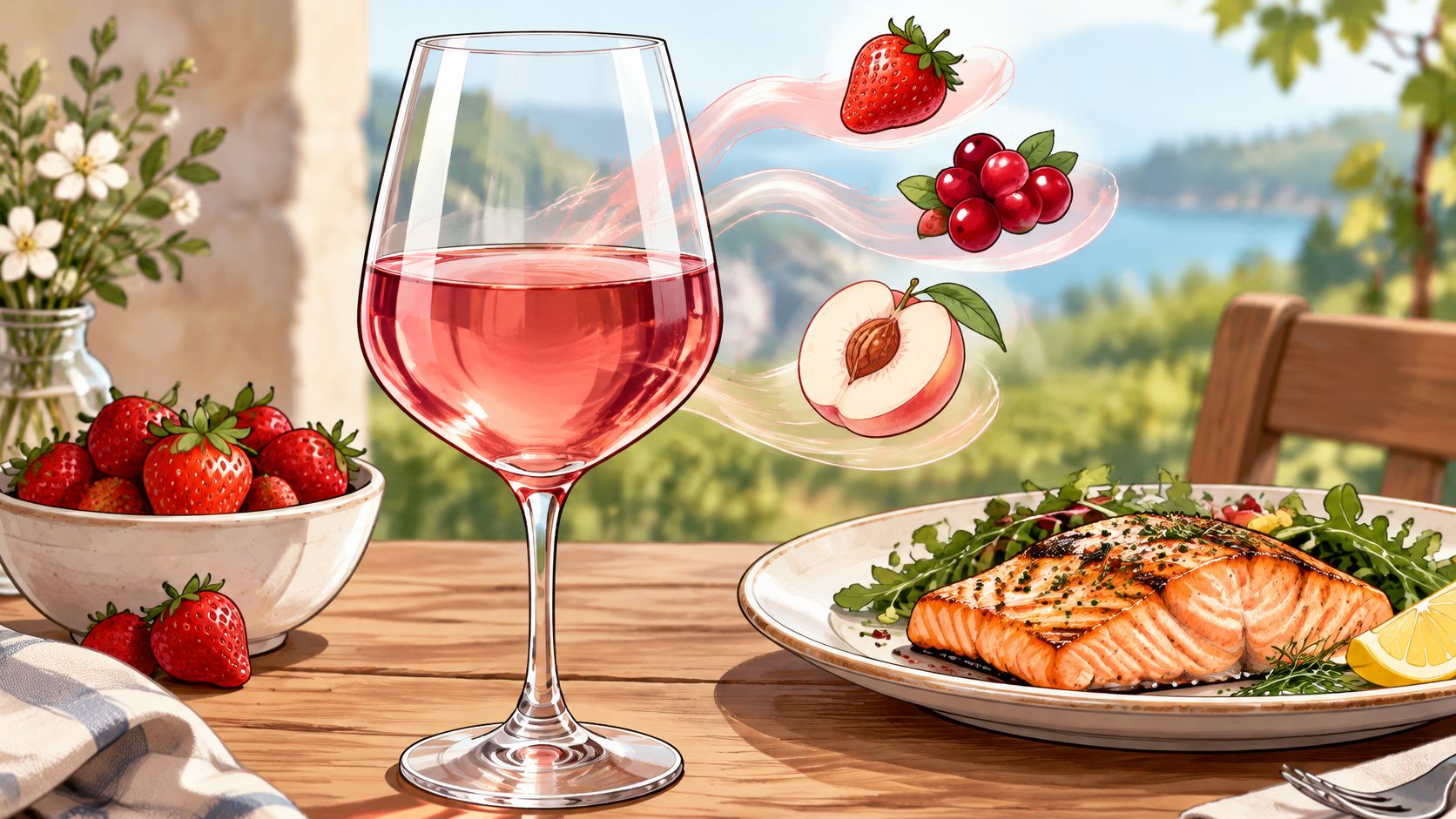
Serve it chilled, but not so cold that the fruit disappears. A very cold glass can make subtle aromas harder to pick out; let it warm slightly if the wine seems closed when first poured. Glassware can also affect what you notice, so if you're curious about choosing a shape, this explainer on why wine glass size matters offers practical context.
Match the wine to the meal
The wine's acidity and red-fruit character make it a flexible partner. Try it with grilled salmon, a chicken salad, sushi or a platter of charcuterie. Its fresh profile can lift richer fish and cured meats, while its light structure won't overwhelm a simple salad.
Roasted vegetables and soft cheeses are natural fits too. For lightly spiced Asian or Middle Eastern dishes, the wine's fruit can sit comfortably alongside fragrant seasoning without requiring a sweet style. If you're serving a more textured rosé, try it with grilled vegetables or a heartier salad rather than limiting it to delicate seafood.
The same approach works across seasons. A chilled glass can suit warm-weather lunches, but savoury notes and enough body for food make Pinot Noir rosé useful at an indoor dinner as well. For more ideas on matching the grape to a meal, see this Pinot Noir food-pairing guide.
For a visual guide to pairing wine with food, you can also watch this short video:
A useful serving habit is to pour a small taste first, then check whether the wine's fruit and acidity show clearly. If it seems muted, give it a little time in the glass rather than assuming the bottle lacks character. And if the meal is still being planned, let the food guide your choice: crisp, delicate wines usually suit cleaner flavours, while a rounder rosé can handle more char and seasoning.
Cool Climate Versus McLaren Vale Style
At the tasting bench, ask for two pours of the same grape and the climate difference can feel almost tactile. Cool-country Pinot Noir rosé usually ripens slowly, so acidity stays bright and the fruit reads as raspberry, cranberry and rose petal. The body tends to be lighter, the finish cleaner, and the wine behaves like a sharp squeeze of lemon over seafood: it frames the dish and keeps your palate awake.
Warm-country fruit moves the other way. In a McLaren Vale expression, strawberry can taste more generous, the mid-palate can feel rounder, and gentle skin contact may add a faint grip. That extra weight suits charred edges, roast capsicum, haloumi and salads with enough dressing to matter.
The seeming contradiction in rosé talk is easier once you separate litres from intent. Overall red and rosé volume can soften while drinkers choose fewer bottles more carefully, which explains why a small category can still feel busy at cellar door. For buying, ignore the category noise and read the style: crisp and restrained for oysters, sashimi or a green salad; ripe and rounded for barbecue smoke, spice and texture.
One label detail matters in South Australia: a McLaren Vale shop can stock Pinot Noir rosé grown outside the Vale, because the grape often prefers cooler sites. Check region and producer before assuming local origin. For a wider map of sites and styles, this guide to Pinot Noir in Australia helps place each bottle before you buy.
How to Choose and Buy With Confidence
Buy for the style you enjoy, not for the palest bottle on the shelf. Colour can hint at how the wine was made, but it doesn't certify quality. Look for producer and regional information, check the vintage if freshness is what you're after, and choose a dry style when you want the most flexibility with food.
A practical way to learn what you like is to compare bottles rather than rely on memory. A tasting pack lets you sample different expressions side by side, while a mixed bundle can help you explore a few styles without committing to a full case of one wine. McLaren Vale Cellars offers curated sample packs, mixed “Half & Half” bundles, a Taste Guarantee for first-time selections, and free delivery Australia-wide on orders over $100. Its Tasting Guide and Wine 101 articles can also help you build confidence as you taste.
Keep the buying decision simple
- Choose by occasion: For delicate seafood or a light lunch, start with a fresher, more restrained style. For grilled dishes or richer salads, try a rounder, fruitier example.
- Check the label: Look at the region, producer and vintage for clues, and favour a dry style if you want the bottle to work across several dishes.
- Taste before you stock up: A sample pack or mixed bundle lets you compare wines and find the profile you'd want to buy again.
- Store for freshness: Keep bottles cool and away from light. Pinot Noir rosé is generally best enjoyed while its fruit is vibrant, rather than held for long-term cellaring.
Repeat shoppers can also explore the Grape-ful Rewards program. Whether you're buying a bottle for tonight or putting together a mixed selection, treat the first purchase as a chance to learn your preference for crispness, fruit weight and savoury detail. That's more useful than trying to decode the colour alone.
Putting It All Together
Pinot Noir rosé is more than a pale warm-weather pour. It's a distinct, food-friendly style whose colour and texture depend on the grape, the climate and the winemaker's choices. The wider rosé category can gain ground even as combined red-and-rosé sales fall, because drinkers are choosing it for lighter, more social occasions rather than replacing every red wine in their lives.
For your next purchase, keep it practical. First, order a sample pack so you can taste different styles rather than guess from the label. Then, compare a cool-climate bottle with a riper South Australian expression and notice how the fruit, acidity and texture shift. Finally, serve your favourite with a specific meal this week, such as grilled salmon, chicken salad or roasted vegetables.
That simple comparison will tell you more than colour alone. Once you've tasted the difference, you can choose the kind of Pinot Noir rosé you want with confidence, whether that means a delicate, crisp bottle or one with riper fruit and more breadth at the table.
McLaren Vale Cellars offers curated wine selections, sample packs and mixed bundles, along with a Taste Guarantee for first-time selections. Explore its rosé options and choose a Pinot Noir rosé to compare with dinner at McLaren Vale Cellars.
Comments (0)
There are no comments for this article. Be the first one to leave a message!