
Let's uncork the captivating story of Australian Pinot Noir. This grape has well and truly found its home in the country's cooler pockets, carving out a reputation for elegance and complexity that rivals the world's best.
Often called the 'heartbreak grape' because it's so tricky to grow, Pinot Noir in Australia is less about heartbreak and more about pure expression. This guide is your backstage pass to understanding everything that makes this grape so special.
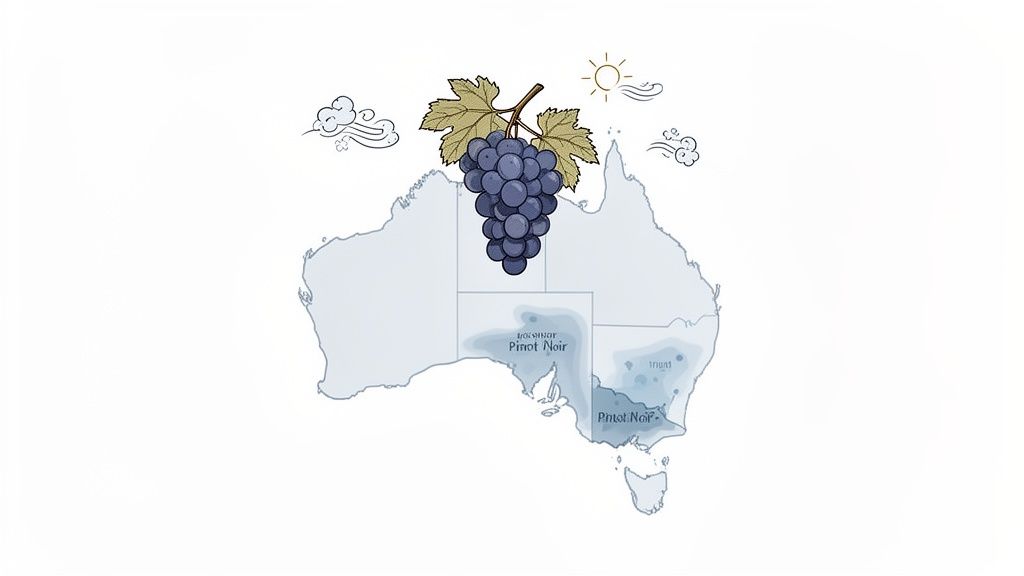
The Allure of Australian Pinot Noir
Think of Pinot Noir not as a difficult grape, but as a transparent lens. It perfectly reflects the unique soil, climate, and soul of the place it’s grown. Unlike big, bold reds that shout with powerful fruit and tannin, Pinot Noir whispers its story. Its thin skins mean lighter-coloured wines with delicate flavours, making it incredibly sensitive to its surroundings.
This sensitivity is exactly why it thrives in very specific parts of Australia. You can't force Pinot Noir to be something it isn't; winemakers have to listen to the vineyard. A slight change in altitude, a subtle shift in soil, or a cool breeze off the ocean can completely change the wine in your glass. This makes exploring Australian Pinot an incredibly rewarding journey.
What Makes It So Special?
The magic of Pinot Noir is in its incredible balance of fruit, earth, and spice. It's a variety that rewards patience, both in the vineyard and in the bottle. The best examples offer a complex perfume that constantly changes in the glass and evolves beautifully with age.
For many wine lovers, Pinot Noir represents the absolute pinnacle of winemaking. Its ability to convey a sense of place—what the French call terroir—is second to none, offering a pure, honest reflection of where it came from.
This guide will take you on a tour of Australia's top Pinot Noir regions, from the pristine island of Tasmania to the rolling hills of the Yarra Valley. Our goal is to cut through the jargon and give you the confidence to explore, choose, and enjoy these stunning wines. We'll break down regional differences, winemaking styles, and food pairings to help you find a bottle you'll absolutely love.
Think of this as your essential companion for understanding:
- Regional Character: Why a Pinot from the Yarra Valley tastes so different from one from the Adelaide Hills.
- Winemaking Influence: How choices like whole-bunch fermentation shape the final flavour.
- Practical Selection: How to pick the right bottle for any occasion, style, or budget.
Australia's Growing Passion for Pinot Noir
Not so long ago, Pinot Noir was just a whisper in the Australian wine scene. It was a grape admired by a dedicated few but completely overshadowed by the country’s big, bold reds. Its journey from the sidelines to centre stage is a great story of patience, discovery, and a collective thirst for something more elegant in the glass.
This incredible rise really kicked off when pioneering winemakers started realising that Australia had these hidden, cool-climate pockets—perfect little homes for this notoriously fussy grape.
The 1990s was the real turning point. Growers and winemakers began looking beyond the traditional warm regions, venturing to higher altitudes, coastal spots, and southerly sites where Pinot Noir could ripen slowly, building its signature complex flavours. It was like a quiet contender suddenly finding its voice, and wine drinkers started paying attention.
This wasn't just a flash in the pan; it was a fundamental shift. As palates began searching for more nuance and subtlety, Pinot Noir was waiting in the wings, ready to deliver. Its graceful, aromatic, and food-friendly style offered a compelling alternative to the powerhouse reds that had long defined Australian wine.
From Niche Grape to National Star
The explosion in Pinot Noir plantings tells a powerful story. It's one of agricultural artistry and changing tastes. Vineyards expanded dramatically as winemakers proved they could not only grow this challenging grape but truly master it, crafting wines that could stand proudly on the world stage.
The numbers paint a fascinating picture. The national vineyard share for Pinot Noir jumped from just 2.2% in 1990 to 4.2% by 2023, even while plantings of some other varieties shrank. This growth was especially explosive during the 1990s, a period when Australia's global share of Pinot Noir production more than doubled, then doubled again to hit 4.9% by 2016.
Today, you'll find Pinot thriving in more regions and across a wider climatic range than ever before, from chilly Tasmania to inland basins. You can read the full research about these findings to see just how far it's come. This expansion is a testament to the growers who took a risk on the "heartbreak grape" and made it sing.
The Key Drivers of Pinot's Popularity
So, what fuelled this incredible rise? A few key things came together at just the right time.
- A Shift in Tastes: Wine drinkers started leaning towards lighter, more aromatic reds with less heavy oak and more vibrant acidity.
- Smarter Farming: Better clonal selection and vineyard management techniques allowed growers to get the absolute best out of their sites.
- Winemaking Finesse: A new generation of winemakers embraced techniques like whole-bunch fermentation, adding savoury complexity and beautiful texture to the wines.
- Global Recognition: Success at major international wine shows put a spotlight on the quality of Pinot Noir in Australia, cementing its reputation.
The rise of Australian Pinot Noir isn't just about planting more vines; it's about a philosophical shift. It represents a move towards expressing place over power, showcasing the delicate and intricate side of Australian winemaking.
Ultimately, the passion for this variety is a story about matching the right grape with the right place. Australian winemakers have proven that with careful site selection and thoughtful craftsmanship, they can produce world-class Pinot Noir that captures the unique spirit of its cool-climate home. It’s a journey that has permanently enriched the Australian wine landscape.
Exploring Australia's Premier Pinot Noir Regions
Australia is a massive country, and tucked away in its cooler corners are little pockets of paradise where Pinot Noir doesn't just grow—it thrives. Each region is like its own little world, with a unique climate, soil, and feel that shapes the final wine. Getting to know these differences is the secret to discovering the incredible variety of Pinot Noir in Australia.
Think of it like comparing different types of cherries. A bright, tart Morello is a world away from a deep, sweet Bing. In the same way, the maritime chill of Tasmania crafts a wine with a completely different personality to one from the high-altitude vineyards of the Adelaide Hills. This tour is your guide to understanding those personalities in the glass.
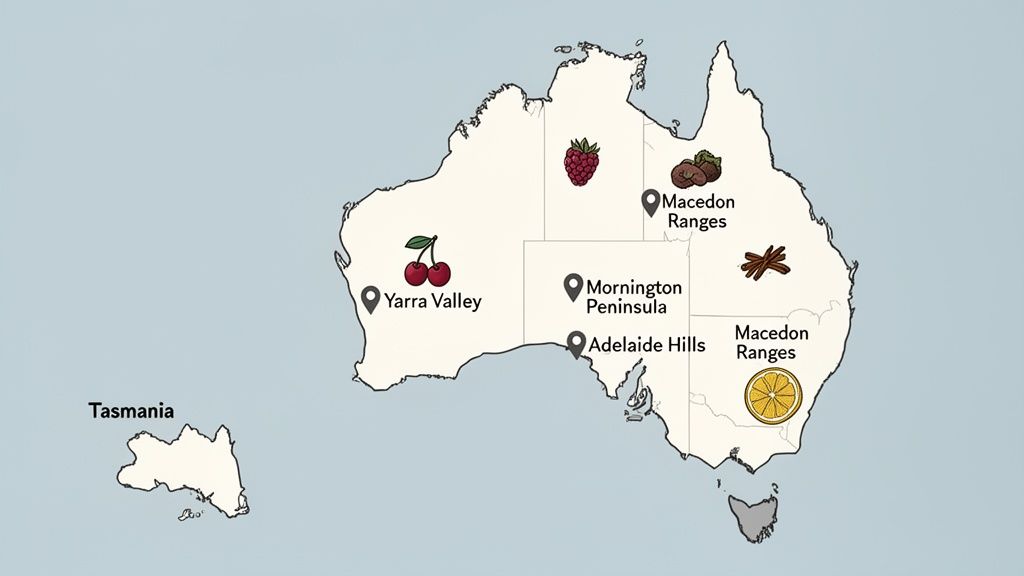
To make sense of it all, let's take a look at the key players side-by-side. This table gives you a quick snapshot of what to expect from each of Australia's top Pinot Noir spots.
A Snapshot of Australia's Key Pinot Noir Regions
| Region | Climate Type | Typical Flavour Profile | Dominant Style |
|---|---|---|---|
| Tasmania | Cool Maritime | Sour cherry, wild strawberry, graphite, florals | Elegant, high-acidity, structured, and age-worthy |
| Yarra Valley | Cool Continental | Red cherry, rose petal, forest floor, subtle spice | Aromatic, fragrant, and silky with fine tannins |
| Mornington Peninsula | Cool Maritime | Black cherry, plum, dark berries, rich spice | Fuller-bodied, powerful, and concentrated with velvety tannins |
| Adelaide Hills | High-Altitude Cool | Cranberry, pomegranate, redcurrant, fresh herbs | Bright, vibrant, and energetic with zesty acidity |
| Macedon Ranges | Cold Continental | Dark cherry, earthy notes, savoury spice, mineral | Tightly wound, powerful, savoury, and built for the long haul |
This is just the starting point, of course. The real fun is in exploring the nuances of each region, so let's dive a little deeper.
Tasmania: The Island of Purity and Intensity
Many people will tell you Tasmania is Australia's absolute pinnacle for Pinot Noir, and they've got a strong case. Surrounded by the cool Southern Ocean, the island has a long, slow ripening season that lets flavours build incredible intensity while holding onto a zing of natural acidity.
The result is wines that are pristine, structured, and full of life. They often burst with bright red fruits like cherry and raspberry, all held together by a firm acidic spine that gives them amazing energy and the ability to age beautifully. You’ll often find complex savoury notes, too, from wild herbs to violets.
- Key Characteristic: Racy acidity and bright, pure fruit.
- Expect to Taste: Sour cherry, wild strawberry, and a distinct mineral or graphite edge.
- Why You'll Love It: If you enjoy elegant, high-energy wines that can evolve beautifully in the cellar.
Yarra Valley: The Home of Fragrance and Finesse
Just an hour's drive from Melbourne, the Yarra Valley is one of our most historic and celebrated wine regions. It's a diverse place with vineyards at different altitudes, but the common thread for its Pinot Noir is aromatic complexity and a silky texture.
Yarra Valley Pinot tends to be more about perfume and red fruits than raw power. Think of a beautiful bouquet of rose petals, red cherry, and a hint of forest floor. The tannins are typically super fine and supple, creating a wine that feels graceful and seamless on the palate.
The hallmark of Yarra Valley Pinot Noir is its aromatic lift and elegance. These are wines that charm you with their perfume before you even take a sip, showcasing a delicate balance of fruit, spice, and earthy undertones.
Mornington Peninsula: Coastal Power and Structure
Jutting out into the sea south of Melbourne, the Mornington Peninsula is all about that coastal influence. The ocean breeze protects the vines from getting too hot, allowing the grapes to ripen perfectly while developing deep, concentrated flavours.
Mornington Pinots are often a bit richer and more powerful than their Yarra Valley cousins. They lean towards darker fruits like black cherry and plum, backed by a firm structure and plush, velvety tannins. It’s this combination of generosity and architecture that makes them so compelling.
Adelaide Hills: Elevation and Brightness
Nestled in the Mount Lofty Ranges east of Adelaide, the Adelaide Hills is defined by its altitude. The elevation brings cool nights and sunny days—the perfect recipe for growing vibrant, aromatic Pinot Noir.
Wines from here are known for their bright, fresh character. They’re typically lighter in body, with zesty acidity and crunchy red fruit flavours like cranberry and pomegranate. This makes them incredibly easy to drink and refreshing, a great choice if you prefer a more energetic, less brooding style of Pinot.
Macedon Ranges: The Coolest Frontier
Welcome to Australia's coldest mainland wine region. The Macedon Ranges has vineyards planted at seriously high elevations, and making wine here is not for the faint of heart. But for those who take on the challenge, the rewards are immense.
The wines are often tightly wound and highly structured, with intense flavours and a powerful mineral backbone. They can take a few years to really open up, but with a bit of patience, they evolve into some of the most complex and long-lived Pinots in the country, revealing layers of spice, earth, and dark fruit.
- Key Characteristic: High-altitude coolness, leading to structured and savoury wines.
- Expect to Taste: Dark cherry, earthy notes, and a firm, mineral-driven finish.
- Why You'll Love It: If you appreciate powerful, age-worthy wines with deep complexity.
While these regions are the heartland of Australian Pinot, you can find exciting examples popping up elsewhere. Even in traditionally warmer zones, clever site selection is producing fantastic results. To see how that works, you can explore the rising stars of McLaren Vale Pinot Noir, where specific vineyard locations make all the difference.
Ultimately, the best way to find your favourite style of Pinot Noir in Australia is to get out there and start exploring these diverse regions, one glass at a time.
How Winemaking Shapes Your Favourite Pinot Noir
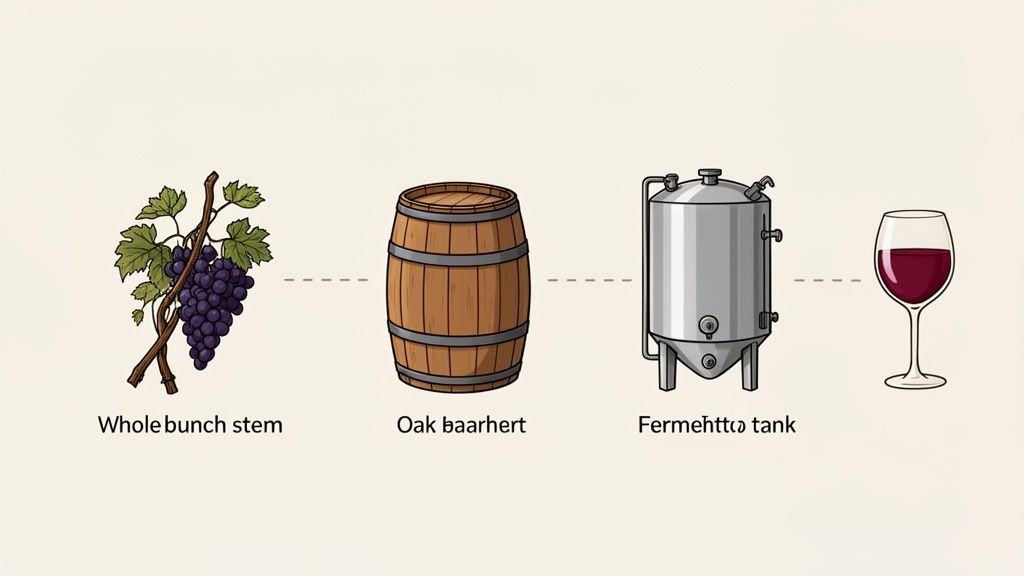
Once the grapes leave the vineyard, their journey is far from over. The winery is where the real magic happens, with the winemaker stepping in as both an artist and a scientist. Every decision they make from here on out will shape the final flavour, texture, and aroma of the Pinot Noir you pour into your glass.
Getting your head around a few of these techniques is the key to decoding wine labels and predicting the style inside the bottle. It’s the difference between crossing your fingers and hoping for the best versus confidently choosing a wine you know you’ll love, whether you’re after something bright and pure or complex and layered.
The Whole Bunch Question
One of the most talked-about techniques in the world of Pinot Noir is whole-bunch fermentation. You might see this on a label or in a tasting note, and it refers to a pretty simple, yet game-changing, choice. Instead of de-stemming all the grapes, the winemaker throws a portion of the bunches into the fermenter intact—stems and all.
Think of the stems as a 'spice rack' for the wine. They add a whole different dimension of flavour and texture that you just can’t get from the grapes alone, introducing savoury, herbal, and peppery notes that cut through Pinot’s classic red fruit character beautifully.
Whole-bunch fermentation isn't just about flavour; it's about structure. The stems create space within the fermenting grapes, allowing for a slower, gentler extraction of tannins and resulting in a wine with a distinct, silky texture and aromatic lift.
Now, this isn't a technique for the faint of heart. It demands skill and perfectly ripe stems, because unripe ones can leave the wine with harsh, green flavours. But when a winemaker nails it, the result is a mesmerising complexity that turns a simple fruit-forward wine into something truly special.
To get a better sense of the big picture, you can follow our step-by-step guide on how red wine is made and see where this all fits in.
The Artful Use of Oak
Oak barrels are another essential tool in the winemaker's kit, but with Pinot Noir, the mantra is always "less is more." Unlike a big, bold Shiraz that can soak up plenty of new oak flavour, Pinot's delicate personality demands a much lighter touch. The goal isn’t to blast it with vanilla and toast, but to gently support and elevate what’s already there.
I like to think of an oak barrel as a picture frame for a beautiful piece of art. The right frame enhances the painting without ever stealing the show. In the same way, oak should add a whisper of complexity, build structure, and soften the tannins, letting the wine’s true character shine through.
Australian winemakers almost exclusively use French oak for their Pinot Noir, which is prized for its finer, more elegant spice notes. The key decisions they juggle are:
- Percentage of New Oak: Most top producers use only a small amount of new barrels—often just 10-30%. The rest are older, 'neutral' barrels that won't impart strong flavours.
- Barrel Size: Bigger is often better for Pinot. Large formats like puncheons (500 litres) mean less wine is in direct contact with the wood, resulting in a more subtle oak influence.
- Time in Barrel: The length of maturation, typically 10 to 18 months, helps all the flavours knit together and softens the wine’s texture.
These careful, deliberate choices ensure that the stunning perfume and vibrant fruit of Pinot Noir in Australia remain the star of the show. Understanding these winemaking decisions gives you a whole new way to appreciate every bottle, recognising the craft that goes into creating its unique personality.
How to Choose Your Perfect Bottle of Australian Pinot Noir
Now that you've got a mental map of Australia's top Pinot Noir spots, let's turn that knowledge into action. Picking the right bottle isn’t about finding a single "best" one; it's about finding the perfect match for your mood, your meal, or a special moment.
Think of it as a bit of fun detective work. The first question to ask yourself is simple: what kind of wine experience are you after tonight? Your answer will instantly cut through the noise and point you in the right direction.
Match Your Mood to a Region
Here's your cheat sheet for navigating the wine aisle. Each region has a distinct personality, making it easy to find a bottle that fits the bill.
-
For a Bright and Casual Evening: If you're after something vibrant, aromatic, and just plain delicious, look no further than the Adelaide Hills. These wines are generally lighter-bodied with heaps of bright red fruit flavours. They're incredibly versatile, perfect for a relaxed get-together or a simple weeknight dinner.
-
For an Elegant and Fragrant Experience: When the occasion calls for a bit of finesse, a bottle from the Yarra Valley is a brilliant choice. Its classic silky texture and complex floral and red fruit notes create a sophisticated wine that sings alongside more delicate dishes.
-
For a Rich and Powerful Statement: Craving a Pinot with a bit more muscle and concentration? The Mornington Peninsula is where you'll find it. These wines deliver darker fruit profiles and a velvety texture, making them ideal for a special dinner or for anyone who loves a fuller-bodied red.
-
For a Complex and Age-Worthy Bottle: If you're marking a special occasion or looking to add a gem to your cellar, Tasmanian Pinot Noir is a true world-class contender. Its brilliant acidity and structured backbone promise a wine that will evolve beautifully, revealing incredible layers of complexity over time.
Understanding Price and What It Means
As you explore Australian Pinot Noir, you’ll notice the prices can vary quite a bit. This isn't random; it’s a direct reflection of the painstaking effort that goes into growing this notoriously fussy grape.
A higher price on a bottle of Pinot Noir often points to things like older vines, lower yields, hand-harvesting, and the use of expensive French oak barrels. These aren't just buzzwords; they are real factors that build greater concentration, complexity, and the ability to age—representing the pinnacle of a winemaker's craft.
Here’s a rough guide to what you can expect for your money:
- Entry-Level (Under $30): Expect fresh, fruit-forward wines made for immediate enjoyment. They’re a fantastic way to get a feel for a region’s signature style without breaking the bank.
- Mid-Range ($30-$50): This is where you start to find more complexity. These wines often come from specific vineyards or showcase more hands-on winemaking, like whole-bunch fermentation or the influence of quality oak.
- Premium ($50+): These are typically single-vineyard expressions or a winery’s flagship bottle. You can expect exceptional balance, intensity, and the structure to age gracefully for years to come.
Ultimately, choosing the right bottle is all about finding that sweet spot where style, occasion, and budget all line up. For those looking to share their passion or find a thoughtful present for a fellow wine lover, exploring some of the best wine gifts in Australia can offer some wonderful inspiration. It’s all part of the joy of discovery.
Pairing Food with Australian Pinot Noir
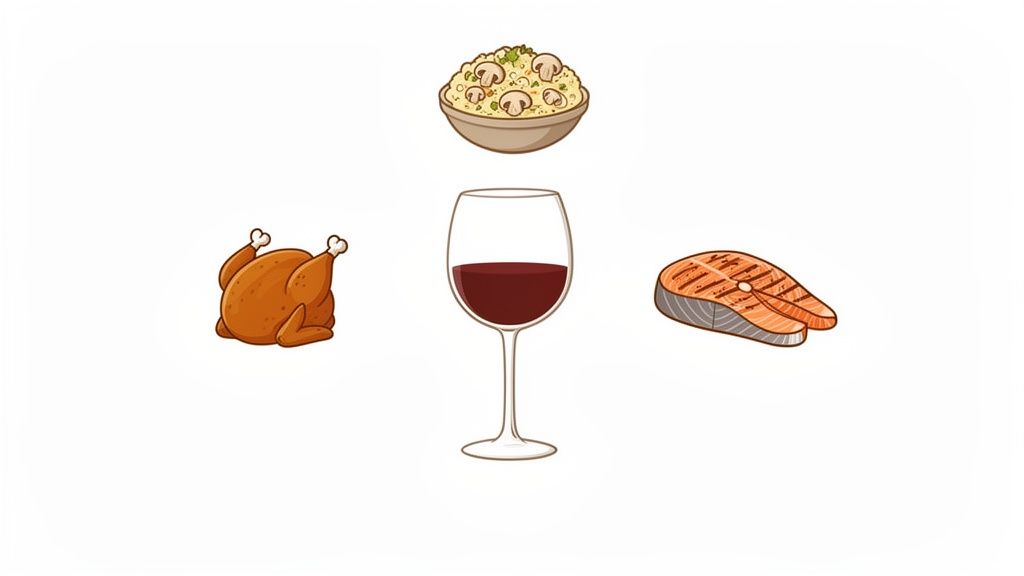
There’s a good reason Pinot Noir is often called the ultimate food-friendly red. Its bright acidity acts like a squeeze of lemon, cutting through rich dishes and lifting flavours, while its softer tannins mean it won’t overpower more delicate meals. This versatility makes Australian Pinot Noir a champion at the dinner table, and its abilities go far beyond the classic duck pairing.
The real secret is to match the weight of the wine to the weight of the food. Think of it as a dance—you want partners of a similar size. Lighter, more aromatic Pinots are perfect for elegant dishes, while the richer, more structured styles can handle much bolder flavours. It's a simple idea, but it gives you the freedom to experiment and create some truly memorable food and wine moments.
Lighter Styles and Classic Pairings
For those more delicate and fragrant styles of Pinot Noir in Australia, often from regions like the Yarra Valley or Adelaide Hills, you'll want food that complements their elegance without stealing the show. Earthy flavours are a brilliant starting point, as they beautifully echo the subtle forest-floor notes found in the wine.
- Roast Chicken: A perfectly roasted chook with herbs is a timeless match. The wine's acidity cuts through the richness of the crispy skin, while its red fruit notes are a perfect partner for the savoury meat.
- Mushroom Risotto: The earthy, umami character of mushrooms is a dream pairing, creating a seamless and deeply satisfying combination that just works.
- Grilled Salmon: Pinot Noir is one of the few reds that works beautifully with richer fish. Its bright acidity and gentle tannins won’t clash with the salmon’s delicate texture, making for a refreshing change.
You'll also find that Aussie Pinot is a great friend to many various pasta dishes, especially those with tomato or mushroom-based sauces.
Bolder Styles and Hearty Dishes
When you open a more structured and powerful Pinot Noir, perhaps from Tasmania or the Mornington Peninsula, you can be a bit more adventurous. These wines have the concentration and tannin backbone to stand up to richer, more intensely flavoured meals.
The classic pairing of Pinot Noir with duck is famous for a reason. The wine's acidity slices through the duck's fatty richness, while its complex cherry and spice notes enhance the flavour of the gamey meat, creating a perfect balance.
Don't stop there, though. Think about tender lamb chops, game birds like quail, or even a hearty beef stew. The wine's complexity will shine alongside these robust dishes.
For a deeper dive into specific matches, check out our complete Pinot Noir food pairing guide, which covers everything from classic combinations to unexpected delights.
Your Top Pinot Noir Questions Answered
To wrap things up, let's tackle some of the most common questions we get about Australian Pinot Noir. Think of this as a quick-fire round to clear up any lingering thoughts and send you off feeling like a true Pinot expert.
What Is the Best Region for Pinot Noir in Australia?
This is the million-dollar question, and the honest answer is: there’s no single "best" one. It all comes down to what you love in a glass of wine.
If you're chasing elegant, perfumed styles bursting with bright red fruits, you’ll likely fall for the Yarra Valley or Adelaide Hills. Their wines are often fragrant, silky, and incredibly pretty. But if you prefer more muscle, complexity, and darker fruit flavours with a savoury, earthy edge, then Tasmania and the Mornington Peninsula are producing some truly world-class, powerful examples.
The only way to find your best is to get tasting. Grab a bottle from a few different places and see which style speaks to you.
Can Australian Pinot Noir Be Aged?
Absolutely. Not only can it be aged, but a well-chosen bottle can transform into something truly magical. High-quality Pinot Noir in Australia, especially from top producers in cool-climate spots like Tasmania, Mornington Peninsula, and the Macedon Ranges, has fantastic cellaring potential.
A great bottle can evolve beautifully for 5-15 years, and sometimes much longer. Over time, that initial burst of fresh fruit softens, making way for complex secondary notes of forest floor, mushrooms, and exotic spice. To pick a bottle for the cellar, look for one with a solid backbone of acidity and structure.
One of the great joys of cellaring Pinot Noir is watching it transform. The vibrant primary fruit of its youth gradually gives way to a more profound, earthy complexity, offering a completely different and rewarding tasting experience years down the line.
Is Pinot Noir a Sweet or Dry Wine?
You can confidently expect virtually all still Pinot Noir to be a dry red wine. "Dry" simply means that during winemaking, the natural grape sugars have been fully converted into alcohol, leaving little to no sweetness behind.
Now, the wine might not be sweet, but its delicious, ripe fruit flavours—think cherry, raspberry, and strawberry—can sometimes trick your brain into sensing a hint of sweetness. It’s a delightful illusion, but rest assured, the wine itself is dry.
Why Is Pinot Noir More Expensive?
Ah, the "heartbreak grape." Pinot Noir has earned this nickname because it’s a notoriously fussy and difficult grape to grow. It’s thin-skinned, making it a diva in the vineyard—highly susceptible to frost, rot, and sunburn. It demands a cool, stable climate to truly shine.
These farming headaches, combined with the fact that it naturally produces lower yields than other grapes, mean there's less of it to go around. Add in the high demand for its elegant, complex profile, and you have the perfect recipe for a premium price tag.
Ready to explore the diverse and elegant world of Australian Pinot Noir? At McLaren Vale Cellars, we've curated a stunning collection from Australia's best regions. Whether you're looking for a vibrant Adelaide Hills bottle or a complex Tasmanian classic, find your perfect match today.
Discover Our Australian Pinot Noir Collection at McLaren Vale Cellars


Comments (0)
There are no comments for this article. Be the first one to leave a message!