
You're standing in front of the white-wine shelf with dinner already planned, the afternoon is warm, and two bottles keep pulling your eye: Pinot Gris and Chardonnay. One looks like the safe, crisp choice. The other could be anything from bright and mineral to rich and creamy. The core question isn't which grape wins. It's which bottle will suit the food, the weather and the people drinking it tonight.
For South Australian shoppers, McLaren Vale makes the comparison especially useful. The region is famous for reds, but its white wines show how site and winemaking can push a variety in different directions. Use the table below as a fast starting point, then read the label for the clues that decide whether you're getting a fresh aperitif wine or something built for the table.
| Attribute | Pinot Gris | Chardonnay |
|---|---|---|
| Typical impression | Crisp, aromatic and medium-bodied | Ranges from lean and mineral to rich and creamy |
| Common flavours | Pear, apple, citrus pith, stone fruit and light spice | Citrus, apple, melon, fig, toast and creamy lees notes |
| Texture | Soft, sometimes lightly oily | Fresh and taut, or layered and creamy |
| Acidity | Usually bright, especially from cooler sites | Can be high in cool regions or softer and fuller in warmer areas |
| Winemaking clues | Often unoaked and made for early drinking | Oak, lees contact and fermentation choices can add weight |
| Best occasions | Seafood, salads, warm days and casual drinking | Roast chicken, creamy dishes, richer seafood and special meals |
What This Pinot Gris vs Chardonnay Question Is Really Asking
A customer comes into a cellar door before lunch, points at two chilled bottles and asks, “Which one is easier to drink?” They usually don't want a lecture on grape genetics. They want to know whether the wine will work with prawns, whether it'll feel heavy in the heat, and whether their Chardonnay-shy friend will enjoy it.
That's why the Pinot Gris vs Chardonnay decision should start with the occasion, not the variety name. Pinot Gris often makes sense when you want freshness, aromatic lift and a clean finish. Chardonnay earns its place when the meal has more richness, the evening is cooler or the drinkers want a wine with extra texture.
The quickest rule: choose the wine that matches the weight of the meal and the mood of the table.
McLaren Vale is a handy lens because the region puts fresh white styles beside fuller South Australian examples. A Pinot Gris can provide a bright alternative to the region's deeper reds, while Chardonnay can move from restrained and citrus-driven to generous and oak-shaped. The variety gives you a starting point, but the bottle's region, alcohol, oak treatment and residual sugar tell you what will arrive in the glass.
You should also think about the drinker. Someone who reaches for Sauvignon Blanc, sparkling wine or lighter aperitif styles will often find Pinot Gris an easy fit. Someone who likes texture, roasted flavours or creamy pasta may prefer Chardonnay, particularly if the bottle has been fermented or matured with oak and lees.
The practical answer is simple. Pinot Gris is the more direct choice for fresh, immediate drinking. Chardonnay is the more flexible choice when you need the wine to handle a wider range of food and texture. Neither is automatically better, and choosing by grape alone is how people end up with a technically sound bottle that doesn't belong on the table.
Getting to Know Pinot Gris and Chardonnay
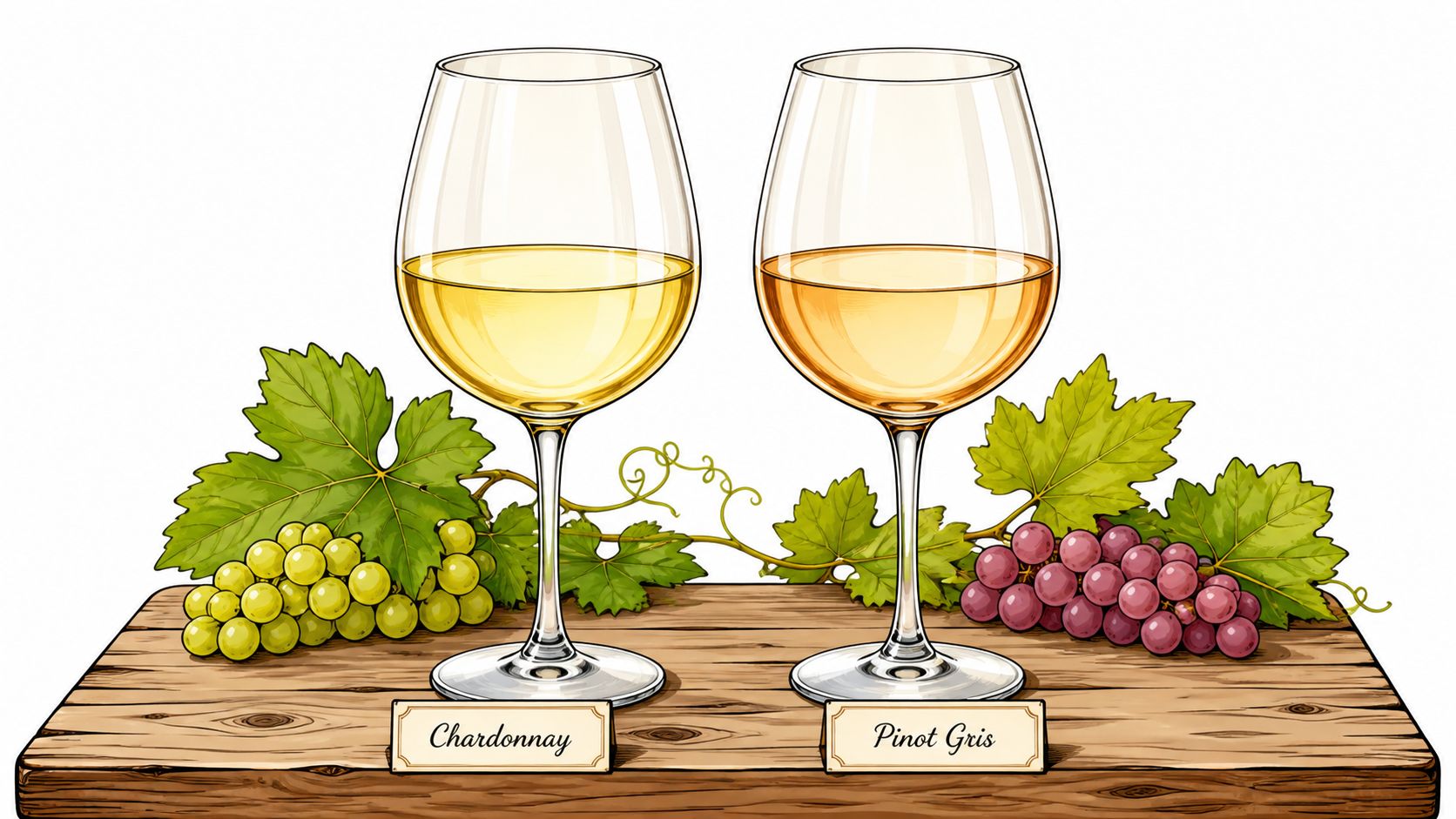
Start with Pinot Gris, also labelled Pinot Grigio. They're names for the same grape, but the label can hint at the intended style. “Pinot Grigio” often signals a brisk, light-footed approach, while “Pinot Gris” can suggest a rounder, more textural wine. That isn't a strict rule, so use it as a clue rather than a guarantee.
In the glass, Pinot Gris commonly brings pear, apple, stone fruit, citrus pith and gentle spice. Cooler-climate examples tend to feel bright and stony, with enough aromatic character to stay interesting without becoming loud. Some bottles are lean and brisk. Others carry a soft, lightly oily texture that gives the wine more presence than a very simple white.
Chardonnay works differently. It's a stylistic shapeshifter, which is both its strength and the reason shoppers find it confusing. A cool-climate Chardonnay may taste taut, citrusy and mineral, while a warmer or more oak-influenced example can show riper fruit, toast, cream and a broader finish.
Pinot Gris in practical terms
Choose Pinot Gris when you want the wine to feel fresh, aromatic and uncomplicated, particularly with lighter food. It's a strong fit for seafood, salads, sushi and dishes with herbs or gentle spice. The style can still have body, but it usually avoids the obvious vanilla, toast or buttery character shoppers associate with heavily handled Chardonnay.
For a deeper look at the style in the glass, the guide to Pinot Gris wine taste is useful before you shop. It helps translate broad descriptions into the flavours and textures you're likely to notice.
Chardonnay in practical terms
Chardonnay gives you a wider spread of choices. Unoaked versions can be brisk and clean, while barrel fermentation, oak maturation and lees work can add creaminess, toast and a more rounded palate. That doesn't mean Chardonnay always tastes oaky. It means the grape takes cellar decisions seriously, and those decisions shape the finished wine.
If you're buying for a mixed group, Chardonnay can be the safer choice when the meal moves from seafood to roast chicken or a creamy main. If you're buying for a hot afternoon and want an immediately refreshing glass, Pinot Gris is usually the sharper call.
Flavour Body and Texture Compared
The choice becomes clear here. Pinot Gris tends to occupy a fairly focused lane, while Chardonnay covers a much broader stylistic range. The comparison isn't about declaring one grape superior. It's about recognising whether you want aromatic freshness and soft lift or a white wine with more room for weight, oak and savoury development.
Pinot Gris usually lands around medium-bodied, with pear, apple and stone-fruit flavours supported by bright acidity. Its texture can be softer than the flavour profile suggests, sometimes with a gently oily feel. That oiliness isn't sweetness. It's a mouthfeel effect shaped by the wine's alcohol, residual sugar, phenolics and acidity.
Chardonnay can be lean and citrus-driven, particularly from cooler sites, or fuller and riper from warmer regions. Oak and lees contact may add cream, toast and savoury depth. A good Chardonnay can feel layered without tasting sweet, and a lean one can be as refreshing as any other white.
| Attribute | Pinot Gris | Chardonnay |
|---|---|---|
| Aroma | Pear, apple, stone fruit, citrus pith and light spice | Citrus, apple, melon, fig, toast and lees |
| Body | Usually medium-bodied | From light and taut to full and broad |
| Acidity | Often bright and refreshing | Higher and more restrained in cool sites, rounder in warm styles |
| Texture | Soft, sometimes oily | Crisp, creamy, waxy or layered depending on technique |
| Oak impact | Usually subtle or absent | Can range from none to obvious toast and spice |
| Finish | Clean, lightly spicy and fruit-led | Mineral and brisk, or creamy and persistent |
Texture matters more than tasting-note poetry
If you dislike wines that feel oily or broad, look for a Pinot Gris with restrained alcohol and residual sugar, plus higher acidity. AWRI analysis of commercial Pinot Gris and Pinot Grigio linked viscosity and oiliness particularly with residual sugar, while alcohol also contributed to oiliness and hotness. Higher acidity generally reduces the perception of a viscous texture. The AWRI research on Pinot Gris texture gives the technical background without reducing the wine to a flavour checklist.
For Chardonnay, ask whether you want freshness or creaminess. Barrel-fermented Chardonnay is often recognised by a creamy in-mouth texture, while Pinot Gris is more associated with oiliness. That distinction matters at dinner. Creaminess can support roast chicken and sauce, while a fresher Gris can clear the palate after each bite of seafood or salad.
Buy by mouthfeel, not colour. Two pale wines can have completely different weight and finish.
A simple home test makes the contrast obvious. Pour both wines into identical glasses, taste them with and without food, and note which one changes more at the table. If you want to make the exercise social, this guide to how to host a blind wine tasting will help you organise the tasting without letting the labels steer everyone's judgement.
How Region and Winemaking Shape Each Wine
The grape name doesn't tell you enough. Climate, site and cellar work decide whether the wine feels lean, ripe, creamy or mineral. Wine Australia characterises Pinot Gris as particularly suited to cool climates, where it generally produces medium-bodied wines with vibrant fruit and stony or mineral notes. Chardonnay is more adaptable across Australian regions, shifting from lighter-bodied and higher in acidity in cool areas to fuller-bodied and riper in warm districts. Wine Australia's variety guide sets out that regional contrast clearly.
The Adelaide Hills, Tasmania and Mornington Peninsula are useful reference points for cooler-climate whites. Pinot Gris from these sorts of sites can show a tighter frame, lively acidity and mineral detail. Chardonnay from the same broad climate category may feel more restrained, with citrus and apple notes, a firmer finish and the balance needed for sparkling or age-worthy styles.
McLaren Vale sits in a warmer South Australian context, so the producer's choices matter. Pinot Gris can be picked and handled to preserve freshness, then made without obvious oak for early drinking. That gives it a useful role on a warm day, especially when the table needs a white that won't compete with prawns, salads or grilled vegetables.
Read the back label for the winemaking signal
A Chardonnay label mentioning barrel fermentation, oak maturation or lees contact points towards more texture and savoury complexity. If the label stresses unoaked freshness, citrus or cool-climate fruit, expect a cleaner, more linear style. Don't treat these terms as quality rankings. They're style indicators.
The same logic applies to Pinot Gris. Aromatic, crisp and fresh language usually points to a lighter, immediate-drinking bottle. Words such as rounded, textural or rich suggest a wine with more weight, often influenced by alcohol, residual sugar or phenolic structure rather than oak.
If you're curious about the specific effect of oak, the guide to how French oak affects the taste of white wine is a useful companion when comparing Chardonnay labels. For a South Australian visit, use the same thinking beyond the bottle. A little planning can help you plan your perfect vineyard day around the styles you actually enjoy, rather than trying every tasting flight without a clear preference.
Food Pairings for Every Occasion
Pairing starts with the dish's weight, not a rigid list of approved foods. Pinot Gris is usually the better partner for meals built around freshness, herbs, delicate proteins and spice. Chardonnay steps forward when the food brings roast flavour, cream, butter, richer seafood or aged cheese.
Light lunches and warm afternoons
Pour Pinot Gris with oysters, prawns, sushi, grilled fish, Vietnamese herbs or a salad with citrus dressing. Its aromatic lift gives the food room, while its acidity keeps the mouth feeling refreshed. It also works well with soft cheeses, especially when you want the wine to stay lively rather than creamy.
A crisp Pinot Gris can handle chilli and aromatic spice better than a heavy, oak-led Chardonnay because it won't add another layer of toast and richness. That's the bottle I'd reach for when lunch is outdoors, the food is shared and nobody wants to spend the afternoon analysing the wine.
Richer weeknight mains
Chardonnay makes more sense with roast chicken, pork, creamy pasta, chicken schnitzel with lemon, baked fish with butter sauce or lobster. An unoaked or lightly oaked Chardonnay keeps the pairing fresh. A richer, barrel-influenced bottle can stand beside cream, roasted skin and savoury sauces without disappearing.
The mistake is choosing the richest Chardonnay only because the meal is substantial. Heavy oak can flatten delicate seafood, while a lean Chardonnay may feel too slight beside a buttery sauce. Match the wine's texture to the sauce, then consider whether you want contrast or reinforcement.
After you've made the first pour, notice how the food changes the wine. The video below is a useful visual prompt for thinking about the role of each bottle at a shared meal.
Cheese boards and grazing tables
Pinot Gris suits soft, fresh and mildly salty cheeses, as well as fruit, nuts and lighter charcuterie. Chardonnay is the stronger match for aged hard cheeses, roast chicken terrine and richer spreads, particularly when the wine has enough acidity to prevent the board from feeling greasy.
Pairing rule: fresh food usually favours Pinot Gris, while roasted, creamy or aged flavours usually favour Chardonnay.
For a mixed platter, serve Pinot Gris first with the lighter items, then move to Chardonnay as the cheese, pastry and roasted components become more intense. That gives each wine a job and stops the boldest bottle from overwhelming the opening courses.
Buying Smart Price Aging and What to Look For
Don't assume the more expensive bottle automatically tastes better. Spend more when you want site detail, better texture, oak integration or ageing potential, not just because the label says Chardonnay. Entry-level Pinot Grigio can be exactly right for a casual lunch, while a carefully made Pinot Gris may justify a higher price through concentration and mouthfeel.
Chardonnay gives you more room to see where additional spend goes. A premium bottle may show better balance between fruit, acidity and oak, with lees-derived creaminess that feels integrated rather than heavy. Cooler South Australian Chardonnay can also offer the structure to develop with time, whereas most fresh Pinot Gris and Pinot Grigio is designed for earlier drinking.
The national production base explains part of that difference. University of Adelaide data shows Chardonnay made up approximately 15% of Australia's winegrape bearing area in 2023, compared with about 3% for Pinot Gris, as reported through the University of Adelaide Wine Economics Research Centre's vineyard data. Pinot Gris is growing quickly, though. Australian 2024 vintage reporting recorded a 27% increase for Pinot Gris/Grigio, making it the fastest-growing major white variety after Chardonnay, according to Wine Australia's vintage reporting.
A repeatable shelf check
Scan the label in this order:
- Region: Cooler-climate language often points towards tighter acidity and restrained fruit. Warmer-region wording can signal greater ripeness and body.
- Winemaking: Look for unoaked, barrel-fermented, oak-matured or lees-aged cues. These terms help predict texture.
- Alcohol and sugar: Technical details can help you anticipate weight, warmth and oiliness, particularly in Pinot Gris.
- Closure and vintage: A sound closure protects freshness, while the vintage gives context for how developed the wine may be.
- Drinking window: If the producer recommends early drinking, follow that advice. If the Chardonnay has clear structure and restraint, it may reward patience.
For a curated look at premium Australian Chardonnay, browse the best Australian Chardonnays you can buy online right now. The useful question isn't “What's the most expensive bottle?” It's “What change in texture, balance or regional character am I paying for?”
Which One Should You Choose Tonight
Choose Pinot Gris when the day is warm, the meal is light or the drinker prefers aromatic, easy-going whites. It's the call for seafood, sushi, salad, soft cheese and casual outdoor drinking. Pick a fresh, bright style when you want the wine to refresh rather than take over.
Choose Chardonnay when dinner includes roast chicken, pork, creamy pasta, richer seafood or aged cheese. It's also the better choice for drinkers who value texture and want a wine that can move from citrus and mineral flavours into cream, toast and savoury depth.
Reach for a premium McLaren Vale Chardonnay when the occasion gives the wine room to be noticed. Serve it with a substantial meal, pour it for people who enjoy texture, and don't bury it under aggressively spicy food. A carefully made bottle can make the wine part of the conversation rather than just another drink on the table.
Shelf-side verdict: Pinot Gris for freshness and immediacy. Chardonnay for richness, texture and range.
If you're still stuck, follow the weather first. Warm afternoon and simple food means Pinot Gris. Cooler evening and a cooked main means Chardonnay. That decision will serve you better than choosing the variety with the most impressive reputation.
Common Questions Shoppers Ask After the Recommendation
Pinot Gris and Pinot Grigio are the same grape. The different names often suggest different stylistic intentions, but the producer's region and winemaking choices matter more than the wording alone.
Chardonnay doesn't always taste oaky. Unoaked Chardonnay can be bright, citrusy and clean, while oak and lees work add toast, cream and weight.
If a guest only drinks one of the two, match the food to their preference rather than forcing a switch. For leftovers, reseal the bottle, keep it chilled and drink it while the fruit and acidity still feel fresh.
McLaren Vale Cellars offers South Australian Pinot Grigio, Pinot Gris and Chardonnay alongside sample packs, mixed bundles and wine guides that make comparing styles easier. Visit McLaren Vale Cellars, choose the bottle for tonight's food and weather, and let the occasion make the final call.

Comments (0)
There are no comments for this article. Be the first one to leave a message!