
So, what does Pinot Gris wine actually taste like? The short answer is: it’s a chameleon. This one grape can be zesty and crisp one moment, and rich and spicy the next. It’s a bit of a dual personality, really. Think of it as a versatile actor that can play two very different roles: the light, refreshing hero (Pinot Grigio) or the complex, thoughtful character (Pinot Gris). Often, your first clue to the style inside is the name on the bottle.
Understanding the Taste of Pinot Gris Wine
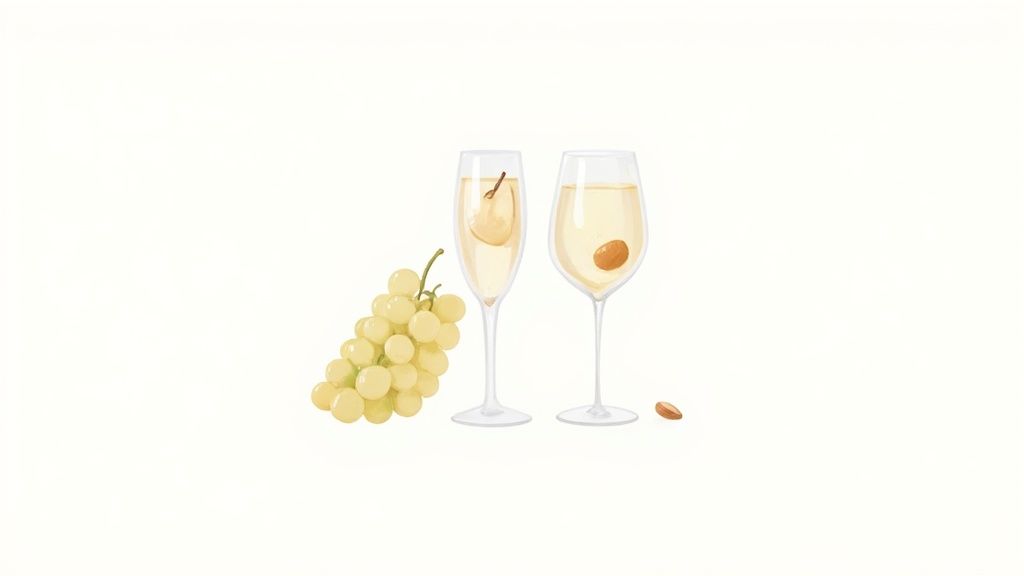
To really get your head around Pinot Gris, it helps to think of it as a spectrum. This single grape can produce wines that are worlds apart, all depending on where it’s grown and how the winemaker decides to treat it in the cellar. As I mentioned, the name itself is a massive hint.
When you see “Pinot Grigio” on a label, especially from Italy, you’re almost always in for a light-bodied, dry white wine with a serious zip of acidity. It's the perfect drop for a sunny afternoon—clean, simple, and incredibly refreshing.
On the other hand, a bottle labelled “Pinot Gris,” particularly from places like Alsace in France or here in Australia, signals a richer, more textural experience is on the way. These wines are typically fuller-bodied, more aromatic, and can even have a subtle touch of sweetness.
Primary Flavour Profiles
The heart of Pinot Gris revolves around orchard and stone fruits, but the intensity and specific fruit flavours vary dramatically between the two main styles. Nailing these primary notes is the first step to figuring out which camp you’re in.
-
Crisp and Zesty (Grigio Style): This profile is all about sharp, vibrant fruit. You can expect to find flavours of green apple, lime, and lemon, often with a distinct minerality that tastes a bit like wet stone or chalk. It's clean and direct.
-
Rich and Aromatic (Gris Style): Here, the fruit character becomes much riper and more complex. Key flavours lean towards juicy white peach, ripe pear, nectarine, and sometimes even a hint of tropical melon. It’s a much rounder, more generous profile.
-
Secondary Notes: The fuller-bodied ‘Gris’ versions often pick up more complex secondary notes from the winemaking process and any time spent ageing. It’s not uncommon to find descriptors like almond, honey, ginger, and a subtle spice, adding delicious layers of depth to the wine.
To break it down even further, here's a quick cheat sheet on what to expect.
Pinot Gris Taste Profile At a Glance
This table gives you a snapshot of the common sensory characteristics you’ll find in Pinot Gris and Grigio wines, offering a great starting point for your tasting journey.
| Characteristic | Common Descriptors |
|---|---|
| Fruit Flavours | Green Apple, Lemon, Lime, White Peach, Pear, Nectarine, Melon |
| Aromas | Citrus Zest, Honeysuckle, Almond, Ginger, Wet Stone |
| Acidity | Medium to High (higher in Grigio style) |
| Body | Light to Medium-Full (lighter in Grigio, fuller in Gris) |
| Sweetness | Typically Dry, but can range to Off-Dry (especially in Alsatian Pinot Gris) |
| Key Regions | Italy (Grigio), Alsace (Gris), Oregon (Gris), Australia (both styles, notably McLaren Vale) |
Think of this as your field guide—whether you're looking for something light and zingy or rich and textured, these descriptors will help you navigate the wonderful world of Pinot Gris.
The Two Styles of Pinot Gris Versus Pinot Grigio

Here’s one of the most common points of confusion for anyone exploring white wine: what’s the difference between Pinot Gris and Pinot Grigio? The answer might surprise you—they're the exact same grape.
So why the two names? It all comes down to style. Think of the name on the label not as the grape’s identity, but as a massive clue from the winemaker about the kind of experience waiting for you inside the bottle. This split personality is rooted in two classic winemaking philosophies, born in Italy and France.
Once you get your head around these two benchmark styles, you'll be able to confidently predict what you're pouring and pick the perfect bottle for any mood or meal. Each name promises a completely different personality.
The Italian Pinot Grigio Style
When you see Pinot Grigio on a label, particularly from northern Italian regions like Alto Adige or Friuli, get ready for a wine that’s lean, crisp, and bone-dry. This style is all about pure, zesty refreshment. The entire winemaking process is geared towards preserving the grape’s natural acidity and delicate fruit notes.
- Taste Profile: Expect a rush of lime, crunchy green apple, and maybe some under-ripe pear.
- Key Characteristic: A distinct minerality—often described as tasting like wet stones or river pebbles—is a classic hallmark.
- Body and Acidity: This is a light-bodied wine with zingy, high acidity that makes your mouth water, finishing incredibly clean and sharp.
This straightforward, zippy character has made Italian-style Pinot Grigio a global superstar. It's the perfect aperitif or a brilliant match for light seafood dishes.
Winemaker's Intent: The goal here is minimal fuss. Grapes are usually picked early to lock in that acidity. They're fermented in neutral containers like stainless steel to avoid adding any extra flavours like vanilla or spice, keeping the final wine pure, crisp, and all about the fruit.
The French Pinot Gris Style
On the flip side, a bottle labelled Pinot Gris is a nod to the richer, more textural style perfected in Alsace, France. This approach coaxes a completely different expression from the grape, dialling up the aroma, body, and complexity. For a deeper dive into how different methods create such varied results, check out our complete white wine guide to understanding different styles.
These wines feel much fuller in the mouth, often with a rounder, almost oily texture on the palate. They can range from dry to off-dry, where just a whisper of sweetness balances the richness and adds to the wine’s weight.
The flavour profile of Pinot Gris is far more opulent and layered. You'll find notes of ripe stone fruits like juicy white peach and nectarine, alongside more complex characters of honey, almond, and subtle baking spices like ginger or clove. This makes it a fantastic food wine, easily standing up to richer dishes like roast chicken or creamy pasta.
How Region Shapes Pinot Gris Flavour

Just like an accent can tell you where someone is from, the flavour of a Pinot Gris tells you a story about its home. The grape is a master at expressing its environment—a concept we call terroir in the wine world. A Pinot Gris from France will taste remarkably different from one grown in Italy or Australia, even though the grape is genetically identical.
This regional variation is your secret map to figuring out what’s in the bottle before you even pull the cork. By understanding the three classic global styles, you can anticipate the wine's body, aroma, and overall personality. Let’s take a quick trip around the world to see how geography creates these deliciously distinct personalities.
France: The Alsatian Benchmark
Our first stop is Alsace, a region in northeastern France that sets the global standard for the rich, complex Pinot Gris style. Tucked away in the rain shadow of the Vosges mountains, Alsace enjoys long, cool, and dry growing seasons. This extended "hang time" lets the grapes develop deep flavour concentration and serious aromatic intensity.
Alsatian Pinot Gris is powerful and textural, often with a slightly oily mouthfeel that gives it a real sense of weight and presence.
- Flavour Profile: Expect ripe stone fruits like white peach and apricot, layered with complex notes of honey, ginger, and even a hint of smoke.
- Body and Sweetness: These wines are typically medium to full-bodied. They can range from bone-dry to distinctly off-dry, where a touch of sweetness beautifully balances the wine's natural richness.
This style is a food lover's dream, pairing brilliantly with rich poultry dishes, pork, and even spicy foods.
Italy: The Crisp Grigio Classic
Next, we head south to Northern Italy, the spiritual home of the world-famous Pinot Grigio. Here, in regions like Alto Adige and Friuli, the winemaking philosophy is completely different. The goal is simple: produce a wine that is lean, zesty, and exceptionally refreshing.
Italian Pinot Grigio is typically harvested earlier than its French cousin to preserve that bright, zinging acidity. The winemakers almost always use neutral stainless steel tanks for fermentation to maintain a pure, crisp fruit profile without any added complexity from oak.
The result is a wine that is light on its feet—the polar opposite of the weighty Alsatian style. It’s all about vibrant citrus notes of lemon and lime, crunchy green apple, and a distinct minerality often described as crushed stone.
Australia: A Perfect Hybrid
Finally, we land back in Australia, where our winemakers have masterfully blended the best of both worlds. In cool-climate regions like the Adelaide Hills, McLaren Vale, and Tasmania, the local take on Pinot Gris often creates a brilliant hybrid style.
These wines manage to capture the bright, mouth-watering acidity of Italian Grigio while building the textural richness and aromatic depth you'd find in an Alsatian Gris. The Australian style is uniquely balanced, making it incredibly versatile and food-friendly.
Its signature taste profile—characterised by ripe pears, spicy undertones, and a silky mouthfeel—has propelled it to a 3% share of Australia's total vineyard area by 2023. This places it among the top nine varieties that dominate 86% of plantings, a huge achievement in a competitive landscape. You can dig deeper into the evolution of Australian grape production here.
Why Australia Fell in Love with Pinot Gris
So, how did Pinot Gris become an Aussie household staple? Its journey from a little-known grape to a white wine superstar is a classic tale of right place, right time, and exactly the right taste. The grape’s sheer versatility just clicks with Australia's relaxed lifestyle and flavour-packed food, making it the perfect go-to for pretty much any occasion.
Our winemakers have absolutely nailed it with this grape, crafting styles that beautifully capture the best of both worlds. They often find that sweet spot between the zesty, crisp fruit of Italian Grigio and the richer texture and aromatic punch of French Gris. The result is a wine that feels both incredibly refreshing and satisfyingly complex.
This adaptability is its secret weapon. Whether it's a chilled glass for a backyard barbie or a bottle shared over a nice dinner, Australian Pinot Gris just works. It delivers that vibrant fruit, crisp acidity, and lovely weight on the palate that wine lovers can't get enough of. You can dive deeper into how different soils and climates create these unique flavour profiles by exploring how soil type shapes the taste of wine.
A Modern Australian Classic
The numbers don't lie—this isn't just a fleeting trend. We're seeing a real shift in what Australians are drinking, and Pinot Gris has well and truly found its home Down Under. It’s cemented its place as a modern classic that keeps winning over new fans every day.
Its rise has been nothing short of spectacular, hitting a massive milestone for the entire industry.
In 2025, Pinot Gris/Grigio officially overtook Merlot to become the fifth most-crushed grape variety nationally for the first time. This was a huge moment, with three white varieties now sitting in the top five spots alongside Shiraz and Chardonnay.
This isn’t just a statistic; it proves how firmly this grape has settled into the hearts (and glasses) of Aussie drinkers. The national winegrape crush bounced back to 1.57 million tonnes in 2025, an 11% jump from the previous year, and you can bet Pinot Gris played a huge part in that recovery. For a full breakdown, check out the data in Wine Australia's National Vintage Report 2025.
Finding the Perfect Food Pairings
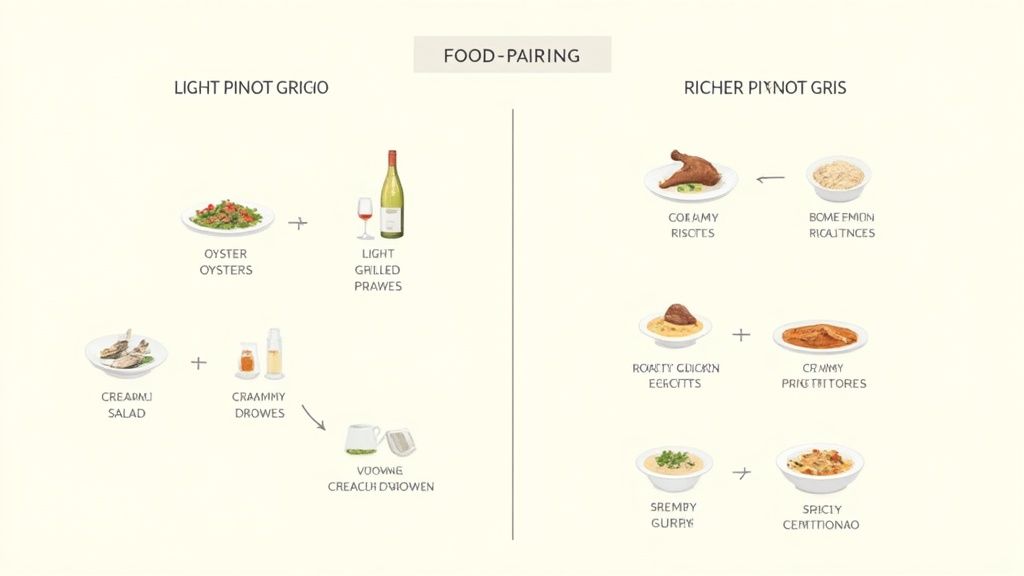
This is where the fun really begins. Once you get a handle on the dual personality of Pinot Gris/Grigio, you unlock its incredible potential at the dinner table. The trick isn't just pairing wine with food; it's about matching the style of wine in your glass to the flavours on your plate.
Getting this right can turn a good meal into a truly memorable one.
The principles are refreshingly simple. That high acidity in lighter Grigio styles cuts through richness like a knife, cleansing the palate beautifully. On the flip side, the textural weight and aromatic depth of a fuller Gris style can stand up to and complement more robust dishes. Knowing this is your superpower for pairing with confidence.
Pairing with Crisp, Zesty Pinot Grigio
The light-bodied, citrus-driven profile of Italian-style Pinot Grigio makes it a natural partner for anything delicate and fresh. Its zesty acidity basically acts like a squeeze of lemon, brightening up flavours without ever stealing the show. This wine absolutely sings when paired with dishes that are equally clean and vibrant.
Consider these no-fail matches:
- Fresh Seafood: Think freshly shucked oysters, grilled prawns, or pan-seared scallops. The wine’s minerality and citrus notes are the perfect echo for the natural sweetness of the seafood.
- Light Salads: A simple salad with a vinaigrette dressing is a dream pairing. The wine’s acidity will harmonise with the dressing rather than clashing with it.
- Simple Pasta Dishes: You can't go wrong with pasta tossed in olive oil, garlic, and fresh herbs, or a light seafood linguine.
Pairing with Rich, Textural Pinot Gris
With its fuller body and complex aromatics, an Australian or Alsatian-style Pinot Gris demands dishes with a bit more substance. Its ripe fruit flavours, hint of spice, and creamy texture can handle richness and more intense flavours with ease.
The goal here is to find complementary weight and flavour intensity. A wine with this much texture and ripe fruit can beautifully balance everything from creamy sauces to mild, aromatic spices, creating a seamless dining experience.
This versatility is a huge reason for its popularity. In fact, Australian Pinot Gris wines, known for their lush, pear-driven taste, saw a massive boom in 2017, with 36,148,000 litres shipped globally, reflecting a growing appreciation for just how food-friendly this style is.
Here are some ideal pairings for this richer style:
- Roast Chicken or Pork: The wine’s body and stone fruit notes are a perfect match for roasted white meats.
- Creamy Risottos: A mushroom or butternut squash risotto has the richness to stand shoulder-to-shoulder with the wine's texture.
- Spicy Asian Cuisine: Mildly spicy Thai green curries or Vietnamese dishes work beautifully, as the wine’s whisper of sweetness helps to tame the heat.
- Washed-Rind Cheeses: The wine’s aromatic complexity stands up wonderfully to pungent, flavourful cheeses.
Believe it or not, even certain pizza varieties can be a surprisingly good match. For even more ideas, check out our complete food pairing guide to unlock the versatility of Pinot Grigio.
How to Serve Pinot Gris for the Best Taste
Getting the serving details right can completely transform your experience with Pinot Gris. A few simple tweaks to temperature and glassware are all it takes to make sure every glass is bursting with fresh, aromatic flavour.
Temperature is easily the most important factor. If you serve Pinot Gris straight from a freezing fridge, its beautiful aromas and delicate flavours will be locked away and almost impossible to detect. Serve it too warm, though, and the wine can feel flat, flabby, and a bit heavy on the alcohol.
The perfect temperature really depends on the style you're pouring.
The Ideal Serving Temperatures
To get the best taste, you need to hit that sweet spot on the thermometer that complements the wine's body and aromatic profile. For a room-temperature bottle, a simple 20-30 minutes in the refrigerator is usually all you need.
-
Lighter Pinot Grigio Style: Serve this crisp, zesty style well-chilled, between 7-10°C. This temperature really makes its bright acidity and fresh notes of green apple and lime pop.
-
Richer Pinot Gris Style: For the fuller-bodied, more textural styles from places like Alsace or right here in Australia, aim for slightly warmer at 10-13°C. This lets the more complex aromas of ripe pear, honey, and spice really open up and show their stuff.
Chilling wine isn't just about making it refreshing; it's about structuring the flavour. The right temperature ensures the acidity, fruit, and texture are all in perfect harmony, delivering the best possible taste in every sip.
Choosing the Right Glassware
Believe it or not, the right glass can make a huge difference to how your Pinot Gris tastes. A standard white wine glass with a medium-sized bowl is perfect. This shape is designed to capture all those delicate aromas and funnel them towards your nose, while also helping to keep the wine at its ideal cool temperature.
Finally, a quick word on storage. To keep your Pinot Gris tasting fresh, store unopened bottles in a cool, dark place, away from sunlight and big temperature swings. Once you've opened a bottle, pop the cork back in tightly and keep it in the fridge. It should stay fresh and vibrant for a good two to three days.
A Few Common Pinot Gris Questions
As you dive into the world of Pinot Gris, a few questions always seem to surface. Getting your head around these is the key to understanding what's in your glass and finding the right bottle for the right moment. Let's tackle some of the most common queries.
Probably the biggest question on everyone's lips is about sweetness. The short answer? It really depends on the style.
Is Pinot Gris a Sweet or Dry Wine?
It can be both, and the clue is usually right there on the label.
An Italian-style Pinot Grigio is almost always bone-dry. These wines are built for crisp, sharp refreshment, with zesty acidity and no noticeable sweetness at all.
Head over to France, and a Pinot Gris from Alsace can run the full gamut—from dry to off-dry, and even all the way to incredibly rich, sweet dessert wines. Australian styles tend to sit somewhere in the middle, in that dry to off-dry sweet spot. Often, the beautifully ripe fruit flavours can give an impression of sweetness, even when there’s hardly any actual sugar left in the wine.
What Is the Main Flavour of Pinot Gris?
While the style can vary wildly, the heart of Pinot Gris almost always beats with orchard fruit flavours.
- In those lighter, zippier Pinot Grigio styles, think crisp green apple, lemon, and pear.
- For the richer, more textural Pinot Gris styles, those flavours deepen into ripe white peach, nectarine, and yellow apple.
These richer versions often have more going on, revealing lovely layers of honey, almond, or a delicate hint of spice. The dominant fruit character is your best guide to figuring out the wine's style and where it came from.
How Does Pinot Gris Compare to Sauvignon Blanc?
They're quite different beasts, even though they're both popular aromatic white wines. Sauvignon Blanc is famous for its sky-high, zesty acidity and its very distinct 'green' or herbaceous notes—think freshly cut grass, capsicum, and gooseberry. It’s pungently aromatic and unapologetically tangy.
Pinot Gris, on the other hand, is generally a softer, more textural wine with less aggressive acidity. Its flavour profile is all about stone fruits and pome fruits like peach, pear, and apple, making it feel rounder and gentler in your mouth than a zesty Sauv Blanc.
At McLaren Vale Cellars, we absolutely love the incredible diversity of Australian Pinot Gris. Explore our curated selection and discover a style that's perfect for you, from crisp and refreshing to rich and textural.

Comments (0)
There are no comments for this article. Be the first one to leave a message!