
If you've ever wondered what all the fuss is about with Pinot Grigio, the answer is simple: it’s all about pure, crisp, refreshing fruit.
Think of biting into a perfectly chilled green apple or a juicy pear, then add a zesty squeeze of fresh lime. That’s the classic Pinot Grigio taste in a nutshell. It's a light-bodied, dry white wine that has won hearts worldwide for being incredibly easy to drink and a fantastic partner for food.
What Does Pinot Grigio Actually Taste Like?
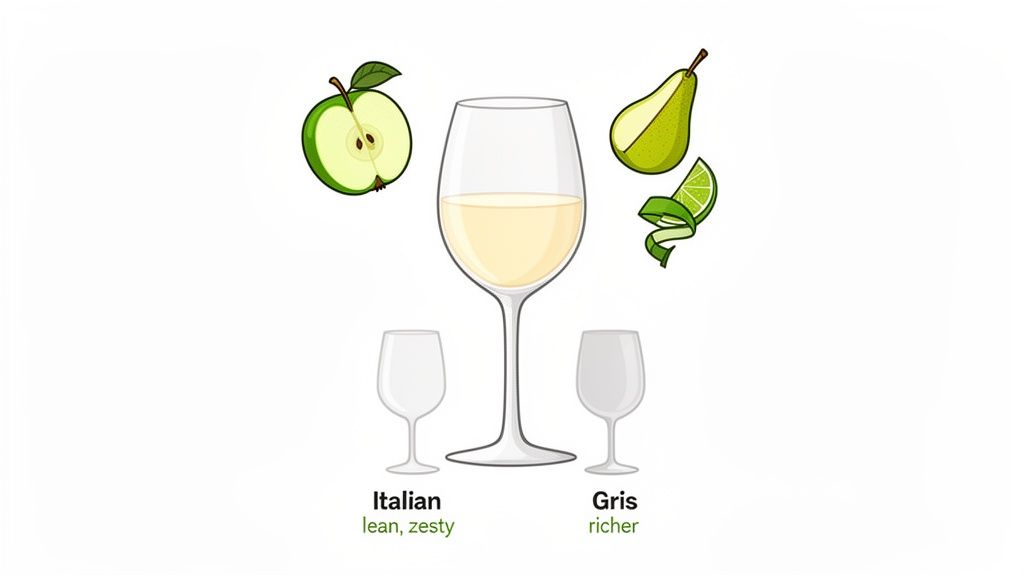
When you pour a glass, you're not just getting one of the world's most popular white wines; you're getting a wine with a split personality. The flavour of Pinot Grigio changes dramatically depending on where it’s grown and how the winemaker handles it, giving us two main styles that are worlds apart.
First up is the world-famous Italian style. This is the version that everyone knows and loves—zesty, light, and almost impossibly refreshing. Winemakers ferment it in stainless steel tanks to keep every drop of pure fruit flavour, which gives you a wine that's lean, bright, and crackling with high acidity.
Then you have the ‘Gris’ style, which you’ll find in places like Alsace (France), Oregon, and right here in Australia. This style is a different beast altogether. It's richer, more aromatic, and has a fuller, rounder texture. Here, you'll find flavours of ripe stone fruits like peach and nectarine, sometimes with a lovely hint of honey or a whisper of ginger spice.
Common Flavours And Aromas
No matter which style you're drinking, some core characteristics are classic Pinot Grigio. Think of them as the grape’s signature moves. While one bottle might lean more into zesty citrus and another into ripe stone fruit, these are the foundational notes you can expect to find.
The real beauty of Pinot Grigio is its clean, approachable profile. It doesn’t try to floor you with complicated layers. Instead, it delivers a straightforward, refreshing hit that makes it the perfect go-to for everyday enjoyment or pairing with a meal.
To give you a better idea of what to look for in the glass, here’s a quick rundown of the most common tasting notes you’ll come across in Pinot Grigio.
Pinot Grigio at a Glance: Common Flavours and Aromas
This table breaks down the signature notes that define the Pinot Grigio profile, helping you pinpoint exactly what you're tasting.
| Characteristic | Common Notes |
|---|---|
| Primary Fruits | Green Apple, Pear, White Peach, Lemon, Lime, Nectarine |
| Floral Notes | Honeysuckle, White Flowers, Citrus Blossom |
| Other Aromas | Almond, Wet Stone (Minerality), Ginger, Saline |
| Body & Acidity | Light to Medium Body, High Acidity |
From the crisp fruit to the subtle floral and mineral hints, these are the building blocks that make Pinot Grigio so reliably delicious.
Exploring the Different Styles of Pinot Grigio
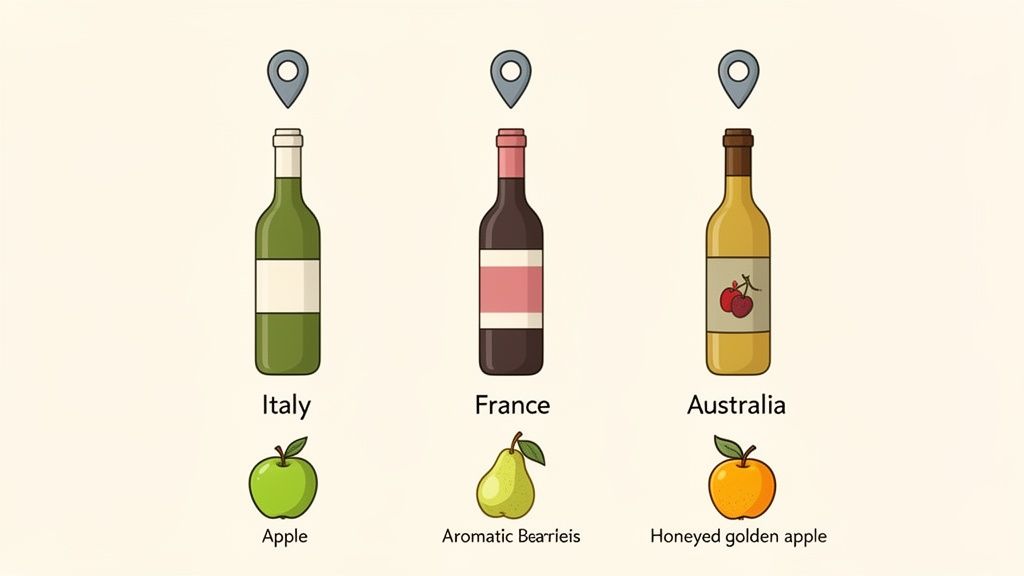
Here’s the thing about Pinot Grigio: not all bottles are created equal. The pinot grigio taste is a direct reflection of its homeland. Climate and soil—what the French call terroir—shape the final character in your glass in a big way.
Think of it like comparing apples. Some are tart and crisp, others are sweet and honeyed. It’s the same with this grape. It can produce wildly different wines depending on where its journey began. This creates a beautiful spectrum of styles, from the bone-dry Italian classics to richer, more textured versions from France and the brilliant emerging stars from Australia.
Getting your head around these key regional differences is the secret to finding a bottle you’ll genuinely love.
The Classic Italian Style
When most people think of Pinot Grigio, they're picturing the classic Italian style, especially from northern regions like Veneto and Friuli. These wines are all about being light-bodied, high in acidity, and having a clean, crisp flavour profile.
Italian winemakers typically harvest the grapes early to lock in that zesty freshness. The result is a wine that’s practically made for a warm day.
What you'll find in the glass:
- Crisp Green Apple and Pear: The dominant fruit flavours are lean and vibrant.
- Zesty Citrus: Think fresh lemon, lime, and maybe a little grapefruit peel.
- Subtle Minerality: This often comes across as a 'wet stone' or saline quality that adds a nice bit of complexity.
This style is deliberately unoaked and fermented in stainless steel tanks to let the pure fruit character shine through. It’s a wine that’s all about refreshment.
This Italian approach creates a wine that acts like a squeeze of fresh lemon on a seafood dish—it’s not there to overpower, but to brighten and cleanse the palate, making it an incredibly versatile food wine.
French Pinot Gris
Hop across the border into France, particularly the Alsace region, and the grape (known here as Pinot Gris) tells a completely different story. The climate allows the grapes to hang on the vine a bit longer, creating a wine that is richer, more aromatic, and often has a touch of sweetness.
The French style is typically fuller-bodied with an almost oily texture. You can expect flavours of ripe stone fruit like peach and apricot, along with notes of honey, ginger, and sometimes even a hint of smokiness. It’s a far more complex and contemplative wine compared to its zesty Italian cousin.
Australian Pinot Grigio
Here in Australia, we've embraced Pinot Grigio with open arms, and its popularity has soared among those who crave a crisp, refreshing white. The grape has turned out to be incredibly adaptable, thriving in cooler climate regions from Victoria's King Valley to South Australia's Adelaide Hills and, of course, our own McLaren Vale.
If you want to see how our local styles stack up, check out our guide on Italian Pinot Grigio vs Australian Pinot Grigio.
Australian winemakers are crafting some exceptional examples that often bridge the gap between the Italian and French styles. A McLaren Vale Pinot Grigio, for instance, might give you that bright citrus acidity of an Italian wine but with a richer texture and more pronounced stone fruit flavours.
In fact, the 2025 Australian winegrape crush report revealed that Pinot Gris/Grigio has surged to become the fifth most crushed variety nationally, even overtaking Merlot for the first time. This meteoric rise just goes to show how perfectly its zesty, fruit-forward profile suits the Australian palate and climate. You can read more about it in the full report on Australia's winegrape crush insights on WineAustralia.com.
How Winemaking Choices Shape the Flavour
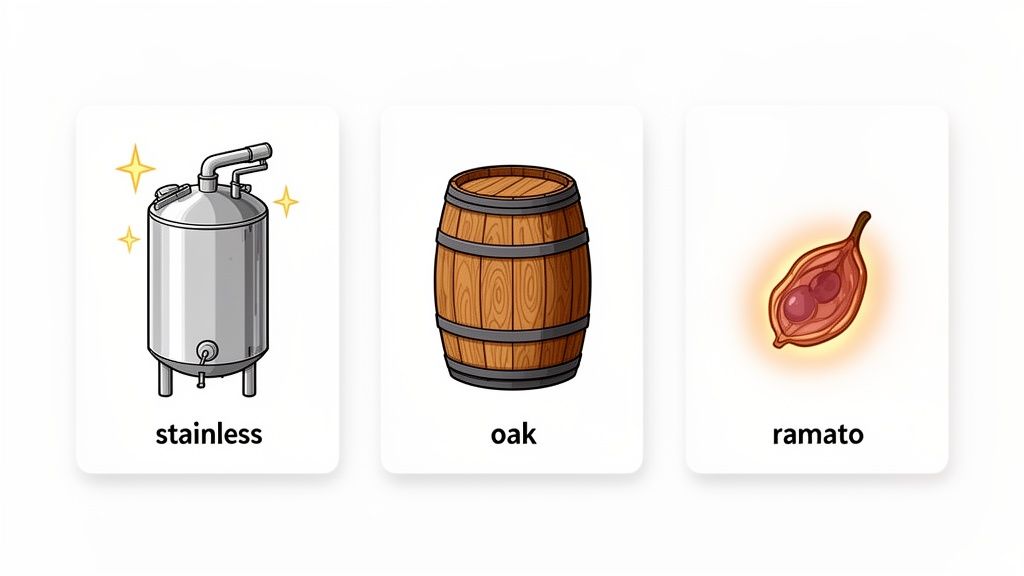
While geography sets the stage, the winemaker is the director. Their decisions in the cellar have a huge impact on the final pinot grigio taste, guiding the journey from grape to glass. Every choice adds another layer to the wine's character, texture, and aroma.
It’s these techniques that explain why two bottles from the same region can taste remarkably different. These aren't just technical steps; they are artistic decisions. Is the goal a wine that’s sharp and zesty, or one that’s rounded and complex? It all begins with how the juice is handled before it even reaches the bottle.
Stainless Steel vs Oak Barrels
One of the biggest calls a winemaker makes is what to ferment the wine in. The vast majority of Pinot Grigio, especially the classic Italian style, is fermented and aged in stainless steel tanks. Think of this method like taking a crystal-clear photograph. It captures the grape’s pure, vibrant fruit notes—that green apple, crisp pear, and zesty citrus—without adding any outside flavours.
This technique is all about freshness. It gives you a wine that’s clean, bright, and lets the primary fruit and acidity do all the talking.
On the other hand, some winemakers, particularly those crafting richer Pinot Gris styles, might use oak barrels for fermentation or aging. Using oak is like adding a warm, textured filter to that photograph. It brings in complexity, a creamier mouthfeel, and secondary flavours like vanilla, baking spice, or a hint of toast. Oak can soften a wine’s sharp edges, creating a richer, more layered experience.
The Magic of Ramato Skin Contact
Beyond the fermentation vessel, there's another fascinating technique: skin contact. Even though Pinot Grigio is a white wine, its grape skins have a distinctive greyish-pink, almost coppery hue. Normally, the skins are whisked away from the juice almost immediately to produce that pale, straw-coloured wine we all recognise.
But what if you don't? An ancient Italian tradition, now being revived by adventurous winemakers, involves leaving the juice to mingle with the skins for a while. This process is called Ramato, which is Italian for "coppery."
This skin contact gives the wine a beautiful pale copper or pinkish-orange colour. More importantly, it extracts different flavour compounds and tannins, resulting in a wine with more texture, body, and intriguing notes of dried orange peel, bitter almond, and stone fruit.
The Ramato technique completely transforms the typical pinot grigio taste, creating a style that is more savoury, textural, and complex. It's a brilliant showcase of the versatility hiding within this seemingly simple grape, proving the winemaker’s touch is every bit as important as the vineyard’s location.
Tasting Pinot Grigio Like a Pro
Now that we’ve covered the different styles and winemaking tricks of the trade, it’s time to put all that theory into practice. Don't worry, tasting wine isn't about memorising complicated rules. It’s really just a simple, mindful process that helps you tune in and appreciate what’s in your glass.
By following a basic three-step rhythm, you can start talking about the pinot grigio taste with real confidence. If you're keen to build your skills, guided sessions are a fantastic way to sharpen your palate. You can find some excellent options for general Wine Tasting experiences that will help you along.
For now, though, let’s walk through the fundamentals right here: Look, Smell, and Taste. This structured approach is the key to unlocking a much deeper appreciation for every bottle you open.
Step 1: Look at the Colour
Before you even think about taking a sip, hold your glass up against a white background—a napkin or a plain piece of paper works perfectly. The colour alone can tell you a surprising amount about the wine's style and even its age.
Is it a very pale, almost watery straw yellow with greenish glints? That’s a classic sign of a young, zesty, Italian-style Pinot Grigio.
If you spot a deeper, more golden hue, it might be a richer Pinot Gris from a warmer climate, or perhaps one that’s spent a little time in oak. And if you see a beautiful pale copper or salmon-pink blush? You're looking at a Ramato style, where the juice was left to mingle with the grape skins.
Step 2: Smell the Aromas
Alright, now for the fun part. Give your glass a gentle swirl. This simple move helps aerate the wine, waking it up and releasing all its aromatic secrets. Don't be shy—get your nose right in there and take a good, deep sniff. What do you pick up first?
- Primary Aromas: Are you getting bright, zesty notes of lemon, fresh lime, or grapefruit? Or is it more about softer scents like green apple, juicy pear, or white peach?
- Secondary Aromas: Can you detect any subtle floral hints, like honeysuckle or citrus blossom? Sometimes you'll find a cool, stony or mineral note, which wine lovers often describe as the smell of wet rocks after rain.
This step is absolutely crucial, because believe it or not, most of what we think of as "taste" actually comes from our sense of smell.
Step 3: Taste the Flavours
Finally, take a small sip and let the wine wash over your entire palate. As you do, focus on three key things: the flavour profile, the body, and the finish. Do the flavours you're tasting match the aromas you just smelled? Does the wine feel light and zippy on your tongue, or is it fuller and rounder?
The finish is simply the impression the wine leaves after you've swallowed. A great Pinot Grigio will have a clean, crisp, and refreshing finish that makes you immediately want to take another sip. This simple process transforms drinking wine from a passive activity into a genuinely engaging and rewarding experience.
To give you a clearer picture of how region shapes the wine, here’s a quick comparison of the two dominant styles you'll encounter.
Tasting Profile Comparison: Italian vs McLaren Vale Pinot Grigio
This table breaks down the typical differences you'll find in a classic, light-bodied Italian Pinot Grigio versus a richer, more expressive style from a premium Australian region like McLaren Vale.
| Feature | Classic Italian Pinot Grigio | McLaren Vale Pinot Grigio |
|---|---|---|
| Appearance | Pale straw, almost translucent, with hints of green. | Pale to light gold, showing a bit more depth and richness. |
| Aromas | Lemon zest, green apple, wet stone, faint white blossom. | Ripe pear, nectarine, lime, and often subtle honeysuckle notes. |
| Palate | Light-bodied with racing acidity. Crisp, dry, and zesty. | Fuller-bodied with a rounder, more textural mouthfeel. |
| Flavours | Dominated by citrus and underripe orchard fruits. | Concentrated flavours of pear, white peach, and a hint of spice. |
| Finish | Short to medium, incredibly clean and refreshing. | Longer finish, with lingering fruit character and a mineral edge. |
| Overall Vibe | Lean, mineral-driven, and perfect as an apéritif. | Generous, fruit-forward, and complex enough for food pairing. |
As you can see, while they're made from the same grape, the end result in the glass can be wonderfully different. The McLaren Vale style offers more fruit weight and complexity, making it a fantastic and versatile choice for the modern Australian table.
Tasting Insight: The vibrant character of Australian Pinot Grigio—defined by pear, lime zest, and a clean mineral finish—has made it a national favourite. Its versatility has driven an 11% increase in domestic sales volume, reflecting a broader shift towards lighter, food-friendly whites perfect for our lifestyle. Read more about these market trends in this Wine Australia insights report.
Pairing Food to Elevate Pinot Grigio Taste
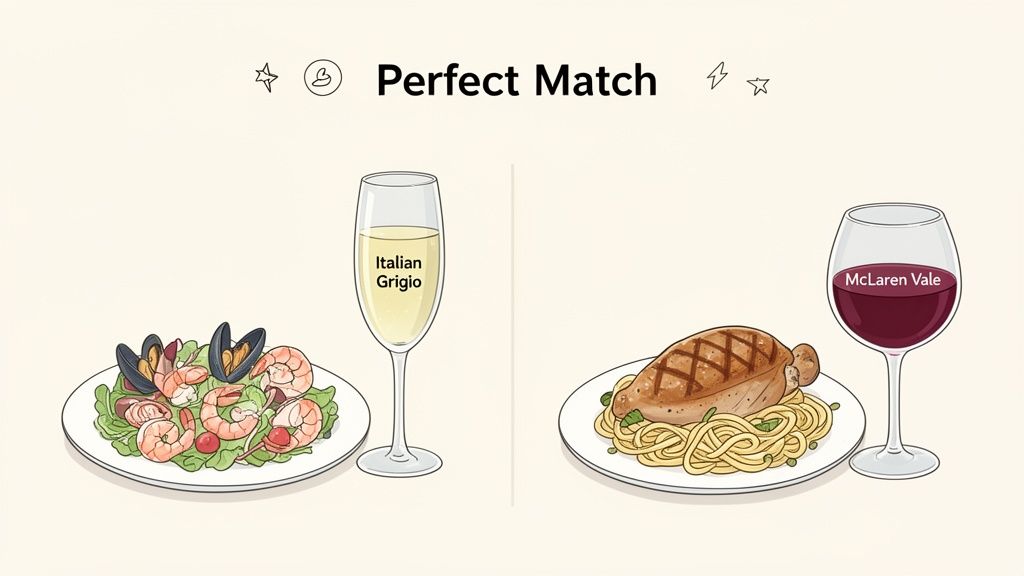
Knowing how to pair a wine with food is what turns a good meal into a truly memorable one. Moving beyond just the basics helps you understand why certain combinations work so well, and the secret to Pinot Grigio lies in its signature high acidity.
Think of a crisp Pinot Grigio as a squeeze of fresh lemon for your food. Its zesty, vibrant character cuts right through richness, brightens up delicate flavours, and cleanses the palate with every sip. This makes it an incredibly versatile partner at the dinner table.
The real key is to match the wine's weight with the food's intensity. Lighter, zippier styles are a natural fit for equally light dishes, while the richer, more textural styles can absolutely hold their own against heartier meals.
Perfect Pairings For Every Style
To make it simple, let's break down the best matches based on the two main styles of Pinot Grigio. This way, you can be sure the pinot grigio taste you've chosen is always shown in its best light.
For Lighter, Italian-Style Pinot Grigio:
- Fresh Seafood: That bright acidity is a dream come true with oysters, prawns, and calamari. For a classic pairing that really lets the wine shine, you can't go wrong with simple dishes like these Sauteed Fish Filets With Lemon And Garlic.
- Light Salads: Salads tossed in a vinaigrette are a perfect match, as the wine’s zesty character mirrors the dressing beautifully.
- Sushi and Sashimi: The wine’s clean, crisp profile won’t overwhelm the delicate flavours of raw fish.
For Richer, McLaren Vale-Style Pinot Grigio:
- Grilled Chicken or Turkey: The wine’s fuller body and stone fruit notes are a brilliant complement to white meats.
- Creamy Pasta Dishes: A richer Grigio has the weight and texture to stand up to indulgent dishes like fettuccine alfredo or carbonara.
- Soft Cheeses: Think brie, camembert, or fresh mozzarella, where the wine cuts through that gorgeous creamy texture.
When in doubt, remember this simple rule: "what grows together, goes together." It’s no surprise that Italian-style Pinot Grigio is a natural fit with classic Italian antipasti, seafood pastas, and risottos.
Pinot Grigio's elegant profile—crisp acidity, hints of melon, and a touch of spice—has made it a serious favourite here at home. Australian sales for the Pinot Gris/Grigio category were up 9% over recent years, impressively bucking the overall 2% decline in wine sales, which was largely driven by reds. This resilience is clear on the shop shelves, where consumer demand has pushed its volume growth ahead of both Sauvignon Blanc and Riesling. To dive deeper into these ideas, you might be interested in our complete https://mclarenvalecellars.com/blogs/articles/unlock-the-versatility-of-pinot-grigio-a-food-pairing-guide.
Foods To Avoid
While it's incredibly versatile, there are a few pairings you’ll want to steer clear of. Heavy red meats like steak or lamb will completely overpower the delicate notes of a Pinot Grigio.
Similarly, it's best to avoid very spicy dishes. The wine's high acidity can actually amplify the heat, creating an unpleasant clash on the palate. Lastly, skip heavy, tomato-based sauces; their own high acidity can make the wine taste flat and dull in comparison.
How to Serve and Store Pinot Grigio Correctly
Don't let a simple mistake ruin a great bottle of wine. When it comes to getting the most out of your Pinot Grigio, getting the temperature right is probably the single most important thing you can do.
Serving it too warm is a bit like drinking flat lemonade—all those vibrant, zesty notes just disappear, leaving the wine feeling dull and lifeless.
To hit that perfect sweet spot, you’ll want to aim for a chilled temperature of 8-10°C. For most home fridges, this usually means pulling the bottle out about 20 minutes before you plan on pouring. This keeps the wine beautifully crisp and refreshing, allowing its delicate aromas of pear, apple, and citrus to really sing.
Glassware and Storage Essentials
The right glass can also make a surprising difference. A standard white wine glass with a medium-sized bowl is perfect. It helps to concentrate the wine’s subtle floral and fruit aromas, guiding them straight to your nose for the full experience.
If you happen to have some wine left over, just seal the bottle tightly with a good wine stopper and pop it back in the fridge. It should stay fresh and vibrant for about two to three days before its bright, fruity character starts to fade.
Following these simple steps ensures every glass is as delicious as the winemaker intended. For a deeper dive, you can learn more about unlocking the secrets of Pinot Grigio temperature, glassware, and storage tips.
Common Questions About Pinot Grigio Taste
Even after you’ve got a handle on the basics, there are always a few questions that pop up about Pinot Grigio's taste. Let's tackle the most common ones head-on, giving you clear, straightforward answers to help you choose your next bottle with total confidence.
Is Pinot Grigio a Sweet or Dry Wine?
Pinot Grigio is almost always a dry white wine. While some richer, more opulent styles from regions like Alsace in France (where it’s labelled 'Pinot Gris') might give a hint of sweetness from incredibly ripe fruit, that's definitely not the norm.
The classic Italian style, along with the fantastic Australian versions you'll find today, are loved for their crisp, dry finish. They’re high in acidity with no noticeable sweetness, which is exactly what makes them so refreshing.
What Is the Difference Between Pinot Grigio and Sauvignon Blanc?
While they're both hugely popular dry whites, their personalities couldn't be more different. Pinot Grigio offers subtle, delicate notes of green apple, pear, and citrus with a clean, sometimes mineral, finish. It’s the quieter, more elegant of the two.
Sauvignon Blanc, on the other hand, is much more aromatic and in-your-face. It practically leaps out of the glass with bold, herbaceous notes of passionfruit, gooseberry, freshly cut grass, and even capsicum. Think of Pinot Grigio as subtle and crisp, while Sauvignon Blanc is zesty and loud.
The real difference is all about intensity. A classic Pinot Grigio whispers its delicate fruit and mineral notes, whereas a Sauvignon Blanc shouts its vibrant, grassy, and tropical character from the glass.
Should You Age Pinot Grigio?
As a rule, no. The vast majority of Pinot Grigio is made to be enjoyed young and fresh, ideally within one to three years of its vintage. Its main appeal comes from those vibrant fruit flavours and zingy acidity, which sadly fade over time.
While a few exceptional, complex examples of Pinot Gris can age beautifully, for the classic styles we know and love, the rule is simple: drink them chilled and celebrate their youthful energy.
At McLaren Vale Cellars, our curated selection showcases the very best of this crisp, dry style. Explore our range of premium South Australian Pinot Grigio and find your new favourite today. Visit us at https://www.mclarenvalecellars.com.



Comments (0)
There are no comments for this article. Be the first one to leave a message!