
The most common advice about Pinot Grigio pairing is also the least useful: serve it with seafood and stop there. Seafood is an excellent starting point, but Australian Pinot Grigio and Pinot Gris can offer enough fresh acidity and structural weight for poultry, pork, coconut-rich dishes and spice-forward Asian food. The better question isn't, “What goes with Pinot Grigio?” It's, “How fresh, rich, spicy or aromatic is the dish, and what style of wine is in the bottle?”
Australian wine guidance repeatedly places the variety alongside oysters, prawns, sashimi, light fish, chicken and fresh cheeses. It also recognises that Australian expressions can carry more weight and alcohol, opening the door to baked salmon, pork rillette and other richer preparations (Wine Companion's Australian Pinot Gris and Pinot Grigio guide). That style difference is the key to building a more confident match.
Rethinking the Pinot Grigio Flavour Profile
Pinot Grigio is often dismissed as a thin, neutral white that exists mainly for pre-dinner drinking. That description suits some very light examples, but it doesn't describe the full Australian picture. Australian Pinot Grigio can combine a zippy, naturally high-acid profile with noticeably greater weight, which gives it more authority at the table (Wine Companion).
Acidity is the first sensation to notice. It gives the wine its brisk, mouth-watering edge and helps clear salt, oil and gentle creaminess from the palate. That's why the wine feels so natural beside oysters, prawns and sashimi. The fruit usually sits in the background rather than dominating, with a clean orchard-fruit character and restrained floral lift that can complement food without turning the pairing sweet or heavy.
Lightness doesn't mean lack of structure
A wine can taste fresh without being watery. Pinot Grigio's freshness comes from acidity, while its sense of body depends on the fruit concentration, alcohol, regional conditions and winemaking choices. Australian examples may feel broader and more substantial than the lightest Italian styles, while still retaining the crisp finish that makes the variety easy to drink (Wine Companion).
That distinction changes the dinner menu. A very light Pinot Grigio may disappear beside baked salmon with a rich sauce, whereas a fuller Australian bottle can hold its shape against the fish's texture. The same logic applies to pork rillette, roast poultry and creamy dishes. The wine's acidity prevents the meal from becoming tiring, while its additional weight stops it from feeling overwhelmed.
Practical rule: Choose Pinot Grigio by style, not just by grape name. A leaner bottle suits delicate seafood, while a fuller Australian expression gives you more room with richer food.
Pinot Grigio or Pinot Gris
The names can create confusion. Pinot Grigio and Pinot Gris refer to the same grape variety, but producers use the names within different stylistic and regional traditions. The label alone won't tell you everything, so look for clues in the producer's description, tasting notes and regional context.
For a clearer sensory guide before you shop, compare the practical notes in this Pinot Grigio wine taste guide. Think in terms of acidity, body and finish. Those three features tell you more about the likely pairing than a generic promise of “crisp white wine”.
Serving Temperature and Core Pairing Rules
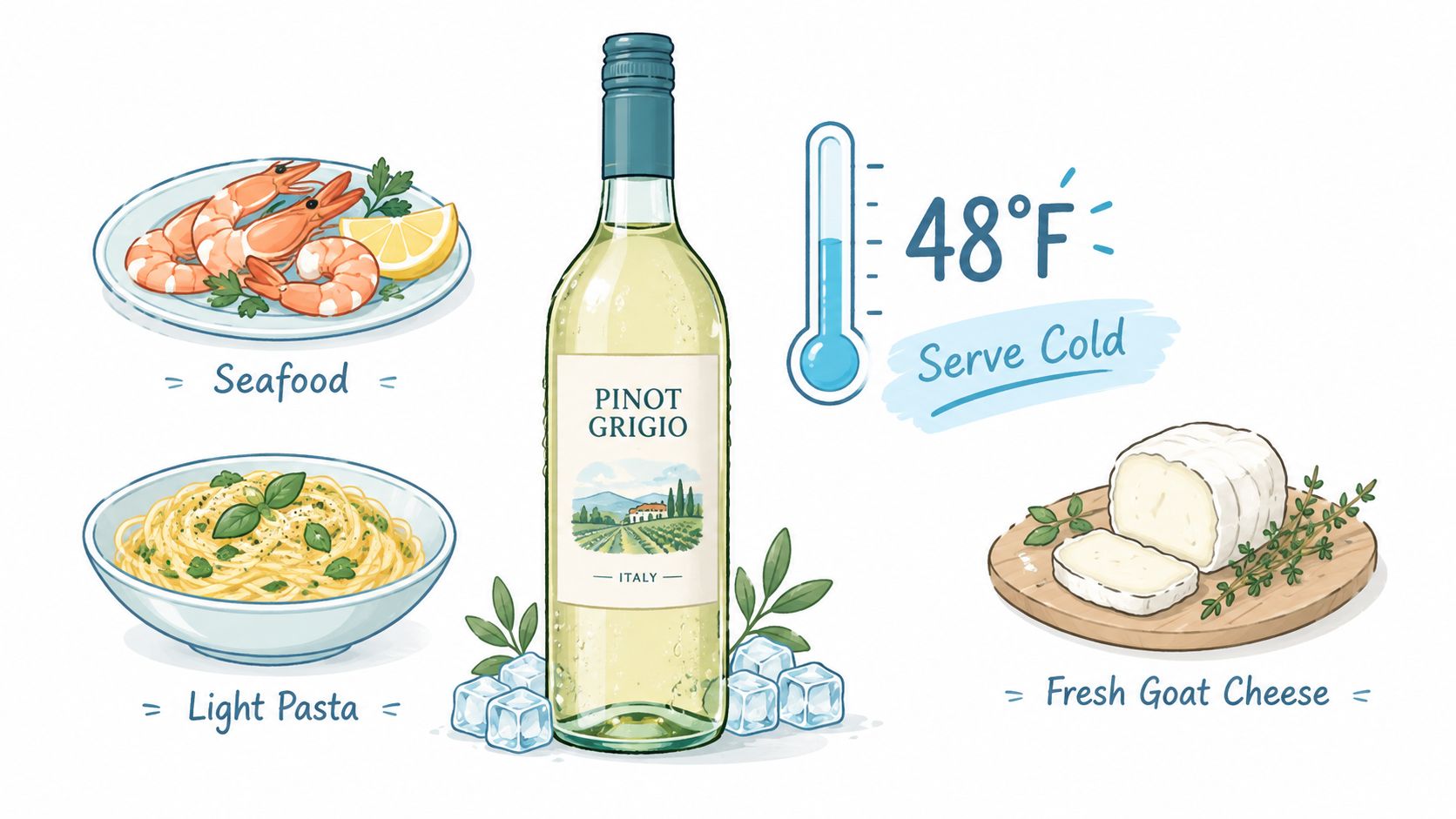
Pinot Grigio does not improve by becoming colder. Serve it too cold and the aromas retreat, making the acidity seem sharper and the wine less expressive. Let it become too warm, and its freshness loses focus beside oily, creamy or richly textured food.
Start with a properly chilled bottle, then allow it to warm a little in the glass as dinner continues. The first taste brings the clean refreshment that suits shellfish, while later sips reveal more fruit and texture for poultry, richer proteins or a substantial sauce. These practical notes on Pinot Grigio temperature, glassware and storage can make a noticeable difference at the table.
Three rules that solve most pairings
Match freshness with freshness. Lemon, herbs, raw vegetables, vinaigrette and briny ingredients echo the wine's acidity. Like two clean brushstrokes in the same painting, the food and wine reinforce each other, keeping the meal bright rather than flat.
Respect delicate texture. Pinot Grigio has restrained tannin and limited phenolic grip, so it does not bring the drying bitterness that can disrupt shellfish or sashimi. Its gentle structure leaves the food's texture in focus, which helps explain the marine pairings outlined in Australian wine guidance (Just Wines).
Balance body against richness. Match the wine's weight to the preparation, not just the main ingredient. A fuller Australian Pinot Grigio can handle richer proteins and spice-forward Asian dishes, especially when its acidity cuts through coconut, oil or creamy sauces. Chicken with lemon and herbs needs a different bottle from chicken in a dense, sweet glaze. Plain fish also behaves differently from fish in a rich coconut sauce.
Use this short pairing video for a visual reminder of the basic match, after considering the dish's texture, richness and seasoning.
Classic Seafood and Poultry Matches
Start with a chilled Australian Pinot Grigio beside a platter of Sydney rock oysters, prawns and lightly dressed seafood. The brine makes the wine taste more vivid, while the acidity refreshes the mouth after each oyster. Ginger and shallot dressing adds aromatic detail without burying the wine, a combination specifically included in Australian pairing guidance (Wine Selectors).
Scallops need a slightly different approach. Their gentle sweetness rewards a wine that won't dominate, while a seared surface introduces savoury depth. Keep the sauce bright and restrained, perhaps with citrus, herbs or a light pan dressing. For a collection of practical ideas suited to Australian produce, browse these delicious scallop recipe ideas, then choose the bottle according to the richness of the preparation.
A coastal menu in three courses
Grilled clams with chickpeas and fennel make a useful bridge between delicate shellfish and a more textured main. The clams bring salinity, fennel adds aromatic freshness and chickpeas provide enough substance to make the dish feel complete. Pinot Grigio's acidity keeps the combination lively, while its relatively restrained flavour allows the clams and herbs to lead (Wine Selectors).
Paperbark-wrapped barramundi offers another distinctly Australian direction. The fish remains delicate, but the cooking method contributes fragrance and a savoury edge. Serve a lighter style when the fish is prepared plainly, or reach for a broader Australian expression if the dish includes richer oil, butter or a substantial side.
The same principle works with prawns. Orange and fennel bring citrus and aniseed freshness, while grilling adds a touch of char. Keep the chilli moderate if the wine is very lean, or use a fuller bottle when the prawns carry more seasoning (Wine Selectors).
Moving from the ocean to the roast
Poultry is a classic match because chicken and turkey have a mild flavour and supple texture. Roast chicken with lemon, thyme or parsley keeps the meal in Pinot Grigio's fresh register. Turkey works similarly, especially when the plate includes herbs, a light pan sauce or crisp vegetables. Australian guidance identifies chicken and turkey, along with semi-soft to firm cow cheeses such as gruyere and Grana Padano, as dependable partners (Wine Companion).
Avoid judging the match by the meat alone. A plain roast bird can suit a lean bottle, while a creamy sauce or rich stuffing may call for the additional body found in a fuller Australian expression. The wine should refresh the plate, but it also needs enough substance to remain present after each bite.
Beyond the Basics with Asian and Richer Dishes
The “seafood only” rule breaks down once you consider seasoning and texture separately. Pinot Grigio can work with Asian food when the dish combines freshness, aromatic herbs and moderate richness. Australian wine education specifically connects Pinot Gris with lemongrass, star anise, chilli, coconut and coriander (Wine Companion).
Coconut is a useful example. Its creamy texture can make a lean wine feel slight, but acidity gives the palate relief from the sauce. Choose a fuller Australian style when the curry is rich, and keep the wine well chilled so it retains its cleansing edge. The pairing succeeds because the wine doesn't compete with the aromatics, while the acidity stops the coconut from coating the mouth.
Spice, herbs and heat
Chilli needs care, but it doesn't automatically exclude Pinot Grigio. Strong alcohol can make chilli feel hotter, so consider the bottle's weight and the level of heat in the dish. A fresh, aromatic preparation with coriander, lemongrass or Vietnamese herbs is more forgiving than a heavily reduced, intensely spicy sauce.
Thai, Vietnamese, Malaysian and Indonesian dishes can all move beyond the standard Western pairing list when the preparation stays balanced. Prawns with citrus and herbs, rice-paper rolls with a mild dipping sauce, or grilled fish with coriander and chilli can highlight the wine's freshness. The wine should complement the dish's aromatic lift, not attempt to overpower it.
When choosing between Pinot Grigio and Sauvignon Blanc: reach for Pinot Grigio when you want a softer aromatic presence and clean acidity beside delicate herbs, seafood or moderate spice. Sauvignon Blanc may make a louder impression, while Pinot Grigio often leaves more space for the food.
Richer proteins need the right bottle
A fuller Australian Pinot Grigio can handle dishes that lighter examples can't. Wine Companion specifically identifies baked salmon and pork rillette as suitable richer matches for weightier Australian expressions (Wine Companion). Those foods bring fat and texture, so a very delicate bottle may vanish, but acidity still matters because it keeps the pairing from becoming heavy.
Grilled pork chops with apple sauce offer another useful combination. The pork supplies savoury richness, while apple introduces a fresh bridge to the wine's orchard-fruit character. Keep the sauce restrained and avoid excessive sweetness, which can make a dry white seem thinner.
Creamy pasta can also work if the sauce remains light and the wine has enough breadth. Think herbs, mushrooms used carefully, or a gentle cream sauce rather than a dense, intensely reduced preparation. With every richer dish, ask two questions: does the wine have enough body to stay visible, and does it have enough acidity to refresh the finish?
Quick Pairing Cheat Sheet and Top Bottle Picks
A Pinot Grigio menu is broader than the usual seafood shortlist. Use the dish's preparation as your guide, because sauce, seasoning and texture can matter more than the main ingredient. Australian examples with extra weight can stay present beside richer proteins and spice-forward dishes, while their acidity keeps each mouthful fresh.
Pinot Grigio Food Matching Matrix
| Meal Category | Example Dishes | Why It Works |
|---|---|---|
| Coastal seafood | Oysters, prawns, sashimi | High acidity refreshes briny flavours and protects delicate texture. |
| Light fish | Barramundi, grilled clams, pan-seared white fish | The wine adds lift without covering mild proteins. |
| Fresh Asian dishes | Rice-paper rolls, herb-led prawns, lightly spiced fish | Freshness supports herbs and moderate chilli. |
| Richer seafood | Baked salmon | A fuller Australian style has enough weight, while acidity keeps the dish lively. |
| Poultry | Roast chicken, turkey with herbs | Mild meat lets the wine's fruit and freshness remain clear. |
| Pork | Pork rillette, grilled pork chops with apple sauce | Weightier bottles meet the texture, while apple links the food with the wine's fruit. |
| Cheese board | Gruyere, Grana Padano and other semi-soft to firm cow cheeses | Savoury cheese gains contrast from the wine's acidity. |
Use the matrix as a starting point, then adjust for the sauce. Coconut, chilli and aromatic herbs can lead a Pinot Grigio towards Southeast Asian dishes, while apple, herbs or a lighter cream sauce can connect it with pork and poultry.
A vineyard lunch can also sharpen your sense of regional matching. Northern Spain Travel's Logrono vineyard gourmet lunch experience offers a food-led example, even when your own tasting takes place at home.
Choosing a bottle for the menu
Choose a leaner style for oysters, sashimi, fresh salads and lightly dressed fish. A broader Australian expression suits baked salmon, pork rillette, creamy pasta or roast poultry with richer accompaniments. Read the product description for clues about brightness, delicacy, texture and weight.
For bottle ideas and buying guidance, consult this Australian Pinot Grigio bottle guide. McLaren Vale Cellars lists Pinot Grigio with mixed “Half & Half” packs, a Taste Guarantee, and free delivery Australia-wide on orders over $100. Those options make it easier to compare styles across different menus instead of using one bottle for every dinner.
Final Thoughts on Building Your Wine Confidence
Good pairing advice should make you more curious, not more nervous. Pinot Grigio works beautifully with seafood, but its real strength is the balance between fresh acidity and adaptable body. Once you identify the style in the bottle, you can move confidently from oysters to roast poultry, and from delicate fish to richer Australian dishes.
Judge the whole plate rather than the headline ingredient. A salmon dish with citrus and herbs may suit a lighter bottle, while baked salmon with a richer preparation needs more weight. Chicken with lemon is a different pairing from chicken in a sweet glaze. Pork with apple can work because the fruit connects the wine and food, while a heavily smoky or intensely sweet preparation may overwhelm a delicate expression.
Before your next dinner, run through this short checklist:
- Check the dish's weight: Decide whether the food is delicate, medium-bodied or rich.
- Look at the sauce: Cream, coconut, butter, citrus and chilli change the match.
- Keep the wine fresh: Serve it chilled, but allow its aromas to open in the glass.
- Choose by style: Use lighter bottles for shellfish and sashimi, fuller Australian examples for richer proteins.
- Taste without rigid rules: If the wine refreshes the food and remains noticeable, the pairing is doing its job.
A good host doesn't need a perfect formula. You need a bottle that suits the meal, a willingness to adjust, and enough confidence to trust what your palate is telling you.
McLaren Vale Cellars offers Australian Pinot Grigio, mixed “Half & Half” packs, tasting resources and a Taste Guarantee to help you explore food-friendly styles with confidence. Visit McLaren Vale Cellars to choose a bottle for your next seafood platter, roast poultry dinner or spice-forward Asian meal.

Comments (0)
There are no comments for this article. Be the first one to leave a message!