
If you've ever wondered what Pinot Grigio tastes like, think clean, crisp, and incredibly refreshing. It’s the kind of dry white wine that's loved for its zesty, easy-drinking character, built around hallmark notes of green apple, pear, and citrus.
Your Quick Guide to Pinot Grigio Taste

For anyone after a straightforward, no-fuss white, Pinot Grigio is a fantastic choice. Its real charm is its simplicity. It’s approachable enough for someone just starting their wine journey but still has enough character for seasoned drinkers to appreciate.
Unlike a big, buttery Chardonnay that's seen a lot of oak, Pinot Grigio is celebrated for its light body and zippy acidity. That vibrant tang is what makes it so refreshing, cleansing your palate with every single sip. Think of it as the wine equivalent of a cool, crisp morning it's all about brightness and energy.
Unpacking the Core Flavours
But don't mistake simplicity for being one-dimensional. While those signature citrus and green fruit notes are always front and centre, you'll often find more delicate layers adding a bit of complexity.
Many Italian styles, for instance, are famous for a distinct, slightly bitter almond note on the finish. It’s a classic trait that adds a pleasant, savoury twist. You might also pick up on:
- Floral aromas like honeysuckle or delicate white flowers.
- Mineral notes that remind you of wet stones, especially in wines from cooler climates.
- A subtle hint of spice in the richer, more textural expressions of the grape.
To give you a clearer picture of what to expect from your next glass, we've broken down the key characteristics of a typical Pinot Grigio. It’s the perfect cheat sheet before you start browsing.
Pinot Grigio at a Glance
This table offers a quick snapshot of the essential traits you'll find in most Pinot Grigio wines.
| Characteristic | Typical Profile |
|---|---|
| Primary Flavours | Green Apple, Lemon, Lime, Pear, Nectarine |
| Aromas | Citrus Zest, Honeysuckle, Almond, Wet Stone |
| Body | Light to Medium-Bodied |
| Acidity | High and Crisp |
| Sweetness | Dry (very low residual sugar) |
| Finish | Clean, Refreshing, sometimes with a bitter almond note |
This profile is what makes Pinot Grigio such a versatile and widely loved white wine, it’s dependably delicious and refreshingly uncomplicated.
Exploring the Two Worlds of Pinot Grigio
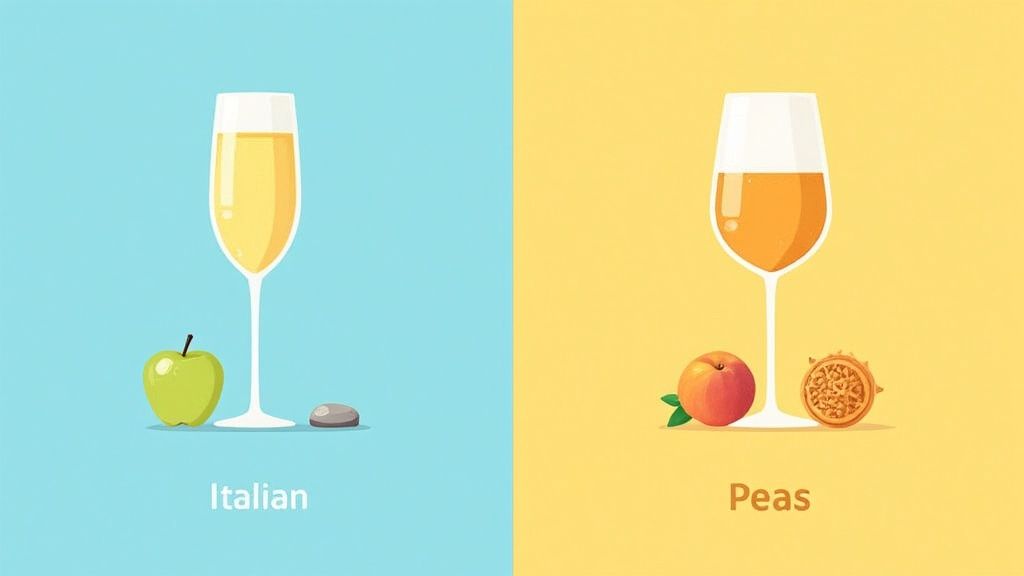
While that light, crisp profile is what most of us think of when we hear "Pinot Grigio," the grape is holding a fascinating secret. It's a bit of a chameleon. Depending on where it’s grown and how the winemaker handles it, it can produce two dramatically different styles of wine.
Think of it as the same actor playing two completely different roles one light and comedic, the other rich and dramatic. This stylistic split really comes down to a tale of two countries: Italy and France. Each has put its own stamp on the grape, shaping it to fit their climate and traditions. Getting to know these two worlds is the real key to understanding what Pinot Grigio has to offer.
The Lean and Zesty Italian Style
When you picture a classic Pinot Grigio, you're almost certainly thinking of the Italian style. This is the version that put the grape on the map, coming mostly from cooler northern regions like Veneto, Friuli, and Alto Adige. It’s all about freshness and simplicity.
The winemaking here is designed to preserve the grape's natural zing. Grapes are picked early to hang onto their acidity and are then fermented in neutral stainless steel tanks. This hands-off approach stops any oaky or buttery notes from creeping in, keeping the wine clean, lean, and straight to the point.
The result is a wine that’s light-bodied, bone-dry, and incredibly refreshing. It's like a splash of cold water on a hot day uncomplicated and exactly what you need.
So, what should you look for in the glass? The primary notes you'll find in Italian Pinot Grigio include:
- Crisp Green Apple: That tart, sharp fruitiness is the star of the show.
- Zesty Citrus: Bright kicks of lemon, lime, and sometimes a hint of grapefruit.
- Mineral Edge: A subtle "wet stone" or flinty character that adds a layer of complexity.
- Bitter Almond Finish: This is a classic hallmark, giving the wine a clean, almost savoury end.
The Rich and Aromatic French Style
Hop across the border into France’s Alsace region, and the grape undergoes a stunning transformation. Here, it’s called Pinot Gris, and the style is a world away from its Italian cousin. Alsace is warmer and sunnier, which lets the grapes hang on the vine longer and ripen more fully.
This extra hang-time builds up more sugar and flavour, creating a wine that is richer, fuller-bodied, and has a much more luscious texture. French winemakers also often let the wine rest on its lees (the spent yeast cells) to develop a creamier mouthfeel.
In a glass of Alsatian Pinot Gris, you’re in for a more aromatic and generous experience:
- Ripe Stone Fruits: Think juicy yellow apple, peach, and nectarine.
- Honey and Spice: You'll often find delicate notes of honey, ginger, and even a touch of clove.
- Lower Acidity: It's still fresh, but the acidity is softer and feels more woven into the wine.
- Slight Sweetness: Some styles are technically "off-dry," with a tiny hint of residual sugar that just amplifies its rich character.
While they come from the very same grape, these two styles couldn't have more different personalities. To really get into the nitty-gritty, check out our detailed comparison of Pinot Grigio vs Pinot Gris. It’s the perfect showcase of just how much terroir and winemaking can shape the final taste in your glass.
A Global Tour of Pinot Grigio Flavours
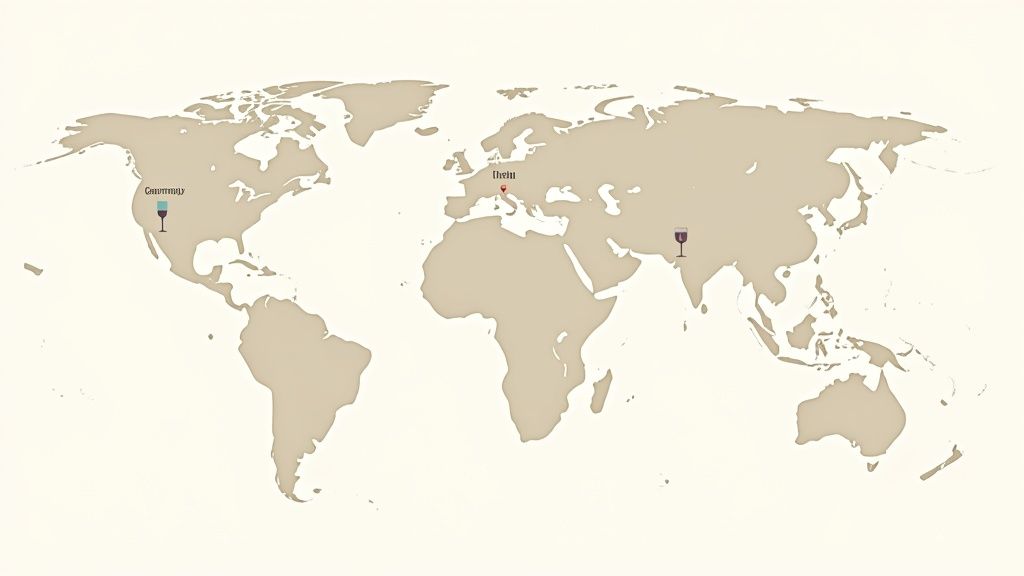
While Italy and France are the spiritual homes of Pinot Grigio and Pinot Gris, this incredibly adaptable grape has well and truly gone global. It’s now thriving in exciting new pockets across the world, with winemakers from Australia to America putting their own unique stamp on it.
This global journey shows just how expressive the grape can be. It’s no longer a simple story of two styles; it's a worldwide conversation. As we explore these different interpretations, you'll see how the fundamental Pinot Grigio wine taste of apple and citrus can be nudged in delicious new directions.
Australian Pinot Grigio: A Style of Its Own
Here in Australia, we've wholeheartedly embraced Pinot Grigio. Our winemakers are crafting some truly exceptional examples that often land in that perfect sweet spot between the Italian and French styles. Regions like the Adelaide Hills in South Australia and Victoria's Mornington Peninsula are really leading the charge.
These cooler climates are key. They allow the grapes to ripen slowly, building up lovely, rich flavours while hanging onto that all-important zesty acidity. The result is a wine that often has the ripe fruit character of a French Pinot Gris, think pear and nectarine, but with the crisp, refreshing finish of an Italian Pinot Grigio.
The grape's popularity is booming locally. In fact, Pinot Grigio has become the fifth most-crushed white grape variety in the country, even overtaking Merlot for the first time. The Mornington Peninsula, in particular, has become a real hotspot for quality, producing a high number of top-rated examples in recent competitions. You can dive deeper into these trends with these Australian wine production statistics.
New World Expressions: Oregon and Germany
Jumping over to the United States, Oregon has carved out a reputation as a standout region for Pinot Gris. The climate there mirrors Alsace in many ways, producing wines that are aromatic and textural, with flavours of ripe pear, melon, and a hint of spice, all held together by a bright, clean acidity.
Oregon Pinot Gris showcases a perfect middle ground. It offers more weight and complexity than a typical Italian Grigio but maintains a vibrancy that makes it incredibly food-friendly and approachable.
Meanwhile, in Germany, the grape goes by the name Grauburgunder. German winemakers typically produce it in a dry style called trocken. These wines are often full-bodied with notes of citrus, almond, and a distinct minerality, giving us a fascinating and delicious alternative for anyone looking to expand their palate.
To help you get a handle on these global differences, here’s a quick snapshot of what to expect from each key region.
Regional Pinot Grigio Taste Profiles
| Region | Primary Flavours | Acidity | Body |
|---|---|---|---|
| Italy (Veneto) | Green apple, lemon, lime, almond | High | Light |
| France (Alsace) | Ripe pear, honeydew, ginger, honey | Medium | Medium to Full |
| Australia (Adelaide Hills) | Nectarine, pear, lime, subtle spice | Medium-High | Light to Medium |
| USA (Oregon) | Yellow apple, white peach, melon, spice | Medium | Medium |
| Germany (Baden) | Citrus, pineapple, almond, minerality | Medium-High | Medium to Full |
From the Adelaide Hills to the vineyards of Germany, Pinot Grigio proves it's a true world traveller. Each region adds another fascinating layer to its story, showing that this single grape is capable of producing an incredible spectrum of white wines.
How to Taste Wine Like a Professional
You don't need to be a sommelier to pick up on all the nuances hiding in your glass. Honestly, all it takes is a simple, structured approach to unlock a much deeper appreciation for the Pinot Grigio wine taste and start identifying what makes each bottle unique. The pros use a surprisingly straightforward four-step method: See, Swirl, Smell, and Sip.
Following this process just slows you down a bit, allowing your senses to catch those subtle details that are easy to miss in a quick gulp. It turns drinking wine from a passive activity into an engaging experience, helping you figure out exactly what it is you love (or don't love!) about a particular wine. Let's walk through it.
Step 1: See the Colour
Before you even think about taking a sip, hold your glass up against something white a napkin, a piece of paper, whatever you've got. Tilt the glass a little and really look at the wine's colour.
A young, crisp Pinot Grigio, especially one from a classic region like Italy’s Veneto, will usually be incredibly pale. We're talking almost see-through, with a pale straw or even slightly greenish tint. This is your first clue. If you see a deeper golden colour, it might hint at a richer, more textural style, like an Alsatian Pinot Gris or a wine that’s seen a bit of age. The colour starts telling the story before the wine even hits your lips.
Step 2: Swirl to Release Aromas
Now for the fun part. Give the wine a gentle swirl in your glass for about 10–15 seconds. This simple move is actually doing something crucial: it’s mixing in a little oxygen, which helps release all the volatile aromatic compounds trapped in the wine.
Think of it as waking the wine up. As you swirl, you're encouraging all those delicate scents of fruit, flowers, and minerals to lift out of the glass, ready for you to discover them.
Step 3: Smell the Bouquet
Right after you've swirled, bring the glass up to your nose and take a good, deliberate sniff. Don't worry about getting it "right", just pay attention to what the aromas remind you of. With a classic Pinot Grigio, you're likely to pick up on a few key things:
- Primary Fruit Aromas: Look for those bright, fresh scents like crisp green apple, zesty lemon, fresh lime, and juicy pear.
- Floral and Other Notes: You might also catch some subtle hints of honeysuckle, delicate white flowers, or even a faint, nutty whiff of almond.
This step is so important because our sense of smell accounts for the vast majority of what we perceive as flavour. Taking a moment here prepares your brain for what's coming next.
Step 4: Sip and Savour
Finally, the moment you've been waiting for. Take a small sip and let the wine wash over your entire mouth. As it does, think about three key things: the initial taste, the texture or "feel" in your mouth, and how the flavour lingers after you swallow, the finish.
Notice that bright, mouth-watering sensation on the sides of your tongue? That's the acidity. Think about the wine's weight, or body. Is it light and zippy like skim milk, or does it have a bit more texture? The vibrant Pinot Grigio wine taste should burst with citrus and apple, leading to a clean, crisp, and wonderfully refreshing finish.
Perfect Food Pairings for Pinot Grigio

The right food can elevate a great glass of wine into something truly unforgettable. Because the Pinot Grigio wine taste is so versatile, it’s a brilliant companion at the dinner table. The real secret is to match the weight and intensity of the wine to the dish think of it as finding a dance partner that moves at the same speed.
Pinot Grigio’s trademark high acidity is its superpower when it comes to food. It acts like a fresh squeeze of lemon, cutting through rich flavours and cleansing your palate between bites. This makes it an incredibly food-friendly wine that complements a huge range of dishes without ever stealing the show.
Pairing with Crisp Italian-Style Pinot Grigio
For that classic, zesty Italian style of Pinot Grigio, the rule is simple: keep it light, fresh, and clean. Its bright citrus notes and crisp mineral edge are a perfect match for delicate dishes that need a wine to lift them up, not weigh them down.
This lean, vibrant profile won't stand a chance against heavy, creamy sauces, so you’ll want to pair it with foods that mirror its lively character. Just think of the kind of food you’d enjoy on a sunny afternoon by the coast.
- Fresh Seafood: This is the ultimate pairing. Grilled fish, prawns, oysters, and scallops are a match made in heaven.
- Light Salads: Salads with a vinaigrette dressing echo the wine’s zippy acidity perfectly.
- Sushi and Sashimi: The wine’s clean finish won’t clash with the subtle, pure flavours of raw fish.
- Light Appetisers: Try it with bruschetta topped with fresh tomato and basil or a simple goat's cheese tart.
Pairing with Richer Pinot Gris Styles
When you move into the fuller-bodied, more aromatic world of Pinot Gris from places like Alsace, Oregon, or even some of the richer Australian styles, you can be a bit more adventurous. These wines have more texture and weight, allowing them to pair beautifully with heartier meals.
This is where you'll find some impressive complexity and depth, especially in modern Australian examples that have evolved far beyond a simple, neutral white. Their success in cooler climates has really cemented their place in our local wine scene.
The key principle for these richer styles is to match weight with weight. The wine’s creamy texture and notes of stone fruit can handle more robust flavours and sauces.
Some fantastic pairings for these richer styles include:
- Roast Chicken or Pork: The wine’s acidity cuts through the richness of the meat while its body stands up to the flavour.
- Creamy Pasta Dishes: A carbonara or an Alfredo sauce is balanced beautifully by the wine's texture and fruit profile.
- Mildly Spiced Asian Cuisine: Think of a mild Thai green curry or Vietnamese dishes loaded with fresh herbs.
- Soft Cheeses: Creamy, decadent cheeses like Brie or Camembert are a wonderful match.
Once you get a feel for these basic principles, you can confidently start creating your own perfect pairings. For even more ideas, check out our complete food pairing guide for Pinot Grigio to unlock its full culinary potential.
How to Choose and Store Your Wine
Walking into a wine shop and staring at a wall of labels can be a bit much, but picking the right Pinot Grigio is actually easier than you think. The label is your best friend here, giving you a roadmap to the Pinot Grigio wine taste waiting inside the bottle.
First thing to look for is the region. An Italian label from Veneto or Friuli almost always means you’re getting that classic crisp, zesty style. See Alsace in France? That's a good hint you're in for a richer, more aromatic Pinot Gris.
Selecting the Right Bottle
Think about what you're in the mood for. Something light and zippy for a sunny afternoon? Go for an Italian Pinot Grigio. It’s a perfect match. But if you're pairing it with a proper meal like a roast chicken, an Australian or Alsatian Pinot Gris with a bit more texture and body will stand up to those richer flavours beautifully.
Don't just stick to the big international names, either. Australia is now home to over 160 different grape varieties, and Pinot Gris/Grigio has really cemented its place in the top tier. It accounts for 4,000 hectares of vines, making it one of our most crushed white grapes. That says a lot about its importance in our diverse wine scene. If you're curious, you can learn more about Australia's rich viticultural world and the grape varieties that thrive here.
Here are a few practical tips for your next trip to the bottle shop:
- Check the Vintage: Pinot Grigio is all about freshness. It's almost always best enjoyed young, so grab the most recent vintage on the shelf to get that maximum vibrancy.
- Consider the Price: You can find some amazing value, but super cheap options can sometimes taste a bit diluted and flat. Often, spending just a few extra dollars delivers a massive leap in quality.
- Read the Description: A lot of modern labels have handy tasting notes on the back. This is a great cheat sheet to figure out if the wine is lean and citrusy or leaning more towards ripe and fruity.
Storing Your Wine for Peak Freshness
So, you’ve got your bottle home. Now what? Proper storage is key to keeping that delicate character intact. Unlike a big, bold red that might get better with age, Pinot Grigio's charm is all in its youthful energy. It’s a "drink now" wine, meant to be enjoyed within one to two years of its vintage.
The goal with storing Pinot Grigio is simple: keep it cool, keep it dark, and keep it still. This prevents the wine from ageing prematurely and losing its crisp, refreshing edge.
For short-term storage, a cool, dark cupboard away from sunlight and heat sources (like the oven!) is absolutely fine. If you plan on holding onto it for more than a few months, a wine fridge set to around 12°C is your best bet.
And once it’s open? Pop a stopper in it, stick it in the fridge, and it'll stay fresh for about three days. For a deeper dive into getting the conditions just right, check out our guide on Pinot Grigio temperature, glassware, and storage tips.
Your Pinot Grigio Questions, Answered
To wrap things up, let's tackle some of the most common questions we hear about Pinot Grigio wine taste. These quick, clear answers will help cement everything you've learned.
Is Pinot Grigio a Sweet or Dry Wine?
Pinot Grigio is almost always a dry white wine, especially the zesty Italian style everyone knows and loves. While the French Pinot Gris style from Alsace can have a whisper of sweetness and a richer texture, the vast majority of Pinot Grigio you'll find is celebrated for its crisp, dry finish with no noticeable sugar.
What Is the Difference Between Pinot Grigio and Sauvignon Blanc?
While they're both popular dry whites, they couldn't be more different in personality. Pinot Grigio is more subtle and delicate, with gentle notes of green apple, pear, and citrus. Sauvignon Blanc, on the other hand, is much more aromatic and loud, bursting with punchy flavours of grapefruit, passionfruit, and often a signature ‘green’ note like capsicum or freshly cut grass.
Think of it like this: Pinot Grigio is a clean, crisp mineral water with a squeeze of lemon, while Sauvignon Blanc is an intensely aromatic herbal tea infused with tropical fruit.
Should Pinot Grigio Be Served Chilled?
Absolutely. There's no other way to enjoy it! To get the best out of its crisp acidity and refreshing fruit notes, Pinot Grigio needs to be served well-chilled, ideally between 7–9°C.
If it's too warm, it will taste flat and muted. Popping a bottle in the fridge for about two hours before you plan to drink it is the perfect way to hit that sweet spot. This guarantees every sip is as bright and zesty as the winemaker intended.
Ready to dive into the crisp, refreshing world of Pinot Grigio? Discover a curated selection of exceptional Australian styles at McLaren Vale Cellars and find your new favourite today. Start shopping now at https://www.mclarenvalecellars.com.

Comments (0)
There are no comments for this article. Be the first one to leave a message!