
Choosing between SA Merlot and SA Shiraz really just boils down to your personal taste for texture and flavour. Think of it this way: Merlot is typically softer, smoother, and more fruit-forward, making it a wonderfully approachable choice for almost anyone. On the other hand, Shiraz brings a bolder, spicier, and more full-bodied experience to the table with a powerful, unmistakable profile.
Merlot vs Shiraz: A Quick Comparison
When you're standing in the wine aisle, it helps to have a clear snapshot of what sets these two popular reds apart. While both are celebrated for their rich character, their personalities couldn't be more different.
Merlot is often described as plush and velvety. It's a versatile companion for a wide range of foods and occasions, thanks to its gentle tannins and notes of ripe plum and black cherry that create a mellow, easy-drinking experience.
Australian Shiraz, in contrast, is known for its robust structure and complexity. It commands attention with its firm tannins, deep colour, and a flavour profile packed with dark blackberry, pepper, and often a hint of smoky oak. This makes it a perfect match for hearty, flavourful meals that need a wine that can stand up to them.
To make your choice even simpler, here’s a direct comparison of their core attributes.
At a Glance: Merlot vs Shiraz
This table gives you a quick summary of the key characteristics that define each wine, helping you make a more informed decision based on your palate and the occasion.
| Characteristic | Merlot | Shiraz |
|---|---|---|
| Primary Flavours | Plum, black cherry, raspberry, bay leaf | Blackberry, blueberry, black pepper, liquorice |
| Body | Medium to Full-Bodied | Full-Bodied |
| Tannins | Medium | High |
| Acidity | Medium | Medium-High |
| Overall Style | Soft, velvety, fruit-forward | Bold, spicy, powerful |
| Best For | Casual dinners, new red wine drinkers | Hearty meals, lovers of robust reds |
Understanding these fundamental differences is the first step. Merlot offers a softer landing, while Shiraz provides a more intense journey. Whether you prefer the gentle embrace of Merlot or the confident punch of Shiraz, each offers a unique and satisfying experience for red wine lovers.
To really get a handle on the Merlot vs Shiraz debate, you have to look beyond the bottle and get to know the grapes themselves. These aren't just two different styles of red wine; they have completely different personalities, shaped by where they came from, how they landed in Australia, and the way they behave in our local vineyards.
Think of Merlot as the smooth, charming diplomat of the red wine world. Hailing from Bordeaux, France, it’s built a global following for its plush, velvety texture and easy-going red fruit character. Merlot is all about soft tannins and delicious notes of plum, black cherry, and a little hint of herbs, which makes it incredibly versatile.
Its adaptable nature means it’s just as good on its own as it is when blended, where it often plays a key role in softening up more structured grapes like Cabernet Sauvignon. Sure, it took a bit of a hit after that movie scene, but its sheer drinkability has kept it firmly on dinner tables and in cellars. To get the full story on its French roots, you can explore the origins of the Merlot wine grape and see how it became a worldwide favourite.
Merlot: The Approachable All-Rounder
The beauty of Merlot is its balance. It manages to be rich without feeling heavy, and fruity without being overly simple.
- Key Characteristics: Usually medium-bodied with gentle tannins and a signature smooth finish.
- Aroma & Flavour: You'll typically find notes of ripe plum, black cherry, chocolate, and sometimes a whisper of bay leaf.
- Australian Expression: In cooler Aussie climates like parts of the Limestone Coast, Merlot shows a bit more elegance and herbal character. Head to warmer spots, and it becomes much jammier and more fruit-forward.
Merlot is the wine you can confidently bring to a dinner party when you don’t know what’s on the menu. Its mellow personality gets along with a huge range of foods and is a genuine crowd-pleaser, making it a safe yet sophisticated bet.
Shiraz: Australia's Bold Icon
If Merlot is the diplomat, then Shiraz is the bold, charismatic leader. It’s known as Syrah in its French homeland of the Rhône Valley, but this grape truly found its voice in Australia, becoming our country's most famous red wine.
Shiraz is all about power and presence. It’s known for its deep, dark colour, full body, and an intense flavour profile that doesn’t hold back. It’s a grape of real complexity, delivering everything from rich blackberry and plum in warmer climates like the Barossa, to spicier, more savoury notes of black pepper and liquorice in cooler regions. With its firm tannins and robust structure, this is a wine that demands your attention and promises a memorable sip every time.
A Detailed Analysis of Flavour and Structure
While you can file both Merlot and Shiraz under "rich red wine," that's where the similarities end. Their flavour profiles and the way they feel in the mouth are worlds apart, and getting to know these differences is the key to figuring out which one you'll prefer for any given occasion. It's a choice between two completely distinct wine personalities.
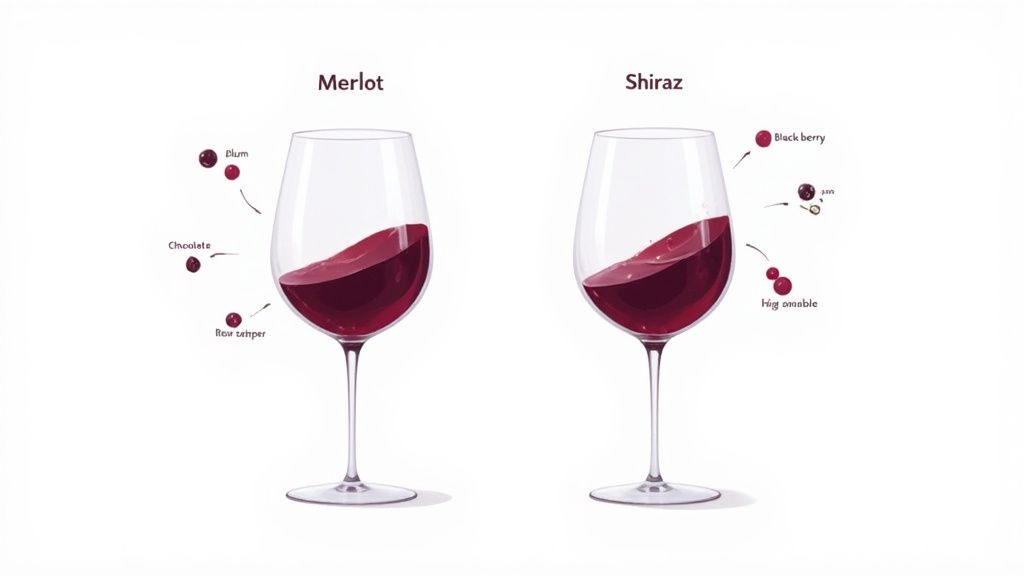
Merlot is all about a softer, rounder fruit character. The main things you'll taste are plush red and black fruits, think ripe plum, black cherry, and maybe some raspberry. This creates a profile that feels generous and welcoming right from the first sip.
Shiraz, on the other hand, lives in a darker, more intense part of the fruit spectrum. It’s driven by bold flavours of blackberry, dark currant, and blueberry. This concentration gives Shiraz its signature power and depth, setting a more serious, commanding tone.
Unpacking the Secondary Notes
Once you get past that first hit of fruit, it’s the secondary notes that truly separate these two wines. These are the more subtle flavours that add layers of complexity, often coming from the winemaking process itself.
-
Merlot's Subtle Complexity: Merlot often picks up gentle secondary notes of chocolate, vanilla, and clove, especially if it has spent time in oak barrels. You might also catch herbal hints like bay leaf or a touch of fruitcake spice, which adds a lovely savoury edge to its fruitiness.
-
Shiraz's Spicy Signature: Aussie Shiraz is famous for its unmistakable spicy and savoury undertones. Black pepper is the classic calling card, but you'll often find notes of liquorice, smoked meat, and sometimes a hint of eucalyptus or mint, particularly in wines from cooler pockets of the region.
These differences are what it's all about. Merlot feels like a comforting blanket of soft fruit and sweet spice, while Shiraz challenges and excites your palate with its bold fruit and peppery kick.
The real split is in their aromatic signatures. Merlot is about gentle, plush fruit with soft herbal touches. Shiraz is defined by its powerful dark fruit core, cranked up by a distinctive spicy, peppery character.
Body, Tannin, and Acidity
How a wine feels in your mouth, its body, tannins, and acidity, is what we call its structure. This is where the contrast between Merlot and Shiraz becomes crystal clear.
Merlot is typically a medium to full-bodied wine with moderate acidity. Its defining feature is its tannins, which are usually softer and plusher than many other reds. This creates that velvety, smooth texture that makes it so approachable and easy to drink, even when it's young. If you'd like to dive deeper, you can check out this detailed guide on unraveling the mystery of tannins and why they matter in wine.
Shiraz, on the other hand, is almost always full-bodied. It brings medium-to-high acidity and, most importantly, firm, well-defined tannins. This robust structure gives the wine a powerful presence on the palate and a long, memorable finish. That higher tannin level doesn't just contribute to its bold mouthfeel; it also gives premium examples fantastic potential for ageing.
Mastering Food Pairings For Merlot and Shiraz
Choosing the right wine can take a good meal and make it truly great, and understanding the core differences between Merlot and Shiraz is your secret weapon. This isn't just about the old "red wine with red meat" rule; it’s about creating a genuine harmony between the wine's structure and the food's flavours.
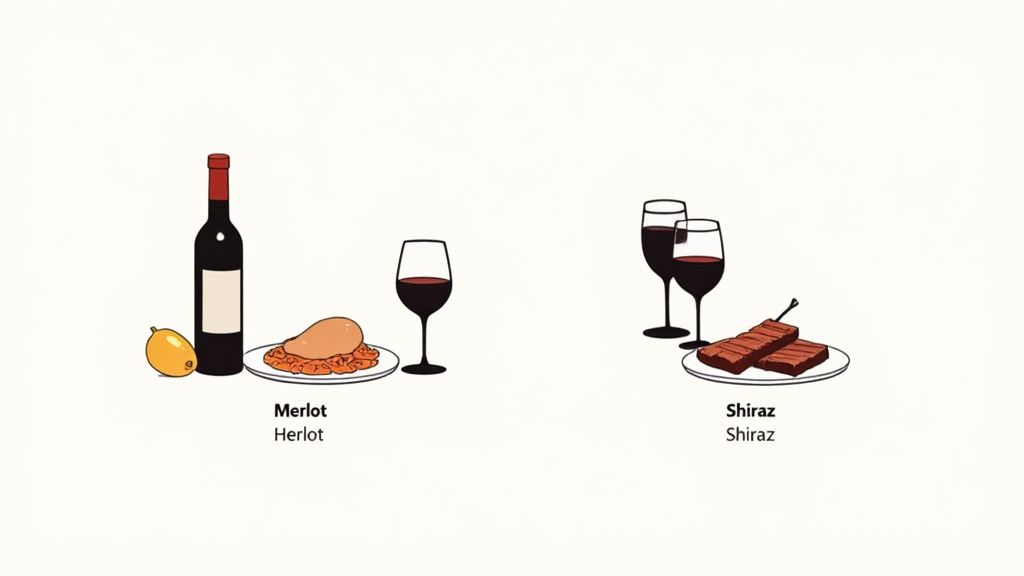
It all comes down to synergy. A wine’s tannins, acidity, and fruit profile interact directly with elements like fat, salt, and spice in your dish. When you get it right, both the food and the wine taste better than they ever could on their own.
Perfect Pairings For Mellow Merlot
Merlot’s charm is its softer tannins and plush, red-fruit character. This makes it incredibly versatile because it’s far less likely to overwhelm more delicate dishes. Its mellow structure is all about complementing food, not competing with it.
Think of Merlot as the perfect plus-one for comfort food and mid-weight dishes.
- Roasted Poultry and Pork: Roast chicken, turkey, or a tender pork loin are just brilliant with Merlot. The wine’s gentle fruitiness lifts the savoury meat without getting in the way.
- Tomato-Based Sauces: Its moderate acidity and soft tannins are a beautiful counterpoint to the tang of Italian pasta sauces, like a classic bolognese or a rich lasagne.
- Earthy Flavours: Dishes heavy on mushrooms, herbs like rosemary, or mild cheeses find a wonderful friend in Merlot, which echoes these savoury notes.
The key takeaway for Merlot is balance. Its smooth, velvety texture and approachable fruit profile make it a safe yet sophisticated choice for a huge range of meals, especially those that aren't too aggressive in flavour.
Hearty Matches For Bold Shiraz
When your meal is big and packed with flavour, you need a wine that can stand up to it. This is where the robust, spicy nature of Australian Shiraz truly shines. Its firm tannins are exceptional at cutting through rich fats, cleansing your palate with every single sip.
Shiraz is the go-to for hearty, well-seasoned, and grilled foods.
- Grilled and Barbecued Meats: This is a classic pairing for a reason. A grilled steak, smoky BBQ ribs, or lamb chops are simply elevated by Shiraz’s peppery spice and bold fruit.
- Rich Stews and Casseroles: Hearty dishes like a beef stew or a slow-cooked lamb shank need a wine with enough body and structure to match their intensity.
- Spicy Dishes: The bold fruit in a good Shiraz can handle a bit of heat, making it a surprisingly great choice for dishes with robust spices.
If you want to dive deeper into creating these perfect combinations, our complete guide to wine and food pairing has even more principles and ideas. You can also explore complementary charcuterie and wine pairings to enhance your understanding of this delicious synergy.
Ultimately, deciding between Merlot or Shiraz for dinner comes down to matching the wine’s personality to the weight and flavour intensity of your dish.
When to Choose Merlot and When to Choose Shiraz
Choosing the right bottle isn’t about following a rigid set of rules. It’s about matching the wine to the moment, the food, the company, and the feeling you want to create. When it comes to deciding between Merlot and Shiraz, the best choice often boils down to the occasion.
Think of Merlot as your go-to for relaxed, social gatherings where you want something easy-going and approachable. Its smooth, fruit-forward nature and soft tannins make it a total crowd-pleaser. It's the bottle you open for a casual barbecue with mates or a simple weekday dinner without a second thought, confident everyone will enjoy it.
Shiraz, on the other hand, brings a bit more drama and complexity to the table. With its bold structure and spicy character, it’s the wine you reach for when you want to make an impression. It’s perfect for a special dinner party built around a rich, flavourful meal or for sharing with a guest who really appreciates a powerful, full-bodied red.
Matching the Wine to the Drinker
Beyond the setting, the most important factor is always personal taste. Knowing what you or your guests typically enjoy is the easiest way to pick a winner. Here’s a simple way to think about it.
-
For the Pinot Noir Lover: If you’re a fan of lighter, more elegant reds like Pinot Noir, then Merlot is a fantastic next step. It offers a little more body and darker fruit flavours, but without the powerful tannins of a bigger red.
-
For the Cabernet Sauvignon Fan: For those who gravitate towards bold, structured reds like Cabernet Sauvignon, Shiraz will feel like coming home. It delivers that same full-bodied intensity but switches things up with its signature spicy, peppery kick.
Choosing between Merlot and Shiraz is all about context. Ask yourself: am I aiming for easy-going and sociable, or bold and memorable? Merlot is the friendly handshake; Shiraz is the confident, lingering conversation.
Situational Scenarios
Let's break it down with a few real-world examples to make it crystal clear.
Hosting a big get-together where you don’t know everyone’s wine preferences? Merlot is the safer, more versatile choice. It’s friendly and unlikely to offend any palate.
Planning an intimate dinner with a perfectly grilled steak as the star? Shiraz will elevate the whole experience, its boldness standing up to the rich meat.
Bringing a bottle to a potluck? Merlot’s knack for pairing well with a wide variety of foods makes it an ideal, no-fuss option. Looking for a wine to tuck away in the cellar for a few years? A quality Shiraz often has greater ageing potential. By thinking through these simple scenarios, you can confidently pick the perfect red every single time.
Merlot and Shiraz in the Australian Wine Scene
To really get your head around the choice between Merlot and Shiraz, it helps to understand where they sit in the grand scheme of Australian wine. These two grapes couldn't be more different in their roles, one is the undisputed king of Aussie reds, while the other is a respected, but much smaller, player. This dynamic directly shapes the style, price, and sheer availability of the bottles you find on the shelf.
Shiraz is, without a doubt, Australia’s flagship red. It's the most planted grape variety in the country, completely dominating vineyards from the iconic Barossa Valley to our home turf here in McLaren Vale. Because it's grown so widely, winemakers have an incredible diversity of fruit to work with. This leads to a massive range of styles, from easy-drinking, fruit-forward drops to world-class, cellar-worthy treasures.

Market Position and Production Scale
Merlot, while a popular and well-loved grape, has a much smaller footprint. It absolutely thrives in specific pockets of Australia, like Coonawarra and parts of Western Australia, but it just doesn't command the same volume or national identity as Shiraz. When you look at the numbers, the difference in scale is pretty stark.
Shiraz is overwhelmingly in the lead, accounting for a massive 46 percent of all red grape plantings. Merlot, on the other hand, covers a far more modest 6.3 percent of vineyard area. This gap in production has a huge impact on the market, though it’s worth noting both varieties are currently caught up in the challenges of a significant red wine oversupply in Australia. You can get more details on the state of Australia's wine industry to understand these economic factors better.
The core difference lies in their roles: Shiraz is the engine of the Australian red wine industry, a national icon produced at every price point. Merlot is more of a niche player, often celebrated for its quality in specific regions rather than its nationwide dominance.
This industry context is crucial for any wine lover. The enormous scale of Shiraz production means there's a fantastic selection out there for everyone. At the same time, the more boutique nature of many Australian Merlots means you can find some truly exceptional value and regional character if you know where to look.
Your Merlot & Shiraz Questions Answered
To wrap things up, let's tackle a few common questions that pop up when people are weighing up Merlot and Shiraz. Getting these straight will help you feel even more confident the next time you're choosing a bottle.
Is Merlot Sweeter Than Shiraz?
Technically, neither wine is sweet. Both Merlot and Shiraz are almost always fermented to be dry wines, meaning the yeast has converted all the grape sugar into alcohol.
But it’s true that Merlot can feel a bit sweeter. This is down to its plush, ripe fruit flavours and softer tannins, which can give the impression of sweetness on the palate. Shiraz, on the other hand, often brings savoury notes like black pepper and smoke to the party, alongside a firmer tannin structure that makes it taste less overtly fruity.
Which Wine Is Better For Beginners?
If you're just dipping your toes into the world of red wine, Merlot is a fantastic place to start. Its approachable, fruit-forward profile, medium body, and smoother tannins make it incredibly easy to get along with.
Shiraz can sometimes be a bit much for a newcomer. Its full body, powerful tannins, and bold, spicy character can feel pretty intense if you’re not used to it. Think of Merlot as your friendly introduction to red wine characteristics before you graduate to the bigger, bolder styles.
Both wines can age beautifully, but they take different paths. A top-quality Merlot will evolve to show complex notes of tobacco and truffle. A premium Aussie Shiraz, however, sees its powerful tannins soften and integrate over time, revealing savoury layers of leather, earth, and smoked meats.
Ready to explore the distinct character of McLaren Vale's finest reds? McLaren Vale Cellars offers curated sample packs and dozens to help you discover your perfect match. Find your next favourite bottle today at https://www.mclarenvalecellars.com.


Comments (0)
There are no comments for this article. Be the first one to leave a message!