
A great Sauvignon Blanc is all about a beautiful tension between its electric aroma, zesty acidity, and satisfying texture. It should feel alive and jump out of the glass, leaving you refreshed, never feeling tired or flat. Think of it as a high wire act; it's the balance that makes it thrilling.
Defining What Makes a Sauvignon Blanc Great
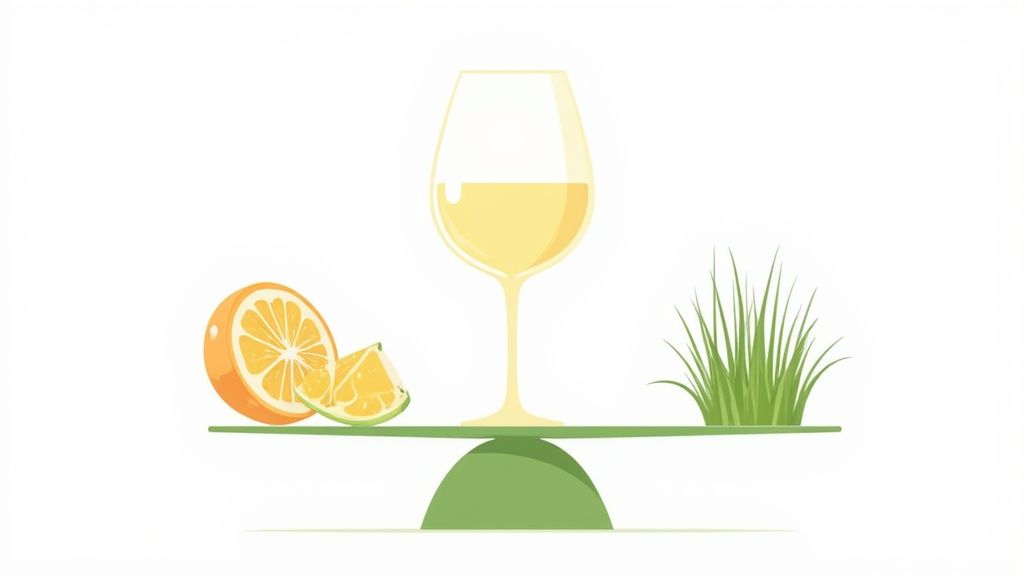
So, what’s the secret sauce that separates a genuinely memorable Savvy from just another bottle on the shelf? It really boils down to three key pillars that winemakers obsess over. Once you know what to look for, you'll have a solid mental checklist for spotting a quality drop every single time.
The Aromatic Profile
First impressions count, and with Sauvignon Blanc, that starts with the aroma. A good one greets you with an expressive bouquet the moment you stick your nose in the glass. This is where the grape really shows its personality.
A top-notch Sauvignon Blanc will have a clean, punchy, and inviting scent. These aromas can swing wildly depending on the climate and the winemaker's touch, but they should always be well-defined. They come from compounds like pyrazines, which give those signature grassy notes, and thiols, which deliver the tropical fruit punch.
You’ll often find a mix of:
- Fruit-Driven: Think tangy passionfruit, zesty grapefruit, lime, gooseberry, and a touch of melon.
- Herbaceous: Fresh-cut grass, green capsicum, a hint of basil, or even asparagus.
- Mineral: A flinty or wet stone character, particularly common in cooler-climate styles from places like the Loire Valley.
This aromatic complexity is a huge clue to the wine's quality. It tells you a story about where it came from and the care that went into making it. You can dive deeper into how place shapes these flavours by exploring the origins of the Sauvignon Blanc grape.
Acidity and Body: The Structural Core
Next up is acidity. This is what gives Sauvignon Blanc its incredible refreshment factor. I like to think of it as the wine’s backbone, it provides structure, makes your mouth water, and cleanses your palate, getting you ready for the next bite of food or another sip.
A well-made Sauvignon Blanc has bright, crisp acidity that feels zesty and energetic. If a wine tastes flat, heavy, or dull, it's often because it lacks sufficient acidity to lift the flavours.
Finally, there’s the body, which is simply how the wine feels in your mouth, its weight and texture. Sauvignon Blanc is almost always a light-to-medium-bodied wine, but a good one still has presence. It shouldn't feel thin or watery. Instead, you're looking for a pleasing texture that holds up against the bright flavours and racy acidity, all leading to a clean, satisfying finish.
To pull it all together, here’s a quick reference guide to these three pillars.
The Three Pillars of a Good Sauvignon Blanc
| Characteristic | What to Look For | Why It Matters |
|---|---|---|
| Aroma | A vibrant, expressive nose with clear fruit, herb, or mineral notes. | The aroma is your first clue to the wine's quality, complexity, and origin. |
| Acidity | A crisp, zesty, and refreshing mouthfeel. It should feel bright, not sharp or flat. | Acidity provides structure, makes the wine food-friendly, and gives it a clean finish. |
| Body & Texture | A light- to medium-body that has presence and isn't watery. The texture should feel pleasing. | Good texture ensures the wine feels balanced and complete, not thin or hollow. |
Getting a handle on these three elements is the key to truly understanding and appreciating what makes a Sauvignon Blanc not just good, but great.
A Global Tour of Sauvignon Blanc Styles
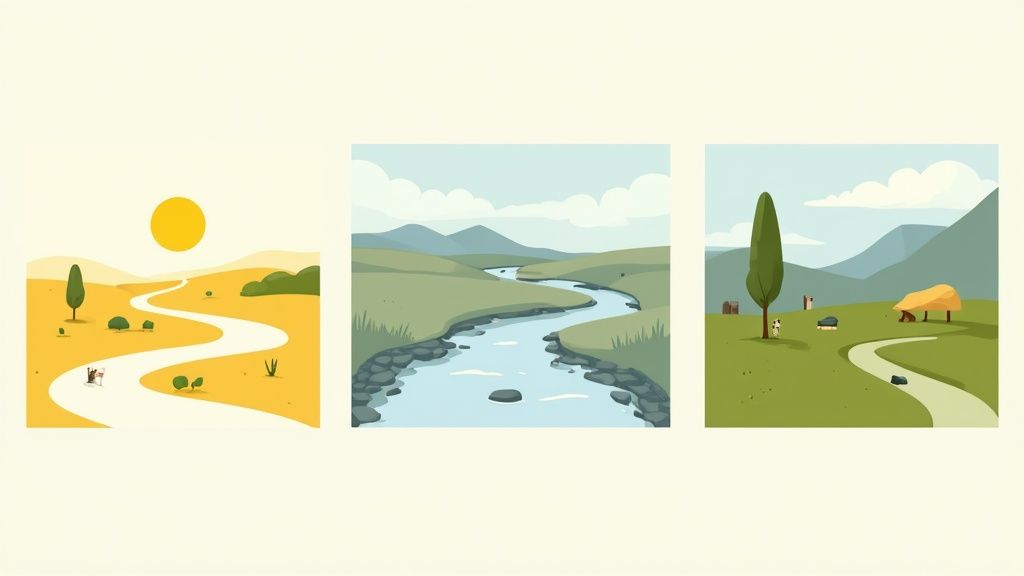
One of the most fascinating things about Sauvignon Blanc is how dramatically it changes depending on where it’s grown. The grape is a bit of a sponge for its environment what the wine world calls terroir, soaking up the unique character of the soil, climate, and local winemaking customs.
This is exactly why a Savvy from the Loire Valley in France tastes worlds apart from one grown in New Zealand, or for that matter, right here in South Australia. Getting to know these regional personalities is the secret to finding a good sauv blanc you’ll absolutely love.
Let's take a quick trip around the globe to explore the most famous postcodes for Sauvignon Blanc and see how place translates to flavour in the glass.
New Zealand: The Tropical Powerhouse
When most people think of Sauvignon Blanc, they’re almost certainly picturing the explosive, aromatic style that put Marlborough, New Zealand, on the world wine map. This region, tucked away on the northern tip of the South Island, produces a wine that is anything but shy.
Thanks to long, sun-drenched days and refreshingly cool nights, the grapes develop an incredible intensity. These are the wines bursting with tropical passionfruit, gooseberry, and a zesty squeeze of lime, often with that signature green kick of freshly cut grass or capsicum. They're unapologetically vibrant and crackle with energy.
This style became a global sensation for good reason. Its punchy, in-your-face fruitiness is immediately appealing and sets the benchmark for a modern, fruit-forward Sauvignon Blanc.
If you’re after a wine that leaps out of the glass, Marlborough is your spot. You can dive deeper into this iconic style by exploring the gems of New Zealand Sauvignon Blanc in our guide.
France: The Old World Classic
Now, let’s head to the Loire Valley in France, the ancestral home of Sauvignon Blanc. Here, in revered villages like Sancerre and Pouilly-Fumé, the grape tells a completely different story. This is the original, the classic "Old World" expression.
Forget the tropical fruit explosion. Loire Valley Sauvignon Blanc is all about restraint and elegance. Think crisp green apple, sharp grapefruit, and a distinctive minerality often described as smelling like wet stones or flint, a direct reflection of the region's famous limestone and silex soils.
It’s less about pure fruit power and more about texture, subtlety, and a steely, refined acidity. These are the epitome of sophisticated, food-loving white wines.
Australia: The Best of Both Worlds
Right here at home, Australian Sauvignon Blanc, especially from cool-climate pockets like the Adelaide Hills and our own McLaren Vale, has carved out a brilliant niche, bridging the gap between the Old and New Worlds. Our winemakers have mastered a style that delivers gorgeous, vibrant fruit without losing its elegant structure.
A cool-climate Aussie Savvy typically shines with notes of bright lime, nectarine, and a gentle herbaceousness, all held together by a more moderate and beautifully integrated acidity than its Kiwi cousin. It’s a wonderfully balanced wine that offers the refreshment you want with an extra layer of complexity, making it both versatile and fantastic value.
To make these differences crystal clear, let's break it down.
Sauvignon Blanc Styles: A Quick Comparison
This table gives you a snapshot of what to expect from these three key regions, helping you pinpoint the style that best suits your palate.
| Region | Primary Aromas & Flavours | Acidity Level | Body |
|---|---|---|---|
| Marlborough, NZ | Passionfruit, gooseberry, fresh-cut grass | High | Light to Medium |
| Loire Valley, FR | Grapefruit, wet stone, green apple, flint | High | Light |
| Cool-Climate AU | Lime, nectarine, subtle herbs, passionfruit | Medium to High | Light to Medium |
Once you start tasting from these different regions, you’ll quickly find the profile that gets you excited. It's all part of the fun of discovering what makes a truly great Sauvignon Blanc.
Why Australian Sauvignon Blanc Is on the Rise
For a long time, Australian Sauvignon Blanc lived in the shadow of its more famous international relatives. If you wanted a good Savvy, you’d probably reach for a bottle from New Zealand or France. But that’s all changed.
Today, Aussie Savvy is stepping out onto the world stage, not just as a reliable alternative but as a top-tier wine in its own right. It's earning rave reviews and winning over wine lovers who are discovering its unique charm. This isn’t a happy accident; it’s the result of a deliberate shift by our winemakers.
They’ve moved away from a ‘quantity over quality’ mindset and are now laser-focused on premium, cool-climate regions. They've figured out exactly where this grape thrives, producing wines that are bursting with life and character. This dedication is what’s cementing Australia's reputation as a powerhouse for a genuinely tastey sauv blanc.
For us wine drinkers, this is brilliant news. It means we’re spoiled for choice with more high-quality, exciting, and great-value Australian options on the shelf than ever before.
A Story of Smart Growth
You don’t have to take my word for it, the numbers tell the same story. Sauvignon Blanc has become a standout performer in Australia's recent wine grape harvests. While the total harvest grew by a respectable 11% to 1.57 million tonnes, Savvy posted impressive double-digit growth.
Even more telling, it’s one of only three top-ten grape varieties to produce more wine now than it did a decade ago. While other classic grapes are plateauing, Savvy is on a clear upward trajectory. You can dive deeper into the stats in Wine Australia’s national vintage report.
This isn’t just a fluke. Winemakers in regions like McLaren Vale are perfecting their craft, fine-tuning everything from how they manage the vineyards to how gently they handle the grapes in the winery. It's all about preserving those delicate, fresh aromas and that signature zesty acidity.
What’s emerging is a distinctly Australian style—a wine that delivers the bright, tropical fruit notes we all love but with a more elegant structure and fascinating texture. It’s a sophisticated sweet spot, sitting perfectly between the lean, flinty style of the Loire Valley and the intensely fruity punch of Marlborough.
By homing in on specific vineyard sites where the grapes can ripen slowly and develop complex flavours, these producers are making wines that truly reflect where they come from. It means the bottle you open is not only refreshing and delicious but also tells the unique story of its patch of Australian dirt.
How to Taste Wine Like You Know What You're Doing
You don't need a fancy vocabulary or years of training to get more enjoyment from your wine. The best tasters simply use a methodical approach to figure out what's in their glass. It’s all about slowing down and paying attention. This helps you pinpoint the flavours you love and starts to reveal why you might prefer one bottle over another.
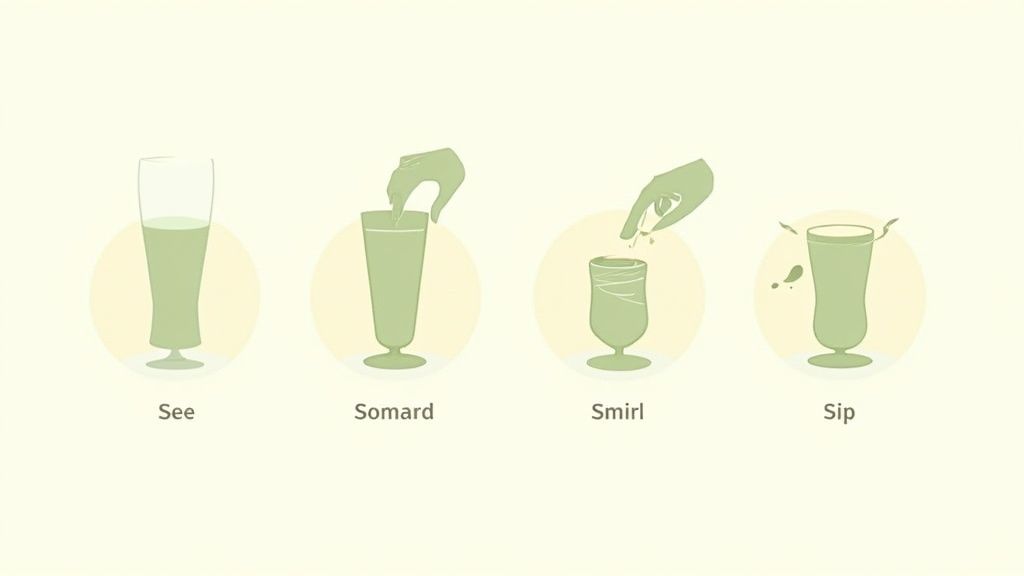
The classic method breaks down into four easy steps: See, Swirl, Smell, and Sip. It’s a simple routine that quickly becomes second nature, and it’ll completely change how you experience every wine you open.
The First Clues Are Visual
Before you even think about drinking, take a moment to look at the wine. Tilt your glass over a white background, a napkin or a piece of paper works perfectly. What do you see? A quality Sauvignon Blanc should be crystal clear and bright, never hazy or dull.
The colour itself tells a story. A pale, almost water-like hue with greenish tints? That’s a classic sign of a young, zesty wine from a cool climate, like Sancerre or a Savvy from the Adelaide Hills. If it’s leaning more towards a straw or lemon-yellow, it could be from a warmer region, or maybe it has a little bit of age on it.
Release the Aromas
Now for the fun part: give the glass a gentle swirl. This isn't just for show. Swirling increases the wine’s surface area, mixing it with oxygen and releasing its aromatic compounds, the tiny molecules responsible for all those incredible scents.
After a few swirls, get your nose right in there and take a proper sniff. What scents are jumping out of the glass? Try to connect what you're smelling back to the styles we’ve talked about.
Are you getting that classic Marlborough hit of passionfruit and gooseberry? Or is it more of a reserved grapefruit and wet stone character, hinting at a French style? This is where the wine really starts to show its personality.
Sip and Assess the Flavours
Finally, take a small sip and let it wash over your entire palate. Think about the journey of flavours from the second it hits your tongue to the lingering taste it leaves behind. This is your chance to confirm what your nose was hinting at and to feel the wine’s structure.
Zero in on these key elements:
- Initial Flavour: What's the very first thing you taste? Is it zesty lime, juicy passionfruit, or that grassy, green capsicum note?
- Acidity: Feel that mouth-watering sensation on the sides of your tongue? That's the acidity. It should feel crisp, vibrant, and refreshing.
- Finish: After you swallow, how long do the flavours stick around? A great Sauvignon Blanc will have a clean, satisfying finish that leaves you wanting another sip.
Going through these simple motions helps train your palate to pick up on the subtleties in every glass. If you're keen to dive deeper, our full how to taste wine like a sommelier guide has you covered.
Pairing Food to Make Your Sauvignon Blanc Shine

Forget everything you’ve heard about stuffy, rigid wine pairing rules. The real goal is to find a partnership, where both the food on your plate and the wine in your glass taste even better together. A good sauv blanc, with that signature zesty acidity and punchy aromatic profile, happens to be one of the most versatile and food-friendly wines you can pour.
What's its secret? It all comes down to its structure. That vibrant acidity acts like a squeeze of fresh lemon, cutting through rich dishes and refreshing your palate with every sip. At the same time, its green, herbaceous, and citrus notes are brilliant at latching onto similar flavours in food. So, let’s move past the old ‘white wine with fish’ advice and get into what makes these pairings really sing.
The Guiding Principles of Pairing
Think of food pairing as choosing between a complement or a contrast. The golden rule is to match intensity, a light, delicate wine for a subtle dish, and a bolder, more aromatic one for something with a bit more oomph. Sauvignon Blanc really hits its stride when you pair it with foods that echo its tangy, herbal character.
At its core, the principle is simple: the wine’s zippy acidity slices through fat and richness, while its herbal and citrus notes complement fresh, green ingredients. The result is a beautifully balanced and refreshing experience.
This makes it the perfect go-to for almost anything you'd normally serve with a wedge of lemon or a scattering of fresh herbs.
Classic and Modern Pairings
Okay, enough with the theory. Let's look at some real-world examples that show just how adaptable this grape truly is. These pairings are brilliant because they play to the wine’s greatest strengths.
Seafood and Shellfish:
- Oysters: This is the quintessential pairing, and for good reason. The wine’s flinty minerality and sharp citrus notes are the perfect match for the briny, fresh hit of a raw oyster.
- Grilled Fish: Whether you've got snapper, barramundi, or prawns on the barbie, the wine's acidity beautifully cuts through any oiliness, keeping every bite tasting clean and bright.
Cheese and Salads:
- Goat Cheese: A world-famous match made in heaven. The creamy, tangy flavour of goat cheese is exquisitely balanced by the wine's zesty acidity and grassy character.
- Green Salads: Any salad tossed in a vinaigrette, especially those with ingredients like asparagus, green beans, or capsicum, will find a soulmate in Sauvignon Blanc. The wine simply mirrors the fresh, green flavours in the dish.
Adventurous Food Pairings
Don't ever feel boxed in by the classics! The lively personality of a good Sauv Blanc, particularly the fruit-forward Australian styles, can stand up to some surprisingly intense and unexpected flavours.
Why not give one of these a try?
- Thai Green Curry: The wine's aromatic intensity and crisp acidity offer a brilliant, refreshing contrast to the rich coconut milk and spicy kick of the curry.
- Herb-Crusted Pork Chops: Those green, herbal notes in a McLaren Vale Sauvignon Blanc will beautifully complement herbs like parsley, thyme, and rosemary in the crust.
- Sushi: The clean, palate-cleansing nature of the wine is an amazing counterpoint to the delicate flavours of raw fish and the savoury hit of soy sauce.
Once you understand why these combinations work, you'll have the confidence to start creating your own knockout pairings at home. It’s all about elevating flavours and, most importantly, enjoying the meal.
How to Choose a Good Sauv Blanc at Any Price Point
Finding a great bottle of wine shouldn't feel like a lottery. It really comes down to knowing what to look for, and with a few pointers, you can walk into any bottle shop or browse online with confidence, ready to pick a winner every time.
Don't be fooled into thinking a higher price tag automatically means better wine, especially with a grape as transparent as Sauvignon Blanc. Often, you're just paying for the prestige of a famous name or fancy packaging. The real secret to finding a good sauv blanc is knowing how to read the story on the label and understanding where the real value is right now.
Decoding the Wine Label
Think of the wine label as a cheat sheet. It gives you the inside scoop on the wine's personality before you even pop the cork. Here are the two most important clues:
- Region: This is your number one indicator of style. As we've covered, a crisp, textural Sauvignon Blanc from McLaren Vale is a world away from the tropical punch of a Marlborough Savvy.
- Vintage: Simply the year the grapes were picked. For a zesty, aromatic wine like Sauvignon Blanc, freshness is key. You'll almost always want to grab the youngest vintage on the shelf.
Finding Value in Today's Market
Wine is a product of agriculture, and market shifts can create amazing opportunities if you know where to look. Right now, the smartest money is on Australian Sauvignon Blanc.
A recent bumper crop saw a huge jump in production of this much-loved grape. In fact, supply ended up exceeding demand by an estimated 52 million litres, that’s a massive surplus of seriously good wine. For anyone who loves a glass of Savvy, this glut has turned Australia into the go-to for finding brilliant quality without the premium price tag. You can read up on the details in this Australian wine production report.
What does this oversupply mean for you? It's a fantastic opportunity. Top-tier wineries have fantastic wine they need to sell, which means you can get your hands on premium, cool-climate Australian Sauvignon Blanc for far less than you would have a few years ago.
It all boils down to buying smarter, not just spending more. By paying attention to what the label tells you and keeping an ear to the ground on regional trends, you can consistently drink better wine and save a bit of money while you're at it.
Got Questions About Sauvignon Blanc? We've Got Answers
To really get the most out of your bottle, let's tackle a few practical questions that always seem to pop up. Nailing these little details can turn a good glass of sauv blanc into a great one.
Does Sauvignon Blanc Age Well?
Honestly, for the vast majority of bottles, the answer is a firm no. This is a wine that’s all about youthful energy. Its punchy aromatics and zesty, vibrant acidity are at their absolute best within 1-3 years of the vintage date on the bottle.
While there are a few top-shelf, barrel-fermented styles out there built to evolve, most sauvignon blanc is crafted to be enjoyed right here, right now. Don't let it gather dust!
What's the Perfect Serving Temperature?
You want it chilled, but definitely not ice-cold. The sweet spot is right around 7-10°C. If it’s too cold, you'll numb all those gorgeous aromas and flavours. Too warm, and that refreshing acidity can feel a bit limp and dull.
A great rule of thumb? Pull it out of the fridge about 20 minutes before you plan on pouring a glass.
Ever seen 'Fumé Blanc' on a label? It's just another name for Sauvignon Blanc. The term was popularised in California for wines aged in oak, which gives them a richer, creamier texture and adds notes of smoke or toast—a completely different beast from the zesty style we know and love.
This grape has become a real star in the Australian wine scene. Recent industry figures showed its harvest grew by double digits, playing a big part in boosting the national crush and cementing its place as one of our most important white wine exports. It’s clear that Aussie sauv blanc is setting a benchmark for quality on the world stage. You can dive into the nitty-gritty in the full Australian wine production report.
Ready to taste what Australian Sauvignon Blanc is all about? Here at McLaren Vale Cellars, we’ve put together a stunning collection of vibrant, elegant styles that are perfect for any occasion. Find your next favourite and get free delivery on orders over $100. Shop our Sauvignon Blanc selection now.

Comments (0)
There are no comments for this article. Be the first one to leave a message!