
“Serve red wine at room temperature” is tidy advice, but it was never written for an Australian summer. A McLaren Vale Grenache poured at a warm indoor temperature can taste hotter, heavier and less fragrant than the same bottle served slightly cool. If you want to know how to serve Grenache wine, start with the wine's style, body and age, not a rule borrowed from a cooler cellar.
A good serving routine is simple: cool the bottle briefly, taste before committing to decanting, use a broad glass, pour modestly and let the wine tell you what it needs. That approach respects Grenache's red fruit, spice and freshness while giving richer McLaren Vale bottles enough warmth to show their texture.
Why the Old Serving Rules Don't Fit Grenache in Australia
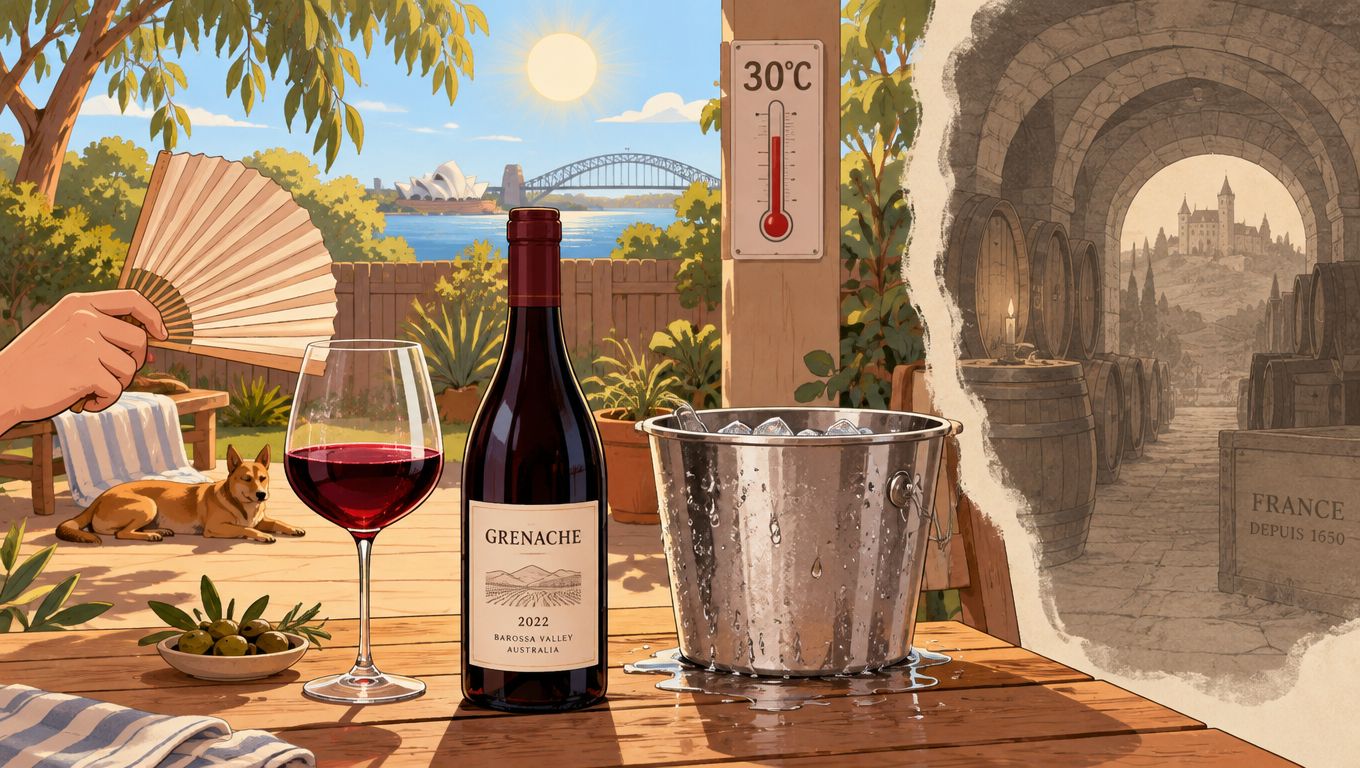
The old “room temperature” rule assumes a cool European room, not an Australian home. In warmer South Australian conditions, a room can sit well above the range that keeps Grenache fresh. Wine Australia's guidance places lighter reds between 12°C and 17°C, and fuller reds between 17°C and 21°C, while its educator material identifies 15°C as a suitable red-wine serving point when wine is poured in advance (Wine Australia's introductory wine notes).
That distinction matters with McLaren Vale Grenache. The region's generous fruit and warmth can be wonderful, but serving the wine too warm makes alcohol feel more prominent and can push spice and red-fruit lift into the background. The result isn't necessarily faulty wine. It's often a service mistake.
Style matters more than the grape name
Grenache isn't one fixed experience. A pale, aromatic rosé needs a colder service than a mature, oak-shaped red. A light, fruit-driven red benefits from a brief chill, while a fuller old-vine example can take more warmth once it has opened. Treating every bottle identically is convenient, but it isn't precise.
McLaren Vale's history explains why the variety deserves this level of attention. Grenache cuttings arrived in South Australia during the 1830s, and the grape remained McLaren Vale's most widely planted variety into the 1960s. By 2020, it represented about 450 hectares, or 6.15% of McLaren Vale plantings, with modern regional material still highlighting old vines dating to the late nineteenth century (McLaren Vale wine history and regional background).
Those old vines and warm-climate styles reward measured service, not ritual. A broad red glass, moderate pour and a little time in the bowl often reveal more than leaving the bottle on the bench.
Practical rule: If your home feels warm, a short refrigerator rest is usually more accurate than “room temperature”.
For more background on the variety before you open the bottle, this Grenache wine guide gives useful context on its history and character. If you keep bottles in a traditional entertaining space, a guide to antique drinks cabinets can also help you think about storage and presentation without confusing a cabinet with temperature-controlled cellaring.
Getting the Serving Temperature Right
Start with a bottle that's been sitting at indoor temperature. Place it in the refrigerator for 20 to 30 minutes, then pour a small taste. This controlled approach cools the wine without forcing you to guess, and it gives you an opportunity to adjust before filling everyone's glass.
Use the following as a working reference:
| Style | Target temperature | Fridge time from room temperature |
|---|---|---|
| Light, fresh red Grenache | 14–16°C | 20–30 minutes |
| Fuller or mature red Grenache | 16–18°C | 20–30 minutes, then assess |
| Grenache rosé | 7–9°C | Chill until properly cold, then serve |
The temperature ranges for red styles reflect the practical differences between lighter and richer bottles. Wine Companion identifies approximately 15°C as an ideal temperature for Grenache, while Australian guidance places fuller-bodied reds around 12–15°C in some serving contexts and lighter examples slightly cooler (Wine Companion's Grenache serving guidance). In practice, a lighter McLaren Vale red can show well around 14–16°C, while a fuller, mature red may need 16–18°C to express its texture without becoming hot.
Let your senses confirm the number
A thermometer is useful, but it's not the final judge. At the right temperature, red fruit and spice should feel lifted, the alcohol should register as warmth rather than heat, and the finish should remain fresh. If the wine tastes broad, sweet or burning, cool it again briefly.
If the wine seems closed after chilling, give it a few minutes in the glass rather than immediately warming the entire bottle. Swirl gently and taste again. If it feels thin and muted, it may be too cold.
Over-chilling is the other common mistake. Temperatures below about 12–14°C can suppress Grenache's red fruit, spice and herbal aromas. Put the bottle aside for a short time and let it come up naturally. You can find a useful comparison of styles and service ranges in this guide to ideal serving temperatures for different wine styles.
Rosé is a separate case. Serve Grenache rosé around 7–9°C to preserve crispness and delicate aromatics, rather than applying red-wine logic to a pale, refreshing style. Mixed selections need separate treatment, especially when red Grenache, rosé and GSM-style blends appear on the same table.
Choosing the Right Glass and Pour Size
Grenache needs room to breathe, so choose a broad-bowled red-wine glass rather than a narrow tumbler or a small white-wine glass. The wider bowl lets you swirl without losing the wine over the rim and gives red fruit, spice and savoury notes space to gather.
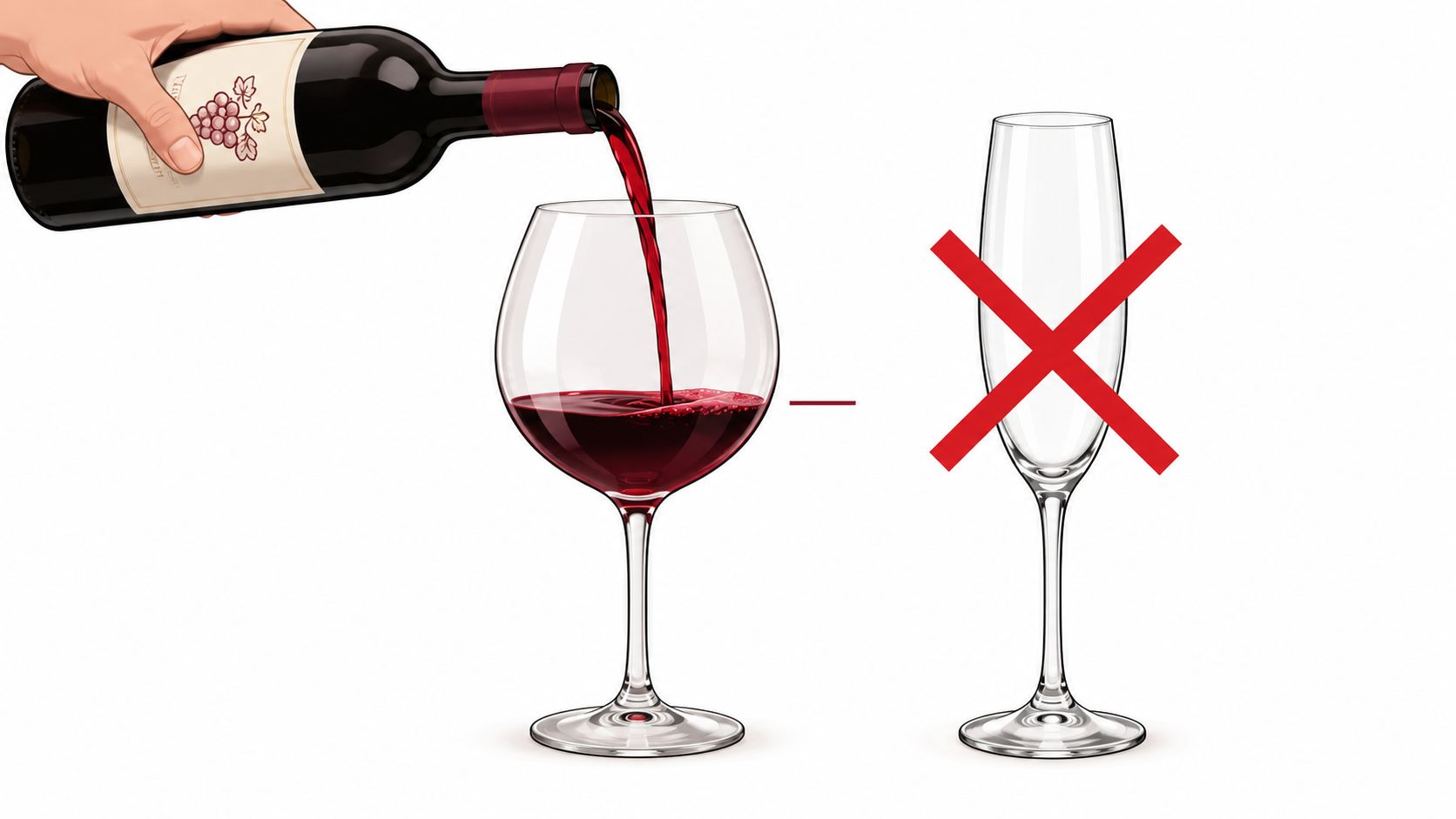
Thin, delicate glassware isn't automatically wrong, but it can make a structured old-vine Grenache feel cramped. A broad red bowl is more forgiving when you're tasting a young wine, comparing bottles or allowing a richer style to open gradually.
Pour for the occasion
Pour size should match what you're doing, not what the glass can hold. For a tasting flight, 60–90 mL keeps the comparison focused. With food, 125–150 mL is a more practical serving. In either case, fill no more than one-third of the bowl so you can swirl without spilling and still have room for aromas to develop.
Leave roughly one-third of the bottle as headspace after pouring. That gives the remaining wine some contact with air, but it avoids turning the open bottle into a large, uncontrolled decanter. If you're saving it for another meal, reseal it and refrigerate it. Bring the next pour back towards the serving range before tasting.
The same principle applies to glass choice: use enough volume for the wine to open, but don't mistake a large pour for generous hospitality. A measured serve lets you notice how Grenache changes across the meal and makes a second sitting more enjoyable.
The biggest pouring mistake is filling a small glass too high. The wine loses useful bowl space for swirling, and the drinker ends up tasting volume rather than aroma.
A short visual demonstration can help if you're setting up a tasting at home:
When to Decant and When to Leave the Bottle Alone
Decanting Grenache should solve a problem, not complete a ceremony. Open the bottle, inspect it for sediment and taste immediately. If the wine smells reductive, closed or strongly alcoholic, decanting may help. If it already shows clear fruit, spice and balance, leave it in the bottle and let the glass do the work.
For a young or concentrated wine, begin with 20–30 minutes in a clean decanter. Taste at 10-minute intervals, watching for more defined fruit, softer tannin and less prominent alcohol. Extend towards 60 minutes only when tannin, oak or concentration still dominates. A stopwatch can guide the process, but the wine decides when it's ready.
Older bottles need a gentler hand
If an older bottle contains sediment, stand it upright for 12–24 hours before opening. Remove the cork carefully and pour slowly through a light source. Stop when sediment approaches the shoulder of the bottle. The aim is to separate the clear wine from the deposit, not to expose a mature Grenache to more oxygen than it can handle.
Delicate or mature Grenache can flatten quickly when over-aerated. Fruit and spice may fade, leaving a wine that feels tired rather than open. If the aroma weakens or the palate becomes flat, stop aeration and serve immediately.
This staged approach is more reliable than automatically decanting every Australian red. Further guidance on the technique appears in this practical article about decanting red wine.
The bottle also needs protection after service. Reseal it cleanly and refrigerate it if you're saving it for another meal. These wine bottle resealing tips are useful when you want to limit unnecessary oxygen exposure without turning a casual dinner into a technical exercise.
A recently opened bottle served warm can undo careful decanting. Taste first, cool when needed, and let sensory change decide the next step.
Pairing Grenache With Food Beyond the Steakhouse
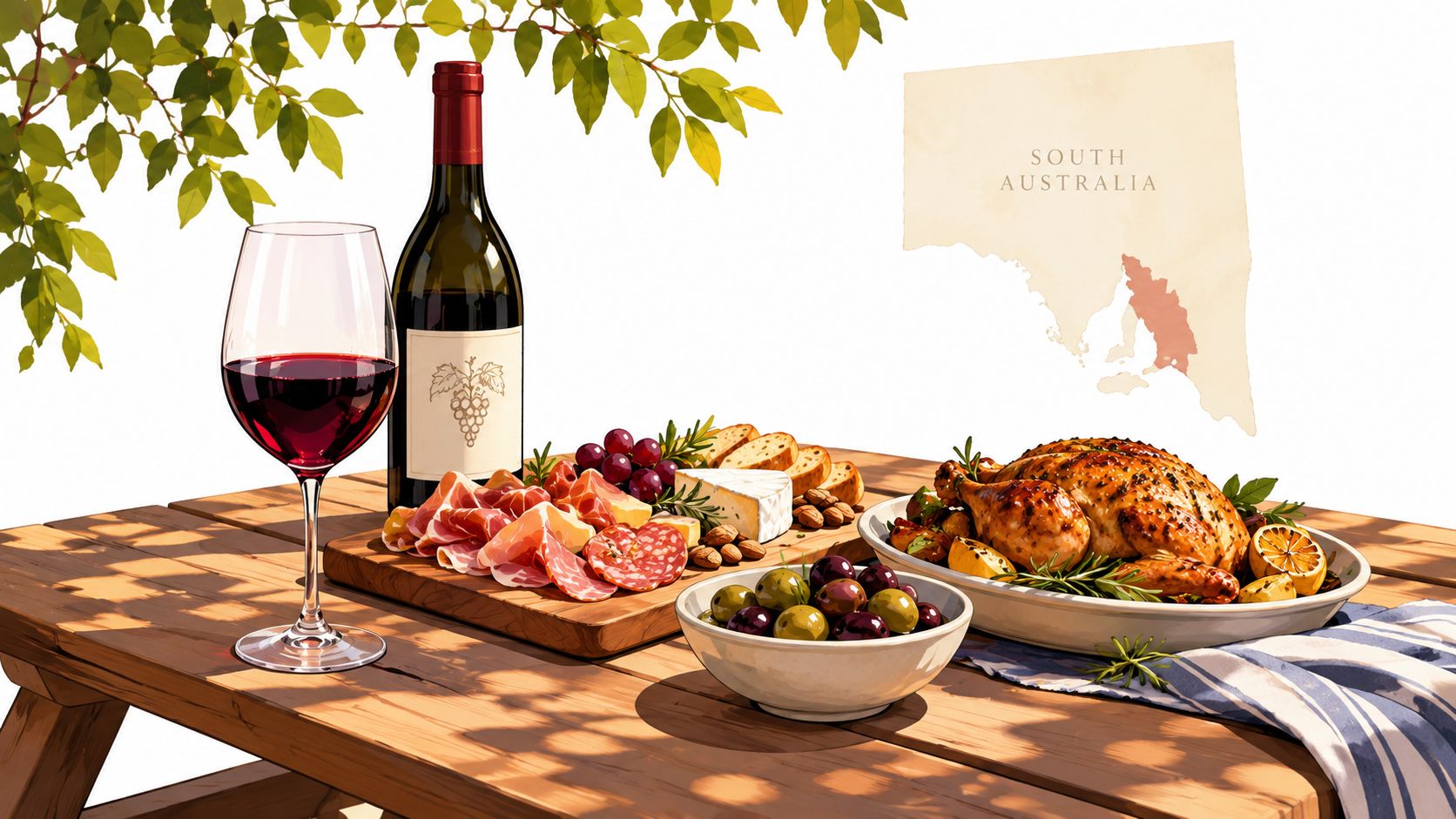
Grenache is an easy food wine because it can bring red fruit and warmth without demanding a heavy meal. McLaren Vale also has a strong GSM tradition, with Grenache, Shiraz and Mataro or Mourvèdre working together in blends. That combination makes the variety useful at a shared table, not only beside a large piece of red meat.
Match the bottle to the meal
| Grenache style | Food that suits it |
|---|---|
| Light, fresh red | Grilled seafood, pizza, charcuterie and roast chicken |
| Fuller or mature red | Slow-cooked lamb, roasted vegetables and herb-led dishes |
| GSM blend | Grilled vegetables, moderately spiced food and savoury shared plates |
| Grenache rosé | Salads, picnic dishes, seafood and lighter shared plates |
A lighter red Grenache can work particularly well with grilled prawns, tuna, roast chicken or a vegetable pizza. Its fruit gives the dish generosity, while a slightly cooler service keeps the pairing from feeling heavy.
Richer examples suit slow-cooked lamb, roasted eggplant, mushrooms and dishes built around rosemary, thyme or other herbs. The wine's texture has enough presence for the food, but the pairing still feels more relaxed than a steakhouse combination.
GSM blends bring another option. Shiraz supplies structure and Mataro adds savoury depth, while Grenache contributes fruit and warmth. That makes the blend a useful partner for grilled vegetables, moderately spiced dishes and shared plates where no single ingredient dominates.
Pair with what you're actually cooking. A good bottle should make dinner easier, not force you to redesign the menu around it.
If you're serving the bottle across more than one meal, let the wine's changing texture guide the food. The first pour might suit charcuterie or pizza, while a softened second pour can sit comfortably beside roasted vegetables, chicken or a slow-cooked dish. Keep the bottle resealed and chilled between meals, then bring only the amount you plan to drink towards serving temperature.
Bringing It All Together at the Table
Before opening McLaren Vale Grenache, run through this short checklist:
- Identify the style: Decide whether it's a light red, fuller mature red, GSM blend or rosé.
- Set the temperature: Start with a brief chill, then taste before serving the whole bottle.
- Choose the glass: Use a broad red-wine bowl and fill no more than one-third.
- Control the pour: Use 60–90 mL for tasting or 125–150 mL with a meal.
- Judge aeration: Decant only when the wine is closed, reductive, hot or tannic.
- Follow the food: Match the wine to the meal on the table, from pizza and seafood to lamb and roasted vegetables.
- Protect leftovers: Reseal and refrigerate the remaining wine rather than leaving it warm.
McLaren Vale Grenache rewards this small amount of care because it carries genuine regional history. Grenache helped shape South Australian wine, and the region's old-vine examples can be richly flavoured, juicy and spicy. Its role in GSM blends also gives it a natural place beside generous, savoury food.
“Room temperature” in an Australian home is rarely the right answer for Grenache. A brief, measured chill is the most useful tool in the drinker's kit.
McLaren Vale Cellars offers McLaren Vale Grenache and other South Australian wines alongside tasting guidance for choosing, storing and serving them. Visit McLaren Vale Cellars to explore regional bottles, mixed selections and practical wine resources for your next meal.
Comments (0)
There are no comments for this article. Be the first one to leave a message!