
Talk to any Aussie wine lover about classic Cabernet Sauvignon, and one name will inevitably come up: Coonawarra. This legendary red wine is celebrated for its elegant structure, deep blackcurrant flavours, and incredible ability to age. It all comes from a tiny, unique strip of land in South Australia, where the famous terra rossa soil and a cool maritime climate combine to create one of the world's great expressions of Cabernet.
Discovering the Elegance of Coonawarra Cabernet
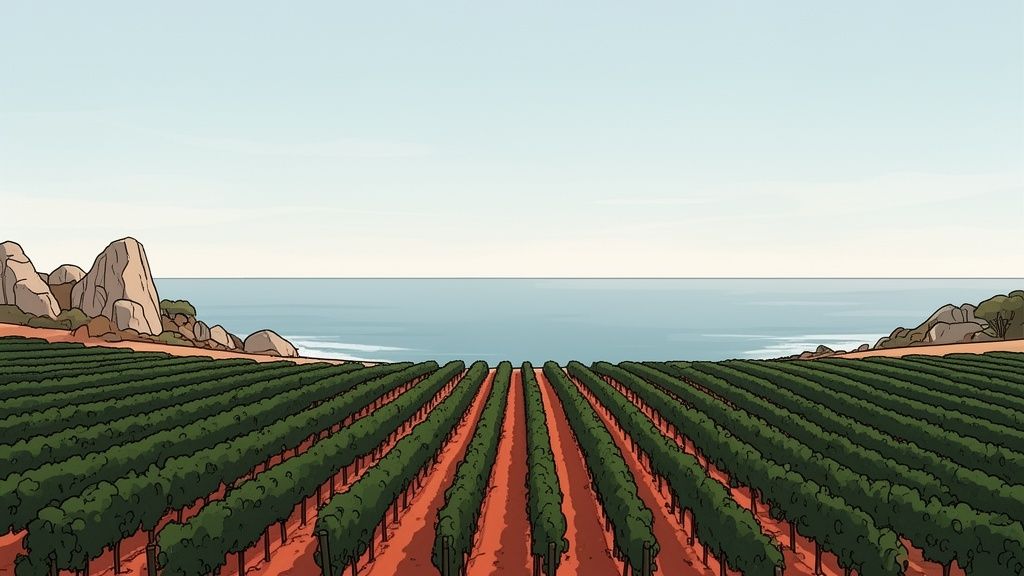
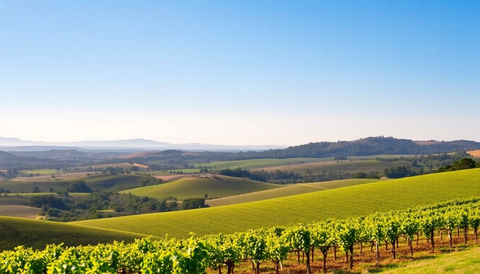
Let's take a deep dive into one of Australia’s genuine wine treasures. Tucked away on the Limestone Coast, the Coonawarra region is a geographical marvel—a cigar-shaped pocket of land just 27 kilometres long that punches well above its weight on the world stage. Think of this guide as your backstage pass to understanding what makes Coonawarra Cabernet Sauvignon so special.
We’re going to start from the ground up, literally, with the famous red soil that gives these wines their soul. From there, we'll explore the signature aromas and flavours you should look for in your glass. This is more than just a wine; it’s a story of place, geology, and masterful winemaking.
What You Will Learn
This journey will cover everything you need to feel confident with this classic wine, breaking down complex topics into simple, practical insights. You’ll soon understand exactly why this particular style holds such a special place in the world of fine wine. For a broader look at this grape's role across the state, you can also learn more about Cabernet Sauvignon in South Australia in our detailed guide.
Along the way, we will uncover:
- The Geological Secret: How the famed 'terra rossa' soil works its magic on the vines.
- A Distinctive Taste Profile: Identifying the classic notes of cassis, mint, and cedar.
- Perfect Pairings: Practical tips for matching Coonawarra Cabernet with food.
- Smart Buying and Cellaring: How to choose, store, and age these wines to perfection.
By the end, you'll have the knowledge to appreciate, select, and truly enjoy every bottle of Coonawarra Cabernet Sauvignon.
Understanding The Famous Terra Rossa Soil
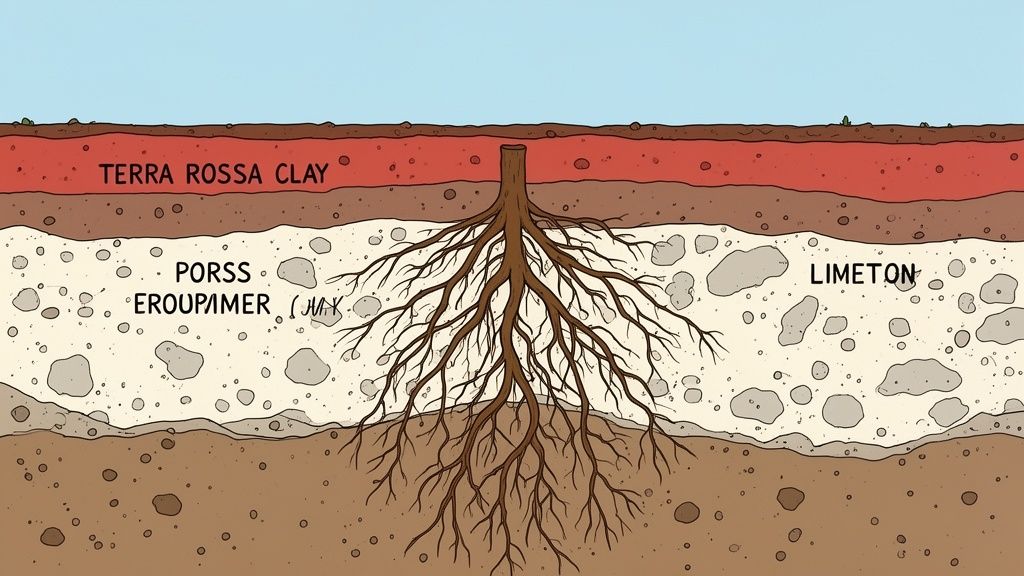
To really get what makes Coonawarra Cabernet so special, you have to look underground. The region's entire global reputation is built on a freak of geological nature: the world-renowned terra rossa soil. This isn't just dirt; it's the engine room that drives the unique character and profound quality of these wines.
Think of it like a thin, bright red blanket draped over a massive limestone sponge. That’s a pretty good picture of terra rossa. The top layer is a vivid, rust-coloured clay-loam, packed with the iron oxide that gives it that famous colour. Critically, this layer is shallow—often less than a metre deep.
Right beneath this precious red earth lies a deep, porous limestone base, the fossilised remains of an ancient sea bed from millions of years ago. It’s this two-part system that creates the perfect, almost contradictory, environment for growing world-class Cabernet Sauvignon.
The Science Behind The Flavour
The magic here is all about water management. The limestone foundation acts like a giant, natural drainage system, stopping the vines from getting waterlogged after a downpour. This is a huge deal, because if there's one thing Cabernet vines hate, it's having "wet feet."
This perfect drainage forces the vine's roots to dig deep, pushing down through the limestone in their search for moisture. This struggle is exactly what winemakers want to see. It acts as a natural handbrake on the vine's growth, telling it to focus its energy on producing small, intensely concentrated berries instead of a jungle of leaves.
The result is grapes bursting with powerful flavour, deep colour, and the fine, structured tannins that are the absolute hallmark of Coonawarra Cabernet Sauvignon. The soil literally translates the region’s geology into the structure and cellar-worthiness of the wine in your glass.
This whole process is a fantastic example of terroir—the idea that a wine is shaped by its total environment. You can dive deeper into this fascinating connection in our guide on how soil type shapes the taste of wine.
A Perfectly Balanced System
The terra rossa soil also provides a slow, steady release of nutrients, giving the vines just enough to stay healthy without letting them get lazy and leafy. It’s a natural regulation that vignerons in many other parts of the world can only dream of achieving.
This unique combination of factors is why the terra rossa strip is so prized and so precisely defined. Its key features are:
- Excellent Drainage: The porous limestone base prevents waterlogging, forcing roots to grow deep and strong.
- Optimal Nutrient Supply: The clay-loam topsoil holds just enough water and nutrients for perfectly balanced vine health.
- Reflective Warmth: The red colour of the soil soaks up sunlight during the day and radiates that heat back onto the vines at night, helping the grapes ripen fully in the cool climate.
Essentially, the soil is a natural crucible, concentrating everything good about the grapes. This geological gift is the single biggest reason Coonawarra Cabernet stands apart with such clarity, structure, and elegance. It’s a direct line from an ancient seabed to the complex, age-worthy wine you enjoy today.
What Does Coonawarra Cabernet Sauvignon Taste Like?
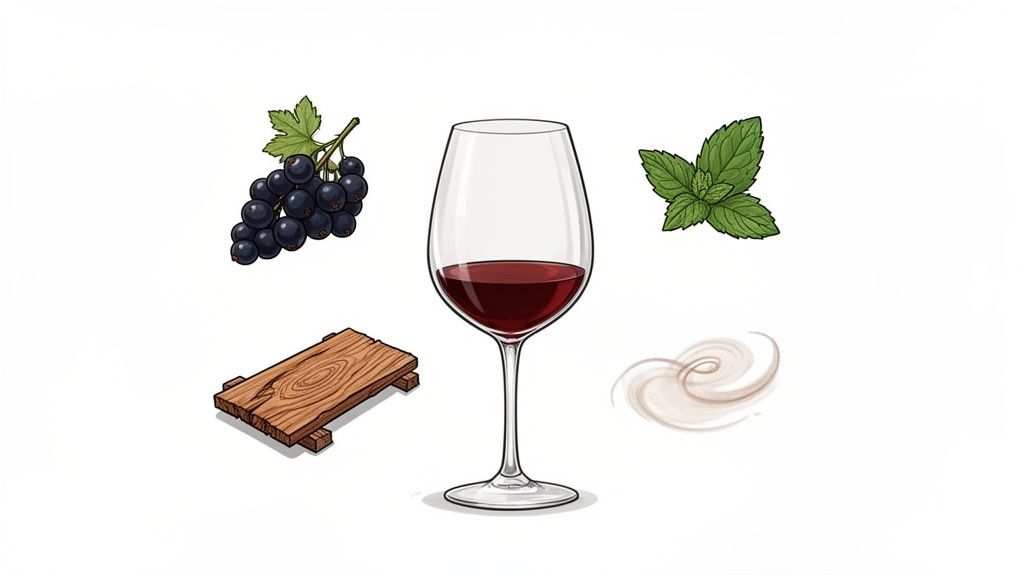
Taking your first sip of a Coonawarra Cabernet Sauvignon is like meeting someone with a strong, unforgettable personality. It’s an experience that unfolds in layers, always starting with a deep, pure fruit core that feels both powerful and refined.
The most famous flavour note is undoubtedly blackcurrant, or cassis as it's often called. But this isn't a simple, jammy fruitiness; think of it more as an intense, concentrated essence. This is often backed up by notes of dark plum and ripe black cherry, creating a rich and inviting first impression.
But a great Coonawarra Cab is never just a fruit bomb. That cool maritime climate brings an elegance and a refreshing lift that you just don't find in Cabernets from warmer regions.
Fruit, Oak, and a Touch of Mint
After that initial rush of pure fruit, you start to notice the winemaker's touch. These are the secondary notes, the ones that develop during fermentation and maturation in the cellar. Here, oak aging plays a crucial role, almost always in French barrels.
You’ll start to pick up subtle hints of cedar, toasted vanilla, and a gentle whisper of spice like clove or nutmeg. These elements don't shout over the fruit; instead, they weave themselves into it, adding a savoury depth and complexity. It's this beautiful integration that gives the wine its sophisticated structure.
A true hallmark of Coonawarra Cabernet is a distinctive herbal or menthol note. This can show up as anything from fresh mint to dried bay leaf or even a subtle hint of eucalyptus—a classic calling card of its cool-climate Australian origins.
This combination of intense dark fruit and that fresh, herbal lift is what makes the flavour profile so distinctive. It’s a wine that manages to be both powerful and graceful at the same time.
The Magic of Age: Tannins and Tertiary Notes
Finally, with a bit of time in the bottle, a Coonawarra Cabernet really begins to show its magic, developing what we call tertiary notes. That vibrant primary fruit slowly evolves into something far more complex and savoury. Think leather, dried tobacco leaf, and the damp scent of a forest floor. These aged characters add a final layer of intrigue, rewarding anyone with the patience to cellar a few bottles.
The structure of the wine is built on its tannins. In Coonawarra, these are typically firm and finely textured—never coarse or aggressive. They provide the backbone that allows the wine to age gracefully for decades. It all comes together in a medium-to-full-bodied wine that feels substantial on the palate yet finishes with poise, leaving a long and satisfying impression.
To see how these characteristics change over time, it helps to compare a young bottle with a mature one.
How Coonawarra Cabernet Sauvignon Evolves with Age
| Characteristic | Young (1-5 Years) | Mature (10+ Years) |
|---|---|---|
| Fruit | Intense blackcurrant, plum, cherry | Dried fruit, stewed plums, savoury |
| Aromas | Primary fruit, fresh mint, subtle oak | Leather, tobacco, cedar, forest floor |
| Tannins | Firm, structured, prominent | Soft, silky, fully integrated |
| Complexity | Fruit-forward and direct | Layered, nuanced, multi-dimensional |
| Colour | Deep ruby with purple hues | Garnet with brick-red edges |
This evolution is what makes cellaring Coonawarra Cabernet so rewarding. You get to witness a wine transform from a bold, fruit-driven powerhouse into a complex, savoury, and elegant masterpiece.
Exploring Vintages and Winemaking Styles
While the famous terra rossa soil provides the blueprint, the final character of a Coonawarra Cabernet is shaped by two powerful forces: the unique personality of each growing season and the hand of the winemaker. Not every bottle is the same, and understanding these influences is the key to picking one you’ll absolutely love.
Think of a vintage as a snapshot of a year's weather. Warmer, drier years tend to produce grapes with more concentrated sugars, resulting in richer, bolder wines with powerful fruit flavours and a more robust structure. On the flip side, cooler and wetter vintages often yield more restrained, elegant wines with vibrant acidity, finer tannins, and a more savoury, herbal character.
This yearly variation has a massive impact on what actually makes it into the bottle. The Coonawarra winegrape crush can swing wildly, reflecting the season's challenges and triumphs. For example, a recent crush saw a 33 percent increase over the previous year, yet it still came in 20 percent below the five-year average—a stark reminder of how much climate dictates supply. You can dive deeper into these numbers with the regional vintage reports on Wgcsa.com.au.
The Winemaker's Signature
Beyond the weather, the winemaker’s philosophy is the final, crucial ingredient. Their decisions in the winery are where the art and science of winemaking truly meet, creating a diverse spectrum of styles from the very same grapes.
A winemaker's goal might be to craft a classic, age-worthy powerhouse built for decades in the cellar. Or, they might aim for a vibrant, fruit-forward style that’s delicious and ready to drink right now. Neither is better—they simply offer different experiences.
You'll find a clear divide in approaches, especially when it comes to oak. The choice of barrel is one of the biggest stylistic calls a winemaker makes, directly influencing the wine's flavour, texture, and ageing potential.
- French Oak: This is the classic choice for Coonawarra Cabernet. It imparts subtle, elegant notes of cedar, vanilla, and gentle spice, complementing the wine's natural structure without steamrolling the fruit.
- American Oak: While less common, some producers use American oak for a bolder, sweeter profile, adding more pronounced notes of coconut, dill, and vanilla bean.
- New vs. Old Oak: New barrels pack a much stronger flavour punch, while older, more neutral barrels are used when the goal is to let the pure fruit character of the wine shine through.
Understanding these differences helps you decode a wine's style before you even pop the cork. For anyone curious about how these styles stack up against other South Australian regions, our article comparing McLaren Vale vs Coonawarra Cabernet Sauvignon offers some fascinating insights.
Ultimately, this dance between vintage and winemaker ensures that exploring Coonawarra is always a rewarding journey of discovery.
Perfect Food Pairings for Coonawarra Cabernet
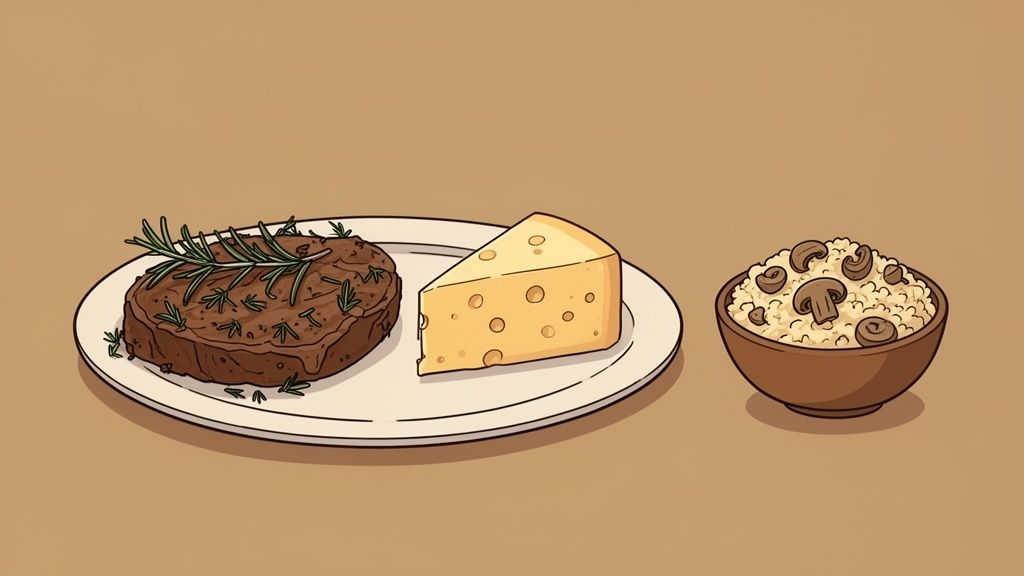
To really see a Coonawarra Cabernet Sauvignon come alive, you need to put the right food on the table next to it. This isn't a wine for a light salad; its classic structure—built on firm tannins, bright acidity, and deep fruit—is practically begging for rich, savoury dishes that can go toe-to-toe with its intensity.
The science behind it is pretty straightforward. The wine's tannins love to bind with proteins and fats from your food. This interaction softens the wine's powerful structure and cleanses your palate with every sip. It's exactly why the age-old pairing of Cabernet and red meat is such a classic. A perfectly cooked steak or a slow-braised beef cheek just melts into the wine, smoothing out the tannins while the wine’s acidity cuts right through the richness.
But don't just stop at steak. The signature blackcurrant and mint notes in a Coonawarra Cab are an open invitation to get creative with your flavour combinations.
Timeless and Creative Pairings
Those elegant, herbal undertones in the wine are a brilliant match for roasted or grilled lamb, especially when it’s loaded up with rosemary and garlic. The herbaceous notes in the food and wine just sing together, creating a seamless, deeply satisfying experience. In the same way, earthy dishes provide a fantastic backdrop.
The key is to match the wine's weight and intensity. A delicate dish will be completely overwhelmed. But a hearty, flavourful meal will stand up to the wine, allowing both the food and the Coonawarra Cabernet to shine.
For a meal that’s guaranteed to impress, give one of these proven combinations a go:
- Classic Comfort: Slow-cooked lamb shanks or a rich beef bourguignon. The tender, fall-apart meat is the perfect partner for the wine's firm structure.
- Gourmet Casual: A top-notch burger with caramelised onions and aged cheddar. The savoury beef and sweet onions are a beautiful match for the wine’s dark fruit.
- Vegetarian Delight: A wild mushroom risotto or a hearty lentil shepherd’s pie. The deep, umami flavours of mushrooms or lentils bring the richness needed to balance the tannins.
- Cheese Board: Stick with aged hard cheeses like a sharp cheddar, Parmesan, or a nutty Gouda. Their salty character is an excellent counterpoint to the wine’s fruit profile.
- A Surprising Treat: A piece of high-quality dark chocolate (70% cocoa or higher). The slight bitterness of the chocolate harmonises brilliantly with the tannins for a truly decadent finish.
How to Buy and Cellar Coonawarra Cabernet
Navigating the world of Coonawarra Cabernet Sauvignon is a rewarding journey, whether you're after a Tuesday night sipper or a treasure to lay down for a decade. Knowing just a few key things will give you the confidence to pick the right bottle every time.
Price is often a pretty reliable guide. Entry-level bottles give you that classic regional character—bright cassis and mint—in a style ready to go right now. Move up the ladder, and you'll find wines with more concentration, complexity from better oak, and the backbone needed for serious cellaring.
Coonawarra's status as Australia's premier Cabernet region is well-earned, with more land dedicated to the grape than anywhere else. This focus means it consistently commands the highest average grape prices among major Australian regions, a direct reflection of the demand for these top-tier reds. You can find more insights on Australia's top Cabernet regions in this economic brief.
Choosing Your Perfect Bottle
Getting started is easy: look for producers with a long-standing reputation for quality. While there are dozens of fantastic wineries, a few names offer a dependable entry point into the region's classic style.
- Iconic Producers: Wineries like Wynns Coonawarra Estate, Parker Coonawarra Estate, and Penley Estate are benchmarks of the region. They offer a whole range of wines, from accessible drops to iconic bottles.
- Dependable Favourites: Brands such as Katnook Estate and Majella consistently turn out high-quality wines that beautifully express that Coonawarra terroir, year in and year out.
Exploring these names is a great way to get a feel for the signature profile of Coonawarra Cabernet.
The Art of Cellaring Coonawarra Cabernet
The real magic of Coonawarra Cabernet unfolds with time. These are some of Australia's most age-worthy reds, with the best examples capable of evolving gracefully for 20 years or more. If you're going to invest in these wines, proper storage is non-negotiable.
Your goal is simple: create a cool, dark, and stable environment. Think of it as putting the wine into a long, peaceful sleep where it can slowly develop complexity without being disturbed.
Ideal cellaring isn't complicated, but it does require specific conditions. The biggest enemy of fine wine is fluctuation, so consistency is your main goal.
Key Cellaring Conditions:
- Consistent Temperature: Keep your wines between 12–16°C. More importantly, avoid those rapid temperature swings from day to night.
- Darkness: UV light is a killer for wine. Store bottles away from direct sunlight in a dark space—a proper cellar, a specialised wine fridge, or even the bottom of a cool wardrobe will do the trick.
- Stable and Vibration-Free: Always store bottles on their side to keep the cork moist. Keep them away from the vibrations of household appliances like the washing machine or dryer.
With these simple steps, your Coonawarra Cabernet will reward your patience, transforming from a vibrant, fruit-forward wine into a complex and savoury masterpiece.
Your Coonawarra Cabernet Questions Answered
Even after diving into the famous terra rossa soil and the classic taste of Coonawarra Cabernet, a few practical questions always pop up. Let's clear them up so you can feel completely confident next time you're picking out a bottle.
Think of this as your final checklist. We'll cover everything from price and serving temperature to how it stacks up against its famous neighbour, the Barossa. Getting these details right can be the difference between a good glass of wine and a truly great one.
Is Coonawarra Cabernet Sauvignon Always Expensive?
Not at all. While Coonawarra is home to some of Australia's most legendary and collectible Cabernets, you don't need a massive budget to experience what makes the region so special. There's a fantastic range of entry-level wines that deliver that signature Coonawarra character without the premium price tag.
You’ll find brilliant examples at every price point:
- Value Tier: Perfect for discovering that classic cassis and mint profile for everyday drinking.
- Mid-Tier: These wines offer more complexity and structure, often with smarter use of oak.
- Premium Tier: These are the icons—powerful, elegant wines built to cellar for decades.
What Is the Best Temperature to Serve Coonawarra Cabernet?
To really let the complex aromas and elegant structure shine, you’ll want to serve Coonawarra Cabernet just a bit cooler than room temperature—aim for around 16–18°C. If it’s served too warm, the alcohol can feel a bit sharp and overpower the beautiful fruit flavours.
Here’s a simple trick: just pop the bottle in the fridge for about 15 minutes before you plan to open it. It’s a small step that makes a huge difference, bringing the wine down to that perfect temperature where the blackcurrant, cedar, and mint notes can really sing.
How Does It Differ from Barossa Valley Cabernet?
It all comes down to the climate. Coonawarra’s cool, maritime-influenced weather and unique terra rossa soil create elegant, structured Cabernets with fine, graceful tannins and those hallmark notes of blackcurrant and mint.
The Barossa Valley, on the other hand, is much warmer. This leads to richer, bolder Cabernets that are typically fuller-bodied. Think riper dark fruit flavours, plusher tannins, and often hints of chocolate or mocha from the warmer growing conditions.
Ready to explore the elegant structure and deep flavours of South Australian wine? McLaren Vale Cellars offers a curated selection of exceptional Cabernet Sauvignon and other regional classics. Discover your next favourite bottle today.

Comments (0)
There are no comments for this article. Be the first one to leave a message!