
That first glass of a beautiful McLaren Vale Shiraz is perfect. But what you do next will seal the fate of the entire bottle. To keep your wine tasting fresh, your first two moves are the most important: reseal the bottle tightly and get it in the fridge. This simple, zero-cost trick dramatically slows down the chemical reactions that turn a great wine sour.
The First Pour: What to Do Immediately After Opening
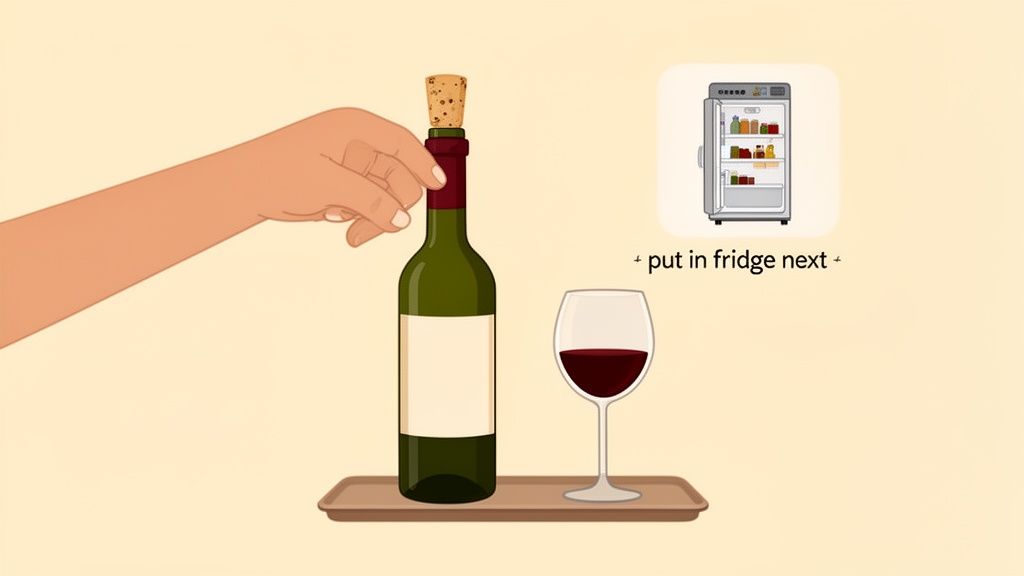
The moment you pull the cork, a countdown begins. Oxygen, the very thing that helps a wine "breathe" and open up, instantly becomes its greatest enemy. This process, called oxidation, is what turns those vibrant fruit flavours into something dull, flat, or even vinegary.
Think of it like a sliced apple left on the kitchen bench—it doesn't take long to turn brown and lose its crispness. Your wine is going through a similar, though thankfully slower, transformation. The key is to minimise its contact with air and slam the brakes on that process.
Your First Line of Defence
Luckily, your immediate actions are simple and surprisingly effective, no fancy gadgets needed. As soon as you've poured your last glass for the night, do these two things straight away:
- Re-cork It Properly: Don't just jam the cork back in. The end of the cork that was touching the wine is cleaner and hasn't been exposed to the air. Flip it around and push that same "wet" end back into the bottle for a tighter, more sterile seal. If the cork has swollen up and won't go back in, a simple rubber or silicone wine stopper is a perfect substitute.
- Get It in the Fridge. Now: This is the game-changer. Yes, even for your big, bold reds. Cold temperatures significantly slow down the speed of oxidation. Leaving an opened bottle on the counter, even if it's re-corked, will see it fade many times faster than if it were chilling in the fridge.
Just remember this simple rule: Heat and oxygen are the enemies of opened wine. Cold is its best friend. Your goal is to limit the first two while embracing the third as fast as you can.
And don't stress about your red wine being too cold for the next glass. Just pull it out of the fridge about 30-60 minutes before you plan to drink it. This gives it plenty of time to gently come back up to a perfect serving temperature. This bit of "wine first aid" is the foundation of good preservation, making sure your second glass is almost as good as the first.
Your Fridge: The Easiest and Most Effective Preservation Tool
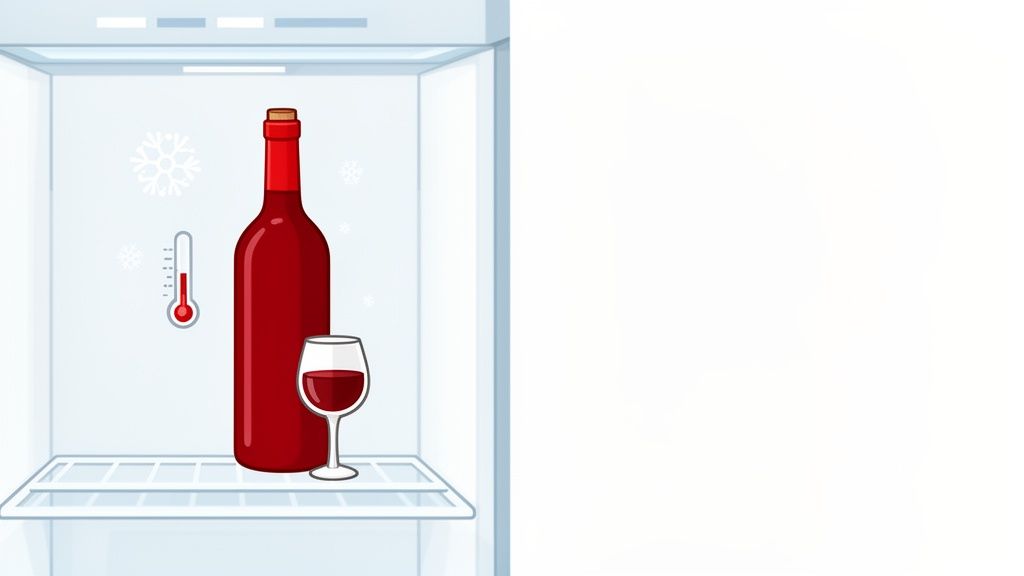
I get it. The idea of putting a beautiful red wine in the fridge feels wrong to many wine lovers, like you're going to damage its delicate flavours. But I'm here to tell you that, in reality, your humble kitchen fridge is the single most powerful and accessible tool you have for preserving wine after opening—regardless of its colour.
The science behind this is brilliantly simple: cold temperatures dramatically slow down the chemical reactions that make wine go bad. Oxidation, the process that turns those vibrant fruit notes into flat, lifeless tastes, happens much, much faster at room temperature. By chilling the wine, you're effectively hitting the pause button on its decline.
Why Cold Is King for Wine Preservation
When it comes to keeping opened wine fresh in Aussie homes, temperature control is the most effective and wallet-friendly method there is. Storing an opened bottle at around 4°C massively slows down the destructive effects of oxygen. In fact, research shows that when wine is kept at room temperature (around 20°C) versus in the fridge, oxygen gets to it a staggering 21 times faster.
What does that mean for your wine? A re-corked red left on the kitchen bench might be noticeably faded by the next day. The same bottle kept in the fridge will still be tasting great two or three days later.
Your fridge isn't just for whites and rosés; it's a universal preservation chamber for every opened bottle. Chilling your leftover red is the best non-negotiable step to extend its life.
Practical Tips for Different Wine Styles
While the fridge is your best mate for all wines, your approach can vary slightly depending on what you're drinking.
- Crisp Whites & Rosés: For wines like a zesty Pinot Grigio or a dry Rosé, the fridge is their natural habitat anyway. Seal them tightly, and they'll hold up well for 3-5 days, though you might notice some of their aromatic intensity starts to fade over time.
- Full-Bodied Whites: An oaked Chardonnay can be a bit more susceptible to oxidation. It will absolutely benefit from refrigeration, but try to enjoy it within 2-3 days to catch it at its best.
- Light & Full-Bodied Reds: From a delicate Pinot Noir to a robust McLaren Vale Shiraz, pop them straight in the fridge. They can last anywhere from 3-5 days. The real trick is how you serve them next.
If you're looking for a more specialised way to keep your wines at the perfect temperature, dedicated undercounter wine refrigerators can be a fantastic investment.
When you're ready to enjoy your chilled red, just pull it out of the fridge 30-60 minutes before you plan to pour. This lets it gently return to its ideal serving temperature without any shocking changes that could mute its character. Honestly, getting this right is one of the most important wine storage tips for Australian weather conditions you can master.
Choosing Your Preservation Method: A Practical Guide to Tools
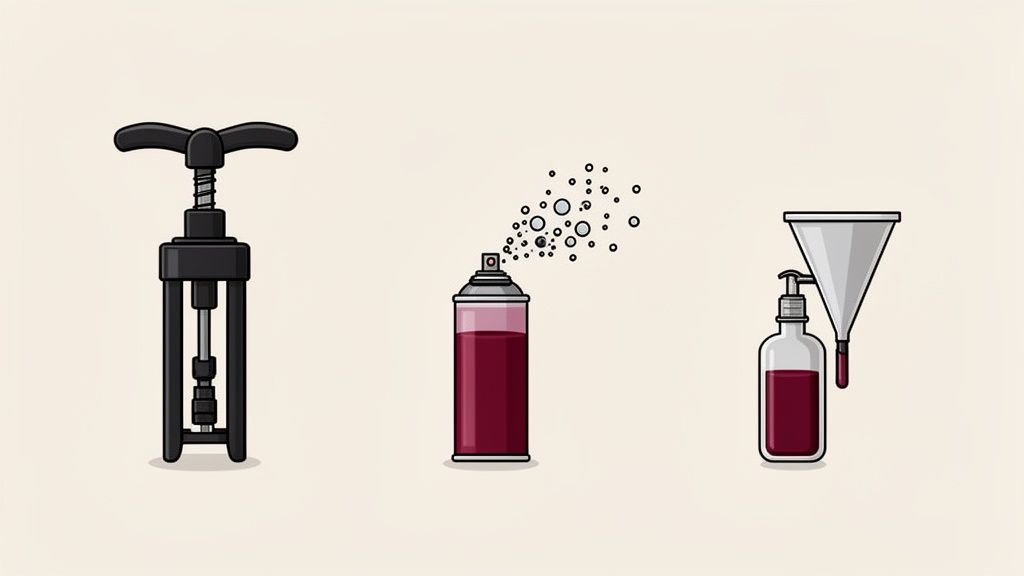
When just popping the cork back in and sticking the bottle in the fridge isn’t going to cut it, a world of handy wine preservation tools opens up. It can feel a bit overwhelming, but picking the right one is simpler than you think. It really just comes down to your budget, how often you have leftover wine, and what kind of drops you’re drinking.
Let’s be honest, you don't need every gadget under the sun. Most of us here in Australia can get fantastic results with one of three key methods. We’ll break down exactly how to use them, which wines they suit best, and what to expect in terms of cost.
The Reliable Wine Vacuum Pump
A vacuum pump is often the first preservation tool people buy, and for good reason. It’s an affordable and straightforward way to squeeze another day or two out of a bottle compared to just re-corking it. The idea is simple: you place a special rubber stopper in the bottle and use a small hand pump to suck out some of the oxygen.
Using one couldn't be easier:
- Firmly push the reusable rubber stopper into the neck of the bottle.
- Place the pump over the stopper and pump away until you feel some decent resistance. That's how you know you've created a vacuum.
- Store the bottle upright in the fridge. To open it again, just press the little valve on top of the stopper to release the seal.
This method works a treat for robust, youthful red wines like a McLaren Vale Cabernet Sauvignon or a big Shiraz. While it doesn't remove all the oxygen, it pulls out enough to make a noticeable difference for a couple of days. Don’t just take my word for it; a French study showed that vacuum pumps can slow oxidation enough to preserve a wine’s flavour for up to 7 days without detectable changes.
Inert Gas Sprays: The Professional Choice
If you're into more delicate or older wines, an inert gas spray is a brilliant step up. These canisters contain a harmless, odourless blend of gases like argon, which is heavier than oxygen. When you spray it into the bottle, it forms a protective blanket right on the surface of the wine, stopping oxygen from getting to it.
It’s even less work than a vacuum pump and incredibly effective. Just give a one or two-second spray directly into the bottle and immediately pop the original cork or a stopper back in. That's it. A single canister can preserve around 100 bottles, making it pretty cost-effective in the long run. This is the perfect method for protecting the subtle aromas of a Pinot Noir or a lovely aged white.
My Personal Tip: When using a gas spray, I like to angle the bottle slightly as I put the cork back in. This little trick helps prevent the gas from being pushed straight back out, ensuring you get the best possible protective layer over the wine.
The Low-Tech Transfer: The Small Bottle Trick
This might just be the most effective low-cost method out there. The goal is to reduce the enemy—air. By simply decanting your leftover wine into a smaller, airtight bottle (a clean 375ml screw-cap bottle is perfect), you can fill it right to the very top, leaving almost no headspace for oxygen.
This is my go-to technique when I have half a bottle of something really special. It minimises air contact better than most affordable gadgets and can easily keep the wine tasting fresh for up to five days in the fridge. The only catch is making sure your smaller bottle is spotlessly clean and has a perfect seal. It’s a simple trick, but many of these tools are considered essential wine accessories every enthusiast needs to get the most out of every bottle.
Wine Preservation Tool Comparison
With a few options on the table, it can be tricky to decide which tool is right for you. This table breaks down the pros and cons of each method to help you find the perfect fit for your wine-drinking habits and budget.
| Method | How It Works | Best For | Typical Cost (AU) | Pros | Cons |
|---|---|---|---|---|---|
| Vacuum Pump | Removes some oxygen from the bottle's headspace with a manual pump. | Robust red and white wines; short-term (1–3 days) preservation. | $15–$30 for a starter kit. | Affordable, reusable stoppers, widely available. | Doesn't remove all oxygen; can dull delicate aromas. |
| Inert Gas Spray | Displaces oxygen by creating a protective layer of heavy, inert gas on the wine's surface. | Delicate, aromatic, and aged wines; longer-term (up to 2 weeks) preservation. | $20–$40 per can (approx. 100 uses). | Highly effective, preserves delicate aromas, quick to use. | Ongoing cost of canisters, requires a good seal. |
| Transfer to Smaller Bottle | Minimises the wine's surface area exposed to oxygen by decanting into a smaller, full bottle. | Any wine type, especially when you have half a bottle left; mid-term (3–5 days) preservation. | Minimal (cost of a small bottle). | Extremely effective, almost no cost, no special equipment needed. | Requires a clean, smaller bottle on hand; can be a bit fiddly. |
Ultimately, the best tool is the one you’ll actually use. For casual drinkers, a simple vacuum pump is a great start. If you regularly open special bottles, investing in an inert gas system is well worth it. And never underestimate the power of the humble smaller bottle
How Long Will My Opened Wine Last? A Realistic Timeline
So, you’ve done the right thing—you’ve sealed the bottle and popped it in the fridge. Now for the million-dollar question: how much time have you really got before it turns?
There’s no single answer, I'm afraid. A wine's lifespan after that first pour depends entirely on its structure. Some wines just have more fight in them than others.
The key players here are acidity, tannins, sugar, and even the wine’s age. Think of high acidity in whites and strong tannins in reds as the wine's natural self-defence system. They’re the secret weapons against the damaging effects of oxygen. This is exactly why a young, gutsy McLaren Vale Shiraz will always outlast a delicate, older Pinot Noir.
Why Structure Is Everything
Tannins and acidity are the backbone of a wine. A wine with a solid structure can fend off oxygen for much longer before it starts tasting tired, flat, and just plain sad.
- Tannins: These are the compounds from grape skins and seeds that give red wines that slightly drying sensation. More than just texture, they're powerful antioxidants, acting as a natural shield against rapid decay.
- Acidity: You know that zesty, mouth-watering quality in a crisp Sauvignon Blanc? That’s acidity at work. Just like tannins, acid slows down the chemical process of oxidation, keeping the wine tasting fresh and vibrant.
- Age: An older, more fragile wine has already spent years evolving in the bottle. Once you pull that cork, its complex, delicate aromas can vanish in just a few hours. Young, robust wines, on the other hand, can often handle a bit more air and might even improve over a day.
The key takeaway is simple: the more structure a wine has (think higher tannins and punchier acidity), the longer it’s likely to last after opening. This is your best guide for predicting freshness.
To make things easier, here’s a realistic timeline for how long different wine styles will stay fresh once they’re properly sealed and tucked away in the fridge. Think of this as your go-to reference guide.
Expected Freshness of Opened Wine (When Refrigerated)
This table gives you a general idea, but always trust your own palate. Sometimes a wine will surprise you, for better or worse!
| Wine Type | Expected Lifespan | Best Preservation Tip |
|---|---|---|
| Light-Bodied Whites & Rosés (e.g., Sauvignon Blanc, Pinot Grigio) | 3–5 days | Keep them sealed tight and ice-cold. Their bright acidity is their best defence, but delicate floral notes will fade first. |
| Full-Bodied Whites (e.g., Oaked Chardonnay, Viognier) | 2–3 days | These wines have often seen more oxygen during winemaking, which paradoxically makes them more prone to oxidising faster. Drink them sooner. |
| Light-Bodied Reds (e.g., Pinot Noir, Grenache) | 2–3 days | With lower tannins, these delicate reds are more vulnerable. An inert gas spray is fantastic for preserving their subtle aromas. |
| Full-Bodied Reds (e.g., Shiraz, Cabernet Sauvignon) | 3–5 days | High tannin levels provide excellent natural protection. A simple vacuum pump or just re-corking it tightly works wonders. |
Remember, these are just guidelines. The best way to know if a wine is still good is to give it a sniff and a small taste. Your nose knows
Knowing When a Wine Has Gone Off: Signs of Spoilage
 Even with the best preservation methods in the world, every opened bottle of wine is on a timer. The good news is you don't need to be a sommelier to figure out if your wine has passed its prime.
Your own senses—sight, smell, and taste—are the most reliable tools you have. Let's walk through how to use them.
What to Look For
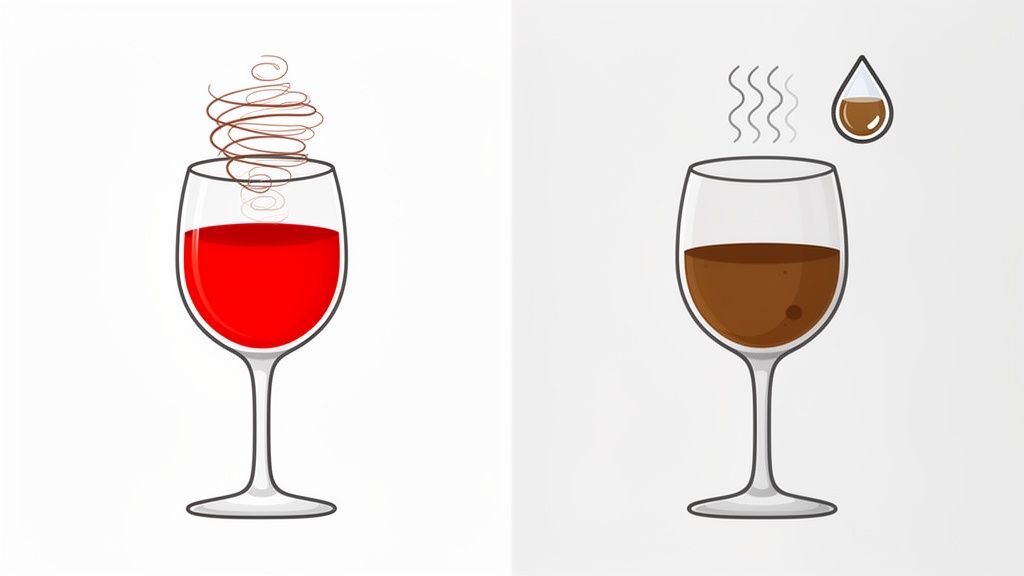
Before you even lift the glass, have a proper look at the wine's colour. Pour a little into a glass and hold it against a white background, like a napkin or a piece of paper. This simple trick makes colour changes obvious.
A wine’s colour is one of the first and clearest indicators of its health. Oxygen doesn’t just flatten the flavour; it fundamentally changes how the wine looks.
- Reds Turning Brown: A vibrant ruby or deep purple red that has taken on a dull, brownish, or brick-coloured tinge is a classic sign of oxidation. It’s lost its freshness.
- Whites Turning Gold: Watch for a pale, straw-coloured white like a Pinot Grigio or Sauvignon Blanc that has deepened into a dull gold or amber colour. It has likely been exposed to too much air.
This colour shift happens because the delicate compounds that give wine its flavour and aroma are breaking down. To slow this process, it helps to understand proper food safety temperature control, as heat massively accelerates these negative changes.
Trusting Your Nose and Palate
If the wine looks okay, the next step is to give it a sniff. A healthy wine should smell appealing—think fruity, floral, earthy, or spicy. A spoiled wine, however, will smell noticeably off.
Keep an eye out for sharp, vinegary, or nail polish remover-like aromas. That’s a sure sign that acetic acid bacteria have taken hold. Another common giveaway is a nutty, sherry-like, or bruised apple smell, which points to advanced oxidation. You can learn more about spotting these issues in our detailed guide on how to tell if a wine has gone bad.
If it passes the smell test, take a tiny sip. You're not looking for complex flavour notes here; you’re just checking for vitality. A wine that has gone off will taste flat, lifeless, and stripped of its fruity character, often leaving a sour or harsh taste in your mouth.
The most important thing to remember is that drinking a slightly oxidised wine won't harm you; it's just not going to be a pleasant experience. It has lost all the character and life the winemaker intended for it to have.
But don’t pour it down the drain just yet! A wine that’s past its drinking prime can still be a fantastic ingredient in the kitchen. Use it to deglaze a pan, add depth to a bolognese sauce, or enrich a slow-cooked beef stew. It’s a great way to make sure nothing goes to waste.
Why Bother Saving Leftover Wine? A Guide for Australian Drinkers
Knowing how to keep a bottle of wine fresh after you’ve opened it isn’t just some nifty party trick—for Aussie wine lovers, it’s a game-changer. It means you can invest in that case of premium McLaren Vale Shiraz you’ve been eyeing and actually enjoy it over time, without feeling like you have to polish off a bottle every time you open one.
It’s all about savouring the moment and respecting the incredible effort that goes into making world-class Australian wine. When you make a bottle last, you’re not just saving a few bucks; you’re honouring the winemaker's craft.
The Bigger Picture for Local Wine Lovers
There's another layer to this for us here in Australia. Our wine industry is a global powerhouse, which means the bottles we see on local shelves are part of a constantly shifting supply. This makes every great bottle you buy a little bit of an investment, and one worth protecting.
Consider this: Australia is the fifth-largest wine exporter in the world, sending about 60% of its total production overseas. On top of that, production levels can swing dramatically. In the 2022/23 period, for instance, national wine stocks dropped by over 100 million litres. As you can see when you look into the Australian viticulture and wine sector, supply can tighten up, making it even more important to get the most out of every purchase.
Good preservation ensures every dollar you spend on a fantastic Aussie wine delivers a full, uncompromised tasting experience, from the first glass right down to the last.
Ultimately, learning a few simple preservation tricks gives you freedom. It’s the freedom to crack open a special bottle for just one glass on a Tuesday, knowing it will still be brilliant on Friday night. It’s about making great wine fit your life, not the other way around.
Frequently Asked Questions About Preserving Wine
Even with the best gadgets and intentions, a few common questions always seem to pop up when you're trying to keep a good bottle fresh. We get these a lot from fellow wine lovers across Australia, so let's clear them up.
Can I Lay an Opened Bottle Down in the Fridge?
It’s tempting, especially when fridge space is tight, but you should always store an open bottle of wine standing upright.
Laying a bottle on its side massively increases the wine's surface area that's exposed to the oxygen trapped inside. That larger contact patch is enemy number one, speeding up oxidation and making your wine taste flat and tired much faster. Keep it upright to minimise air contact and preserve those fresh flavours.
Is Freezing Leftover Wine a Good Idea?
Yes and no. For drinking? Definitely not. Freezing won't spoil the wine in a dangerous way, but the thawing process can really mess with its texture and kill off all those lovely, delicate aromas. It just won't be the same.
For cooking, however, it's a brilliant hack. Pour any leftover drops into an ice cube tray and freeze. You'll have perfect, ready-to-go flavour bombs to drop into a risotto, bolognese, or pan sauce. It's an instant way to add a bit of richness and depth to your cooking.
A quick word of advice: aged, expensive wines are often the most fragile. While a young, tannic red has the structure to last a few days, a delicate older wine can lose its complex aromas within just a few hours. Always plan to finish those special bottles the day you open them to really appreciate them at their peak.
At McLaren Vale Cellars, we believe every glass should be a great one. Explore our curated selection of premium Australian wines and find your next favourite bottle today. https://www.mclarenvalecellars.com


Comments (0)
There are no comments for this article. Be the first one to leave a message!