
The most popular wine-tasting advice starts with the wrong idea: that you pour several wines, swirl them, and trust your instincts. That can be enjoyable, but it isn't a fair comparison. A wine tasting kit works best when you treat it as a small sensory experiment, controlling the glassware, serving conditions, information and sequence so you can learn what you like.
That approach doesn't make tasting formal or intimidating. It makes it more useful. You can compare McLaren Vale Shiraz with Cabernet Sauvignon, test a sparkling style against a still wine, or explore how packaging and alcohol strength suit different occasions, while keeping your judgement grounded in more than a label or a price tag.
What a Wine Tasting Kit Actually Is
A mixed case and a wine tasting kit might look similar online, but they serve different purposes. A mixed case is usually assembled for variety, convenience or value. A wine tasting kit is curated for comparison, with samples chosen because they reveal a relationship between wines, such as grape variety, region, vintage, winemaking style or format.
That distinction changes how you drink. Opening several unrelated bottles over a few weeks can help you discover favourites, but memory becomes unreliable. You may remember that one wine felt “smooth” without knowing whether you preferred its fruit, lower tannin, serving temperature or food pairing. A curated flight places the wines beside one another, so the differences become easier to notice.
The educational value of smaller samples
A useful kit doesn't need to provide a full bottle of every wine. Smaller formats or sample pours let you investigate a theme without committing to a large quantity of a style you may not enjoy. A regional flight might compare several McLaren Vale wines, while a varietal flight could place Shiraz, Cabernet Sauvignon and a white variety in the same session.
The information matters as much as the liquid. Each sample should identify the grape variety, region, vintage, alcohol strength where relevant, serving guidance and price position. Those details can be hidden during the first pour and revealed later, depending on whether you want a blind or open-label exercise.
A presentation designed for gifting can also be useful, provided it supports comparison rather than looking attractive. For ideas that combine wine with serving and entertaining accessories, you can browse custom wine gift sets and then apply the same question: does the set help people taste thoughtfully, or is it mainly a collection of items?
Practical rule: If the wines have no shared theme and the notes give you little to compare, you've probably bought a mixed bundle rather than an educational tasting kit.
Before you buy extra equipment, check what you already have and what the tasting requires. This guide to essential wine accessories can help you identify useful basics, but the central tool remains the comparison itself. The point isn't to own impressive equipment. It's to create a fair question and answer it with your senses.
Why Structured Tasting Changes How You Buy Wine
You don't need a sommelier's vocabulary to taste wine intelligently. You need a repeatable way to compare what you smell and taste. When someone asks whether a wine is “good”, the answer often becomes vague because the question has no reference point. When they ask whether it feels brighter, fuller, sweeter, drier, more tannic or more aromatic than another wine, the task becomes manageable.
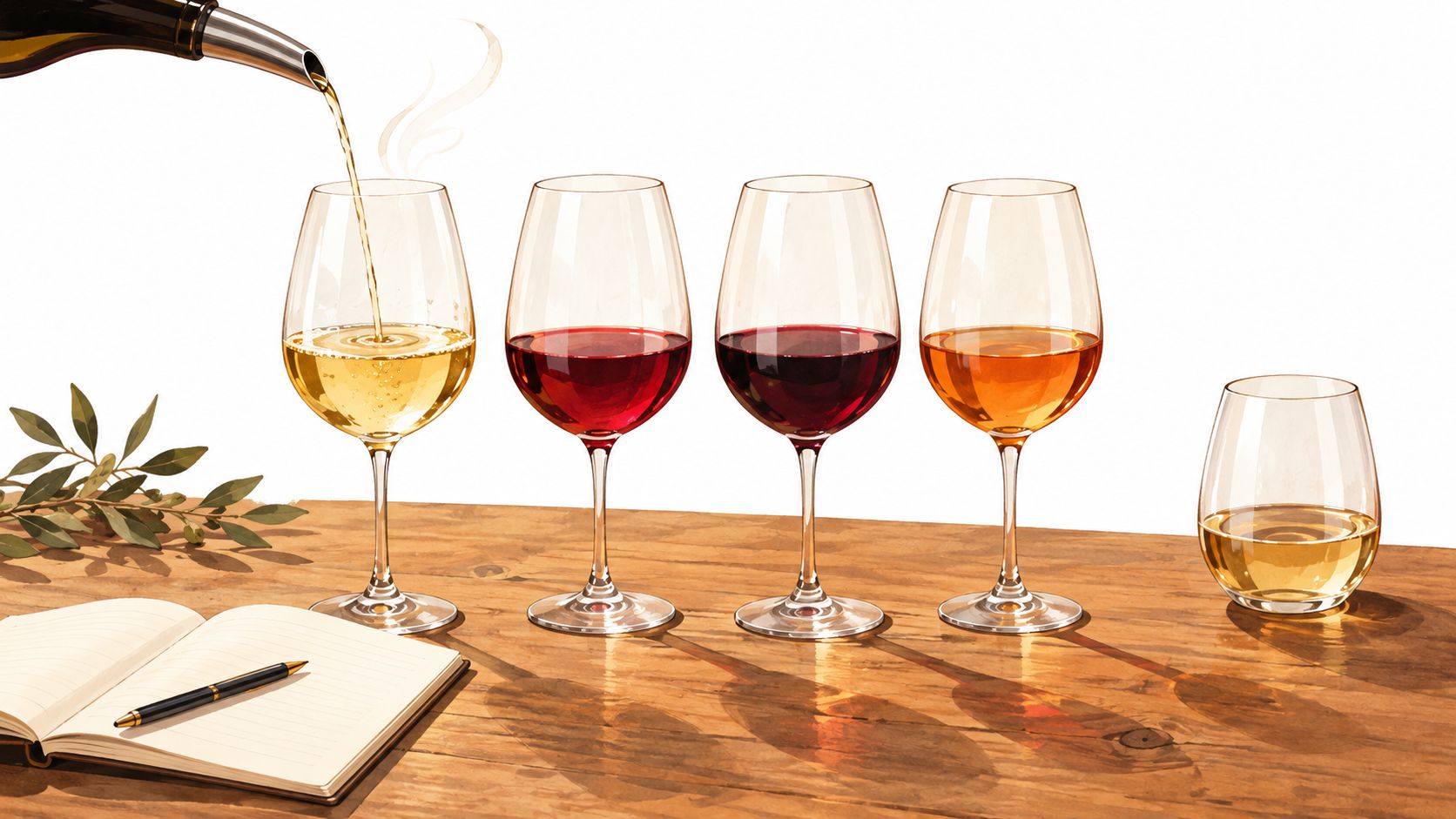
Australian consumer research supports that confidence. A 2022 study of 339 Australian wine drinkers found that participants identified an opposing sensory descriptor in 81% of red-wine cases and 84% of white-wine cases. The study concluded that ordinary wine drinkers could model sensory dimensions in more than 80% of cases, rather than reserving this ability for professional judges or trained sommeliers. (Read the Australian sensory-language study)
Give your palate useful choices
The finding is practical because beginners often struggle when tasting sheets offer a long list of disconnected aroma words. A better card asks you to choose between clear contrasts:
- Acidity: soft and rounded, or bright and refreshing?
- Tannin: gentle and fine, or firm and drying?
- Body: light and delicate, or full and weighty?
- Fruit character: fresh and red-fruited, or dark and rich?
- Finish: short and clean, or lingering and savoury?
You don't have to select the “correct” answer. You're recording the direction of your perception. Repeating that process across related wines helps you build a personal vocabulary, especially when the kit gives you a clear reason for putting the samples together.
Structured tasting also separates liking from description. You might recognise that a wine has firm tannin and still enjoy it with a roast meal. Another wine might smell appealing but feel too light for the dish you're serving. This distinction prevents tasting notes from turning into scores that say very little about real-life enjoyment.
A tasting note isn't a performance. It's a record of what you noticed, under the conditions in which you noticed it.
The most useful question is often not “Did I taste blackberry?” but “Would I choose this style again, and for what occasion?” That answer becomes more reliable when you compare wines directly, write before discussing them with friends, and revisit your notes after the labels are revealed.
What to Look for in a Quality Tasting Kit
Start with the theme. A kit built around McLaren Vale Shiraz should make regional comparison possible, while a kit focused on Australian white wines should give you a reason to examine differences in acidity, aroma, texture or sweetness. If the selection appears to be clearance stock with no connection between the bottles, it may still offer drinking value, but it won't teach you much.
A buying checklist
Look for these features before placing an order:
- A clear comparison question: The wines should explore a region, variety, style, vintage, winemaking approach or packaging format.
- Complete sample information: Notes should identify grape variety, region, vintage and relevant serving advice. Price positioning can also be useful when you later examine how expectations affect your judgement.
- Practical tasting prompts: A good card should guide you through appearance, aroma, structure, flavour, finish and overall preference without demanding specialist terminology.
- Secure packaging: Smaller bottles and sample containers need protection against movement, breakage, leakage and temperature changes during delivery.
- Serving instructions: The kit should explain whether the wines need chilling, how to handle sparkling samples and whether a decanting step is appropriate.
- Food guidance: Pairings should help you test suitability, not dictate a single “correct” match. Neutral foods are useful for a sensory comparison, while familiar meals reveal how you might actually drink the wine.
- A recording method: Leave enough space for separate notes on liking, quality, value and food suitability.
A professional-feeling kit doesn't need ornate packaging. It needs traceability and a fair comparison structure. You should be able to tell why each sample is present and what difference you're being encouraged to investigate.
Read the notes before opening the bottles
Ask whether the kit supports blind, semi-blind and open-label use. A blind setup hides producer, variety, region and price until after you record your first impression. A semi-blind setup might reveal the broad category, such as “McLaren Vale Shiraz”, while concealing individual producers. Open-label tasting gives you the commercial context from the start.
Each format answers a different question. Blind tasting asks what your senses notice without branding. Open-label tasting asks whether the wine makes sense for a meal, a gift or a particular budget. A kit that allows all three gives you more value than one that forces every taster into the same format.
Also check whether the samples are intended to be tasted together. A kit that includes wines with very different serving needs should explain the order of service and temperature. Without that guidance, you may mistake warmth, chill or carbonation loss for a difference in quality.
Choosing the Right Kit for Your Experience Level
Your ideal kit depends less on how long you've been drinking wine and more on the question you want answered. A first-time taster usually benefits from broad contrasts. An experienced drinker may prefer a narrower comparison that isolates regional, vineyard or production differences.
| Experience Level | Ideal Kit Focus | Key Learning Outcome |
|---|---|---|
| New taster | Broad red, white or sparkling comparisons | Build confidence with body, acidity, tannin, sweetness and aroma |
| Developing taster | One region or grape variety with contrasting styles | Identify how site, ripeness, oak and winemaking affect structure |
| Experienced enthusiast | Narrow regional flights, vintages or blends | Examine subtle differences and refine personal preferences |
| Occasion-focused drinker | Conventional wine alongside alternative formats | Judge freshness, texture, convenience and suitability for a specific use |
For a first tasting
Choose a kit with a simple theme and approachable prompts. A red flight that contrasts lighter and fuller styles may be easier to understand than several wines that differ only in subtle winemaking details. Keep the tasting card focused on comparisons such as “more drying” or “more refreshing”, rather than a long catalogue of aroma descriptors.
A regional kit can work particularly well if it explains the place in plain language. You aren't expected to memorise vineyard names. You're learning how a group of wines from the same broad area can still differ in fruit profile, texture and balance.
For an intermediate or advanced taster
Choose a narrower question. You might compare several McLaren Vale Shiraz styles, examine a regional blend against a single-variety wine, or taste wines from different formats while keeping the grape and occasion in mind. Record not only preference, but also what changed between samples.
Australian research activity is examining consumer responses to lower-alcohol wines and alternative formats alongside conventional wine, making this a relevant direction for modern tasting kits. (Explore the Australian wine-tasting research study) The useful comparison isn't “Which category is best?” It's “Which option delivers the freshness, texture, convenience and drinking experience I want for this occasion?”
Don't assume lower alcohol automatically means healthier or better. Treat alcohol strength, container, serve size, standard drinks, storage and intended use as separate factors, and follow Australian responsible-drinking guidance when planning a tasting.
Setting Up a Fair and Engaging Tasting at Home
Blind tasting isn't automatically the best method for beginners. It can reduce the influence of labels, reputation and price, but it can also hide the information you need when choosing a bottle for dinner, gifting or a social occasion. A fair home tasting begins with controlled conditions, then chooses the level of information that matches the question.
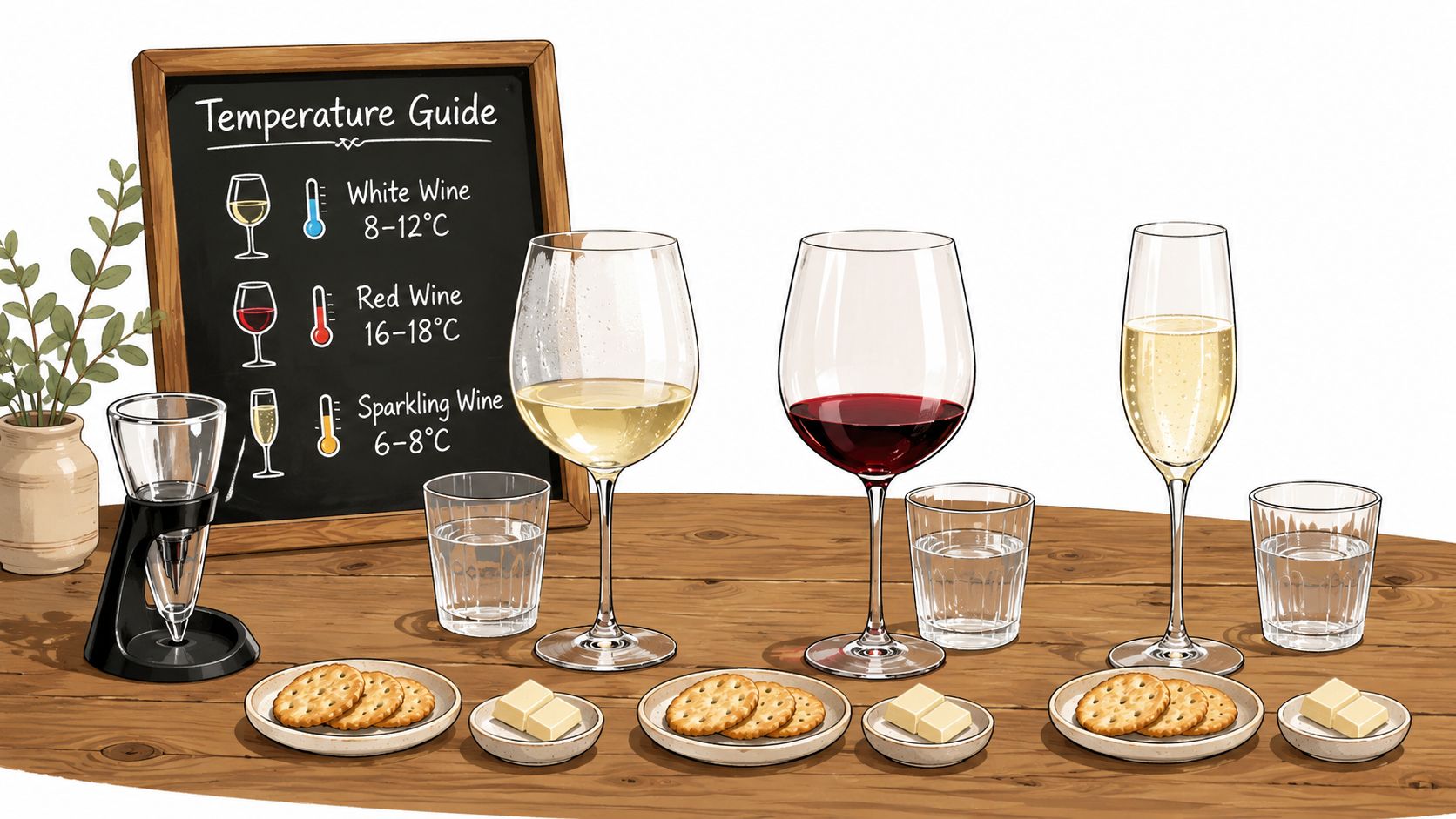
For a formal still-wine comparison, guidance from the Australian Wine Research Institute recommends identical covered glasses, random three-digit sample codes, a measured 30 mL pour and a serving temperature of approximately 20°C. (Review the AWRI sensory-assessment guidance) These controls reduce expectation bias and order effects, so one wine doesn't gain an unfair advantage from its glass, pour size or position in the sequence.
A simple home setup
- Prepare the space. Use neutral lighting, clean glassware and a surface where everyone can write. Avoid strongly scented candles, flowers or cooking aromas.
- Standardise the glasses. Use matching glasses where possible. Cover them with opaque lids or paper if you're running a blind or semi-blind tasting.
- Code the samples. Use random codes rather than obvious labels such as “Shiraz 1”. Ask each person to taste in a different order if you want to reduce sequence effects.
- Measure the pour. A measured pour gives every sample the same starting point and leaves enough wine for revisiting.
- Control temperature. Serve still wines consistently. Use an insulated cooler or ice sleeve for white, rosé and sparkling wines, and keep sparkling samples sealed until pouring.
- Reset the palate. Offer water and plain, neutral foods. Strong cheese, spicy dishes and salty snacks can change how the next wine tastes.
- Record separate judgements. Note liking, perceived quality, food suitability and value independently.
Use blind tasting for a sensory question, semi-blind tasting for regional or varietal learning, and open-label tasting for a practical buying decision. A mixed approach often creates the most engaging evening because guests can first describe what they perceive and then discuss why the producer, region, price or serving suggestion matters.
The companion guide to hosting a wine tasting party at home can help with the social side, but don't let conversation replace recording. Write first, discuss second.
For sparkling and chilled samples, timing matters. Australian sensory work has used covered, coded glasses, controlled pours and rapid evaluation to limit temperature drift, oxidation and carbonation loss. At home, you don't need a laboratory, but you can keep the same principle by chilling comparable wines together, opening sparkling bottles only when ready, and tasting them promptly.
Moving from Tasting Notes to Your Next Bottle
A tasting kit earns its place when it changes what you buy next. Your notes should help you recognise patterns, not produce a single impressive score. If you repeatedly prefer wines with bright acidity for warm-weather meals, or fuller texture for slow-cooked dishes, that is more useful than deciding that one bottle received a slightly higher mark.
Keep four judgements separate:
- Liking: Did you enjoy drinking it?
- Quality: Did it feel balanced, complete and well made to you?
- Value: Did the experience justify the price position?
- Use: Would you serve it with food, give it as a gift or open it casually?
Wine Australia research found that structured tasting can influence evaluation, but purchase decisions also combine flavour experience with price, brand name, medals, discounts and other visible quality signals. In the Shiraz choice experiment, objective star ratings were the strongest predictor of choice, followed by brand name, price, medals and discounts, while tasting preference alone didn't necessarily determine repurchase. (Read Wine Australia's research on wine choice)
That doesn't make tasting pointless. It tells you how to use it truthfully. A wine may be your sensory favourite but too expensive for a casual meal. Another may offer the right balance of flavour, price and availability for regular drinking. Record both reactions instead of forcing them into one answer.
Use your results to create a personal buying brief. Note the regions, grape varieties, structures and formats you want to revisit, then compare those preferences with the occasion and budget. For more practical guidance on turning preferences into confident purchases, explore how to buy wine like a sommelier.
A curated sample pack gives you a low-pressure way to test that brief before committing to larger purchases. Once you know which styles suit your palate and table, mixed cases and dozen offers become more considered choices rather than guesses.
McLaren Vale Cellars offers curated sample packs, mixed cases and regional McLaren Vale styles that make this kind of comparison practical at home. Visit McLaren Vale Cellars to choose a tasting-friendly selection, use the tasting guides to record your impressions, and turn your next pour into a more confident buying decision.

Comments (0)
There are no comments for this article. Be the first one to leave a message!