
Ever stood in a wine aisle wondering what separates a "dry" Shiraz from a "sweet" Riesling? The answer isn't some secret winemaker's code—it's all down to the wine sweetness scale.
At its heart, the scale is a way of classifying wine based on its residual sugar (RS). This is simply the natural grape sugar that's left over after the yeast has done its job of converting sugar into alcohol during fermentation. It's the technical blueprint that defines a wine's style, from bone-dry to lusciously sweet.
How the Wine Sweetness Scale Actually Works
Forget tasting notes like cherry or vanilla for a moment. The sweetness scale isn't about subjective flavours; it's a precise, scientific measurement.
The leftover sugar, or residual sugar (RS), is measured in grams per litre (g/L). The higher the number, the sweeter the wine. Think of it like a baker's recipe: they know exactly how much sugar is needed for a tart lemon slice versus a rich caramel mud cake. Winemakers do the same, targeting a specific RS level to craft a particular style of wine. It’s that straightforward.
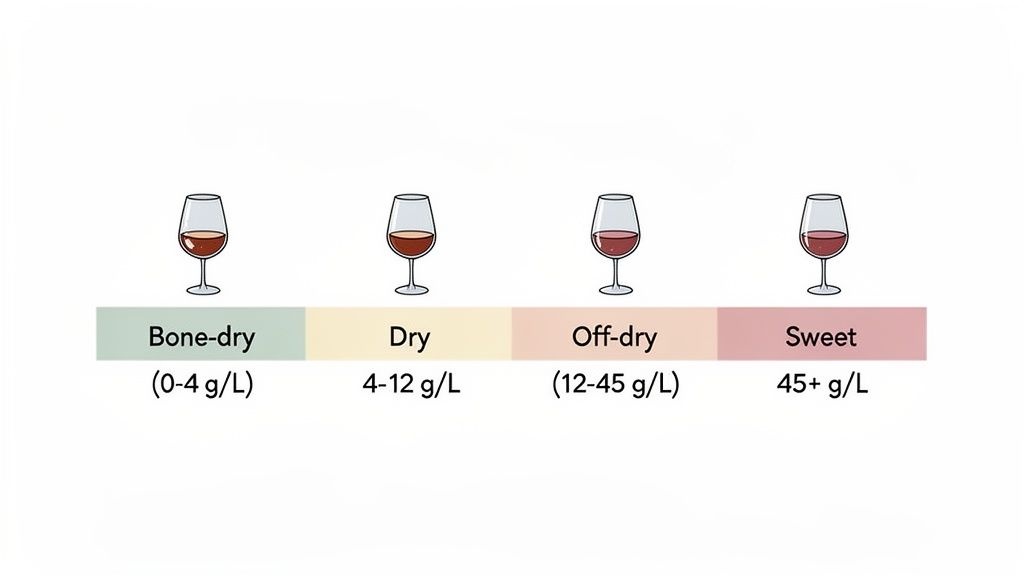
The Four Main Sweetness Levels
While sweetness is a continuous spectrum, wines are generally grouped into four main categories. Getting your head around these levels is the first step to confidently choosing your next bottle.
Of course, sweetness is just one piece of the puzzle. Other elements like acidity and tannins play a huge role in how a wine feels in your mouth. For a deeper look into another key component, check out our guide to understanding wine acidity and see how it all balances out.
For now, here’s a simple breakdown of the core categories you'll see on the wine sweetness scale.
The Four Core Levels of Wine Sweetness
This table gives you a quick guide to understanding wine sweetness categories based on their residual sugar (RS).
| Sweetness Level | Residual Sugar (grams/litre) | Common Wine Examples |
|---|---|---|
| Bone-Dry | Less than 1 g/L | Brut Nature Champagne, many Sauvignon Blancs |
| Dry | 1-10 g/L | Most red wines (Shiraz, Cabernet), Chardonnay |
| Off-Dry | 10-35 g/L | Some Rieslings, Rosé, Moscato |
| Sweet | More than 35 g/L | Dessert wines (Sauternes), Fortified wines (Port) |
These ranges give you a reliable map for your palate, helping you navigate the wine world with a bit more confidence.
Why Your Taste Buds Can Be Deceiving
Have you ever taken a sip of wine, bracing for sweetness, only to be met with a crisp, dry finish? Or tasted a supposedly dry red that felt surprisingly fruity and rich? This isn’t your palate playing tricks on you; it’s the fascinating difference between a wine's actual sugar content and its perceived sweetness.
It’s a bit like making lemonade. A glass of plain sugar water is obviously sweet. But squeeze in the juice of a sharp, zesty lemon, and that sweetness suddenly feels much less intense. The sugar is all still there, but the high acidity provides a counterbalance, changing the entire experience. Wine works in precisely the same way.
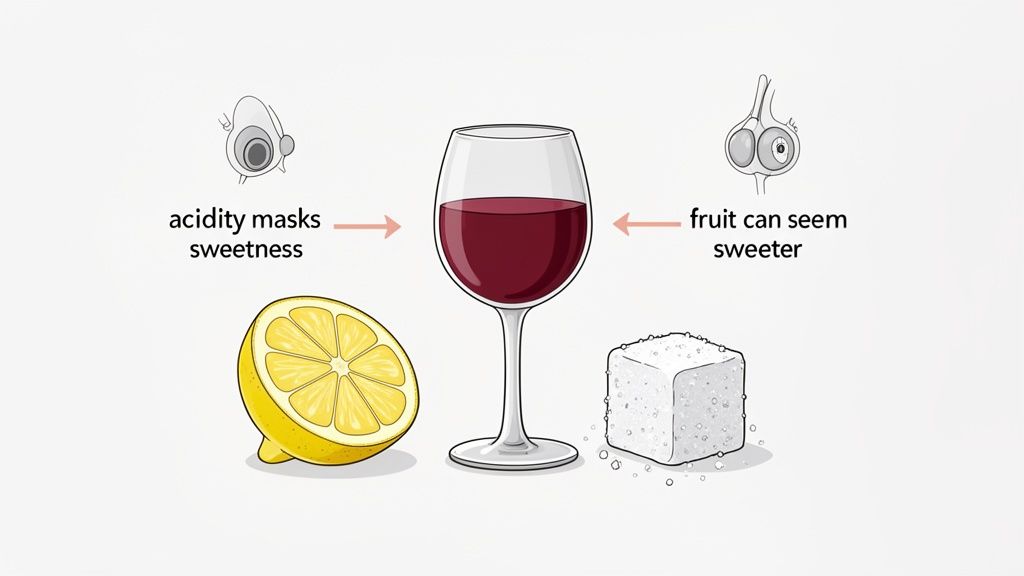
The Balancing Act in Your Glass
Several key elements in a wine can either hide or highlight the residual sugar. Think of them as the winemaker's toolkit for creating balance and complexity, ensuring a wine is more than just a one-note sweet or dry drink.
These components all work together to shape how a wine feels on your palate:
- Acidity is sugar’s number one rival. It brings that crisp, mouth-watering quality that can make a wine with a fair bit of residual sugar taste clean, zesty, and dry.
- Tannins, the compounds from grape skins and seeds that create a drying sensation in your mouth, also push back against sweetness, especially in reds.
- Alcohol can add a sense of sweetness and body, making a wine feel richer and fuller.
- Fruitiness is another great pretender. Intense, ripe fruit flavours—like jammy blackberries or tropical mango—can easily trick your brain into thinking there’s more sweetness than there actually is.
This interplay is what great winemaking is all about. Here in South Australia, our warm climate is perfect for developing beautiful natural grape sugars. In 2021, the state crushed a whopping 52% of Australia’s entire wine grape harvest, with residual sugar levels often ranging from 0-5 g/L for bone-dry styles to 20-45 g/L for off-dry whites, proving our winemakers are masters of balance. You can discover more about our region's winemaking prowess over at redheadswine.com.
Key Takeaway: A wine's structure—its acidity, tannins, and alcohol—is what really determines how sweet it tastes, no matter what the numbers say. A truly balanced wine is one where no single element shouts louder than the others.
Why Temperature Changes Everything
Even something as simple as the serving temperature can totally change how sweet a wine tastes. Chilling a wine mutes the perception of sweetness and puts its acidity and structure in the spotlight.
Take a slightly sweet Riesling, for example. Serve it ice-cold, and it will come across as much drier and more refreshing. On the flip side, a red wine served too warm can feel "flabby," as its alcohol and fruit sweetness become overpowering. This is why a simple chill can completely transform your tasting experience, bringing a wine’s carefully crafted balance into perfect focus.
Navigating Wine Styles Across the Spectrum
Right, so we've covered the theory. Now for the fun part: putting that knowledge to use when you're staring at a wall of wine. This is where it all clicks. Let's walk through the sweetness scale using real-world examples, from the crispest whites to the most decadent dessert wines, so you can connect the numbers to what's actually in your glass.
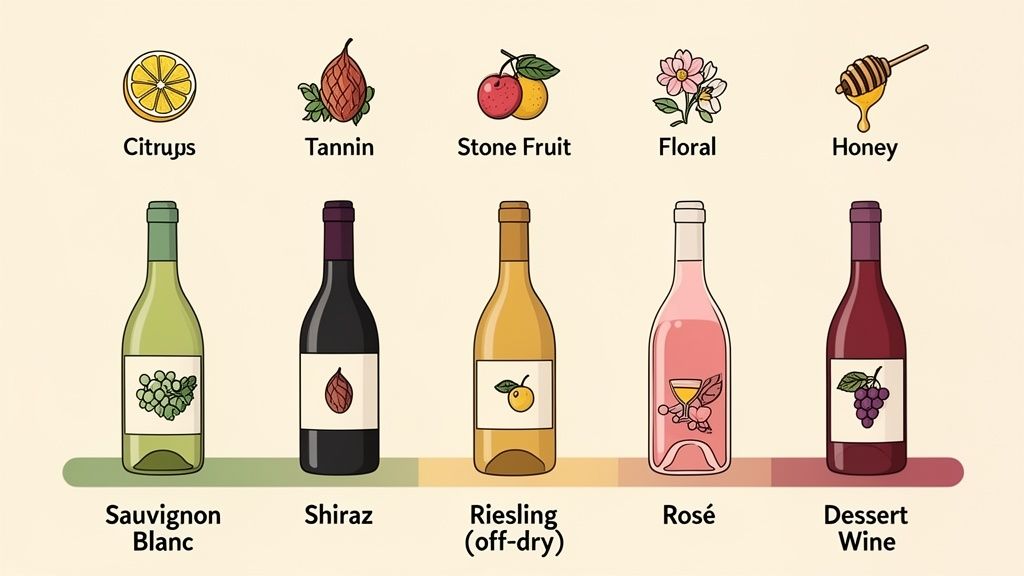
We’ll start at the driest end of town with Bone-Dry and Dry wines. These are the ones defined by their complete lack of perceptible sugar, making them incredibly refreshing and brilliant partners for food.
- Sauvignon Blanc: This is your classic bone-dry white. It's all about that zesty, mouth-watering acidity, bursting with notes of passionfruit, freshly cut grass, and lime—all without a whisper of sweetness.
- Shiraz: Our very own McLaren Vale specialty is a perfect example of a dry red. It might explode with rich, ripe flavours of blackberry and plum, but there's virtually no residual sugar. This is what allows its bold tannins and savoury spice to really take centre stage.
These wines are the ultimate proof that "fruity" doesn't automatically mean "sweet." All that vibrant character comes from the grape's flavour, not from sugar.
Exploring Off-Dry Styles
Moving just a little way along the spectrum, we arrive in the Off-Dry category. These wines have a noticeable touch of sweetness, but it’s always balanced by a crisp acidity that stops them from feeling heavy or cloying. It's this delicate balance that makes them so versatile.
A classic off-dry Riesling is a great example, where a little sweetness softens the grape’s naturally high acidity, creating a beautifully harmonious wine. Many Rosé styles live here too, with just enough red berry sweetness to make them dangerously easy to drink on a sunny afternoon. If you're keen to explore this dynamic grape, you can learn more about Riesling styles from dry to sweet in our dedicated guide.
Here's a pro tip: this touch of sweetness is a secret weapon for pairing with spicy food. The sugar masterfully tames the heat of Thai or Indian dishes, creating a perfect harmony where a bone-dry wine might get lost.
The World of Sweet and Fortified Wines
Finally, we reach the truly Sweet end of the scale. In these wines, sugar is the star of the show. Winemakers achieve this either by stopping the fermentation early to leave lots of natural grape sugar behind or by adding a spirit, a process known as fortification.
Think of luscious dessert wines like Sauternes, with their concentrated honey and apricot notes, or a rich, warming glass of Port. These wines are intentionally sweet, delivering a decadent and complex tasting experience that’s completely unforgettable.
Regional Wines on the Sweetness Scale
To help you visualise where your favourite local drops might sit, discover where some popular regional varietals typically land on the spectrum.
| Wine Style | Typical Sweetness Level | Typical Residual Sugar (g/L) | Key Flavour Profile |
|---|---|---|---|
| McLaren Vale Sauvignon Blanc | Bone-Dry | < 2 g/L | Crisp, passionfruit, zesty lime |
| McLaren Vale Shiraz | Dry | < 4 g/L | Blackberry, dark chocolate, spice |
| Clare Valley Riesling | Off-Dry | 10-25 g/L | Green apple, citrus blossom, slate |
| Barossa Valley Grenache Rosé | Off-Dry | 8-15 g/L | Strawberry, watermelon, bright acidity |
| Rutherglen Muscat | Sweet | > 150 g/L | Raisin, caramel, rich toffee |
This table gives you a great starting point for understanding how sweetness levels translate across different wine styles you'll find on the shelf.
Finding Sweetness Clues on Wine Labels
Navigating a wine shop can feel overwhelming, but the bottle itself holds all the clues you need. While most labels won’t just say "sweet" or "dry," they are sprinkled with useful hints that point you in the right direction. Learning to spot these is the key to choosing your next bottle with total confidence.
Think of it like learning a few key phrases before travelling. Once you know them, you can find exactly what you’re looking for. This is especially true for European wines, where tradition and labelling laws offer a reliable guide to the wine’s style.
Decoding International Terms
When it comes to sparkling wine, certain words are your best friend. A bottle labelled "Brut" is your go-to for a classic, crisp dry style—perfect for any celebration. For German wines, particularly Riesling, the word "Trocken" literally means "dry," signalling you’re in for a refreshing wine with minimal sugar.
On the flip side, if you're chasing something on the sweeter end of the spectrum, keep an eye out for these terms:
- Doux: This is French for "sweet" and marks the highest level of sweetness you'll find in Champagne.
- Dolce: The Italian equivalent, meaning "sweet," is often found on popular wines like Moscato d'Asti.
- Demi-Sec: A French term meaning "half-dry," this indicates a wine that's noticeably sweet but not syrupy.
These terms act as clear signposts, taking a lot of the guesswork out of the equation.
Using Alcohol Percentage as a Hint
Beyond specific words, the alcohol by volume (ABV) is another clever detective tool you can use, especially with white wines. Alcohol is made when yeast eats sugar during fermentation. So, a lower ABV can sometimes mean the winemaker stopped the fermentation early, leaving more unfermented sugar behind.
A German Riesling with an ABV of just 8% or 9%, for instance, is almost guaranteed to have some sweetness to balance out its zinging acidity. In contrast, a dry Aussie Sauvignon Blanc will typically sit around 12-13.5% ABV, meaning nearly all the sugar was converted into alcohol.
This isn't a foolproof rule for every single wine out there, but it's an incredibly handy guideline when other clues are hard to find. By combining your knowledge of key terms with a quick glance at the ABV, you’re well-equipped to predict a wine's style with impressive accuracy.
Pairing Food with Wine Sweetness in Mind
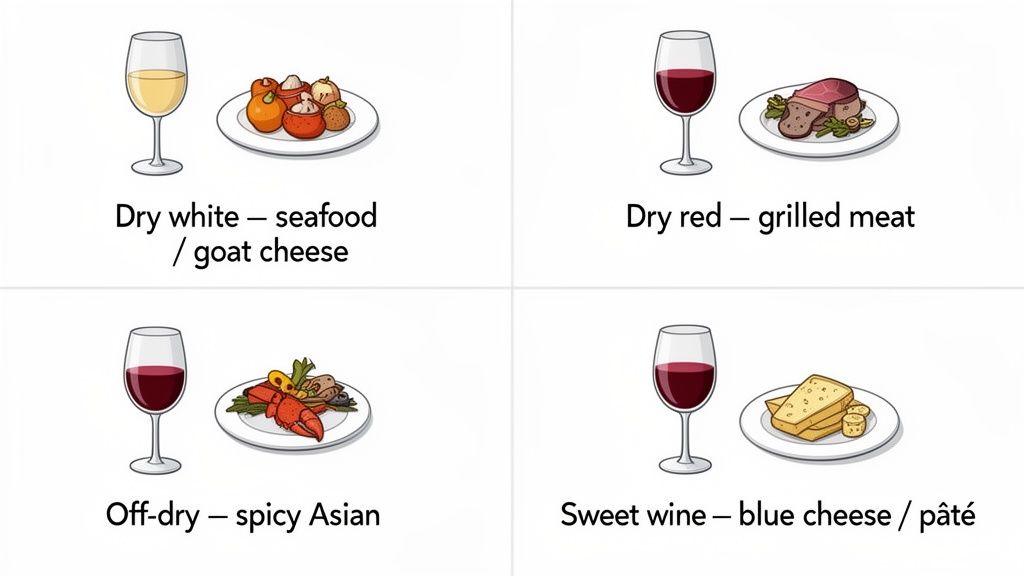
This is where the magic happens. Turning a good meal into something truly unforgettable often comes down to the perfect wine pairing. While it might seem like a dark art, using the wine sweetness scale as your compass makes it surprisingly simple.
The golden rule is all about balance: the wine needs to complement the dish, not get bullied by it. A classic tip is to make sure your wine is at least as sweet, if not a touch sweeter, than your food. This simple trick stops the wine from tasting flat or sour next to what’s on your plate.
Let’s break down some winning combinations for each step on the sweetness ladder.
Dry Wine Pairings
Dry wines are the ultimate team players at the dinner table. Their secret weapons? Acidity and tannins. These structural elements slice through rich foods, cleansing your palate and getting you ready for that next delicious bite.
- Crisp, Dry Whites (e.g., Sauvignon Blanc): The zippy acidity in these wines is a dream match for anything light and fresh. Think grilled fish with a squeeze of lemon, briny oysters straight from the shell, or a salad with creamy goat's cheese.
- Bold, Dry Reds (e.g., McLaren Vale Shiraz): A robust McLaren Vale Shiraz, with its firm tannins and deep fruit flavours, is built for hearty meals. It stands up beautifully to a chargrilled steak, slow-roasted lamb, or a rich mushroom risotto, where its structure cuts right through the fat and protein.
Off-Dry and Sweet Wine Pairings
Don't overlook wines with a hint of sweetness—they are incredibly versatile and can be your secret weapon against tricky flavours. They have an uncanny ability to tame spice and create stunning contrasts with savoury dishes.
The subtle sugar in off-dry wines, like certain Rieslings, is a master at cooling the fire of spicy Asian food. A slightly sweet Rosé can also be a brilliant partner for a Thai green curry or a fiery Szechuan stir-fry, where a bone-dry wine would simply disappear. This dance between spice and sweetness is a cornerstone of great food pairing, and you can dive deeper into how salt, spice, and sweetness enhance dining in our detailed guide.
Don't Reserve Sweet Wines for Dessert!
While a luscious fortified wine is a classic finish with chocolate cake, its true genius often shines brightest next to savoury foods. The interplay between sweet and salty creates an incredible flavour explosion that you have to taste to believe.
Try a rich, sweet fortified wine with a pungent, salty blue cheese like Roquefort or a decadent duck liver pâté. The wine’s intense sweetness slices through the richness and salt, creating a perfect, harmonious balance on your palate. It’s a truly show-stopping combination.
Your Wine Sweetness Questions Answered
Even after getting your head around the sweetness scale, a few questions always seem to pop up. Let’s tackle some of the most common ones to clear up any lingering confusion and get you choosing your next bottle with total confidence.
Think of this as your go-to cheat sheet, putting everything we've learned into practice.
Does a Fruity Wine Mean It Is a Sweet Wine?
Not at all, and this is probably the biggest hurdle for new wine lovers to clear. "Fruity" is all about the aromas and flavours—think notes of fresh cherry, passionfruit, or ripe blackberry. A wine can be absolutely bursting with these fruit characters while being technically bone-dry, with almost no sugar left in it.
The best way to think about it is the difference between biting into a fresh, tart strawberry and spooning into a bowl of strawberry jam. Both are intensely fruity, but only the jam is actually sweet. A classic dry McLaren Vale Shiraz, for instance, is packed with dark fruit notes but finishes completely dry.
Remember to always separate the sensation of fruit from the sensation of sugar. They are two different things, and getting this right is a huge leap forward in your wine journey.
Are All Riesling Wines Sweet?
This is such a common myth! The truth is, Riesling is one of the planet's most versatile grapes, made in every style imaginable, from bone-dry and zesty right through to lusciously sweet dessert wines. Many famous regions, including our very own Clare Valley here in South Australia, are celebrated for producing world-class dry Rieslings.
These dry styles are incredibly crisp, refreshing, and complex, making them brilliant food wines. The label is your best friend here. Look for terms like 'Dry Riesling' or the German word 'Trocken', which also means dry. If you're ever unsure, just ask for a recommendation to find the style of Riesling that's right for you.
How Does the Wine Sweetness Scale Apply to Sparkling Wines?
Sparkling wine marches to the beat of its own drum, using a unique vocabulary for sweetness. It can seem a bit backward at first, but the system is actually quite logical once you know the order.
Here’s the scale, from the driest style to the sweetest:
- Brut Nature (The driest of the dry)
- Extra Brut
- Brut (Your classic, go-to dry style)
- Extra Dry (Confusingly, this is a touch sweeter than Brut)
- Dry (Also known as Sec)
- Demi-Sec (Noticeably sweet)
- Doux (The sweetest)
The most important one to remember is "Brut". If you see this on a label, you can bet you’re getting a crisp, classic, dry sparkling wine. It’s the perfect all-rounder for an aperitif or pairing with everything from oysters to fried chicken.
Why Don’t All Wine Labels Show the Exact Residual Sugar?
It would certainly make life easier if every bottle listed its residual sugar in grams per litre (g/L), wouldn't it? But it’s not a mandatory labelling requirement in many countries, including Australia. Besides, winemakers know that a single number doesn't tell the whole story.
As we've covered, perceived sweetness is a huge factor. A wine with 8 g/L of sugar but high, zesty acidity can taste much drier than a wine with only 5 g/L and softer acidity. It's the final balance in the glass that truly matters. Instead of just giving you a number, producers rely on stylistic descriptions and regional reputation to guide you to the wine you’re looking for.
Ready to explore the delicious spectrum of McLaren Vale wines? At McLaren Vale Cellars, we have everything from bone-dry Sauvignon Blancs to rich, full-bodied Shiraz. Discover your next favourite and enjoy free delivery on orders over $100 Australia-wide. https://www.mclarenvalecellars.com


Comments (0)
There are no comments for this article. Be the first one to leave a message!