
You've got guests arriving, the fridge is half-full, and you don't want to gamble on a random bottle that disappoints the table. That's the job behind a wine near me search, finding something solid, close, and worth opening tonight. In Australia, that usually means choosing between the bottle shop around the corner, a cellar door within reach, or an online store that can get the right wine to your door without mucking about.

The old “where's the nearest winery?” mindset is out of date. Consumers want value, speed, and confidence, with enough regional quality to feel like they've bought properly, not just conveniently. South Australia matters here because it remains the backbone of Australian wine production, with the state accounting for about 50% of Australia's wine grape crush in many vintages, while Australia exported 594 million litres of wine in 2023–24, worth A$2.13 billion (Wine Australia via OIV statistics).
If you want the blunt version, stop treating this as a tourism search. Treat it like a buying decision. A decent local wine search should help you decide what to drink, who to buy from, and whether the deal is good once delivery, pack size, and style are factored in.
Why You Searched for Wine Near Me
Most wine near me searches happen at the same moment, the one where the clock's pushing toward dinner and you need something decent on the table without wasting time. Maybe you're on the way home, maybe someone has texted saying they're “just popping in”, and maybe you've had one bad bottle recently and do not want a repeat. That is not a tourism mood. It is a buying problem.
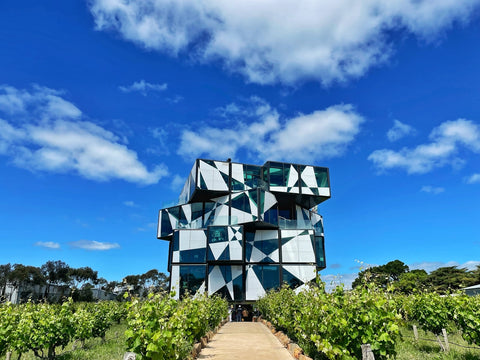
South Australian wine is the obvious anchor because it is the most reliable shorthand for quality, regional character, and broad availability. McLaren Vale sits right in that sweet spot, with a reputation built on Mediterranean-style climate, strong red wine, and cellar-door culture that matters to buyers. The scale matters too, because South Australian supply feeds both local shelves and national distribution, so you are not chasing a niche label that only exists in one tiny corner of the state.
What people really want
Practical rule: if a nearby store cannot tell you where the wine came from, how it is packed, and when it will arrive, keep moving.
The phrase has shifted from “find a venue” to “find a bottle I can trust quickly”. That is why nearby bottle shops, cellar doors, and online stores all belong in the same conversation. They are competing to solve the same problem, just in different ways.
For some people, “near me” means a store two suburbs away with a good shelf of McLaren Vale reds. For others, it means a cellar door with a trusted regional range. For plenty of households, it now means an online retailer that can sort the order tonight without the fuel cost and the wandering around. The practical part is simple. Use the best apps and platforms to buy wine on your phone to compare bottles, pack formats, and delivery before you commit.
In other words, the search is less about geography and more about getting the right wine with the least hassle.
What Wine Near Me Actually Means in 2026
A wine near me result now falls into three buckets. There's the local bottle shop, which is the fastest fix when you need something tonight. There's the cellar door, which makes sense if you're chasing regional advice and you don't mind the drive. Then there's the online store, which has become the most practical option when the right bottle, pack, or mixed case matters more than the nearest postcode.
Local access shapes buying
Physical access still matters. A cohort study found that having three or more wine outlets within 0.5 km of home was associated with a higher likelihood of wine consumption than having none nearby, with cumulative odds ratios of 1.20 for women and 1.29 for men; each increase in the number of wine outlets was also linked to higher wine consumption, including a COR of 1.16 among all women (PubMed). That's not Australia-only data, but the message carries straight into Australian shopping behaviour. Nearby outlets change what people buy and how often they buy it.
South Australian wine sits underneath a lot of that convenience. It's the backbone of domestic choice because the regional supply is deep, familiar, and easy to distribute. That's why McLaren Vale is so often the smarter answer than a random “wine bar near me” result. If you know what style you want, regional sourcing matters more than a glossy listing.
Near me now means best route to the bottle
Online has rewritten the meaning of local. If a store can get you a mixed half-case, a dozen deal, or a reliable regional red without charging silly freight, that's “near” in the only sense that matters. A cellar door is close in a map sense. An online store is close in a convenience sense. A good bottle shop is close in an emergency sense.
The bad search result is the one that gives you a map pin and nothing else. The good one gives you style, value, format, and delivery in the same screen. That's the standard now.
Smart Search Tactics and Store Features to Check
Start with the map, but don't stop there. A store that appears nearby isn't automatically worth your money. Check whether the listing names the styles it stocks, whether it shows clear opening hours, and whether the retailer tells you something useful about regional sourcing. A vague “wine shop” listing is not enough.
Read the listing like a buyer
Use the product pages and store pages as a filter, not a decoration. If a shop only lists broad categories, you're going to waste time. If it shows Shiraz, Cabernet Sauvignon, Sauvignon Blanc, Pinot Grigio, Blanc de Blanc sparkling, and pack options upfront, that's a sign the retailer understands how people really shop.
Look for these features:
- Clear regional labelling: You want McLaren Vale, South Australia, or another real region named plainly.
- Useful tasting notes: Short and specific is better than fluffy marketing copy.
- Pack choice: Single bottles, mixed packs, or dozen deals should be visible without hunting.
- Delivery clarity: If shipping rules are hidden, the deal usually isn't good.
- Returns or guarantee wording: If a retailer stands behind the bottle, it'll usually say so.
The strongest stores don't make you guess. They make it easy to compare.
Don't ignore the practical extras
A quick check of the store's mobile experience matters too. If you're ordering on the run, the site should be usable on a phone, and the steps from search to checkout need to be short. This guide on the best apps and platforms to buy wine on your phone is a good reference point if you want to compare how different buying routes behave on mobile.
If a store hides the freight cost until the final step, assume the headline price is doing the selling for them.
One more thing. A decent store should help you decide without talking down to you. That means transparent region names, honest style notes, and enough range that you can buy for tonight, for the weekend, or for a gift without starting from scratch every time.
Delivery, Pickup and Pack Formats Worth Comparing
The cheapest bottle on the page is often the wrong measure. If you're shopping wine near me, stop asking which bottle looks cheapest and ask which buying format gives your household the best value. A single bottle, a mixed pack, a dozen, pickup, or delivery can change the final bill more than the shelf price does.
Single bottle, dozen or mixed pack
A single bottle suits a trial run, a gift, or a night where you only want one wine on the table. It keeps the risk low, which is handy if you are trying a new maker or a new style. You pay for convenience, though, so it rarely wins on value.
A dozen deal makes sense once you already know what you like. It works for households that will drink the same wine across dinners, weekend lunches, and a few guests dropping by. The catch is simple. If you get tired of the wine halfway through the box, the bargain starts to look ordinary.
A mixed half-and-half pack is the format I point individuals toward first. You get variety without tying yourself to twelve of one bottle, and that matters when one person wants red and another wants white. For a home that moves from pasta to barbecue to a gift bottle for a friend, mixed packs cut waste and keep the cupboard useful.
Freight and pickup change the maths
Freight can turn a good-looking price into a poor one fast. Free delivery over a sensible spend usually beats a cheaper bottle with ugly shipping added at checkout, and pickup is the right move if you are already nearby or passing through McLaren Vale. Question is not only what the bottle costs, but what the order costs once it leaves the store.
For a plain guide to how delivery and postage should be explained, see this Australia wine delivery guide. The same logic applies whether you are comparing a cellar door, a bottle shop, or an online store such as McLaren Vale Cellars. Clear thresholds, clear timing, and clear pack sizes save you from overpaying for convenience.
The model worth copying is simple, and shipping returns for eco-friendly supplies shows the standard. If an order arrives damaged, turns up late, or is wrong, the policy should say exactly what happens next. Wine retailers should be just as plain about freight, pickup, and returns.
Buy for the house, not for the shelf. If your fridge, table, and gift list all want different things, mixed packs and honest delivery rules usually beat the lowest sticker price.
How to Choose McLaren Vale Wines With Confidence
McLaren Vale is a red wine region first, and that's no accident. Shiraz is the obvious pick if you want ripe fruit, depth, and plenty of structure. Cabernet Sauvignon leans firmer and more upright, better if you like shape and length rather than plushness. The whites and rosés are worth your time too, especially when you want freshness without giving up regional character.
The best way to buy is to stop reading labels like they're poetry and start reading them like a spec sheet.
Use the tech sheet properly
For wine buyers, the producer tech sheet is the useful document. It usually lists ABV, pH, acidity, residual sugar, and the maturation regime, including oak type and time. Those details tell you more than a glossy paragraph ever will.
Lower pH means a sharper, more stable wine profile because the scale is logarithmic. Most wines sit roughly in the pH 3 to 4 range, and acidity commonly falls in the 4 to 8 g/L range, according to Wine Folly as referenced in the supplied brief. In plain English, tighter pH usually means more brightness and more life in the bottle. For whites and rosés, that matters a lot.
McLaren Vale reds often aim for a firmer frame because they're built for depth and, in many cases, cellaring. The oak detail tells you whether the wine is meant to feel polished, generous, or more restrained. If you see heavy oak and higher alcohol, expect more weight. If you see careful acid and moderate oak, expect a cleaner line.
| Style | Typical Profile | Best For |
|---|---|---|
| Shiraz | Ripe, dark-fruited, full-bodied | BBQ, roast lamb, cellar-worthy reds |
| Cabernet Sauvignon | Firmer, structured, savoury edge | Steak, slow-cooked meats, longer ageing |
| Sauvignon Blanc | Fresh, zesty, lively | Aperitif, seafood, easy weekday drinking |
| Pinot Grigio | Crisp, light, clean finish | Casual lunches, lighter dishes |
| Blanc de Blanc sparkling | Bright, brisk, celebratory | Gifting, toasts, mixed starters |
If you want a broader regional frame, this guide to Tasmanian cool-climate wine experiences shows how different Australian regions push different styles, which helps you understand why McLaren Vale leans the way it does. For a deeper regional breakdown, keep the ultimate guide to McLaren Vale wines, varieties, regions and pairings handy while you compare bottles.
Sample Packs, Best Sellers and Offers Worth Knowing

You've got three sensible ways to buy McLaren Vale wine online. Start with the bottles locals keep reaching for, then decide whether you want a sample pack, a mixed half-case, or a larger case that gives you a better price per bottle.
Shiraz and Cabernet Sauvignon are the reds to trust first. Sauvignon Blanc, Pinot Grigio, and Blanc de Blanc sparkling cover the fresher side of the range without forcing you to guess your way through the catalogue.
Sample packs are for buyers who don't want to waste money on a style they may not finish. They suit first-time buyers, gift buyers, and households where one person wants red and the other wants white. A half-and-half mixed pack is the sensible move if you want range without building a case bottle by bottle.
What to grab first
- Shiraz: Buy this if you want a classic McLaren Vale red with depth and presence.
- Cabernet Sauvignon: Choose this if you prefer firmer structure and a more serious dinner wine.
- Sauvignon Blanc: Pick it when freshness matters more than weight.
- Pinot Grigio: This is the easy-drinking white for people who don't want fuss.
- Blanc de Blanc sparkling: Take it for gifts, starters, and anything that needs polish.
The value is in how the packs cut down the risk. A sample pack gets you started without overcommitting. A mixed half-case gives you breadth across styles. A full dozen only makes sense once you already know what disappears from your fridge fastest.
McLaren Vale Cellars is one local option that sells these styles online, along with sample packs and mixed formats. That makes the order easier to build, and it keeps you from paying for bottles you do not want.
The best offer is the one that fits how you drink. If your household gets through different styles in the same week, mixed packs beat chasing a single deal every time.
Wine Near Me for Non-Drinkers, Mixed Households and Gift Buyers

A lot of wine near me results still act like every shopper wants the same thing, a standard alcoholic bottle and a table at a cellar door. That misses a real chunk of the market. The 2023 National Drug Strategy Household Survey found 38% of people aged 18+ drank at levels exceeding the single-occasion risk guideline, while 8.9% were lifetime non-drinkers (wheresnick.com.au). That's a big audience looking for nearby options that aren't just classic wine-bar answers.
Mixed households need different options
If one person drinks and another doesn't, the right retailer is one that stocks both. Alcohol-free wine, gift bundles, and mixed drink packs make far more sense than forcing everyone into one category. That's especially useful for dinner parties, work gifts, and family gatherings where preferences are split.
Simple test: if a retailer can't serve the non-drinker in the room, it's not really solving the whole buying problem.
The other blind spot is presentation. Gift buyers often need packaging that looks deliberate, not random. That's why Packaging Panda bulk hat boxes is a useful reference if you're thinking about how premium packaging changes the feel of a gift. Wine retailers who understand gifting usually make that process obvious.
Low- and no-alcohol options are no longer a side note. They're part of a proper local wine search now, and good stores should make them easy to find without forcing you through irrelevant cellar-door pages. If a retailer can build a mixed bundle, stock alcohol-free choices, and still handle regular wine well, that's a store worth remembering.
Your First Local Wine Order, Step by Step
Start with the occasion, not the bottle. Dinner for two, a housewarming, a gift, or a weekend top-up all call for different formats. Once that's clear, choose the format first, single bottle, half-case, or dozen, then shortlist two or three styles that suit the food and the drinkers.
Use the McLaren Vale style clues above and pick one red, one white, or one sparkling if you're unsure. Then check the store's delivery threshold, pickup option, and returns or guarantee language before you click buy. A cheap bottle with ugly freight is still a bad deal.
A clean buying sequence
- Define the use case: Tonight's dinner, a gift, or a mixed household.
- Pick the format: Single bottle for testing, mixed pack for variety, dozen for repeat drinking.
- Choose the style: Use the region and tech-sheet clues to narrow the field.
- Check the fine print: Delivery, pickup, and guarantee terms first, price second.
- Place a starter order: Include at least one sample or mixed pack if you're trying a new store.
If you're buying as a gift, favour a sparkling, a mixed pack, or a boxed bundle that looks polished without being fussy. Add a short note if the store allows it, and keep the order simple so it arrives looking intentional. Gift buying goes wrong when people overcomplicate it.
Save this checklist and use it every time you search, because the right wine store should make the decision faster, not harder.
Buy the store that helps you decide quickly, delivers clearly, and shows its regional sourcing without games. That's the whole trick.
If you want McLaren Vale wine without the usual guesswork, start with a store that knows the region and sells in sensible formats. McLaren Vale Cellars offers online access to McLaren Vale wines, sample packs, mixed bundles, and value-focused options that suit everyday buying as well as gifts. Visit it when you want a local wine order that's straightforward, regional, and ready to drink.

Comments (0)
There are no comments for this article. Be the first one to leave a message!