
Wine has a 57% value share of online alcohol sales in Australia, despite representing only 19% of the country's total alcohol trade, according to Wine Australia's 2024 market insights. That gap changes how we should think about wine bundles online. They're not a way to move excess stock or attach a discount to a dozen bottles. They're a response to the way Australians increasingly discover, compare and buy wine.
The useful question isn't whether buying more bottles automatically saves money. It's when a bundle gives you better value than buying singles, and when it merely leaves you with wine you didn't really want. The answer depends on taste, format, delivery, storage and the confidence you have in the retailer.
How Online Wine Buying Took Hold in Australia
Wine's digital importance is clear in the Australian market. It accounts for 57% of the value of online alcohol sales, compared with 19% of total alcohol trade, according to Wine Australia, 2024 market insights. For shoppers, that means online wine is no longer an occasional convenience. It is a meaningful route to discovering, comparing and purchasing bottles.
That shift changes the bundle decision. Online buyers can compare a six-pack with a dozen, review grape varieties, read tasting notes, check delivery terms and calculate the effective bottle price before paying. The trade-off is equally clear: a bundle can simplify choice and improve delivery value, but it can also commit the buyer to wines that do not suit their palate. For more on how Australian shoppers moved online, see the growth of online wine shopping in Australia.

A structural channel, not a temporary habit
Wine Australia projects that online wine sales will rise from 15% in 2022 to 18% in 2026, reinforcing the view that e-commerce is becoming a larger purchasing channel rather than remaining a pandemic-era substitute. The projection, from the market insights report cited above, also explains why retailers are building mixed packs, half-cases and regional selections around online browsing behaviour.
Domestic sales data adds useful context. In 2020–21, off-trade wine represented 90% of domestic wine sales by volume, with 66% sold through in-store retail, 19% through e-commerce and 13% through direct-to-consumer channels, according to Wine Australia's domestic market bulletin. Channel definitions vary between reports, yet the practical conclusion remains steady. Retail and digital purchasing already account for a substantial share of packaged wine sales.
Practical rule: Treat a bundle as a buying format, not a discount slogan. Choose a pack that suits your upcoming occasions without leaving you with repetitive or unwanted wine.
A strong bundle page should therefore explain more than the reduced price. It should identify the intended drinker, describe each wine's role, show how the bottles differ and state what support is available if one selection disappoints. Bundles work best when they reduce comparison effort while leaving enough variety for genuine discovery. Single bottles remain the safer choice for unfamiliar producers, while a well-designed pack can offer better practical value when the wines have a clear purpose.
Understanding Wine Bundle Formats
The word “bundle” covers several different purchases, and the differences affect both value and enjoyment. Before comparing prices, identify whether you're buying repetition, variety or controlled choice.
Dozens for a trusted favourite
A dozen bundle usually means six or twelve bottles of the same wine. It's the most straightforward format, and it suits someone who already knows the bottle works for their palate, household and usual meals.
This is a sensible choice for a reliable Shiraz served with barbecued meats, or a crisp white that regularly appears beside seafood and weeknight salads. It's less sensible as a first experiment with an unfamiliar producer. A low bottle price won't compensate for twelve bottles that don't fit your taste.
Half-cases for guided variety
A half-case generally contains six bottles divided across two or three wines or grape varieties. It offers a useful middle ground. You get enough bottles to make delivery more efficient and to revisit a wine, but not so many that one disappointing choice dominates the purchase.
A regional half-case might pair McLaren Vale Shiraz with Cabernet Sauvignon, or combine a fuller red with a lighter white for different meals. This format works particularly well for households with varied preferences, couples who drink wine with different cuisines, and new drinkers who want a structured introduction rather than a random assortment.
Mixed packs for personal control
Mixed packs, sometimes called “Half & Half”, let you divide your selection across styles or price points. Depending on the retailer, you might combine reds and whites, choose several bottles from one region, or build a pack around a particular occasion.
The important detail is how much control the retailer gives you. Some mixed packs are fully curated, while others allow bottle-by-bottle selection. Read the product description carefully, because “mixed” doesn't always mean customisable.
For presents, presentation can matter as much as the wine itself. A resource such as gift box with wine can help when the purchase needs to arrive as a considered gift rather than a plain carton.
| Format | Best suited to | Main trade-off |
|---|---|---|
| Dozen | A known favourite and regular consumption | Less variety |
| Half-case | Exploring a region or balancing styles | Smaller quantity per wine |
| Mixed pack | Flexible households and gifts | Selection rules vary |
Before placing an order, check the smart way to buy wine by the case, then match the format to how you normally drink. The cheapest bottle is only good value if you'll open it.
Why Bundles Outperform Single Discounts
Australian online alcohol retail is heavily promotion-led, particularly in wine. A web-scrape of two leading Australian online alcohol retailers collected 11,184 products, and 62% had at least one promotion. Wine was the most promoted category, with 91% of wine products on promotion, according to the published Australian online alcohol promotion research.
The format of those promotions is more revealing than the existence of the discounts. “Any six” offers accounted for 61% of all promotions, while temporary price cuts accounted for 31% and multi-buy offers for 7%. The average discount magnitude was 11% against regular price, with observed discounts ranging from less than 1% to 71%, all from the same source.
| Promotion type | Market share | Discount size |
|---|---|---|
| Any six discounts | 61% | Not separately reported |
| Temporary price cuts | 31% | Not separately reported |
| Multi-buy offers | 7% | Not separately reported |
| All observed promotions | Not applicable | Average 11% |
Why quantity changes the calculation
A single-bottle markdown lowers the cost of one item, but it doesn't necessarily solve the delivery problem. A six-bottle purchase can spread freight across more bottles, meet a retailer's delivery threshold and give the seller a clear reason to reduce the unit price. The buyer benefits when the quantity reflects genuine future consumption.
This is why “any six” pricing is so prominent. It's flexible enough to let shoppers choose among several wines, while still creating a meaningful order size. A rigid case of one label may suit a loyal customer, but a flexible six-bottle threshold is easier for a mixed household to justify.
A bundle wins on value only when the extra bottles replace purchases you would have made anyway.
Single discounts still have a place. They're useful when you want to test a new producer, need one bottle for dinner or are buying a style that doesn't suit your normal rotation. A good buying framework should leave room for those occasions rather than treating every discount as a reason to increase volume.
Businesses buying wine for an event can also borrow ideas from broader discount strategies for team cards, especially the principle of matching volume incentives to a predictable need. The same logic applies to wine, but the consumption plan must be honest. A lower unit price isn't a saving if the bottles sit untouched.
For a more detailed value test, buying wine in bulk is worth considering through the lens of frequency, storage and occasion, not price alone.
Selecting Your Perfect Bundle
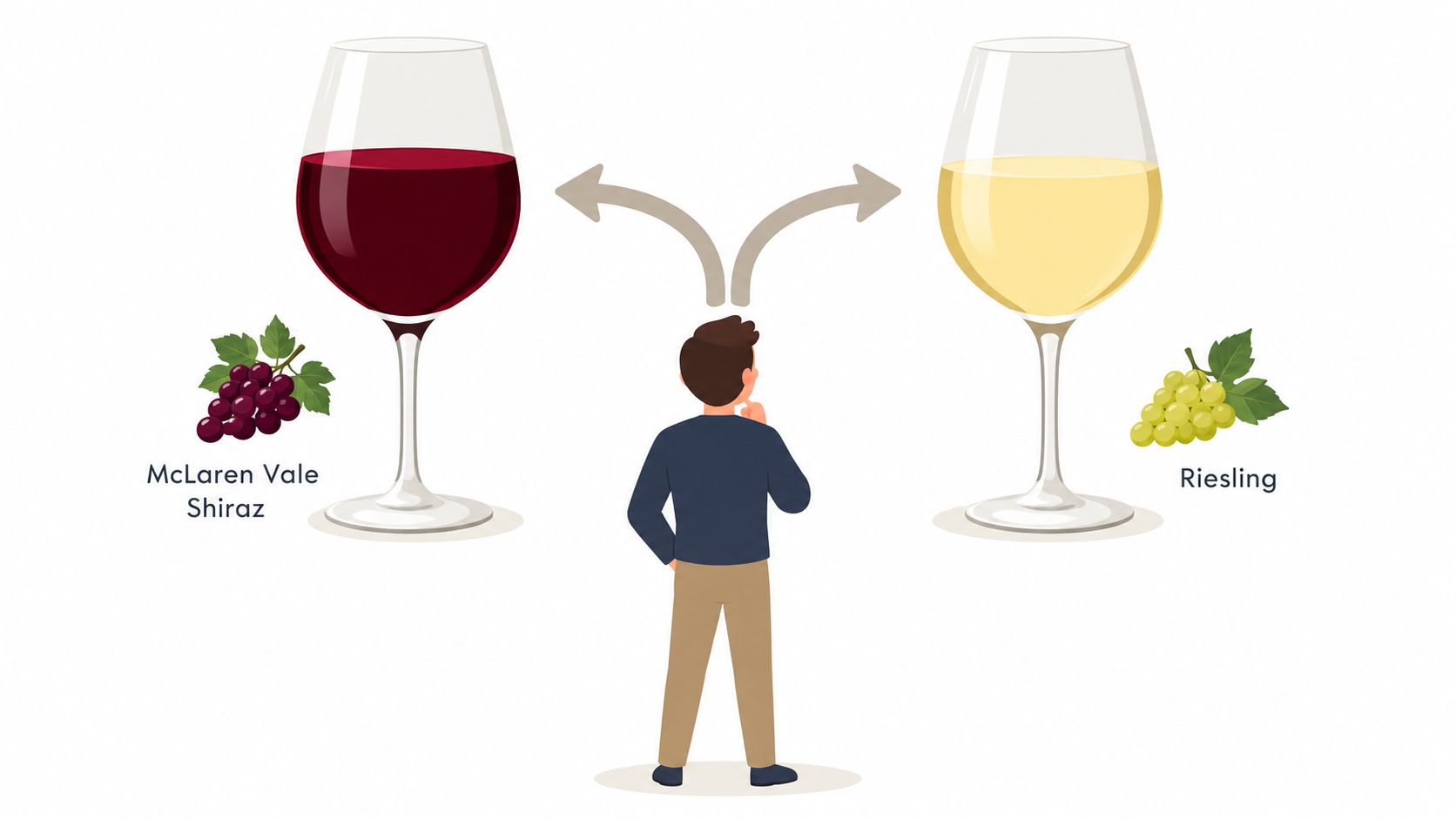
Start with the bottle you'd be happy to open on an ordinary evening. That answer tells you more than a flashy saving badge. If you prefer the dark fruit, spice and generous structure associated with McLaren Vale Shiraz, a red-focused pack may earn its place. If you reach for fresh acidity and lighter textures, a selection built around Sauvignon Blanc, Riesling or Pinot Grigio will probably see more use.
Taste comes before quantity
Ask yourself three questions:
- What do I already enjoy? Choose a dozen when you know the producer and style, not merely because the pack has the lowest listed bottle price.
- What do I want to learn? Choose a half-case when you'd like to compare varieties, vintages or regional expressions without committing to one label.
- Who else is drinking it? Choose a mixed pack when one person prefers richer reds and another reaches for aromatic whites or sparkling wine.
A bundle should create useful contrast. Pairing a full-bodied red with a lean, bright white gives you more dinner flexibility than filling every slot with wines that demand the same food and mood.
Match the pack to the occasion
For weekly dinners, consistency matters. For a celebration, include a style that works as an aperitif as well as something suitable for the main course. For corporate or personal gifts, presentation, recipient preference and delivery reliability deserve as much attention as the case composition.
The occasion also determines whether customisation is valuable. A fully curated pack can save time when you trust the retailer's selection. A build-your-own option is safer when the recipient has a known preference or when several guests will be drinking.
Calculate the delivered value
Don't compare only the displayed bottle price. Check the delivery charge, the order threshold for any free-delivery offer, and whether the bundle qualifies. Then consider storage. Six bottles may fit comfortably in a cool cupboard, while a larger order may need a more deliberate cellar arrangement.
The useful test: If you removed the discount badge, would you still want most of the bottles?
That question protects against false economy. A carefully chosen half-case can be better value than an unwanted dozen because it combines lower decision risk with enough variety to keep the purchase interesting.
Case Study - The McLaren Vale Appeal
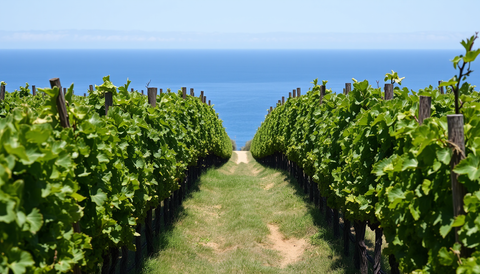
A McLaren Vale bundle can show why regional curation is more useful than a generic “red wine deal”. The region gives a retailer a clear narrative and gives the buyer a way to compare styles that share a sense of place without tasting identical.
A six-bottle selection built around McLaren Vale Shiraz and Cabernet Sauvignon offers a practical starting point. Shiraz can bring richness, dark fruit and spice, while Cabernet Sauvignon often gives the pack a firmer structural counterpoint. The pair suits different meals and creates a clearer comparison than six unrelated bottles chosen only because they were marked down.
The appeal grows when the selection includes contrasting formats rather than only big reds. Pinot Grigio can provide a lighter, more refreshing option for warm afternoons and delicate food, while Blanc de Blancs sparkling can handle an aperitif, a toast or a celebratory table. The point isn't to claim that every bottle suits every palate. It's to build a pack with enough stylistic range that the buyer can find a natural place for each wine.
What makes the example work
The regional focus gives the customer a reason to explore. The mixed structure limits the risk of repetition. The individual styles create a sequence of occasions, from casual drinking to a more formal meal.
A retailer also needs to describe the wines clearly. Tasting notes should explain body, acidity, fruit character and likely food matches in plain language. They shouldn't hide behind vague praise. A buyer needs to know whether a Shiraz is plush or savoury, whether a white is rounded or sharp, and whether the sparkling wine is intended for easy drinking or a more complex table role.
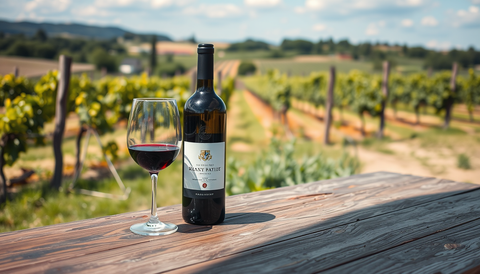
A visual look at the wines can help shoppers understand how a regional bundle is presented:
For someone new to the region, this kind of pack is more informative than buying a full dozen of one unfamiliar red. For an experienced drinker, it can refresh a familiar cellar with a deliberate spread of varieties. That's the actual value of a regional bundle. It turns quantity into a guided tasting path.
Navigating Shipping and Guarantees
Online wine buying asks the customer to trust a retailer with three things: the bottle's condition, the journey to the door and the accuracy of the description. A low price can't repair a broken bottle or compensate for wine that arrives poorly presented.
Wine Australia's consumer research indicates that discounts are a weaker motivator at cellar doors and winery websites than they are for online retailers. The same research highlights the importance of quality and storage guarantees for online purchase confidence, as discussed in Wine Australia's research on discounts and guarantees. That distinction is useful. Online shoppers need a reason to believe the wine has been handled properly, not just a reason to click “add to cart”.
Read the delivery terms before the tasting notes
Check whether the retailer states:
- Delivery thresholds: Know whether a larger order qualifies for free delivery and whether the offer applies nationwide.
- Packaging standards: Look for clear information about protective cartons, bottle separation and the process for reporting breakage.
- Storage conditions: A retailer should explain how wine is stored before dispatch, particularly for styles sensitive to heat or prolonged exposure.
- Guarantee terms: Confirm whether a taste guarantee covers a disliked bottle, a damaged delivery or both, and how the retailer handles the request.
These details can change the bundle calculation. A six-bottle offer may appear attractive until freight is added. A larger pack may make more sense when it crosses the retailer's delivery threshold, provided you have the storage space and a realistic plan to drink the wine.
A guarantee also needs careful reading. A taste guarantee isn't a promise that every wine will suit every palate. It's a risk-reduction tool that gives the customer a defined path if the purchase doesn't work. Retailers that explain the process plainly create more confidence than those that rely on broad claims about quality.
The best online bundle pages put price, bottle selection, delivery, storage and guarantees in one place. That transparency helps shoppers compare the full purchase rather than making a decision from the discount percentage alone.
Your Next Purchase Strategy
The most useful wine bundles online combine quantity with purpose. A dozen suits a proven favourite. A half-case offers a controlled introduction to a region or style. A mixed pack gives households and gift buyers room to balance reds, whites, rosé or sparkling wines.
Use the following filter before ordering:
- Choose the drinking pattern first. Buy for meals, weekends, celebrations or gifting, rather than an imagined future self.
- Select the format second. Pick repetition for familiarity, a half-case for exploration or a mixed pack for flexibility.
- Check the delivered cost. Include freight, delivery thresholds and the practical cost of storing the bottles.
- Look for a clear guarantee. Confidence depends on handling and after-sales support as much as the headline offer.
A half-case is often the sensible entry point when you want to explore McLaren Vale without committing to a full dozen of one wine. Once you know which styles disappear first, your next order can become more focused and more economical.
Start with a manageable bundle, note what you enjoyed and use that experience to shape the next purchase. That's how online buying becomes a useful relationship with a retailer, not a cycle of impulsive discounts.
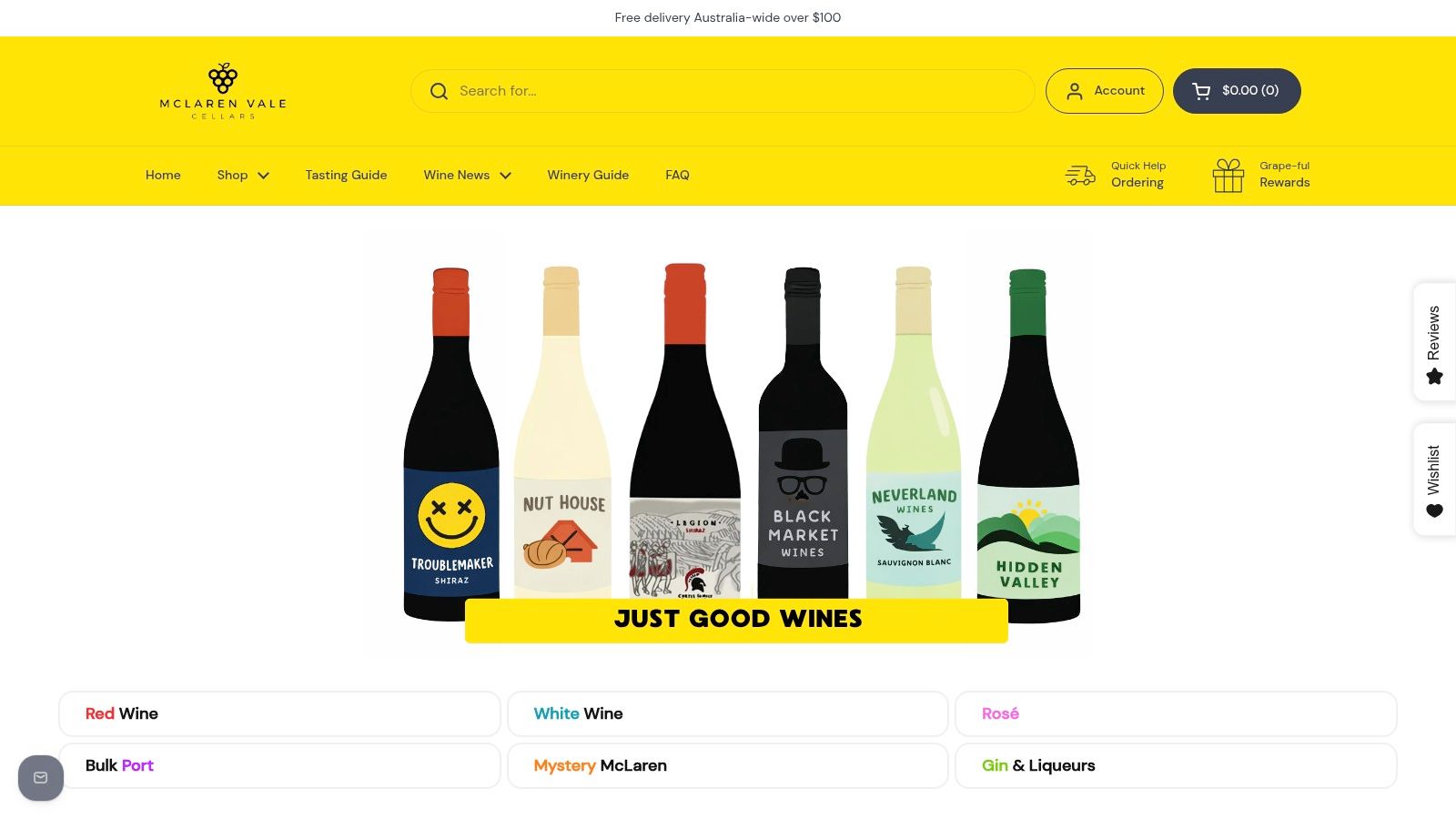
McLaren Vale Cellars offers dozens, half-case bundles, mixed “Half & Half” packs and curated selections across McLaren Vale reds, whites and sparkling wines, supported by a Taste Guarantee and free delivery Australia-wide on orders over $100. Visit McLaren Vale Cellars to choose a pack that matches your palate, occasion and delivery needs.
Comments (0)
There are no comments for this article. Be the first one to leave a message!