
You're standing at the barbecue with a bottle of Shiraz in one hand and a chilled white in the other. The steak is resting, the prawns are ready, someone has brought a creamy salad, and the afternoon heat has made the usual “red with meat, white with seafood” rule feel surprisingly unhelpful.
The better answer to when to drink white wine vs red wine starts with more than colour. Consider the dish's flavour intensity, the wine's body and tannin, its serving temperature, the setting, and what your guests enjoy. A structured red can work beautifully with savoury food, but a lighter red may suit a hot patio better than a full-bodied bottle served too warm. A white can refresh a meal, while a fuller style can carry richer food without feeling slight.
| Situation | More suitable starting point | Why |
|---|---|---|
| Grilled or braised red meat | Structured red | Weight, savoury character and tannin can meet the dish |
| Seafood, salads or delicate starters | Fresh white | Acidity and freshness keep the meal lifted |
| Hot outdoor gathering | Crisp white or chilled lighter red | Cooler service and lighter body suit the environment |
| Rich poultry, creamy dishes or soft cheese | Fuller white or complementary red | Texture and flavour intensity matter more than colour |
| Casual social occasion | Sparkling, rosé, approachable white or light red | Easy drinking and flexible serving style |
| Formal dinner with umami-rich food | Structured red or fuller white | The wine needs enough presence to stand up to the dish |
Why Choosing Between White and Red Wine Feels Harder Than It Should
Wine knowledge often starts with a short list of rules. Red wine goes with steak. White wine goes with fish. The advice is useful, but only until the meal becomes more interesting than the rule. A pepper-crusted tuna steak, mushroom risotto, spicy salami pizza or grilled chicken with a smoky sauce can all expose the limits of colour-based matching.
The same uncertainty appears at home. You're planning a dinner with roast vegetables, lamb sausages, a green salad and soft cheese. A red seems obvious for the sausages, but its tannin may feel hard beside the salad. A white would refresh the greens, yet a delicate style could disappear beside the grilled meat. Neither choice is automatically wrong. The question is which element of the meal should lead, and whether the wine has enough structure to remain enjoyable beside it.
Colour is only the first clue
Wine colour often indicates broad tendencies, but it doesn't tell you everything that matters in the glass. A light Pinot Noir can feel more refreshing than a heavy white, while a rich Chardonnay can have enough body for roast poultry, creamy sauces and substantial vegetarian dishes. Body, acidity, tannin and serving temperature usually explain a pairing more accurately than colour alone.
The serving environment changes the decision too. A full red poured warm on a sunny deck can taste soft, alcoholic and tiring, even if it was the right match on paper. The same bottle, served cooler in an air-conditioned dining room, may feel firm, savoury and balanced.
Practical rule: Choose the wine that matches the meal's intensity and the room's temperature, not just the protein on the plate.
Occasion matters as well. A short afternoon gathering often favours something bright and immediately approachable. A slow winter dinner gives a more structured red time to open and work with braised flavours. Personal preference still has the final say, but understanding the mechanics helps you choose with intention rather than defaulting to the nearest familiar bottle.
What Australian Food-and-Wine Research Actually Shows About Pairing
Australian sensory research makes the useful part of wine pairing more precise. A controlled study involving 151 consumers tested Australian Shiraz, including McLaren Vale Shiraz, with spicy salami, cheesy pasta, braised beef with potato purée and chocolate mousse. The Australian sensory study found that consumers responded more favourably when the food and wine combination increased perceived liking, sensory complexity and positive emotional response.
That finding shifts attention away from simple categories. The strongest combinations were associated with savoury flavours, umami and sufficient food weight, with the wine slightly dominating the interaction. In practical terms, a structured McLaren Vale Shiraz or Cabernet Sauvignon is a defensible choice for grilled or braised red meat, savoury salami and rich dishes with deep umami. The wine needs enough presence to remain distinct rather than becoming thin beside the food.
Match the interaction, not just the ingredient
Tannin is one of the reasons a red can succeed with rich meat. It gives the wine grip and shape, while the food's fat and protein can make that structure feel more integrated. Spice changes the balance, however. Strong heat can make alcohol feel more prominent, so a powerful red isn't always the most comfortable choice for heavily spiced food.
White wine becomes the stronger option when the meal benefits from freshness rather than palate weight. Seafood, salads, poultry, soft cheeses and delicate starters generally suit whites that are crisp, aromatic or lightly textured. A more complex white can also handle richer food, particularly when its acidity keeps the dish from feeling heavy.
| Dish type | Best wine match | Reason |
|---|---|---|
| Grilled or braised red meat | Structured Shiraz or Cabernet Sauvignon | Weight, savoury flavour and tannin can meet the dish |
| Spicy salami | Full, savoury red | The wine needs enough structure for the cured meat |
| Cheesy pasta | Red or fuller white, depending on richness | Match the sauce's weight and acidity |
| Seafood or delicate starters | Fresh white | Acidity supports freshness without overpowering texture |
| Salad or light poultry | Crisp white | The lighter style keeps the meal lively |
| Soft cheeses | Complementary white or red | Style matters more than colour alone |
| Umami-heavy dishes | Slightly dominant structured red | Savoury depth prevents the wine from disappearing |
Australian cheese-pairing research also found red table wine marginally more versatile overall than white table wine, but the result depended on style. Gewürztraminer and Sangiovese were among the more complementary options, while Sauvignon Blanc and white dessert wine were harder to match across the tested cheeses. The useful lesson is simple: wine style controls compatibility within each colour.
Serving Temperature - The Hidden Factor That Changes Every Pairing
A good pairing can fail before the first sip if the wine is served at the wrong temperature. Full-bodied reds often arrive too warm, especially in Australian homes during summer. Heat can make alcohol feel more noticeable and soften the wine's shape, turning a promising Shiraz into a broad, heavy pour.
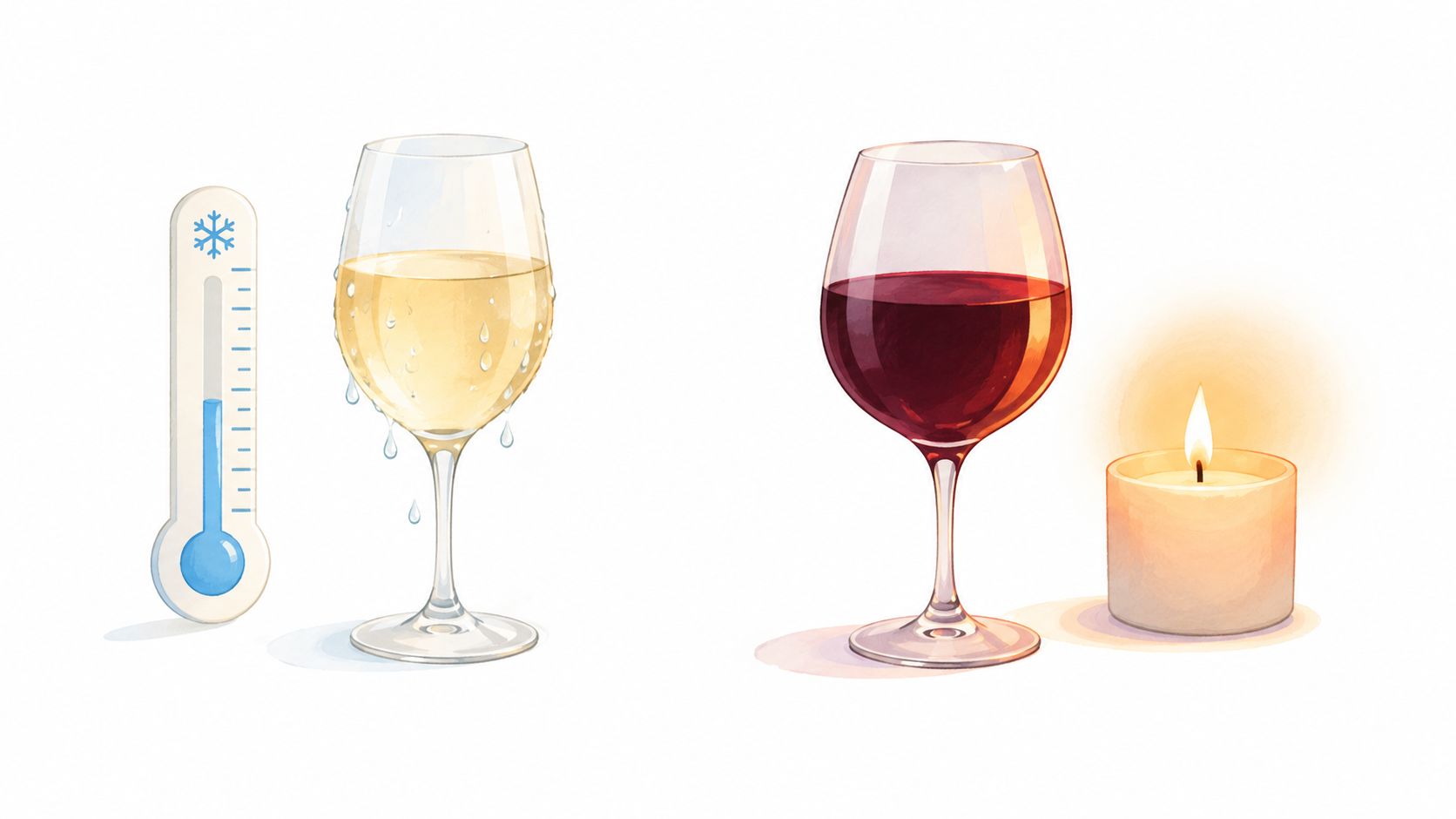
Guidance for Australian serving conditions places full reds at approximately 16–18°C, while light whites generally work better around 7–12°C and more complex whites around 10–13°C. Those ranges come from practical serving guidance on how wine temperature affects service. They aren't rigid laboratory rules, but they give you a reliable starting point.
Cool the style, not just the colour
A crisp white usually benefits from proper chilling because temperature preserves its freshness and makes the wine feel clean beside seafood, salads and lighter dishes. A fuller white shouldn't be pushed to the coldest setting, though. Excessive chilling can mute aroma and make texture seem narrower than it really is.
Red wine also benefits from adjustment. A lighter-bodied Pinot Noir can be refreshed before an outdoor meal, particularly when the weather is warm. A full Shiraz doesn't need to be cold, but it should be cooler than a hot room. If you don't have a wine thermometer, use a practical approach. Chill the bottle briefly, pour a small glass, and allow it to warm gradually while you taste.
For picnics, beach gatherings and long drives to an outdoor lunch, insulated storage is as important as the bottle choice. A guide to soft sided lunch coolers can help you compare portable options that keep drinks protected while you're moving between home and the table.
The difference between storage and service matters. Bottles can share a cool, dark storage space, but they need different preparation before pouring. Keep a fuller white slightly less chilled than a light white, and do not assume a red should sit in a hot kitchen just because it isn't served cold.
A chilled lighter red can be more refreshing outdoors than an over-warm full red.
For a practical reference covering styles from sparkling wines to fortifieds, use this guide to the ideal serving temperature for every wine style. It helps translate broad red and white categories into more useful style-based decisions.
Seasonal Occasions and Australian Outdoor Dining Considerations
A summer barbecue often begins before the food is ready. Guests gather outside, glasses stay in hand, and the wine needs to remain pleasant in warm air rather than merely match the main course. In that setting, a crisp white, sparkling wine, rosé or chilled lighter red can work better than a powerful Shiraz served too warm. The choice reflects the environment as much as the menu.
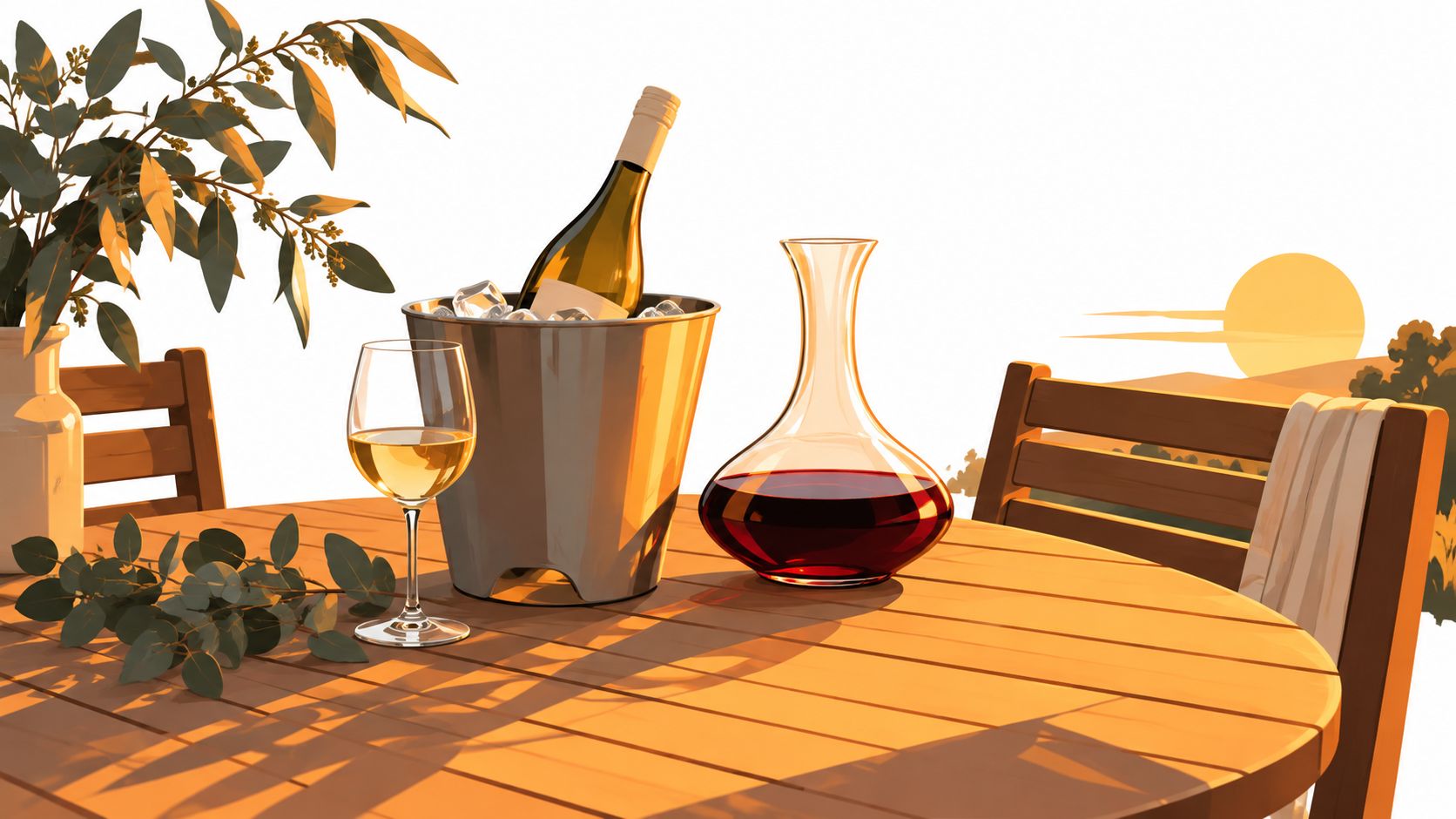
Consider the same sausages in two settings. On a shaded patio with grilled peppers and a sharp salad, a fresh white or lighter red keeps the meal agile. At an indoor winter table with slow-cooked onions, gravy and roasted root vegetables, a structured red becomes more convincing because the dish and the room can support greater weight.
Let the occasion set the pace
Spring garden lunches reward wines that feel bright and sociable. Sauvignon Blanc, Pinot Grigio, sparkling wine and lighter rosé can move easily between salads, seafood, poultry and conversation. Autumn entertaining gives you more room for texture, so medium-bodied reds and fuller whites can sit comfortably beside roasted vegetables, baked dishes and earthy flavours.
Winter changes the rhythm again. A braise, roast or mushroom-rich dish has enough intensity for a red with savoury depth. A fuller white can still work, particularly with roast chicken, creamy sauces or seafood served with a rich accompaniment. The key distinction is not that winter demands red. It's that cooler indoor conditions and more substantial cooking often make weight and texture more welcome.
Wine Australia's consumer reporting describes a broader shift towards occasion-based drinking, with white, sparkling and rosé gaining ground as red consumption has declined over recent decades. That context makes the outdoor question especially useful. Instead of asking which colour belongs to summer, ask which style will stay balanced in the actual place where you're drinking it.
A practical seasonal reference for planning menus is this guide to seasonal wine pairings for summer versus winter. Use it as a prompt, then adjust for shade, food temperature and how long the bottle will remain open.
The video below offers another way to think about seasonal matching and serving context.
For a hot outdoor meal, serving temperature can matter more than the traditional red-versus-white rule.
How Younger Australian Drinkers Are Changing Wine Choices
Younger Australian drinkers are shifting wine away from one formal pattern. Gen Z and Millennials show stronger interest in rosé, sparkling wine and sweeter styles such as Moscato, while traditional red consumption is weakening. Their choices often suit short gatherings, rooftop catch-ups and relaxed meals, where an approachable style can work without ceremony. For more on this shift, read what Gen Z is teaching us about the future of wine.
Wine Australia's 2025 financial-year analysis reports that wine was consumed on the most recent occasion by 35% of Gen Z respondents, compared with 29% in 2021, while Gen Z drank wine least often and averaged 3.3 serves when they did, compared with 2.2 for Traditionalists. These figures are reported in Australian wine industry insights. Infrequent drinking does not automatically indicate a preference for low-intensity wine. Occasion, style and group setting shape the decision.
Approachability isn't the same as low alcohol
A wine can feel light without being low in alcohol. Pinot Grigio, sparkling wine, rosé and Moscato may seem easier to drink because of their acidity, sweetness, bubbles or fruit-forward character. Sensory ease and alcohol level are separate qualities.
The same report notes that Australian drinking occasions are becoming more concentrated, with 66% involving only one beverage category, compared with 49% the previous year. A group may select one style for the entire event, so immediate appeal and flexibility matter. Chilled white or sparkling wine can welcome guests and accompany lighter food. A soft, fruit-led red may suit the same setting better than a firm, tannic Shiraz.
Choose for the group in front of you
Start with texture rather than asking whether someone should prefer red or white. Freshness points towards crisp whites and sparkling styles. Fruitiness may lead to rosé, Moscato or a soft red, while savoury depth and a slower meal can support a more structured red.
This approach respects preference while keeping the advice practical. A relaxed rooftop gathering may suit wine that is easy to serve and discuss. A long dinner with grilled meat gives you a reason to offer a structured red, alongside a fresh white for guests who prefer lift over tannin.
How to Decide Between White and Red Wine With Confidence
Start with the food's flavour intensity, not its colour-coded category. Ask whether the dish is delicate and fresh, rich and creamy, smoky and grilled, or intensely savoury. Seafood with citrus and herbs usually points towards a fresh white. Braised beef with a dense sauce calls for a wine with more weight and structure. A mixed table may need two styles rather than one forced compromise.
Then check the serving environment. Is the bottle going onto a hot deck, a shaded picnic table or an air-conditioned dining table? Warm conditions favour wines that can stay refreshing, including crisp whites and lighter reds served cool. A full-bodied red may be better saved for a cooler room or adjusted before pouring.
Use this four-question test
- What dominates the plate? Match high flavour intensity and umami with a wine that won't disappear.
- How does the wine feel? Tannin adds grip, acidity adds freshness, sweetness softens spice, and body provides weight. Choose the quality that solves the meal's main problem.
- Where will you drink it? Outdoor heat, indoor warmth and refrigeration all change the way the wine tastes.
- What does the group enjoy? A technically classic pairing won't succeed if guests dislike tannin, prefer freshness or want something fruit-driven.
Australian guidance also says to measure consumption by standard drinks rather than glass size or wine colour. One standard drink contains 10 grams of alcohol, and a typical 100 mL wine serving is approximately one standard drink, although a larger pour can exceed that amount, according to the Australian Dietary Guidelines. For healthy Australian adults, the benchmark is no more than two standard drinks on any day and no more than four on a single occasion, with lower intake reducing risk. Abstaining is safest during pregnancy.
The same guidance makes an important distinction. Alcohol can increase cancer risk even at low intake, and any possible cardiovascular advantages associated with modest consumption can also come from diet and exercise. Pairing wine with food is preferable to drinking on an empty stomach because food slows the rise of alcohol concentration in the bloodstream, but food doesn't remove alcohol-related risk.
If you enjoy comparing styles over time, a wine club can make that exploration more organised. For example, you might join the Kunde Winery club to receive selections that encourage side-by-side tasting, then record which body, acidity and serving temperature worked best with your meals.
The most reliable answer to when to drink white wine vs red wine is therefore practical: choose white for freshness, red for savoury weight and structure, then adjust for temperature, setting and preference. Those principles are more useful than any rule that treats every steak, salad or summer afternoon the same.
McLaren Vale Cellars offers a broad selection of McLaren Vale reds, whites, rosé and sparkling wines, alongside sample packs and tasting guidance for comparing styles with confidence. Visit McLaren Vale Cellars to find a bottle suited to your next meal, outdoor gathering or relaxed tasting at home.
Comments (0)
There are no comments for this article. Be the first one to leave a message!