
Decanting is simply the process of pouring wine from its bottle into another container—called a decanter—before you serve it. While it might look a bit fancy, this ritual isn't just for show. It actually serves two very important purposes: letting a young wine breathe and separating an older wine from its natural sediment.
Getting your head around what is decanting is the first step to unlocking some seriously amazing flavours and textures hiding in your favourite bottles.
Unlocking Your Wine's True Character
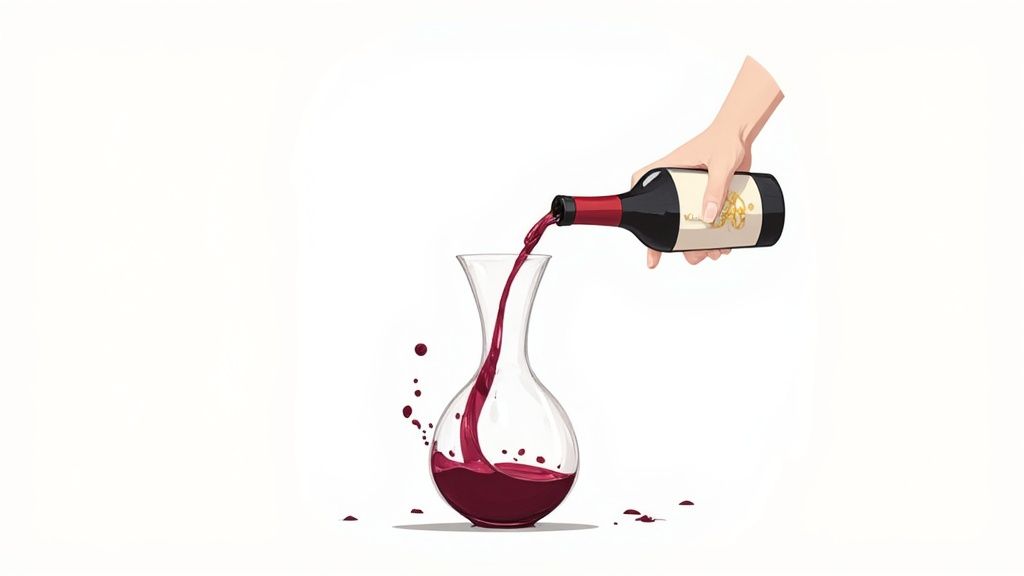
Think of decanting as giving your wine a much-needed chance to stretch its legs after being cooped up in the bottle. This simple action can dramatically improve how a wine tastes and feels, and it works its magic in two very different ways for two very different types of wine.
The Magic of Aeration
The most common reason we decant is for aeration, which is just a fancy word for exposing the wine to oxygen. This is a game-changer for young, powerful red wines that are packed with tannins—think of a big McLaren Vale Shiraz or a bold Cabernet Sauvignon.
Tannins are those natural compounds that give wine structure but can make it feel a bit harsh or "tight" in its youth. Pouring the wine into a decanter increases the surface area, letting oxygen get to work on those tannins and soften their edges.
The result? The wine feels much smoother and more rounded in your mouth. Aeration also helps release all the beautiful aromas that were trapped in the bottle, allowing the wine’s full bouquet to shine.
The Necessity of Sediment Removal
For older wines, decanting serves a completely different, but equally crucial, purpose: separating the clear wine from its sediment. Over many years in the cellar, aged red wines naturally develop a deposit made up of tartrates and colour pigments.
It's completely harmless, but let's be honest—nobody wants a gritty mouthful of wine.
By carefully pouring an aged wine into a decanter, you can leave all that sediment behind in the bottle. This ensures every sip is clean, clear, and focused on the beautifully developed flavours you've been waiting years to enjoy.
So, while it’s one simple action, decanting cleverly solves two distinct challenges. It helps wake up a sleepy young wine and shows the proper respect to a beautifully aged one.
The Science Behind Aeration and Sediment
To really get what decanting is all about, you have to appreciate the chemistry at play when wine meets air. It’s a fascinating little conversation. This process boils down to two distinct goals: aeration for young, bold wines and sediment removal for older, more delicate ones.
While they tackle different issues, both aim for the same result: letting the wine show its absolute best.
How Aeration Transforms a Young Wine
Aeration is really just a fancy word for controlled oxidation. When you splash a young, full-bodied red into a decanter, you're massively increasing the surface area exposed to oxygen. This simple act kicks off a chemical reaction that goes to work on the wine’s tannins.
Tannins are the compounds that give a red wine its structure and create that drying, slightly bitter sensation in your mouth. They're crucial for a wine's ability to age, but in a young wine, they can come across as aggressive and harsh. Oxygen is the great softener here; it binds with the tannin molecules, causing them to link together and feel much smoother and rounder on the palate. Suddenly, a tight, grippy wine becomes far more generous and approachable.
You can dive deeper into this topic and unravel the mystery of tannins and why they matter in wine with our detailed guide.
But it’s not just about texture. Aeration also helps unlock the wine's aroma.
Think of a wine's bouquet as being tightly coiled after years in the bottle. Oxygen helps it unspool, allowing delicate floral, fruit, and spice notes to escape and reach your nose, creating a much richer aromatic experience.
Understanding and Removing Sediment
As a great red wine matures in the cellar, its chemistry is constantly evolving. After a decade or more, some of its natural components slowly bind together and drop out of the liquid, forming a fine, dusty deposit at the bottom of the bottle.
This sediment isn't a flaw; in fact, it’s a great sign of a well-aged wine. It’s mostly made up of:
- Tartrates: You might hear these called tartaric acid crystals or "wine diamonds." They are a completely harmless and natural by-product.
- Colour Pigments: Over many years, the very molecules that give a red wine its deep colour can link up and settle out.
While this sediment is perfectly natural, its gritty texture is the last thing you want in your glass. Decanting lets you carefully pour the clear wine off this deposit, leaving the gritty stuff behind in the bottle. It's a simple step that ensures every sip is silky smooth, preserving the delicate, resolved texture that makes a mature wine so special.
Which Wines You Should (and Should Not) Decant
So, you've got the decanter, but which bottle should you actually pour into it? This is one of the most practical questions in wine, and the answer isn't a simple yes or no. It really comes down to the wine’s age, style, and what it’s made of. Getting this right is key to making a good wine taste great.
Think of it as a balancing act. For some wines, a good dose of air is exactly what they need to soften up and show off their complex aromas. But for others, especially the more delicate ones, decanting can be like shouting in a library—it just strips away all their subtle charm. The goal is to give each wine just enough help to shine, without overdoing it.
Wines That Almost Always Benefit from Decanting
Some bottles are practically begging to be decanted. These are usually the big, powerful young reds that need a little taming, or the very old reds that need to be separated from their sediment. You can decant these with confidence, knowing you're almost certainly making them better.
-
Young, Full-Bodied Red Wines: This is the number one reason most people own a decanter. Think of a bold, young McLaren Vale Shiraz, a gutsy Cabernet Sauvignon, Malbec, or a tight-knit Nebbiolo. Fresh off the bottling line, their tannins can feel a bit rough and aggressive. Giving them 30 minutes to 2 hours in a decanter lets oxygen work its magic, smoothing out those tannins and making the wine feel much more lush and approachable.
-
Aged Red Wines (Over 10 Years Old): With older wines like a mature Bordeaux, a classic Barolo, or a vintage Port, you're decanting for a completely different reason: sediment. Over many years, a harmless but gritty deposit forms in the bottle. The idea here isn’t to blast it with air, but to gently pour the clear wine off the top, leaving that sediment behind. This is a careful, swift process you do right before you plan to serve it.
-
Certain Full-Bodied White Wines: This one might surprise a few people, but yes, some whites love a little air! We're talking about complex, oaked whites like a high-quality White Burgundy (Chardonnay) or a rich Rhône white blend. A brief decant of about 15-20 minutes can help them open up, revealing more texture and layers of flavour that might otherwise stay hidden.
Wines to Approach with Caution or Avoid Decanting
Just as important as knowing what to decant is knowing what to leave in the bottle. Pouring the wrong wine into a decanter can do more harm than good, flattening its aromas and killing its delicate structure.
The golden rule is simple: when in doubt, don't. A wine will always open up a bit in your glass, but you can never put the genie back in the bottle once you've over-aerated it.
Be sure to leave these wines be:
- Light-Bodied Red Wines: Delicate reds like Pinot Noir and Gamay are all about their subtle, perfumed aromas. Aggressive aeration can blow all those beautiful scents away, leaving the wine feeling flat and one-dimensional.
- Most White and Rosé Wines: Crisp, aromatic whites like Sauvignon Blanc and Pinot Grigio get their charm from being zesty and fresh. Decanting just strips that vibrancy away. To make smarter choices on which wines to decant, it's worth getting to know the unique profiles of different grapes, like exploring the differences between Pinot Grigio and Sauvignon Blanc.
- Sparkling Wines: This is a hard and fast rule: never decant sparkling wine like Champagne, Prosecco, or Cava. All you'll accomplish is making it go flat, and nobody wants that. The bubbles are the whole point
Your Step-By-Step Guide to Perfect Decanting
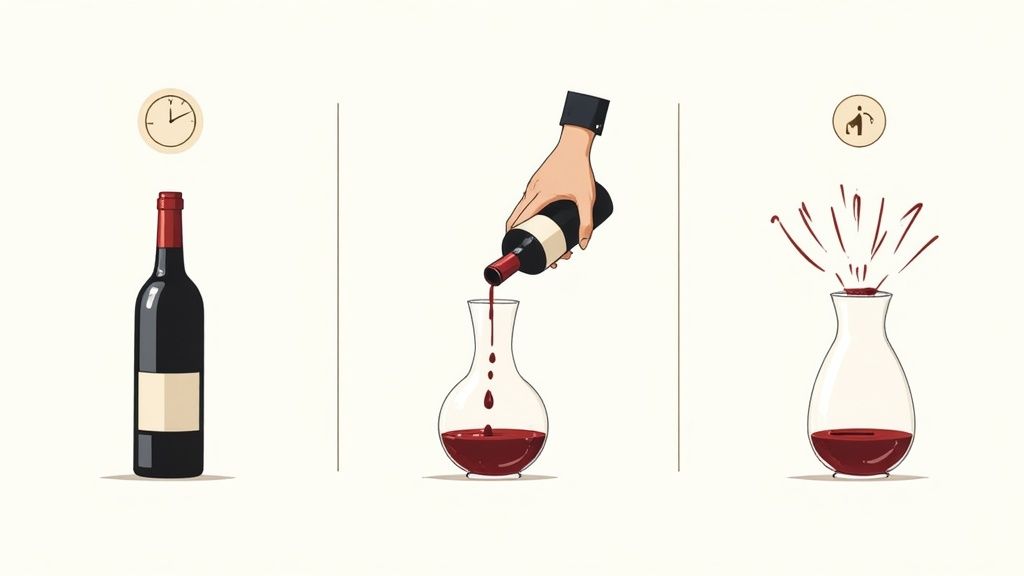
Knowing why we decant is one thing, but mastering how to do it is where the real magic happens. The technique you'll want to use really depends on your goal. Are you looking to soften up a young, powerhouse red, or are you carefully separating a delicate aged wine from its sediment?
Each of these scenarios calls for a slightly different touch. Don't worry, getting it right is simple. This guide will walk you through both methods to make sure you get a perfect pour, every single time.
How to Decant an Aged Wine for Sediment
With an older vintage, the main goal is pure finesse. You want to pour the clear wine off its fine sediment without stirring it all up. This method is all about gentle precision and requires a little bit of prep work.
-
Prepare the Bottle: At least 24 hours before you plan on enjoying it, stand the bottle upright. This gives all that fine sediment plenty of time to settle completely at the bottom, making it a whole lot easier to separate.
-
Set Up Your Station: Open the bottle as gently as you can, trying not to shake it. You'll need a light source—a candle is the traditional choice, but the torch on your phone works a treat. Position the light so it shines up through the neck of the bottle as you pour.
-
Pour Slowly and Steadily: Tip the bottle and begin pouring the wine into your decanter in one single, slow, and continuous motion. Keep your eyes glued to the neck of the bottle, using the light to see what’s happening inside.
-
Know When to Stop: You’ll eventually see the fine, murky sediment start to creep towards the neck. The second you spot it arriving, stop pouring. It’s always better to leave a tiny amount of wine behind with the sediment than to get any grit in your beautiful decanter. Serve this wine almost immediately to enjoy its delicate, mature character.
How to Decant a Young Wine for Aeration
When you're dealing with a young, robust red, your objective is the complete opposite. You actually want to introduce as much oxygen as possible to soften those grippy tannins and unlock all the hidden aromas. Vigour and speed are your best friends here.
The aim is maximum oxygen exposure. Don't be afraid to be a bit more dramatic with your pour to create a good splash. This turbulence is precisely what helps the wine open up and express its full flavour.
This process is dead simple:
- Pour Vigorously: Pop the cork and just pour the wine into a wide-based decanter. You can even pour from a bit of height to create a good splash, which really helps agitate the wine and mix in more air.
- Let It Rest: Now, just let the wine sit and breathe in the decanter. The time needed can be anywhere from 30 minutes to a couple of hours, depending on how big and bold the wine is.
- Give It a Swirl: Every now and then, give the decanter a gentle swirl to keep introducing fresh oxygen to the wine’s surface.
The Clever Trick of Double Decanting
What if you want all the benefits of aeration but prefer the theatre of serving from the original bottle? This is where double decanting comes into play. It's a neat little trick used by sommeliers everywhere.
You simply pour the wine into your decanter, just as you would for aeration. Then, using a clean funnel, you carefully pour it straight back into the now-empty bottle.
This technique is a fantastic way to give a young wine a quick and effective dose of oxygen, making it a great party trick when you don’t want to bring your prized decanter to the dinner table.
How Long to Decant Different Wine Styles
When it comes to decanting, timing is everything. Give a wine too little air, and its true personality stays locked up. But give it too much, and you risk the delicate aromas vanishing before you even get a chance to enjoy them.
Getting the timing right isn't some mysterious art form; it’s a practical skill that really just depends on the wine's age, style, and structure.
Think of it like cooking a steak. A big, thick-cut ribeye needs a decent amount of time on the heat to become perfectly tender. On the other hand, a delicate piece of fish might only need a few minutes. It's the same with wine. A young, powerful Cabernet Sauvignon needs a good hour or two to soften its grippy tannins, while a fragile, 20-year-old Burgundy just needs a quick, careful pour to separate it from its sediment.
Young and Full-Bodied Reds
For young, powerful reds under five years old, your main goal is aeration. These wines are often bursting with assertive tannins and bold fruit that need a bit of time to relax and come together.
- Big and Bold (Cabernet Sauvignon, Shiraz, Malbec): For these styles, aim for 1 to 2 hours. They have the backbone to handle the air, which helps smooth out any rough edges and brings forward those complex fruit and spice notes.
- Tannic and Complex (Nebbiolo, Sangiovese): These classic Italian varieties often need even more time to shine. Don’t be afraid to give them 2 to 3 hours to fully open up and reveal their beautiful floral and savoury character.
Mature and Aged Wines
Once a wine gets past the ten-year mark, your focus shifts. Instead of aggressive aeration, you’re looking for gentle separation. The mission is simply to pour the wine cleanly off its sediment without disturbing its beautifully evolved, delicate bouquet.
The rule for aged wine is simple: decant it just before you plan to serve it. The goal is clarity, not transformation. Prolonged air contact can quickly cause a fragile older wine's precious aromas to fade away.
This "just before serving" approach works for most classic aged wines:
- Aged Bordeaux or Barolo (10+ years): A quick, careful pour that takes about 15 to 30 minutes is all you need to leave the gritty sediment behind.
- Vintage Port: Now this is a special case. It throws a lot of sediment, so careful decanting is non-negotiable. For a deeper dive, you can learn how to properly serve and drink Port wine in our dedicated guide.
- Delicate Aged Reds (Pinot Noir, Burgundy): Be extremely careful here. Often, 15 minutes is more than enough time. Some purists even skip the decanter and pour straight into the glass, minimising any risk of losing those precious, fleeting aromas.
Recommended Decanting Times by Wine Type
To make things easier, here’s a quick-reference guide. Think of these as starting points—feel free to experiment to see what works best for your palate.
| Wine Style / Varietal | Age | Recommended Decanting Time |
|---|---|---|
| Full-Bodied Red (Cabernet, Shiraz) | Young (< 5 years) | 1–2 hours |
| Medium-Bodied Red (Merlot, Sangiovese) | Young (< 5 years) | 30–60 minutes |
| Light-Bodied Red (Pinot Noir, Gamay) | Young (< 5 years) | 20–30 minutes (optional) |
| Aged Red (Bordeaux, Barolo, etc.) | Mature (10+ years) | 15–30 minutes (for sediment) |
| Vintage Port | Any Age | 30 minutes to 2 hours (for sediment) |
| Full-Bodied White (Chardonnay, Viognier) | Young (< 3 years) | 15–20 minutes (optional) |
Remember, the best way to learn is by tasting. Pour a small sample from the bottle right after opening, then taste it again every 30 minutes to see how it evolves. You'll quickly get a feel for what each wine needs.
Choosing the Right Decanter for Your Needs
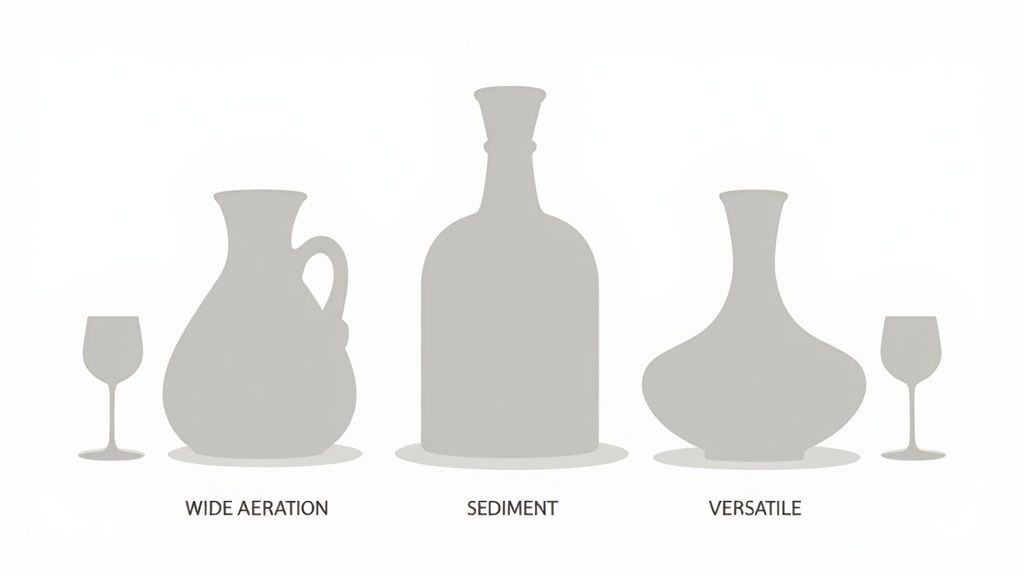
It’s easy to get caught up in the beautiful designs of wine decanters, but their shape is all about function, not just form. The right vessel can genuinely elevate your wine, while the wrong one is little more than a pretty table ornament.
Ultimately, your choice boils down to one simple question: what kind of wines do you find yourself opening most often? Knowing your own palate and drinking habits is the first step to finding a decanter that will actually get some use.
Decanters Designed for Aeration
If your cellar is full of young, powerhouse reds—think a bold McLaren Vale Shiraz or a structured Cabernet Sauvignon—then your main goal is maximum aeration. To achieve this, you’ll need a decanter with a very wide base.
This design dramatically increases the wine's surface area, exposing as much of it as possible to oxygen. Think of it as giving a tight, muscular wine the breathing room it needs to stretch out, soften its tannins, and unveil all its complex aromas.
Decanters for Delicate Older Wines
On the flip side, when you’re handling a fragile, mature vintage, the mission changes completely. Here, it’s all about gently separating the wine from its sediment with minimal fuss. These older wines call for a decanter with a much slimmer, more elegant profile.
A tall, narrow-necked decanter minimises the wine’s exposure to air, which is crucial for preserving the delicate, fragile aromas that have developed over many years. Its shape is engineered for a slow, precise pour, allowing you to separate the clear wine from its gritty deposit without disturbing its character.
This style acts more like a surgical instrument than a mixing bowl, guaranteeing a clean pour while protecting the wine’s fragile integrity. A decanter is just one piece of the puzzle, of course; you can explore other key tools in our guide to the essential wine accessories every enthusiast needs.
Common Questions About Decanting Wine
Even after getting a handle on the basics, a few practical questions always seem to pop up. Let's tackle some of the most common queries I hear, giving you the straightforward answers you need to decant with total confidence.
Can I Decant Wine Without a Proper Decanter?
Absolutely! The main goal with a young wine is simply aeration, and just about any clean, neutral vessel will get the job done. A glass water pitcher, a large measuring jug, or even a simple carafe works beautifully.
Don't let a lack of fancy gear stop you. The whole point is to get the wine out of the bottle and into something with a larger surface area so it can breathe.
What Happens If I Decant a Wine for Too Long?
This is a real risk, especially for delicate or much older wines. If you leave a wine exposed to air for too long, its beautiful, complex aromas can simply vanish, leaving it tasting flat, tired, and stripped of its personality.
It's always better to decant for less time than you think. You can always let the wine open up a bit more in your glass, but you can never put the genie back in the bottle once a wine is over-aerated.
Should I Bother Decanting Inexpensive Wine?
Yes, you often should! So many budget-friendly reds are made to be enjoyed young and can come across as a bit aggressive or tannic right out of the bottle. Giving a cheap and cheerful but bold wine 30 to 60 minutes of air can work wonders on its texture.
It's a simple trick that often makes the wine taste much smoother and more integrated, turning a standard weeknight bottle into something far more enjoyable.


Comments (0)
There are no comments for this article. Be the first one to leave a message!