
A good Australian Sauvignon Blanc is fresh, aromatic and crisp, light to medium bodied, with a clean finish and no sweetness or oak masking the fruit. Judge it on balance and how it drinks, not how loudly it smells of passionfruit.
The familiar advice to choose the most intensely aromatic bottle misses what happens after the first sniff. A spectacular nose can lead to a thin middle, abrasive acidity or a finish that disappears before you've put the glass down.
If you're asking what is a good Sauvignon Blanc, start with the wine you want to drink: something brisk with oysters, generous enough for chicken, or relaxed enough to share without food. Price, provenance and freshness help narrow the choice, but none replaces tasting.
Label Clues That Point to a Good Sauvignon Blanc
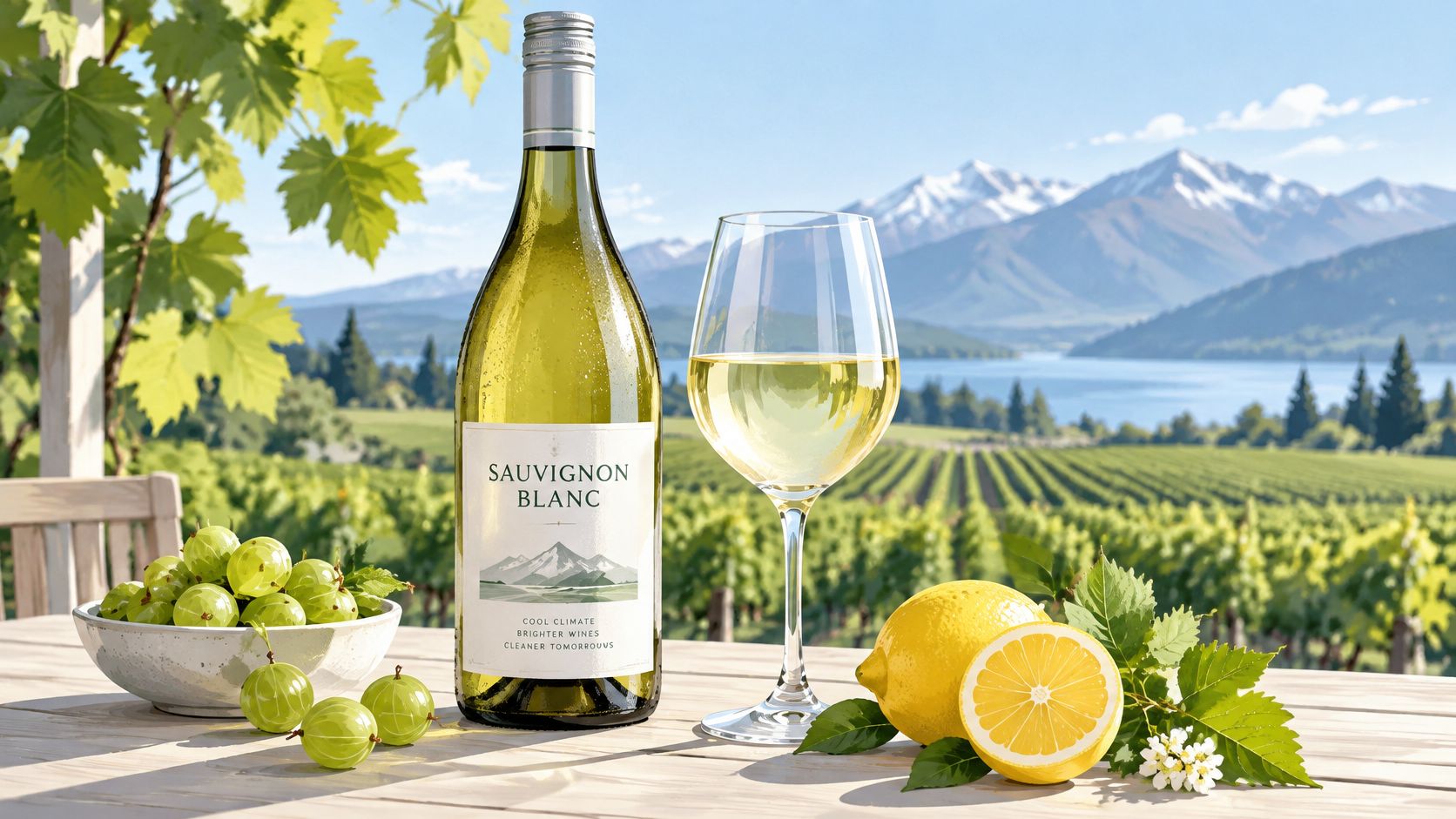
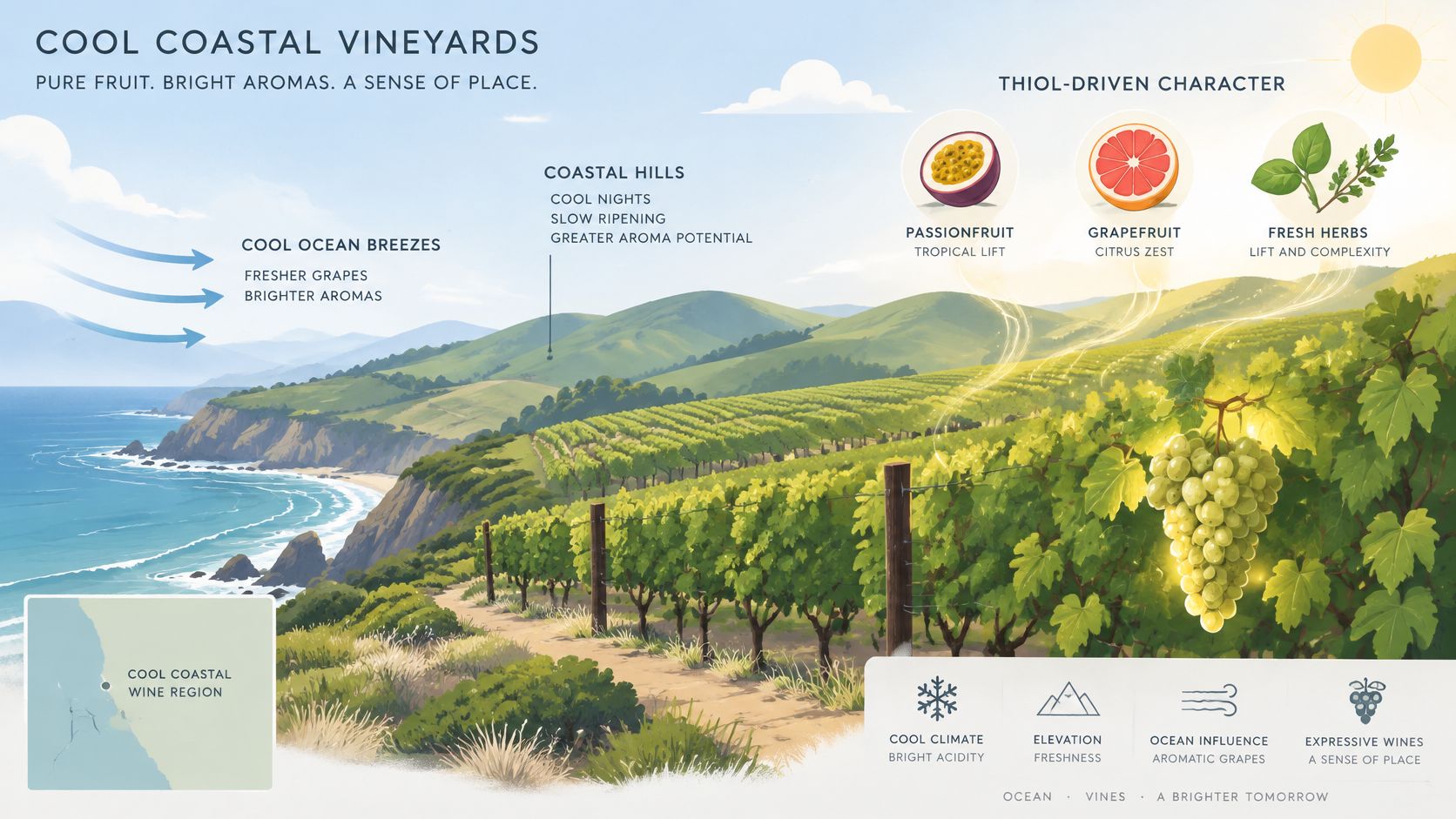
Look for freshness, vivid aromatics and crisp acidity rather than weight or high alcohol. Wine Australia's Sauvignon Blanc guide identifies cool but sunny conditions, particularly sites moderated by ocean breezes or elevation, as favourable for preserving aroma and natural acidity while developing fruit flavour.
That makes a cool-climate origin a useful first filter, not a quality certificate. Adelaide Hills offers a particularly useful starting point for Australian buyers seeking lifted citrus and herbal characters rather than broad tropical richness.
A vineyard setting can suggest a style, but the label needs closer inspection.
Label cues and what they tell you
| Label cue | What to look for | What it tells you |
|---|---|---|
| Region or sub-region | Adelaide Hills, Marlborough, Loire, Margaret River | Cool or maritime conditions point towards aromatic lift and acidity |
| Vintage | A recent release for a fresh, fruit-led style | A useful starting point when youthful fruit is the priority |
| Alcohol | Compare the declared alcohol across otherwise similar bottles | Lower alcohol can suggest a lighter palate, but doesn't establish balance |
| Oak or barrel wording | Oaked, barrel-aged, reserve | Potentially fuller and more textural; reserve alone doesn't confirm oak use |
| Closure | Screw cap or cork | Screw cap is common for fresh whites and doesn't signal lesser quality |
| Producer tasting note | Citrus, herb, passionfruit, flint | Previews the intended style before you pay |
Read the region before the brand story. A specific origin gives you more useful information than sweeping descriptions of premium grapes or exceptional craftsmanship.
Next, check vintage and alcohol together. A recent release suits a straightforward aromatic style, while an older bottle needs a reason to interest you, such as deliberate maturation or a producer known for structured wines. Alcohol is supporting information, not a pass-or-fail threshold.
Read past the front label
The producer's name matters because you can check its winemaking approach and current tasting note. Look for concrete descriptions of fruit, texture and finish rather than a string of flattering adjectives.
Oak isn't automatically a defect. Barrel fermentation or maturation can make a wine more savoury and substantial, but that's a different purchase from a zesty, unoaked aperitif.
- Check origin: Choose a region that points towards your preferred style.
- Check release: Favour youthful fruit unless development is intentional.
- Check language: Look for freshness and a clean finish, not just lushness or sweetness.
How Region and Climate Change the Style
Sauvignon Blanc's signature aromas owe much to volatile thiols, aroma compounds that can suggest grapefruit, passionfruit and box hedge. They're perceptible at very low concentrations, so increasing their impact doesn't automatically improve the wine.
Coastal exposure and vineyard temperature help explain why the same grape can taste so different.
The compounds include mercaptohexanol, mercaptohexyl acetate and mercaptomethylpentanone. An Australian Wine Research Institute technical review describes research on 21 Adelaide Hills Sauvignon Blanc samples, made using a consistent method, that found variation in free thiols, their precursors and amino acids.
That's an important limitation on regional shopping advice. Even within a named region, site and grape composition can produce noticeably different wines.
Regional Sauvignon Blanc styles
Treat these as starting expectations rather than promises. Producer choices, blending and vintage conditions can all shift the result.
| Region | Typical style | Dominant aromas | Body and acidity |
|---|---|---|---|
| Marlborough, New Zealand | Intense and aromatic | Passionfruit, capsicum, grapefruit | Light-medium, high acidity |
| Sancerre, Loire Valley | Mineral and restrained | Flint, lime, green apple | Light, crisp acidity |
| Bordeaux dry white blends | Citrus-led and lean in fresher examples | Lemon, grapefruit, herb | Light, moderate acidity |
| Adelaide Hills, South Australia | Lifted and cool-climate | Citrus, lime, herb, some passionfruit | Light-medium, bright acidity |
| Warmer inland South Australia | Riper and fuller | Tropical fruit, stone fruit | Medium, softer acidity |
| Margaret River, Western Australia | Ripe with a savoury edge | Tropical fruit, gooseberry, herb | Medium, balanced acidity |
Sancerre and Pouilly-Fumé are useful Loire starting points for restrained, savoury expressions. Bordeaux needs closer label reading because Sémillon and barrel influence can move a blend well beyond the lean profile in the table.
For a deeper look at the New Zealand end of the spectrum, explore this guide to New Zealand Sauvignon Blanc and Pinot Noir.
The video below offers another way to explore the variety.
Where regional shortcuts fail
A warmer-vintage Adelaide Hills wine can taste riper than you expect, while a producer in a warmer district can deliberately pursue freshness. Read the producer's description before assuming the regional stereotype applies.
A region tells you where to start looking. It doesn't tell you whether the finished wine is good.
Don't confuse a persistent rotten-egg or cabbage smell with desirable varietal character. Equally, don't assume emphatic passionfruit means more skilful winemaking: aromatic power still needs a palate capable of carrying it.
How to Serve Sauvignon Blanc at Its Best
Poor service can make a decent bottle seem disappointing. A wine poured from a warm cupboard can feel broad and alcoholic; an icy pour can seem almost scentless.
Use a wine thermometer if you want repeatable comparisons rather than guessing from condensation. For wider guidance across styles, consult the wine serving temperature guide.
A practical serving routine
- Chill evenly in the fridge. Give the bottle time to cool through, rather than chilling only its surface. When you're short on time, use an ice bucket containing both ice and water, with the water reaching well up the bottle.
- Skip the freezer as your default. It's easy to forget the bottle or overshoot the temperature you wanted. Controlled chilling makes it easier to judge the wine fairly.
- Choose a medium white-wine glass with a tapered rim. Leave generous space above the pour so you can swirl without spilling. An oversized, open bowl can make delicate aromas harder to assess.
- Let a closed or severe wine warm in the glass. Taste again once the fruit becomes easier to smell. Don't condemn a bottle while it's still too cold to reveal its shape.
- Reseal and refrigerate after pouring. Keep the remaining wine cold and minimise unnecessary air exposure. Drink it while the fruit still tastes lively, rather than relying on a fixed storage deadline.
- Give fuller styles more latitude. A textured or barrel-influenced Sauvignon Blanc generally benefits from less aggressive chilling. Let it reveal its savoury and creamy details without allowing it to become warm.
Keep comparisons fair
Use clean, odour-free glasses, and rinse away any detergent residue. A cupboard smell or heavily scented drying cloth can interfere with a subtle wine before you've tasted it.
Serving check: If the glass is icy and the wine seems mute, let it warm before deciding it lacks character.
When comparing bottles, chill and pour them identically. Don't give one wine a generous glass and patient airing while judging the other straight from a nearly frozen bottle.
A Tasting Scorecard for Judging Any Sauvignon Blanc
Taste in a consistent order so an attractive nose doesn't decide the result before the wine reaches your mouth. Halliday Wine Companion's tasting guidance supports assessing Sauvignon Blanc at approximately 6–8°C and recording aroma clarity, acidity, mid-palate texture, finish and balance on a 1–5 scale.
Start by looking at colour and clarity before swirling. Pale colour isn't proof of quality, and deeper colour isn't automatically a fault, especially in a developed or barrel-influenced style.
Then swirl gently and smell in short bursts. Name what you can recognise: lemon, grapefruit, passionfruit, tropical fruit, fresh herb or box hedge. Assessing the nose first lets you concentrate on volatile aromas before repeated tasting dulls your attention.
Sauvignon Blanc tasting scorecard
Use the scale above for the sensory criteria, and treat faults as a separate rejection check. Score how well each element works, not how much of it you detect.
| Criterion | Strong sign | Warning sign |
|---|---|---|
| Aroma clarity | Clear varietal notes such as citrus, passionfruit or herb | One-dimensional pungency or muddy aromas |
| Acidity | Fresh and integrated with the fruit | Harsh, sharp or dominating the palate |
| Mid-palate texture | Fruit with some weight and a clean line | Thin, watery or overly sweet |
| Finish | Persistent, clean and mouth-watering | Short, hollow or unpleasantly bitter |
| Balance | Aroma, acidity and fruit working together | One element clearly overpowers the others |
| Faults | None | Persistent reductive sulfur, oxidation or cork taint: reject |
Take a modest sip and move it around your mouth. Notice whether the fruit continues through the middle or vanishes, leaving only sourness, sweetness or alcohol.
After swallowing or spitting, pay attention to what remains. A clean citrus or herbal aftertaste is useful persistence; lingering bitterness or alcoholic heat isn't the same thing as length.
Separate faults from preferences
A grassy wine isn't faulty because you prefer tropical fruit. A rounded wine isn't inferior because it lacks the piercing edge you expected.
Persistent rotten-egg aromas, wet-cardboard cork taint or tired, bruised-apple oxidation are different matters. A fleeting struck-match note can dissipate, so give it air before deciding it's an obvious fault.
- Reject persistent faults: Don't let an expensive label persuade you to tolerate a defective bottle.
- Mark down harsh structure: Acidity should refresh your mouth, not scrape across it.
- Distrust the hollow middle: A showy opening can't compensate for missing flavour and texture.
Judge the sip you want to take next, not just the sniff that impressed you first.
Record a short reason beside each score. Notes such as clear lime, thin middle or clean savoury finish are more useful than writing nice.
For buying decisions, I would prioritise strong balance and finish over a high overall total. Otherwise, a spectacular aroma score can disguise the very weaknesses that make a bottle tiring to drink.
Matching Sauvignon Blanc to Food and Occasion
Choose between citrus-and-herb, ripe tropical and softer textural styles before choosing a brand. These palate families do different jobs, and the sharpest wine isn't necessarily the most useful at dinner.
The category's broad appeal doesn't mean everyone enjoys the same expression. IWSR figures cited by Wine Australia's market bulletin found that 50% of regular Australian wine drinkers had consumed Sauvignon Blanc in the previous six months, but that doesn't tell you whether your guests prefer grassy intensity or gentle texture.
Sauvignon Blanc style by food and occasion
| Food or occasion | Best style | Why it works |
|---|---|---|
| Oysters, lemon-dressed seafood | High-acid citrus and herb | Freshness complements brine and balances richness |
| Goats cheese, herb salads | Herbaceous, lean | Herbal notes echo the dish and acidity suits the tang |
| Spicy Thai or Vietnamese | Riper tropical, less aggressively acidic | Generous fruit can make the pairing feel less austere |
| Creamy fish or chicken dishes | Textural, partly barrel-influenced | Palate weight matches richer sauces |
| Aperitif or casual gathering | Crisp and light, served chilled | Refreshing without demanding a substantial dish |
| Roast chicken with lemon | Balanced mid-palate | Fruit and acidity complement both meat and citrus |
For oysters, seek precision rather than tropical abundance. With goats cheese and herbs, a green-edged wine can feel coherent where the same bottle might seem severe on its own.
Creamy fish needs more than a sharp line of acidity. A fuller South Australian example with savoury texture can hold its place beside the sauce without overwhelming the fish.
Match the sauce and seasoning
For a practical seafood dinner, Smokey Rebel's garlic and prawn pasta recipe gives you a useful pairing exercise. Choose citrus freshness for a lighter preparation, or more mid-palate weight if you make the dish richer.
Chilli needs care. Tropical aroma isn't sweetness, and a dry, fruity wine won't reliably neutralise intense heat; avoid pronounced alcoholic warmth and don't choose a severe wine just because the dish contains lime.
The guide to pairing McLaren Vale Sauvignon Blanc with food offers further ideas for matching local expressions to the plate.
- For grassy-wine sceptics: Choose ripe citrus or tropical fruit with a gentler herbal edge.
- For a food-focused dinner: Let the sauce's richness determine how much texture you need.
- For mixed company: Favour an approachable, balanced style over the most polarising aromatic expression.
A casual gathering doesn't require a wine that dominates conversation. A dinner built around seafood might justify something more distinctive.
Match acidity to richness and salt, then let the occasion decide how assertive you want the wine to be. Personal fit is part of quality, not an embarrassing exception to it.
Choosing Your Next Bottle Without Paying for Hype
A discounted Sauvignon Blanc can be excellent buying, but a large markdown doesn't prove you've found an overlooked gem. Sometimes the seller has more stock than customers want.
Wine Australia's inland production bulletin reported that inland Sauvignon Blanc crushed in 2025 rose 39% to 81,726 tonnes, while average grape value had fallen 11% from its 2022 peak to $492 per tonne. Those are inland grape-market measures, not retail bottle prices or evidence that any particular discounted wine is poor.
The useful conclusion is narrower: plentiful supply can create buying opportunities, but popularity and surplus tell you little about what's in your glass. A technically clean, interchangeable wine may suit a party perfectly while offering little reason to pay a provenance premium.
What deserves your money
Pay for a result you can recognise. Distinctive regional character, dependable production and a finish you enjoy are stronger reasons than heavy glass, elaborate packaging or a flattering recommended retail price.
| Buying situation | Sensible response |
|---|---|
| Deep discount on an unfamiliar label | Check origin, release and producer before considering the saving |
| Modestly priced wine from a named cool region | Taste it against your usual bottle rather than assuming it's better |
| Older aromatic stock | Ask about storage and intended style |
| Premium bottle for a casual gathering | Consider whether guests will enjoy its distinctive character |
| Case offer on a known favourite | Confirm it's the same wine and release you tasted |
A broad regional label isn't automatically bad. Producers can use flexible sourcing to deliver dependable value, while a prestigious origin can still produce an awkward or disappointing wine.
A buying routine that limits regret
- Define the job before shopping. Decide whether you need a seafood wine, an easy aperitif or something substantial for dinner. This stops a compelling offer from becoming the wrong purchase.
- Check the label against that job. Read the producer's current tasting note and look for a clear explanation of origin and style, rather than relying only on brand familiarity.
- Taste before committing to a case. Use the scorecard, then write down whether you'd want the wine with a full meal or another glass. A small saving per bottle isn't useful if you tire of the wine quickly.
- Where available, choose a mixed or sample pack to compare contrasting palate families. Keep the serving conditions consistent and note which bottle works with your usual food.
- Buy in volume only after the choice is settled. Check storage space and how quickly you expect to drink the wine. Fresh aromatic stock isn't something to accumulate merely because delivery becomes economical.
This week, taste contrasting regional expressions side by side, score them without looking at their prices, then reveal what each cost. Buy the one that makes sense for your palate and occasion, not the one with the loudest nose or largest discount.
McLaren Vale Cellars offers South Australian wines, curated sample packs and mixed bundles, giving you ways to explore styles before committing to a dozen. Visit McLaren Vale Cellars to compare Sauvignon Blanc options and choose a bottle or pack that fits your next meal.
Comments (0)
There are no comments for this article. Be the first one to leave a message!