
A good red blend is a wine whose grape varieties complement each other so that no single component overwhelms it, judged by four balance checks: defined fruit, comfortable tannin, refreshing acidity and integrated oak.
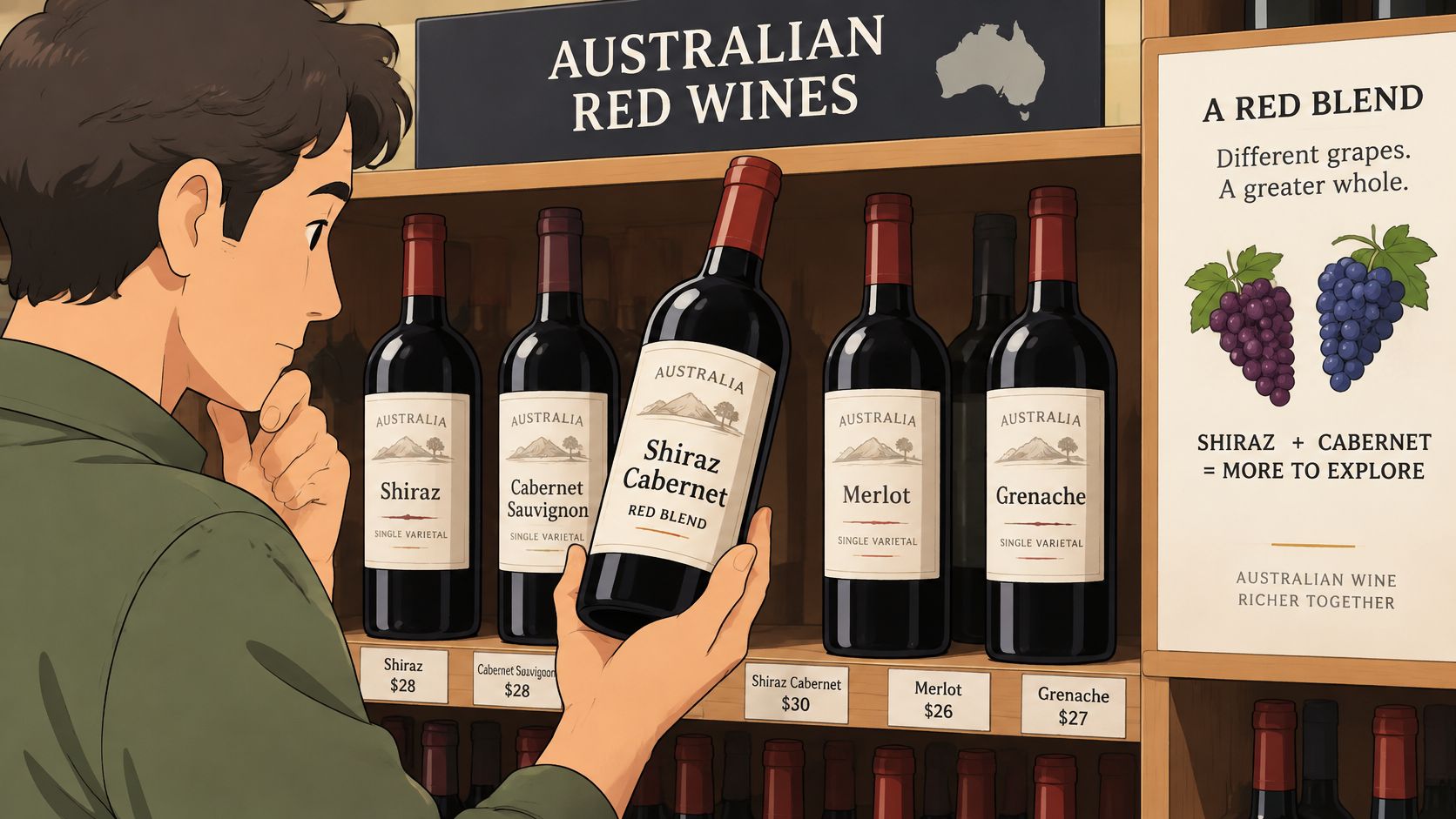
You're looking for a bottle for dinner, and a Shiraz Cabernet sits beside a Grenache Shiraz with an equally appealing label. Neither grape list tells you which will suit your meal, or whether the wine will feel satisfying rather than heavy. The useful question isn't how much has gone into the blend, but how well it works together.
What a Good Red Blend Really Is
You pick up the Shiraz Cabernet, turn it over and read about rich berries, spice and smooth tannins. It sounds promising, but those words could describe plenty of bottles on the shelf. What you want to know is whether the richness comes with enough freshness and shape to make the wine enjoyable throughout dinner.
That's a familiar buying decision.
Think of a blend as a band. Bass gives the music depth, percussion gives it shape, and a melody provides something to follow. Adding more instruments doesn't automatically improve the song; the musicians need to leave room for each other.
In wine, you'll notice fruit weight, structure and finish. Fruit weight is how light or substantial the wine feels. Structure comes largely from tannin, the drying grip, and acidity, the mouth-watering freshness; finish is what remains after you swallow.
What that means for your bottle
McLaren Vale makes a useful Australian example because Shiraz, Cabernet Sauvignon and Grenache provide recognisable building blocks. A blend might feel generous at first, become firmer through the middle, then finish with a fresher red-fruit note. You don't need to identify every grape to recognise that satisfying progression.
A good blend doesn't have to taste complicated. It needs to feel complete.
If you're asking “what is a good red blend wine?”, start with the experience you want rather than an impressive grape list. Knowing the grapes' usual jobs helps you choose a likely style; tasting its balance tells you whether the winemaker has brought those jobs together successfully. Your meal, your preference for tannin and your plans for opening the bottle finish the decision.
The Grapes That Build a Red Blend
Shiraz accounted for 59% of McLaren Vale's estimated 2022 crush, while Cabernet Sauvignon represented 19%, according to Wine Australia's McLaren Vale regional guide. Their prominence helps explain why these grapes appear so often in the region's blends, although those regional shares aren't a recipe for an individual bottle.
McLaren Vale's Mediterranean conditions support ripe, flavourful reds. Winemakers can combine that generosity with grapes that contribute firmer edges, brighter aromas or savoury detail.
Common red blend grapes and the roles they play
| Grape | Usual role | What it adds | Risk when it dominates |
|---|---|---|---|
| Shiraz | Base and volume | Dark fruit, colour and mid-palate weight | High alcohol and heavy, jammy texture |
| Cabernet Sauvignon | Structure | Firm tannin, acidity and cassis-like definition | Angular finish if fruit ripeness is short |
| Grenache | Lift and softness | Red fruit, spice and a softer mid-palate | A thin-feeling core and less colour if supporting structure is missing |
| Mourvèdre | Savoury depth | Earthy, savoury notes and a firm frame | Tannic grip that can take time to soften |
| Cinsault | Freshness | Bright red fruit and light body | Limited tannin and less support for extended ageing |
Why the same grapes can make different wines
These roles are tendencies, not fixed personalities. Picking decisions, vineyard conditions, extraction and oak treatment all influence the finished result. Grenache can make a substantial wine, and a Shiraz-led blend doesn't have to feel weighty.
The warning signs describe what can happen when a blend lacks a counterweight, not inevitable faults in the grapes themselves. A generous Shiraz component may need freshness to stop its fruit feeling ponderous. Cabernet Sauvignon can provide useful definition, but insufficiently ripe fruit and tannin can leave the wine feeling pointed rather than composed.
Grenache needs similar care. Its softer texture and aromatic lift can open up a dense blend, but softness without enough fruit depth or supporting structure may leave the middle feeling hollow.
Read the combination, not just the names
Say you enjoy dark berries but dislike a drying finish. A Shiraz-led blend with Grenache may be a sensible starting point, while a Cabernet-led wine deserves a closer look at the tasting description. Words such as supple, fresh and savoury are more useful to your preference than a promise of sheer power.
The guide to why certain grapes are blended explains the logic behind these combinations. At the shelf, use that logic to form a question: does this bottle appear to have something that supports, refreshes or softens its main component? The grape list gives you a starting hypothesis, not a verdict.
Judging Balance and Avoiding Common Myths
Treating the first-listed variety as a quality signal is an easy mistake. It identifies the leading component, not how successfully the wine has been made.
Start with this checklist, using the back label or retailer's description to shortlist bottles and the glass to confirm your choice. Shelf descriptions are clues, not proof.
Balance checks: good signs and warning signs
| Check | Good sign | Warning sign |
|---|---|---|
| Fruit intensity | Ripe but defined | Jammy, stewed fruit |
| Tannin | Persists without drying the finish | Hot, drying finish |
| Acidity | Offsets alcohol and sweetness | Heavy, flat warmth |
| Oak | Sits inside the fruit | Oak sits on top of the fruit |
Read labels for facts, not promises
Australian Wine Research Institute guidance states that a wine naming multiple grape varieties must contain 100% of those named varieties, a single-variety claim generally requires at least 85% of that variety, and named varieties appear in descending order of proportion. Shiraz Cabernet Merlot therefore identifies Shiraz as the largest component, without guaranteeing a particular flavour or standard of quality.
Look for a clear regional name and a description that explains texture as well as flavour. A list of blackberry, plum and chocolate tells you what aromas to expect, but says little about how the wine will feel. References to freshness, ripe tannin and restrained oak help fill that gap.
Ripe fruit isn't the same as sweetness. A dry wine can smell richly of berries and feel generous without containing enough sugar to taste sweet. Judge whether those flavours remain distinct, rather than assuming that every plush red is a sweet red.
Make the checks practical
For fruit, look for definition: blackberry rather than an indistinct cooked-fruit flavour. For tannin, separate firmness from discomfort; a useful grip supports the wine without leaving your gums feeling scraped.
Acidity should make the mouth feel refreshed, not sharply sour. Oak should contribute seasoning, such as cedar, toast or spice, while leaving fruit at the centre. If vanilla or char is all you can taste, the seasoning may be dominating the dish.
Shelf shortcut: Ask for the texture you enjoy. “Dark-fruited but fresh, with gentle tannin” gives a retailer more useful direction than “something smooth”.
The explanation of how tannins, acidity and alcohol define balance helps distinguish these sensations. Heat and dryness can arrive together, but they aren't the same thing: alcohol contributes warmth, while tannin creates grip.
Myths that make buying harder
- More varieties mean better wine. A short, well-chosen combination can be more coherent than a crowded blend. Every additional component needs a purpose, not merely a place on the label.
- Higher alcohol means higher quality. Alcohol can add body, but it can't replace flavour definition or freshness. Equally, a lower-alcohol wine isn't automatically balanced if its fruit feels thin or its acidity feels detached.
- Darker colour proves concentration. Colour tells you about appearance, not the whole drinking experience. A heavily coloured wine can still taste simple, while a paler blend can offer detail and persistence.
- Blends don't age. Suitable blends can develop savoury complexity as they mature. Their prospects depend on fruit depth, sound structure and storage, not whether the label names a single grape.
Price is an imperfect shortcut too. A dearer bottle may offer complexity you appreciate, but it might also be firmer or more oak-influenced than you enjoy.
Vintage differences can change a familiar wine's feel, so don't buy on memory alone when committing to a larger order. Taste after the wine has had some air, let the initial impression settle, then consider warmth, freshness and grip together rather than scoring each sensation separately.
Fruit-Forward, Everyday and Cellarable Styles Compared
Australian demand is changing: Wine Australia reports that domestic still red and rosé sales fell 5% in 2024–25 and were 13% below the 10-year average. For a shopper, the useful response isn't to follow a trend but to recognise that a lighter, more flexible blend can be a serious choice.
Red blend styles, profiles and drinking windows
| Style | Typical profile | Tannin and acidity | Drinking window | Best use |
|---|---|---|---|---|
| Fruit-forward | Ripe dark fruit with generous oak | Soft tannin and moderate acidity | Enjoy while the primary fruit is vivid | Weeknight roasts and crowd-pleasing dinners |
| Medium-bodied everyday | Red and dark berry with savoury lift | Balanced tannin and bright acidity | Usually chosen for near-term drinking | Pizza, barbecue vegetables and casual lunches |
| Cellarable | Dense fruit with layered spice and savoury notes | Firm, ripe tannin and sustained acidity | Follow the producer's advice for the specific wine | Slow-cooked meats and aged cheese |
These are overlapping styles, not quality grades. Fruit-forward wines can be carefully made, while a bottle intended for cellaring can be disappointing if it offers hardness without enough flavour.
Choose for the occasion
A fruit-forward blend suits someone who wants immediate generosity and little resistance from tannin. The important distinction is between approachable and tiring: plush fruit should still leave a clean impression.
For casual lunches and warm-weather entertaining, a medium-bodied blend often fits more comfortably. A McLaren Vale blend using Grenache or Cinsault can retain regional ripeness while offering a more open texture and brighter red-fruit expression. Lighter doesn't mean diluted when the flavour stays clear through the middle.
Cellarable styles make more sense when you enjoy firm structure, have suitable storage and want to follow a wine's development. They can also work at the table with richly savoury food, provided the wine is enjoyable when opened.
Choose the wine you want to drink, not the drinking window you want to own.
A drinking window is guidance rather than a countdown. Ask for advice on the specific bottle, especially if you're buying a gift that might remain unopened. Match the style's weight to the food and weather, then favour the wine that remains appealing as the meal progresses.
Tasting for Balance in the Glass
Tasting a blend is a little like tasting a stew. The first mouthful reveals the ingredients, but the lingering flavour tells you whether they've cooked together.
Use this sequence to give your impressions some order.
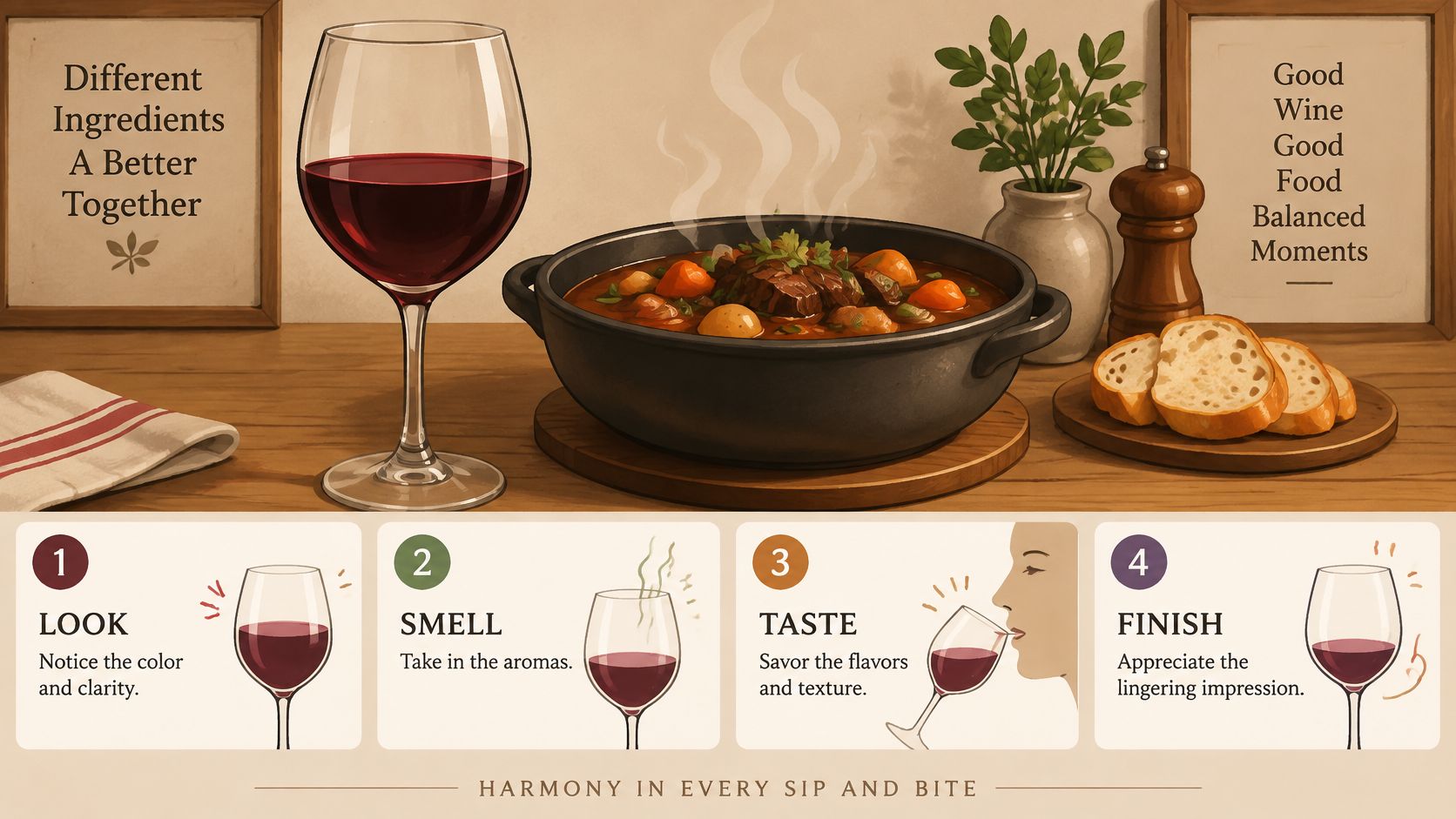
Follow the wine from appearance to finish
Look. Hold the glass against a white background and notice the depth of colour and the rim. Treat them as descriptive clues rather than a score; you're recording what's there, not deciding whether darker is better.
Smell. Start with the fruit, then look for spice, herbs or savoury notes. Swirl gently and smell again, noticing whether you find another layer or mainly alcohol rising from the glass.
Taste. Take a modest sip and follow it across your mouth. Notice the arrival of flavour, whether the middle feels filled out or hollow, and how the tannin feels against your gums.
Finish. After swallowing or spitting, pause before tasting again. Does a recognisable fruit or savoury flavour remain, or are you left mainly with heat and dryness?
A visual demonstration can help you practise the sequence.
Put the impressions together
Say you're tasting a McLaren Vale Shiraz-led blend with Cabernet Sauvignon. Dark berry might arrive first, followed by a cassis-like note and a firmer outline, with savoury spice preventing the overall impression from feeling confectionery. That's a plausible tasting sequence, not a formula every bottle must follow.
Be cautious if the finish feels both hot and drying, or if the fruit seems stewed with little lift. Neither a dramatic first sip nor a long aftertaste is enough on its own; what remains should be pleasant.
- Record appearance. Use a simple word such as ruby.
- Name the aroma. Blackberry is enough; you don't need an elaborate tasting vocabulary.
- Describe the texture. Try supple, firm or hollow.
- Capture the finish. Fresh, savoury or hot will help distinguish bottles later.
Keep those notes alongside the label name. You'll soon have a personal guide to the textures you enjoy rather than a collection of borrowed tasting phrases.
Pairing a Red Blend With Food and Occasions
Match the wine's weight to the food's weight. A substantial blend usually feels more at home with rich food, while a mid-weight bottle is less likely to overwhelm vegetables or a simple lunch.
Think about the sauce and cooking method as well as the main ingredient. Roast chicken with crisp skin and gravy can handle a more generous red than chicken served with a delicate salad.
- Fruit-forward blends. Try roast chicken, a beef burger or roasted mushrooms. Their browned, savoury flavours provide a useful contrast to plush fruit.
- Medium-bodied blends. Choose pizza, barbecued capsicum and eggplant, or a casual platter with lentils and roasted vegetables. Freshness helps when the meal includes tomato or oily dressings.
- Cellarable styles. Pair an approachable example with lamb shanks, beef short rib or hard aged cheese. Richness can make firm tannin feel less prominent, though food won't turn an unpleasantly hard wine into a harmonious one.
Serve for freshness, not warmth
Room temperature can be too warm in an Australian home. Give a medium-bodied red a brief chill, then let it open up in the glass; fuller reds also benefit from being served below a warm room's temperature.
For a young, tannic blend, pour a taste before decanting and compare it after some air. Use a clean decanter or glass jug, and remember that aeration can change the wine's expression but can't repair poor balance. The guide to wine and food pairing offers more ways to match flavour and texture.
For a summer barbecue, favour freshness over sheer power. At a dinner party with mixed preferences, a mid-weight red is a practical compromise; for a gift, look for a clearly explained regional style that suits the recipient's tastes, not just an imposing bottle.
Choose Your Next Red Blend With Confidence
Buying confidently doesn't require predicting every aroma before opening the bottle. It means narrowing the choice to a suitable style, then learning enough from tasting to make your next purchase more reliable.
Use this shelf-to-table routine.
- Decide the occasion. Choose the weight you want for the meal, weather and people drinking it.
- Pick a style. Select fruit-forward, medium-bodied everyday or cellarable according to the experience you want.
- Read the label as evidence. Use variety order, a clear regional name and useful tasting descriptions to understand the bottle, not to award it a quality score.
- Confirm it in the glass. Ask whether the wine feels coherent from its first flavour through to what remains after the sip.
Try before you commit
A mixed selection from a retailer, a cellar-door tasting or a shared comparison at home can reveal more than buying a case based on an appealing label. Keep the food similar when comparing wines so you can notice differences in texture more easily.
McLaren Vale Cellars offers curated sample packs and a Taste Guarantee as an option for exploring regional wines before placing a larger order. Check the current pack contents and guarantee terms, and choose a selection that lets you compare styles rather than assuming every pack contains the blend you want.
Buying habit: Keep the name of a wine you enjoyed and a short note explaining why. Your own useful description is more valuable than a score you can't translate into taste.
You might discover that you prefer fragrant Grenache-based blends with lunch and a firmer Shiraz Cabernet with a substantial dinner. Neither preference needs defending, and neither bottle needs to win every occasion.
A good red blend is one where every grape earns its place. The right purchase is the version of that harmony you enjoy drinking.
Curated sample packs and regional selections make it easier to compare red blend styles before committing to a larger purchase. Visit McLaren Vale Cellars to explore the current range and use the tasting guides to choose a bottle that fits your food, occasion and preferred texture.
Comments (0)
There are no comments for this article. Be the first one to leave a message!