
Let's jump straight into the big question: what are dry white wines? At its core, 'dry' simply means the wine isn't sweet. It's a term for a wine with very little to no sugar left after fermentation, which really lets the grape's natural acidity, fruit character, and minerality take centre stage.
Unpacking What ‘Dry’ Really Means in Wine
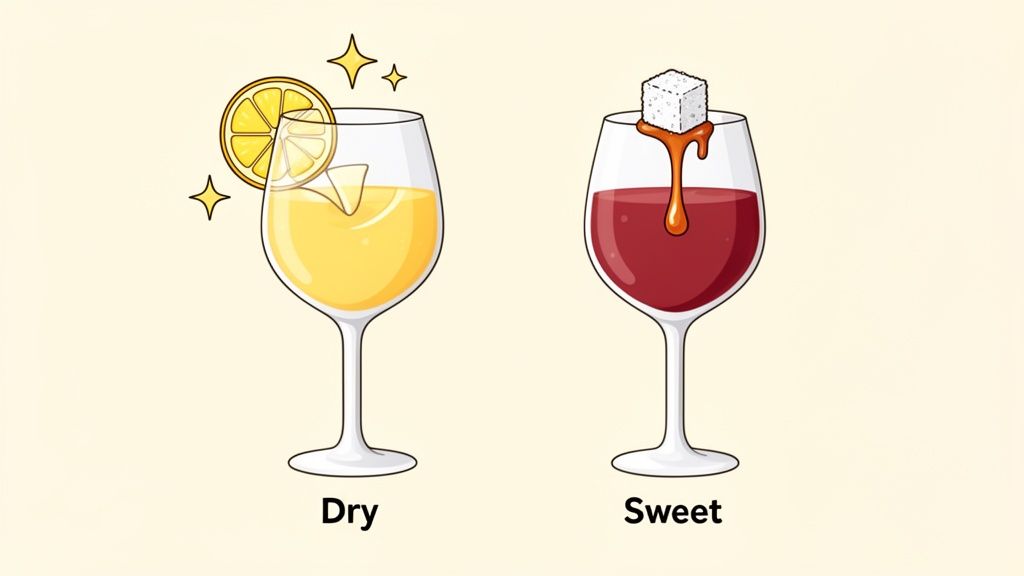
When someone says a wine is "dry," you might imagine a mouth-puckering, drying sensation. But in the wine world, dryness has nothing to do with how the wine feels texturally. It’s all about the level of sweetness.
During fermentation, yeast eats the natural grape sugars and converts them into alcohol. In a dry white wine, the yeast has done a thorough job, leaving almost no sugar behind.
This lack of sweetness allows all the other fascinating flavours to shine through. Instead of a sugary taste, your palate is free to pick up on:
- Zesty citrus notes like lemon, lime, and grapefruit.
- Crisp tree fruits such as green apple or crunchy pear.
- Grassy or herbal characters, which you’ll often find in a good Sauvignon Blanc.
- A distinct minerality, sometimes described as the taste of wet stone or chalk.
Sweetness Is Not the Same as Fruitiness
Here’s a crucial point that trips many people up: "sweet" and "fruity" are two different things. A dry white wine can be absolutely bursting with vibrant fruit flavours, think of juicy pineapple in a Chardonnay or ripe passionfruit in a Sauvignon Blanc.
These are fruit aromas and flavours, not actual sugar on your tongue.
The key takeaway is simple: A dry wine can be incredibly fruity without being sweet. The term 'dry' is the opposite of 'sweet,' referring specifically to the low level of residual sugar.
To give you a clearer picture, we've put together a simple table comparing the main characteristics of dry and sweet white wines.
Dry vs Sweet White Wine At a Glance
| Characteristic | Dry White Wine | Sweet or Off-Dry White Wine |
|---|---|---|
| Residual Sugar | Very low (<4g/L) | Noticeable to high (>4g/L) |
| Primary Sensation | Acidity, minerality, tart fruit | Sweetness, ripe/candied fruit |
| Alcohol Level | Typically higher (12-14% ABV) | Often lower (5-11% ABV) |
| Body | Light to full-bodied | Can feel richer, more viscous |
| Key Flavours | Citrus, green apple, herbs, stone | Honey, apricot, ripe peach, jam |
| Food Pairing | Versatile with savoury foods | Desserts, spicy dishes, strong cheese |
This table shows just how different the two styles can be, all starting from that single factor: sugar.
This distinction is what makes exploring dry whites so exciting. From bone-dry, saline styles to those that are rich and full-bodied yet still technically dry, there’s a massive spectrum of flavours to discover.
Regions like McLaren Vale showcase this beautifully, producing crisp, aromatic whites that are both complex and refreshing, proving that "dry" is the beginning of a flavourful adventure, not the end.
The Science Behind a Perfectly Dry Sip
So, how does a wine actually end up being ‘dry’? It’s not some flavour that’s added in the winery. It’s all about the beautiful, natural science of fermentation.
The secret is something winemakers call residual sugar, and the real heroes of the story are tiny, hardworking organisms: yeast.
Think about a freshly picked grape, it’s bursting with natural sweetness. This sugar is the raw material for wine. When winemakers crush the grapes, they mix this sweet juice with yeast, which kicks off fermentation. The yeast get to work, enthusiastically eating up all that grape sugar and turning it into alcohol and carbon dioxide.
To make a dry white wine, the winemaker simply lets this process run its full course. The yeast are given free rein to feast until virtually all the sugar in the juice is gone. Once their food source is depleted, the fermentation stops. What's left is a wine that’s low in sugar and, therefore, dry.
Defining Dryness By the Numbers
While our own palates are the final judge, there's a technical side to it. For a wine to be officially labelled as 'dry,' it needs to have a tiny amount of leftover sugar, usually less than 4 to 5 grams per litre. That’s a minuscule amount, and most of us would never even notice it.
It’s a common trap to think that fruit flavours equal sweetness. A wine can be packed with notes of lemon, green apple, or passionfruit and still be technically bone-dry. What you’re tasting are fruit characters, not sugar.
This whole process is the key to creating that crisp, refreshing character we all love in dry white wines. Here in McLaren Vale, our winemakers are masters at managing fermentation to craft exceptional dry whites. Even in a challenging, drier season like 2020, the region crushed 1,146 tonnes of Chardonnay and other white grapes, a real testament to the dedication to quality. You can read the full insights on the 2020 McLaren Vale winegrape crush.
It’s Not Just About Sugar
Interestingly, residual sugar isn’t the only thing that shapes how dry a wine feels on your palate. Other elements play a huge part in how we perceive dryness.
- Acidity: This is the backbone of any great dry white wine. Think of the sharp, mouth-watering tang of a fresh lemon. That bright, zesty quality cuts through richness and makes a wine feel even crisper and more refreshing, really amplifying the sensation of dryness.
- Alcohol: Higher alcohol can give a wine a sense of weight and warmth on the palate. This can sometimes balance out the acidity, creating a rounder, fuller mouthfeel, even in a wine that is completely dry.
Ultimately, it's the beautiful interplay between minimal sugar, bright acidity, and balanced alcohol that creates that perfectly dry sip. It’s a delicate balancing act that winemakers work hard to perfect, all to produce the vibrant and flavourful wines we enjoy.
Meet the Most Popular Dry White Grapes
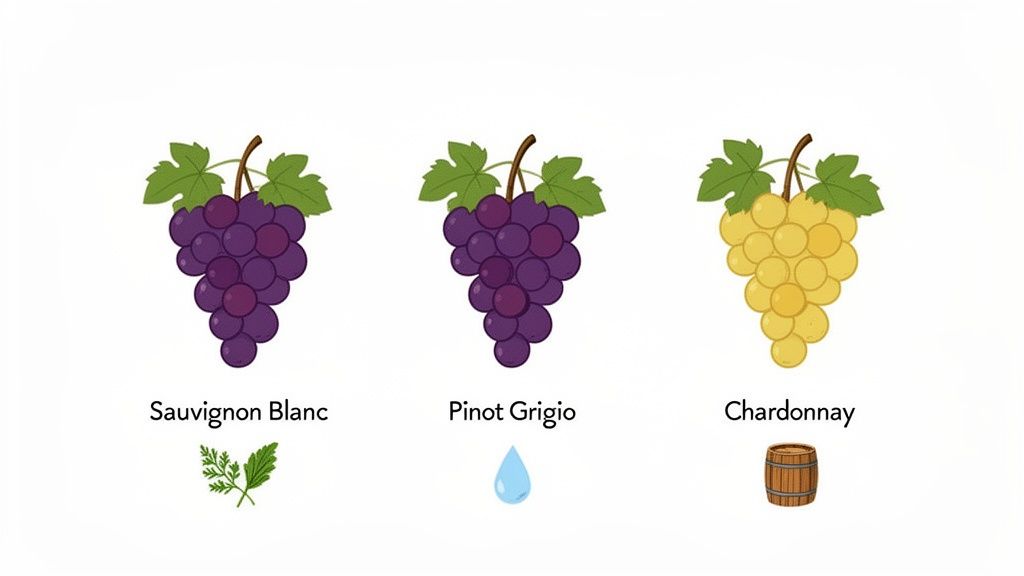
Now that you've got a handle on what makes a white wine dry, it's time to meet the stars of the show. The world of dry white grapes is vast and exciting, but a few key players turn up time and again on wine lists and bottle shop shelves. Getting to know them is the fastest way to find a wine you’ll love.
Think of these grapes as actors, each with a distinct personality. Sauvignon Blanc is the sharp, witty character, while Chardonnay is the versatile performer who can play any role. Let's explore the most common varieties you'll run into.
The Zesty One: Sauvignon Blanc
Sauvignon Blanc is famous for its racy acidity and powerfully aromatic profile. It's the wine equivalent of a splash of cold water on a hot day, utterly refreshing and vibrant.
Its signature flavours often include:
- Citrus: Zesty grapefruit, lemon, and lime.
- Herbaceous Notes: Freshly cut grass, capsicum, and sometimes a hint of passionfruit.
- Minerality: A crisp, stony finish that makes it incredibly food-friendly.
It’s almost always made in a completely dry style. Winemakers in places like McLaren Vale craft versions that are bright, aromatic, and absolutely perfect for a summer afternoon.
The Crisp One: Pinot Grigio
Known as Pinot Gris in France and other regions, Pinot Grigio is the definition of a crisp, clean white wine. It's generally lighter-bodied than Sauvignon Blanc, with a more subtle and delicate flavour profile.
Expect to find straightforward, refreshing notes of green apple, pear, and a touch of citrus. It's a fantastic, uncomplicated choice that pairs beautifully with light salads, seafood, and antipasto platters. In Australia, you'll find superb examples that are zesty and easy-drinking.
A key point to remember is that winemaking style can dramatically alter a grape's final taste. A grape is just the starting point; the winemaker's decisions in the cellar guide its expression, creating a spectrum of flavours from the same raw ingredient.
The Versatile One: Chardonnay
Chardonnay is arguably the world's most famous white grape, and for good reason, it’s incredibly adaptable. It can be made in a lean, unoaked style or a rich, creamy, oaked style, offering two completely different experiences from the same grape.
- Unoaked Chardonnay: Fermented in stainless steel tanks, this style is crisp and clean. It showcases flavours of green apple, lemon, and pineapple, often with a chalky minerality. Modern McLaren Vale Chardonnays often fall into this elegant category.
- Oaked Chardonnay: Fermented or aged in oak barrels, this style is richer and more complex. The oak imparts notes of vanilla, butter, and toast, which complement the grape’s natural flavours of yellow apple and tropical fruit.
This versatility means there's a Chardonnay out there for everyone. Understanding the difference between these two styles is a game-changer when choosing a bottle.
To make things even easier, here's a quick cheat sheet to the most common dry white grapes you'll encounter.
Common Dry White Wine Varieties and Their Flavours
| Grape Variety | Typical Flavour Profile | Best Paired With |
|---|---|---|
| Sauvignon Blanc | Grapefruit, cut grass, passionfruit, flint | Goat cheese, green salads, grilled fish |
| Pinot Grigio | Green apple, pear, lemon, almond | Light pasta, seafood, antipasto |
| Chardonnay (Unoaked) | Green apple, lemon, pineapple, chalk | Oysters, roast chicken, creamy soups |
| Chardonnay (Oaked) | Yellow apple, vanilla, butter, toast | Lobster, pork, mushroom dishes |
| Riesling (Dry) | Lime, green apple, petrol, slate | Spicy Asian food, pork schnitzel, cured meats |
| Fiano | Pear, hazelnut, orange peel, spice | Rich seafood, grilled vegetables, poultry |
| Vermentino | Green apple, lime, bitter almond, saline | Shellfish, Mediterranean salads, pesto |
Getting familiar with these core profiles is your first step to confidently picking a dry white wine off any menu or shelf.
From here, you can branch out to other exciting dry whites like Riesling, Fiano, and Vermentino, each offering a unique window into what dry white wines can be.
Discovering McLaren Vale's Premium Dry Whites
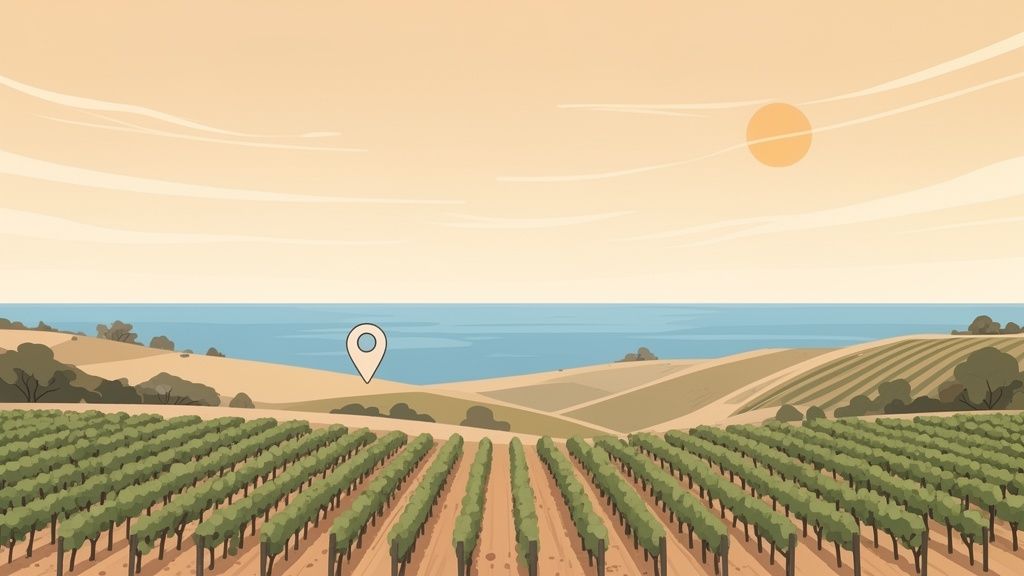
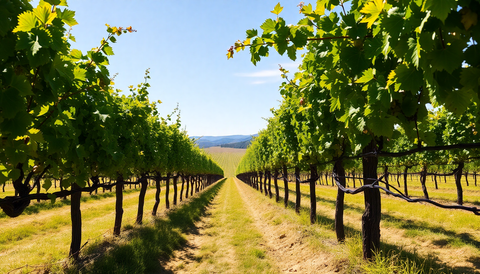
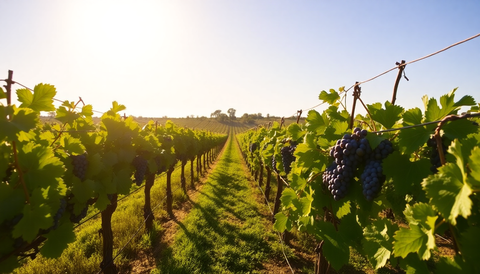
While McLaren Vale is world-famous for its powerful reds, it's also a treasure trove for exceptional dry white wines. The region's unique geography is its secret weapon. Tucked between the Mount Lofty Ranges and the Gulf St Vincent, our vineyards get hit with cooling sea breezes every afternoon.
This maritime influence is like a natural air conditioner for the grapes. It slows down the ripening process, allowing complex, intense flavours to build up while locking in the brilliant, zesty acidity that is the hallmark of a world-class dry white. It’s this perfect balance that makes McLaren Vale whites so compelling.
The Stars of the Region
While you’ll find the classics here, McLaren Vale has become a pioneer for alternative grapes that absolutely thrive in our Mediterranean climate. These grapes are producing some of the most exciting dry whites in Australia.
- Modern Chardonnay: Elegant and refined, these are a world away from the heavily oaked styles of the past. Think crisp apple, bright citrus, and a beautiful, subtle minerality.
- Aromatic Fiano: This Italian native has found its perfect second home here. It creates wonderfully textural wines with notes of pear, hazelnut, and orange peel that are both refreshing and complex.
- Vibrant Vermentino: Another star from the Mediterranean, Vermentino delivers lively flavours of green apple and lime with a signature saline kick on the finish that’s incredibly food-friendly.
These varieties really showcase the region's knack for producing distinctive, premium wines. And although white grapes are only a small part of the total harvest, their quality and value speak volumes.
In the 2025 vintage, white varieties accounted for just 6% of McLaren Vale's total crush, yet their value soared to an impressive $2,747,904. This just goes to show the premium nature and high demand for these outstanding wines. You can dive deeper in the official 2025 SA Winegrape Crush Survey report.
This focus on quality over quantity is what defines the local wine scene. When you start exploring the best McLaren Vale white wines, you'll uncover a diverse landscape of flavour, from familiar favourites to exciting new discoveries that perfectly express this unique coastal terroir.
How to Serve and Pair Dry White Wines Like a Pro
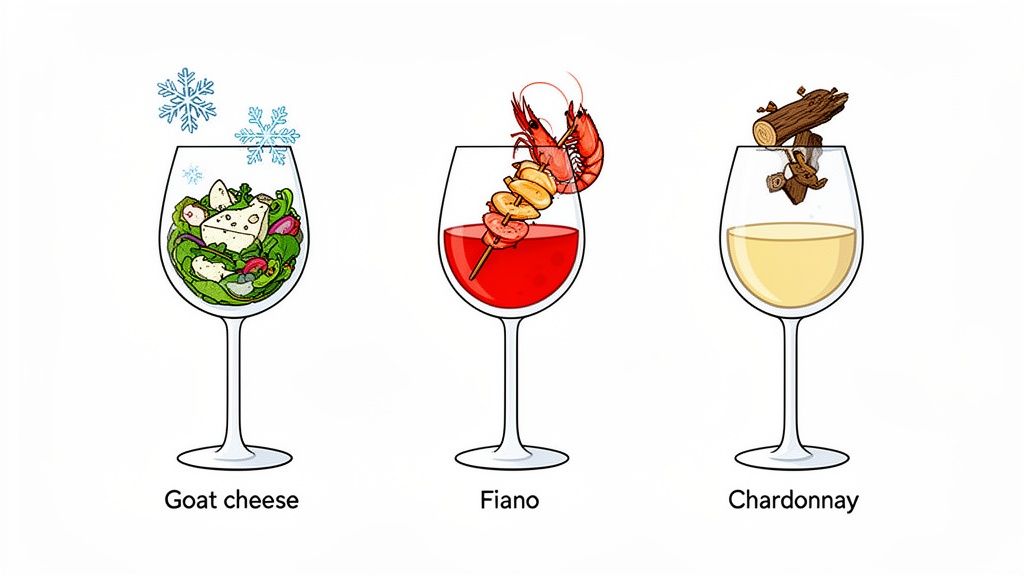
Unlocking the full potential of your dry white wine is all about the details. Serving it at the right temperature and in the right glass can dramatically lift its aromas and flavours, turning a good sip into a truly memorable one.
The first step is getting the chill right. While "room temperature" works for many reds, it’s a flavour-killer for whites. But serving them ice-cold isn't the answer either, as extreme cold can numb those delicate aromatics we love so much.
The perfect serving temperature for a dry white wine depends on its body and style. Lighter, zestier wines are best served colder, while richer, more complex wines benefit from being slightly warmer to express their full character.
Getting this right ensures every glass is as delicious as the winemaker intended.
Finding the Perfect Temperature
Getting the temperature right is simpler than you think. For lighter-bodied, aromatic wines like Sauvignon Blanc, Pinot Grigio, and Vermentino, aim for a crisp 7-10°C. This temperature really makes their bright acidity and zesty citrus notes pop. A quick 30 minutes in the freezer or a couple of hours in the fridge will get you there.
For medium to full-bodied dry whites, such as an oaked Chardonnay or a textural Fiano from McLaren Vale, a slightly warmer 10-13°C is ideal. This allows the more complex notes of vanilla, pear, or hazelnut to open up and show their true colours. Just pull it from the fridge about 20 minutes before you plan to pour.
Classic Food Pairings for Dry Whites
One of the greatest joys of exploring what are dry white wines is discovering how beautifully they pair with food. Their signature acidity acts like a squeeze of fresh lemon, cutting through richness and cleansing the palate between bites. It’s a match made in heaven.
Here are a few can’t-miss combinations to get you started:
- Crisp, high-acid wines (Sauvignon Blanc, Pinot Grigio) are a dream with fresh goat cheese, green salads tossed in vinaigrette, and delicate white fish like snapper or whiting.
- Aromatic, textural wines (Fiano, Vermentino) shine alongside grilled prawns, calamari, or dishes with Mediterranean flavours like pesto, olives, and fresh herbs.
- Rich, oaked wines (Chardonnay) stand up beautifully to roast chicken, creamy pasta sauces, and richer seafood like lobster or pan-seared salmon.
Mastering these fundamentals is the key to creating fantastic food and wine moments. To dive deeper, check out our complete guide to pairing dry white wines with seafood, pasta, and chicken for more expert tips and mouth-watering ideas. Cheers
A Smart Shopper's Guide to Buying Dry White Wine
Walking into a wine shop shouldn't feel like a test. Armed with a little know-how, you can confidently stride down the aisles and pick out the perfect dry white for any occasion. The secret? It’s all about learning to read the bottle like a pro.
Your first clue is often the language right there on the label. Keep an eye out for specific words that give the game away.
- Dry: This is the most straightforward term you'll see, especially on New World wines from Australia and New Zealand. No mystery here.
- Sec / Secco: These are simply the French and Italian words for 'dry'. If a French label says 'Sec' or a bottle of Prosecco says 'Secco', you're in the right place.
- Brut: You'll find this on sparkling wine bottles. It means the wine is very dry, with just a whisper of sugar.
Decode the Label with Regional Clues
Sometimes, where the wine comes from is your most reliable guide. Certain places are world-famous for a particular style, and knowing these classic regions is like having a cheat sheet for wine shopping.
A Sancerre from France, for instance, is always a bone-dry Sauvignon Blanc, celebrated for its zesty citrus and flinty minerality. Likewise, a Chablis is always a crisp, unoaked Chardonnay. Knowing these benchmarks means you can shop with confidence, no matter what the front of the bottle says.
Understanding Price and Value
While a higher price doesn't automatically mean better wine, it often points to the level of craftsmanship, care, and sometimes rarity involved. In McLaren Vale, there’s a serious focus on quality you can taste.
In one recent vintage report, white grapes accounted for 3,154 tonnes crushed, valued at an impressive $4.2 million. That figure really highlights the high regard for the whites coming out of this region. For a deeper look at the numbers, you can read the full McLaren Vale report.
This commitment to quality means you often get fantastic value, even from an entry-level bottle from a great local producer. To see what we mean, take a look at our guide to the top dry white wines in Australia for 2025.
Your Questions Answered: A Dry White Wine FAQ
Let's clear up a few common questions that pop up when chatting about dry white wines. Think of this as your cheat sheet for feeling more confident on your wine journey.
Is Sauvignon Blanc Always a Dry White Wine?
Pretty much, yes. Sauvignon Blanc has built its global reputation on being zesty, crisp, and decidedly not sweet. It's the poster child for a classic dry white.
While a winemaker could technically stop the fermentation early to leave some sugar behind, it's incredibly rare and goes against the style everyone knows and loves. When you grab a bottle from places like McLaren Vale, Marlborough, or France’s Sancerre, you can bet you’re getting a refreshingly dry drop.
What Is the Driest Style of White Wine?
For those who crave that mouth-watering, bone-dry finish, you’ll want to look for wines celebrated for their zinging acidity and practically non-existent sugar.
Think French Muscadet, Greek Assyrtiko, or a sharp, unoaked Sauvignon Blanc. Here in Australia, a classic 'Dry' Riesling from the Clare Valley or one of McLaren Vale’s modern, textural Fianos are brilliant choices for that super crisp, zesty, and thoroughly dry experience.
Does Dry Mean Higher in Alcohol?
Not always, but there's a definite connection. During fermentation, yeast eats the sugar in the grape juice and creates two things: carbon dioxide and alcohol. To make a wine completely dry, the yeast has to munch through nearly all the sugar.
If the grapes were super ripe and full of sugar to begin with, letting the yeast finish the job can naturally lead to a higher alcohol wine. But a wine can also be dry and lower in alcohol if the grapes were picked earlier with less sugar. You can't judge dryness by alcohol alone.
So, while there's a link, the final alcohol percentage is shaped by a few different factors, not just dryness.
How Do I Know if a Riesling Is Dry or Sweet?
This is the million-dollar question! Riesling is a chameleon, made in every style from bone-dry to lusciously sweet. The secret is to play detective with the label.
German Rieslings will often use the word 'Trocken', which means dry. Many Aussie Rieslings, especially those from the famous Clare and Eden Valleys, are almost always made in a dry style. Another great clue is the alcohol content: a low ABV (around 8-9%) is a strong hint of sweetness, while a higher ABV (11-13%) almost always points to a drier wine.
Ready to explore the world of premium dry white wines? At McLaren Vale Cellars, we've curated a stunning selection of the best our region has to offer. From crisp Sauvignon Blanc to elegant Fiano, discover your next favourite bottle today at https://www.mclarenvalecellars.com.
Comments (0)
There are no comments for this article. Be the first one to leave a message!