
Let's get one thing straight: fortified wine is simply wine that's been given a little extra backbone. It starts life as a regular base wine, but then a distilled spirit – usually brandy – is added to the mix. This single, crucial step, known as fortification, is what defines the entire category. It's the secret to boosting the alcohol and creating the unforgettable flavours that make these wines so special.
What Exactly Is a Fortified Wine?
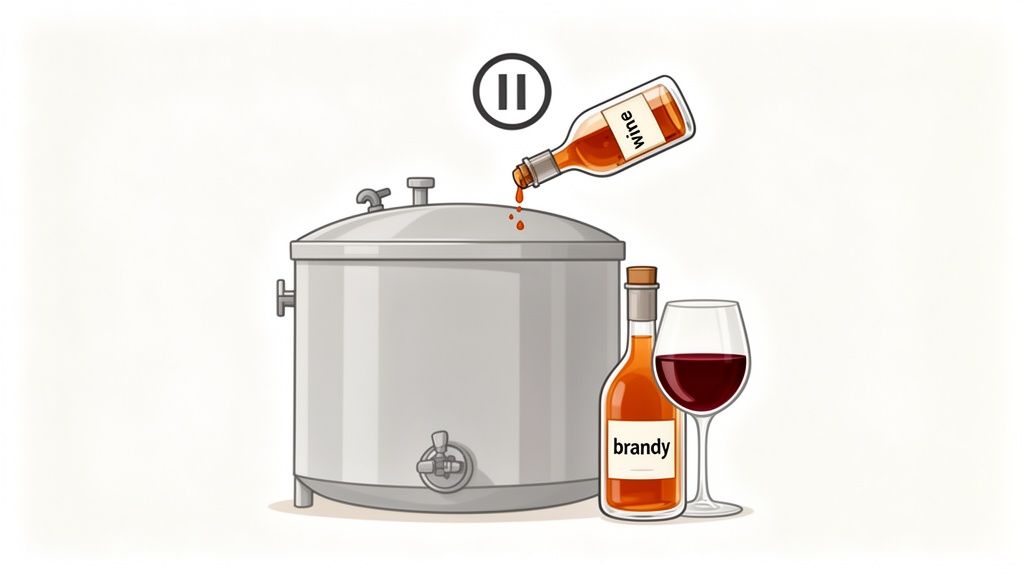
Think of the fortification process as a winemaker hitting the "pause" button on fermentation. As yeast is busy converting the natural grape sugars into alcohol, the winemaker introduces a neutral grape spirit (like brandy). This instantly stops the yeast in its tracks.
This clever move accomplishes two incredible things at once. First, it leaves behind some of the grape’s delicious, unfermented sugar, which explains the rich, luscious character of many fortified wines. Second, it bumps up the alcohol content to somewhere between 15% and 22% ABV. This higher alcohol level acts as a natural preservative, which is precisely why these wines were the go-to for long sea voyages centuries ago – they wouldn’t spoil!
Why This Process Matters
This isn't just about making a stronger, sweeter wine. It's a deliberate, artistic choice that completely shapes the wine's final personality. The exact moment the spirit is added is everything, and it’s what gives us such a vast spectrum of styles.
This deliberate intervention is what creates everything from the bone-dry, nutty notes of a Fino Sherry served as an aperitif to the deep, decadent sweetness of a Vintage Port enjoyed after dinner.
A Roadmap to the Main Styles
Getting your head around this core concept is the key to appreciating all the different types of fortified wine out there. Each style begins with this fundamental process but then takes its own unique path, shaped by regional traditions, specific grape varieties, and fascinating ageing techniques.
We’ll take a journey through the most iconic styles:
- Port: The rich, sweet red hero, famous for its flavours of dark fruit and chocolate.
- Sherry: An incredibly diverse family, ranging from bracingly dry and savoury to intensely sweet.
- Vermouth: An aromatised fortified wine, infused with a botanical cocktail of herbs and spices.
- Madeira: Known for its unique heating process that gives it almost indestructible longevity.
- Marsala: A Sicilian classic that’s as delicious to sip as it is to splash into a pan.
By the end, you'll see how one simple technique gives rise to an entire world of complex flavours.
The Art of Fortification and How It Shapes Flavour

The secret to the incredible diversity among fortified wines all boils down to one critical decision: timing. A winemaker can add the fortifying spirit at two key moments, and that single choice sends the wine down a completely different path, shaping everything from its sweetness to its body and overall personality.
Think of it as a fork in the road during the winemaking journey. One path leads to rich, luscious, sweet styles. The other creates wines that are dry, savoury, and complex. Both use the same tool—a neutral grape spirit—but the moment it's introduced changes the game entirely.
Fortifying During Fermentation for Luscious Sweetness
Picture a vat of freshly crushed grape juice, where tiny yeast cells are hard at work, busily converting natural grape sugars into alcohol. This is fermentation in action. To make a sweet fortified wine, the winemaker steps in while this party is in full swing.
By adding a high-alcohol grape spirit, the overall alcohol level in the vat shoots up instantly. This sudden change is too much for the yeast to handle; they can’t survive in this new environment and immediately stop working. The crucial part? They leave behind a significant amount of unfermented, natural grape sugar.
This method is the secret behind the world's great sweet fortifieds. The sweetness you taste is pure, residual sugar from the grapes themselves, not something added later on.
This is exactly how classic Port is made. You end up with a wine that is both strong and beautifully sweet, bursting with bold fruit flavours. Here in Australia, we use this technique to craft our iconic Tawny and Vintage Fortified styles, celebrated for their decadent notes of caramel, dried fruit, and spice.
Fortifying After Fermentation for a Dry, Savoury Style
Now, let's take that other path. To create a dry fortified wine, the winemaker simply lets nature take its course. They allow the yeast to finish their job completely, letting them feast on all (or nearly all) of the available sugar until the wine is fermented to dryness.
Only after this process is complete is the fortifying spirit added. With no sugar left to preserve, the spirit's role here is different. It’s all about boosting the alcohol content and adding a unique character that will evolve and deepen as the wine ages.
This is the hallmark of most Sherry styles, especially the bone-dry Fino and Manzanilla varieties. In Australia, we use this method to create Apera, our local answer to Sherry. These wines are prized for their nutty, briny, and savoury flavour profiles, making them a sensational aperitif. This precise control over timing allows winemakers to craft an amazing range of types of fortified wine, from the sweetest dessert styles to the driest aperitifs.
Exploring the Major Types of Fortified Wine
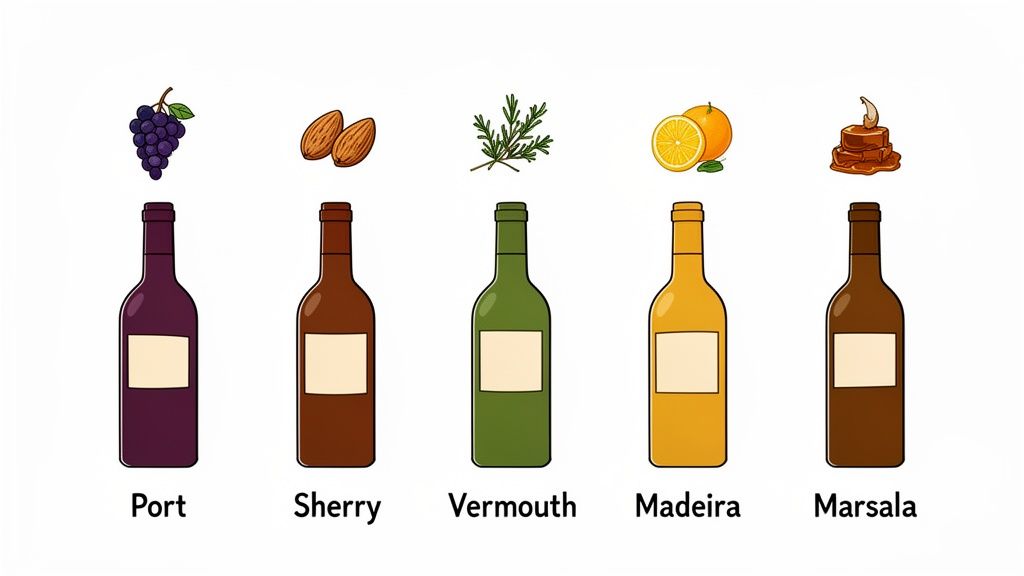
Now that we’ve got a handle on how fortification works, let's dive into the fun part: the iconic styles that make this category so fascinating. Each of these types of fortified wine comes with its own unique story, production method, and flavour profile, all shaped by centuries of tradition.
From the sweet, robust reds of Portugal to the complex, savoury wines of Spain, the diversity here is incredible. We’ll journey through the five major players: Port, Sherry, Vermouth, Madeira, and Marsala. Getting to know their key differences is the best way to pinpoint which styles might become your new favourites.
Port A Tale of Two Styles
Hailing from Portugal's stunning Douro Valley, Port is probably the most famous sweet fortified wine out there. It’s almost always made from red grapes and gets its spirit dose mid-fermentation, which is what preserves its natural sweetness and rich, fruity character. But not all Port is the same—it's really all about how it's aged.
- Ruby Port: This is your entry point into the world of Port—accessible, vibrant, and delicious. It's aged in huge tanks with very little oxygen contact, which helps it keep that deep ruby red colour and punchy, youthful fruit flavours of blackberry, raspberry, and cherry.
- Tawny Port: Instead of big tanks, Tawny Port matures in smaller wooden barrels. This lets in more oxygen, which completely transforms the wine over time. Its colour softens to a gorgeous amber-brown, and complex notes of caramel, nuts, cinnamon, and dried fruit emerge.
Sherry A Spectrum of Flavours
Sherry, from the Jerez region of Spain, is easily the most varied and often misunderstood of the fortified wines. Most Sherry starts with the Palomino grape and is fortified after fermentation has finished, making it naturally dry. The real magic happens during its unique solera system of ageing—a fractional blending process that creates incredible consistency and complexity.
Styles can range dramatically, from bone-dry to lusciously sweet:
- Fino and Manzanilla: These are the driest and lightest styles, aged under a protective blanket of yeast called flor. They’re pale, crisp, and savoury with notes of almond, salty brine, and fresh dough.
- Amontillado and Oloroso: These styles often start out like a Fino but are later exposed to oxygen, which allows them to develop deeper amber colours and richer, nuttier flavours.
- Pedro Ximénez (PX): At the complete opposite end of the spectrum, PX is a decadent, syrup-like dessert wine. It’s made from sun-dried grapes and boasts intense flavours of fig, raisin, and molasses.
People often compare Port and Sherry, but their production methods create fundamentally different wines. If you’re curious to learn more, you can explore the difference between Port and Sherry to truly appreciate what makes each one special.
The most crucial takeaway is this: Port is generally sweet because it's fortified during fermentation, while most Sherry is dry because it's fortified after fermentation is complete.
Vermouth The Aromatised Icon
Unlike the others, Vermouth is also an aromatised wine. This just means that after being fortified, it’s infused with a secret blend of botanicals—think herbs, spices, roots, and barks. Wormwood (vermut in German, where the wine gets its name) is a traditional ingredient, giving it a characteristic bitter edge.
Produced mainly in Italy and France, it's a versatile player with styles from dry white to sweet red. It’s a staple in classic cocktails like the Negroni and Martini, but it’s also fantastic sipped on its own as an aperitif.
Madeira and Marsala The Cooked Wines
Finally, we have Madeira and Marsala, two unique wines known for production methods that involve heat.
Madeira, from the Portuguese island of the same name, is famous for being virtually indestructible. During its production, the wine is intentionally heated and oxidised. This process was discovered when barrels survived long, hot sea voyages, and it gives the wine remarkable stability and complex flavours of roasted nuts, toffee, and dried orange peel.
Marsala is Sicily's great contribution to the fortified world. It comes in a range of sweetness levels and is often made with a cooked grape must called mosto cotto, which adds deep caramelised and nutty notes. While it has a reputation as a cooking wine, a high-quality Marsala is a superb sipping wine, perfect with cheese or dessert.
How to Properly Serve and Store Fortified Wines
Getting the absolute most out of your fortified wine isn’t just about what's in the bottle—it’s also about how you handle it. A few simple tweaks to serving and storing can completely elevate your tasting experience, making sure every single glass is as flavourful as the winemaker intended.
Unlike a lot of table wines, fortifieds aren't always at their best when served at a standard room temperature. Lighter, drier styles really come alive when they’re chilled. Think of a crisp Fino Sherry or a botanical dry Vermouth; popping them in the fridge and serving them at 8-12°C sharpens their refreshing, savoury character, making them the perfect pre-dinner drink.
Richer, sweeter styles, on the other hand, prefer a slightly warmer embrace. A complex Tawny Port or a luscious Australian Muscat will only reveal its deep, nutty, and caramelised flavours when served at a cool room temperature, somewhere around 14-16°C. For a deeper dive, understanding how to drink Port wine is a fantastic place to start.
Storing Before and After Opening
Before you even think about popping the cork, storage is pretty straightforward. Just keep your fortified wines in a cool, dark place, well away from direct sunlight and any wild temperature swings. Here’s the key difference from your other wines: most fortifieds should be stored standing upright. Their high alcohol content can actually damage the cork over the long haul if the bottle is laid on its side.
Once opened, the game changes entirely, and this is where fortified wines have a massive advantage. Their higher alcohol and sugar levels act as natural preservatives, giving them a much, much longer lifespan than your average bottle of red or white.
The staying power of an opened bottle depends completely on its style. Wines aged with oxygen (like Tawny Port and Oloroso Sherry) are much more stable and can last for weeks or even months. Those aged without it (like Fino Sherry and Vintage Port) are far more delicate.
Here’s a rough guide for how long you can expect different types of fortified wine to last after you’ve opened them:
- Fino & Manzanilla Sherry: These are the most fragile of the bunch. Treat them just like a white wine—seal them up, stick them in the fridge, and plan to finish the bottle within a few days.
- Ruby & Vintage Port: To keep their vibrant, punchy fruit character, these styles are also best enjoyed within a few days of being opened.
- Tawny Port & Madeira: Thanks to their oxidative ageing, these are the heavyweights of longevity. They can stay in excellent condition for several weeks, and sometimes even months, after opening. Just pop the stopper back in and keep them in a cool spot.
Finding the Perfect Food and Fortified Wine Pairings
Knowing the different types of fortified wine is one thing, but the real fun starts when you discover just how brilliantly they pair with food. It’s time to move them beyond their reputation as a simple after-dinner drink. These wines are incredibly versatile partners for everything from a handful of almonds to the most decadent desserts.
The secret is to think about matching or contrasting flavours. A crisp, savoury fortified can slice through richness like a knife, while a sweet, complex wine can take a dessert or a pungent cheese to a whole new level. It's all about experimenting to find those combinations that make both the food and the wine truly sing.
Classic Pairings for Dry Fortifieds
Dry fortified wines are born aperitifs, practically designed to wake up your taste buds before a meal. Their sharp, often nutty and savoury profiles are a perfect match for salty, flavour-packed bites. This style of pairing is less about decadence and more about creating a clean, appetite-whetting contrast.
Think along these lines for a perfect pre-dinner setup:
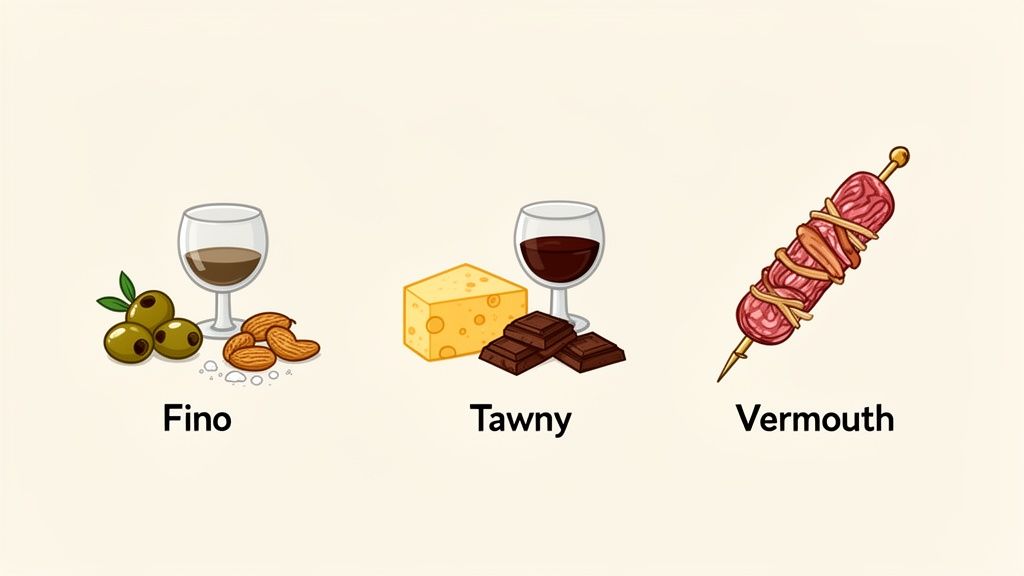
- Dry Sherry (Fino or Manzanilla): This is the ultimate partner for salty snacks. Pour a chilled glass alongside a bowl of good quality green olives, salted almonds, or classic Spanish tapas like cured Iberian ham. That briny character just works.
- Dry Vermouth: Whether you're sipping it neat with a twist of lemon or in a classic cocktail, its herbal notes shine alongside charcuterie. A simple board of prosciutto and salami is really all you need.
The rule of thumb for dry fortifieds is simple: if it's salty, savoury, or briny, you're on the right track. These wines are built to cleanse the palate and get you ready for the meal ahead.
Pairings for Sweet and Rich Styles
When you get to the sweeter, more powerful fortified wines, the world of pairing opens right up into cheese and dessert territory. Here, you can either go toe-to-toe, matching the wine's intensity with equally bold foods, or create an amazing contrast.
For the richer styles, like a classic Australian Tawny from McLaren Vale, the goal is to complement its deep, nutty, and caramelised notes.
Here are a few combinations that just can't miss:
- Tawny Port: An absolute classic with a cheese board. It’s beautiful with hard, aged cheeses like a sharp cheddar or a nutty Comté. For dessert, anything with chocolate, caramel, or nuts is a winner—think sticky date pudding or a flourless chocolate cake.
- Ruby Port: With its vibrant, punchy fruit character, Ruby Port is excellent with softer blue cheeses like Stilton or Gorgonzola. It's also a fantastic match for simpler chocolate desserts or even just a bowl of fresh berries.
And don't be afraid to think locally. A rich McLaren Vale fortified shiraz can be an incredible partner for a classic Aussie meat pie, cutting through the richness while complementing the savoury filling. The possibilities are genuinely endless.
Your Guide to Australian Fortified Wines
While the classic fortified styles have deep roots in Europe, Australia has a long and incredibly proud history of crafting its own world-class versions. Regions like our very own McLaren Vale have become masters of the art, putting a distinctly local spin on these timeless winemaking techniques.
Our winemakers aren’t just copying old-world traditions; they're brilliantly adapting them to our unique climate and grape varieties.
What you get is a lineup of fortifieds that feel both classic and thrillingly new. You'll find rich, complex Tawnies that can stand shoulder-to-shoulder with the best from overseas, showing off those deep notes of caramel, dried fig, and toasted nuts that only come from years of patient barrel ageing.
Discover Local Character
Beyond the classic Tawny, Aussie producers are making stunning examples right across the spectrum. Think luscious Muscat and Topaque (what we used to call Tokay), which are famous for their intensely concentrated floral and raisined fruit flavours.
Then you have the drier styles, like our elegant Aperas—Australia's answer to Sherry. These offer nutty, savoury profiles that are just perfect for kicking off an evening.
The real beauty of Australian fortified wine lies in its quality and undeniable character. Winemakers here often use iconic local grapes like Shiraz, Grenache, and Mataro, infusing these classic styles with a bold, sun-kissed personality you just won't find anywhere else.
Exploring these local gems is a fantastic way to appreciate the incredible skill of Australian winemakers. Many of these wineries are family-run, with knowledge and precious aged barrel stocks passed down through generations.
If you want to dive deeper into this heritage, our guide on the top 10 Australian Tawny Ports is a great place to start.
Whether you're trying a single bottle or exploring a curated tasting pack, you’re connecting with a significant piece of Australian wine history. There’s never been a better time to start your own tasting adventure and discover the exceptional quality being bottled right in our backyard.
Your Fortified Wine Questions Answered
To wrap things up, let's tackle a few of the most common questions that pop up when people are exploring fortified wines. Think of this as a quick chat to clear up any lingering curiosities.
What Is the Main Difference Between Port and Sherry?
This is a great question, and the answer comes down to timing.
The easiest way to remember it is that Port is fortified during fermentation. This stops the yeasts in their tracks, leaving behind plenty of natural grape sugar. That's why Port is almost always rich and sweet, with those classic dark fruit flavours.
Sherry, on the other hand, is fortified after fermentation is complete. The base wine is naturally bone-dry. Any sweetness in a Sherry comes from blending it with a sweetening wine after the fact.
Are All Fortified Wines Sweet?
Not at all! This is probably the biggest misconception out there.
While famous styles like Port and sweet Muscats are definitely on the sweeter side, a huge world of dry fortified wine is waiting to be discovered. Styles like Fino and Manzanilla Sherry are crisp, savoury, and incredibly refreshing—perfect as an aperitif. Dry Vermouth is another fantastic example. The sweetness level is all about when the winemaker decides to add the spirit.
Can You Cook with Fortified Wine?
Absolutely, and you definitely should! Using fortifieds in the kitchen is a brilliant way to add a serious flavour boost.
Wines like Marsala, Madeira, and even a dry Sherry can bring an incredible depth and nutty complexity to everything from pan sauces and rich stews to decadent desserts. Just follow one simple rule: if you wouldn't be happy to sip it on its own, don't pour it in the pot. The quality of the wine really does shine through in the final dish.


Comments (0)
There are no comments for this article. Be the first one to leave a message!