
You're standing in a bottle shop with dinner in mind, looking at Chardonnay, Sauvignon Blanc, Pinot Grigio, Riesling and Prosecco. The labels offer plenty of clues, but they don't always tell you the one thing you really want to know: what will this wine taste and feel like in the glass?
Choosing a type of white wine isn't a test of expertise. It's closer to choosing tea, fruit or cheese. You might prefer something zesty and refreshing, softly aromatic, lightly sweet, or broad and creamy. Once you learn that flavour language, grape names become useful shortcuts rather than intimidating terms.
This guide builds a practical map for Australian drinkers. You'll start with sweetness and body, move through the main white varieties, then see how climate and winemaking alter flavour. From there, food matching and current Australian market conditions can help you buy with more confidence. If you're exploring at home, tasting guides and mixed sample packs from retailers such as McLaren Vale Cellars can make comparison easier without committing to a full dozen of one style.
Introduction to Finding Your Perfect White Wine Style
A friend might say they want “a nice white”, then reach for the same bottle every time because they know it won't disappoint. Another shopper may want something for prawns, a spicy takeaway meal or a sunny afternoon, but feel lost among unfamiliar labels. Both are asking the same underlying question: which type of white wine suits this moment?
The simplest answer starts with flavour, not prestige or price. Do you enjoy the snap of lemon, lime and green apple? Look towards high-acid styles such as Sauvignon Blanc or Riesling. Prefer pear, white peach and a softer texture? Pinot Grigio or Pinot Gris may be a better fit. If you like richer textures, toasted flavours and a wine that feels substantial beside roast chicken, Chardonnay is worth exploring.
A useful starting point: describe the last white wine you enjoyed before trying to remember its grape variety.
Australian wine shelves can feel especially varied because familiar international styles sit beside regional expressions from South Australia and other parts of the country. Chardonnay is commercially central, while Sauvignon Blanc, Pinot Gris or Grigio, Semillon, Riesling, Colombard and Prosecco also shape the national white-wine scene. You don't need to memorise every variety. You need a few reliable taste comparisons.
As a McLaren Vale cellar host might put it, begin with two contrasting bottles rather than chasing a perfect answer. Try a crisp, unoaked Sauvignon Blanc beside a fuller Chardonnay. Taste them with food, then notice which glass you return to. That preference is more valuable than a technical description.
The aim is relaxed discovery. By the end, you should be able to read a label, anticipate the wine's shape on your palate, choose a bottle for dinner and spot a style that deserves further exploration.
How White Wine Styles Work From Dry to Sweet and Light to Rich
Most white wine choices become easier when you adjust two simple dials. The first is sweetness, which runs from bone-dry to sweet. The second is body and texture, which runs from light and crisp to full and creamy.
Think about tea. A plain green tea can feel light, brisk and refreshing, while a strong chai with milk feels fuller and rounder. Neither is automatically better. They create different sensations. White wine works in a similar way.
The sweetness dial
A dry wine contains little noticeable residual sugar, so the main impression may be citrus, herbs, minerals or fruit without a sugary finish. Sauvignon Blanc, many Chardonnays, Pinot Grigio and classic Riesling can all be dry, though their aromas and textures differ.
An off-dry wine leaves a gentle impression of sweetness. That sweetness can make ripe fruit flavours seem softer and can work well with chilli. A sweet wine makes sugar part of the wine's central experience, as with many Moscato styles. Sweetness is separate from fruitiness. A dry wine can smell strongly of ripe peach or tropical fruit without tasting sweet.
The body and texture dial
Body describes how much presence the wine has. A light-bodied white feels quick and delicate, while a full-bodied white lingers with more weight. Oak, lees contact and alcohol can add fullness, but a wine can also feel broad because of its fruit concentration and acidity balance.
Acidity supplies the mouth-watering, refreshing sensation that makes a wine feel lively. For a plain-language explanation of how acidity behaves in the glass, this guide to understanding wine acidity is a useful reference.
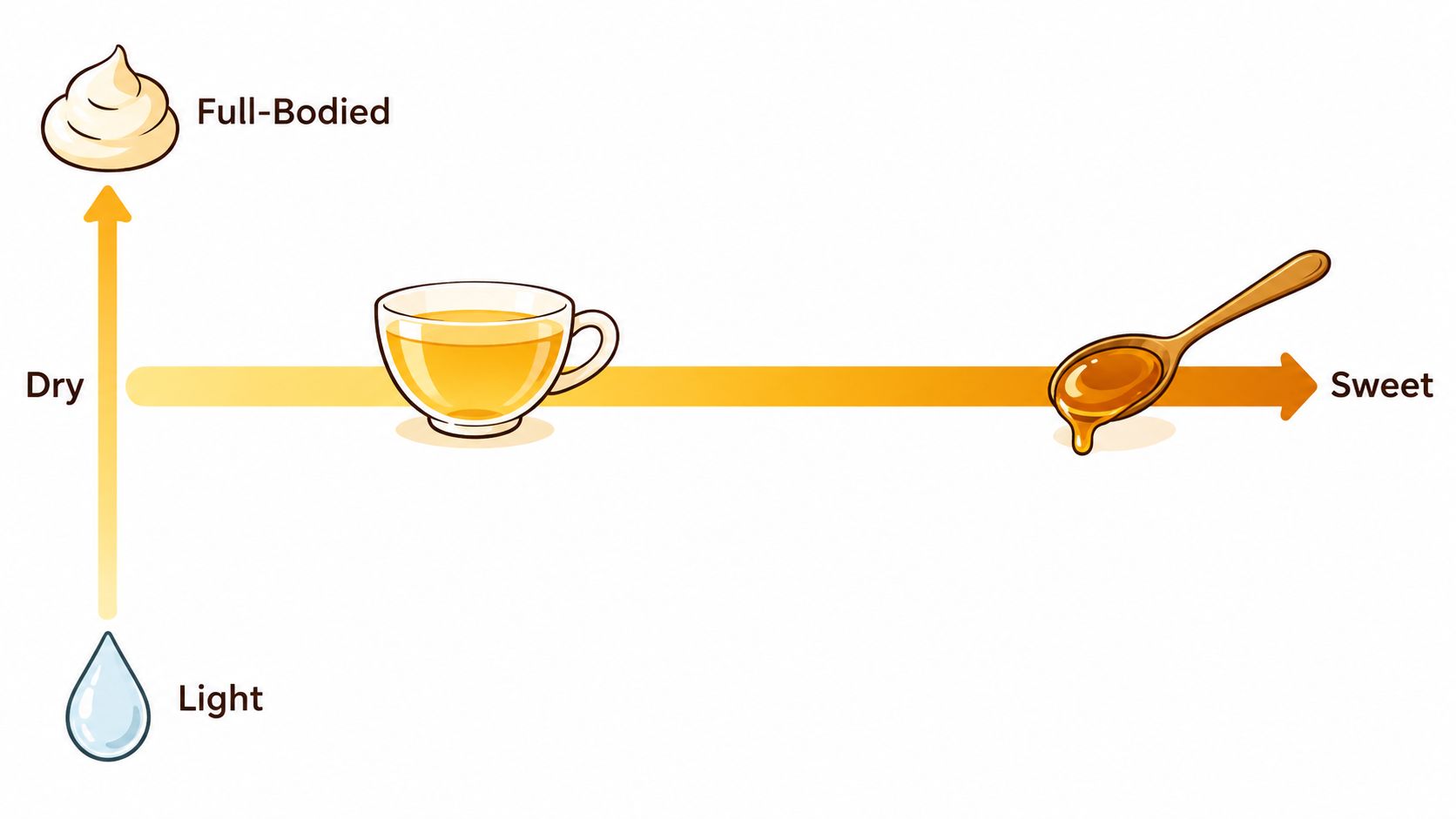
Two wines made from the same grape can therefore taste completely different. A cool-climate Chardonnay may feel lean, citrusy and firm, while an oak-influenced Chardonnay can taste softer, wider and more savoury. A winemaker's choices and the vineyard's conditions move the wine along both dials.
One technical detail helps explain why texture can surprise you. AWRI research found that low pH increased perceived astringency, while caftaric acid and grape reaction product influenced palate texture in opposite ways. Caftaric acid suppressed the perception of alcohol heat, while grape reaction product increased perceived oiliness, showing why pressing, oxidation and skin-contact decisions can affect what you feel, not just what you smell. AWRI research on white-wine mouthfeel explores those interactions in detail.
The Major Types of White Wine by Grape Variety and Flavour
Grape varieties act like flavour signposts, but they're not rigid recipes. The same variety can be lighter, richer, more aromatic or more savoury depending on its site and the winemaking. Use the descriptions below as starting points, then let the bottle confirm your preference.
Sauvignon Blanc: Think lemon, grapefruit, passionfruit, fresh herbs and a brisk finish. It's a strong choice when you want energy rather than creaminess.
Pinot Grigio and Pinot Gris share the same grape name, but the labels can signal different styles. Pinot Grigio is often light, clean and citrus-driven, while Pinot Gris may feel rounder, fruitier and more textured. Both can show apple, pear, white peach and floral notes.
Riesling is one of the most versatile varieties on the shelf. It can be very dry and lime-scented, or it can carry noticeable sweetness. High acidity keeps the wine refreshing, which is why Riesling works so well with spicy food and salty dishes.
Chardonnay covers the broadest range in this group. Unoaked examples may show lemon, apple and mineral notes, while oak and lees work can bring toast, vanilla, butter, brioche and a fuller palate. Chardonnay is especially important in Australia. Wine Australia reported that its tonnes increased 31% year on year in 2024, allowing it to overtake Shiraz as the country's largest variety by crush, a position it had last held in 2013. ABC News reporting on the 2024 vintage provides that national context.
Semillon can be lean and lemony when young, or develop toast, honey and nuttier tones with bottle age. Moscato is generally the obvious choice for a lightly sweet, floral and fruity glass, with orange blossom, peach and grapefruity aromas. Prosecco brings freshness, gentle bubbles and an easy aperitif character, making it useful when you want sparkling lift rather than a still wine.
For a broader introduction to the grape names on Australian shelves, see this guide to white wine varieties.
| Grape Variety | Typical Flavour Profile | Body and Acidity | Try It When You Want |
|---|---|---|---|
| Sauvignon Blanc | Citrus, passionfruit, herbs, grapefruit | Light to medium, refreshing acidity | A zesty aperitif or salad-friendly white |
| Pinot Grigio or Gris | Apple, pear, white peach, flowers | Light to medium, clean acidity | A simple seafood or weeknight wine |
| Riesling | Lime, lemon, grapefruit, peach | Light to medium, bright acidity | A dry or gently sweet wine with spice |
| Chardonnay | Citrus and apple through to toast, butter and brioche | Light to full, acidity varies | A versatile wine from lean to creamy |
| Semillon | Lemon, lime, stone fruit, toast and honey | Medium, fresh to rounded | A savoury white with seafood or poultry |
| Moscato | Peach, nectarine, orange blossom | Light, sweet and aromatic | A floral, lower-intensity dessert-style pour |
| Prosecco | Fresh orchard fruit, citrus and light florals | Light to medium, sparkling freshness | A celebratory aperitif or casual gathering |
How Region and Winemaking Shape Every Type of White Wine
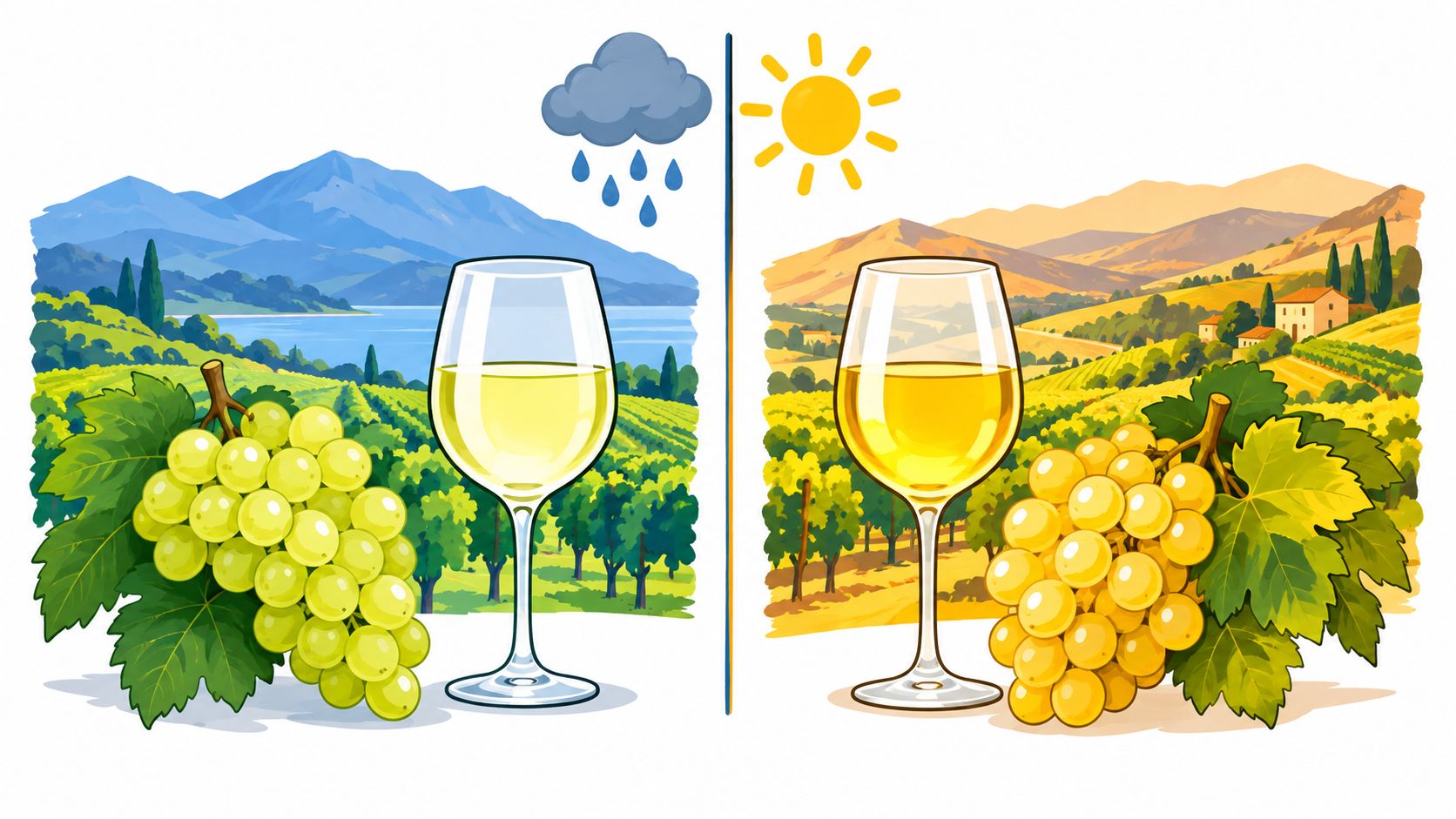
A grape variety sets the starting point, while climate, vineyard site and cellar decisions shape where the wine finishes. Cooler growing conditions usually preserve acidity and highlight citrus, producing a finer, lighter style. Warmer conditions can bring riper fruit, broader texture and more generous flavour.
Australian shelves reflect that range. Fresh, high-acid whites are widely available, while richer, carefully matured styles can be less common and may reward comparison before you buy. Region is a useful first clue, but the winemaking choices on the bottle help you judge value by taste rather than by grape name alone.
Chardonnay shows the difference clearly. Stainless-steel fermentation can keep it clean and bright. Fermentation and maturation in oak can add toast, spice and a creamier impression. Lees contact, and sometimes lees stirring, can soften the texture without making the wine sweet.
The cellar choices behind the flavour
Pressing affects how much phenolic character reaches the wine. Gentle pressing can protect delicate fruit and freshness. Greater contact with grape solids can add texture. Skin contact may bring extra aroma and structure, but it can also make a white feel more tactile or slightly grippy.
AWRI work on Australian white and rosé wine found that titratable acidity was broadly stable for decades before shifting in the 2010s. Mean TA reached a low of 6.25 g/L in 2016 and later rose to 6.53 g/L. Acidity affects freshness, microbial stability and overall balance, so a small technical measurement can create a noticeable change in the glass. The AWRI report on Australian titratable-acidity trends explains the Australian trend.
Some white-wine programmes also use hyperoxidation. Managing oxygen exposure before fermentation can alter certain phenolic compounds and help produce a smoother or less sharply aromatic style. In Sauvignon Blanc, Chardonnay and Pinot Grigio, these choices can separate crisp, clean freshness from a more oily or creamy palate.
That is why “Chardonnay” alone gives only part of the answer. Look for unoaked, oak matured, barrel fermented, fresh, textural or rich. These terms will not predict every detail, but they place the bottle on a useful flavour dial and help you compare abundant value styles with less readily available richer options.
The winemaking process is easier to visualise when you can see the contrast between vineyard conditions and finished wine:
Matching Every Type of White Wine With Food You Love
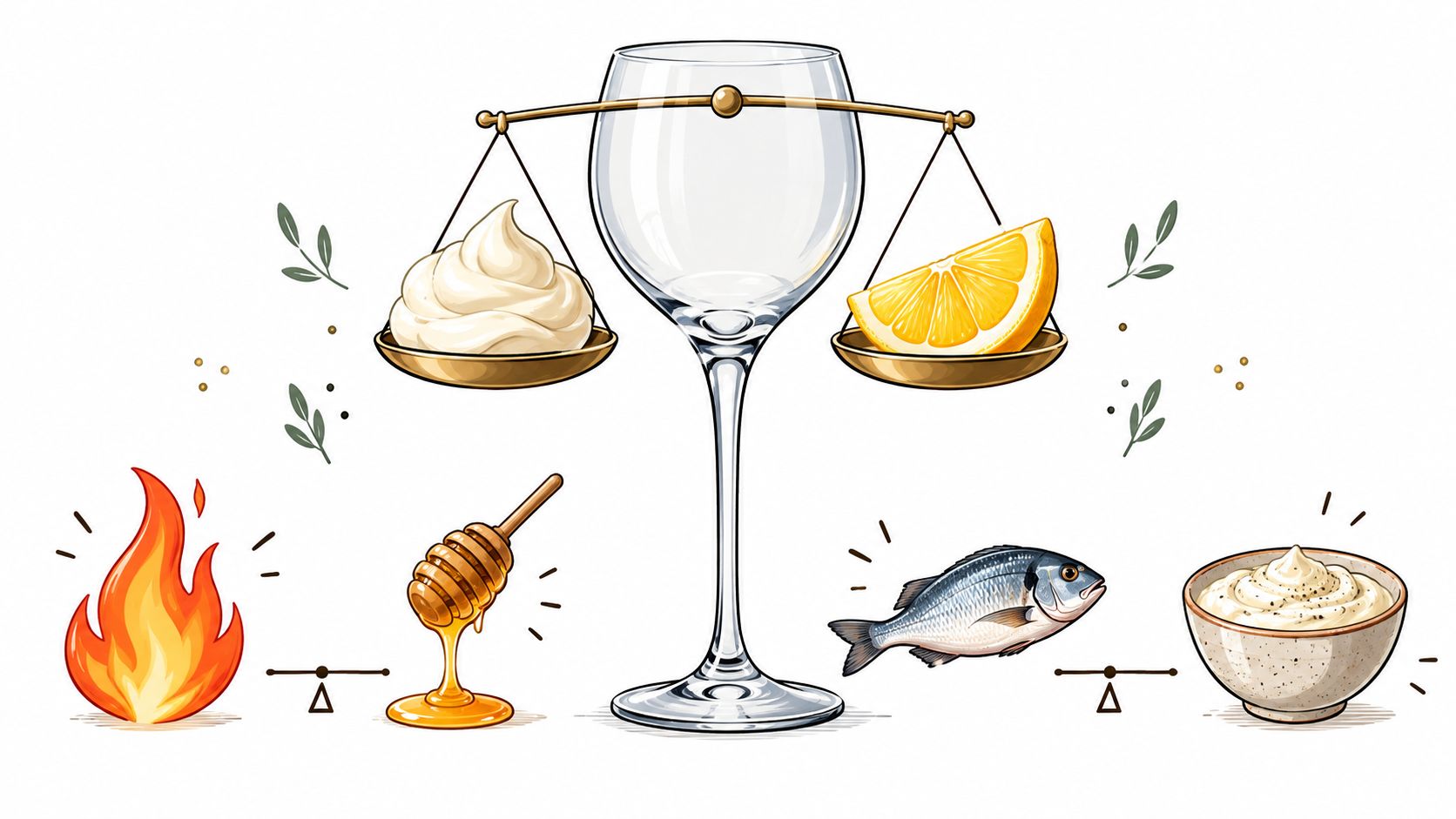
Pairing works best as a balancing exercise, not a list of strict laws. Acidity cuts through richness, sweetness softens chilli, and body should broadly match the weight of the dish. A delicate seafood entrée can disappear beside a heavily oaked wine, while a rich cream sauce may make a very light white seem thin.
Start with the dominant flavour on the plate. Lemon, herbs and green vegetables usually welcome a fresh, high-acid style. Butter, cream and roast poultry can handle a broader Chardonnay or Semillon. Heat needs either refreshing acidity or a touch of sweetness, which makes Riesling particularly useful.
Match the main varieties
- Sauvignon Blanc: Pair it with goat cheese, leafy salads, grilled vegetables, oysters, prawns and dishes with fresh herbs. Its citrus and herbal character can echo the green ingredients instead of competing with them.
- Pinot Grigio or Pinot Gris: Choose it for cooked fish, calamari, chicken, antipasti and light pasta. The wine's moderate weight won't overwhelm clean flavours.
- Riesling: Pour it with Thai, Vietnamese or Malaysian dishes, especially when chilli, ginger or aromatic herbs are present. A dry Riesling suits delicate seafood, while a sweeter version can be more forgiving with heat.
- Chardonnay: Unoaked Chardonnay works with grilled fish and salads. Oak-influenced Chardonnay has enough texture for roast chicken, creamy sauces, risotto and soft cheeses.
- Semillon: Its citrus and savoury qualities suit shellfish, chicken, pork, herb sauces and goat cheese. A more developed bottle can meet richer dishes without relying on oak.
- Moscato: Keep it alongside fruit-based desserts, lightly sweet dishes or tangy cheeses. Its floral sweetness can feel refreshing when the food isn't overly rich.
- Prosecco: Use the bubbles to lift antipasto, fried appetisers, salty snacks and casual grazing boards. It's also a natural aperitif before the main meal.
For a seafood pasta night, a practical recipe such as this home recipe for lobster lo mein can point you towards a white with enough acidity and texture for noodles, seafood and sauce. A crisp Sauvignon Blanc or Pinot Grigio may suit a lighter preparation, while a broader Chardonnay can work if the dish carries a richer sauce. This guide to pairing white wines with seafood, pasta and poultry offers more menu-based ideas.
For a weeknight dinner, match the wine to the sauce first. For a barbecue, choose a refreshing style that can handle smoky food and changing dishes. For a cheese board, use Chardonnay with soft creamy cheese, Sauvignon Blanc with fresh goat cheese, or Prosecco when salty, fried and savoury bites share the plate.
Smart Ways to Buy and Try White Wine in Australia Right Now
Australian shoppers are dealing with an interesting white-wine market. White wine production increased 2% in 2024–25, while white still wine production rose by 92 million litres to 714 million litres, and the stock-to-sales ratio increased 19% to 1.59. Inventories were also reported at 15% above the 10-year average, according to Wine Australia's market bulletin on white-wine supply and demand.
At the same time, demand has softened in relative terms. Wine Australia reported that the share of regular wine drinkers who had consumed white wine in the previous 12 months fell from 80% in 2019 to 75% in 2023, while white wine's share of total sales slipped from 43% in 2023–24 to 41% in 2024–25. The Endeavour Group insights report on Australia's off-trade market also describes a shift towards lighter, more sessionable formats such as sparkling, rosé and single-serve spritzers.
Turn supply into a tasting opportunity
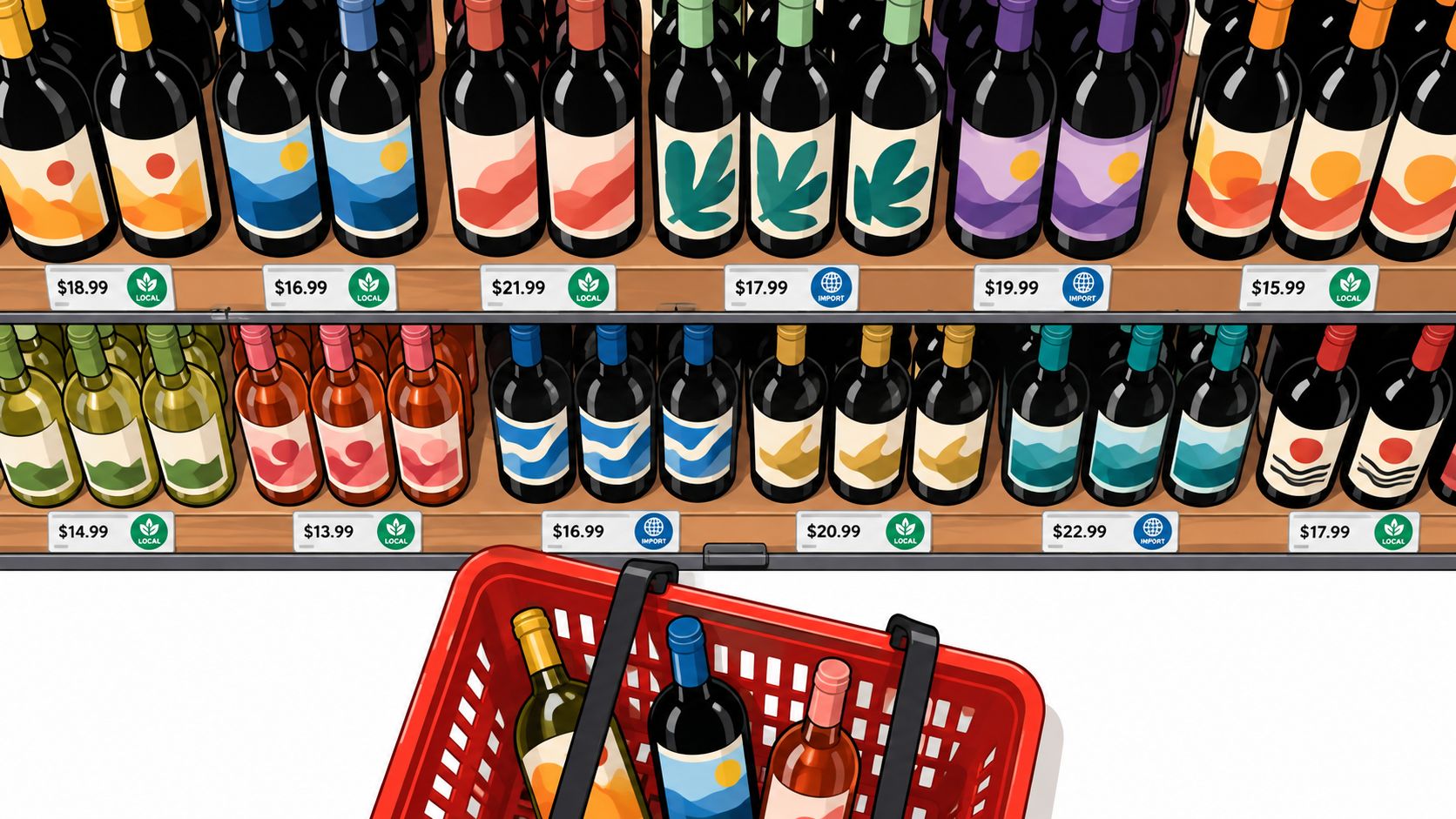
More available stock can create useful buying opportunities, particularly for shoppers who are willing to compare labels rather than default to one familiar variety. It doesn't guarantee that every bottle is a bargain, but it gives you a reason to explore Chardonnay, Sauvignon Blanc, Pinot Grigio, Prosecco and Riesling across different producers and styles.
A sensible approach is to buy for comparison:
- Start with contrast: Put a crisp Sauvignon Blanc beside an oak-influenced Chardonnay.
- Add aromatic lift: Include Riesling or Moscato if you want to test dry against gently sweet.
- Check the format: Prosecco can suit a gathering, while still whites may be easier to assess with dinner.
- Use mixed packs: A half-and-half dozen or curated sample pack lets you learn your preferences before buying a larger quantity.
White varieties remain concentrated nationally. Wine Australia notes that the top 10 red and top 10 white varieties together account for over 95% of the national crush, while the 2026 National Vintage Report recorded white grape crush falling 9% to 669,445 tonnes. Chardonnay was almost unchanged within the leading white varieties, while Semillon, Colombard, Sauvignon Blanc and Prosecco moved differently year to year, showing that supply conditions vary by grape. Wine Australia's variety snapshots provides the broader variety picture.
Store unopened white wine somewhere cool, dark and stable. Chill it before serving, then let it warm slightly in the glass if the flavours seem muted. For Australian shoppers comparing styles, McLaren Vale Cellars offers white-wine six-packs, dozens, mixed packs and sample options, along with a Taste Guarantee and free delivery Australia-wide on orders over $100, as described in the publisher information supplied for this guide.
Your Next Pour and Confident White Wine Choices Ahead
You now have four practical questions to ask before choosing a type of white wine.
First, where does it sit on the sweetness dial? Dry, off-dry and sweet wines create different relationships with food and different finishing sensations. Second, how much body do you want? Light and crisp can be ideal for a warm afternoon, while a fuller, textural wine may suit a substantial meal.
Third, which grape personality sounds appealing? Sauvignon Blanc points towards citrus and herbs, Pinot Grigio towards clean orchard fruit, Riesling towards lime and aromatic freshness, Chardonnay towards a wide range from lean to creamy, and Moscato towards floral sweetness. Prosecco adds bubbles, while Semillon brings a savoury Australian option with room for both youthful and developed styles.
Finally, remember that region and cellar technique can shift the result. Oak, lees contact, skin contact, pressing and acidity management all help determine whether the wine feels zesty, rounded, oily, creamy or firm. The label gives you a starting point, but tasting two contrasting bottles teaches you more quickly than memorising descriptions.
Try this low-pressure exercise at home: choose one crisp, unoaked white and one fuller or more aromatic white. Serve both with the same meal, take a sip before eating and another after a mouthful. Notice which wine makes the food taste fresher, which texture you prefer and whether you enjoy sweetness, fragrance or savoury depth.
Wine knowledge should make the choice more enjoyable, not make the table feel like an exam. Trust the flavours you notice, keep a short record of bottles you'd buy again, and use mixed packs to widen your reference points. The right type of white wine is the one that fits your palate, your plate and the occasion.
McLaren Vale Cellars offers Australian white wines including Chardonnay, Sauvignon Blanc, Pinot Grigio, Moscato and sparkling styles, plus mixed packs and tasting resources for exploring by flavour. Visit McLaren Vale Cellars to compare white-wine options, build a practical tasting selection and find a bottle that suits your next meal.


Comments (0)
There are no comments for this article. Be the first one to leave a message!