
When you think of the top sparkling wines, what comes to mind? It’s all about that perfect balance between zingy acidity and delicious flavour. Whether you're drawn to the crisp, green apple notes of a Prosecco or the rich, toasty character of a traditional method bubbly, there's a world of choice out there. And Australia is right at the forefront, crafting world-class options from cool-climate pockets like Tasmania and the Adelaide Hills that deliver exceptional quality for any occasion.
Your Guide to Australian Sparkling Wine

Welcome to the vibrant world of Australian sparkling wine. For far too long, we’ve kept the good stuff locked away, only popping corks for New Year's Eve or big anniversaries. This guide is here to change all that. We want to show you the incredible versatility and quality that makes Aussie sparkling the perfect drop for everything from a casual Friday night to a stunning gourmet dinner.
Think of this as your personal journey from the vineyard to your glass. We’re here to demystify the seemingly complex world of sparkling wine, making it simple, fun, and accessible. By the end, you'll have the confidence to walk into any bottle shop and pick the perfect bubbly for any event. We’ll uncover the secrets behind how those delightful bubbles get into the bottle, help you decode the language on wine labels, and find the foods that make your fizz sing.
What You Will Discover
Our goal is to arm you with practical know-how you can use right away. By the time you're done here, you’ll be able to:
- Understand Production Methods: Get your head around the difference between the traditional method (like Champagne) and the tank method (like Prosecco), and how it shapes the wine's flavour and price tag.
- Decode Wine Labels: Confidently read a label to spot sweetness levels (from bone-dry Brut to luscious Demi-Sec) and understand the style you're buying.
- Explore Key Regions: Take a tour through Australia’s best sparkling wine regions and get familiar with their signature taste profiles.
- Master Pairing and Serving: Discover perfect food matches and learn the essential tips for serving your sparkling wine at its absolute best.
The appetite for Australian sparkling is booming, both here at home and overseas. Right now, the market is valued at around USD 370.58 million, and it's tipped to grow to nearly USD 593.32 million by 2033. It’s clear we’ve got a serious thirst for quality fizz! You can explore more data about the growing Australian sparkling market.
This isn't just about learning definitions; it's about building a practical understanding that connects the winemaker's craft to the experience in your glass. It’s about appreciating the artistry and skill that goes into producing Australia's top sparkling wines.
We’ll also point you towards trusted sources like McLaren Vale Cellars, making it a breeze to find high-quality, diverse selections from our own backyard. Whether you’re a seasoned pro or just starting your wine journey, this guide is your go-to for exploring the exciting and delicious world of Australian sparkling.
Right then, let's pop the cork and get started.
Understanding How Sparkling Wine Gets Its Bubbles
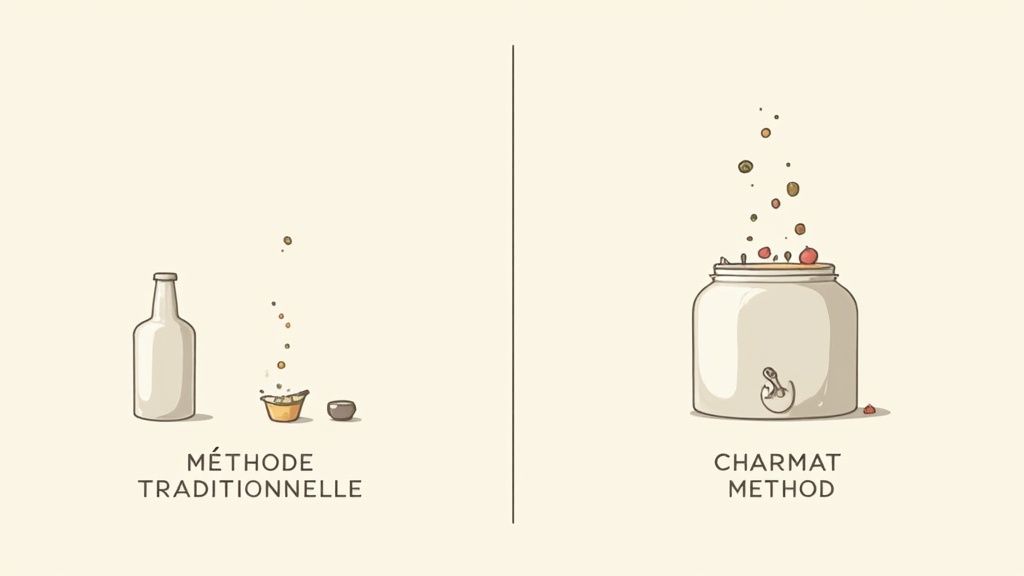
Ever stop to think about where those millions of tiny, dancing bubbles in your glass actually come from? It’s not magic, but it is a fascinating piece of winemaking science that defines the style, flavour, and even the price of your favourite fizz.
Those delightful bubbles are simply carbon dioxide (CO2), a natural byproduct of fermentation. The real secret is how winemakers trap that CO2 inside the bottle. To do this, a still base wine must go through a second fermentation. This is the key step where a little sugar and yeast are added to create more alcohol and, crucially, those all-important bubbles.
The method used for this second round of fermentation splits the world of sparkling wine into two main camps, each producing a distinctly different result. Getting your head around these two paths is the first step to finding top-shelf sparkling wines you’ll absolutely love.
The Artisan's Way: The Méthode Traditionnelle
Think of the Méthode Traditionnelle, or traditional method, as the artisan approach. It’s the same painstaking technique used for Champagne in France, and it’s all about crafting complexity and elegance right inside the very bottle you’ll eventually buy.
The process is patient and labour-intensive. A still wine is bottled with a small dose of yeast and sugar (called the liqueur de tirage) and sealed with a crown cap, just like a beer. The magic then happens slowly as a second fermentation kicks off inside that individual bottle. With nowhere to go, the CO2 dissolves into the wine, just waiting to erupt as fine, persistent bubbles when you pop the cork.
But that’s not all. The wine is then aged on its expired yeast cells, known as lees, for months or even years. This process, called sur lie ageing, is where the real complexity develops, giving the wine those classic rich, brioche, nutty, and toasty flavours that are the hallmark of top-quality traditional method wines. It’s a method demanding time and skill, which explains why these wines often come with a higher price tag.
You can learn more about how these methods shape the final product in our comprehensive guide to sparkling wines.
The Efficient Way: The Charmat Method
Now, let's switch gears to the Charmat Method, also known as the Tank Method. If the traditional method is like baking artisan sourdough loaf by loaf, the Charmat method is like using a state-of-the-art baker's oven to produce a beautiful batch all at once. It’s efficient, modern, and absolutely brilliant at preserving a wine’s fresh, fruity character.
Here, the second fermentation happens in large, pressurised stainless-steel tanks instead of individual bottles. The base wine, sugar, and yeast are all combined in the tank, which is sealed to trap the CO2 as it forms.
This technique is perfect for aromatic grape varieties because it minimises contact with the lees, preventing those yeasty, bready notes from taking over. The focus is squarely on capturing pure, vibrant fruit and floral aromas to create a wine that is fresh, crisp, and ready to drink.
This process is quicker and less expensive than its traditional counterpart, which is why wines like Italian Prosecco are often more approachable in price. It’s all about producing a bright, clean, and fruit-forward style of bubbly that’s meant to be enjoyed young.
To get a clearer picture, let's break down the key differences side-by-side.
Sparkling Wine Production Methods at a Glance
| Feature | Méthode Traditionnelle | Charmat (Tank) Method |
|---|---|---|
| Fermentation Vessel | Individual bottles | Large, pressurised steel tanks |
| Flavour Profile | Complex, yeasty, toasty, nutty, brioche | Fresh, fruity, floral, crisp |
| Ageing | Aged on lees in the bottle for extended periods | Minimal ageing, bottled young to preserve freshness |
| Bubble Character | Fine, persistent, and creamy (small beads) | Livelier, frothier, with larger bubbles |
| Cost & Labour | High (labour-intensive, time-consuming) | Lower (efficient, faster production) |
| Best For | Creating complex, age-worthy sparkling wines | Producing fresh, aromatic, fruit-forward styles |
| Classic Examples | Champagne, Cava, Crémant, high-end Aussie sparkling | Prosecco, Lambrusco, many affordable Aussie sparklings |
So, next time you’re enjoying a glass from our selection of top sparkling wines, take a moment to appreciate the journey those bubbles took. Whether crafted slowly in the bottle or created with modern efficiency in a tank, each method tells a unique story of flavour and tradition.
Decoding the Language on the Wine Label
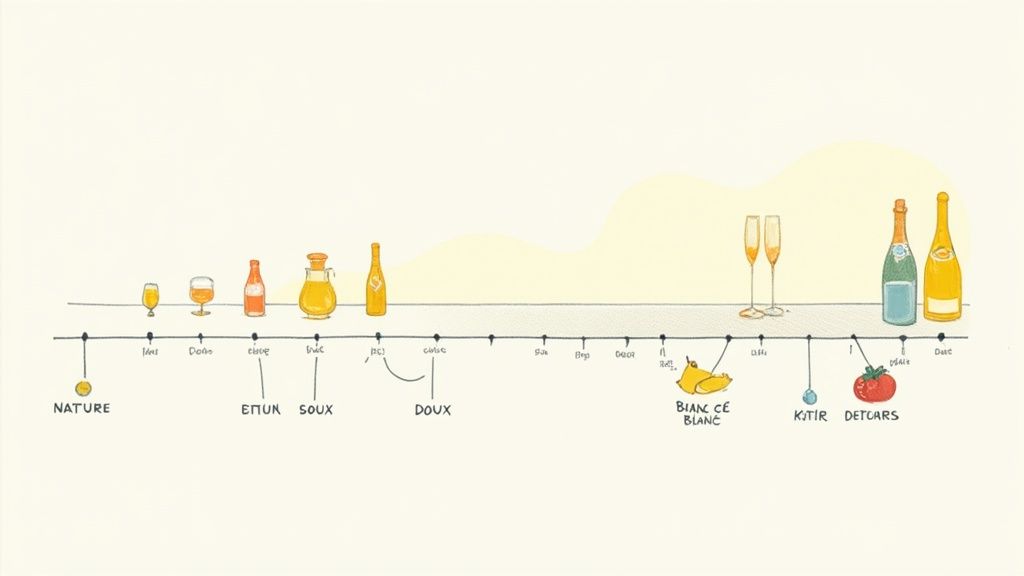
Stepping into the sparkling wine aisle can feel like trying to read a map in a foreign language. With terms like ‘Brut’, ‘Blanc de Blancs’, and ‘Cuvée’ dotting the labels, it’s easy to feel a bit lost.
But these aren’t just fancy words. They are essential signposts that tell you exactly what to expect from the wine inside the bottle.
Learning to translate this language is the key to unlocking a world of flavour and finding the top sparkling wines that perfectly suit your palate. It transforms shopping from a guessing game into a confident choice. Once you know what to look for, you’ll be able to select a bottle for any occasion, from a bone-dry aperitif to a slightly sweeter drop for dessert.
Cracking the Sweetness Code
One of the most important clues on any sparkling wine label is its sweetness level, also known as the dosage. After the traditional method's second fermentation, a small amount of wine and sugar solution (liqueur d'expédition) is added to top up the bottle and balance the acidity. The amount of sugar in this final step dictates how dry or sweet the finished wine will be.
Think of it like adding sugar to your coffee. No sugar is like a Brut Nature—intensely dry and crisp. A little sugar to take the edge off is a Brut, while a noticeable sweetness brings you into Demi-Sec territory.
Here’s a quick guide to the official terms, from driest to sweetest:
- Brut Nature: Bone-dry with virtually no perceptible sugar (0-3 grams per litre). This is a pure, crisp, and intensely acidic style.
- Extra Brut: Still very dry, with just a whisper of sugar to soften the sharpest edges (0-6 g/L).
- Brut: The most popular and versatile style of sparkling wine. It's dry, but with a balanced fruitiness that makes it exceptionally food-friendly (0-12 g/L).
- Extra Dry (or Extra-Sec): Confusingly, 'Extra Dry' is actually sweeter than Brut. It has a noticeable touch of sweetness, making it a great match for salty appetisers (12-17 g/L).
- Dry (or Sec): Even sweeter still, this style has a clear off-dry character and pairs well with richer foods or mildly sweet dishes (17-32 g/L).
- Demi-Sec: This is a distinctly sweet sparkling wine, often served as a dessert wine. It’s perfect with fruit tarts, pastries, and cheese (32-50 g/L).
- Doux: The sweetest of all, this is a true dessert-style bubbly with over 50 grams of sugar per litre.
Most drinkers find their sweet spot in the Brut category, which accounts for the vast majority of sparkling wine sales worldwide. Its balanced profile makes it a reliable and crowd-pleasing choice for nearly any occasion.
Understanding Sparkling Wine Styles
Beyond sweetness, the label also tells you about the style of the wine, which is determined by the types of grapes used. The two most important style terms you'll encounter are 'Blanc de Blancs' and 'Blanc de Noirs'.
These French terms literally translate to "white from whites" and "white from blacks," referring to the colour of the grape skins. Remember, even red grapes like Pinot Noir have clear juice; the colour in red wine comes from skin contact during fermentation.
Blanc de Blancs
This style is made 100% from white grapes, most commonly Chardonnay.
- Flavour Profile: Typically elegant, crisp, and delicate. Expect notes of green apple, lemon, citrus zest, and sometimes a chalky minerality.
- Perfect For: An elegant aperitif, pairing with fresh seafood like oysters, or for those who love a zesty, refreshing bubbly.
Blanc de Noirs
This style is made 100% from red (black) grapes, usually Pinot Noir and/or Pinot Meunier.
- Flavour Profile: Generally has more body, structure, and red fruit character. Look for flavours of strawberry, raspberry, cherry, and a richer, more rounded mouthfeel.
- Perfect For: Pairing with heartier dishes like roast chicken or duck, or for drinkers who prefer a more powerful and flavourful sparkling wine.
By combining your knowledge of sweetness levels and wine styles, you can walk up to any shelf of top sparkling wines and choose a bottle with precision. Craving a crisp, dry wine for oysters? A Brut Blanc de Blancs is your answer. Need something with a hint of sweetness for a spicy curry? An Extra Dry might be just the ticket.
Exploring Australia's Premier Sparkling Wine Regions
While Champagne in France might be the global benchmark, Australia has well and truly carved out its own place as a producer of world-class fizz. The secret isn't a secret at all: it all comes down to finding the perfect cool-climate spots. You need conditions where grapes can ripen slowly, building deep, intense flavours while holding onto the razor-sharp acidity that gives bubbly its structure and refreshment.
Luckily, Australia has a handful of these premier regions scattered across the country. Each one stamps a unique personality onto its wines. From the windswept vineyards of Tasmania to the lofty slopes of the Adelaide Hills, these pockets of terroir are the heartland of Australian sparkling. Getting to know what makes each region special is the key to unlocking the incredible diversity and quality being produced right in our own backyard.
Let's take a quick trip through the landscapes that craft Australia's best bubbles.
Tasmania: The Cool-Climate Champion
When you talk about Australian sparkling, Tasmania is the undisputed star of the show. Its southerly latitude and powerful maritime influence create a climate that's uncannily similar to Champagne, France. For sparkling wine producers, this is the holy grail.
The long, cool, and surprisingly sunny growing season lets classic varieties like Chardonnay and Pinot Noir ripen to perfection without sacrificing their vital, zesty acidity. The wines that result are exceptionally fine and complex, known for their laser-like precision, minerality, and incredible potential to age. A classic Tassie sparkling often sings with notes of crisp apple, lemon zest, and oyster shell, which slowly morph into rich, biscuity characters over time.
Adelaide Hills: Elegance at Altitude
Just a stone's throw from Adelaide, the Adelaide Hills is another major player in the premium sparkling scene. What gives this region its edge? Altitude. The vineyards are perched between 400 and 700 metres high, where cooler temperatures help the grapes hang onto their bright, natural acidity.
Wines from the Adelaide Hills are celebrated for their elegance and finesse. They typically burst with vibrant citrus and white peach flavours, carried by a creamy texture and a crisp, clean finish. This region consistently turns out some of the most refined and stylish top sparkling wines in Australia, showing a beautiful tug-of-war between pure fruit and developing complexity.
A region’s terroir—its unique combination of climate, soil, and topography—is the invisible ingredient in every bottle. It’s what makes a Tasmanian sparkling taste distinctly different from one grown in the Yarra Valley, even if they're made from the same grapes.
Yarra Valley: A Victorian Icon
Victoria's Yarra Valley has a long and storied history of producing phenomenal cool-climate wines, and its sparkling is no exception. As one of Australia's oldest wine regions, its winemakers have been honing their craft for generations.
The region’s varied microclimates allow for a spectrum of sparkling styles, but they are generally known for their complexity and depth. Yarra Valley bubbles often weave rich stone fruit flavours with savoury, yeasty notes that come from spending extra time on lees. They have a textural richness that makes them both powerful and sophisticated.
And our love for these local gems is only getting stronger. Sparkling wine makes up nearly 10% of all Aussie wine sales, and that number is on the rise. Forecasts predict we'll be drinking another 250,000 cases by 2028. This growth is a direct reflection of a growing appreciation for the sheer quality coming out of our premier regions. You can learn more about Australian sparkling wine market trends from Wine Australia.
Ultimately, exploring the wines from these regions is like taking a tasting tour of Australia itself. Each bottle tells a story of its unique home, offering a world of flavour that can stand shoulder-to-shoulder with the best on the global stage.
Perfect Pairings and Pro Serving Tips

Alright, you’ve picked your bottle, and you know what makes it tick. The next step is where the real fun begins: bringing it all to life. Serving your bubbly at its best and pairing it with the right food can elevate a simple glass of wine into something truly memorable.
Forget rigid rules. The high acidity and lively fizz in sparkling wine act as a natural palate cleanser, making it one of the most versatile, food-friendly wines you can pour. It slices through rich, fatty foods with ease while beautifully complementing more delicate flavours.
While Champagne and oysters are a legendary combo for a reason, the world of sparkling wine pairings is so much bigger and more exciting.
Creative Food Pairings for Every Style
The secret to a great pairing is to think about matching the wine's character and sweetness to the food on the plate.
-
Crisp, Light-Bodied Wines (Prosecco, Brut Nature): These zesty, clean styles are a knockout with anything salty or fried. Think beyond canapés to a classic fish and chips, crispy salt and pepper calamari, or even a big bowl of buttery popcorn. Those bubbles just scrub your palate clean.
-
Complex, Traditional Method Wines (Vintage Sparkling, Blanc de Noirs): Richer and more structured, these wines have the backbone to stand up to heartier dishes. Their toasty, nutty notes are brilliant alongside roast chicken, creamy pasta, or even a simple mushroom risotto.
-
Aromatic, Off-Dry Styles (Moscato d'Asti, Extra Dry): That touch of sweetness is a secret weapon against spice. It expertly tames the heat in Thai green curries or spicy Szechuan stir-fries, while the wine’s fruity aromatics play off the exotic spices perfectly.
A great way to think about pairing is that "like complements like, while opposites attract." The creamy texture of a traditional method sparkling echoes the buttery richness of lobster, while its sharp acidity cuts right through it for a refreshing contrast.
For even more ideas to get you started, check out our detailed guide covering the fundamentals of perfect food pairings for wine. It’s a fantastic resource for planning your next dinner party.
To make things even easier, here's a quick cheat sheet for your next get-together.
Quick Guide to Sparkling Wine Food Pairings
| Sparkling Wine Style | Classic Pairings | Adventurous Pairings |
|---|---|---|
| Brut (e.g., Prosecco) | Oysters, smoked salmon, sushi | Fish and chips, truffle popcorn, fried chicken |
| Blanc de Blancs (Chardonnay) | Grilled fish, scallops, soft cheeses (brie, camembert) | Creamy pasta, lobster rolls, lemon tart |
| Blanc de Noirs (Pinot Noir) | Roast chicken, duck confit, mushroom risotto | Charcuterie board, pork belly, aged cheddar |
| Rosé Sparkling | Prawns, charcuterie, berry desserts | Spicy tuna rolls, beetroot salad, duck pancakes |
| Off-Dry (Extra Dry, Demi-Sec) | Fruit tarts, cheesecake, foie gras | Thai green curry, spicy noodles, blue cheese |
This table is just a starting point, so don't be afraid to experiment and find what you love!
Pro Serving Tips for Perfect Bubbles
How you serve your sparkling wine is just as crucial as what you serve it with. A few simple tricks will ensure you’re getting the full experience the winemaker intended.
Chill It Just Right
Temperature is everything. Serve it too warm, and the wine tastes flat and boozy. Too cold, and you’ll numb all those gorgeous, delicate flavours.
- The sweet spot for serving is between 6–8°C.
- The easiest way to get there? Pop it in the fridge for about three hours, or for a quicker chill, place it in an ice bucket filled with half ice and half water for 30 minutes.
Master the Opening
A bottle of sparkling should open with a gentle sigh, not a cannon-like pop. That dramatic, cork-flying spectacle actually wastes precious bubbles.
- Remove the foil and loosen the wire cage, but don't take it off completely.
- Hold the bottle at a 45-degree angle, pointing it away from everyone (including yourself!).
- Drape a tea towel or cloth over the cork and cage, gripping it firmly with one hand.
- Here’s the trick: with your other hand, twist the base of the bottle, not the cork.
- Let the pressure gently push the cork out with a soft hiss. Perfect.
Choose the Right Glass
While the old-school coupe looks incredibly glamorous, it lets the fizz escape far too quickly. To truly appreciate the aromas and preserve those lovely bubbles, a flute or a tulip-shaped glass is much better. Their tall, narrow shape keeps the carbonation lively and funnels all the delicate aromas right where you want them—to your nose.
Finding Your Perfect Bottle of Bubbly
Right, you’ve journeyed through the methods, learned to decode the labels, and taken a tour of Australia's best sparkling regions. Now for the fun part: putting all that knowledge into practice and choosing a bottle that’s absolutely perfect for you. This is your personal buyer's guide, designed to connect everything you've learned to our curated collection here at McLaren Vale Cellars.
Armed with your new expertise, you can confidently navigate our selection and find the right fizz for any moment. Whether it's a premium, complex traditional method wine for a milestone anniversary or a bright, budget-friendly Prosecco for a spontaneous picnic, we have a bottle to match. Think of it as turning theory into delicious reality.
Our Curated McLaren Vale Cellars Picks
To get you started, we've handpicked a few highlights from our cellar that showcase the brilliant diversity of Australian sparkling wine. Each one represents a different style and price point, making it easy to find your match.
- For the Celebration: When the occasion calls for something truly special, you can't go past a traditional method sparkling. Look for our premium Blanc de Blancs, crafted from 100% Chardonnay. It offers the rich, toasty complexity and fine, elegant bubbles that rival the world's best, perfect for making lasting memories.
- For Casual Sipping: Planning a relaxed weekend get-together? Our vibrant and zesty Prosecco is your go-to. It's absolutely bursting with fresh green apple and pear notes, making it an incredibly refreshing and easy-drinking choice that always pleases a crowd.
- For the Adventurous Palate: If you're keen to explore something uniquely Australian, a Sparkling Shiraz is an experience you won't forget. This bold, bubbly red is packed with rich berry flavours and a hint of spice—a fantastic and surprising match for a summer barbecue.
Your palate is your best guide. The most important factor in choosing one of the top sparkling wines is whether you enjoy it. Don't be afraid to try new styles and trust your own taste.
To broaden your understanding of wine and discover new favourites, you could also explore local wine bar experiences.
Explore and Discover with Our Tasting Packs
Feeling a little indecisive or just keen to try a bit of everything? We’ve designed our sample packs specifically for discovery. A great place to start is with a 'Sparkling Discovery Trio', which typically features a classic Brut, a delicate Rosé, and an aromatic Prosecco side-by-side.
This is the perfect, low-risk way to compare different styles and pinpoint exactly what you love. It's a guided tasting experience delivered right to your door. For a deeper dive into finding your perfect match, you can also explore our comprehensive guide to sparkling wine varieties and styles.
Your journey into the exciting world of Australian sparkling wine starts here. Browse our full collection, grab a tasting pack, and get ready to pop the cork on your next favourite bottle. Cheers to confident sipping
Sparkling Wine FAQs: Your Questions Answered
Diving into the world of bubbly can sometimes feel a bit overwhelming, but it doesn't have to be. To help you feel like an expert next time you're browsing for a bottle of fizz, we've answered some of the most common questions we get asked.
What Is the Main Difference Between Champagne and Prosecco?
The biggest difference comes down to where they're from and how they get their bubbles. Champagne can only come from the Champagne region in France and is made using the time-honoured, labour-intensive 'Méthode Traditionnelle'. This is where the second fermentation happens right inside each bottle, creating those ultra-fine bubbles and complex, toasty flavours we all love.
Prosecco, on the other hand, is Italy's famous sparkling wine. It's usually made with the 'Charmat Method', where that second fermentation takes place in a large pressurised tank. This clever technique is perfect for preserving the wine’s fresh, fruity, and floral notes, and it also makes Prosecco a more wallet-friendly choice for everyday celebrations.
How Long Can I Store an Unopened Bottle of Sparkling Wine?
That's a great question, and it really depends on the style of wine you've got.
- Non-Vintage Wines: Most sparkling wines, including Prosecco and your classic non-vintage Brut, are crafted to be enjoyed young and fresh. It's best to pop them open within 1-2 years of buying them to catch them at their vibrant, zesty best.
- Vintage Wines: Now, this is where things get interesting. High-quality, traditional method sparkling wines from a single, specific year (a 'vintage') can age beautifully. If you store them properly—on their side in a cool, dark spot—they can develop incredible richness and complexity over 5 to 10 years, and sometimes much longer.
A crucial tip for long-term cellaring: always lay your special bottles down. Storing them upright for too long can dry out the cork, letting those precious bubbles escape. Nobody wants that!
Why Is Some Sparkling Wine So Much More Expensive?
It really comes down to a few key things that add up.
The biggest factor is the production method. The 'Méthode Traditionnelle' is a slow, hands-on, and seriously expensive process compared to the much more efficient Charmat (or tank) method. Then there's ageing. Wines that are aged for several years before they're released, especially those aged on lees to build texture and flavour, carry significant storage costs and reflect a much higher level of craftsmanship.
Finally, just like in real estate, it's all about location, location, location. The origin of the grapes plays a massive role. Grapes from prestigious, cool-climate regions like Tasmania are in high demand for their exceptional quality, and that prestige is reflected in the price tag.
Ready to explore the best of Australian bubbly? At McLaren Vale Cellars, we've curated a stunning selection of top sparkling wines to suit every taste and occasion. Browse our collection today and find your new favourite fizz.

Comments (0)
There are no comments for this article. Be the first one to leave a message!