
Ever taken a sip of red wine and felt that familiar drying, slightly grippy sensation on your tongue and gums? That feeling is your formal introduction to tannins, the natural compounds that act as the architectural backbone for many of your favourite reds.
What Are Tannins in Wine and Why Do They Matter?
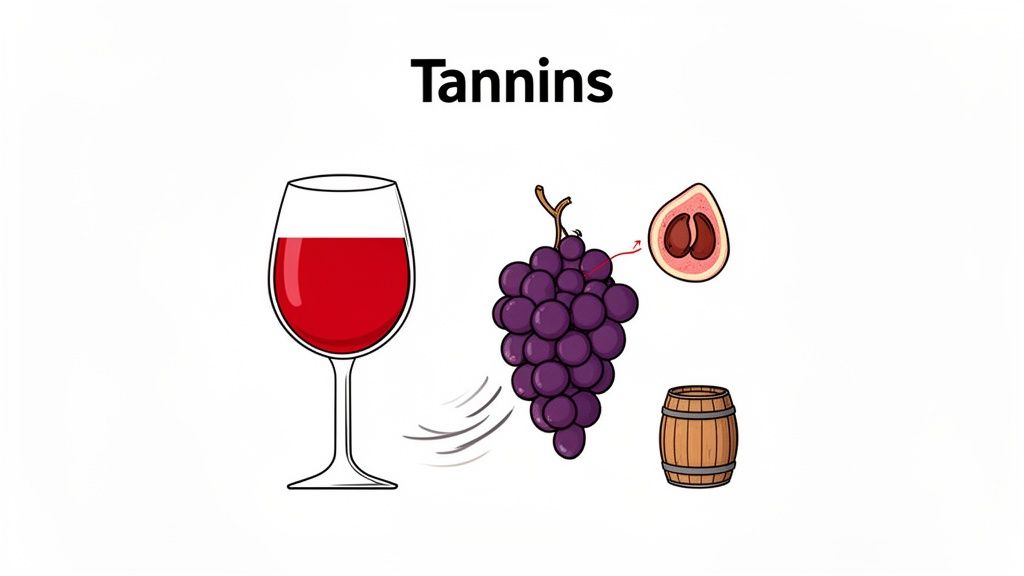
Think of tannins as the structural framework of a wine. Just like a skeleton supports a body, tannins provide the structure that holds all the complex flavours and aromas together.
These compounds are absolutely essential for giving a wine its texture, complexity, and that remarkable ability to age gracefully. Without them, many bold reds would feel soft, simple, and lack the backbone needed to evolve and improve over time. Getting your head around what they are and how they feel is the first real step to unlocking a much deeper appreciation for wine.
The Main Sources of Tannins
Tannins come mainly from the grapes themselves, but the winemaking process can introduce them from other places too. It's the concentration and character of these tannins that separate a silky, elegant red from a powerful, robust one.
The key sources are:
- Grape Skins: This is the big one, especially for red wines where the juice soaks and ferments with the skins. Thick-skinned grapes like Shiraz and Cabernet Sauvignon are naturally packed with higher levels of tannin.
- Grape Seeds (Pips): The little seeds inside grapes contain tannins, but they're often more bitter and astringent. Winemakers are incredibly careful about how much they extract from the pips to avoid any harshness.
- Grape Stems: While often removed, some winemakers choose to include whole bunches—stems and all—in the fermentation. This can add spicy, herbal notes and a different kind of tannic structure to the final wine.
- Oak Barrels: When a wine is aged in new oak barrels, it slowly absorbs tannins from the wood itself. These oak tannins don't just add structure; they also introduce lovely flavours like vanilla and spice, contributing to a smoother, more rounded mouthfeel.
How Terroir Influences Tannin Profiles
The specific place where grapes are grown—the terroir—plays a massive role in shaping a wine's tannic profile. For instance, blind tastings of McLaren Vale Shiraz since 2010 have consistently shown that different sub-regions produce distinct types and amounts of tannins.
This variation, driven by local geology and cooling sea breezes, is a game-changer for winemakers and wine lovers alike. It helps explain why a Shiraz from old, dry-grown vines can have such a firm, age-worthy structure, making it a perfect candidate for your cellar. You can discover more insights about this connection between McLaren Vale terroir and tannins at Wine Companion.
A wine's structure is built on acidity, alcohol, and tannin. While acidity brings freshness and alcohol provides weight, it's the tannins that contribute the texture and staying power, especially in red wines destined for ageing.
How Tannins Shape Your Wine Experience
Far more than just a bitter note, tannins are the architects of a wine’s personality. They’re responsible for how a wine feels in your mouth, providing the structural backbone that holds all the delicate flavours and aromas together. Think of them as the hidden framework of a house—you don’t always see it, but it’s essential for giving everything shape and strength.
Without that framework, a bold red wine would feel flimsy and unfocused, missing the very texture that makes it so compelling. Tannins are directly responsible for a wine's body and mouthfeel, two of the most critical sensory cues you'll notice with every sip. For a deeper dive, you can explore our complete guide to wine weight and texture.
This structural contribution stops a wine from tasting flat or one-dimensional. Tannins introduce a layer of complexity and texture that elevates the whole experience, turning simple grape juice into a balanced, engaging drink.
The Signature Drying Sensation Explained
Ever noticed that distinct drying, almost puckering feeling on your tongue and gums after a sip of a big red? That’s tannin making its presence known. It’s the most direct way to feel tannins in action, and there’s a fascinating bit of chemistry behind it.
Your saliva is packed with proteins that keep your mouth lubricated and feeling smooth. Tannin molecules, being polyphenols, have a natural talent for binding to these proteins.
When that happens, the lubricating power of your saliva is temporarily reduced, creating that classic sensation of astringency or dryness. It's more of a tactile feeling than a flavour, much like the one you get from a strongly brewed cup of black tea. This interaction is also what makes tannic wines so brilliant at cleansing your palate, especially when paired with rich, fatty foods.
Ripe Versus Green Tannins
Not all tannins are created equal. The quality and character of the tannins in a wine can vary dramatically, and managing them is a skill winemakers spend years perfecting. The main difference comes down to one thing: the ripeness of the grapes at harvest.
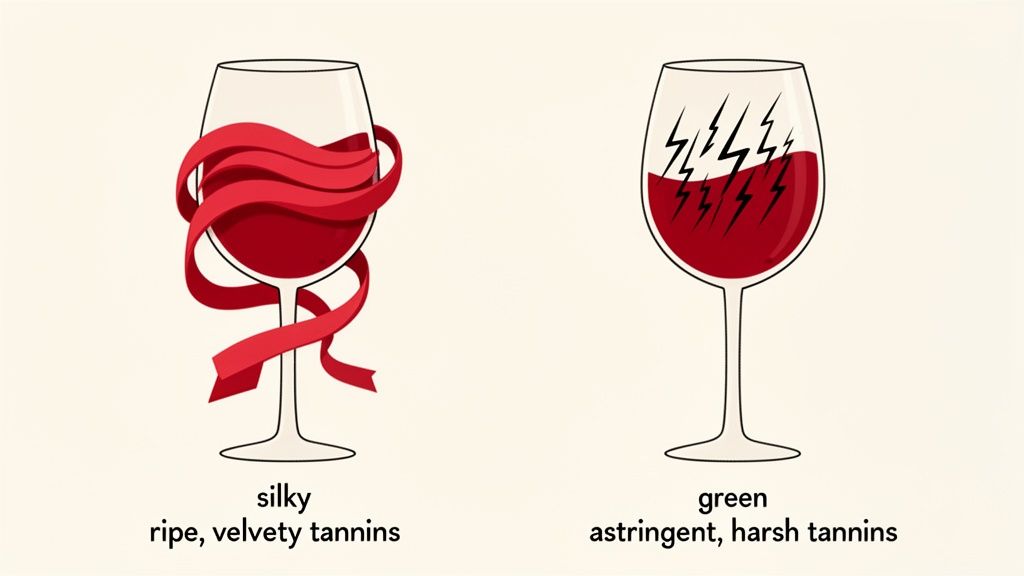
- Ripe Tannins: This is the gold standard for any premium red wine. Found in perfectly ripened grapes, these tannins feel smooth, velvety, or even silky on the palate. They add weight and texture without aggressive harshness, contributing to a luxurious and seamless mouthfeel.
- Green Tannins: Sourced from underripe grapes, these are the total opposite. They can feel coarse, gritty, and unpleasantly astringent. Instead of a gentle grip, they give the wine a harsh, unbalanced edge, often leaving a bitter aftertaste.
The difference between ripe and green tannins is like comparing fine-grained sandpaper to rough gravel. Both provide texture, but one feels refined and integrated, while the other is just abrasive.
How Tannin Levels Create Different Styles
The amount of tannin in a wine has a huge say in its final style and character. Here in McLaren Vale, you can taste this difference beautifully by comparing our signature grape varieties.
A classic McLaren Vale Shiraz, made from grapes with thick skins, is typically high in tannins. This results in a full-bodied wine with a firm, structural backbone that supports its bold dark fruit flavours. These tannins give the wine a powerful framework, creating a robust red that's built to age gracefully.
On the other hand, a McLaren Vale Grenache is naturally lower in tannins because the grape has thinner skins. This leads to a softer, more medium-bodied wine. The mouthfeel is often described as plush and juicy, with a smoother texture that feels immediately approachable and showcases bright red fruits without that same structural grip you find in Shiraz.
Where Do Tannins Come From? Grapes, Oak, and Terroir
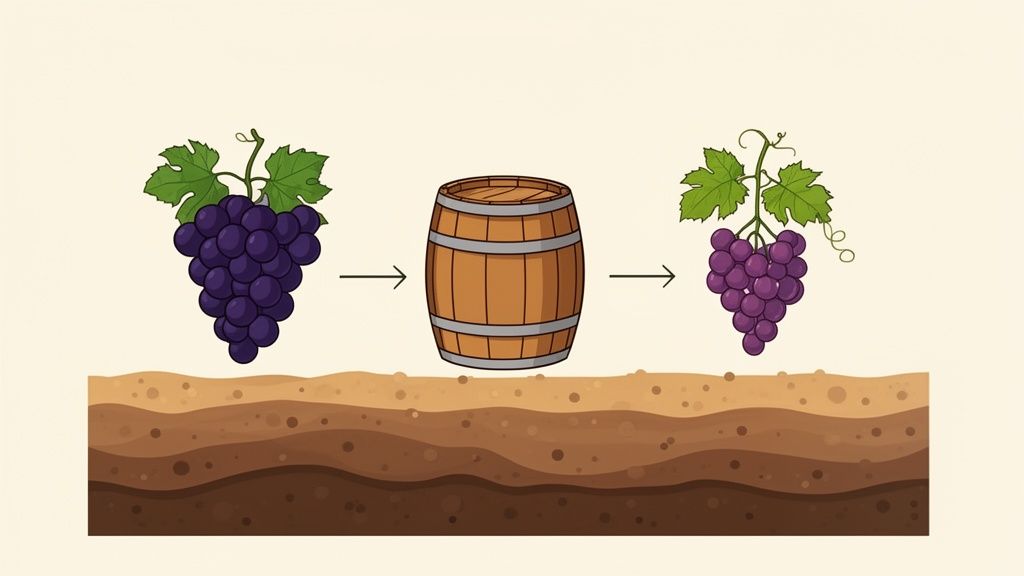
Tannins aren't some kind of magical dust a winemaker sprinkles into the vat. Their story begins long before the first grape is ever picked, out in the vineyard under the sun. The amount and style of tannin you find in your glass are a direct result of the grape’s entire journey—from its DNA and the soil it grew in to the barrel it rested in.
These three sources—the grape, the earth, and the oak—are the holy trinity of tannin. Each one plays a critical role, weaving together to create the final texture and structure you experience in a wine. Understanding where they come from helps demystify why a powerful McLaren Vale Shiraz feels so different from a delicate Pinot Noir.
The Grape Variety and Its Skin
First and foremost, tannins come from the grape itself. We find them in the skins, seeds (or pips), and stems. For red wines, where the juice ferments in direct contact with all these bits, the grape’s physical makeup is everything. It’s a pretty simple equation: the thicker the grape's skin, the more tannins in the wine.
This is exactly why certain grapes are famous for producing big, structured wines that can age for years.
- High-Tannin Grapes: Varieties like Cabernet Sauvignon, Shiraz, and Nebbiolo have thick, dark skins that are absolutely loaded with these polyphenols. It’s in their nature to create wines with a firm, grippy backbone that’s built to last.
- Low-Tannin Grapes: On the flip side, grapes like Pinot Noir and Gamay have much thinner skins. As you’d expect, they produce lighter-bodied wines with softer, silkier textures that are less astringent and often much easier to drink when they're young.
Just think of grape skins as the colour and flavour concentrate of the wine world. The more skin you have compared to pulp, the more intense the extraction of both colour and tannin will be.
How Terroir Shapes Tannins in the Vineyard
Beyond a grape's genetics, its growing environment—or terroir—has a massive say in how its tannins develop. This famous French term captures everything about a vineyard's unique spot on the planet: its climate, its soil, and even the human touch. A single grape variety grown in two different places can produce wines with wildly different tannic structures.
McLaren Vale is a perfect case study. Our warm, dry climate, cooled by sea breezes from the Gulf St Vincent, allows grapes like Shiraz to ripen perfectly. This means the tannins in the skins and seeds mature completely, evolving from harsh and "green" to smooth and "ripe" before they're even harvested. If you want to dive deeper, exploring the science behind wine fermentation, tannins, and terroir offers a fantastic look at this interplay.
Terroir is the ultimate storyteller. It dictates whether tannins will be bold and assertive or fine-grained and elegant. A sunny slope might produce riper, softer tannins, while a cooler, cloudier site could result in a more angular and grippy structure.
Tannin Levels in Popular Grape Varieties
To give you a clearer picture, let's break down how different grapes stack up. This table shows the typical tannin levels you can expect from some of the world's most popular red and white varieties, helping you know what to look for on your next bottle shop run.
| Grape Variety | Typical Tannin Level | Common Flavour Profile | McLaren Vale Example |
|---|---|---|---|
| Cabernet Sauvignon | Very High | Blackcurrant, cedar, mint, dark cherry | Often bold with structured, age-worthy tannins. |
| Shiraz (Syrah) | High | Blackberry, plum, pepper, dark chocolate | Rich and velvety, with ripe, powerful tannins. |
| Nebbiolo | Very High | Rose, cherry, leather, liquorice | Deceptively light in colour but famously tannic. |
| Grenache | Medium-Low | Strawberry, raspberry, white pepper, herbs | Soft, juicy, and often silky, especially from old vines. |
| Pinot Noir | Low | Cherry, raspberry, mushroom, forest floor | Known for its fine-grained, elegant tannins. |
| Merlot | Medium | Plum, black cherry, bay leaf, vanilla | Generally softer and rounder than Cabernet. |
| Riesling | Very Low | Lime, green apple, petrol, jasmine | Aromatic white with crisp acidity, not tannins. |
| Sauvignon Blanc | Very Low | Gooseberry, passionfruit, grass, capsicum | Zesty and fresh, structure comes from acidity. |
As you can see, the grape variety itself is your biggest clue. A Cabernet will almost always have more tannic grip than a Pinot Noir, no matter where it's grown.
The Influence of Oak Barrels
The final piece of the tannin puzzle is added in the cellar: the oak barrel. While the grapes and their terroir lay the foundation, the barrels used for ageing can profoundly shape a wine's final character. New oak barrels, in particular, leach their own set of tannins (called hydrolysable tannins) directly into the wine.
These wood tannins do more than just add structure; they actually interact with the grape tannins, helping them link together and soften over time. This process can make a wine feel rounder and smoother on your palate. Of course, oak also brings its own unique flavours to the party, like vanilla, clove, and toast. If you're curious about this, understanding the flavor contribution of wood in other contexts offers some great insights.
The winemaker's choice of vessel is a critical one, leading to very different styles:
- New Oak Barrels: These impart the maximum amount of oak tannin and flavour, adding layers of complexity and spice.
- Used or Neutral Oak: They provide the benefit of slow oxygen exposure (which also helps soften tannins) without adding significant new flavours.
- Stainless Steel or Concrete: These vessels are completely neutral, preserving the pure fruit and tannin profile that comes straight from the grapes.
The Winemaker's Art of Managing Tannins
Great tannins aren’t just grown in the vineyard; they're meticulously shaped in the winery. A winemaker’s decisions at every stage can dramatically influence a wine's final tannic profile, turning a potentially harsh red into something balanced, structured, and silky smooth. It’s an art form that blends science with a whole lot of sensory intuition.
This craft kicks off the moment grapes hit the crush pad. The winemaker has to decide just how much tannin they want to pull from the skins, seeds, and stems. This is far from a one-size-fits-all approach; a bold McLaren Vale Shiraz needs a different touch to a delicate Grenache, and the conditions of the vintage itself play a massive role in every choice.
Gentle Extraction Before Fermentation
One of the first tools in the winemaker's kit is cold soaking, also known as pre-fermentation maceration. This involves chilling the crushed grapes and letting them sit in their own juice for a few days before any yeast gets to work and fermentation begins.
Because tannins love alcohol and aren't as keen on water, this process gently coaxes colour and flavour out of the grape skins with minimal tannin pickup. The result? A wine that often boasts a more vibrant hue and softer, more approachable tannins right from the get-go.
Managing Tannins During Fermentation
Once fermentation kicks off, the rising alcohol levels start pulling tannins from the skins and seeds much more aggressively. This is where the winemaker has to actively manage the "cap"—that dense blanket of skins and seeds that floats to the top of the fermenting wine. How they handle this cap is critical for controlling the tannins in wine.
Two classic methods are used to keep the cap submerged and manage extraction:
- Punch-downs (Pigeage): The old-school method. It involves physically pushing the cap down into the juice with a large tool. It’s a gentler technique that can lead to finer, more elegant tannins and is often the go-to for delicate varieties like Pinot Noir.
- Pump-overs (Remontage): This is a bit more hands-on, where juice is pumped from the bottom of the tank and sprayed over the top of the cap. It’s a more extractive method that can build a bigger, more robust tannic structure, making it perfect for powerful reds like Cabernet Sauvignon and Shiraz.
The frequency and force of these actions are carefully judged. Go too hard, and you end up with a harsh, bitter wine. Too soft, and the wine can feel weak and unstructured.
A winemaker’s goal is to hit 'tannin ripeness,' where the extracted tannins add a pleasing texture rather than an aggressive, mouth-puckering astringency. It's a delicate dance between extracting enough for structure and knowing exactly when to back off.
The Art of Pressing and Fining
After fermentation is done, the wine needs to be separated from the grape solids. The first bit, the free-run wine, drains naturally from the tank just by gravity. This is the highest quality juice, typically containing the softest and most polished tannins.
Next, the remaining skins and seeds are pressed to squeeze out every last drop of liquid. This press wine is intensely tannic and often has a coarser feel. A winemaker might blend a tiny amount of this back into the free-run to add a bit more backbone, or they might keep it completely separate.
Finally, if a wine’s tannins are still a bit too aggressive, winemakers can use fining agents. Traditionally, these are protein-based substances (like egg whites or gelatine) that bind with the harsher tannin molecules. This causes them to clump together and fall out of the wine, leaving behind a smoother, more polished final product. It’s the final polish that ensures the wine is perfectly balanced and ready to enjoy from the moment you pop the cork.
Unlocking Flavours Through Food and Tannin Pairings
This is where the magic really happens. Getting your head around how tannins in wine dance with food is the secret to creating those truly unforgettable dining moments. It’s why some pairings just click, making both the wine and the meal taste better than they ever could on their own. We're not just talking about matching flavours here; it's a fascinating bit of chemistry that plays out right on your palate.
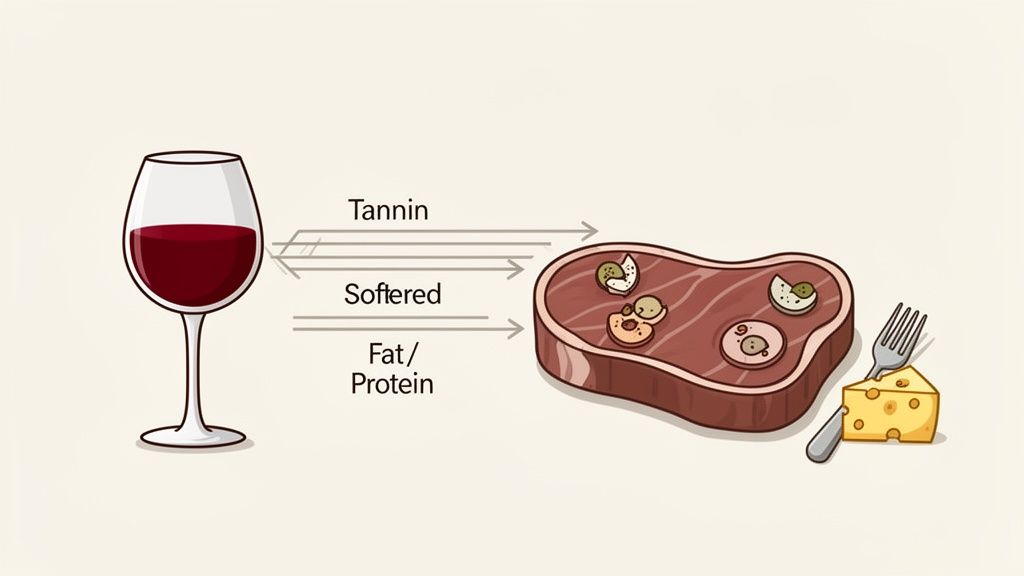
The classic example everyone knows is a big, bold McLaren Vale Shiraz next to a rich, juicy steak. The magic is all about the tango between the wine’s tannin molecules and the protein and fat in the meat.
When you take a sip of that powerful red after a bite of steak, the tannins have a choice. Instead of latching onto the proteins in your saliva (which creates that drying sensation), they bind with the proteins from the meat. The effect is immediate and amazing: the wine's grippy astringency softens dramatically, making it feel smoother, richer, and more velvety. At the same time, the wine's acidity cuts through the richness of the fat, cleansing your palate and getting you ready for the next bite. It's a perfect partnership.
Perfect Pairings for High-Tannin Wines
High-tannin wines are a foodie’s best friend. Their powerful structure means they can stand up to equally powerful flavours without getting lost. They don’t just sit alongside the meal; they get involved and elevate it. When you’ve got a wine with a firm tannic backbone, your first thought should be dishes rich in protein and fat to create that beautiful harmony.
Here are a few go-to pairings that almost never fail with a gutsy red:
- Rich Red Meats: The undisputed champion of tannin pairing. Think grilled ribeye, slow-roasted lamb shoulder, or a hearty beef brisket. The fat and protein are perfectly suited to taming the most assertive tannins.
- Aged Hard Cheeses: Forget the delicate, creamy cheeses. You need something with a bit of texture and oomph, like a sharp aged cheddar, Parmigiano-Reggiano, or a firm Manchego. Their fat and protein do the same job as red meat.
- Savoury, Fatty Dishes: Things like a rich beef bourguignon, a creamy mushroom risotto loaded with parmesan, or even a gourmet burger with all the trimmings make fantastic partners. That savoury, umami richness is exactly what you're looking for.
The rule of thumb is simple: Fat and protein are a tannin's best friends. They grab hold of those tannin molecules, creating a softer, more luxurious mouthfeel and letting the wine's beautiful fruit flavours take centre stage.
For a deeper dive into the art of pairing, exploring expert perspectives on things like Argentine food and wine pairings can offer some fantastic inspiration.
Common Pairing Pitfalls to Avoid
Just as the right food can make a tannic wine sing, the wrong one can create a train wreck in your mouth. Certain foods clash badly with high tannins, cranking up their bitterness and leaving a harsh, metallic aftertaste.
Be careful when pairing your powerful reds with these culprits:
- Spicy Dishes: The capsaicin from chilli can amplify the sensation of both alcohol and tannin. The wine can start to feel hot and unpleasantly astringent, leading to a serious flavour clash.
- Delicate Fish: A light, flaky piece of fish will be completely bulldozed by a big, tannic red. The wine's structure will just dominate the fish's gentle flavour, often leaving a weird metallic taste in its wake.
- Very Sweet Foods: While some dessert pairings can work, matching a very tannic wine with a very sweet dessert is tricky. The sweetness can make the tannins in the wine taste sour and bitter by contrast.
How Tannins Help Wines Age Gracefully
Think of tannins as a wine's personal time capsule. They're much more than just a textural element; they are the secret ingredient that allows certain red wines to transform beautifully over years, sometimes even decades. Tannins act as a natural preservative, safeguarding the wine from its greatest enemy: oxygen.
This protective quality is precisely why wines with a powerful tannic structure, like a premium McLaren Vale Cabernet Sauvignon, are considered age-worthy. Their firm backbone shields the delicate fruit flavours and aromatic compounds from breaking down too quickly. It gives them the chance to evolve into something truly special.
Without a solid tannic framework, a wine would simply fade. Its vibrant fruit notes would turn dull and tired. The presence of these remarkable compounds is what allows for the magical journey from youthful exuberance to mature complexity.
The Science of Softening Tannins Over Time
So, how does a wine that feels grippy and assertive in its youth become so silky and smooth with age? The answer lies in a slow, fascinating chemical process called polymerization.
When a wine is young, its tannin molecules are small, separate, and highly reactive. These are the individual molecules that bind to the proteins in your saliva, creating that classic drying sensation on your palate. They’re sharp, angular, and make their presence known immediately.
Over time in the cellar, these small tannin molecules begin to link together, forming longer and longer chains. As these chains grow, the tannins become heavier, eventually falling out of the wine as sediment. The remaining polymerised tannins are larger and have fewer reactive sites, meaning they feel much smoother and rounder in your mouth.
The transformation of tannins over time is like watching sharp, individual stones on a beach being slowly tumbled by the waves until they become smooth, polished pebbles. The initial roughness gives way to a refined and elegant texture.
This gradual softening is what wine lovers and collectors wait patiently for. The once-aggressive grip mellows into a velvety caress, allowing the more nuanced, hidden flavours of the wine to finally step forward.
From Simple Fruit to Complex Aromas
As tannins are busy polymerising and softening the wine's texture, they are also paving the way for a beautiful evolution of flavour. This is where a wine's true potential for ageing is realised.
A young, tannic red is often dominated by primary aromas—the straightforward scents of fresh fruit like blackberry, cherry, or plum. But as the wine matures under the protective cloak of its tannins, these simple notes give way to more complex and captivating layers.
- Secondary Notes: These flavours come from the winemaking process, especially time in oak, and can include hints of vanilla, clove, or toast.
- Tertiary Notes: These are the real prizes of ageing, developing only after years in the bottle. Think of savoury aromas like leather, tobacco, forest floor, dried herbs, and earthy mushrooms.
This incredible development is only possible in wines with the right structure from the start. The tannins provide the stage upon which these complex tertiary aromas can perform. For those interested in building a collection, our guide to unlocking the secrets of wines that age gracefully provides more cellar-worthy tips.
Common Questions About Tannins in Wine
Even after getting your head around the basics, the world of tannins in wine can throw up a few tricky questions. Let's tackle some of the most common myths and curiosities head-on, giving you quick, clear answers to help you shop, sip, and share your wine with more confidence.
Are Tannins Bad for You?
This is probably the number one myth we hear, but the short answer is a firm no. Tannins are a type of antioxidant known as a polyphenol—the same good stuff you find in dark chocolate, berries, and a strong cup of black tea. They're a completely natural part of many plants we eat and drink.
Some people point the finger at tannins for the dreaded "wine headache." While a tiny percentage of people might have a specific sensitivity, research suggests tannins are rarely the main culprit. For most of us, other compounds like histamines, or simply the alcohol content and dehydration, are far more likely triggers.
Key Takeaway: For the vast majority of people, tannins aren't just safe; they're a crucial part of what gives red wine its structure, complexity, and age-worthiness.
Do White Wines Have Tannins?
While tannins are the calling card of red wines, they absolutely can show up in whites. It’s not as common, but certain winemaking decisions can introduce a subtle tannic grip that adds fantastic texture and complexity.
You're most likely to find tannins in:
- Orange Wines: These are essentially white wines made like reds. The juice is left to ferment on the grape skins, picking up colour, flavour, and—you guessed it—tannins.
- Oak-Aged Whites: Wines like some styles of Chardonnay that are fermented or aged in new oak barrels can pull tannins directly from the wood. This adds structure and a bit of backbone to the finished wine.
How Can I Identify High Tannins When Tasting?
This is all about texture, not flavour. The dead giveaway for high tannins is that unmistakable drying sensation you feel after you've swallowed the wine.
Pay close attention to how your tongue, gums, and the inside of your cheeks feel. If they seem a bit rough or like all the moisture has been whisked away, that’s the astringency from tannins at play. It's the complete opposite of acidity, which makes your mouth water.
Can I Soften a Wine That Is Too Tannic?
Absolutely. If you crack open a bottle and it feels overwhelmingly grippy or astringent, don't write it off. There are a couple of easy tricks to tame those tannins and make the wine more approachable.
First, give it some air. Decanting the wine and letting it breathe for an hour or two is a brilliant way to mimic the softening process that happens over years in a cellar. Second, and arguably the most effective trick, is to pair it with the right food. A dish rich in fat and protein—think a juicy steak or a slice of aged cheddar—is tannin's best friend. The protein binds to the tannins, making the wine feel instantly smoother on your palate. And of course, time is the ultimate solution; a few more years in the bottle will work wonders.
Ready to explore the beautiful spectrum of tannins from McLaren Vale? McLaren Vale Cellars offers a curated selection of wines, from bold, structured Shiraz built for ageing to softer, more approachable Grenache. Find your next favourite today at https://www.mclarenvalecellars.com.


Comments (0)
There are no comments for this article. Be the first one to leave a message!