
Welcome to the luscious world of Australian sweet wines—a category that goes so much further than just a simple dessert pairing.
Forget what you think you know about sweet wine. We're about to take a deep dive into a diverse landscape of styles, from light and fresh to profoundly rich and complex. Prepare to have your perceptions completely transformed.
Uncorking the World of Australian Sweet Wine
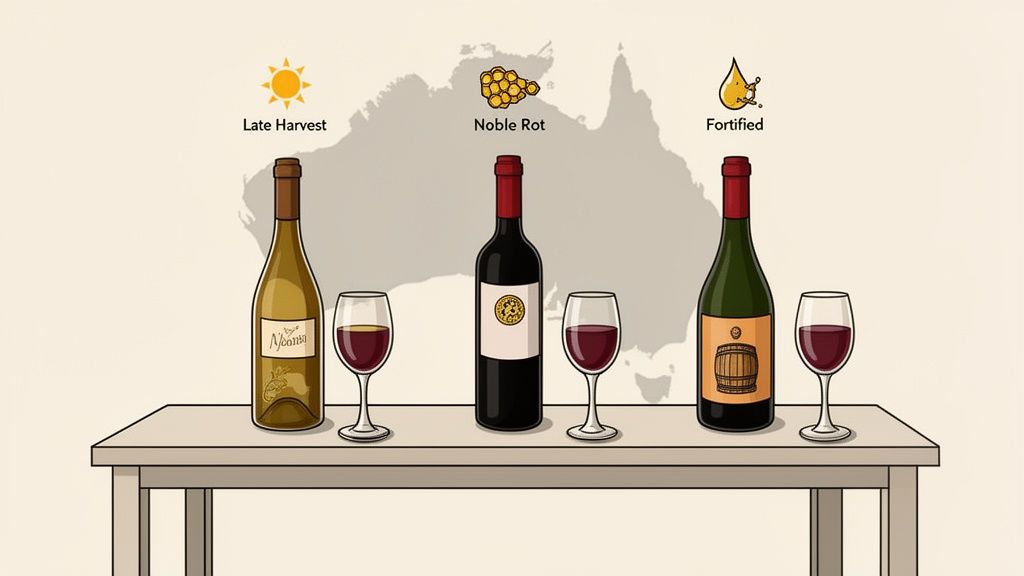
When someone mentions "sweet wine," it’s easy for your mind to jump straight to a sticky, syrupy drink served after dinner. But the reality of sweet wines in Australia is far more varied, nuanced, and frankly, exciting. From delicate, aromatic whites to powerful, aged fortifieds, this category is a brilliant showcase of the skill and creativity of Aussie winemakers.
Think of this guide as your expert companion, here to help you navigate the delicious territory of these often-misunderstood gems. We'll break down everything from how they're made to the key regions, giving you the confidence to explore, select, and savour them like a pro.
What Actually Makes a Wine Sweet?
At its heart, a sweet wine is simply a wine with noticeable residual sugar. This is just the natural grape sugar that's left over after the fermentation process has finished. Winemakers have a few fascinating tricks up their sleeves to achieve this, each resulting in a completely unique style and flavour profile.
Getting a handle on these methods is the first step to appreciating the incredible artistry in every bottle.
- Stopping Fermentation Early: A winemaker can deliberately halt the fermentation before the yeast has a chance to convert all the grape sugars into alcohol. This is often done by adding a neutral grape spirit, which is the classic technique for making fortified wines.
- Concentrating the Grape Sugars: This is where things get really interesting. Grapes can be left on the vine longer to become super ripe (late-harvest), encouraged to develop a special, beneficial fungus called "noble rot" (botrytis), or even laid out to dry on straw mats after being picked. All these methods reduce the water content in the grape, concentrating the sugars and flavours.
A common misconception is that all sweet wines are cloying or overly sugary. In reality, the best examples are defined by a brilliant balancing act between sweetness and acidity. This creates a finish that is clean and refreshing, not heavy.
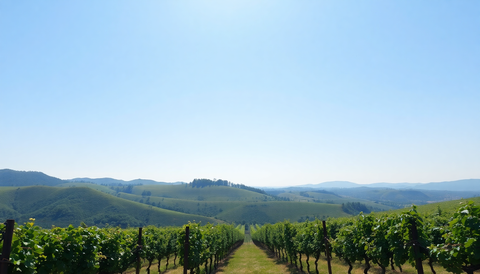
Down in the sun-drenched vineyards of South Australia's McLaren Vale, sweet wines have carved out a cherished niche, blending intense fruit flavours with the region's signature warmth. In a recent vintage, Australia's total wine production hit 1.13 billion litres, a 9% jump from the previous year, with sweet and fortified styles playing a key role. South Australia remains the undisputed powerhouse, responsible for the lion's share of the national 1.57 million tonne grape crush. You can dive deeper into the latest Australian vintage reports and production trends.
Now, let’s demystify the major styles of sweet wine that Australia is famous for.
Major Australian Sweet Wine Styles at a Glance
To give you a quick lay of the land, here’s a snapshot of the main sweet wine styles you'll encounter from Australian producers. Each one offers a completely different experience in the glass.
| Wine Style | Production Method | Typical Flavour Profile | Key Grape Variety |
|---|---|---|---|
| Late Harvest | Grapes are left on the vine to ripen longer, concentrating sugars. | Honey, apricot, tropical fruits, marmalade. | Riesling |
| Botrytis (Noble Rot) | Grapes are affected by the Botrytis cinerea fungus. | Ginger, saffron, honeycomb, dried apricot. | Semillon |
| Fortified (Tawny) | Grape spirit is added to stop fermentation, then barrel-aged. | Nuts, caramel, dried fruit, vanilla, rancio. | Grenache, Shiraz |
| Fortified (Muscat) | Grape spirit added to unfermented juice, then aged. | Raisins, rose petals, molasses, Christmas cake. | Muscat |
This table is just the beginning. As we dig into each of these styles, you'll start to see the incredible diversity and craftsmanship that goes into every bottle, helping you find your next favourite.
How Winemakers Craft Luscious Sweet Wines
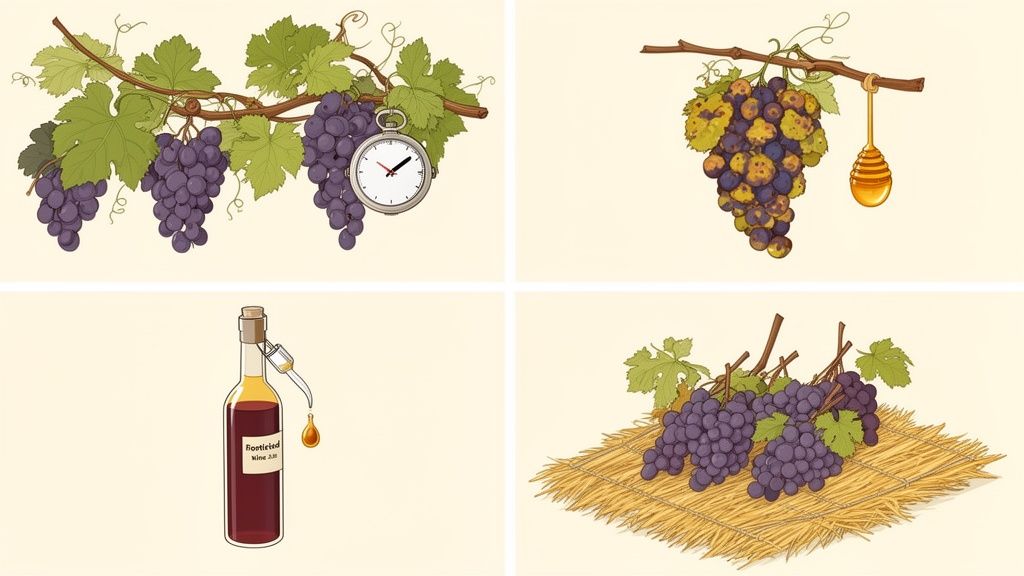
That captivating sweetness in a bottle of dessert wine doesn't happen by accident. It's pure winemaking artistry—a delicate balance of meticulous work and often, a bit of risk-taking. Crafting these luscious drops involves either concentrating the grape sugars to an intense level or stopping the fermentation process at just the right moment.
Think of it like this: to get a sweeter flavour, you need more sugar. Winemakers can achieve this in two main ways. They can start with grapes that are already incredibly high in sugar, or they can step in and stop the yeast from converting all that natural sugar into alcohol.
Each method gives the final wine a completely different personality. Let's look at the ingenious techniques Australian vintners use to create these stunningly sweet results.
Late Harvest: The Waiting Game
One of the most intuitive methods is the late harvest. As the name suggests, winemakers simply leave the grapes to hang on the vine long after the normal picking window has closed. Basking in the Australian sun, the grapes slowly begin to dehydrate in a process known as passerillage.
It’s a bit like letting a banana over-ripen on the counter; the flavours intensify and become much, much sweeter. For grapes, this extended hang-time shrinks the berries, concentrating their sugars, acids, and flavours into a potent, nectar-like juice. This technique gives us wines with pure, ripe fruit profiles, often brimming with notes of honey and apricot.
Noble Rot: A Miraculous Fungus
The story behind botrytised wines sounds more like a happy accident than a deliberate plan. It all hinges on a very particular fungus, Botrytis cinerea, which, under the right conditions, is celebrated as noble rot. This miracle mould needs a specific climate to thrive: misty, humid mornings followed by warm, dry afternoons—conditions found in special pockets of Australia, like the Riverina.
The fungus delicately punctures the grape skins, allowing water to evaporate without actually spoiling the fruit. This shrivels the grapes and concentrates everything inside—sugars, acids, and flavours—to an extraordinary degree.
The result is one of the most complex and revered styles of sweet wine in the world. Noble rot imparts unique, sought-after flavours of ginger, marmalade, saffron, and honeycomb that simply cannot be replicated any other way.
Fortification: Stopping Fermentation in Its Tracks
Fortified wines, like Australia's world-famous Rutherglen Muscats and Tawnies, are born from a process called fortification. This technique involves adding a neutral grape spirit (think of it as a simple, clean brandy) to the wine while it's still fermenting.
This sudden spike in alcohol kills off the yeast, putting an immediate stop to its job of converting sugar into alcohol. It’s a crucial step that locks in all the remaining natural grape sugars, creating a wine that is both intensely sweet and higher in alcohol.
The timing of this addition is everything. Add the spirit earlier, and you get a much sweeter wine; add it later in the process, and the style will be drier. To get a better handle on the science behind it, our complete guide to wine fermentation techniques breaks down exactly how yeast and sugar create their magic.
Other Creative Methods
Winemakers have a few other tricks up their sleeves for concentrating sugars, many of them drawing on ancient traditions.
- Straw Wine (Passito): Grapes are picked at normal ripeness and then laid out to dry, traditionally on straw mats. Over weeks or even months, they shrivel up like raisins, concentrating their sugars before finally being pressed.
- Ice Wine (Eiswein): This is a rare and risky game. Grapes are left on the vine until they freeze solid in the winter cold. When they're pressed, the frozen water is left behind as ice, allowing a tiny amount of intensely sweet, concentrated juice to be extracted.
Each of these methods is a testament to the winemaker's patience and skill. By carefully manipulating conditions in both the vineyard and the winery, they transform simple grape juice into the complex, delicious, and age-worthy sweet wines that Australia is celebrated for.
Exploring Australia's Premier Sweet Wine Regions
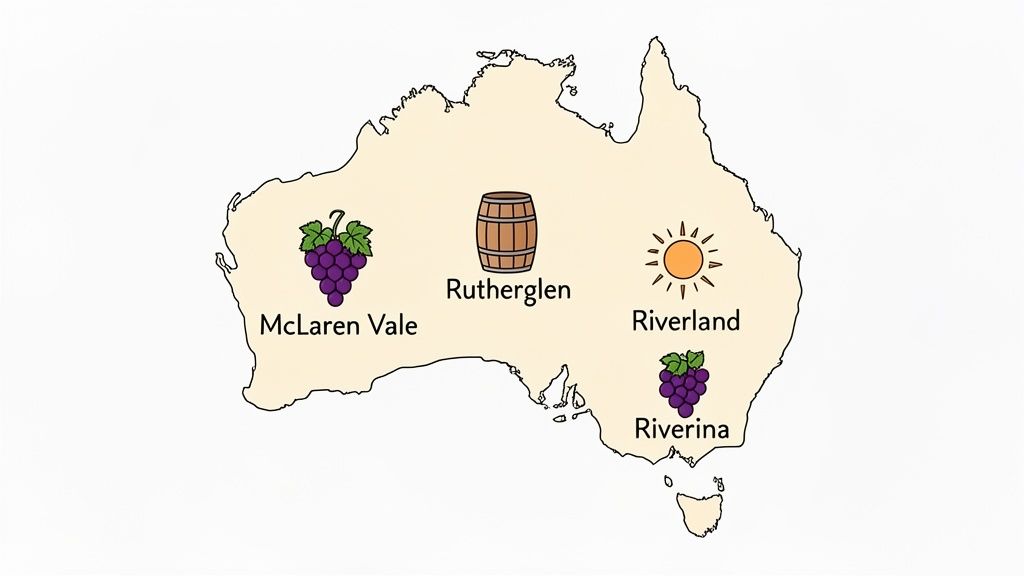
While you can find delicious sweet wines crafted all over the country, a few special pockets of Australia have truly mastered the art, earning global praise for their luscious creations. It's in these places that the unique mix of climate, soil, and generations of know-how creates the perfect storm for producing world-class stickies and fortifieds.
Taking a tour of these hotspots really shows you how geography shapes the flavour in your glass. Each region has its own signature style, a kind of vinous fingerprint that tells a story of place and tradition. Getting to know these key areas is the secret to navigating the incredible world of sweet wines Australia has to offer.
From the sun-drenched vineyards of South Australia to the historic cellars of Victoria, let's explore the epicentres of Australian sweet winemaking.
South Australia: The Fortified and Botrytis Powerhouse
South Australia is the undeniable heartland of Aussie wine, and its reputation for brilliant sweet styles is a huge part of that story. The state is home to a whole range of climates, allowing everything from rich, complex fortifieds to delicate botrytised wines to flourish.
Two regions, in particular, lead the charge here: McLaren Vale and the Riverland.
-
McLaren Vale: Famous for its powerhouse Shiraz, McLaren Vale also has a deep, rich history with fortified wines. Its warm, Mediterranean climate is just right for ripening grapes like Grenache and Shiraz, concentrating their sugars to create complex Tawny and Vintage styles brimming with notes of caramel, nuts, and dried fruits.
-
The Riverland: This warm, inland region gets long, sunny days and sits close to the Murray River, creating the misty morning conditions that are perfect for noble rot. The Riverland is a major source of high-quality, intensely flavoured botrytised wines, often made from Semillon and Riesling.
The state’s influence is massive. A recent National Vintage Report noted a significant rebound in production, with 1.57 million tonnes crushed—an 11% jump from the previous year. This was driven largely by white grapes, which are essential for many of these sweet styles. You can dive deeper into Australia's recent vintage rebound and production figures to get the full picture.
Victoria: Rutherglen's Liquid Gold
When you talk about fortified wines in Australia, one name stands above all others: Rutherglen. This historic Victorian region is the undisputed king of rich, luscious, and incredibly complex Muscat and Topaque (which used to be called Tokay).
The winemaking tradition here goes back over 150 years, with many wineries using a fractional blending system, much like a solera, to age and blend their wines over decades. This painstaking process builds layers of flavour and depth that you just can't find anywhere else.
Rutherglen's long, warm autumns allow the Muscat grapes to achieve incredible ripeness on the vine, developing their signature notes of raisin, rose petal, and spice. The resulting wines are often described as 'liquid history'—a truly unique Australian treasure.
New South Wales: The Riverina's Noble Rot Nectar
Alongside South Australia's Riverland, the Riverina in New South Wales is Australia's other major hub for producing world-class botrytised wines. The region's warm climate, combined with the autumn humidity from its intricate irrigation channels, provides the perfect nursery for noble rot to work its magic.
The star grape here is Semillon. When kissed by botrytis, Riverina Semillon transforms into a golden nectar bursting with flavours of candied apricot, marmalade, and honeycomb, all held together by a beautiful line of fresh acidity. These wines have consistently won major awards on the global stage, proving that Aussie 'stickies' can compete with the very best in the world.
To help connect the dots, here’s a quick snapshot of these premier regions and the signature styles they're famous for.
Key Sweet Wine Regions and Their Signature Styles
| Region | State | Signature Sweet Wine Style | Common Grape Varieties |
|---|---|---|---|
| McLaren Vale | South Australia | Rich Fortifieds (Tawny, Vintage) | Grenache, Shiraz |
| Riverland | South Australia | Botrytised "Noble Rot" Wines | Semillon, Riesling |
| Rutherglen | Victoria | World-Class Fortifieds | Muscat, Muscadelle (Topaque) |
| Riverina | New South Wales | Botrytised "Noble Rot" Wines | Semillon |
This quick geographical tour really shines a light on the incredible diversity within Australian sweet wine. From the nutty, aged complexity of a McLaren Vale Tawny to the vibrant, honeyed intensity of a Riverina botrytis Semillon, there is a regional style to suit every palate and every occasion.
How to Serve, Store and Pair Sweet Wines
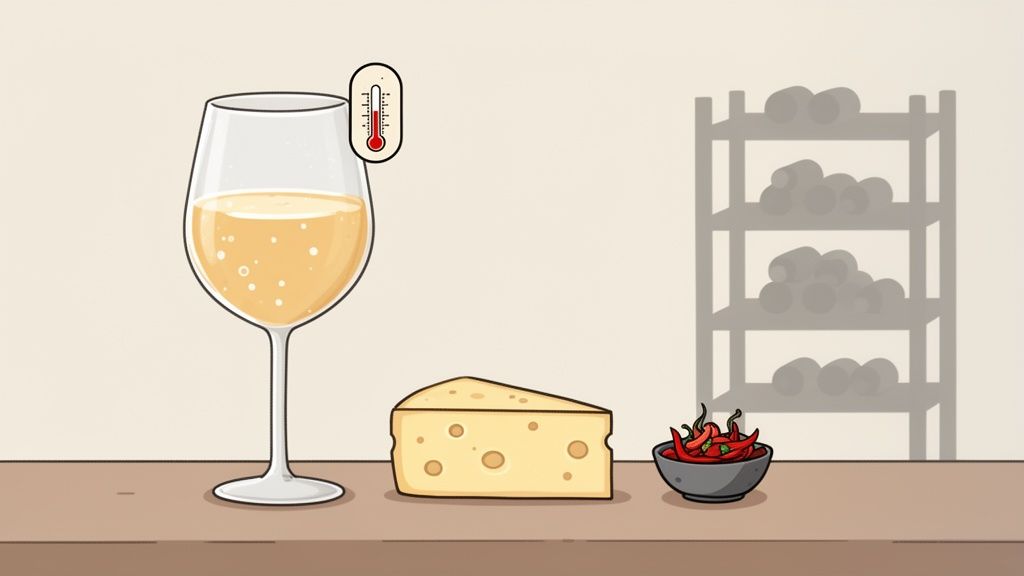
You’ve got the backstory on how they’re made and where they come from, but the real magic happens the moment you pour that first glass. Getting the serving temperature, food pairing, and storage right isn’t just about ticking boxes; it's about unlocking the full experience the winemaker intended.
These details are what turn a great wine into a truly unforgettable moment. It's the difference between just drinking a wine and actually savouring every last drop.
Finding the Perfect Serving Temperature
Temperature has a massive effect on how we perceive sweetness, aroma, and complexity in wine. Serve it too warm, and a sweet wine can feel cloying and heavy. Over-chill it, and you’ll completely mute its beautiful aromatics.
You’re looking for that "sweet spot" where the wine’s personality can really shine. As a rule of thumb, lighter, more delicate styles love a good chill, while the richer, more complex wines show their true colours when served just slightly warmer.
Here’s a quick guide to get it right:
- Lightly Sweet & Sparkling (6–8°C): For vibrant styles like Moscato or a fresh, unoaked sweet Riesling, serve them properly chilled—think sparkling wine temperature. This keeps them crisp, zesty, and refreshing.
- Botrytised & Late Harvest (8–11°C): These wines, like a classic botrytised Semillon, are all about aromatic complexity. A gentle chill lifts those incredible notes of honey, apricot, and ginger without stripping them away. We’re talking cool, not ice-cold.
- Fortified Wines (11–14°C): Richer fortifieds like a McLaren Vale Tawny or a Rutherglen Muscat are at their best at cellar temperature. This allows their complex nutty, caramel, and dried fruit characters to open up and express themselves fully.
A handy tip: pull the wine out of the fridge about 20-30 minutes before you plan to serve it. That little bit of time allows it to warm up just enough to release its full spectrum of flavours.
Pairing Sweet Wines Beyond Dessert
Sure, they're a natural match for the dessert trolley, but if you’re only drinking sweet wines with pudding, you’re missing out on some of the most exciting food pairings imaginable. That beautiful balance of sugar and acidity makes them incredibly versatile partners for a whole world of savoury dishes.
The secret is to play with contrast and harmony. The wine's sweetness can tame fiery spice, cut through rich fats, or complement salty flavours in a way that’s nothing short of spectacular.
Daring and Delicious Savoury Pairings
Ready to get adventurous? Here are a few pairings that really showcase the versatility of the sweet wines Australia has to offer:
- Salty Cheeses: There's a reason salty and sweet is a timeless combination. A botrytised Semillon alongside a sharp, salty blue cheese like Roquefort or Stilton is pure heaven. The wine's sweetness just beautifully tames the cheese's pungent funk.
- Spicy Asian Cuisine: A late-harvest Riesling, with its zippy acidity and hint of sweetness, is a brilliant counterpoint to spicy Thai or Vietnamese food. The sweetness cools the chilli heat while the acidity cleanses the palate, making every bite feel fresh.
- Rich Pâté and Foie Gras: The luscious, honeyed character of a great sticky provides a stunning contrast to the rich, savoury notes of a smooth chicken liver pâté or decadent foie gras.
Of course, the classics are classics for a reason. For more ideas on traditional pairings, check out our guide to finding the perfect sweet matches for desserts and wine.
Storing and Ageing Your Sweet Wines
Proper storage is your best friend for preserving a wine's quality, whether you plan to drink it next week or in ten years. Thanks to their high sugar content and, in some cases, higher alcohol, many sweet wines are fantastic candidates for long-term cellaring.
Non-fortified sweet wines should be stored on their side in a cool, dark place with a stable temperature—just like any other fine wine. Fortified wines, on the other hand, can be stored upright. Their higher alcohol content acts as a natural preservative, protecting them from oxidation.
Once opened, a non-fortified sweet wine will keep well for 3-5 days in the fridge. Fortified wines are much tougher; an opened bottle of Tawny or Muscat can last for several weeks, or even months, if you re-seal it and keep it in a cool spot.
Discover McLaren Vale's Finest Sweet and Fortified Wines
Alright, you’ve got the basics down. Now for the best part—actually tasting these incredible wines. Here at McLaren Vale Cellars, we live and breathe the quality and diversity our home region is famous for, and we've hand-picked a collection that shows it off.
Every bottle we select tells a story of our unique climate, ancient soils, and the sheer dedication of our local winemakers. Let's take a look at some of the styles you can discover right here.
Experience Our Curated McLaren Vale Collection
We've put together a range that has something for everyone, whether you’re just starting your journey with Australian sweet wines or you're a seasoned enthusiast hunting for something truly special. The best way to learn is by tasting, and our collection is the perfect place to start.
Picture this: finishing a beautiful meal with a glass of a classic McLaren Vale Tawny. Its deep amber colour hints at the complex flavours waiting inside—rich notes of toasted walnuts, luscious caramel, and dried figs that unfold with every sip. It’s the perfect companion for a quiet evening or a lively cheese board.
Or maybe you'd prefer to explore a rare and exquisite Botrytised Riesling. These wines are a true labour of love, offering a vibrant bouquet of honeyed apricot, candied citrus peel, and a hint of ginger. The brilliant acidity cuts through the sweetness, leaving a clean, refreshing finish that will have you reaching for another glass.
Each of our wines is more than just a drink; it's an invitation to experience the unique character of McLaren Vale. We stand behind the quality in every bottle, ensuring you receive an authentic taste of our celebrated region.
The Perfect Way to Start Your Tasting Adventure
We get it—choosing from so many amazing options can feel a bit overwhelming. That’s why we’ve created the perfect solution to help you explore without commitment: our curated sample packs.
These packs are an ideal introduction to the different styles of sweet and fortified wines. They let you sample a variety of expressions, helping you pinpoint the flavours and aromas that you enjoy most. Think of it as a guided tour through our cellar, delivered right to your door.
- For the Curious Newcomer: Our mixed sample packs are the best way to discover your preferences.
- For the Enthusiast: Explore our half-case bundles for exceptional value on your favourite styles.
- For the Gifting Guru: A curated pack makes a thoughtful and impressive gift for any wine lover.
Your Confidence Is Our Priority
We want you to feel completely confident when you shop with us. That’s why we’ve put a couple of key promises in place to ensure your experience is seamless and satisfying from start to finish. Our dedication to quality extends beyond the wine itself to every part of our service.
To help you shop with peace of mind, we offer:
- Our Taste Guarantee: We’re so confident in the quality of our selections that if you’re not completely happy with your purchase, we’ll make it right. Simple as that.
- Free Delivery Australia-Wide: Enjoy the convenience of free shipping on all orders over $100, bringing the best of McLaren Vale directly to you.
The rich history of fortified winemaking is deeply woven into the fabric of our region. To dive deeper into this heritage, you can explore the rich heritage of McLaren Vale fortified wines, a journey that highlights the timeless traditions behind these exceptional drops.
Ready to find your new favourite? Explore our full range of sweet and fortified wines today and let us bring the authentic taste of McLaren Vale to your glass.
Your Questions Answered: A Guide to Australian Sweet Wines
Diving into the world of Aussie sweet wines can bring up a few questions. The lingo can seem a bit tricky at first, and there are plenty of myths floating around about everything from alcohol levels to how long a bottle lasts once opened. We’re here to clear the air.
Think of this as your go-to cheat sheet. We'll break down the key differences between the major styles, bust a few long-standing myths, and arm you with the practical know-how to buy, open, and enjoy your next bottle with complete confidence.
What Is the Difference Between Dessert Wine and Fortified Wine?
This is a brilliant question because the two terms get thrown around together all the time, but they aren't the same thing. The easiest way to think about it is that one is a broad category, and the other is a specific winemaking technique.
‘Dessert wine’ is simply an umbrella term for any sweet wine you’d typically enjoy with, or as, dessert. This covers a massive range of styles, from light and zesty late-harvest Rieslings to intensely rich and complex botrytised Semillons. If it’s sweet and served at the end of a meal, you can call it a dessert wine.
‘Fortified wine’, on the other hand, points to a very specific process. As we’ve covered, it involves adding a distilled spirit (usually grape-based, like brandy) to the wine while it’s still fermenting. This act of fortification stops the yeast in its tracks, which preserves the natural grape sugars and, of course, bumps up the alcohol content.
So, here's the key takeaway: all fortified sweet wines (like Tawny or Muscat) can be considered dessert wines, but not all dessert wines are fortified. A late-harvest wine, for example, gets its sweetness naturally from the vineyard and has no added spirit, making it a dessert wine but not a fortified one.
Getting this distinction down helps you know exactly what to expect in your glass—both in flavour and alcoholic strength—as you explore the incredible world of sweet wines Australia has to offer.
Are All Sweet Wines High in Alcohol?
This is probably one of the biggest myths out there, and the short answer is a definite no. The confusion almost always stems from people lumping all sweet wines in with the fortified style, which is, by nature, higher in alcohol.
Let’s set the record straight:
- Fortified wines, like a classic McLaren Vale Tawny or a Rutherglen Muscat, are absolutely higher in alcohol. The addition of spirit is designed to lift their alcohol by volume (ABV) to around 17-20%.
- Non-fortified sweet wines, however, are often the complete opposite. Many are actually lower in alcohol than your average dry table wine.
How can that be? It all comes back to fermentation. For styles like late-harvest or botrytised wines, the sugar levels in the grapes are so concentrated that the yeast simply can't convert all of it to alcohol before it gives up. Fermentation stops naturally, leaving behind a wine that is both beautifully sweet and refreshingly low in alcohol—often somewhere between 8% and 12% ABV. A German Spätlese Riesling, one of the world's benchmarks, can even dip as low as 7.5%.
So, if you're after a lighter way to finish a meal, a gorgeous botrytised Semillon from the Riverina is a fantastic choice that won’t weigh you down.
How Long Can I Keep a Bottle of Sweet Wine Open?
How long an open bottle of sweet wine will last depends entirely on one thing: whether it's fortified or not. That higher alcohol and sugar content in fortifieds acts as a brilliant natural preservative, giving them some serious staying power.
Here’s a simple rule of thumb for storing your open bottles:
- Non-Fortified Sweet Wines: Treat these just like you would a bottle of dry white wine. This goes for your late-harvest Rieslings and botrytised Semillons. Once open, pop the cork or screw cap back on tightly and store it in the fridge. It'll stay fresh and vibrant for about 3 to 5 days.
- Fortified Sweet Wines: This is where you can relax. An opened bottle of Tawny, Muscat, or Topaque is incredibly resilient. As long as you seal it properly and keep it in a cool, dark place (the fridge is also great), it will happily last for several weeks, often even a couple of months, without losing its charm.
This incredible durability makes fortified wines the perfect bottle to have on hand for the occasional after-dinner treat, since you never have to worry about finishing it all in one go.
Are Stickies Just Another Name for Sweet Wine?
Yes, spot on! 'Stickies' is a wonderfully affectionate and very Australian term for sweet dessert wines. It's a name that just perfectly captures the luscious, sometimes syrupy texture of these wines—especially the golden nectar made from grapes with noble rot.
The name almost certainly came from the wonderfully sticky feel of the unctuous liquid in the glass and on your palate. While it’s definitely an informal term, it's used and understood by everyone from casual drinkers to top sommeliers across the country.
So, if you’re in a bottle shop or at a winery and hear someone recommend a great Aussie 'sticky', they're simply talking about a delicious sweet wine. It’s a fantastic catch-all that proudly covers the whole spectrum, from light, golden botrytis styles to deep, dark fortifieds. Embrace it—it's all part of the fun of enjoying sweet wine down under.
Ready to explore the rich, complex world of McLaren Vale's finest sweet and fortified wines? At McLaren Vale Cellars, we've curated a collection that represents the very best of our region. From classic Tawnies to rare dessert styles, discover your next favourite today. https://www.mclarenvalecellars.com
Comments (0)
There are no comments for this article. Be the first one to leave a message!