
Welcome to the wonderful, and often misunderstood, world of sweet sparkling wines. Let's move past the old myth that 'sweet' means simple. This guide is here to pop the cork on a category that’s brimming with complexity, elegance, and a whole lot of fun.
These wines are a vibrant spectrum of flavours, from the light, floral notes of an Italian Moscato to the rich, layered profiles of a French Demi-Sec Champagne.
Your Guide to Sweet Sparkling Wines
First things first: forget any idea that sweet sparkling wine is just a one-dimensional, sugary drink. In reality, this category is incredibly diverse, offering sophisticated options perfect for a massive range of palates and occasions.
The sweetness you taste isn't an afterthought; it's a deliberate choice by the winemaker. It's a carefully measured touch designed to balance the wine's natural acidity and make its fruit flavours sing. Think of it less like adding sugar to a drink and more like a chef using a pinch of sweetness to bring a savoury dish to life.
Our journey starts by understanding that 'sweet' isn't a single note but a whole scale of flavour. We'll explore this spectrum together, kicking off with how to decode the language on a wine label.
What You Will Discover
We'll take a trip through the rolling hills of Italy to the prestigious cellars of France, introducing you to the most popular styles and what makes each one unique. You'll learn to spot the key characteristics that define these beloved wines:
- Aromatic Profiles: We’ll uncover the signature scents of peach, apricot, orange blossom, and honeysuckle that make these wines so inviting.
- Production Methods: You'll get to grips with how winemakers create both the sweetness and the bubbles, from the tank method used for Prosecco to the traditional method for Champagne.
- Regional Specialties: Discover iconic wines like Moscato d'Asti, Asti Spumante, and Lambrusco Dolce, each with its own distinct sense of place.
Beyond the Glass
But it's not all about what's in the glass. We'll dive into the practical side of enjoying sweet sparkling wines, uncovering delicious food pairings that might just surprise you. You'll see how these wines can complement everything from spicy Asian cuisine to creamy cheeses and decadent desserts. The goal is to give you the confidence to pick the perfect bottle for any meal or celebration.
Think of this guide as your friendly manual to confidently picking the perfect sweet bubbly, whether it's for a grand event or just a quiet Tuesday night treat.
We'll also shine a light on some exceptional selections from renowned regions like McLaren Vale, connecting you with our own curated choices and expert knowledge. By the end, you'll have a whole new appreciation for the artistry and versatility behind every bottle of sweet sparkling wine.
How to Read Sparkling Wine Sweetness Levels on Labels
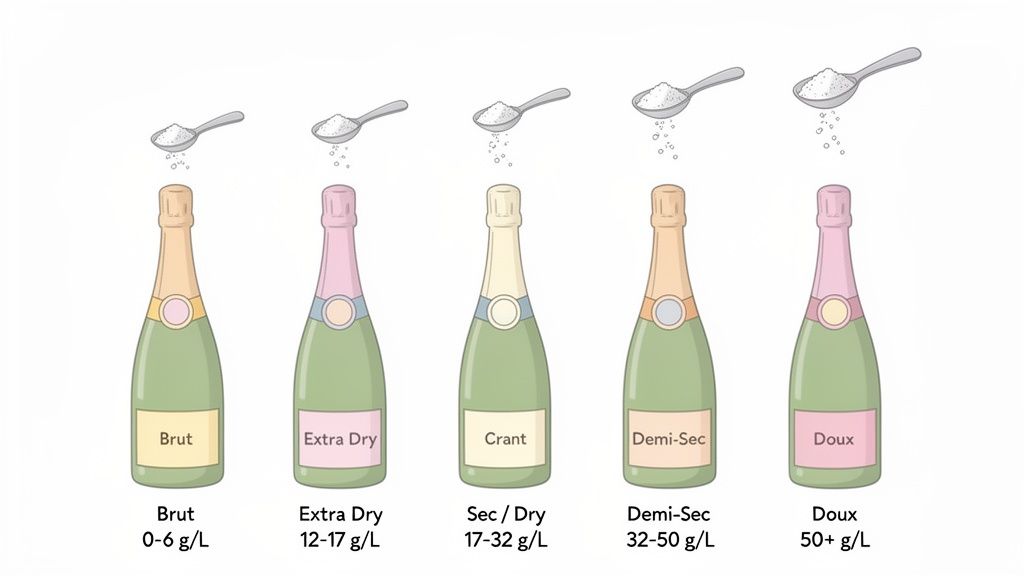
Stepping into the world of sparkling wine can feel a bit like learning a new language, especially when all you want is to find a bottle with the perfect touch of sweetness. The terms on the label are your best guide, but let's be honest—they aren’t exactly straightforward.
Think of it like ordering a coffee. You know exactly what you’re getting with "no sugar," "one sugar," or "extra sweet." The sweetness scale for bubbly works the same way, using specific terms to signal how much sugar is left in the wine after fermentation.
Getting these terms down is the secret to unlocking a world of flavour. It turns a hopeful guess in the wine aisle into a confident choice, every single time.
Decoding the Sweetness Spectrum
Here’s the first thing to know: the language of sparkling wine sweetness is wonderfully counterintuitive. You'd be forgiven for thinking a wine labelled "Dry" would be the absolute driest option, but that's not the case. This is where most people get tripped up.
For example, a bottle labelled "Extra Dry" is actually sweeter than one labelled "Brut". It's a funny historical quirk from a time when most sparkling wines were much sweeter than they are today. Back then, an "extra dry" style was still quite luscious compared to what we now consider truly dry.
This is exactly why learning the official scale is so important. It runs from the bone-dry styles with virtually no sugar all the way up to rich, sweet dessert wines. Once you know the lingo, you can pinpoint exactly where your preference for sweet sparklings fits in.
From Brut to Doux Explained
Every term on that label corresponds to a specific range of residual sugar, measured in grams per litre (g/L). This tells you precisely how much sweetness shapes the wine's final taste. Let's break down the most common terms you'll find.
-
Brut: The most popular style of sparkling wine on the planet. It’s dry, crisp, and refreshing, with just enough of a fruity hint to balance its acidity, making it incredibly versatile. It contains 0-12 g/L of residual sugar.
-
Extra Dry: Now, here's that confusing one. It's a clear step sweeter than Brut, with more noticeable fruitiness and a softer finish. It’s a fantastic starting point for anyone curious about off-dry styles, containing 12-17 g/L of sugar.
-
Dry (or Sec): Climbing further up the scale, "Dry" (or the French "Sec") is noticeably sweeter than both Brut and Extra Dry. Here the sweetness is more obvious, pairing beautifully with slightly richer foods. It contains 17-32 g/L of sugar.
These three cover the drier side of things. But for those of us who truly love a sweet sparkling wine, the next levels are where the real magic happens.
Finding Your Sweet Spot
If your palate leans towards all things sweet, then "Demi-Sec" and "Doux" are the names to look for. These wines are crafted to be intentionally luscious and fruity—perfect for desserts or even as a clever pairing for spicy dishes.
A wine's sweetness is a deliberate choice made by the winemaker. A high-quality sweet sparkling wine is a thing of beauty—balanced, complex, and a true expression of skill. It’s definitive proof that 'sweet' and 'sophisticated' absolutely belong in the same glass.
Demi-Sec literally translates to "half-dry," but make no mistake, it's firmly in the sweet camp. This is a brilliant match for fruit tarts, cheesecake, or even adventurous pairings like foie gras. A Demi-Sec contains a generous 32-50 g/L of residual sugar.
Finally, Doux is the sweetest of them all. This is a true dessert-in-a-glass style of sparkling. While rare, these wines offer a rich, decadent experience with over 50 g/L of sugar, making them the perfect companion for your most indulgent sweets.
To make shopping a breeze, here’s a quick reference guide to keep handy.
Sparkling Wine Sweetness Levels at a Glance
This table is your cheat sheet for decoding sparkling wine labels, helping you find the perfect bottle every time.
| Label Term | Sweetness Level | Residual Sugar (grams/litre) |
|---|---|---|
| Brut | Dry | 0-12 g/L |
| Extra Dry | Off-Dry | 12-17 g/L |
| Dry (Sec) | Medium-Dry | 17-32 g/L |
| Demi-Sec | Sweet | 32-50 g/L |
| Doux | Very Sweet | 50+ g/L |
With this chart, you'll be able to navigate the sparkling aisle with the confidence of a seasoned pro, ready to pick out the perfect level of sweetness for any occasion.
Exploring the Most Popular Sweet Sparkling Wine Styles
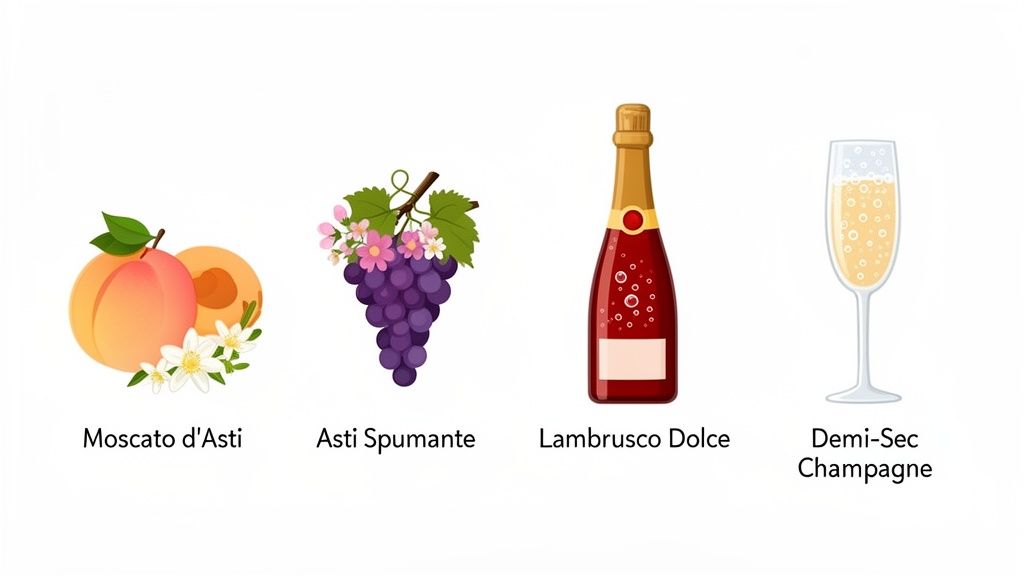
Now that you can confidently read a wine label, it’s time for the fun part—exploring the incredible variety of sweet sparkling wines from around the globe. Each style tells a story about its homeland, from the sun-drenched hills of Italy to the prestigious vineyards of France.
These aren't just sugary drinks; they're crafted with real intention and tradition. Getting to know their unique profiles will help you find the perfect bottle that truly matches your taste and the occasion. Let's take a tour of the most beloved styles.
We'll start our journey in Italy, a country that has absolutely perfected the art of creating aromatic, fruit-forward sweet sparkling wines adored worldwide.
Moscato d'Asti: The Gentle Italian Charmer
When people think of approachable, aromatic sweet sparklers, Moscato d'Asti is often the first name that springs to mind. Hailing from Italy's Piedmont region, this wine is made from the Moscato Bianco grape, one of the oldest and most fragrant grape families in the world.
It’s a frizzante style, which means it’s gently sparkling rather than fully bubbly like Champagne. This delicate effervescence is part of its charm, making it feel light and refreshing on the palate.
Moscato d'Asti is famous for its captivating floral and fruity aromas. Expect a bouquet bursting with fresh peaches, ripe apricots, orange blossom, and honeysuckle. With a low alcohol content, typically around 5.5% ABV, it's a fantastic choice for daytime sipping or as a light aperitif. Its delicate sweetness is always balanced by zesty acidity, ensuring it never feels heavy or cloying.
Moscato d'Asti is like capturing summer in a glass. Its gentle fizz and notes of stone fruit make it an incredibly versatile wine, perfect for pairing with fruit-based desserts, light pastries, or even a spicy Thai curry to cool the heat.
Asti Spumante: The Vibrant Celebratory Sparkler
Just next door to Moscato d'Asti, both geographically and genetically, is Asti Spumante. Also from Piedmont and made from the same Moscato Bianco grape, Asti Spumante offers a different experience altogether.
The key difference is the fizz. Asti is a spumante wine, meaning it's fully sparkling with a lively, persistent bubble that feels much more celebratory. This is achieved by stopping fermentation at just the right moment to trap more carbonation while retaining the grape's natural sweetness.
While it shares the classic Moscato aromas of peach and orange blossom, Asti Spumante's flavour profile is often bolder and more pronounced. It also has a slightly higher alcohol level than its frizzante cousin, usually between 7% and 9.5% ABV. It’s a brilliant and affordable alternative to pricier sparkling wines for toasts and celebrations. For a deeper dive into different bubbly types, explore our comprehensive guide to sparkling wine varieties and styles.
Demi-Sec and Doux Champagne: The Luxurious French Classics
Now, let's travel to the prestigious vineyards of Champagne, France. While this region is world-famous for its dry Brut styles, it also produces exquisite sweet sparkling wines that showcase incredible complexity and elegance.
Demi-Sec (32-50 g/L of sugar) and Doux (50+ g/L) Champagnes are made with the same painstaking traditional method as their drier relatives. This process involves a second fermentation right in the bottle, creating those fine, persistent bubbles and adding layers of toasty, brioche-like notes from ageing on lees (spent yeast).
These wines are anything but simple. They offer a rich tapestry of flavours, combining ripe fruit notes like baked apple and poached pear with hints of honey, candied citrus, and toasted almonds. The sweetness is beautifully woven together with the wine's high acidity, creating a balanced and luxurious finish.
- Demi-Sec: Translating to "half-dry," this style is noticeably sweet and is a classic pairing for richer desserts like crème brûlée or fruit tarts. It also creates a stunning contrast with salty, savoury foods like blue cheese or foie gras.
- Doux: The sweetest classification for Champagne, Doux is a true dessert wine. It's a rare find but offers an unforgettably rich and decadent experience, perfect for sipping alongside the most indulgent sweet creations.
Lambrusco Dolce: The Fun and Fruity Red Fizz
Our final stop takes us back to Italy, this time to the Emilia-Romagna region, home of the delightful Lambrusco. While Lambrusco comes in a whole range of styles from dry to sweet, the Lambrusco Dolce (sweet) version is a joyfully uncomplicated and food-friendly option.
Unlike the other wines on our list, Lambrusco is typically a red sparkling wine. It pours a brilliant ruby colour and fizzes with notes of ripe strawberries, juicy cherries, and wild berries.
Its charm lies in its simple, fruit-forward nature. The gentle sweetness is balanced by a pleasant tartness that makes it incredibly refreshing when served chilled. Think of it as the ultimate pizza wine, or pair it with charcuterie boards, burgers, and spicy sausages. Its approachable style makes it a real crowd-pleaser for any laid-back get-together.
Mastering Food Pairings with Sweet Sparkling Wines
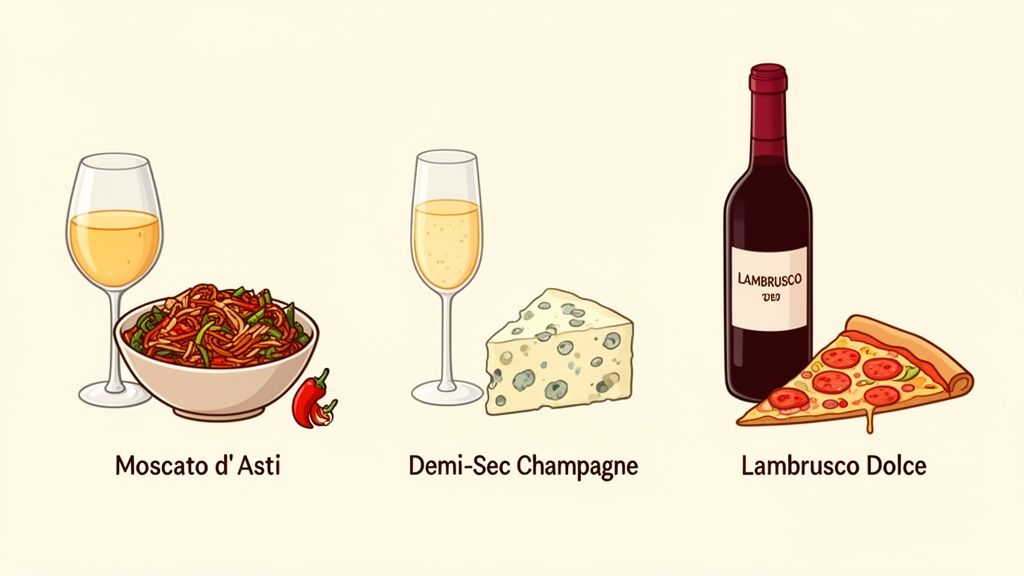
This is where the real fun begins. Pairing food with a sweet sparkling wine is an adventure that goes so much further than the dessert trolley. The secret lies in a beautifully simple principle: complement or contrast. Once you get your head around this, you unlock a world of incredible flavour combinations that will surprise and delight your guests.
Forget the old, stuffy rule that sweet wines only belong with sweet foods. Imagine pouring a delicate Moscato d'Asti not just with a fruit tart, but alongside spicy Szechuan chicken to perfectly tame the heat. Picture a rich Demi-Sec Champagne cutting through the creamy intensity of a sharp blue cheese or foie gras.
These wines are far more versatile than they're often given credit for. With a few key principles in your back pocket, you’ll have the confidence to experiment and discover just how adaptable sweet fizz truly is.
The Two Golden Rules of Pairing
To create pairings that people will talk about for weeks, you can either match intensity with intensity (complement) or use the wine to balance out a dominant flavour in the dish (contrast). Both approaches can deliver spectacular results.
-
Complementing Flavours: This is all about finding harmony by pairing the wine with dishes that share similar profiles. The fruity, floral notes of a Moscato d'Asti, for example, are a natural match for desserts topped with peaches, apricots, or pears. Simple.
-
Contrasting Flavours: This is often where the magic happens. The sweetness in the wine acts as a perfect counterbalance to spice, salt, and fat. At the same time, the wine's acidity and bubbles cleanse the palate, getting you ready for the next delicious bite.
Perfect Pairings for Cheeses and Appetisers
A well-chosen sweet sparkler can turn any cheese board or starter into a showstopper. The wine's lively fizz and acidity slice right through rich textures, while its sweetness plays off both salty and creamy elements.
For softer, creamier cheeses like Brie or Camembert, a fruity Asti Spumante is a brilliant choice. When you’re dealing with pungent blue cheeses like Roquefort or Gorgonzola, a Demi-Sec Champagne is a classic and unbeatable pairing. The wine’s sweetness just mellows the cheese's sharp bite, creating a perfect balance.
The rule of thumb for dessert pairing is simple: your wine should always be sweeter than your dessert. If the food is sweeter, it can make the wine taste dull or even a bit sour.
When it comes to appetisers, think contrast. The gentle sweetness of a Moscato Rosé is a fantastic partner for salty prosciutto-wrapped melon or a savoury pâté on toast. You can explore a huge variety of bubbly options in our sparkling wine recommendations guide to find your perfect match.
Main Courses Beyond Expectations
Yes, you can absolutely serve sweet sparkling wines with the main course! They really come into their own when paired with spicy cuisines, where their sweetness provides a welcome relief from the heat.
- Spicy Asian Dishes: A slightly sweet Lambrusco Dolce or an off-dry Prosecco can beautifully temper the fire of a Thai green curry or spicy Korean fried chicken.
- Rich Meats: A Demi-Sec Champagne has the body and complexity to stand up to rich dishes like glazed duck or seared foie gras, cutting through the fat and refreshing the palate between mouthfuls.
This growing appreciation for pairing wine with a variety of foods is something we see right here at home. Total wine sales have held steady at 1.08 billion litres, with Aussie consumption accounting for a massive 41%—that's roughly 443 million litres keeping local cellars well-stocked.
Desserts and Sweet Treats
This is the most traditional territory for sweet sparkling wines, and for good reason. A well-paired bubbly can elevate a simple dessert into something truly special.
For fruit-based desserts like apple tarts, berry pavlova, or poached pears, the stone fruit and floral notes of a Moscato d'Asti are a perfect match. For richer, creamier desserts like cheesecake or crème brûlée, the complexity of a Demi-Sec Champagne is an ideal companion.
While your sweet sparkling wines are perfect for sipping alongside meals, don't forget that other wines can be used directly in your cooking to unlock incredible depth and flavour. For more on using wines as ingredients, you might find this guide on cooking with dry sherry really helpful.
How to Properly Serve and Store Your Sparkling Wine
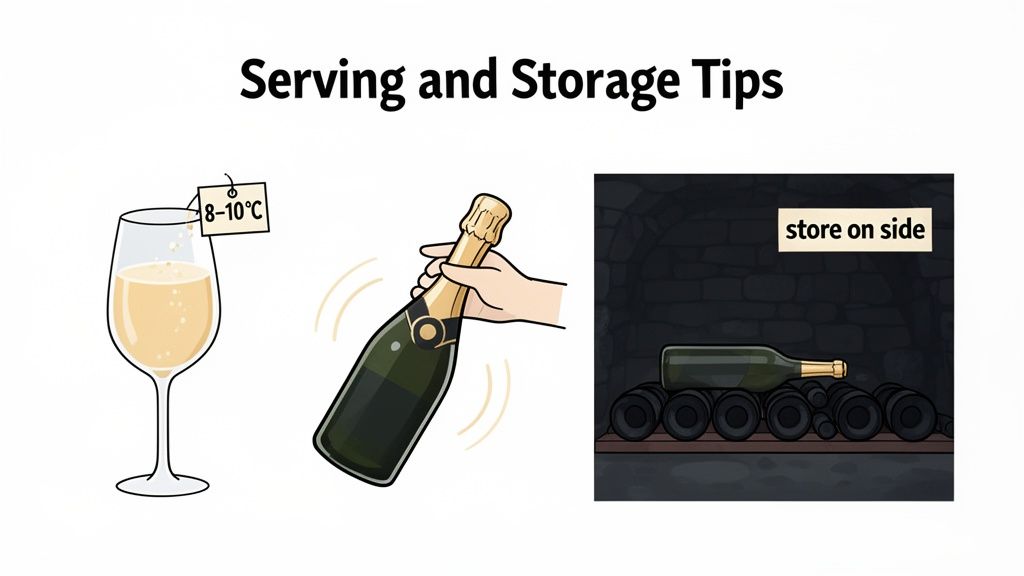
To really unlock the magic in your favourite sweet sparkling wines, getting the serving and storage right is non-negotiable. These simple steps are the difference between a good glass of wine and an exceptional one, ensuring every bubble, aroma, and flavour shines through exactly as the winemaker intended.
From the moment a bottle comes home to the final pour, a bit of care goes a long way. Paying attention to details like temperature, glassware, and even how you pop the cork makes all the difference in preserving the quality and vibrancy of the wine.
The Ideal Serving Temperature
Temperature is probably the single most important factor when serving sparkling wine. While all bubbly is best served chilled, the sweet styles actually benefit from being slightly less cold than their dry Brut cousins.
If you serve a Moscato d'Asti or a Demi-Sec Champagne straight from an ice bucket, you'll mute all those beautiful, delicate floral and fruit aromas. A slightly warmer temperature allows those expressive notes of peach, honeysuckle, and ripe pear to really blossom.
- Sweet Sparkling Wines (Moscato, Asti, Demi-Sec): Aim for 6–8°C. This keeps the wine refreshing while letting its aromatic complexity come alive.
- Dry Sparkling Wines (Brut): These are better served a touch colder, around 5–7°C, to really accentuate their crispness and fine bubbles.
Here's a quick tip: your fridge is probably set to about 4°C. For a sweet sparkling, just pull the bottle out 15-20 minutes before you plan to serve it. That's all it needs to warm up to the perfect temperature.
Opening the Bottle Safely and Correctly
That dramatic "pop" of a cork might feel festive, but it's not the best way to treat your wine. A loud pop means you're losing precious carbonation—the very bubbles you paid for! A controlled, quiet opening is how the pros do it.
- Chill it Down: A warm bottle is a recipe for a flying cork. Make sure it's properly chilled to keep the pressure inside stable.
- Foil and Cage Off: Peel off the foil, then untwist the wire cage. Critically, keep your thumb pressed firmly on top of the cork the entire time.
- Tilt and Twist: Hold the bottle at a 45-degree angle, pointing it away from everyone (including you!). Grip the cork with one hand and twist the base of the bottle—not the cork—with your other hand.
- Listen for the "Sigh": As you feel the cork loosen, gently control its release until you hear a soft hiss or sigh. This keeps the bubbles in the wine and guarantees a smooth pour.
Choosing the Right Glassware
The glass you pour your wine into directly impacts how you experience its flavour and aroma. While the classic coupe looks glamorous, it lets those lovely bubbles escape far too quickly.
For most sparkling wines, including the sweet styles, a tulip glass is your best bet. Its wider bowl lets the aromas gather, while the tapered rim funnels them straight to your nose, enhancing the entire tasting experience. A traditional flute is also a great option, as its tall, narrow shape is brilliant for preserving that stream of bubbles. For more in-depth advice, you can learn more about how to store and serve Champagne for maximum enjoyment.
Long-Term Storage Essentials
If you're not planning to drink your sweet sparkling wine right away, proper storage is key to keeping it in perfect nick. The goal is simple: create a stable environment that protects the wine from its enemies—light, heat, and vibration.
- Keep it Cool and Dark: Store your bottles in a cool, dark place with a consistent temperature, ideally between 10–13°C.
- Store Horizontally: Always lay bottles on their side. This keeps the cork moist, preventing it from drying out and letting destructive oxygen seep in.
- Avoid Vibration: Keep your wine away from appliances like the fridge or washing machine, which can disturb the sediment and mess with its delicate structure over time.
Finding and Buying Your Perfect Bottle of Sweet Bubbly
Alright, you're now armed with the insider knowledge on sweetness labels and the most popular styles out there. It's time to put that to good use and track down a bottle of sweet bubbly you’ll absolutely love. This is where the fun begins—turning what you’ve learned into confident choices, whether you’re wandering the wine aisle or browsing online.
The single most important thing to remember? The label is your best friend. Seriously. Keep an eye out for those key terms—Demi-Sec or Doux are your big clues for pronounced sweetness. If you're looking at an Italian wine like Lambrusco, "Dolce" is the word you want. These are your signposts, guiding you straight to the good stuff and taking the guesswork out of the equation.
Navigating the Wine Aisle
When you're in a bottle shop, don’t be afraid to look beyond the main sparkling wine section. You’ll often find sweet sparklings like Moscato d'Asti or Asti Spumante hanging out with their compatriots. A quick trip to the Italian section is almost always a surefire way to find these gorgeous, aromatic, and fruit-forward wines.
On the flip side, if you're after something with more complexity and richness, the French section is your destination. This is where you'll find elegant Demi-Sec Champagne. Think of its signature profile: baked apple, honey, and brioche notes that are just perfect with sophisticated desserts or even rich, savoury foods like pâté. Knowing these little regional secrets makes shopping so much easier.
The best advice is to trust your own palate and don't be afraid to experiment. Start with a style that sounds delicious to you—maybe a light, floral Moscato—and use that as your starting point. At the end of the day, your personal taste is the only guide that truly matters.
Shopping Online for Sweet Bubbly
Shopping online throws open the doors to a massive world of options. It's a fantastic way to explore curated collections and unearth hidden gems you might never stumble upon in a local store. You can easily hunt down specific styles and dive deep into regional specialties without leaving your couch.
Here are a few tips to make your online hunt a success:
- Use the Filters: Every good online wine store has filters. Get clicking! Select "sweet" or "demi-sec" under the taste profile, or filter by a specific type like "Moscato" or "Lambrusco Dolce" to zero in on what you want in seconds.
- Read the Tasting Notes: The descriptions are your secret weapon. Pay close attention to them. They'll give you clues about the wine's flavour profile, mentioning notes like peach, apricot, or honey that confirm you’re on the right track for a sweet style.
- Look for Curated Packs: If you’re just starting out, a curated sample pack is a brilliant move. Exploring a McLaren Vale Cellars sparkling bestsellers pack is a great way to taste a few different styles side-by-side to discover what you genuinely enjoy.
Your Sweet Sparkling Questions, Answered
Jumping into the world of sweet sparkling wine always brings up a few good questions. Whether you're wondering about quality or just how to handle a half-finished bottle, getting some clear answers can make all the difference. Let's tackle some of the most common queries and clear things up.
Think of this as your go-to guide for diving deeper into this delightful style of wine.
Does Sweet Sparkling Wine Mean It Is Low Quality?
Absolutely not. This is one of the biggest and most persistent myths in the wine world.
A sparkling wine's sweetness is a deliberate stylistic choice made by the winemaker, not some shortcut to cover up flaws. It's all about adding a precise mixture of wine and sugar—known as the dosage—right before the final cork goes in. World-renowned regions like Champagne produce incredible Demi-Sec styles, and Italy’s Piedmont region is famous for its aromatic Asti Spumante. Quality comes down to the grapes, the vineyard, and the winemaker's skill, never the sugar level alone.
What Is The Difference Between Moscato and Asti Spumante?
This is a great question, as both of these famous Italian sparklers come from the Piedmont region and are made from the same Moscato Bianco grape. Yet, they have completely different personalities, mainly due to their fizz and alcohol levels.
- Moscato d'Asti is what's known as frizzante, which means it's only lightly sparkling. It’s beautifully delicate, with a lower alcohol content (around 5.5%) and soft notes of peach and orange blossom.
- Asti Spumante is a spumante, meaning it's fully sparkling with much more lively and persistent bubbles. It packs a bit more of a punch with a higher alcohol content (7–9.5%) and a bolder, more fruit-forward profile.
Think of Moscato d'Asti as the soft-spoken, aromatic sibling and Asti Spumante as its vibrant, life-of-the-party counterpart. Both are delicious, but they bring very different vibes to the table.
How Long Can I Keep an Open Bottle of Sparkling Wine?
Once that cork is popped, the clock starts ticking on those precious bubbles. To give yourself a fighting chance, you need a proper sparkling wine stopper that clamps down and creates an airtight seal. That old trick of putting a spoon in the bottle neck? Sadly, it’s just a myth.
When sealed correctly with a dedicated stopper and popped back in the fridge, your open bottle of sweet sparkling wine will last for one to three days. The flavours will still be lovely, but you'll notice the fizz fading with each passing day. For the best experience, there’s no substitute for enjoying your bubbly as fresh as possible.
Ready to discover your next favourite sweet sparkling wine? Explore the curated collections at McLaren Vale Cellars, featuring exceptional drops from South Australia and beyond. Find your perfect bottle today!


Comments (0)
There are no comments for this article. Be the first one to leave a message!