
Sweet Australian wines are an incredibly diverse bunch, covering everything from crisp, off-dry Rieslings to sticky, decadent fortified Muscats. The one thing they all have in common is residual sugar – the natural grape sugar that’s deliberately left behind after the winemaking process is finished.
Your Journey into Sweet Australian Wines
Let's be honest, when some people hear "sweet wine," they think of something simple, maybe even cloying. But the reality of Australian sweet wine couldn't be further from that. It’s a sophisticated and wonderfully varied world with a style for every palate and occasion.
It’s also easy to confuse fruity flavours—like a burst of ripe berries or tropical notes in a dry white—with actual sweetness. A wine tastes sweet because the winemaker has intentionally left some residual sugar in the final bottle. This isn't about tipping in a bag of sugar; it's a careful balancing act where the fermentation is stopped just at the right moment, before the yeast converts all the natural grape sugars into alcohol. The result is a perfect harmony between sweetness, acidity, and flavour.
What You Will Discover
Think of this guide as your map to exploring this delightful corner of the wine world. We'll pull back the curtain on the winemaking magic and take you on a tour through Australia’s best-known sweet wine regions, shining a special spotlight on treasures from places like our own McLaren Vale. By the end, you’ll have a real-world understanding of:
- Winemaking Methods: We’ll break down how techniques like late harvesting and fortification create completely different styles of sweet wine.
- Key Grapes and Regions: You'll discover which areas, from the Clare Valley to Rutherglen, are famous for their sweet specialities.
- Decoding Labels: Terms like 'Botrytis' and 'Off-Dry' will no longer be a mystery, so you can pick a bottle with confidence.
- Perfect Pairings: Forget just sticking to the dessert course. We’ll show you food pairings that can elevate an entire meal.
Think of this journey like exploring coffee. You might start with a simple flat white, but you soon discover the nuances of a single-origin pour-over. Sweet wines are just the same. They range from the light, zesty refreshment of an off-dry Riesling to the deep, complex comfort of a vintage fortified Shiraz.
This exploration will give you the confidence to appreciate the incredible craftsmanship behind these bottles and, most importantly, help you find your next favourite. For a deeper dive into pairing and serving, be sure to check out our guide to enjoying delectable dessert wines.
Right, let's get started.
How Winemakers Craft Sweet Australian Wines
That delicious sweetness in your glass is never an accident. It’s the result of some seriously skilled and often nerve-wracking winemaking. Australian producers have mastered several fascinating techniques to capture and preserve natural grape sugars, with each method creating a completely unique style of sweet wine.
Getting your head around these methods is the key to truly appreciating what you’re sipping.
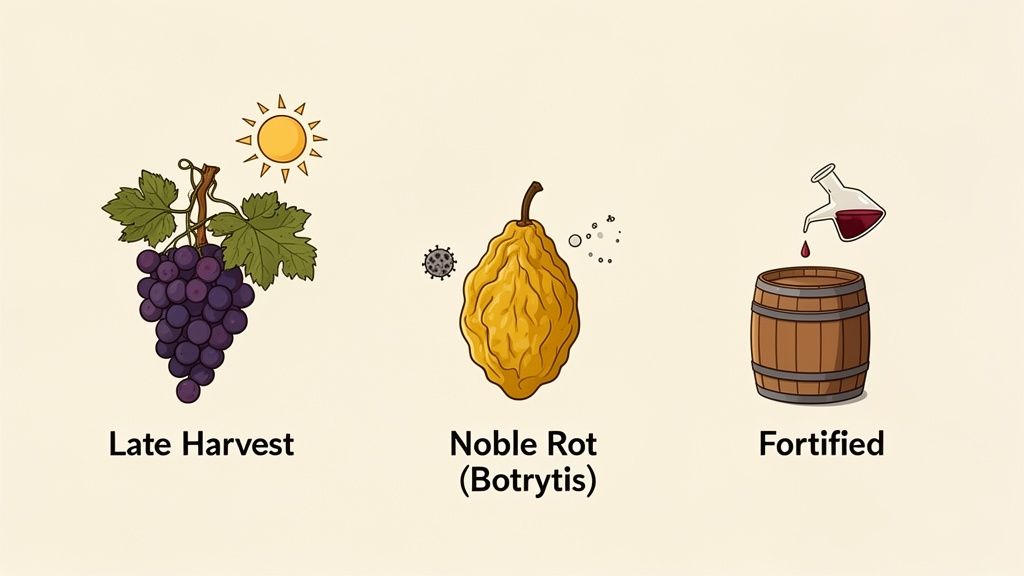
One of the most straightforward approaches is called late harvest. The name says it all: winemakers simply leave the grapes hanging on the vine for weeks longer than they would for a dry wine. This extra time allows the grapes to gradually dehydrate, concentrating their sugars, flavours, and acidity.
Think of it like the difference between a plump, fresh grape and a raisin. The raisin is tiny but packs a massive, sugary punch because most of the water has gone. That’s exactly what’s happening on the vine, leading to a wine that’s lusciously sweet but still has a zip of acidity to keep it fresh.
The Magic of Noble Rot
Another captivating method involves a special fungus called Botrytis Cinerea, or as winemakers lovingly call it, noble rot. Now, "rot" might not sound too appealing, but when conditions are just right—misty mornings followed by sunny afternoons—this fungus is pure gold. It carefully punctures the grape skins, allowing water to evaporate while concentrating the sugars inside.
This process gives us some of the world's most complex and celebrated dessert wines. Botrytis doesn’t just concentrate the sugar; it adds its own signature flavours of honey, ginger, and orange marmalade to the wine.
“Noble rot is a high-risk, high-reward game for winemakers. It requires perfect weather conditions, but when it works, the result is a truly extraordinary wine with layers of complexity you won't find anywhere else.”
The harvest for these wines is painstaking. It often involves picking individual berries by hand, since not all grapes develop botrytis at the same time. This incredible attention to detail makes these wines, often called 'stickies' here in Australia, a true labour of love.
The Power of Fortification
Finally, we have fortification, a classic technique behind many of Australia’s most iconic sweet wines. The method involves adding a neutral grape spirit (think of it as a clean, high-proof brandy) to the wine while it’s still fermenting.
This single addition achieves two critical things:
- It stops fermentation dead in its tracks: The spike in alcohol kills off the yeast before it can eat all the grape sugars.
- It locks in the sweetness: By halting the yeast, the winemaker perfectly preserves the desired level of residual sugar.
This powerful technique is how we get the rich, warming styles Australia is famous for, like Rutherglen Muscat and Tawny. Winemakers in regions like McLaren Vale also use it to create luscious fortified Shiraz, resulting in a wine that’s both intensely fruity and decadently sweet. Each path to sweetness is different, showcasing the incredible skill and versatility behind Australia’s amazing sweet wines.
Discover Famous Grapes and Wine Regions
Australia is a continent of contrasts, and our wine regions are no different. This diversity gives us an incredible tapestry of sweet wine styles, each with a personality tied directly to the place it was grown. A tour through these pockets of winemaking genius shows you just how varied sweet Australian wines can be, from delicate and floral to unapologetically rich and powerful.
This variety is what makes our wine scene so thrilling. It’s also catching the eye of the world, fuelling a resilient market valued at around AUD 3.03 billion in 2025 and set to keep growing. With a huge chunk of that coming from export sales, it’s clear the secret is out about what Australia has to offer.
Let's take a quick trip around the country to meet the key players defining Australian sweet wine.
The Crisp Rieslings of South Australia
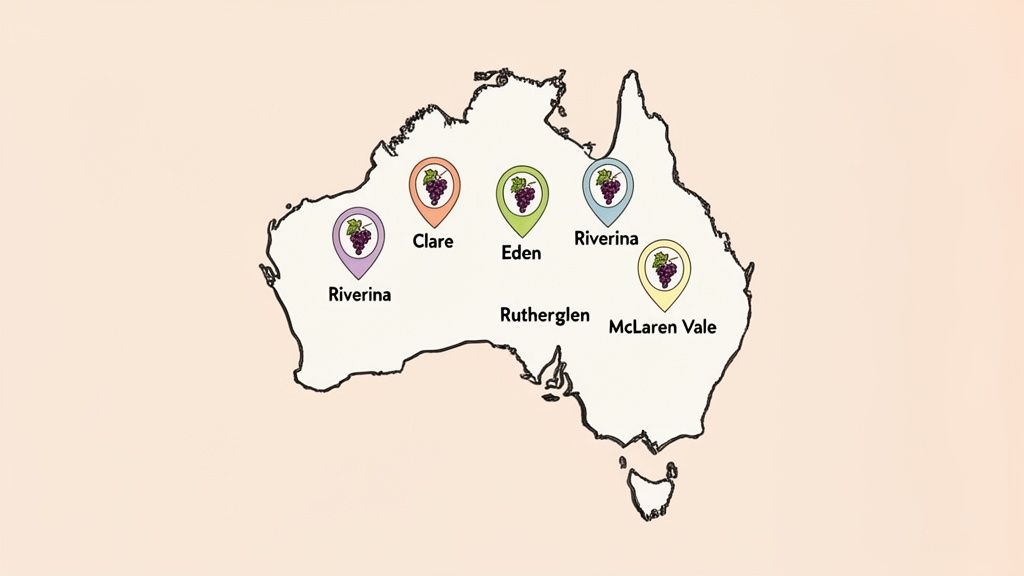
When you think of lighter, crisper sweet wines, your mind should go straight to South Australia’s Clare and Eden Valleys. These are cool-climate havens, absolutely perfect for growing world-class Riesling. They produce the full spectrum, from bone-dry to lusciously sweet.
The off-dry styles are where the real magic happens. They beautifully capture the grape's signature lime, green apple, and floral notes, but add just a whisper of sugar to round out that zesty, mouth-watering acidity. It's the perfect tightrope walk between refreshment and texture. If you want to get better acquainted with this superstar grape, our beginner's guide to Riesling styles is a great place to start.
Riverina and the 'Noble Rot' Semillon
Hop over to New South Wales, and you’ll find the Riverina region, which has built a global reputation for its incredible Botrytis Semillon. The area’s humid, misty autumn mornings create the ideal conditions for Botrytis cinerea, or ‘noble rot’, to work its magic on the grapes.
These wines are pure liquid gold. They explode with complex flavours of apricot, honey, marmalade, and candied citrus peel. On the palate, they have a rich, viscous texture, but they’re always cut through with a seam of bright acidity that keeps them from ever feeling cloying or heavy.
A great Botrytis Semillon is a masterclass in balance. It showcases how intense sweetness can be lifted by acidity to create something that is both decadent and surprisingly fresh. It's a style that proves 'sweet' wine can be incredibly complex.
Fortified Treasures from Rutherglen and McLaren Vale
For those who crave something richer and more powerful, two regions stand head and shoulders above the rest. Rutherglen in Victoria is the historic home of Australian fortifieds, famous for its legendary Muscat and Topaque (what we used to call Tokay). These wines are liquid history, aged in old oak barrels for years—sometimes decades—developing unbelievable complexity. Think deep notes of raisins, figs, sticky toffee, and Christmas cake.
And right here in our backyard, McLaren Vale is a powerhouse for fortified Shiraz. Our winemakers take the region's famously rich, ripe Shiraz grapes and fortify them to create a wine that’s intensely fruity and wonderfully sweet. It's a uniquely Australian style that packs in dark berry fruit, chocolate, and spice. An unforgettable drop for a cool evening.
And while you're dreaming of touring Australia's great wine regions, the iconic Hunter Valley is another must-visit, with plenty of places to stay if you plan on settling in for a proper exploration.
How to Read Sweet Wine Labels Like a Pro
Navigating the wine aisle can feel like deciphering a secret code, especially when it comes to sweet wines. But don't worry, once you get the hang of a few key terms, you'll be able to predict exactly what's in the bottle and pick the perfect sweet Australian wines with total confidence.
Think of wine labels as a helpful cheat sheet from the winemaker. They use specific language to signal the style and sweetness level, taking all the guesswork out of your purchase. Getting to know this vocabulary is your key to unlocking a world of delicious possibilities.
Decoding Common Sweet Wine Terms
You'll come across a handful of terms again and again on the labels of Australian sweet wines. Each one tells a story about how the wine was made and what you can expect when you pour a glass.
Here are the most important ones to know:
-
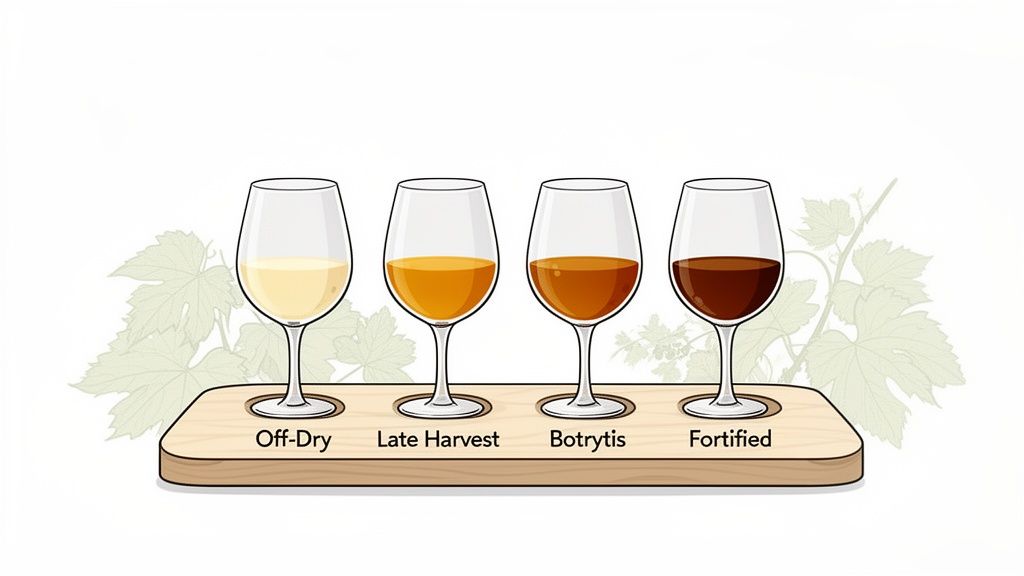
Off-Dry: This signals just a whisper of sweetness, enough to soften the acidity but not enough to be sugary. It’s the perfect balance for anyone who enjoys crisp wines with a bit more texture and roundness on the palate.
-
Late Harvest: Just like it sounds, these grapes were picked later in the season. This extra hang-time on the vine concentrates their sugars and flavours, resulting in a richer, sweeter wine bursting with intense fruit notes.
-
Botrytis (or 'Noble Rot'): When you see this, you’re looking at a true dessert wine classic. It’s made from grapes affected by a special fungus that pierces the skins, allowing water to evaporate. The result is an incredibly complex, honeyed, and luscious wine.
-
Fortified: This term means a neutral grape spirit (like brandy) was added during winemaking. This clever trick stops fermentation early, preserving the natural grape sugars and creating powerful, rich styles like Muscat or Tawny.
-
Stickies: This is classic Aussie slang for just about any dessert wine, often used to describe Botrytis or Late Harvest styles. If you see 'stickie' on a menu or a shelf talker, you know you're in for a sweet treat.
Understanding these terms is a bit like learning to order coffee. 'Off-Dry' is your lightly sweetened latte, while a 'Fortified' wine is more like a rich, decadent mocha—both are delicious, but they serve very different purposes.
The Sweetness Spectrum at a Glance
To make it even simpler, it helps to visualise these styles on a spectrum from least to most sweet. The table below organises the common styles you’ll find, giving you a quick reference guide for your next shopping trip.
Here's a simple breakdown of common sweet wine styles, from delicately sweet to seriously luscious.
Australian Sweet Wine Styles from Lightly Sweet to Luscious
| Style Category | Common Grape Varieties | Typical Flavour Profile | Example Region |
|---|---|---|---|
| Off-Dry | Riesling, Gewürztraminer | Crisp apple, lime, floral, ginger | Clare Valley |
| Late Harvest | Riesling, Semillon | Ripe stone fruit, baked apple, honey | McLaren Vale |
| Botrytis 'Stickie' | Semillon, Sauvignon Blanc | Marmalade, apricot, honeycomb, ginger | Riverina |
| Fortified | Muscat, Shiraz, Grenache | Raisins, toffee, dark chocolate, spice | Rutherglen |
Use this as your cheat sheet to find exactly the right level of sweetness you’re looking for. Happy tasting
Unlock Amazing Flavors with Perfect Pairings
Pairing sweet wine is an adventure that stretches far beyond the dessert table. The real secret to a stunning match is all about balance—understanding how the wine’s sweetness and acidity play off the flavours in your food. Once you get the hang of a few key principles, you'll be creating combinations that make the whole meal sing.
The goal is to find harmony. That touch of sweetness in wine is brilliant at cooling the fire in spicy dishes, while a kick of acidity can slice straight through rich, fatty foods, cleansing your palate and making every bite feel fresh. It’s this dynamic interplay that can turn a good meal into a truly great one.
Think of it like adding a squeeze of lime to a rich curry; that acidity just brightens everything up. In the same way, the subtle sweetness in an off-dry Riesling can be the perfect counterpoint to the chilli in a Thai green curry, allowing all those delicate, aromatic flavours to come forward.
Classic Pairings and Why They Work
Some pairings have become classics for a very good reason—they just work, time and time again. Once you understand the logic behind them, you'll have the confidence to start experimenting on your own. Each style of sweet Australian wines has its own perfect partners on the plate.
Here are a few foolproof combinations to get you started:
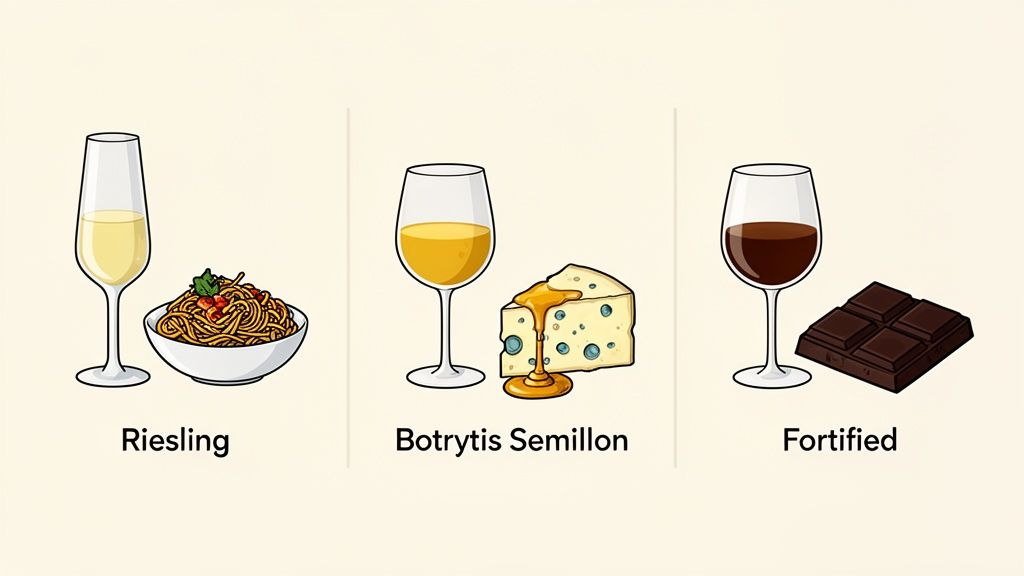
- Off-Dry Riesling with Spicy Food: That little bit of sweetness is perfect for soothing the heat from dishes like fiery Thai salads or Szechuan chicken. Meanwhile, the wine's high acidity keeps the whole experience refreshing and lively.
- Botrytis Semillon with Salty Cheese: The intense, honeyed sweetness of a classic 'stickie' creates an incredible contrast with the sharp, salty punch of a blue cheese like Roquefort or Stilton. It's that timeless sweet-and-salty clash, and it is absolutely delicious.
- Fortified Muscat with Rich Chocolate: A dark, decadent chocolate dessert meets its match in a luscious Rutherglen Muscat. The wine's deep notes of raisin, caramel, and spice beautifully complement the chocolate's bitterness for a truly indulgent finish.
The rule of thumb for dessert pairing is simple: your wine should always be sweeter than your dessert. If the food is sweeter, it can make even a luscious dessert wine taste surprisingly flat or sour.
Serving Sweet Wines for Maximum Enjoyment
Getting the serving details right is crucial for experiencing the full spectrum of flavours the winemaker worked so hard to create. Temperature and glassware play a surprisingly big role in how a wine shows up in the glass, especially for these sweet styles.
For the best possible taste, just follow these simple guidelines:
- Chill Them Down: Lighter styles like off-dry Riesling and Botrytis Semillon are best served well-chilled, around 6-8°C. This keeps them crisp and stops the sweetness from feeling cloying or heavy.
- Slightly Warmer for Fortifieds: Richer fortified wines, such as a Muscat or Tawny, really open up when served slightly warmer, at about 12-14°C. This helps release all their complex nutty and spicy aromas.
- Choose the Right Glass: It’s best to use smaller glasses for sweet wines. A smaller bowl helps concentrate all those beautiful aromatics, and since the servings are smaller, the whole experience just feels more balanced and intentional.
Your Guide to Buying Sweet Australian Wines
Alright, you've got the basics down. You know the styles, the regions, and what foods make these wines sing. Now for the fun part: heading out (or online) to find your perfect bottle. This is where we turn that knowledge into confident buying decisions.
The smartest way to start is by casting a wide net. Instead of committing to a full case of a single wine you've never tried, look for curated sample packs or mixed dozens. This lets you put an off-dry Riesling up against a late-harvest style without a huge investment, helping you pinpoint exactly what you love. It’s a low-risk, high-reward way to explore, and for a great overview of what's out there, you can check out some of Australia's best dessert wines you can order online.
Smart Shopping Strategies
Once you find a style you're keen on, especially a fortified wine, remember one of its best features: incredible longevity. A standard table wine goes off pretty quickly after you pop the cork, but a good fortified Muscat or Tawny will stay fresh for weeks, sometimes even months. This makes them a fantastic addition to your bar, always ready for an impromptu nightcap or dessert.
Right now is a brilliant time to be buying Australian wine. The industry is sitting on some high inventory levels—national wine stock has climbed to 2.06 billion litres, which is well above what the market needs for perfect balance. This oversupply, driven by production outpacing sales, means there are some truly exceptional deals to be found. Retailers like us can take advantage of this by hand-picking high-quality selections and offering them at fantastic prices. You can discover more insights about the Australian wine market here and see how these trends are a win for wine lovers.
Takeaway Tip: In a buyer's market like this, keep an eye out for value packs and dozen deals from specialist retailers. Their expertise ensures you're getting top-quality wine that represents outstanding value, not just leftover clearance stock.
To make the most of this opportunity, stick with trusted sellers who live and breathe a specific region, like McLaren Vale. They have the local knowledge to sift through the surplus and find the real gems, ensuring you get a fantastic bottle every time. Armed with these tips, you can confidently dive into the delicious world of sweet Australian wines and find your next favourite drop.
Your Questions Answered
When you start exploring the delicious world of sweet Australian wines, a few common questions always seem to pop up. Here are the answers to get you started.
Are All Australian Rieslings Sweet?
Definitely not. While Australia produces some absolutely stunning off-dry and sweet Rieslings, particularly from cooler climates like the Clare and Eden Valleys, the vast majority of Aussie Riesling is made in a bone-dry, crisp style.
If you’re specifically chasing that touch of sweetness, keep an eye out for terms like ‘Off-Dry’ or ‘Late Harvest’ on the label – that’s your clue you’re on the right track.
What Is the Difference Between Dessert and Fortified Wine?
This is a great question. A fortified wine is one that has had a neutral grape spirit (think something like brandy) added to it. This simple act does three important things: it stops fermentation, ramps up the alcohol, and most importantly, locks in the grape's natural sugars. Many iconic sweet wines, like a classic Rutherglen Muscat, are fortified.
However, not all dessert wines are fortified. Styles like Late Harvest or Botrytis wines get their sweetness the old-fashioned way—through concentrating the sugars naturally on the vine, with no added spirits. Think of it like this: all fortified wines have had spirit added, but only some dessert wines have.
How Long Can I Keep Sweet Wine After Opening It?
This really depends on the style of wine you’re pouring. Lighter, unfortified dessert wines, like a Botrytis Semillon, are best enjoyed within 3-5 days of opening, much like you would a standard bottle of white wine.
Fortified wines, on the other hand, are the marathon runners of the wine world. Thanks to their higher alcohol and sugar levels, a Rutherglen Muscat or a Tawny is incredibly stable. They can easily last for several weeks, or even months, after being opened if you store them properly in a cool, dark place with the cork or cap sealed up tight.
Ready to explore the best of McLaren Vale? At McLaren Vale Cellars, we've put together a fantastic selection of sweet and fortified wines perfect for any occasion. Find your next favourite today by browsing our collection.

Comments (0)
There are no comments for this article. Be the first one to leave a message!