
Let's pop the cork on one of wine's most misunderstood categories. When you hear sparkling sweet wine, it's easy to picture something cloying or overly sugary. But that couldn't be further from the truth.
A true sparkling sweet wine is a beautifully crafted drink, intentionally made with a noticeable touch of sweetness balanced by delightful, crisp bubbles. It’s a whole world of flavour, stretching from the lightly fizzy, fruity fun of a Moscato all the way to the richer, more complex layers of a Demi-Sec Champagne.
A Perfect Start to Sparkling Sweet Wine
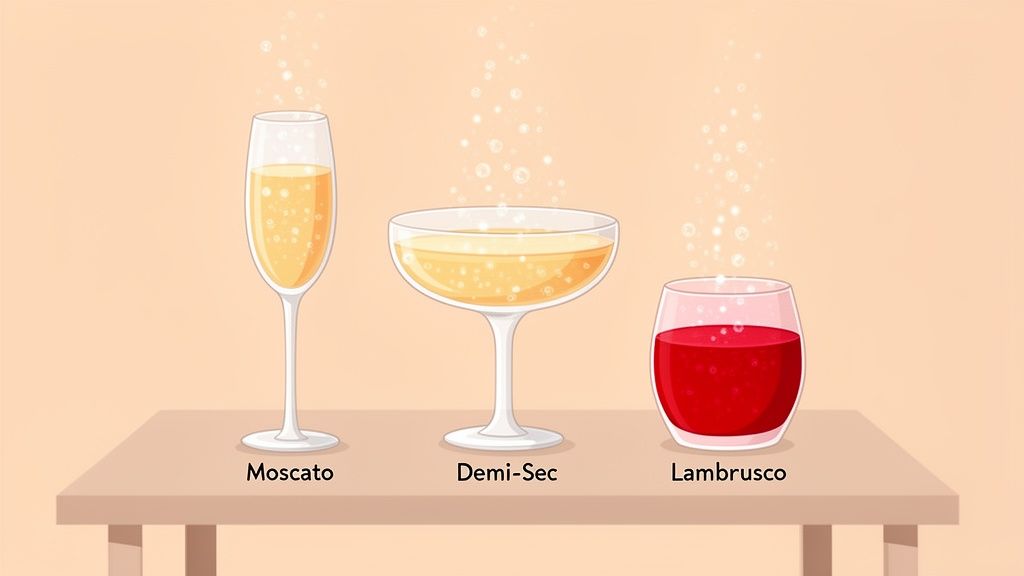
Think of these wines not just for dessert, but as the perfect plus-one for countless occasions. From a sunny brunch with friends to a celebratory toast, sparkling sweet wine adds a touch of fun and accessibility that everyone can enjoy, whether they're new to wine or a seasoned pro. The secret is realising that "sweet" here isn't just a single note—it's a characteristic that's all about perfect balance.
Consider this guide your friendly introduction to this delicious style. We'll break down everything you need to know in a simple, approachable way, so you can walk down the wine aisle with confidence. No confusing jargon, just a straightforward chat about finding a wine you'll love.
What You Will Discover
We're going to build your knowledge from the ground up. We'll explore how these wines get their sweetness and their sparkle, turning what sounds like complex winemaking into simple, easy-to-grasp ideas. By the end, you'll be able to read a label like an expert, knowing exactly what to expect from terms like 'Doux' or 'Demi-Sec'.
We'll also dive into:
- Popular Styles: Get to know the big names, from Moscato d'Asti and Asti Spumante to the surprisingly versatile sweet Lambrusco.
- Food Pairing Ideas: Uncover how these wines can stand up to everything from spicy curries to creamy, decadent cheeses.
- Serving and Buying Tips: Learn the tricks for chilling, pouring, and picking out the perfect bottle for any event you have in mind.
By the time you're done, you'll have the confidence to choose, serve, and properly enjoy sparkling sweet wine. It'll go from being a mystery to a new favourite. Let’s get started.
Decoding Sweetness on a Wine Label
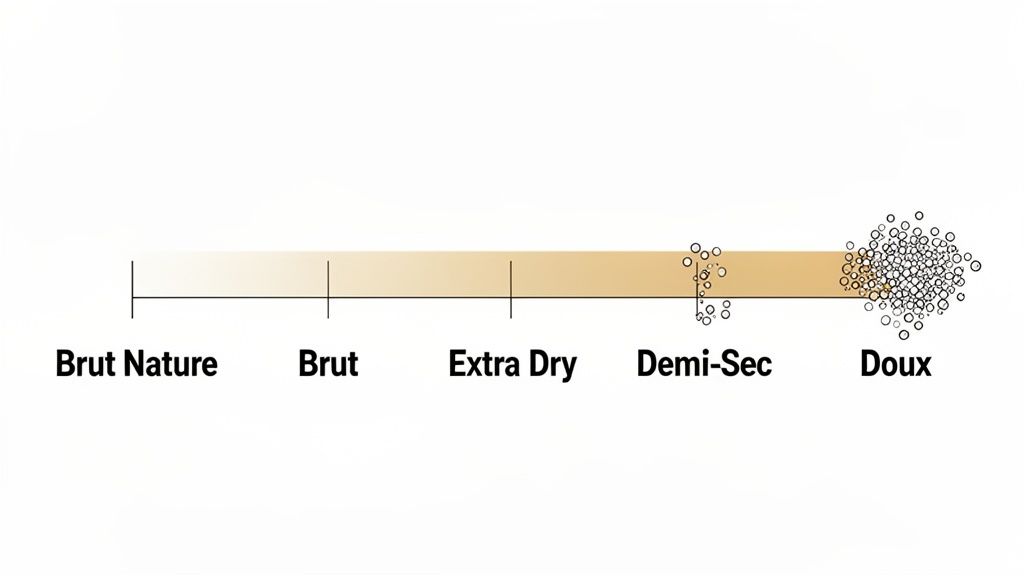
Ever stood in the wine aisle, staring at a bottle of bubbly and wondering what on earth ‘Brut’ or ‘Extra-Dry’ actually means? It can feel like you need a secret decoder ring. Don't worry, these terms aren't about quality—they're simply a guide to the wine's sweetness.
It all comes down to a little something called residual sugar (RS). This is the natural grape sugar left over after the yeast has finished its fermentation magic. Winemakers can also add a final touch—a mixture of wine and sugar known as a dosage—just before the cork goes in. This step is all about balance, perfecting the wine's acidity and hitting a specific style, from bone-dry to lusciously sweet.
Getting a handle on this scale is your ticket to confidently picking a sparkling wine you'll absolutely love, long before you hear that satisfying pop.
The Official Sweetness Scale
The language used for sparkling wine sweetness is standardised across the globe, though it can seem a bit backwards at first. For instance, a wine labelled ‘Dry’ is actually sweeter than one labelled ‘Brut’. It’s one of those classic wine quirks!
Once you get the hang of the order, it's easy to know what to expect in your glass.
This handy table breaks down the official classifications, helping you translate the label lingo into real-world flavour.
Sparkling Wine Sweetness Levels Explained
| Sweetness Term | Residual Sugar (grams/litre) | Tasting Expectation |
|---|---|---|
| Brut Nature | 0-3 g/L | Bone-dry. Think crisp, lean, and intensely refreshing with zero perceptible sweetness. |
| Extra Brut | 0-6 g/L | Still very dry, but with just a whisper more fruitiness than Brut Nature. |
| Brut | 0-12 g/L | The most popular style. It tastes dry, but has enough fruit character to feel balanced and versatile. |
| Extra-Dry | 12-17 g/L | Off-dry with noticeable fruit. Here's the tricky one—it's sweeter than Brut! |
| Dry / Sec | 17-32 g/L | Now we're getting into clearly sweet territory. Fruity, smooth, and very approachable. |
| Demi-Sec | 32-50 g/L | Meaning "half-dry," this is unapologetically sweet and a classic dessert pairing. |
| Doux | 50+ g/L | The sweetest of them all. A true liquid dessert, rich and luscious. |
These terms are your roadmap. Brut is your go-to for a classic dry aperitif, while anything from Extra-Dry onwards starts to deliver that sweet profile you might be looking for.
To put it in perspective, a standard 150ml glass of Demi-Sec sparkling wine can have as much sugar as some soft drinks. This makes it a fantastic partner for rich desserts, where its sweetness can stand up to the food without being cloying.
Putting It All Together
So, what does this all mean for your next trip to the bottle shop?
If you’re hunting for a genuinely sweet sparkling wine, keep your eyes peeled for terms from Dry (or Sec) all the way up to Doux.
A Dry or Demi-Sec is a brilliant choice for something with obvious sweetness that sings alongside spicy dishes or lighter desserts. If you want something truly decadent and dessert-like, a Doux is the ultimate treat. With this knowledge, you can walk up to any bottle of bubbly and choose the perfect one with total confidence.
How Winemakers Create Bubbles and Sweetness
The delightful fizz and balanced sweetness in a bottle of sparkling wine don't just happen by magic. They’re the result of careful, time-honoured winemaking techniques, and understanding them can really change how you appreciate what’s in your glass.
At its core, the magic lies in managing two key processes: one for the bubbles, and one for the sweetness.
There are two main paths winemakers take to get those beautiful bubbles, and each creates a totally unique style of wine. It’s like comparing a quick, vibrant pop song to a complex classical symphony—both are brilliant, but they get there in very different ways.
The Speedy and Fresh Tank Method
First up is the most common method for crafting fruity, aromatic sparkling sweet wines: the Tank Method, also known as the Charmat Method. Instead of creating bubbles in thousands of individual bottles, the winemaker carries out the second fermentation in a huge, pressurised stainless steel tank.
This process is way faster and more efficient, and its main advantage is that it keeps the fresh, primary fruit flavours of the grapes front and centre. Think of it as capturing lightning in a bottle. This technique is perfect for wines where the goal is to show off bright, youthful notes of peach, pear, and honeysuckle.
You'll find it used for popular styles like:
- Italian Prosecco: Known for its crisp apple and melon notes.
- Asti Spumante: Famous for its aromatic grape and stone fruit character.
Because the wine doesn't spend a long time ageing on its lees (the leftover yeast cells), it stays incredibly vibrant and fruit-forward. This makes it a really approachable and easy-to-love style.
The Patient and Complex Traditional Method
The second approach is the Traditional Method, the prestigious technique behind the world's most famous sparkling wine, Champagne. Here, the second fermentation happens inside the very bottle you eventually buy. As you can imagine, this process is far more hands-on and takes a lot longer, requiring the wine to age for months, or even years, on its yeast lees.
This extended contact with the lees is what builds those complex, secondary flavours of brioche, toast, and nuts, adding layers of depth that the Tank Method just doesn't produce. While it’s more common for dry styles, winemakers also use this method to create sweeter versions like a Demi-Sec Champagne.
For a deeper dive into the nuances of different bubbly types, check out our guide to sparkling wines.
The key difference is flavour development. The Tank Method champions pure fruit, while the Traditional Method builds rich, savoury complexity over time.
The Secret to Sweetness: Arrested Fermentation
So, where does that lovely sweetness come from? More often than not, it comes from a clever trick called arrested fermentation. As the grape juice is fermenting, winemakers will suddenly chill it down to a near-freezing temperature. This puts the yeast to sleep, stopping it from converting any more sugar into alcohol.
This move effectively "arrests" the process, leaving behind some of the grapes' delicious natural residual sugar. It's a delicate balancing act that lets winemakers hit the perfect level of sweetness while keeping the alcohol content lower—a signature trait of many sparkling sweet wines like Moscato d'Asti.
A Tour of Popular Sparkling Sweet Wine Styles
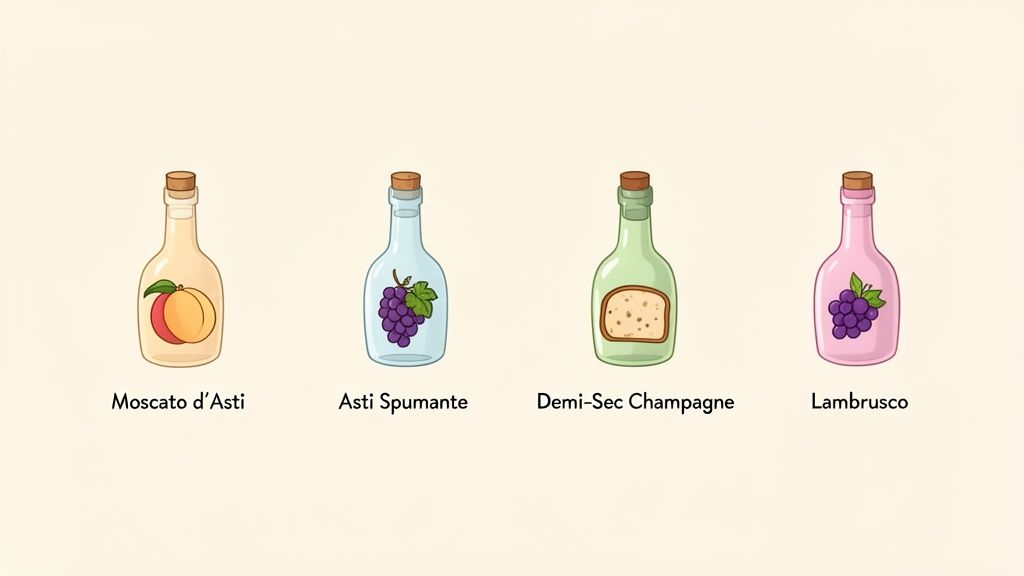
Now that you know how the sweetness and sparkle get into the bottle, it’s time for the fun part—exploring the most popular styles. The world of sparkling sweet wine is wonderfully diverse, with a perfect match for just about any palate or occasion. From Italy’s fragrant hills to France’s most prestigious vineyards, each style brings its own unique personality to the table.
Think of this as a guided tasting tour. We’ll introduce you to the key players, so you can understand their signature flavours and what makes them special. It's the kind of knowledge that will have you choosing your next bottle with confidence, whether you're planning a quiet night in or a lively celebration.
The Italian Icons: Moscato and Asti
When most people think of sparkling sweet wine, their minds often jump straight to Italy, and for good reason. The Moscato Bianco grape is the star behind two of the world's most beloved and approachable styles.
Moscato d'Asti is the gentle, charming cousin in the family. It’s a frizzante style, which means it's just lightly sparkling rather than fully bubbly. It’s incredibly refreshing and easy to drink, with a low alcohol content (typically 5-6% ABV) and gorgeous notes of peach, honeysuckle, and orange blossom. It's the perfect drop for a sunny afternoon picnic or a light brunch.
Asti Spumante, on the other hand, is the more outgoing sibling. As a spumante or fully sparkling wine, it has more persistent bubbles and a slightly higher alcohol level. While still beautifully aromatic and sweet, its vibrant fizz gives it a more celebratory feel, making it perfect for toasts and parties.
Key Takeaway: Choose Moscato d'Asti for a gentle, semi-sparkling experience that’s perfect for casual sipping. Go for Asti Spumante when you want a fully bubbly, festive wine with the same gorgeous floral and fruit notes.
The Luxurious Demi-Sec Champagne
Sweetness isn’t just for casual wines; it also has a place in the most prestigious sparkling wine region in the world. Demi-Sec Champagne, which translates to "half-dry," sits firmly in the sweet category with 32-50 grams of residual sugar per litre.
Made using the traditional method, this style offers a luxurious richness that balances its sweetness with complex flavours of toasted brioche, baked apple, and honey. It's a fantastic choice for special occasions and pairs beautifully with rich foods like foie gras, creamy cheeses, or fruit-based desserts. This is the sophisticated side of sparkling sweet wine, proving that sweetness and complexity can absolutely go hand-in-hand.
The Surprising Sweet Lambrusco
Don't forget about red bubbles! Lambrusco, another Italian gem, comes in a whole range of styles from dry to sweet (amabile or dolce). The sweet versions are a delightful surprise, bursting with flavours of ripe cherry, blackberry, and wild strawberries, all lifted by a refreshing sparkle.
Its vibrant fruitiness and cleansing acidity make sweet Lambrusco an unexpectedly brilliant partner for savoury and salty foods. Think of it alongside a platter of prosciutto and salami, a rich lasagne, or even your favourite pizza. It’s a versatile and food-friendly sparkling sweet wine that’s perfect for breaking the rules and trying something new.
Creative Food Pairings and Serving Tips
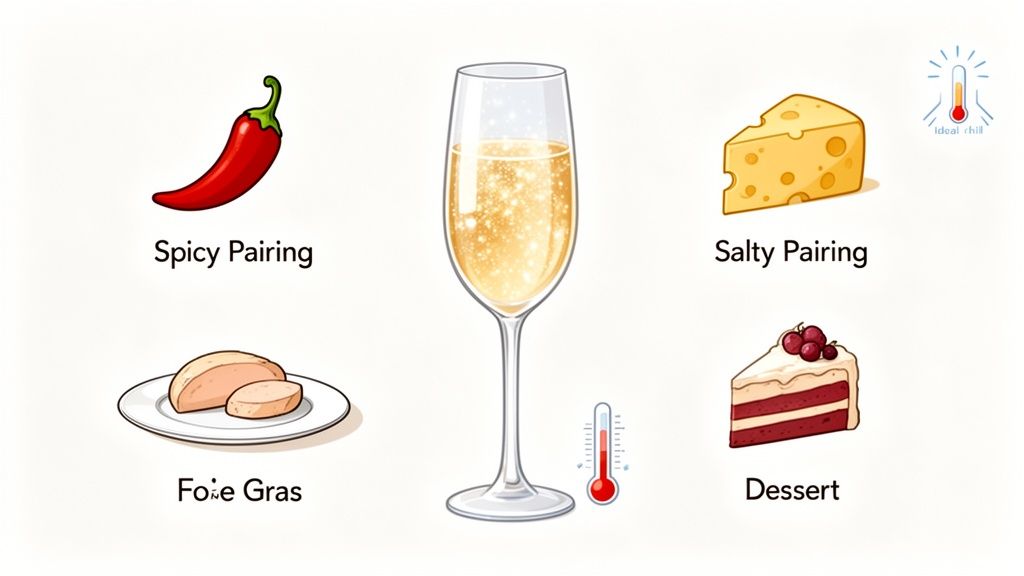
Let's bust one of the biggest myths in the wine world: sparkling sweet wine is not just for the dessert table. While it's an absolute dream with a fruit tart or pavlova, its true magic comes alive when you pair it with savoury, spicy, and even salty foods.
The secret is to stop thinking of the sweetness as just "sugary" and start seeing it as a powerful balancing tool. That touch of residual sugar is your best friend when tackling heat, which is why a chilled glass of Moscato or Demi-Sec is a game-changer with spicy Asian food. The wine’s sweetness calms the fire on your palate, letting the complex flavours of a Thai green curry or Szechuan stir-fry shine through without overwhelming you. It's a pairing that creates perfect harmony.
Savoury and Unexpected Matches
Beyond spice, a sparkling sweet wine works wonders with rich, salty foods. It's all about the contrast—that beautiful push-and-pull between sweet and savoury is what makes these pairings so dynamic and memorable.
Give these a try:
- Salty Cheeses: A Demi-Sec is absolutely brilliant with a sharp, salty blue cheese like Roquefort or Stilton. The wine’s sweetness slices right through the cheese's pungent kick, creating a perfectly balanced bite.
- Rich Pâté: The luxurious, creamy texture of foie gras or a chicken liver pâté is lifted beautifully by the wine's acidity and sweetness, cleansing your palate with every single sip.
- Cured Meats: Pour a sweeter Lambrusco alongside a platter of prosciutto and salami. You’ll find the wine’s fruity notes and gentle fizz cut through the richness of the meat, making everything taste brighter.
If you're looking for more ideas, check out our detailed guide on the perfect food pairings for wine.
The fundamental rule is contrast. A sparkling sweet wine’s vibrant acidity and fruit-forward profile can cut through richness and tame spice, making your entire meal more exciting.
Serving for Maximum Enjoyment
To get the most out of every bottle, getting the temperature right is non-negotiable. You want it well-chilled, between 6–8°C. Serve it too warm, and the sweetness can feel cloying and heavy; too cold, and you'll completely numb its gorgeous aromas.
A classic flute or a more modern tulip-shaped glass is your best bet. Both are designed to preserve those delicate bubbles and concentrate the wine’s beautiful aromatics right where you can enjoy them.
For anyone planning a special event, sparkling sweet wine is a fantastic and often unexpected choice. It’s perfect for exploring creative wedding reception ideas that move beyond the standard fare. This style is definitely having a moment in Australia, with more and more people enjoying a glass of bubbles one to three times a month.
Your Guide to Buying Sparkling Wine
Walking into a wine shop to pick the perfect bottle of sweet sparkling shouldn't feel like a chore—it should be part of the fun. Now that you're armed with a bit of knowledge about styles and sweetness, you can make a choice that perfectly matches your taste, your budget, and whatever you're celebrating. The trick is to just think about what you're in the mood for.
Are you after something light, bright, and full of fruity fun? Then you’ll want to look for a Moscato d'Asti or even a Prosecco that's labelled ‘Dry’ or ‘Extra-Dry’. These are absolutely brilliant for a casual afternoon get-together or a weekend brunch. But if you’re craving something with a bit more depth and richness, a Demi-Sec from a classic region like Champagne, or even a top-notch Australian sparkling, will give you those gorgeous toasty notes alongside a beautiful, balanced sweetness.
Making a Confident Choice
The world has fallen head over heels for sparkling wine, with demand growing by a massive 57 percent since 2002. This boom means there are more choices on the shelves than ever before, especially from places like Italy which are masters of delicious, accessible bubbly. You can get the full story on this global trend from the International Organisation of Vine and Wine’s detailed report.
All this choice is great news for us wine lovers. It means you’ve got the power to find the perfect bottle. For a closer look at some homegrown heroes, check out our guide to the best Australian sparkling wines to buy online.
When you're buying wine, don't just look at the price tag; look for value. A great purchase is one that makes your tastebuds happy and feels like a smart buy. That’s where things like guarantees and rewards really come into play.
Here at McLaren Vale Cellars, we want every bottle you buy to feel like a win. Our Taste Guarantee is there to take any risk out of trying something new—if you don't love it, you're not stuck with it. Simple. On top of that, our Grape-ful Rewards program means every purchase earns you points toward your next delicious discovery. It's all about making the experience of choosing wine as enjoyable as drinking it.
Your Questions, Answered
Even after getting the basics down, there are always a few questions that pop up when you're standing in the wine aisle. Let's clear up some of the common ones so you can choose your next bottle of sparkling sweet wine like a pro.
Is Extra-Dry Sparkling Wine Sweeter Than Brut?
Yes, and this is probably the most confusing bit of wine labelling out there! Despite what the name suggests, 'Extra-Dry' is actually sweeter than 'Brut'. Brut is your classic, bone-dry sparkling wine with almost no sweetness you can taste.
It helps to think of the sweetness scale starting from the driest style, Brut, and going up from there.
- Brut: The go-to dry, crisp style.
- Extra-Dry: Off-dry with a noticeable fruity character.
- Dry (or Sec): Sweeter still, with a definite touch of sweetness.
- Demi-Sec: Unmistakably sweet, making it a perfect dessert wine.
So, when you spot 'Extra-Dry' on a label, you can expect a lovely hint of sweetness that makes the wine incredibly easy to enjoy.
Can I Age a Bottle of Moscato?
Honestly, it's best not to. Most sweet sparkling wines, especially those vibrant and fruity styles like Moscato d'Asti or many Proseccos, are made to be enjoyed young. They're typically produced using the Tank Method, a technique designed specifically to capture and preserve their fresh, youthful aromas.
These wines are all about immediate pleasure. Their magic lies in that bright, zesty fruitiness and crisp finish, which sadly fades over time. To catch them at their best, you’ll want to drink them within a year or two of purchase.
Unlike a vintage Champagne that develops complexity in the cellar, these bottles won't get better with age. Pop them open and enjoy the party!
What Is the Best Occasion for Sparkling Sweet Wine?
The real beauty of a good sparkling sweet wine is just how versatile it is. Please don't just relegate it to the dessert course!
With their typically lower alcohol content and refreshing vibe, these wines are brilliant for all sorts of moments. Think of a weekend brunch paired with fresh berries, a sunny afternoon garden party, or a delightful aperitif to kick off an evening with friends. And of course, they’re still a knockout with dessert, playing nicely with everything from a creamy pavlova to a sharp and tangy cheese platter.
Ready to dive into the delightful world of sparkling sweet wines yourself? Here at McLaren Vale Cellars, we've handpicked a fantastic selection of Australian sparkling wines that are perfect for any celebration, big or small. Find your next favourite and enjoy our Taste Guarantee with every bottle.


Comments (0)
There are no comments for this article. Be the first one to leave a message!