
Sparkling rosé is what happens when the life of the party—celebratory bubbles—meets the easy-going charm of a still rosé. It’s truly the best of both worlds: you get all the elegance and fizz of a classic sparkling wine, but with that relaxed, summery vibe that has made rosé a global sensation. It’s an incredibly versatile and enjoyable drink for just about any occasion you can think of.
Why Everyone Loves Sparkling Rosé
There’s a good reason a chilled glass of sparkling rosé has become the go-to for so many wine lovers. It effortlessly bridges the gap between serious, traditional sparkling wines and your favourite easy-drinking still wines, creating an experience that feels both sophisticated and wonderfully approachable. This unique appeal is exactly why its popularity has skyrocketed.
Unlike some classic sparkling wines that can feel a bit formal or reserved for big toasts, sparkling rosé brings an undeniable sense of fun to the table. Its beautiful pink hue, ranging from the palest salmon to a vibrant coral, is instantly appealing and gives you a hint of the delicious red fruit flavours waiting inside.
A Wine for Every Occasion
One of the biggest wins for sparkling rosé wine is its sheer versatility. It's shaken off the "special celebrations only" tag and has cemented its place as a wine for all moments, from the monumental to the mundane.
Just think about how well it fits into different settings:
- Casual Brunches: That crisp acidity is a dream next to everything from smashed avo on toast to rich smoked salmon blinis. It just cuts through perfectly.
- Summer Barbeques: The bright berry notes and refreshing fizz make it a brilliant match for grilled prawns, chicken skewers, or a fresh garden salad.
- Celebratory Toasts: It offers a more colourful and often fruit-forward alternative to the usual suspects when you’re marking a milestone.
- A Relaxing Evening: Let's be honest, sometimes the only occasion is making it through the day. A cold glass of bubbly rosé is one of life's perfect simple pleasures.
Sparkling rosé isn't just a drink; it's an experience. It captures the joy of a sunny afternoon, the buzz of a celebration, and the simple pleasure of a beautifully made wine, all in one glass.
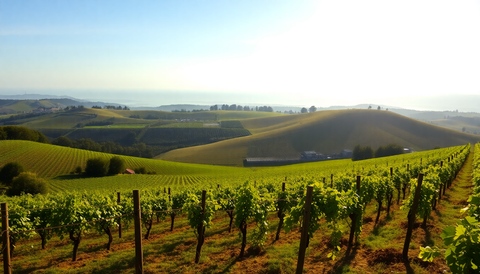
In this guide, we'll walk you through everything you need to know about this fantastic wine. We’ll get into how it gets that signature colour and fizz, what flavours you can expect, and why our home turf here in McLaren Vale is producing some of Australia's most exciting examples.
How Sparkling Rosé Gets Its Colour and Bubbles
That gorgeous pink blush and lively fizz in a glass of sparkling rosé aren't just a happy accident. They're the result of careful, deliberate choices made by the winemaker, each one shaping the final flavour and feel of the wine. Understanding how they pull off this magic trick is the key to appreciating what's really going on in your glass.
It all starts with getting that perfect shade of pink. This isn't as simple as just mixing red and white wine together (a method that’s actually banned in most of Europe, with Rosé Champagne being a notable exception). Instead, it’s a delicate dance with red grape skins.
Crafting the Perfect Pink Hue
Winemakers have a few tricks up their sleeve to get that rosé colour just right. Each technique influences the wine's intensity and character, a bit like a painter choosing between watercolours, oils, or pastels.
- Saignée (or "Bleeding"): Picture a winemaker crafting a big, bold red wine. Very early in the process, they "bleed off" a small amount of the pinkish juice. This juice is then fermented on its own to become rosé. The method often creates a deeper-coloured, more robust and flavourful sparkling rosé with a bit more structure.
- Direct Press: This is the go-to method for creating those pale, delicate, Provence-style rosés. Red grapes are pressed very gently, just like white grapes, giving the juice only the briefest kiss of contact with the skins. The result is a wine with a subtle, light pink hue and a crisp, fresh character.
- Blending (Assemblage): While less common for still rosé, this technique is a big deal in the sparkling world. A winemaker will first create a white base wine and then, just before the second fermentation kicks off, blend in a small amount of still red wine—usually between 5% and 20%. This gives them ultimate control over the final colour and flavour.
The Magic of the Bubbles
Once the base rosé wine is ready, it's time to bring on the sparkle. This is where the real magic happens. A second fermentation is started by adding a little yeast and sugar, which creates carbon dioxide. Trapped inside the bottle or tank, that CO2 becomes the beautiful bubbles we all love.
The method used to create bubbles is one of the biggest factors influencing the final taste and texture of a sparkling rosé wine. It separates the fresh and fruity from the rich and complex.
The two main ways to do this are the Traditional Method and the Charmat Method.
Before we dive in, here’s a quick overview of how the different production methods stack up.
Sparkling Rosé Production at a Glance
This table breaks down the common techniques used to create the colour and the fizz, helping you understand how each step impacts what you taste in the final wine.
| Method | How It Works | Resulting Style |
|---|---|---|
| Traditional Method | Second fermentation happens inside each individual bottle. The wine ages on lees (yeast cells), adding complexity. | Rich, complex, and elegant with fine, persistent bubbles and notes of brioche, toast, and nuts. |
| Charmat (Tank) Method | Second fermentation occurs in a large, pressurised stainless steel tank before the wine is bottled. | Fresh, bright, and fruit-forward with lively, zesty bubbles and vibrant primary fruit flavours like strawberry and citrus. |
| Saignée ("Bleeding") | Pink juice is "bled off" from a red wine fermentation. Often results in a deeper colour. | More structured and robust rosé with pronounced red fruit character and greater intensity. |
| Direct Press | Red grapes are gently pressed with minimal skin contact, creating a very pale juice. | Light, crisp, and delicate with subtle fruit and floral notes. The most common method for pale rosés. |
| Blending (Assemblage) | A small amount of still red wine is blended into a white base wine before the second fermentation. | Precise control over colour and flavour, leading to a consistent and often nuanced style. |
As you can see, a winemaker's choices at each stage build the final character of the wine, from a light and breezy aperitif to a rich and complex food-pairing champion.
The Traditional Method (Méthode Traditionnelle): This is the most prestigious and hands-on approach, famous for creating the fine, persistent bubbles you find in Champagne. Here, the second fermentation happens right inside the bottle you buy. The wine is then left to age on its lees (the expired yeast cells), which is what adds those complex, toasty notes of brioche and almond, giving the wine a richer texture and a finer mousse.
The Charmat Method (Tank Method): For a fresher, more fruit-forward style, winemakers turn to the Charmat method. The second fermentation takes place in a large, pressurised steel tank instead of individual bottles. It’s a quicker process that’s all about preserving the grapes' natural fruitiness. This results in wines that burst with vibrant notes of fresh berries and flowers, with a livelier, more energetic fizz.
You can learn more about the intricacies of these techniques in our comprehensive guide to sparkling wines.
Exploring the Flavours of Sparkling Rosé
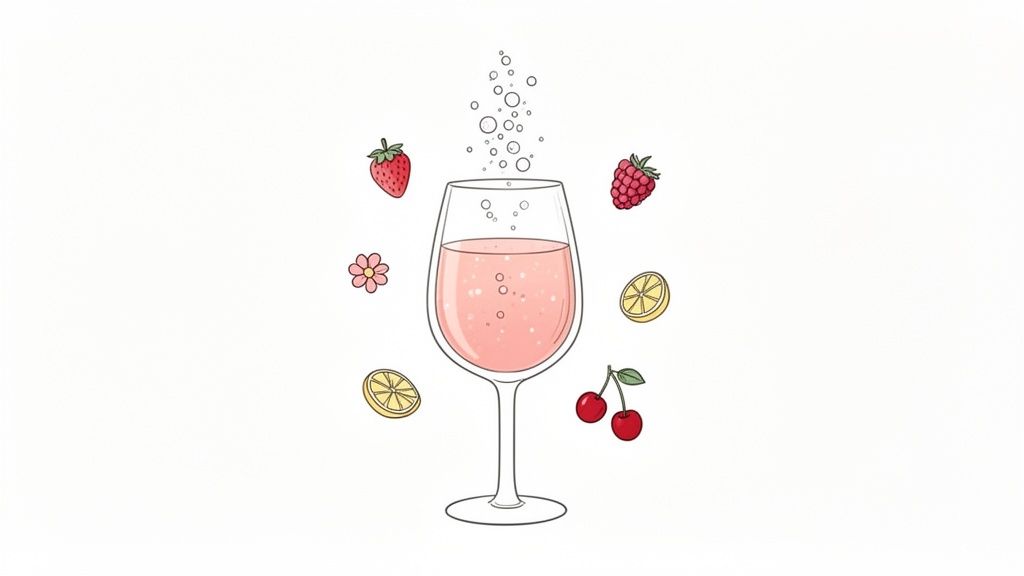
There's a real magic to popping the cork on a bottle of sparkling rosé. It’s more than just a pretty pink drink; it’s an explosion of vibrant aromas and flavours that tell a story about the grapes, the region, and the winemaker’s touch. The real key to finding a bottle you’ll fall in love with is understanding what’s going on inside that glass.
Most sparkling rosé kicks things off with a gorgeous bouquet of fresh red fruits. Think of a punnet of just-picked strawberries, the bright, tangy hit of raspberries, or the sweet juiciness of red cherries. These are the wine’s calling card—the primary notes that give it that refreshing and instantly loveable character.
Look a little closer, and you'll often find more subtle layers at play. You might catch a whiff of zesty citrus like pink grapefruit, delicate floral hints of rose petals, or even a touch of melon or rhubarb weaving through the fruit.
How Grapes and Methods Shape the Taste
The specific grapes used are the artists painting the wine’s flavour picture. For instance, a sparkling rosé wine built around Pinot Noir will often deliver elegant strawberry and cherry notes with a lovely, earthy complexity. One that features Shiraz, on the other hand, might offer up bolder, spicier raspberry and plum flavours that reflect the grape’s powerful nature.
The way the wine is made also adds crucial layers of texture and complexity. This is where you can really start to tell different styles apart just by tasting them.
- Charmat Method Wines: These are typically all about freshness. They’re crisp, fruit-forward, and designed to preserve the pure, vibrant character of the grapes. Think zesty and lively.
- Traditional Method Wines: Wines made this way often feel richer and creamier in your mouth. That’s thanks to aging on yeast lees, which builds in complex secondary notes of brioche, toasted almond, or pastry, adding wonderful depth to the fruit flavours.
The final taste of a sparkling rosé is a beautiful balancing act between its bright fruit core and the subtle complexities picked up during winemaking. It’s the difference between a simple, refreshing fruit salad and a rich, layered berry tart.
From Crisp and Dry to Rich and Creamy
This dance between fruit and technique creates an amazing spectrum of styles. Some sparkling rosés are lean, bone-dry, and almost flinty, making them the perfect aperitif to kick off an evening. Others are far more generous and full-bodied, with a creamy mousse and a long, flavourful finish that can stand up to a proper meal.
By paying attention to these cues—the types of fruit you smell, the texture on your palate, and how the flavour lingers—you can start to dial in on your preferred style. It’s the kind of knowledge that gives you the confidence to pick the perfect sparkling rosé for any mood or occasion. If you're keen to dive deeper into the world of pink wine, you can explore more in our guide to understanding the rosé revolution.
The Ultimate Food Pairing Guide for Sparkling Rosé
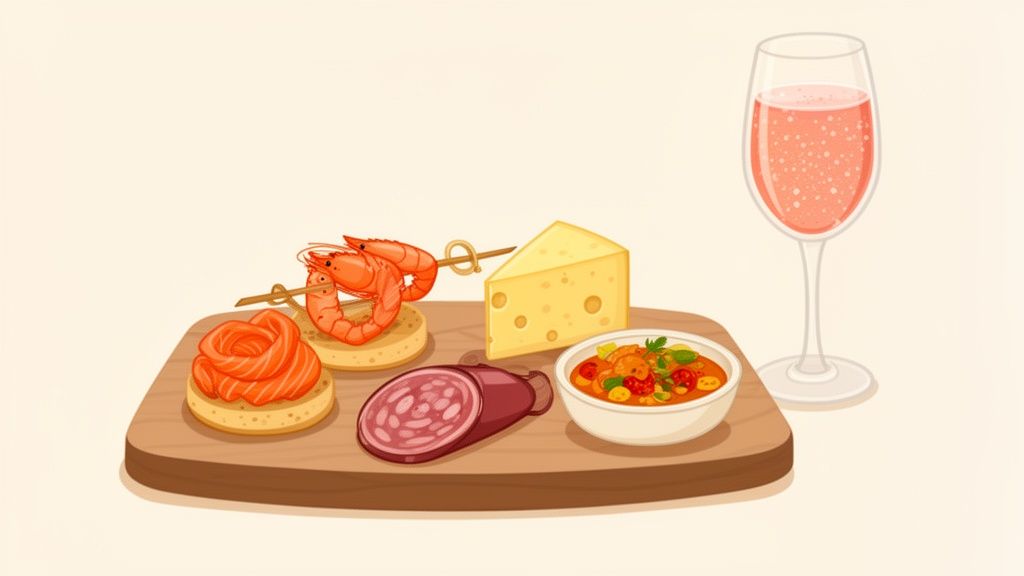
Finding the right food to go with sparkling rosé wine is one of life’s simple pleasures, mainly because it’s just so darn versatile. What’s the secret? It all comes down to a magic combination of crisp acidity, bright red fruit flavours, and those delightful, cleansing bubbles. This trio allows it to pair beautifully with a surprising variety of dishes, way beyond just a few party nibbles.
Think of the wine's acidity as a squeeze of fresh lemon over a rich dish; it cuts right through fatty foods without getting lost. At the same time, those strawberry and raspberry notes play well with both sweet and savoury flavours. And the bubbles? They act like a palate cleanser, scrubbing everything clean so each bite tastes as good as the first.
Perfect Pairings for Every Course
From light starters all the way through to hearty mains, sparkling rosé is a partner you can count on. It has enough structure and flavour to handle dishes that would overwhelm a delicate white wine or clash with a heavy red.
- Appetisers: Try it with smoked salmon blinis topped with a dollop of crème fraîche, salty prosciutto-wrapped melon, or fresh bruschetta. The wine's acidity is the perfect foil for the richness and salt.
- Seafood: Grilled prawns, seared scallops, or even a classic fish and chips are taken to the next level. The zesty character of the rosé is a refreshing counterpoint to delicate seafood.
- Poultry and Pork: This is where it really shines. Think roast chicken, crispy-skinned pork belly, or even duck. The berry notes in the wine are a natural match for the savoury meat, and the bubbles lift the whole dish.
- Spicy Cuisine: You might be surprised, but it's a fantastic match for moderately spicy food. A Thai green curry or tacos al pastor are brilliant pairings, as the wine's touch of fruitiness helps to cool the heat.
Create the Ultimate Grazing Platter
If you really want to show off a great sparkling rosé, put together a vibrant grazing platter or charcuterie board. It’s the easiest way to turn a simple bottle into a memorable, social event. The goal is to create a balance of different textures and flavours, so there's a little something for everyone.
A well-crafted platter isn’t just food; it’s an invitation to explore. Each combination of cheese, charcuterie, and fruit you try with the wine reveals a new dimension of flavour, making for a truly interactive tasting.
Start with a mix of cheeses—something creamy like brie or camembert, a semi-hard goat's cheese, and maybe a mild cheddar. Add some cured meats like salami and prosciutto. Then, fill in all the gaps with fresh figs, berries, good-quality crackers, and a handful of almonds or pistachios.
This kind of relaxed, delicious entertaining reflects how we enjoy wine today. In the off-premise channel, where most of us buy our wine for home, bottles priced between $10-$20 now drive 62% of rosé sales. South Australia's McLaren Vale, with its sun-drenched vineyards, is perfectly positioned to craft these vibrant sparkling rosés that are just made for a summer BBQ or a loaded platter. You can discover more insights about Australian wine market trends on Wine Australia.
Serving and Storing Your Sparkling Rosé Correctly
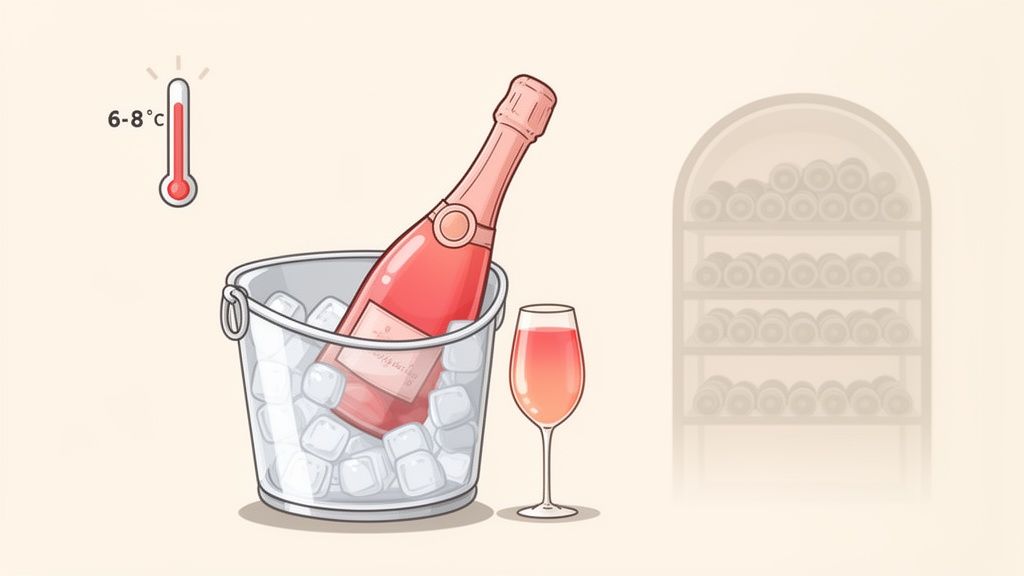
To really get the most out of every bottle, how you serve and store your sparkling rosé is non-negotiable. These simple steps aren't just for show; they make sure your sparkling rosé wine tastes exactly how the winemaker dreamed it would, with all its delicate aromas and fine bubbles intact.
The single most important factor? Temperature. You want to serve sparkling rosé properly chilled, right in that sweet spot between 6–8°C. If it's too warm, the alcohol can taste a bit harsh, and those beautiful bubbles will vanish in a flash, leaving the wine feeling flat. Serve it too cold, though, and you’ll numb all those lovely fruit flavours we’ve been talking about.
Getting the Glassware Right
While we all love the look of a classic flute, a tulip-shaped glass is actually a much better choice for appreciating the full character of a quality sparkling rosé. Its wider bowl gives the aromas room to breathe and gather, while the tapered rim funnels them right to your nose, taking the whole tasting experience up a notch.
Thinking about your next get-together, it's worth considering how glassware can elevate the whole affair. For instance, the right glasses are just as crucial as the wine itself when you're putting together stunning charcuterie and wine pairings.
How to Store Your Bottles
Proper storage is all about protecting your investment, whether you plan on opening that bottle this weekend or next year. Just follow these simple rules:
- Short-Term (a few days): If you're planning to drink it soon, the fridge is perfectly fine for getting it chilled and ready.
- Long-Term (months or years): For longer storage, find a cool, dark place with a consistent temperature. You want it away from direct sunlight and vibrations. A cellar or wine fridge is perfect, and always store bottles on their side to keep the cork from drying out.
Properly serving sparkling rosé is about unlocking its potential. The right temperature and glass don't just change how it tastes—they reveal its true character, from the first aromatic whiff to the last refreshing sip.
Its gorgeous look and refreshing profile have made sparkling rosé a huge hit with modern wine drinkers. Here in Australia, we lead the charge in sparkling sales. And while Prosecco might hold a larger slice of the market, the love for rosé just keeps growing, especially as a go-to celebratory drink when you want something different from South Australia’s famous reds.
How to Choose Your Perfect Sparkling Rosé
Navigating the world of sparkling rosé can feel like an adventure, but a few key signposts on the label will guide you straight to your perfect bottle. The best place to start is with your own taste. What are you in the mood for? Something to kick off an evening, or a wine with enough body to stand up to a meal?
Think of it in terms of flavour profiles. If you love crisp, dry, and refreshing styles, keep an eye out for terms like 'Brut' or 'Extra Brut'. These are your lean, zesty go-to's, perfect as an aperitif or with delicate seafood. They're the top pick for anyone who prefers their bubbles without a hint of sweetness.
On the other hand, if you’re after a wine with a more generous, fruity character, look for styles that don't shout about being dry. These bottles often burst with ripe strawberry and cherry notes, making them fantastic for casual sipping or even pairing with spicy foods.
Decode the Label Like a Pro
Understanding a few key terms can transform your buying experience, turning a wall of options into a curated selection. Here’s what to look for:
- Grape Variety: A wine made from Pinot Noir will often have elegant red berry flavours, while one featuring Shiraz might be bolder and spicier.
- Production Method: 'Traditional Method' is a good clue you’re getting a richer, more complex wine with toasty notes. In contrast, 'Charmat Method' usually means fresh, bright, and fruit-forward. You can learn more by exploring our guide to sparkling wine varieties.
- Region: A warm climate like ours in McLaren Vale often produces sparkling rosé with ripe, generous fruit flavours that are just incredibly appealing.
This category’s popularity is absolutely soaring. In fact, sparkling rosé has been highlighted as Australia's fastest-growing sparkling export category, which really shows its widespread appeal. You can read more about the growth of Australian sparkling wine exports on AWRI.
A Few Final Questions on Sparkling Rosé
Even after diving deep into the world of pink bubbles, a few questions always seem to pop up. We’ve rounded up the most common ones to give you clear, straight-to-the-point answers, so you can feel completely confident next time you’re choosing a bottle.
Is Sparkling Rosé Sweet?
This is probably the biggest myth out there, but the answer is almost always no. The vast majority of sparkling rosé wine you’ll find is crafted in a crisp, dry style known as ‘Brut’.
While it bursts with delicious red fruit flavours like strawberry and raspberry, those flavours aren't the same as sweetness. The final sweetness level is a choice made by the winemaker. If you prefer a dry wine, just look for the word ‘Brut’ on the label—it’s your guarantee of a refreshing, zesty drop.
How Long Does Sparkling Rosé Last After Opening?
Once you pop that cork, the clock starts ticking. To keep those bubbles alive for a little longer, use a proper sparkling wine stopper (a regular cork won’t cut it) and pop the bottle straight back in the fridge. This should keep it fresh for 1 to 3 days.
Honestly, though, for the best experience—with the most vibrant fizz and brightest flavours—it’s always best to enjoy the whole bottle the day you open it.
The key difference between Sparkling Rosé and Rosé Champagne isn't about quality—it's about geography. Great sparkling wine is made all over the world, but only wine from Champagne, France, can legally use the name.
What’s the Difference Between Sparkling Rosé and Pink Champagne?
The crucial difference here is simply location, location, location. True ‘Champagne’ can only be made in the Champagne region of France, and it must follow a strict set of traditional rules.
‘Sparkling Rosé’ is the catch-all term for any pink sparkling wine made anywhere else in the world, from Italy to right here in McLaren Vale. So, while all Rosé Champagne is a type of sparkling rosé, not all sparkling rosé is Champagne. It’s a distinction that celebrates the unique character that winemakers from different regions bring to the table.
Does a Darker Colour Mean It’s Sweeter?
Not at all. The colour of a rosé has absolutely nothing to do with how sweet it is. The shade of pink comes down to two things: the type of red grape used and, more importantly, how long the grape skins were left in contact with the juice.
A deep ruby rosé might have more intense berry flavours, while a pale salmon-hued one could be more delicate and citrusy. Either one can be made completely dry or lusciously sweet—that’s a separate decision made by the winemaker later in the process.
Ready to explore the stunning range at McLaren Vale Cellars? From crisp and dry to fruit-forward and vibrant, our curated collection of sparkling rosé wine has something for every palate. Discover your next favourite bottle today. https://www.mclarenvalecellars.com

Comments (0)
There are no comments for this article. Be the first one to leave a message!