
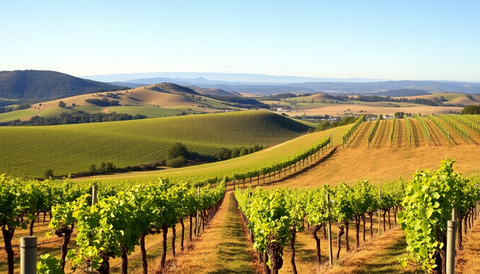
When you think of Australian wine, chances are you’re picturing a glass from South Australia. It’s no accident. This state is the undisputed heartland of Australian wine, producing nearly 50% of the country's entire vintage each year.
This guide will take you on a journey through the unique character, flavour, and soul of each major growing area.
Discover the Epicentre of Australian Wine
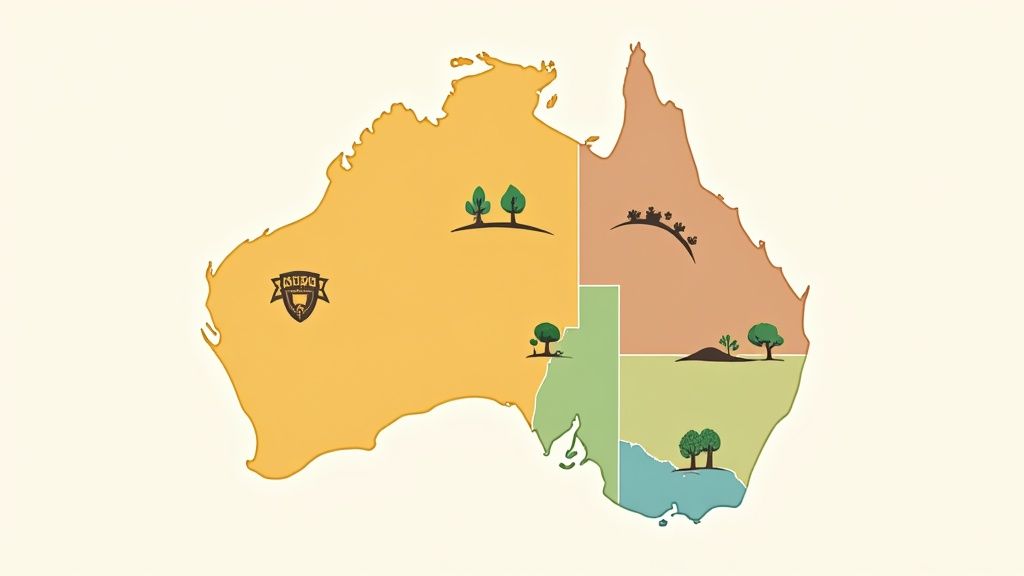
The story of South Australian wine began with some of the nation's earliest vine plantings, way back in 1838 in Adelaide. But what really sets this place apart isn't just its history—it's its incredible resilience.
While the phylloxera plague devastated vineyards across Europe and even parts of Australia in the late 19th century, South Australia’s strict quarantine measures saved its vines. This stroke of historical fortune means the state is now a living museum, home to some of the oldest continuously producing vineyards on the planet.
These precious "ancestor" vines offer a direct link to the earliest days of Australian winemaking. The depth and complexity they bring to a wine is something that’s almost impossible to replicate anywhere else in the world.
Key South Australian Wine Regions at a Glance
To get started, here’s a quick look at the headline acts. Each region has a signature style that has put it on the world wine map, driven by its unique terroir and climate.
| Region | Signature Grape | Defining Wine Style |
|---|---|---|
| Barossa Valley | Shiraz | Rich, powerful, full-bodied reds |
| McLaren Vale | Shiraz / Grenache | Velvety, chocolate-laced reds |
| Clare Valley | Riesling | Bone-dry, lime-zest whites |
| Coonawarra | Cabernet Sauvignon | Structured, elegant, age-worthy reds |
| Adelaide Hills | Sauvignon Blanc | Crisp, aromatic, cool-climate whites |
This table is just the beginning, of course. The real magic lies in exploring the nuances that make each bottle and each region a unique experience.
A Mosaic of Climates and Soils
So, what's the secret to South Australia's incredible variety? It all comes down to a remarkable collection of distinct terroirs packed into one state. This isn’t one giant, uniform vineyard; it’s a patchwork of microclimates and soils, each with its own personality.
- The warm, continental climates of places like the Barossa Valley are perfect for crafting the powerful, full-bodied red wines that have become global benchmarks.
- In contrast, the cooler, high-altitude pockets of the Adelaide Hills create pristine conditions for elegant, acid-driven whites and delicate Pinot Noir.
- Then you have the unique maritime influences in regions like McLaren Vale and the Limestone Coast, where sea breezes moderate temperatures, letting grapes ripen slowly to develop deep, complex flavours.
This tapestry of conditions allows winemakers to grow everything from classic French grapes to exciting Mediterranean varietals. To get the full picture of this incredible legacy, you can explore our complete guide to South Australian wine and its heritage.
This journey through the state's wine landscape is about more than just tasting notes. It’s an exploration of history, geography, and the passionate people who turn grapes into liquid art. From the sun-drenched plains of the Riverland to the famed terra rossa soils of Coonawarra, every region has a story to tell. Let's dive in.
The Icons: Barossa Valley and McLaren Vale
When you start talking about South Australian wine, it’s impossible not to begin with the two names that command the global spotlight: the Barossa Valley and McLaren Vale. These aren’t just places on a map; they are the standard-bearers for Australian wine, each with a powerful and distinct personality shaped entirely by its environment. They're both giants of South Australian Shiraz, yet they tell two completely different stories.
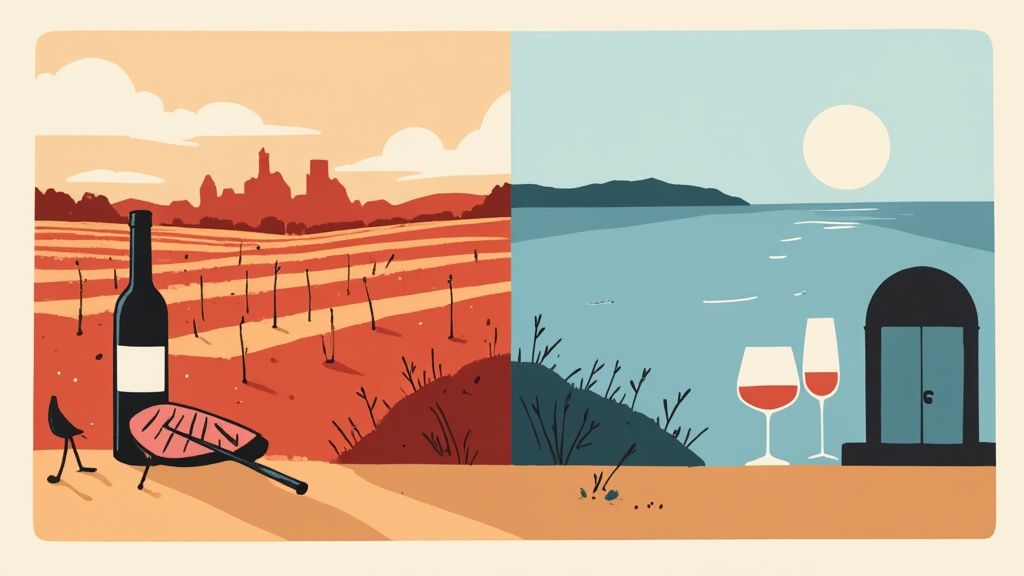
Think of them as two heavyweight champions with contrasting styles. The Barossa is the raw knockout artist, all about power and intensity. McLaren Vale is the graceful fighter, blending that same strength with elegance and finesse. Getting your head around their differences is the first step to truly appreciating the depth of South Australian wine.
Barossa Valley: The Iron Fist of Australian Shiraz
The Barossa Valley is arguably Australia’s most famous wine region, a place steeped in history and home to some of the world's oldest vines. Its reputation is built squarely on the back of its signature grape: Shiraz. The climate here is warm and continental, with hot, dry summers that let the grapes hang on the vine until they reach maximum ripeness.
This climate, combined with ancient, nutrient-poor soils, forces the vines to dig deep and work hard. The result is low yields of intensely concentrated fruit, which in turn creates a wine that is powerful, structured, and unapologetically bold.
Barossa Shiraz is the quintessential "iron fist in a velvet glove." While the texture can feel plush and luxurious, the underlying power and structure are undeniable, delivering a wine experience that is both immense and memorable.
So, what does that mean in the glass? Expect a deep, almost opaque colour and an aromatic explosion of dark fruits like blackberry, plum, and black cherry. These powerful primary notes are layered with complex secondary flavours of dark chocolate, mocha, and a hint of savoury spice. Give them some time in the cellar, and these wines develop beautiful notes of leather, earth, and smoked meat.
A classic Barossa Shiraz is the perfect companion for rich, hearty dishes. Its robust tannins and full body stand up beautifully to grilled steak, slow-roasted lamb shank, or a smoky barbecue brisket. The wine’s intensity just slices through the fat and complements those charred flavours perfectly.
For visitors, a trip to the Barossa is a journey through winemaking history. Cellar doors like Seppeltsfield and Penfolds offer a glimpse into the region’s pioneering past, while newer producers are always showcasing modern interpretations of this classic style.
McLaren Vale: The Velvet Glove of Coastal Terroir
Just a short drive south of Adelaide, McLaren Vale offers a completely different take on South Australian terroir. While it also excels with Shiraz and Grenache, the defining feature here is the cooling influence of the nearby Gulf St Vincent. This maritime climate acts as a natural air conditioner, with afternoon sea breezes taking the edge off the summer heat.
This gentler climate allows for a longer, more even ripening period. Grapes develop rich, complex flavours without the super-concentrated intensity you find in the hotter Barossa. The wines are often described as having a softer, more rounded texture—a "velvet glove" approach.
So, what should you look for in a McLaren Vale Shiraz? The fruit profile often leans towards ripe raspberry, blackcurrant, and blueberry, with a signature note of milk chocolate or dark cocoa. The tannins are typically finer and more supple, creating a wine that feels plush and generous on the palate.
McLaren Vale is also a champion of Grenache, producing vibrant, aromatic wines with notes of red cherry, strawberry, and exotic spices. These wines are incredibly versatile with food, pairing wonderfully with everything from roast chicken to spicy Mediterranean dishes.
When you visit, you’ll discover a region deeply committed to sustainability and innovation. Many wineries employ organic and biodynamic practices, reflecting a profound respect for the land. Cellar doors like d'Arenberg, with its iconic Cube, offer experiences that are as much about art and architecture as they are about wine.
The contrast between these two iconic regions is a fascinating study in terroir, and you can learn more by exploring our detailed comparison of Barossa Valley vs McLaren Vale.
Cool Climate Champions: Adelaide Hills and Clare Valley
While South Australia is justly famous for its powerhouse reds, some of the country's most elegant and refined wines come from its cool-climate pockets. To find them, we move away from the warmth of the Barossa and McLaren Vale and head for the hills—literally. The Adelaide Hills and Clare Valley are the state's cool-climate champions, offering a completely different, yet equally compelling, side to South Australian wine.
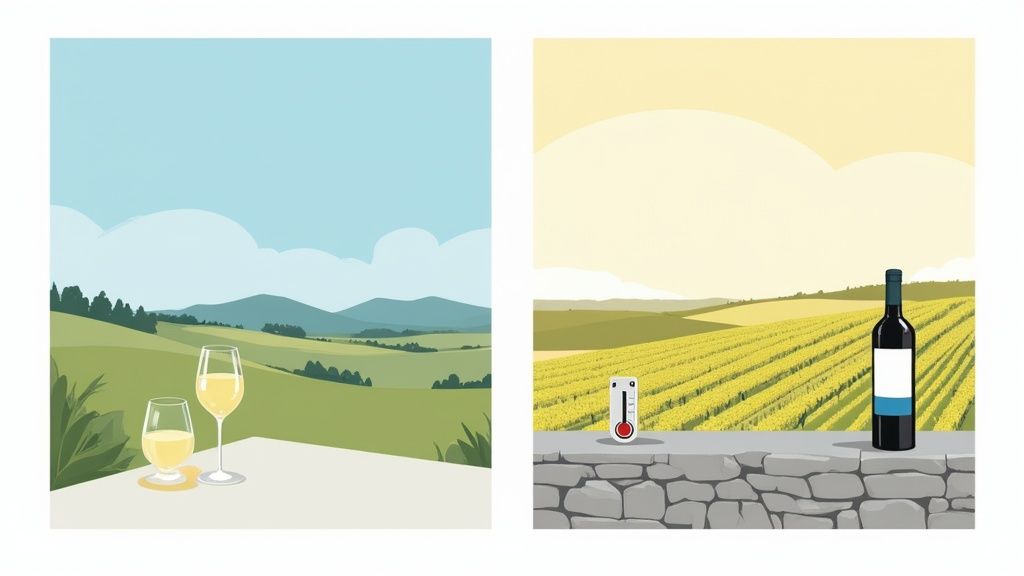
Here, elevation is everything. Higher altitudes mean cooler temperatures, especially overnight, which puts the brakes on the ripening process. Think of it like slow-roasting versus searing a piece of meat; this gradual development allows the grapes to build intense, nuanced flavours while holding onto their precious natural acidity. The result? Wines that are crisp, vibrant, and incredibly food-friendly.
Adelaide Hills: An Alpine Oasis
Just a stone's throw from Adelaide’s city centre, the Adelaide Hills is a stunning region of winding roads, charming villages, and vineyards perched at high altitudes. This elevation is the secret to its success, with vineyards sitting between 400 and 700 metres above sea level. This creates a climate that’s a world away from the nearby plains, making it perfect territory for delicate, aromatic grape varieties.
The undisputed star of the show here is Sauvignon Blanc. Adelaide Hills "Savvy B" is celebrated for its zesty, energetic personality—a far cry from the richer styles you might find in warmer spots.
- Tasting Notes: Expect a burst of passionfruit, gooseberry, and freshly cut grass, all driven by a racy acidity that makes your palate come alive.
- Food Pairing: Its crispness is a knockout match for fresh seafood. Think oysters, grilled prawns, or a delicate goat cheese salad.
But the region is no one-trick pony. It also produces some of Australia’s finest cool-climate Chardonnay and Pinot Noir. The Chardonnay is elegant and restrained, with notes of white peach and grapefruit alongside a subtle flinty minerality, often kissed by gentle oak. The Pinot Noir is equally graceful, offering delicate flavours of red cherry, raspberry, and earthy forest floor notes.
Clare Valley: The Kingdom of Riesling
Travel north of the Barossa, and you'll discover the Clare Valley, a region with a singular, laser-like focus: producing world-class Riesling. While days can get quite warm, the continental climate delivers a significant diurnal range—a fancy term for the big temperature swing between day and night. This swing is absolutely critical for Riesling, as those cool nights are what preserve the grape's signature, mouth-watering acidity.
The real magic, however, lies just beneath the surface. The Clare Valley’s soils are a complex tapestry of slate and limestone, a geology that draws comparisons to the great Riesling regions of Germany.
This unique terroir is what gives Clare Valley Riesling its distinctive character. The slate imparts a steely, mineral-driven backbone, while the limestone contributes to its fine texture and incredible ability to age, developing complex honeyed and toasted notes over time.
Clare Valley Riesling is almost always made in a bone-dry style, a hallmark that truly sets it apart. It’s fiercely aromatic and intensely flavoured.
- Tasting Notes: Look for piercing aromas of fresh lime juice, lemon zest, and white flowers. With a few years in the bottle, these wines evolve to show incredible complexity, revealing notes of toast, kerosene, and honeycomb.
- Food Pairing: That high acidity and dry profile make it an exceptionally versatile food wine. It cuts through the richness of pork belly beautifully and is a dream pairing for spicy Asian cuisine, like a Thai green curry or Vietnamese pho.
The sheer quality and age-worthiness of the Rieslings from this pocket of South Australia are remarkable. To truly get a handle on what makes this grape so special in this corner of the world, you can learn more by uncovering the gems of Australian Riesling, which dives even deeper into the variety.
Together, the Adelaide Hills and Clare Valley showcase the incredible diversity hiding within South Australia’s wine landscape. They prove that the state's story is not just one of power and intensity, but also of elegance, precision, and finesse.
The Limestone Coast: Coonawarra and Beyond
If you head southeast from Adelaide, you’ll find yourself in a truly unique geological landscape: the Limestone Coast. That’s not just a catchy name; it’s literally what’s under your feet. The whole area is built on a foundation of ancient marine fossils and limestone, a memory of a time when the ocean covered this part of Australia.
This limestone bedrock is the secret sauce that gives the wines here their distinctive character. It acts like a giant, natural sponge, soaking up winter rainfall and storing it deep underground. As the dry growing season progresses, this water is slowly wicked back up to the vines, giving them just enough hydration without ever letting them get lazy.

This incredible geology sets the stage for a collection of sub-regions, each with its own story to tell. But one narrow strip of land stands head and shoulders above the rest, celebrated as one of the most famous terroirs on the planet.
Coonawarra: The Magic of Terra Rossa
Tucked within the Limestone Coast is a long, cigar-shaped sliver of land called Coonawarra. What makes this 12-kilometre-long stretch so special is its world-renowned ‘terra rossa’ soil. This vibrant, rust-red earth is a thin layer of nutrient-rich topsoil sitting directly on top of that free-draining limestone.
Think of it as nature’s perfectly engineered garden bed. The terra rossa topsoil provides just enough food for the vines to thrive, while the fractured limestone below acts as the ultimate drainage system, ensuring the roots never get waterlogged.
This perfect marriage of soil and bedrock creates the ideal conditions for growing world-class Cabernet Sauvignon. The vine gets just enough water and nutrients to produce intensely flavoured grapes, but not so much that it becomes complacent. It's a delicate balance that winemakers around the world can only dream of.
This unique environment is directly responsible for the classic Coonawarra Cabernet Sauvignon. These are wines celebrated for their structure, elegance, and incredible ability to age.
- In Youth: Expect a rush of cassis, blackcurrant, and blackberry, often with a signature hint of fresh mint or eucalyptus.
- With Age: As the wine matures, these bright fruit notes evolve into complex layers of cedar, tobacco leaf, and rich, damp earth.
A great Coonawarra Cab can age gracefully for decades, developing a savoury complexity that is truly profound. Its firm tannins and balanced acidity make it a brilliant partner for rich dishes like roasted lamb with rosemary or a classic beef wellington.
Beyond the Red Soil: Padthaway and Wrattonbully
While Coonawarra rightly steals the limelight, it’s not the only story on the Limestone Coast. Just to the north, its neighbours offer their own compelling take on this remarkable terroir, often at an exceptional value.
Padthaway is well-known for producing high-quality Chardonnay, with styles that range from crisp and unoaked to rich and creamy. It also turns out excellent Shiraz and Cabernet Sauvignon that share a family resemblance with Coonawarra but often feel a little softer and more approachable when young.
A little further inland, Wrattonbully shares a similar geological makeup to Coonawarra, with significant pockets of that famous terra rossa soil over limestone. This has made it a rising star for Cabernet Sauvignon and Shiraz, producing wines with outstanding structure and depth that are quickly gaining a cult following among those in the know.
Together, these regions paint a clear picture of geology's profound impact on wine. From the iconic reds of Coonawarra to the diverse offerings of its neighbours, the Limestone Coast is a true cornerstone of the South Australian wine story.
Exploring Other Vital South Australian Wine Regions
When you think of South Australian wine, the big names probably jump to mind first. But beyond the globally famous valleys, there are regions that form the very backbone of the state's wine industry. These aren't just supporting acts; they're powerhouses and hidden gems that offer incredible diversity and value, painting the complete picture of SA's rich winemaking story.
To get a sense of scale, South Australia contributes nearly 50% of the nation’s entire annual wine output, making it the undisputed giant of the Australian wine scene. In 2022, Australia had 361,376 acres under vine, and a huge chunk of that is right here. From the vast, sun-drenched plains of the Riverland to the unique floodplains of Langhorne Creek, these regions are essential to understanding the sheer scope of what our state has to offer. You can explore more about Australia's wine geography and discover what makes each area unique.
The Riverland: The Engine Room
For decades, the Riverland has been the unsung hero of Australian wine. This warm, irrigated region hugging the Murray River is the country’s largest grape-growing area by volume—truly the industry’s engine room. For a long time, its job was to reliably produce huge volumes of grapes for commercial blends.
But things are changing. A new generation of winemakers is looking at the Riverland's warm, dry climate not as a hurdle, but as a golden opportunity. They're ditching tradition and planting drought-loving grape varieties from Spain, Italy, and Portugal.
Think Vermentino, Fiano, Nero d'Avola, and Montepulciano. These are grapes that absolutely thrive in the heat, holding onto their acidity and developing bright, punchy flavours. This shift is turning the Riverland into a hotbed for experimentation and the go-to source for some of Australia's most exciting and affordable "alternative" wines.
So, what does that mean for your glass? It means you can find crisp, aromatic whites with zesty green apple and citrus notes in a Riverland Vermentino, or juicy, medium-bodied reds bursting with cherry and spice from a Montepulciano. These wines deliver amazing quality and a fresh take on what a warm-climate region can produce.
Langhorne Creek: The Floodplain Secret
Tucked between the Adelaide Hills and Lake Alexandrina, Langhorne Creek is a region with a truly fascinating story etched into its soil. Its reputation was built on the rich, alluvial dirt left behind by the Bremer and Angas Rivers, which used to flood the vineyards every winter. This natural irrigation, known locally as the "Langhorne's System," created deep, fertile soils perfect for growing top-tier red grapes.
While modern irrigation has mostly taken over, the legacy of that floodplain terroir remains. The region is famous for producing exceptionally soft, approachable, and flavour-packed red wines, especially Cabernet Sauvignon and Shiraz.
- Signature Style: Langhorne Creek Cabernet Sauvignon is loved for its lush, dark fruit and velvety tannins. It’s often described as being more generous and less leafy than its Coonawarra cousins.
- Powerful Blends: The region is a master of the blend. Classic Shiraz-Cabernet combinations from here deliver layers of complexity with a smooth, generous palate that’s impossible to resist.
The wines from Langhorne Creek consistently punch above their weight, offering fantastic quality for the price. It makes them a savvy choice for anyone hunting for rich, beautifully made reds. Cellar doors like Bleasdale and Bremerton give a warm welcome and a brilliant introduction to the distinctive character of this vital, yet often overlooked, South Australian region.
Your Guide to Visiting and Buying South Australian Wine
Diving into South Australia’s wine regions is an incredible adventure, but knowing where to begin can turn a good trip into a great one. With just a little planning, you can move beyond a simple tasting tour and create an unforgettable journey through the heart of Australia's wine country.
The best times to visit are easily autumn (March to May) and spring (September to November). These seasons serve up beautiful, mild weather that’s perfect for wandering through vineyards, without the intense heat of summer or the chill of winter. Autumn is especially magical—you get to witness the buzz and energy of the grape harvest firsthand.
Planning Your Visit
A bit of forethought goes a long way in getting the most out of your wine tour. Here are a few insider tips to get you started:
- Book Ahead: Many of the smaller, boutique wineries and top-rated restaurants get booked out, especially over the weekend. Lock in your spots in advance to avoid missing out.
- Cellar Door Etiquette: Don't feel you have to buy a bottle at every single stop. It's completely fine to pay a small tasting fee, thank the staff for their time, and head to your next destination.
- Smart Transport: This one’s non-negotiable. Always have a designated driver, book a private car service, or join one of the many excellent guided tours. Never drink and drive.
And if our guide inspires you to share your own wine adventures, you'll find some great tips for creating a successful travel blog to get you started.
A Buyer's Guide to South Australian Wine
Bringing the experience home is half the fun. With South Australia supplying a staggering 80% of the country’s premium wine and 50% of all bottled wine nationally, the choices can feel endless.
When you're standing in front of a wall of bottles, the label is your best friend. Look for the region, the vintage (the year the grapes were picked), and of course, the grape variety. A brilliant vintage can certainly take a wine to the next level, but never underestimate the skill of the winemaker—it’s just as important.
Pro Tip: Don’t overlook the ageing potential of South Australian classics. A Barossa Shiraz or Coonawarra Cabernet from a solid vintage can evolve in the cellar for a decade or more, transforming into something truly special with complex, savoury notes.
Here at McLaren Vale Cellars, we do the hard work for you. Our collections are carefully curated to showcase the very best of the region, and we provide detailed tasting notes and pairing ideas for every bottle. Whether you're a seasoned collector or just starting out, we're here to help you choose with confidence and find your next favourite wine.
Frequently Asked Questions
Diving into the world of South Australian wine can bring up a few questions, especially when you're trying to plan the perfect trip or just understand what makes each region tick. Here are a few of the common queries we get, answered to help you on your way.
What Is the Most Famous South Australian Wine Region?
If you ask anyone around the globe to name one Aussie wine region, chances are they'll say the Barossa Valley. It’s earned its fame, celebrated worldwide for those powerhouse, old-vine Shiraz wines that have become legendary. Its deep roots in Australian wine history make it an icon.
That said, places like McLaren Vale, Coonawarra, and the Clare Valley are giants in their own right, each with a passionate following and a unique story to tell.
Which Wine Is South Australia Best Known For?
Shiraz is the undisputed king here. From the bold, dark-fruited giants of the Barossa to the velvety, chocolate-laced styles we cherish in McLaren Vale, South Australian Shiraz has truly set the global standard for the grape.
But don't stop there. The state also produces absolutely world-class Cabernet Sauvignon and Riesling that are just as impressive.
The real strength of the South Australian wine scene is its incredible diversity. While Shiraz might grab the headlines, the supporting cast of varieties from different terroirs is just as compelling and essential to the full story.
Can I Visit Wineries Without a Booking?
While you might get lucky with a walk-in at some of the larger, more commercial cellar doors, it's always, always best practice to book your tasting in advance.
Many of the smaller, boutique wineries—the ones where you get to chat with the winemaker—run on an appointment-only basis. This ensures they can give you a personal and memorable experience. If you’re visiting on a weekend or during a holiday period, booking ahead isn’t just a good idea; it’s essential.
What Is the Best Time of Year to Visit?
You really can't go wrong, but for the best experience, aim for autumn (March to May) or spring (September to November).
- Autumn: This is the magic of harvest season. The weather is usually stunning, and you get to see the wineries buzzing with action. The energy is fantastic.
- Spring: The vineyards burst back to life in a sea of green, and the mild temperatures are absolutely perfect for a day of exploring and tasting.
At McLaren Vale Cellars, we live and breathe this stuff. We make exploring these incredible regions easy. Dive into our curated collections and let us bring the best of South Australian wine directly to your door. Discover your next favourite bottle today at https://www.mclarenvalecellars.com.

Comments (0)
There are no comments for this article. Be the first one to leave a message!