
When you think of Australian red wine, you’re almost certainly thinking of South Australian Shiraz. It's the undisputed benchmark, celebrated around the globe for its massive fruit flavours, luscious texture, and incredible range.
From the powerhouse styles of the Barossa Valley to the more savoury, complex bottles coming out of McLaren Vale, this region is home to some of the world's most legendary Shiraz.
Exploring the Heart of Australian Shiraz
Welcome to South Australia, the spiritual home of Australian Shiraz. This is where the grape variety truly found its voice, forging a reputation that put the nation firmly on the global wine map. It’s a story built on ancient vines, passionate winemakers, and a unique combination of sun, soil, and sea that creates an amazing spectrum of styles.
Think of South Australia as a giant winemaking canvas. The climate and geology shift so dramatically from one valley to the next that a single grape, Shiraz, can produce wildly different but equally compelling wines. This guide is your roadmap to understanding what makes South Australian Shiraz a true global icon.
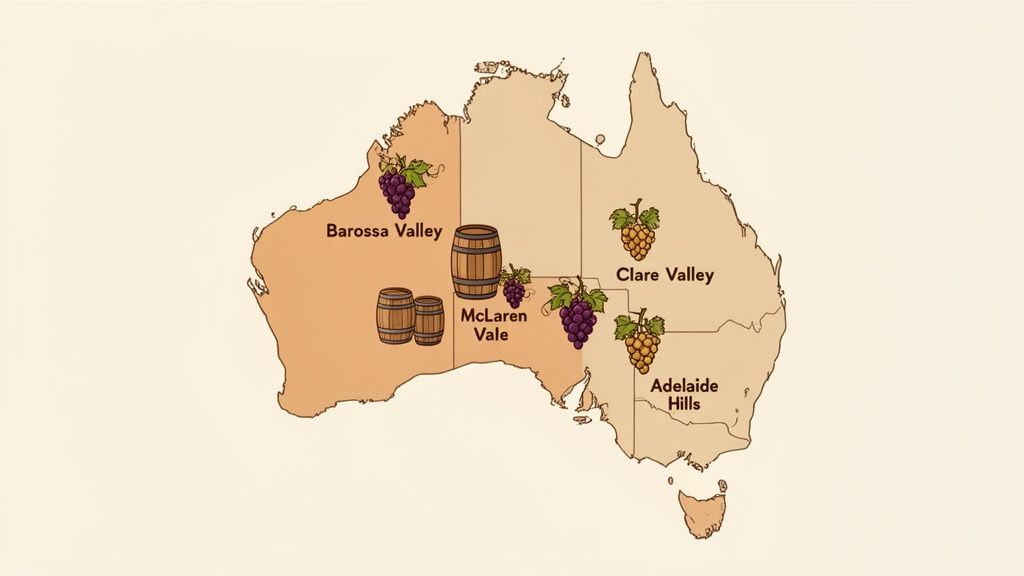
A Journey Through Iconic Regions
We're about to take a tour through the state’s most celebrated wine districts, each stamping its own signature on the Shiraz legacy. We'll journey through regions that have become household names for quality, each offering a distinct personality in the bottle.
This is an essential trip for anyone wanting to truly get to grips with Australian wine. To zoom out and see the bigger picture, you can uncover the depths of Australian Shiraz in our comprehensive article.
Here are the key stops on our tour:
- Barossa Valley: Famous for its powerful, full-bodied Shiraz bursting with intense dark fruit, chocolate, and plush tannins. Many of these wines come from some of the world's oldest vines.
- McLaren Vale: Known for its rich, complex, and often savoury Shiraz that balances ripe fruit with earthy undertones and a more velvety texture, thanks to its coastal proximity.
- Adelaide Hills: A cooler-climate region producing elegant, medium-bodied Shiraz with vibrant red fruit, a classic peppery spice, and bright acidity.
- Clare and Eden Valleys: Higher-altitude areas that craft structured, aromatic, and age-worthy Shiraz with floral notes and fine, linear tannins.
This guide is designed to be your trusted companion, whether you're a seasoned collector looking to refine your palate or a curious newcomer eager to uncork the world of premium Australian wine.
By the end of this journey, you won't just know about South Australia Shiraz; you'll understand why it commands such respect. You’ll be able to spot regional differences, pick a bottle with confidence, and appreciate the incredible craftsmanship that goes into every glass.
Let's start by digging into how the very ground these vines grow in shapes the wine you enjoy.
How Terroir Shapes South Australian Shiraz
Ever wondered why a Shiraz from McLaren Vale tastes so different from one grown just up the road in the Barossa Valley? The answer is a single, powerful word: terroir. It's a French term that perfectly captures the entire natural world of a vineyard, its soil, climate, and geography, and how all those pieces come together to shape the wine in your glass.
Think of terroir as a vineyard's unique fingerprint. No two are ever exactly alike, which is why no two wines can ever be identical. For South Australian Shiraz, this concept is everything. It’s the secret sauce behind the state's incredible diversity, allowing one grape variety to sing in a whole spectrum of styles.
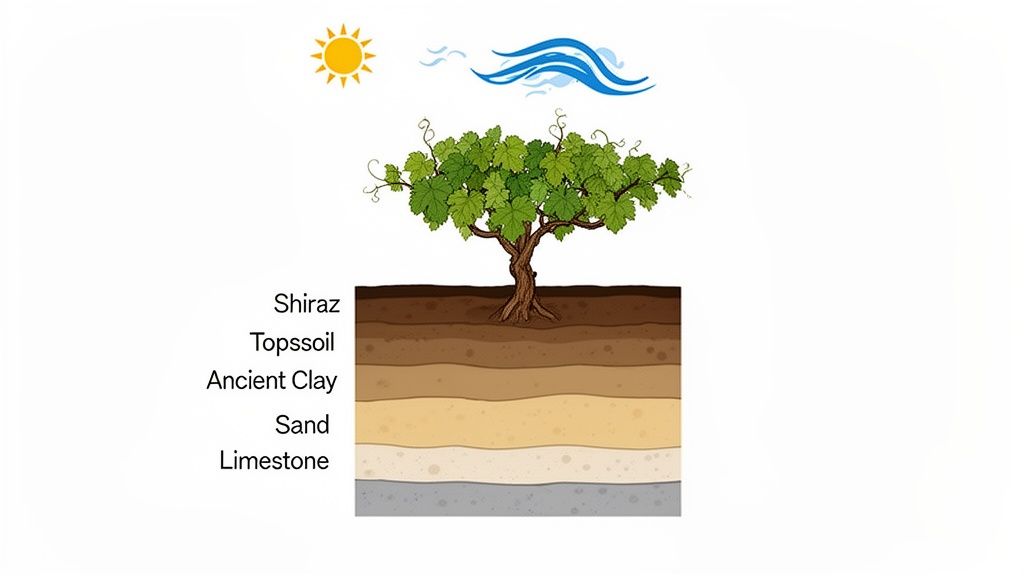
The Ground Game: Soil's Deep Influence
The foundation of any great wine is literally the ground it grows in. The ancient soils of South Australia are incredibly varied, and each type gives something unique to the Shiraz grown there.
You can think of soil as a pantry for the vine, holding all the water and nutrients it needs to thrive. The type of soil determines how easily the vine can access those resources, which has a direct impact on the grape's development and flavour.
- Ancient Clay Soils: Found all through the Barossa Valley, these soils are low in nutrients but hold water well. This forces the vines to struggle a bit, which is actually a good thing! It leads to smaller, more concentrated berries bursting with intense dark fruit flavours and powerful, structured tannins.
- Diverse Geologies: McLaren Vale is a different beast altogether, boasting an incredible mosaic of over 40 distinct geologies. From sandy loams that produce aromatic, softer wines to gnarly ironstone and limestone that add minerality and backbone, this diversity is the region's superpower. It’s what gives McLaren Vale Shiraz its signature savoury complexity.
This geological patchwork is a massive part of why the styles between the two regions are so distinct. To dig a little deeper, you can learn more about the distinct terroirs of McLaren Vale and Barossa Valley in our guide.
Climate: The Architect of Flavour
Beyond what's underfoot, the climate plays a huge role in sculpting the personality of South Australian Shiraz. The daily dance of sunshine, warmth, and cooling breezes is critical in defining a wine's style from one vintage to the next.
Warm, sunny days are a must for ripening Shiraz, helping to build those rich, generous fruit flavours we all love. But if that's all you had, the grapes would ripen way too fast, lose their acidity, and create a simple, flabby wine. That’s where the cooling influences come in.
A region's climate acts like a conductor for an orchestra. It sets the tempo for ripening, ensuring all the elements, fruit, tannin, and acidity, come together in perfect harmony by harvest time.
Take McLaren Vale, for instance. Its proximity to the Gulf St Vincent provides a crucial maritime influence. Cooling afternoon sea breezes, affectionately known as the "St Vincent's Doctor," sweep through the vineyards, hitting the brakes on the ripening process. This preserves the natural acidity in the grapes, adding a beautiful freshness and elegant structure that balances the region’s trademark fruit richness.
The Barossa Valley, in contrast, has a warmer, more continental climate. While it gets some relief from elevation and gully breezes, its character is largely defined by warmth. This is what helps create that opulent, full-bodied, and plush style of Shiraz it’s famous for around the world. These climatic differences are every bit as important as the soil in creating the distinct regional identities that wine lovers seek out.
Barossa Valley vs McLaren Vale Shiraz
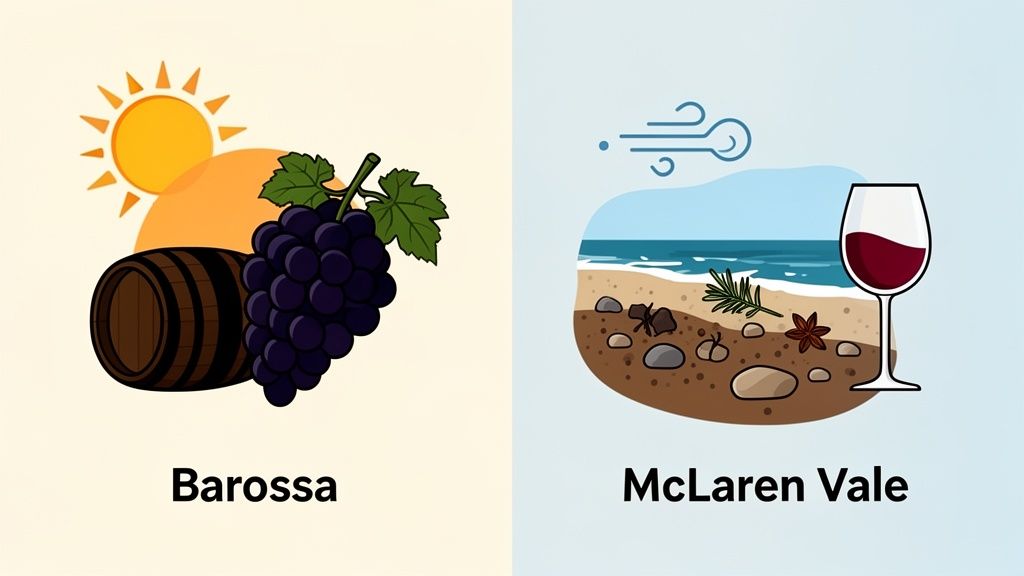
When it comes to South Australian Shiraz, two regions stand shoulder-to-shoulder as the undisputed titans: Barossa Valley and McLaren Vale. While they both craft world-class wines from the same grape, their styles are worlds apart. Choosing between them isn’t about which one is "better," but about understanding their unique personalities to find the one that hits the spot for you.
Think of it as a rivalry between two heavyweight boxers with completely different fighting styles. In one corner, you have the Barossa Valley, a powerhouse known for its sheer force, delivering an opulent, fruit-driven knockout punch. In the other corner, you have McLaren Vale, the technical master, combining strength with finesse, layering rich fruit with complex, savoury footwork.
This is the ultimate showdown. We’re going beyond the generic descriptions to really dig into the nuances that give each region its famous identity. By the end, you'll be able to spot the differences in the glass and pick your next bottle like a pro.
The Barossa Valley Signature Style
Barossa Valley Shiraz is the quintessential "big Aussie red." It's bold, unapologetic, and incredibly generous. The region’s warmer continental climate and ancient clay soils work together to produce grapes that are intensely concentrated and ripe.
The result is a wine that is typically full-bodied, with a rich, velvety texture and plush, mouth-coating tannins. The fruit profile is unapologetically dark and decadent.
- Core Flavours: Expect a massive wave of ripe blackberry, dark plum, and black cherry.
- Secondary Notes: These primary fruits are often layered with notes of dark chocolate, mocha, and a hint of sweet spice, like liquorice or vanilla from its time in oak.
- The Finish: The finish is characteristically long, smooth, and powerful, leaving a lasting impression of warmth and richness.
A classic Barossa Shiraz is like a decadent chocolate mud cake in a glass, dense, satisfying, and impossible to forget. It’s a wine that commands your full attention from the very first sip.
The McLaren Vale Counterpoint
Just a short drive south, McLaren Vale offers a different, yet equally compelling, take on Shiraz. The game changer here is the cooling influence of the nearby Gulf St Vincent. Those afternoon sea breezes act like a natural air conditioner for the vineyards, preserving acidity and adding a layer of complexity you don't always find in warmer spots.
McLaren Vale Shiraz still has that richness and concentration you'd expect, but it’s beautifully balanced by a savoury, sometimes earthy, character. The tannins are often finer and more velvety, creating a structure that is powerful yet elegant. It's a wine of beautiful contradictions.
The flavour profile here is also dark-fruited but ventures into more complex territory.
- Core Flavours: You'll find black cherry and blackberry, but often with a brighter, more vibrant edge.
- Secondary Notes: This is where McLaren Vale truly shines. Expect layers of dark chocolate, but also savoury notes like black olive, dried herbs, and a distinctive earthy spice.
- The Finish: The finish is typically long and textured, with a fine tannin grip that provides structure and promises a long life in the cellar.
Barossa Valley Shiraz vs. McLaren Vale Shiraz At a Glance
To really get a feel for the differences, it helps to see their key characteristics side-by-side. While winemaking styles can vary from one bottle to the next, these regional signatures hold true for the vast majority of wines.
| Characteristic | Barossa Valley Shiraz | McLaren Vale Shiraz |
|---|---|---|
| Primary Profile | Bold, opulent, and fruit-forward. | Rich, complex, and often savoury. |
| Fruit Flavours | Intense blackberry, dark plum, black cherry. | Ripe dark fruit, with savoury undertones. |
| Secondary Flavours | Dark chocolate, mocha, sweet spice. | Dark chocolate, black olive, earthy spice. |
| Body & Texture | Full-bodied with a plush, velvety texture. | Full-bodied with a velvety, finer texture. |
| Tannin Structure | Broad, mouth-coating, and powerful. | Finer, more structured, and elegant. |
| Defining Analogy | A powerful, warm embrace. | A sophisticated, layered conversation. |
Ultimately, your preference will come down to personal taste. If you crave a wine that is powerful, decadent, and fruit-driven, the Barossa Valley is your champion. If you prefer a wine that balances richness with savoury complexity and a more refined structure, you'll find your perfect match in McLaren Vale.
The best part? There's no wrong answer; only delicious discovery ahead.
Discovering Cooler Climate Shiraz Styles
When you hear "South Australian Shiraz," your mind probably jumps straight to a big, bold glass of something dark and powerful. And while the famous warm-climate classics from the Barossa and McLaren Vale absolutely deserve their rockstar status, there’s a whole other side to this grape waiting in the wings, one that’s elegant, spicy, and born from cooler temperatures.
Step away from the sun-baked valley floors and head for the hills, and you’ll find a completely different expression of Shiraz. It’s here the grape trades its trademark muscle for finesse. Think of it as the same grape, but performing a completely different dance, less of a powerful stomp and more of a graceful, energetic ballet.
This is where regions like the Adelaide Hills, Eden Valley, and Clare Valley shine, proving just how versatile South Australian Shiraz can be. By using elevation and crisp nights to their advantage, they craft wines that are vibrant, aromatic, and a world away from their warmer neighbours.
The Adelaide Hills Elegance
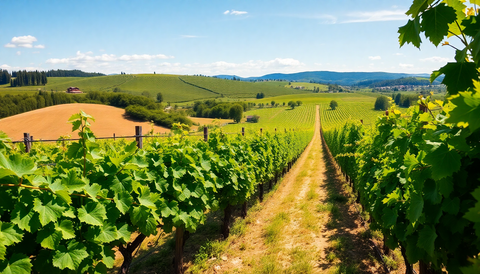
Tucked away in the Mount Lofty Ranges, the Adelaide Hills is one of Australia's premier cool-climate wine regions. With vineyards perched at altitudes from 400 to over 700 metres, the grapes enjoy cooler days and brisk nights, which really slows down the ripening process.
This extra "hang time" on the vine is crucial. It lets the grapes build up complex, nuanced flavours without getting overloaded with sugar. The result is a Shiraz that’s typically medium-bodied, with a zing of bright acidity and a beautiful aromatic lift. Forget dense black fruits; here, you’ll find a more lively spectrum of red fruit flavours.
What to look for in the glass:
- Vibrant red fruits like raspberry, red cherry, and a touch of cranberry.
- A distinct peppery spice, often a classic black or white pepper kick.
- Subtle floral hints of violet or lavender that add to its gorgeous smell.
The tannins are finer, almost savoury, creating a wine that feels energetic and refined rather than big and plush. It’s a style that brilliantly shows off the grape’s more delicate side.
Eden Valley and Clare Valley Structure
Head a bit further north, and you’ll find the Eden Valley and Clare Valley, both offering their own unique, structured take on cool-climate Shiraz. While they're a touch warmer than the Adelaide Hills, their higher elevations create a world of difference compared to the neighbouring Barossa Valley floor.
The Eden Valley, with its rugged, rocky soils and elevations hitting 500 metres, produces Shiraz known for intense aromatics and a fine, linear structure. These wines often have a floral, almost herbal edge, with dark cherry and blackberry fruit that’s framed by firm tannins built for ageing. It’s a beautiful balancing act of power and poise.
"Cooler climate Shiraz from regions like the Adelaide Hills or Eden Valley offers a fascinating counterpoint to the warmth of the Barossa. It’s where you find the spice, the fragrance, and the kind of elegance that makes you rethink what Australian Shiraz can be."
Similarly, the Clare Valley crafts Shiraz with incredible definition and longevity. The combination of warm days and cool, high-altitude nights helps lock in acidity, giving the wines a fresh backbone. Clare Valley Shiraz is often packed with concentrated dark fruit, classic mint or eucalyptus notes, and a firm tannin structure that screams "cellar me!" These are wines built for the long haul, evolving beautifully over many years.
Serving and Pairing Your Shiraz Like a Pro
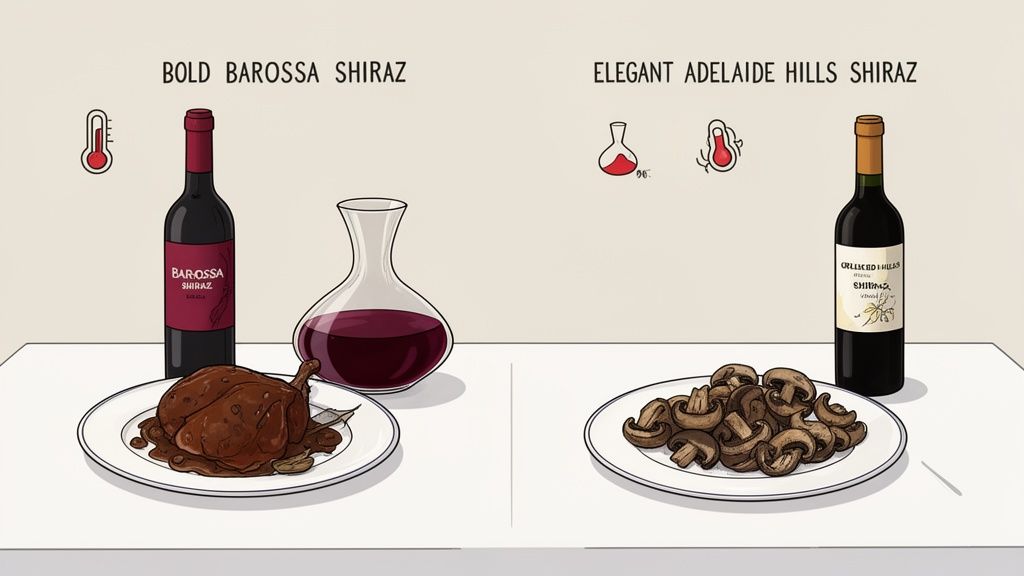
So, you've got your hands on a fantastic bottle of South Australian Shiraz. Brilliant. Now it’s time for the fun part, making sure it tastes as good in your glass as the winemaker intended. Getting the serving right isn't about being fussy; it’s about a few simple steps that can take a wine from good to absolutely glorious.
Think of it as setting the stage for the main performance. From the right temperature to the magic of decanting and finding that perfect food match, these are the little details that will truly elevate your experience and honour the craft in the bottle.
Nailing the Ideal Serving Temperature
One of the biggest mistakes we see is serving powerful reds like Shiraz at "room temperature." Let's be honest, in Australia, that can easily mean 20°C or more, which is far too warm for any wine. Serve a Shiraz too warm, and the alcohol shouts over the beautiful fruit and spice, making the wine taste flabby and hot.
The sweet spot you're aiming for is 16-18°C. This slightly chilled temperature tames the alcohol, lifts the complex aromas, and lets the layers of dark fruit, spice, and savoury notes sing in harmony.
Here’s a dead-simple trick: if the bottle feels warm to the touch, pop it in the fridge for 20 minutes before you pour. It’s a small effort that makes a massive difference.
The Art of Decanting
Decanting isn't just for dusty old bottles from a cellar. It's an absolute game-changer for young, bold South Australian Shiraz. The process is simple, pouring the wine into a separate container (the decanter), and it works its magic in two ways.
- It lets the wine breathe. Think of a young, powerful Shiraz as being a bit tightly wound after being cooped up in the bottle. A good dose of oxygen (aeration) helps soften up its tannins, those compounds that give the wine structure and a bit of grip. The result is a wine that feels smoother, silkier, and far more approachable.
- It wakes up the aromas. A freshly opened bottle can be a bit shy on the nose. Giving it time to breathe in a decanter allows its full personality to emerge. That glorious bouquet of dark berries, chocolate, and spice will unfold beautifully.
For a young, full-bodied Shiraz from the Barossa or McLaren Vale, give it a good 60-90 minutes in the decanter before serving. If you're lucky enough to have an older, more delicate vintage, a shorter 30-minute decant is plenty to separate it from any sediment without exposing it to too much air.
Perfect Pairings Beyond the Steakhouse
Look, a big, juicy steak with a bold Shiraz is a classic for a reason, it’s fantastic. But the world of Shiraz pairing is so much bigger than that. The real secret is to match the intensity of the wine with the intensity of the food. A full-bodied wine calls for a dish with equally robust flavours to stand alongside it.
The goal of a great pairing is synergy, where both the wine and the food taste even better because they're together. A bold Shiraz has the structure to cut through richness and the fruit to complement savoury, and even spicy, dishes.
Here are a few ideas to get you started, tailored to the style of your Shiraz:
- For Bold Barossa Valley Shiraz: Its sheer power and dark fruit profile beg for rich, slow-cooked meats. Think lamb shanks falling off the bone, smoky beef brisket, or a hearty venison pie. The wine’s firm tannins are the perfect foil for the richness of the meat.
- For Complex McLaren Vale Shiraz: The lovely savoury, earthy notes here are a brilliant match for dishes with herbs and umami. Try it with rosemary-crusted lamb cutlets, a creamy mushroom risotto, or even a top-notch burger with aged cheddar and caramelised onion.
- For Elegant Adelaide Hills Shiraz: This style’s bright acidity, red fruits, and peppery spice make it incredibly versatile. It’s a knockout with roasted duck and cherry sauce, grilled portobello mushrooms, or a flavour-packed pork and fennel sausage pasta.
For more inspiration, be sure to check out our detailed guide to pairing Shiraz wine. You’ll quickly discover just how brilliantly food-friendly this iconic Aussie red truly is.
Your South Australia Shiraz Questions Answered
To wrap things up on our journey through this iconic Aussie red, let's tackle a few of the questions that pop up most often. Think of this as the practical advice you need to feel confident picking, pouring, and cellaring these incredible wines.
Young vs Aged Shiraz
So, what’s the real difference between a young South Australian Shiraz and one that’s been tucked away in a cellar for a few years? A young Shiraz is all about upfront, primary fruit. It’s a riot of bold blackberry, juicy plum, and a peppery kick, all wrapped up in some pretty firm tannins. It’s got energy and swagger.
Let that same bottle rest, and a bit of magic happens. Those bright, punchy notes mellow and transform into complex, savoury ‘tertiary’ flavours. The fruit shifts towards dried fig or rich fruitcake, joined by hints of leather, tobacco, and earthy, forest-floor notes. Just as importantly, those grippy tannins soften and integrate, creating a smoother, silkier experience in the glass.
The magic of cellaring is watching a wine’s youthful energy transform into mature elegance. What starts as a bold statement becomes a complex, nuanced conversation in the glass over time.
Price and Quality
Does a bigger price tag always mean a better South Australia Shiraz? Not always. A higher price often points to things like rarity, the age of the vines, or expensive oak barrels and winemaking techniques. But it's definitely not the only yardstick for quality.
You’ll find plenty of wineries making absolutely outstanding Shiraz that offers incredible value for money. The best approach is to find a style you love from a producer you trust. At the end of the day, the "best" bottle is the one you enjoy drinking the most, regardless of what it says on the price tag.
Where to Start Your Journey
For someone just getting into South Australian Shiraz, which region is the best place to start? McLaren Vale is a fantastic launching pad. Its wines strike a beautiful balance between rich, dark fruit and approachable, almost velvety tannins, often with an intriguing savoury twist.
It gives you a genuine taste of premium South Australian character without being as overwhelmingly powerful as some other regional styles can be. This makes it both delicious right off the bat and complex enough to keep you coming back for another glass.
Ready to discover the perfect South Australian Shiraz for your palate? At McLaren Vale Cellars, we’ve curated a stunning collection, from value-packed bundles to iconic single-vineyard treasures. Explore our range and enjoy our Taste Guarantee with every purchase. Find your next favourite today at https://www.mclarenvalecellars.com.

Comments (0)
There are no comments for this article. Be the first one to leave a message!