
Two bottles on the kitchen bench, one labelled Shiraz and one labelled Cabernet Sauvignon, and nothing on either front label that tells you which one belongs with the lamb in the oven. The prices are close. The regions are close. The decision still feels like a coin toss.
The table below is the shortest honest summary of how Shiraz (also sold as Syrah) and Cabernet Sauvignon differ in the glass. Treat it as a starting map rather than a finished answer, because the same grape grown in two different regions, or picked a fortnight apart, can land in completely different places.
Shiraz and Cabernet Sauvignon Side by Side
| Trait | Shiraz | Cabernet Sauvignon |
|---|---|---|
| Typical flavours | Blackberry, plum, liquorice, black pepper | Blackcurrant, cassis, mint, graphite |
| Body | Medium to full | Medium to full, often firmer |
| Tannin | Supple to firm | Firm and grippy |
| Acidity | Medium, softer | Medium to bright |
| Oak signature | Chocolate, vanilla, spice | Cedar, vanilla, savoury oak |
| Ageing potential | 5-10 years for premium bottles | 10-20 years for premium bottles |
The Headline Contrast in Plain Terms
Shiraz usually leads with blackberry, plum, liquorice and black pepper, and it arrives with softer, more generous fruit weight. Cabernet Sauvignon leads with blackcurrant, cassis, mint and graphite, and it arrives with firmness sitting behind the fruit rather than in front of it.
Both can be medium to full bodied, so choosing on "big red" alone gets you nowhere. Texture and fruit character separate them far more reliably than weight does. A medium-bodied Shiraz and a medium-bodied Cabernet can carry the same alcohol and the same deep colour and still drink like two entirely different beverages.
Walking the Palate in Order
Start with fruit, because that's the first thing your mouth solves. Shiraz gives a wide, sweet-centred mid-palate with the fruit sitting forward of everything else. Cabernet's fruit is narrower and darker and sits further back, with a savoury edge already showing underneath it.
Spice and oak come next. Shiraz carries black pepper and clove from the grape itself, then chocolate and vanilla from barrel. Cabernet shows cedar and vanilla but also a savoury, sometimes leafy note, so it's the one that tastes more of the herb garden than the spice rack.
The finish is where the two part company hardest.
Cabernet grips, Shiraz coats.
When Shiraz tannins are supple, the wine coats the palate and slides away, and you're ready for the next mouthful. Cabernet's tannins grip the cheeks and gums and leave a drier, tighter finish, one that reads as austere in a young bottle and as fine-grained and savoury in a mature one.
Why the Middle of the Tannin Scale Wins
Australian sensory research supports the texture-first reading. In an AWRI consumer preference study, more than 200 consumers assessed six Shiraz and six Cabernet Sauvignon wines spanning a broad tannin range, and the most-liked wines sat around the middle of the tannin scale. The extremes did not win.
The same body of work found that tannin varies with both vintage and region, which is useful for anyone shopping by label. "Shiraz" tells you the grape. It doesn't tell you whether the bottle in your hand will feel velvety or chewy, because the season and the site moved that number long before the wine went into glass.
Premium quality here is about balance rather than maximum concentration. Drying, aggressive tannin lowers immediate appeal, and too little structure limits how the wine ages. Both failures are common, and both are invisible from the grape name on the front label.
What That Means at the Shelf
Sort reds by structural style instead of by variety. Three buckets do the job: soft and immediate, medium-bodied with some grip, and firmly tannic and built to wait. Two bottles from the same region can sit at opposite ends of that list.
A McLaren Vale Shiraz with silky, resolved tannin will feel more generous on the night than a young Cabernet with firm, unresolved grip, even when the Cabernet costs more and carries a higher score. That's not a knock on Cabernet. It's a reminder that structure and readiness are separate questions, and only one of them is about the grape.
Young Cabernet often needs help. Pour it into a jug or decanter half an hour before dinner, or give it time in the glass, and the grip softens into something finer. Shiraz rarely needs the same patience, though a big, oaky example benefits from the same air.
Three Checks That Beat the Label
- Fruit intensity. Ask whether the fruit is forward or held back. If you can't taste past the oak or the alcohol, the wine isn't ready for tonight whatever the variety.
- Tannin texture. Run your tongue along your gums after swallowing. Velvety and integrated means drink it now. Powdery and drying means give it air or give it a year.
- Finish length. Count how long the flavour stays after the swallow. A short finish is fine for a Tuesday. A long, savoury one is what you're paying for in a bottle destined for the rack.
A mixed case is where these three checks pay off most. Wines with moderate, integrated tannin get opened and finished, and wines chosen for maximum extraction tend to sit in the rack until you've forgotten why you bought them.
The ageing figures in the table are typical windows for premium bottles, not guarantees. A warm year, a soft closure and a warm cupboard all shorten them. A cool cellar and a firm acid line stretch them.
Where the Two Grapes Grow and Why It Matters
Shiraz is the defining red grape of South Australia, and McLaren Vale grows it at serious scale. Wine Australia's 2025-26 McLaren Vale regional snapshot estimates that Shiraz makes up 53% of the region's grape crush, with Cabernet Sauvignon at 22%, so the two together account for roughly three-quarters of everything crushed here. The region also supplies 19% of Australia's Shiraz tonnes and 12% of the national Cabernet Sauvignon crush, which makes it nationally significant for both varieties rather than a local curiosity.
What Coastal and Inland Sites Do to the Glass
McLaren Vale's Mediterranean climate and maritime influence keep ripening steady, and steady ripening is what gives Shiraz its elegance and a savoury edge instead of plain sweetness. Move inland to warmer country, the Barossa being the obvious example, and the same grape ripens harder and heavier, producing bolder and more concentrated wine with more alcohol and softer acid.
Cabernet Sauvignon ripens later and does its best structural work on cooler or well-drained sites, where it holds a firm backbone instead of going soft and jammy. Plant it somewhere too warm and it loses the mint and graphite line that makes it worth buying.
When a label names a region, ask whether that region is coastal or warm inland before you ask anything else. That one question predicts freshness and weight better than the grape name does, and it explains why two Shiraz from the same state can taste like they came from different countries. The relationship between climate and wine style runs deeper than variety, and it's the single most useful label clue after the region itself.
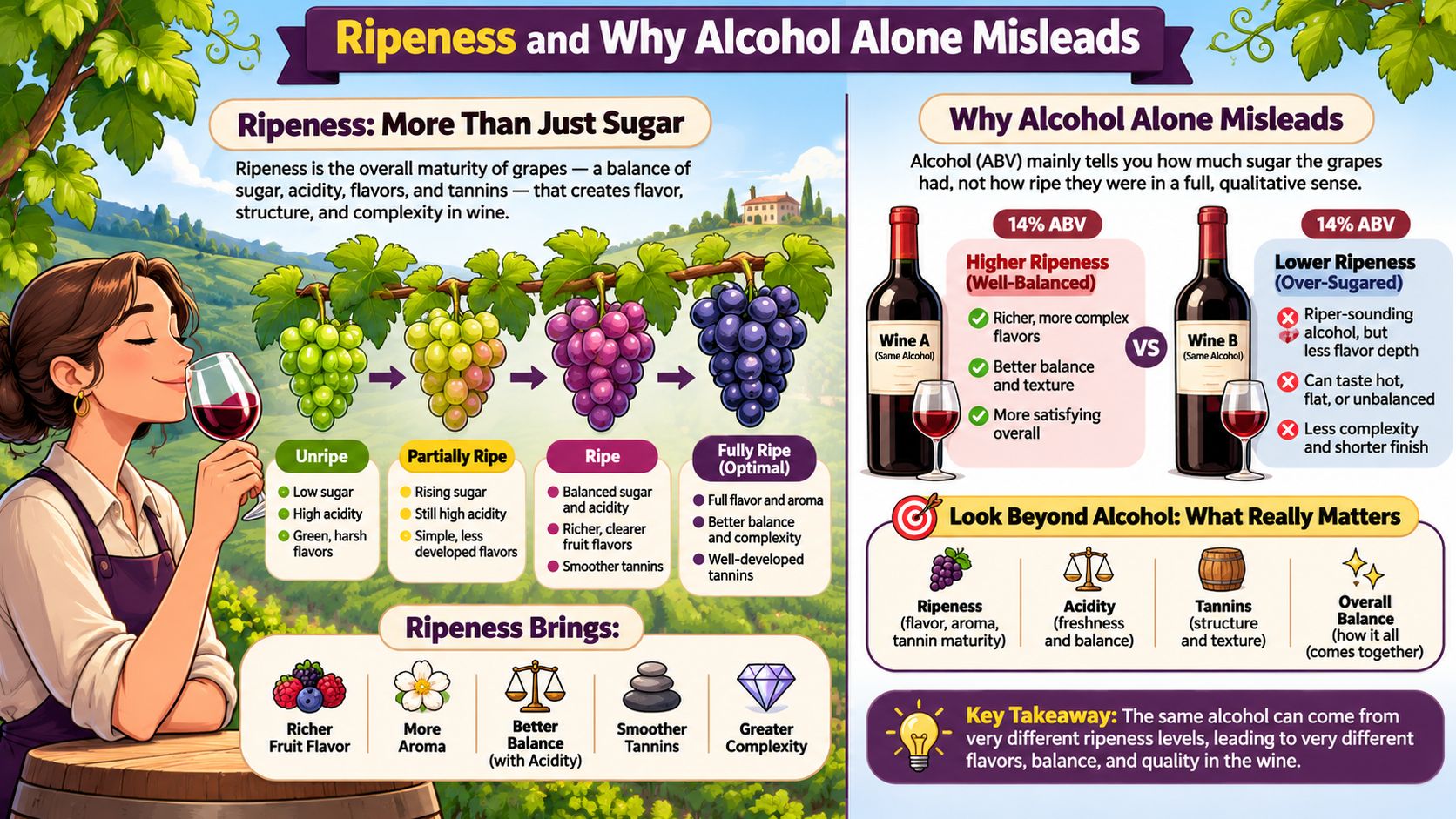
Ripeness and Why Alcohol Alone Misleads
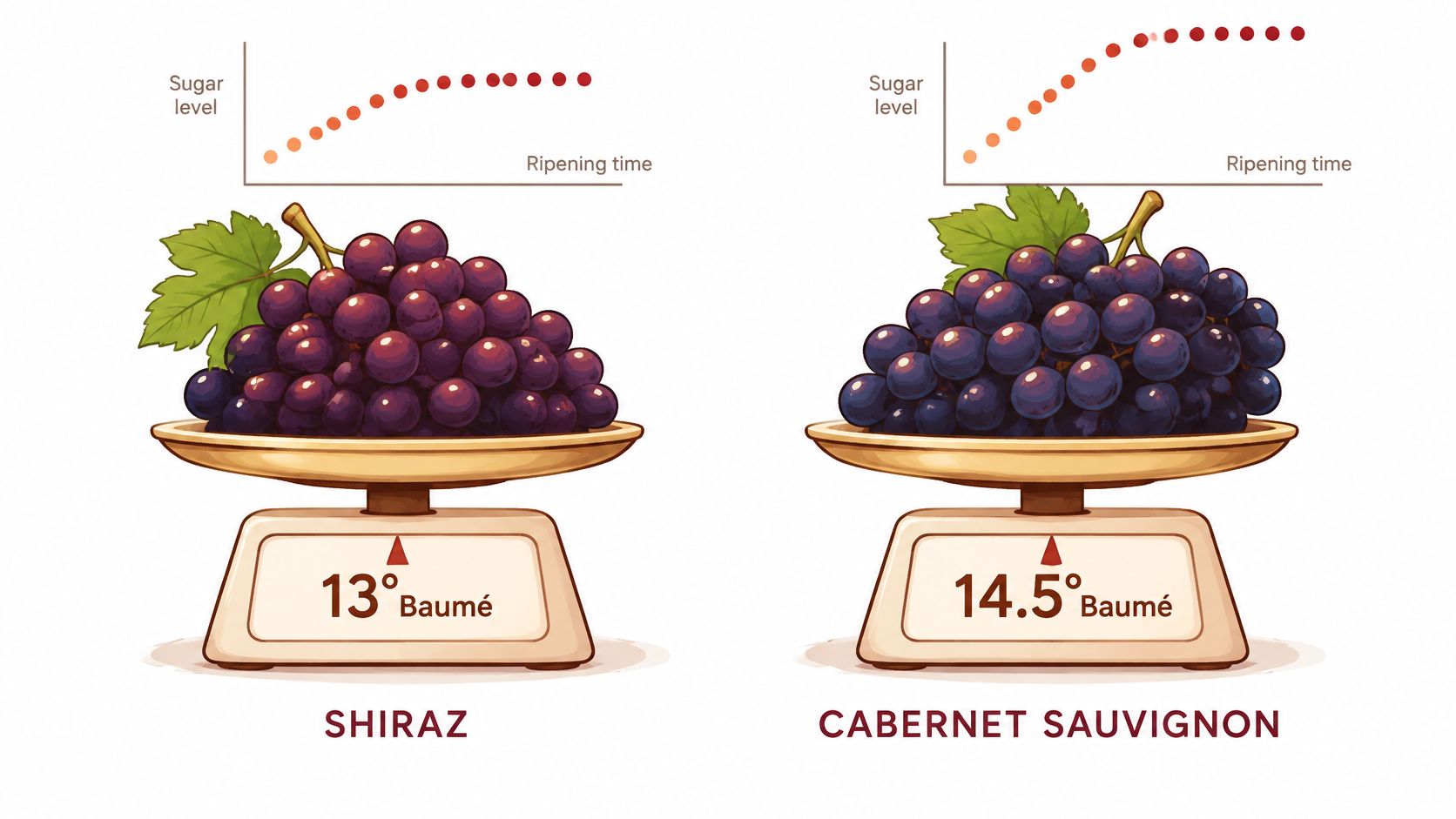
A bottle showing 14.5% alcohol tells you almost nothing about how ripe the fruit was, because Shiraz and Cabernet Sauvignon stop accumulating sugar at different points. Australian ripening research identifies that plateau at roughly 13°Baumé for Shiraz and about 14.5°Baumé for Cabernet Sauvignon, a gap of around 1.5°Baumé, according to the AWRI project summary.
Once a berry reaches its plateau, sugar gain per berry stops. Extra hang time after that mostly increases dehydration and concentrates flavour, acidity and tannin rather than lifting sugar any further.
The Consequence in the Glass
A Cabernet picked later can carry more structure at a similar alcohol level, because it was still building phenolics while the Shiraz in the next block had already topped out. A Shiraz picked earlier shows brighter fruit and less alcohol heat. Two bottles reading the same percentage on the back label can therefore sit at completely different stages of maturity.
These are national benchmarks from a meta-analysis across multiple Australian growing regions, not targets for any single vineyard. McLaren Vale's maritime conditions, irrigation regime, canopy exposure and vintage heat all move the harvest date, which is why growers monitor berry weight and seed ripeness rather than picking to a number.
Three Checks Before You Buy
- Treat alcohol as a clue, not a verdict. A high number can mean a late pick in a hot year or a naturally ripe site. Pair it with the region before you decide.
- Read the producer's own words. Terms such as ripe, savoury, firm, lifted or brooding are choices, not filler. A winery that calls its Cabernet "savoury and structured" is telling you what the tannin will feel like.
- Check the vintage shape. A hot year pushes sugar up and acid down, a cooler year preserves freshness. When a bottle is flagged as coming from a warm season, expect more weight and reach for it with richer food.
If you're tracking what you drink rather than how ripe it tastes, a standard drinks calculator does the arithmetic the label percentage leaves you to do in your head, which matters more as bottle sizes and alcohol levels drift. And if you want the deeper mechanics, this explanation of how tannins, acidity and alcohol define balance is the useful companion to the ripeness question.
Food Pairings That Suit Each Style
Match the weight of the fruit to the richness of the dish, then match tannin to fat and protein. Fat coats the palate and softens grippy tannin, and protein binds it. Get those two alignments right and the wine tastes rounder than it did on its own. Get them wrong and even a good bottle feels harsh.
| Dish | Better match | Why it works |
|---|---|---|
| Slow-cooked lamb shanks | Shiraz | Dark fruit and spice stand up to rich braising juices |
| Grilled rib-eye steak | Shiraz with a pepper crust, Cabernet with a rarer cut | Fruit weight meets charred fat, or firm tannin meets richness |
| Roast beef with rosemary | Cabernet Sauvignon | Firm tannin cuts through roasted fat |
| Peppered beef | Shiraz | Pepper and liquorice echo the seasoning |
| Aged cheddar | Cabernet Sauvignon | Acidity and tannin hold against salt and fat |
| Lentil or mushroom stew | Cabernet Sauvignon | Savoury notes and firm tannin balance earthiness |
Notice what the table never does. It doesn't ask which grape is better, only which structure the dish can absorb. A stew with earthy depth has nothing to soften a wall of tannin, so Cabernet needs to be a moderate one, or a few years old. A plate of charred, fatty meat has plenty of padding, which is why it forgives either wine.
The rib-eye row is the one worth remembering, because it's the dish most households cook. A pepper-crusted steak pulls out the pepper and liquorice in Shiraz. A rarer cut with a thick rim of fat gives Cabernet's grip something to work against. Same grill, two different bottles, both correct.
Lentils and mushrooms deserve a mention because they're the pairing that surprises people. Cabernet's savoury, sometimes leafy edge sits naturally with earthiness, while a soft, fruity Shiraz can make a mushroom dish taste thin.
When the dish is spiced or fruit-led, reach for Shiraz. When it's herb-led, savoury or fatty and firm, reach for Cabernet Sauvignon.
If you want the dish-by-dish version for a weekend cook-up, this red wine food pairing guide for steak, pasta and barbecue goes further without contradicting the principle.
Choosing the Right Red for Your Occasion
Most wine decisions aren't about wine at all. They're about a Tuesday, a birthday, a group of people with different tastes, or a bottle you want to still be interesting in a decade. Here's how the choice shifts with the situation.
For a weeknight dinner with a bit of everything on the plate, Shiraz is usually the easier answer. Its fruit is generous, its tannin is softer, and it doesn't demand the right dish to show well. For a bottle you intend to hold for ten years or more, Cabernet Sauvignon earns its place, because tannin and acidity give it a longer development window than most Shiraz.
If you're new to red wine, start with Shiraz. The fruit is up front, the tannin is approachable, and there's nothing to decode. If you're pouring for a group whose preferences you don't know, Shiraz again covers more palates, which makes it the safer bottle when nobody has volunteered an opinion.
Price is a poor guide here, and current supply data shows why. Wine Australia's market bulletin put Australia's 2026 crush at 1.27 million tonnes, the smallest in more than 25 years, down 19% from 2025 and 25% below the ten-year average, with Shiraz down 35% and Cabernet Sauvignon down 27%. In the same reporting, Shiraz's average value rose 3% while Cabernet's average value fell. Scarcity hasn't made every Shiraz a bargain or every Cabernet the pricier, more age-worthy option.
Two exceptions are worth knowing. A young, firm Cabernet alongside a light dish tastes harsh and metallic, no matter how good the bottle is. And an older Shiraz will often show more complexity than a young one, so age can reverse the usual recommendation entirely. The same logic about finding real value applies when you're buying abroad, and this guide to judging red wine value rather than trusting the label makes the case well.
Choose Your Red Before Tonight's Dinner
Choose Shiraz when you want ripe fruit, spice and an easy drink to work through over the next few years. Choose Cabernet Sauvignon when you want firmer structure, a savoury finish and a bottle you intend to hold.
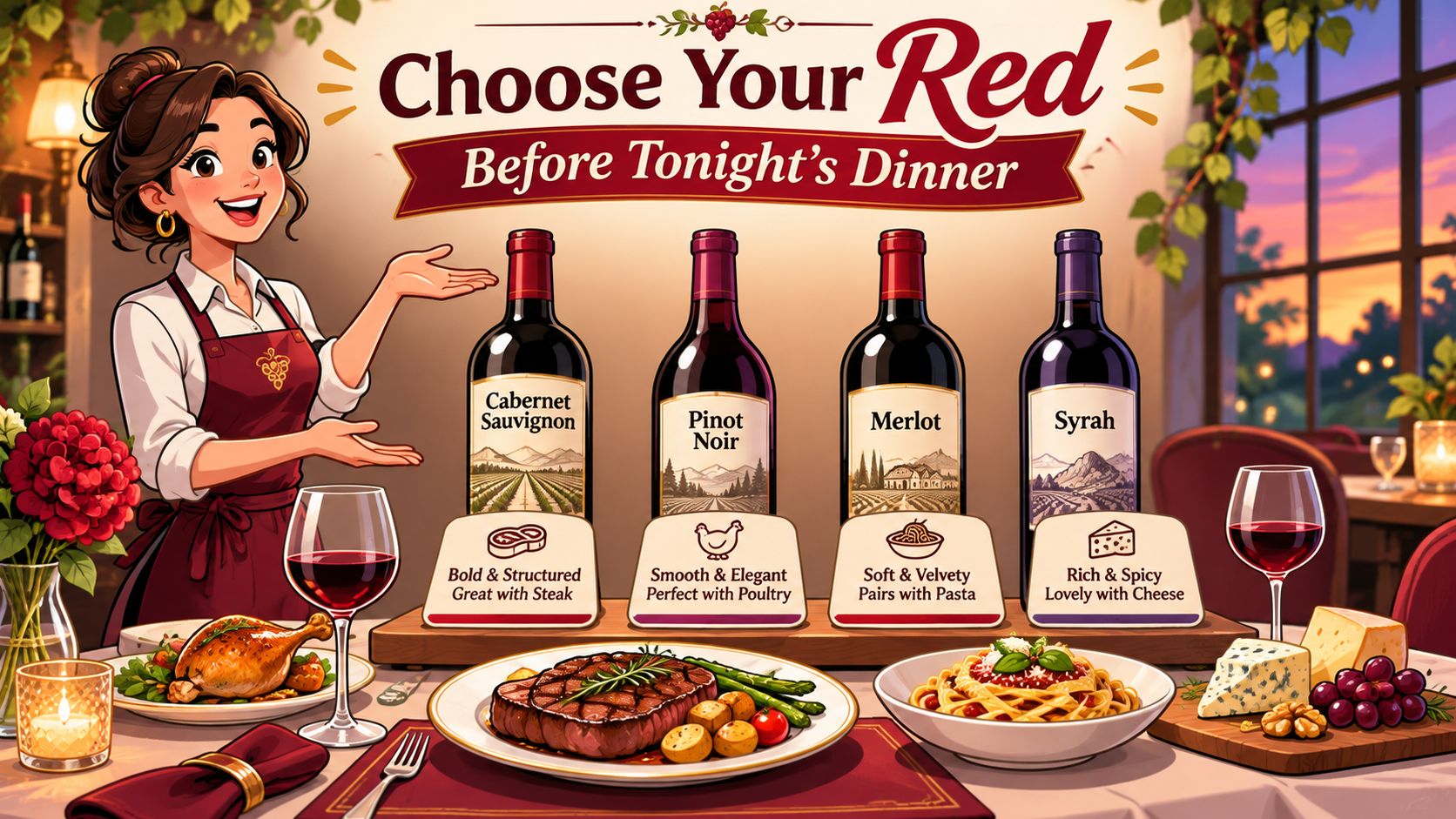
Three steps settle it.
- Pick one style for tonight's occasion. Weeknight and casual means Shiraz. Long dinner with rich food, or a bottle for the rack, means Cabernet.
- Match it to a single dish. Lamb shanks pull you toward Shiraz, roast beef with rosemary toward Cabernet. One dish decides faster than a long menu.
- Write down what you noticed. Fruit intensity, tannin grip, finish length. Three words in your phone turns the next purchase into an informed guess instead of a fresh gamble.
For anyone weighing the two side by side, the range runs across both styles, from the Troublemaker South Australian Shiraz 2021 at $15.00, or $12.50 a bottle by the dozen, to the Curtis Legion Cabernet Sauvignon 2021 at $150.00 a dozen, which is $12.50 a bottle. If a bottle doesn't land, we'll help you find a wine suited to your taste rather than leave you guessing.
Both sides of this comparison sit on our shelves, from generous McLaren Vale Shiraz to firmer, more savoury Cabernet Sauvignon, and comparing them in the same week is the fastest way to learn which structure you prefer. Tell us what you cook most often and we'll point you at the bottle that suits it, whether that's a value dozen for weeknights or a single bottle worth cellaring. Browse the range at McLaren Vale Cellars and have tonight's decision settled before the oven is warm.
Comments (0)
There are no comments for this article. Be the first one to leave a message!