
Dry white wine is not a neutral liquid you can pour into any pan without changing the result. The popular advice that Sauvignon Blanc and Pinot Grigio are interchangeable for cooking is convenient, but it's wrong where cooking matters most: reduction, cream, butter and herbs.
Choose Sauvignon Blanc when you need acidity to push through richness or keep a sauce lively. Choose Pinot Grigio when you want a clean, quiet background that won't compete with delicate ingredients. The bottle isn't just seasoning. It's part of the recipe.
Why These Two Whites Aren't Interchangeable in the Pan
A dry white wine has three jobs in a hot pan. It loosens the browned fond, adds acidity and contributes flavour after some of its water and alcohol cook away. Sauvignon Blanc and Pinot Grigio can both perform those jobs, but they don't leave the same result behind.
Sauvignon Blanc arrives with more obvious aromatic energy. Australian wine guidance describes it as light to medium bodied, highly aromatic and high in acidity, while Pinot Grigio is presented as easy-drinking, versatile and softer in profile. That difference is subtle in a glass and decisive in a sauce. You'll notice it particularly when the wine has to stand up to butter, cream, stock or a pan full of herbs. (Australian Wine Companion's guide to white wine varieties)
Kitchen verdict: If the wine needs to remain noticeable after cooking, reach for Sauvignon Blanc. If it should quietly support the other ingredients, Pinot Grigio is the calmer choice.
The lazy swap usually works for a quick deglaze that gets eaten immediately. It breaks down when the wine is reduced, folded into dairy or asked to carry the flavour of parsley, dill, basil, tarragon or coriander. Heat removes volatile aromas, so a wine with a more expressive herbal and citrus character has a better chance of remaining perceptible.
The rest of the decision comes down to three tests:
- Acidity holding power: Does the wine keep the sauce bright rather than flat?
- Flavour survival: Does it still taste like something after reduction and butter?
- Aroma behaviour: Does it complement herbs, or vanish beneath them?
Sauvignon Blanc wins the technical test. Pinot Grigio still has a clear role, particularly in delicate dishes where a more forceful wine would distract. Treating both bottles as identical is the mistake. Treating them as different ingredients gives you control.
The Cooking Profile of Each Wine
The label tells you the grape. The glass tells you how it will behave in the pan. Sauvignon Blanc is usually easier to identify by its aromatic lift, while Pinot Grigio tends towards a quieter, cleaner presentation.
Sauvignon Blanc commonly shows citrus, grapefruit and green herbal notes, sometimes with a grassy edge. Its acidity gives it a firm, mouth-watering shape. That sharpness cuts through cream, butter and fatty poultry, and it gives seafood sauces a cleaner finish.
Pinot Grigio is generally lighter and more neutral. Expect restrained citrus, gentle fruit and a smooth, uncomplicated texture rather than an overtly grassy aroma. That makes it useful when soy, sesame, ginger, garlic or delicate fish should remain in charge of the dish.
Cooking-Relevant Attributes at a Glance
| Attribute | Sauvignon Blanc | Pinot Grigio |
|---|---|---|
| Acidity | High, with a sharp, bright lift | Softer and less forceful in perception |
| Body | Light to medium, with firm structure | Light, lean and easy-drinking |
| Aromas | Grapefruit, citrus, herbs and grassy notes | Subtle citrus, light fruit and a neutral profile |
| Residual sugar | Usually used as a dry white style | Usually used as a dry white style |
| Tannin | Very low, so it won't add astringency | Very low, with a smooth finish |
| Best pan role | Reduction, deglazing, herb sauces and creamy preparations | Light deglazing, delicate seafood and sauce-light dishes |
Neither wine brings meaningful tannin to a sauce, so the important contrast is acid and aroma, not bitterness. A dry style is preferable because noticeable sweetness can make a savoury reduction taste heavy or unbalanced.
Sauvignon Blanc's herbal character can be an advantage or a distraction. With parsley, basil, dill, tarragon, goat's cheese or green vegetables, it creates continuity between the glass and the plate. With very delicate fish or subtle broths, Pinot Grigio's restraint is more useful.
A cook doesn't need to identify every aroma. Swirl the glass and ask one question: does this wine taste vivid enough to survive butter and heat?
The profile also explains why Pinot Grigio can feel as though it has disappeared from a rich sauce. Its softer structure doesn't push through dairy as firmly, while Sauvignon Blanc's acidity keeps registering even after the wine has been mellowed by butter or cream.
Heat, Reduction and Sauce Behaviour Compared
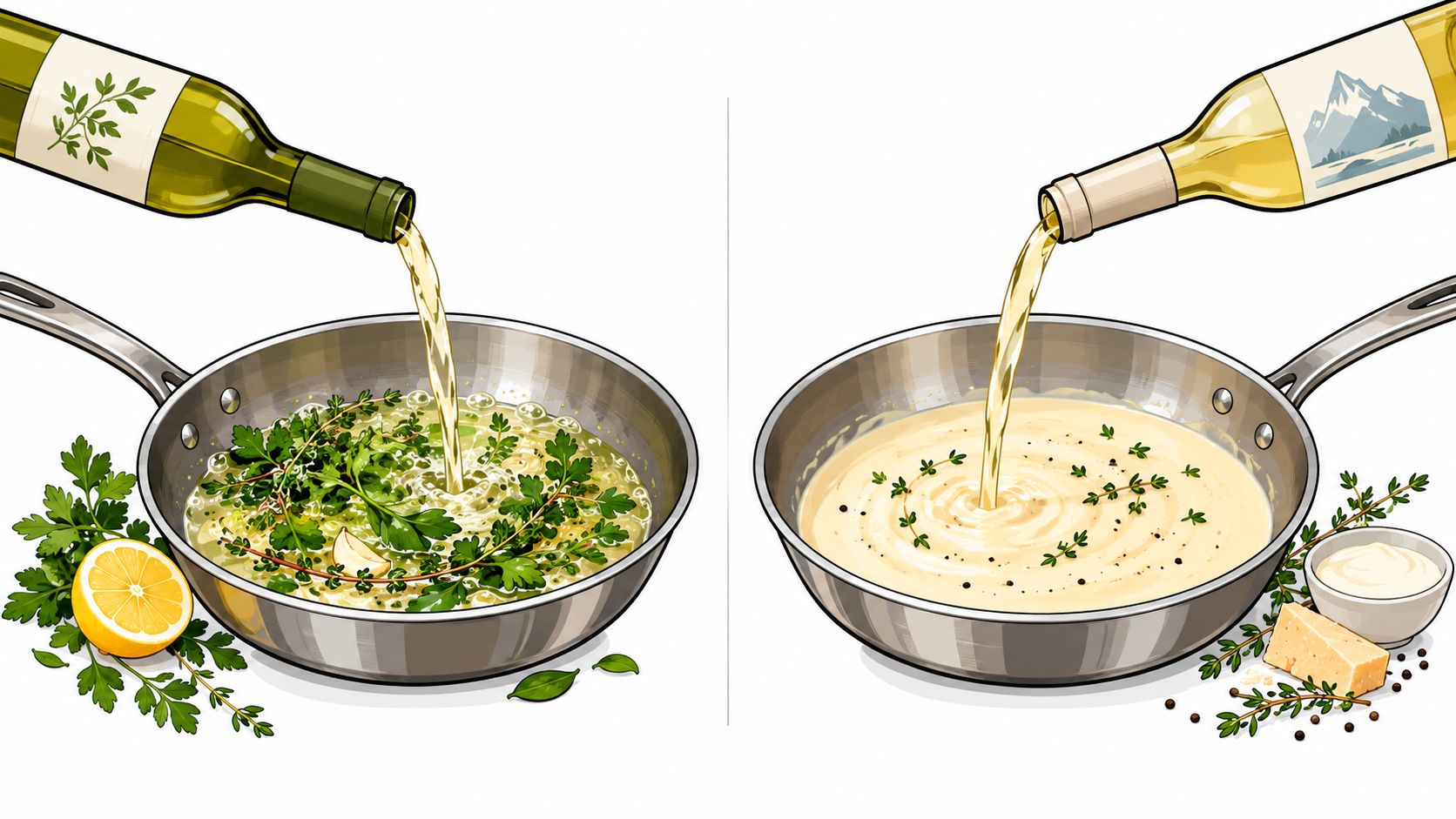
The hot-pan test is simple. Add the wine after searing, scrape up the browned bits, reduce it until the raw wine smell has gone, then decide what the sauce needs next. Sauvignon Blanc gives you a more obvious line from the first splash to the finished sauce. Pinot Grigio gives you a quieter base, but it can lose definition sooner.
What Happens in the Pan
With a fast sear and a quick deglaze, either wine works. Pinot Grigio is especially good when the pan contains prawns, scallops or a mild white fish and you want the ingredient to remain the headline. Sauvignon Blanc is the stronger choice when the seared ingredient is paired with garlic, fresh herbs or a sharp finishing element.
Reduction exposes the difference. As water cooks off, the wine's acidity and flavour become concentrated. Sauvignon Blanc's citrus and herbal edge usually survives and gives the sauce lift. Pinot Grigio can become less distinct, leaving a pleasant but less assertive liquid behind. Don't reduce a delicate Pinot Grigio aggressively and expect it to provide the same backbone as Sauvignon Blanc.
Cream changes the balance again. Cream softens acidity and rounds off aromatic edges, which is exactly why Sauvignon Blanc works well in a cream sauce. Its sharper profile keeps the finished dish from tasting dull. Pinot Grigio can work in a light lemon-cream preparation, but in a fuller dairy sauce it may contribute little beyond moisture.
Butter is kinder to both wines, though Sauvignon Blanc remains more useful. Its grassiness becomes gentler and more savoury when whisked with butter, particularly alongside parsley, capers or tarragon. Pinot Grigio makes a restrained butter sauce that suits delicate seafood, but it won't provide the same aromatic lift.
The same pattern applies to herbs. Sauvignon Blanc meets green herbs with its own herbal register. Pinot Grigio stays in the background, which is helpful with ginger, sesame and soy, where a greener wine could compete.
The video below shows the practical contrast between a fresh deglaze and a richer sauce finish.
Use Pinot Grigio for speed and delicacy. Use Sauvignon Blanc when the pan asks the wine to do structural work.
Substitution Ratios and Practical Swaps
A direct swap is safe when the wine is used in a short-cooked seafood dish, a quick deglaze or a light pasta sauce. Replace Sauvignon Blanc with the same volume of Pinot Grigio in mussels marinara, scampi butter or a simple seafood pasta, then taste before adding the final salt.
The swap becomes less reliable when the wine is reduced heavily or combined with cream. Pinot Grigio may leave the sauce softer and less vivid, so restore the missing brightness at the end rather than pouring in more wine and making the sauce watery.
Adjusting the Finished Sauce
If Pinot Grigio has made the sauce too quiet, use one of these corrections:
- Lemon juice: Add a small squeeze at the finish, tasting after each addition.
- White wine vinegar: Use a restrained splash when the sauce needs sharper acidity without extra citrus aroma.
- Stock: Add a spoonful of unsalted stock when you need more savoury body rather than more tang.
- Fresh herbs: Fold them in at the end to replace aroma lost during cooking.
The reverse substitution needs more care. Sauvignon Blanc can replace Pinot Grigio in a creamy or herb-heavy dish, but reduce it gently before adding dairy. That softens its greener edge and stops the finished sauce from tasting aggressively grassy.
| Scenario | Sauvignon Blanc → Pinot Grigio | Pinot Grigio → Sauvignon Blanc |
|---|---|---|
| Quick seafood deglaze | Safe at equal volume, especially with delicate fish | Safe, but expect more herbal lift |
| Butter sauce | Use lemon or herbs if the result tastes flat | Excellent with parsley, capers or tarragon |
| Cream sauce | Add acidity at the finish if needed | Reduce gently before adding cream |
| Light pasta | Safe with lemon, garlic or prawns | Use when the pasta includes herbs or greens |
| Long reduction | Not the preferred swap | Better choice for retaining definition |
For a broader alternative when a recipe calls for cooking sherry, this guide to what to use instead of cooking sherry offers useful substitution context without forcing you to buy a salted cooking bottle. For more ideas beyond these two grapes, explore Sauvignon Blanc substitutes and exciting alternatives.
Never use a supermarket cooking wine just because the label says it belongs in a pan. Added salt can distort the seasoning and leave you with less control. Use a dry bottle you'd be willing to drink, even if it's an uncomplicated one.
Best Matches by Dish and Cuisine
The best choice changes with the dish's texture, cooking time and dominant aromatics. “Seafood” is too broad to settle the question. Raw fish, steamed clams and a reduced shellfish cream sauce ask for different behaviour from the wine.
Seafood and Poultry
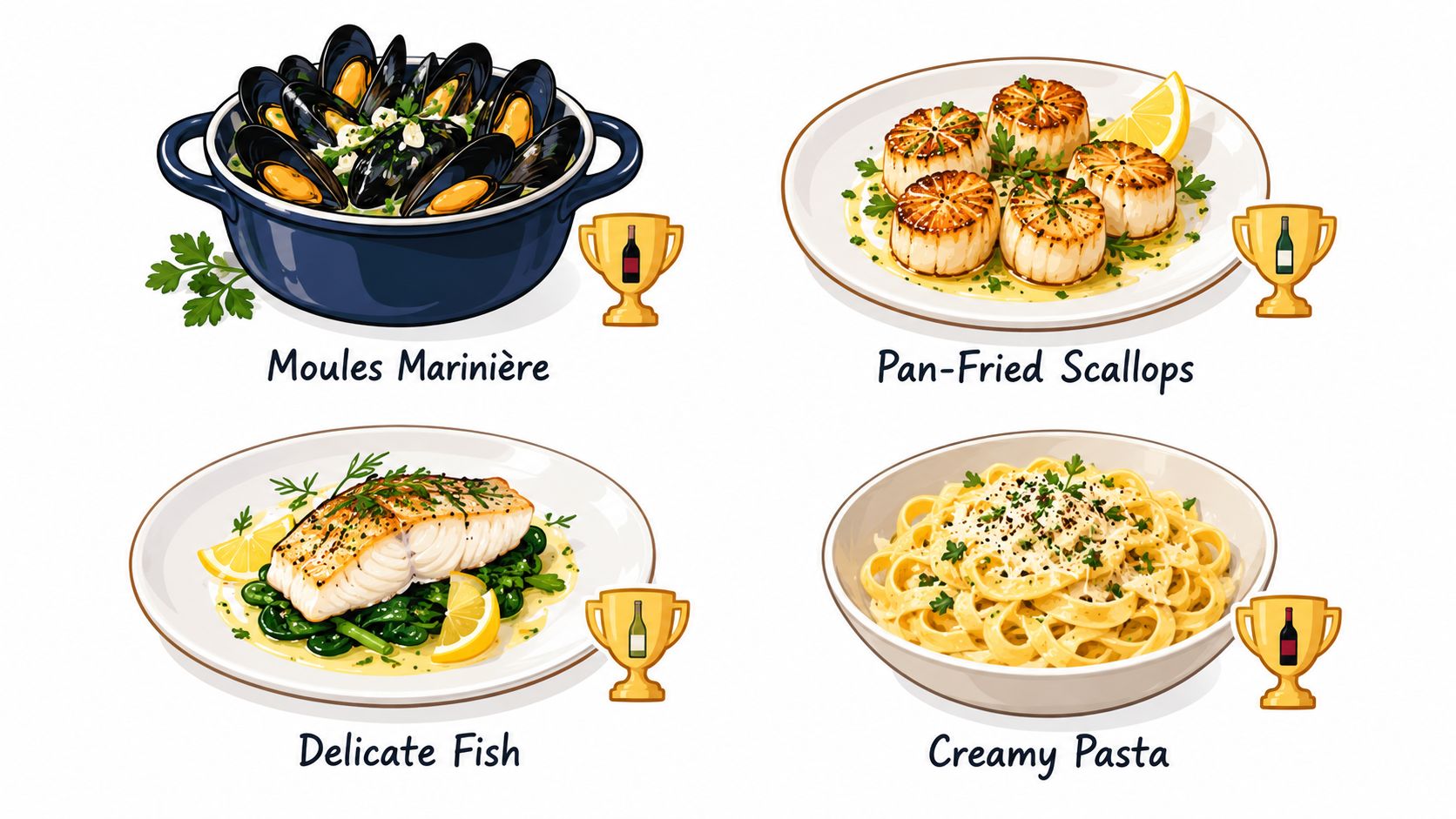
Moules marinière: Choose Sauvignon Blanc. Its acidity keeps the shellfish liquor lively, while its herbal character supports parsley and shallot.
Pan-fried scallops: Choose Sauvignon Blanc when the pan sauce includes herbs or browned butter. Choose Pinot Grigio when the scallops are served with a very delicate garnish and you want the wine to stay quiet.
Delicate crudo: Choose Pinot Grigio, or leave wine out of the preparation and use citrus separately. Its neutral style won't compete with the clean texture of raw seafood.
Steamed clams: Pinot Grigio is the gentler fit, particularly with garlic, olive oil and a modest amount of wine.
Chicken piccata: Sauvignon Blanc wins because its acidity reinforces the lemon and cuts through the richness of the pan juices.
Coq au vin blanc: Use Sauvignon Blanc when the sauce contains herbs, stock and cream. The wine has enough presence to remain part of the finished gravy.
Poached chicken breast: Pinot Grigio suits this lighter technique. It adds freshness without pulling attention away from the soft, mild meat.
Pasta, Risotto and Asian Cooking
Mushroom risotto: Sauvignon Blanc is the better tool. Its acidity keeps the rice and butter from becoming weighty, while its savoury herbal notes suit earthy mushrooms.
Alfredo-style sauce: Pick Sauvignon Blanc, but use it with restraint and reduce it before adding dairy. Pinot Grigio can get lost beneath butter and cream.
Lemon-cream linguine: Pinot Grigio works when the sauce is light and the lemon provides the main lift. Sauvignon Blanc is preferable if garlic, peas or fresh herbs are prominent.
Ginger-scallop noodles: Pinot Grigio's neutral profile fits the dish. It won't compete with soy, sesame, ginger or chilli.
Herb-heavy Asian stir-fries: The answer depends on the herb. For coriander, basil or green vegetables, Sauvignon Blanc can add useful freshness. For soy and sesame-led dishes, Pinot Grigio is less intrusive.
Gruyère fondue: Sauvignon Blanc. Acidity gives the melted cheese a cleaner, less heavy finish.
Fresh mozzarella flatbreads: Pinot Grigio is the softer match, particularly when the toppings are mild and fresh.
A useful summary appears in this Pinot Grigio food-pairing guide, but cooking demands a little more precision than a general pairing list. Heat, herbs and dairy favour Sauvignon Blanc. Cold, delicate or sauce-light cooking favours Pinot Grigio.
Choosing the Right Bottle at the Shop
Start with style, not prestige. For Sauvignon Blanc, look for a fresh, unoaked bottle with clear citrus and herbal character. Australian examples from regions such as Adelaide Hills, Margaret River or Tasmania can suit this purpose, as can crisp examples from Marlborough or the Loire.
For Pinot Grigio, look for a dry, pale and uncomplicated style. Northern Italian examples are the classic reference point, while Friuli and Alto Adige often offer more texture without turning the wine heavy. The goal is a clean bottle, not a sweet or heavily flavoured one.
What to Avoid
- Oaked Sauvignon Blanc: Oak can introduce weight and sweetness that muddy a light pan sauce.
- Late-harvest wine: Residual sweetness can make a savoury reduction cloying.
- Sparkling wine: The bubbles add no useful advantage to ordinary deglazing.
- Flavoured Pinot Grigio: Added fruit or botanical character can pull the recipe in the wrong direction.
- Salted cooking wine: It limits your control over the dish's seasoning.
You don't need an expensive bottle for a weeknight sauce. Buy a sound dry wine with clean fruit and no obvious faults. Spend more only when you're also planning to drink it, or when the dish depends heavily on a concentrated reduction where poor fruit becomes more exposed.
The back label can help. Look for the grape, region and dry style, then check that the bottle suits the dish rather than the occasion. A screw cap is practical for a cooking bottle because it makes resealing easy, and leftover wine can be frozen in small portions for future deglazing.
For a wider Australian buying guide, these dry white wines for cooking and drinking provide useful context around styles and food applications.
The Two-Question Test Before You Cook
Ask the first question before you reach for a bottle: Does the dish finish quickly and rely on bright, fresh flavours?
If the answer is yes, Pinot Grigio is often the cleanest choice. It works in a fast seafood sauté, a light pasta or a delicate poaching liquid where you want freshness without a strong wine signature. It also behaves well with ginger, sesame and soy because it doesn't add another dominant aromatic layer.
Then ask: Will the sauce reduce, simmer with cream, or finish with butter and stock?
If the answer is yes, choose Sauvignon Blanc. Its acidity and more expressive flavour give it a better chance of remaining present after heat has softened the wine. It's the bottle to use when the sauce has to cut richness, carry herbs or provide the contrast that keeps a creamy dish from tasting flat.
When Both Wines Could Work
Creamy seafood pasta sits between the two decisions. Pinot Grigio gives a restrained base for prawns or scallops, while Sauvignon Blanc supplies more lift for cream and herbs. If you have both open, a modest splash of each can create a balanced result, with Pinot Grigio providing quiet fruit and Sauvignon Blanc adding definition.
There are edge cases. Very delicate fish may need only stock and lemon. A heavily herbed Asian dish may suit a neutral white or no wine at all. A long-braising stew usually needs a fuller, more powerful style than either of these light whites.
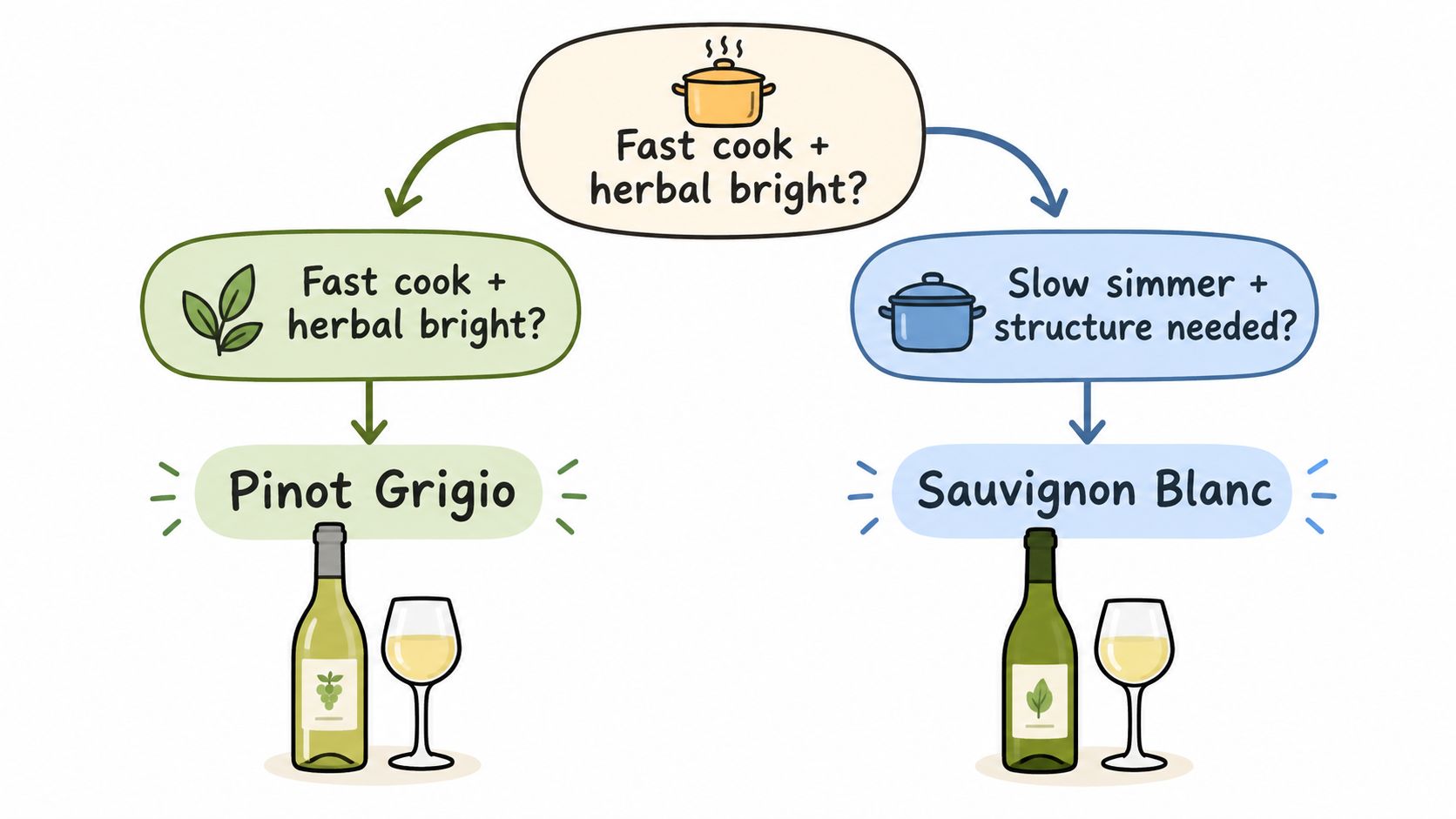
The practical payoff is simple. Ask whether the dish is quick and delicate, or reduced and rich. Pinot Grigio handles the first job with restraint. Sauvignon Blanc handles the second with structure.
McLaren Vale Cellars offers Sauvignon Blanc, Pinot Grigio and other Australian wine styles, along with curated packs and guides that make it easier to choose a bottle for both cooking and drinking. Visit McLaren Vale Cellars to find a suitable dry white for your next pan sauce and explore delivery options across Australia.


Comments (0)
There are no comments for this article. Be the first one to leave a message!