
You're standing in front of a bottle-shop shelf, or scrolling through an online wine store, trying to choose a red for tonight. One label promises dark fruit, another mentions oak, and a third comes from a region you've heard of but never tasted. Buying a full dozen feels like a commitment when you're not sure whether you'll enjoy the first bottle.
A red wine sampler pack removes much of that pressure. Instead of guessing from a label, you can taste several styles side by side, record what you notice, and decide which bottle deserves a place in your regular rotation. The smartest approach isn't to ask what's inside the box. It's to ask how well the pack helps you compare wines, understand your palate and spend your money.
Why a Red Wine Sampler Pack is Your Best Discovery Tool
A sampler pack works best when you treat it as a small experiment rather than a collection of random bottles. Open one wine, taste it thoughtfully, compare it with the next, and look for patterns. You may discover that you prefer savoury reds over sweet, jammy styles, or that you enjoy firm tannin with food but want softer fruit for a weeknight glass.
Australia remains a strong red-wine market. Wine Australia reported that still red wine, including rosé, rose by 19 million litres, or 4%, in 2024–25, while total wine sales stayed almost unchanged at 1.08 billion litres, or 120 million 9-litre cases. The same report found that red wine represented 52% of Australian wine sales, matching its share of production. Those figures make a mixed red selection a sensible starting point for shoppers exploring Australian wine, rather than a niche format built around a declining category. Wine Australia's 2024–25 market report provides the category context.
Taste like a small panel
Professional sensory work uses controlled tastings because memory is unreliable and the order of wines can influence the result. One Australian red-wine study screened wines before narrowing the selection, then tested them with 113 regular red-wine consumers. The participants had consumed red wine in the previous fortnight, which is a useful qualification rule when you're deciding whether a panel reflects the intended drinker. The Australian sensory study in OENO One also shows why regular drinkers provide clearer preference signals than a group containing people who rarely drink red wine.
You can borrow that discipline at home. Taste with a friend who drinks red wine regularly, ask each person to score aroma, acidity, tannin, fruit character and overall enjoyment, then reveal prices and labels afterwards. A blind score tells you which wine performs in the glass. An informed score tells you whether you'd buy it.
Practical rule: Don't buy a case because one bottle impressed you. Buy it because you can explain what you liked and expect to enjoy the same style in a different setting.
Decoding the Classic Red Varieties in Your Flight
Before you pour, learn what each variety is likely to contribute. The point isn't to predict whether you'll love a wine. It's to give your senses a useful set of questions.
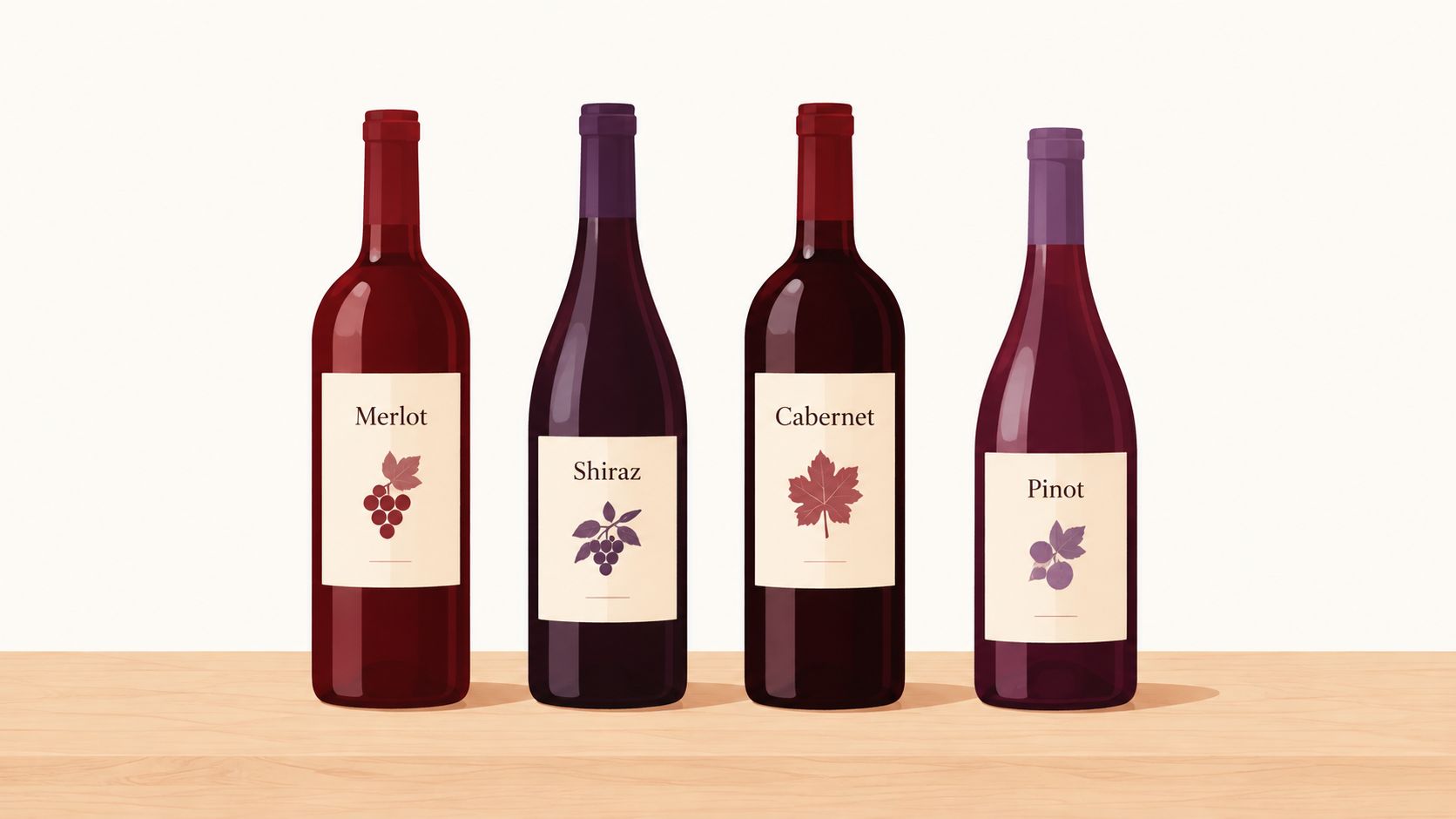
Shiraz is often the boldest contender in an Australian flight. Look for concentrated blackberry or plum character, peppery spice and a generous, sometimes chocolate-like impression from fruit ripeness and oak maturation. The key structural question is whether the wine feels plush and rounded or dense and muscular. McLaren Vale Shiraz can show ripe fruit with savoury depth, but individual wines still vary according to vineyard, vintage and winemaking choices.
Cabernet Sauvignon usually brings more visible structure. Blackcurrant, dark berry, leafy notes and cedar can sit alongside firm tannin, which creates a drying sensation on the gums. A young Cabernet may seem austere on its own but become much more convincing beside steak or slow-cooked beef. If you enjoy a wine that feels precise and finishes firmly, Cabernet may suit you better than a softer Shiraz. For a broader guide to the varieties you may encounter, explore this guide to red wine varieties.
Look for texture, not just flavour
Merlot tends to be approachable, with plum-like fruit and softer tannin. It can be a useful bridge between lighter reds and more powerful styles. Grenache may offer red berries, warmth and spice, often with a more supple, flowing texture. A blend can combine the strengths of several grapes, giving you fruit, savoury character and structure without making one element dominate.
Pinot Noir, where included, is usually lighter in body, with red cherry, earthy notes and brighter acidity. It won't necessarily taste “weaker” than Shiraz. It's built differently, with a more delicate frame and less of the deep, dark fruit associated with full-bodied Australian reds.
During your tasting, ask three questions:
- Tannin: Does the wine feel silky, chalky, grippy or drying?
- Acidity: Does your mouth water after the sip, or does the wine feel broad and soft?
- Body: Does it feel light, medium or full, and does that weight remain comfortable after several sips?
Those answers are more useful than writing “nice” beside every bottle.
Setting Up the Perfect At-Home Tasting Order
A powerful red can make a delicate wine seem thin and flavourless. Taste in the wrong order and you may reject a perfectly good Pinot Noir because your palate is still carrying a mouthful of Shiraz.
Build the flight from gentle to bold
Start with the lightest-bodied, brightest red in the pack. Move towards wines with more alcohol warmth, oak influence, body and tannin. A practical sequence might look like this:
- Light and aromatic: Pinot Noir or another delicate red.
- Soft and fruit-forward: Merlot or a supple blend.
- Medium-bodied and savoury: Grenache or a balanced regional red.
- Structured: Cabernet Sauvignon.
- Rich and powerful: Shiraz or a full-bodied blend.
You don't need to follow a variety label blindly. If the Cabernet is lighter than the Shiraz, trust the wine in front of you and place it earlier. The objective is to protect the subtler wines from being overwhelmed.
Use the same glass for each pour if you can, rinsing it with a little water between wines. A clean, medium-sized wine glass is enough. You don't need specialised equipment to notice whether a wine smells of ripe plum, blackcurrant, spice or oak.
Serve for clarity
Red wine shouldn't automatically be served warm. Light reds usually show more freshness when slightly cool, while fuller reds need enough warmth to release their aroma without becoming hot or alcoholic. If a bottle feels heavy or flat, a short spell in the refrigerator can make its acidity and texture easier to assess.
Pour modest samples rather than filling the glass. First observe the colour, then swirl gently and smell before tasting. Take one small sip to notice the opening impression, a second to feel the middle of the palate, and a third to judge the finish. This practical wine tasting guide can help you refine that sequence.
Keep plain water nearby and use neutral crackers or plain bread if your palate feels coated. Avoid strongly flavoured snacks during the comparison, because salt, spice and sweetness can distort the wines. Write notes before discussing them with your tasting partner, so the most confident person in the room doesn't decide what everyone else “should” be tasting.
Matching Your New Favourites with Food and Occasions
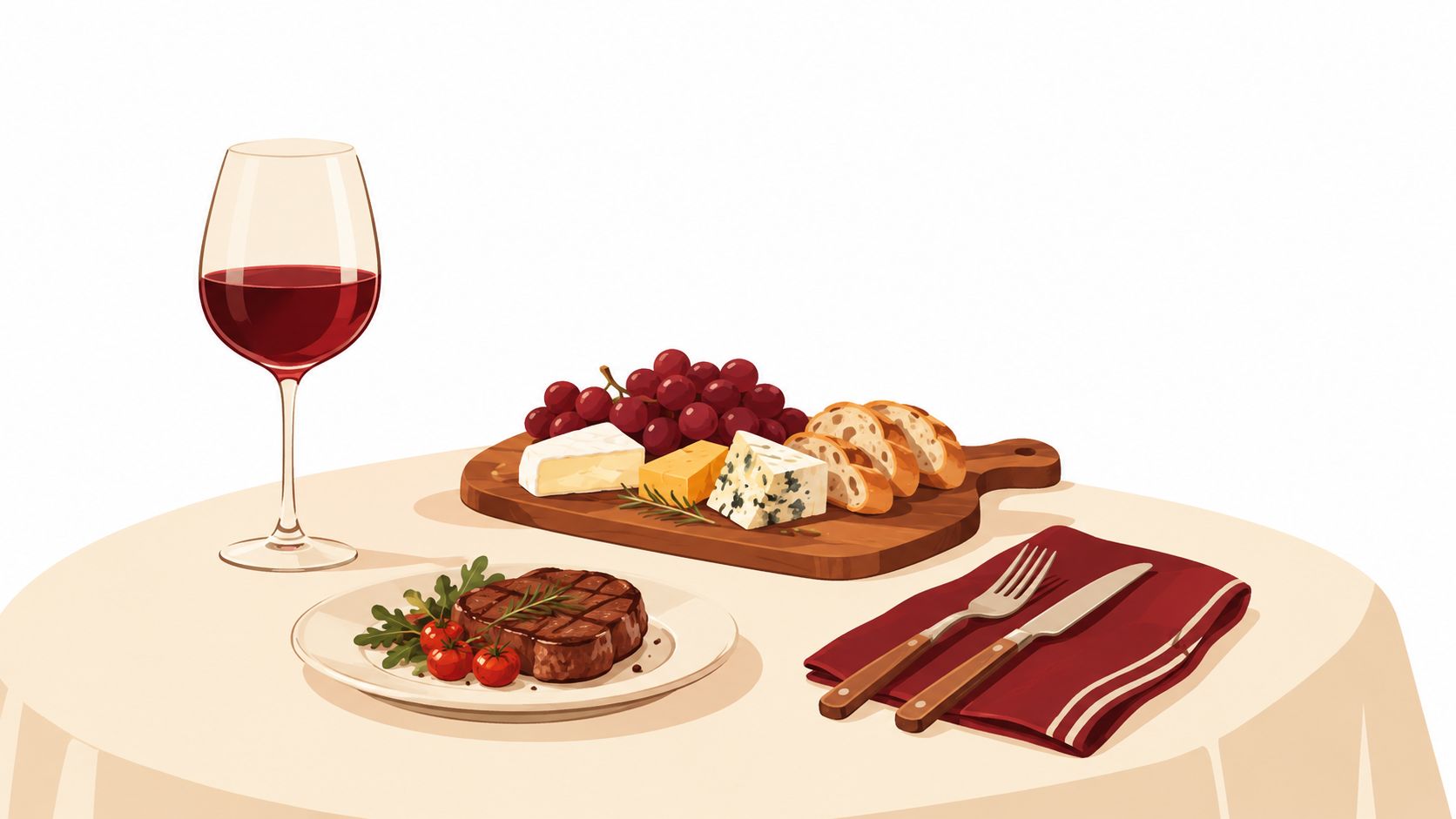
A wine's best use often becomes obvious at the table. The Shiraz that seemed a little intense on its own may become balanced beside grilled lamb, while the Cabernet that felt firm with crackers can find its shape alongside a marbled steak.
Match structure with texture
Tannin binds with protein and fat, which is why structured reds often improve with rich food. Try these pairings as starting points:
- Shiraz with grilled lamb: The wine's dark fruit and savoury spice can stand up to char, herbs and roasted vegetables.
- Cabernet with steak: Firm tannin and blackcurrant character work well with a fatty, well-seasoned cut.
- Merlot with burgers or roast chicken: Softer texture makes it flexible for familiar meals.
- Grenache with slow-cooked dishes: Warm spice and supple fruit suit casseroles, tomato-based braises and roasted vegetables.
- Pinot Noir with mushrooms or duck: Brighter acidity and earthy notes can complement umami without overwhelming it.
For casual grazing, choose the wine that feels most adaptable rather than the most powerful. A softer blend or Merlot can handle cured meats, hard cheese and savoury pastries. If you're building a platter, these charcuterie board wine tips offer useful guidance on balancing salty, fatty and spicy ingredients.
Read the label as a serving guide
Back labels and technical notes can reveal why a wine behaves differently at dinner. Look for references to oak maturation, vineyard location, texture, acidity or recommended serving suggestions. Oak can add vanilla, toast and spice, while acidity helps a wine stay lively beside food. Neither is automatically better. They influence the meals and occasions where the bottle feels most at home.
A red that works with takeaway pizza may become your dependable midweek wine. Another may need a slow-cooked meal and a little time in the glass before it makes sense. Record those details beside your tasting score. This complete guide to wine and food pairing is a useful reference when you want to move beyond generic red-meat advice.
Food can also expose flaws in your original judgement. A wine that seemed too tannic may become your favourite with dinner, while a plush, sweet-fruited red may feel tiring beside a rich sauce. Your final choice should reflect how you drink wine, not how impressive it seemed in isolation.
The tasting can be made more vivid with a short visual guide to serving and pairing:
Evaluating True Value Beyond the Headline Discount
You open a sampler pack expecting a bargain, then discover that two bottles do not suit your meals and another remains unopened. The discount looked attractive, but the useful question is whether the pack helped you avoid a poor case purchase and identify a wine you would buy again.
Begin with the amount that leaves your account. Add delivery, subtract any genuine credit or refund attached to a taste guarantee, then divide the total by the bottles you expect to enjoy. Include likely wastage. A cheaper bottle that you abandon can cost more in practice than a slightly dearer wine that becomes a reliable favourite.
Australian evidence supports taking trial costs seriously. A survey of 448 valid respondents across Australia and New Zealand found that 57.8% said a fee to taste wines or enter a cellar door would deter them, as reported in the Australian and New Zealand tasting-fee study. The finding does not predict every sampler buyer, but it explains why delivery charges, minimum order thresholds and risk-reduction policies belong in your value calculation.
Compare the Pack Formats on Real Cost
| Pack Format | Best For | Value Proposition |
|---|---|---|
| Sampler pack | Curious drinkers testing unfamiliar styles | Pays for variety and reduces the risk of committing to one untested wine |
| Half-case | Drinkers with a short list of proven favourites | Balances quantity with a lower effective bottle cost |
| Straight dozen | Regular drinkers who know exactly what they like | Usually makes the most sense when every bottle has a clear place in the cellar |
| Mixed pack | Households with different preferences | Creates variety without requiring separate orders for each person |
Use the table as a starting map, not a verdict. A sampler has value when variety answers a real question, such as which red suits your weeknight cooking. A half-case may work better once your shortlist has survived more than one meal. A dozen only makes sense when you can name the occasions for its bottles.
Wine Australia's 2024–25 reporting put the average value at $7.99 per litre, or $5.99 per 750 ml equivalent, in a category still facing price pressure. That figure provides market context, not a target retail price. Wine Australia's production, sales and inventory reporting supports comparing the advertised saving with the delivered cost and the amount you will likely consume.
A structured choice process makes the comparison sharper. Research involving 420 Sydney consumers found that simulated Shiraz shelf choices correlated strongly with real AC Nielsen sales data at 0.75 when price and brand were included. The practical lesson is simple: taste blind first, then record whether you would buy the wine after seeing its label and price.
A sampler is a smart purchase when discovery is the goal. It becomes a false economy when you already know which wine you'll choose.
Securing Your Next Case with Confidence
Once the bottles have been tasted with food and ranked by real-world usefulness, separate the winners into three groups: buy again, keep an eye on, and don't repeat. This simple sorting method prevents one exciting first sip from turning into a case of wine you only liked under perfect tasting conditions.
Check the store's buying protections before placing the next order. A Taste Guarantee can reduce the risk of committing to a full case, while loyalty rewards can improve the effective price of a repeat purchase. Free-delivery thresholds matter too, especially when a discount disappears into freight charges. Compare the final delivered total rather than focusing only on the bottle price.
You may also find that the right follow-up order isn't another traditional case. Packaging innovation is creating more options, including single-serve bottles, half bottles, pouches, cans and tetra packs. A recent industry update links that activity with a AUD 2.5 million Wine Australia packaging-innovation initiative, as discussed by Travelling Corkscrew's overview of wine subscription and packaging trends. Smaller formats can suit weeknight drinking, lighter serves or occasions when you don't want an opened bottle sitting in the refrigerator.
Turn notes into a buying rule
Choose a straight dozen when you repeatedly enjoy the same wine with the meals you cook. Choose a half-case when you have identified a favourite but still want some variety. Choose another sampler when your notes show curiosity is still stronger than certainty.
The most useful tasting note isn't “high quality”. It's “I'd serve this with lamb on a cool evening” or “I enjoyed the first glass, but preferred something fresher after dinner”. That language connects sensory preference with behaviour, which is what makes your next purchase more reliable.
McLaren Vale Cellars offers curated red sample packs, including mixed South Australian and McLaren Vale selections, alongside half-case, dozen and mixed-pack formats. The store also provides a Taste Guarantee, Grape-ful Rewards and free delivery Australia-wide on orders over $100, so you can use your tasting notes to compare discovery and repeat-buy options.
Choose a red wine sampler pack with distinct styles, taste it in a deliberate order and record what works with your real meals. Visit McLaren Vale Cellars to explore curated South Australian red packs, then use your favourite results to build a confident half-case or dozen.
Comments (0)
There are no comments for this article. Be the first one to leave a message!