
You're standing in front of a wall of red wine cases with a calculator in one hand and three browser tabs open in the other. The dozen looks cheaper, the half-case feels safer, and the mixed pack promises variety, but none of those choices matters if the wines don't suit the way you drink.
Australia's wine market makes the decision more interesting. Wine Australia reports that production in 2025 reached 1.13 billion litres, equivalent to 126 million 9-litre cases, while total wine sales in 2024–25 were estimated at 1.08 billion litres, or 120 million cases. Still red wine sales rose year on year, yet the gap between production and sales shows that the industry is still working through high supply rather than selling into unlimited demand. (Wine Australia's production, sales and inventory report)
That's good news for a careful buyer. Wineries and retailers have more reason to make case offers attractive, but the smartest purchase isn't automatically the biggest box. It's the format that matches your drinking habits, storage space and appetite for experimentation. Here's how I'd approach the case wall, with McLaren Vale as the reference point.
Why a Red Wine Case Is the Smartest Way to Buy
A full case earns its keep only when you will enjoy the twelfth bottle as much as the first. That makes the format, price and drinking plan more important than the carton size.
The value starts with the format
A dozen can cost less per bottle because ordering, packing and freight work more efficiently at case volume. Check the single-bottle price against the case price, then confirm the bottle count. If the retailer has bundled bottles at the same rate, there is no real saving.
Australia's current oversupply gives careful buyers room to compare. Wine Australia reports 1.96 billion litres of inventory by 30 June 2024, while red wine faced the greatest pressure, with a 2.13 stock-to-sales ratio in 2023–24, still 15% above the 10-year average. (Wine Australia's market and inventory reporting) That pressure can produce sharper case pricing, clearance offers and mixed bundles, but it also demands closer attention to style and vintage.
My rule: Buy twelve bottles because you already know you will drink them, not because the carton looks impressive.
Match the pack to your drinking
A regular red-wine household can make good use of a dozen. Keep a full-bodied McLaren Vale Shiraz for barbecues, a medium-bodied blend for pasta and a lighter red for midweek meals. The case stays ready for dinner or unexpected guests, without another shopping trip.
Consistency is another strong reason to buy a full dozen. If a McLaren Vale Shiraz suits your cooking, buying the same wine gives you a dependable flavour profile across several dinners. That predictability beats novelty when you are hosting or planning meals through the month.
A half-case is the better call for a new producer, unfamiliar vintage or richer style you may not drink often. Choose a mixed pack when several people have different preferences, or when you want Shiraz, Grenache and Cabernet Sauvignon without committing to twelve bottles of one label.
For a practical explanation of case formats and purchasing decisions, read this guide to buying wine by the case. My price-and-style rule is straightforward: take a full dozen for a trusted everyday staple, a half-case for a trial purchase, and a mixed pack when variety will prevent unopened bottles from sitting in the rack.
What a Red Wine Case Actually Is in Australia
Australian retailers use “case” in a few practical ways, so read the product description rather than relying on the carton image. The traditional dozen contains 12 bottles, normally 9 litres when the bottles are standard 750 mL formats. A half-case generally contains 6 bottles, while mixed cases divide those bottles between different wines or varieties.
The dozen is the most straightforward option. Every bottle may carry the same label, vintage and style, which makes the pack attractive for repeat drinkers and cellaring. A mixed case is assembled differently. The carton might contain equal numbers of Shiraz and Cabernet Sauvignon, or a broader selection such as Shiraz, Grenache and Merlot.
Three formats you'll see most often
Single-label dozen: Twelve bottles of one wine. This is the cleanest choice when you know the producer and want consistency.
Half-case: Six bottles of one wine, or sometimes six selected bottles. It lowers your commitment without forcing you to buy an assortment.
Mixed pack: Several labels or varieties in one shipment. A “Half & Half” offer might split the selection between two styles, giving you range without purchasing two separate dozens.
| Format | Bottles | Approx. volume | Typical discount vs singles | Best for |
|---|---|---|---|---|
| Single-label dozen | 12 | 9 litres for standard 750 mL bottles | Usually the strongest case-tier value | Regular drinkers and known favourites |
| Half-case | 6 | About 4.5 litres for standard 750 mL bottles | Often more flexible, with a smaller saving | Couples, triallists and smaller households |
| Mixed pack | Varies by offer | Depends on the bottle count and format | Often sits between a dozen and ad hoc selections | Variety seekers and entertaining |
The table's volume figures are based on standard bottle formats, not a universal rule. Australian trade-measurement rules recognise wine package sizes including 50 mL, 100 mL, 187 mL, 200 mL, 250 mL, 375 mL, 500 mL, 750 mL, 1 L and 1.5 L, so an unusual case may not equal 9 litres. (Australian technical notes on wine package measurement)
Labels matter more than the carton
A compliant pack needs clear declarations. The measurement statement, country of origin, product description and actual alcohol by volume must be visible in one field of vision on the package, according to the Australian technical guidance linked above. Red wine and rosé average 13.70% ABV in Australia, which makes accurate alcohol labelling especially relevant when retailers assemble mixed offers.
Check whether the listing promises a consistent vintage. If it doesn't, assume the retailer may substitute or combine vintages. That's not automatically a problem, but you should know before ordering, particularly if you're buying for a gift or planning to cellar the bottles together.
Choosing the Right Red Styles for Your Case
A good case has a centre of gravity. For McLaren Vale, that usually means starting with a generous, savoury red, then adding styles that change the pace at the table. Don't build a dozen around labels alone. Build it around body, tannin, food and the occasions you have.
Start with an anchor
Shiraz is the dependable McLaren Vale anchor. Expect dark fruit, spice and a full, generous shape, with richer examples suited to grilled meats and barbecue. It's enjoyable young when balanced, while more structured bottles can reward careful cellaring.
Cabernet Sauvignon is firmer and more architectural. Look for blackcurrant-like fruit, herbal detail and tannin that works with steak, roast beef and lamb. Choose it when you want a red with structure rather than softness.
Pinot Noir gives the case breathing room. It's lighter, more aromatic and generally gentler in tannin, making it useful with poultry, mushrooms, salmon or a plate of charcuterie. Serve it slightly cooler than a big red, especially in warmer weather.
Add flexibility, then curiosity
Grenache and GSM blends bring bright fruit, spice and savoury lift. They're excellent with roast vegetables, sausages, lamb and Mediterranean dishes, and they're often easier to pour across a long lunch than a heavily structured Cabernet.
Tempranillo and Mataro are the wildcard choices. Tempranillo brings savoury cherry, spice and an earthy edge, while Mataro can offer dark fruit and firm, rustic character. Choose one when you want the case to teach you something rather than repeat a familiar style.
For a deeper explanation of body, tannin and variety, use this complete guide to red wine styles.
| Style | Flavour profile | McLaren Vale anchor | Pairs with | Drink window |
|---|---|---|---|---|
| Shiraz | Dark fruit, spice, chocolate-like richness and savoury depth | Full-bodied McLaren Vale Shiraz | Barbecue, steak, lamb and burgers | Young or with cellaring potential |
| Cabernet Sauvignon | Black fruit, herbs, cedar-like structure and firm tannin | Structured regional Cabernet | Steak, roast beef and hard cheese | Young with food, or cellar-worthy examples |
| Pinot Noir | Red berries, cherry, earth and fresh acidity | Lighter, cooler-climate style | Poultry, mushrooms, salmon and charcuterie | Best for earlier drinking |
| Grenache or GSM | Red fruit, spice and savoury warmth | Grenache-led or blended McLaren Vale red | Roast vegetables, sausages and Mediterranean food | Young and food-friendly |
| Tempranillo or Mataro | Savoury fruit, spice and rustic complexity | Alternative-variety regional red | Lamb, grilled meats and hearty vegetables | Young, with some examples suited to holding |
My case-building formula is direct: choose one anchor style, one food-flexible red and one wildcard. For a dozen, that could mean a Shiraz-heavy case with a few lighter bottles. For a mixed pack, it could mean equal attention to Shiraz, Grenache and Pinot Noir. The right balance depends on your table, not the grape list.
Full Dozen Versus Half-Case Versus Mixed Packs
The full dozen wins on consistency and usually on the strongest case-tier price. A six-bottle half-case wins when you're testing a producer, managing a smaller household or avoiding twelve bottles of something you've only tasted once. A mixed pack wins when variety is the point.
Match the format to the shopper
| Format | Bottle count | Best for | Typical price per bottle AUD | Value profile |
|---|---|---|---|---|
| Single-label dozen | 12 | A couple with a reliable dinner rotation | Depends on the offer | Usually the lowest per-bottle case price |
| Single-label half-case | 6 | Trialling a new wine or buying for limited storage | Depends on the offer | More flexible, often a smaller saving |
| Mixed pack | Varies | Households that want several styles | Depends on the mix | Convenience and variety may outweigh the deepest discount |
The price column deliberately stays qualitative because case prices change by producer, vintage and promotion. Don't trust a percentage saving printed beside the carton until you calculate the actual bottle price yourself. Divide the delivered case total by the number of bottles, then compare it with the current single-bottle price for the same wine.
Three useful scenarios
A couple planning a regular dinner rotation should choose a dozen if they already know the wine. A dozen McLaren Vale Shiraz makes sense when barbecue, steak and slow-cooked dishes appear often. You'll get consistency, and you won't have to rethink the purchase every weekend.
A household that wants range should choose a mixed pack. This is the better option if one person prefers bold reds and another reaches for lighter or fresher styles. A split between Shiraz and Pinot Noir is more useful than twelve bottles that only one drinker enjoys.
A buyer testing a new vintage should start with a half-case. Six bottles give you enough opportunity to taste the wine across different meals without turning a single experiment into a long-term commitment. If the wine earns repeat pours, move up to the dozen next time.
The honest trade-off: A dozen gives you the best chance of a sharp bottle price. A half-case gives you control. A mixed pack gives you discovery.
Oversupply makes the dozen especially worth checking, because retailers have a practical reason to move larger units. But don't let that pressure you into a style you won't finish. A smaller pack at a slightly higher bottle price can be the better purchase if it prevents unwanted bottles from sitting untouched.
Storing and Cellaring Your Red Wine Cases
A case is only good value if you protect the wine after delivery. Red wine doesn't need an elaborate underground cellar for short-term holding, but it does need a stable environment. Heat, light and repeated temperature swings will do more damage than an ordinary cardboard carton suggests.

Make the storage check before you stack
Aim for a steady environment around 12–18°C, away from direct sunlight and strong artificial light. Humidity around 60–75% helps prevent corks from drying out, while bottles sealed with cork should generally rest on their sides so the closure doesn't dry prematurely.
A laundry may work for short-term holding if it stays cool and stable, but a cupboard beside a hot appliance is a poor choice. A kitchen bench is worse. The carton protects against bumps, not heat or fluctuating conditions.
Run four quick checks:
- Temperature: Put a thermometer in the storage area and check it at different times, not just once.
- Light: Shine a torch around the cupboard edges and look for bright leaks or direct exposure.
- Movement: Keep the bottles away from washing machines, doors and areas with frequent vibration.
- Position: Lay cork-sealed bottles on their sides, and keep cartons supported rather than precariously stacked.
Proper cellaring becomes more important when you're holding structured Shiraz or Cabernet for several years. Lighter Pinot Noir, fresh Grenache blends and everyday reds are usually better enjoyed within a shorter drinking window, often one to three years when the producer hasn't designed them for extended ageing. For more regional guidance, this guide to red wine cellaring for Australian enthusiasts is worth keeping nearby.
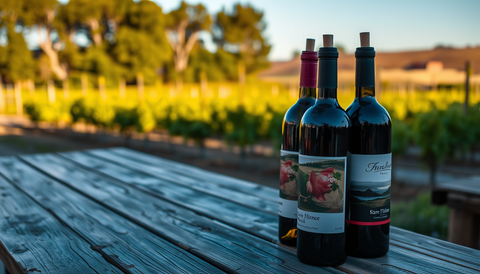
The image shows the ideal principle, stable and dark storage, rather than a requirement for every home. If you're planning to serve several bottles at a gathering, practical hosting advice such as these flawless dinner party tips from MODERN LYFE can help you coordinate opening, serving and storage.
A wine fridge is useful when the room temperature fluctuates, but don't keep opening the door unnecessarily. Each opening changes the internal environment, and a packed fridge needs room for air to circulate. If you don't have controlled storage, buy wines to drink sooner and reserve long-term cellaring for bottles with clear structure, balance and a producer's stated ageing potential.
Gifting, Entertaining and Corporate Red Wine Cases
A single bottle is easy to give. A case feels deliberate. That difference matters when you're welcoming someone into a new home, thanking a client or supplying wine for a dinner where several guests will be drinking the same red.
A dozen also solves a practical problem. You don't need to coordinate several unrelated bottles, and the recipient has enough wine for more than one occasion. For a dinner host, one cohesive Shiraz can work across grilled meat, roasted vegetables and a cheese course, while a mixed pack creates more contrast across the meal.

Pick the case for the occasion
Dinner-party gift: Choose one versatile red if the host serves a consistent menu. A Grenache-led blend or approachable Shiraz is more useful than a highly tannic wine that needs a specific dish.
Housewarming gift: Prioritise sturdy packaging and straightforward styles. The case needs to travel safely, and the recipient shouldn't need specialist knowledge to enjoy the first bottle.
Corporate order: Ask about invoice-ready documentation, delivery scheduling, branded cartons and the ability to include a business message. The wine still matters, but reliable fulfilment often matters just as much.
Presentation can turn a practical purchase into a proper gift. Timber presentation boxes, magnetic closures, printed tasting notes and a handwritten card give the recipient a reason to keep the packaging and remember the occasion. You can also mix McLaren Vale Shiraz with softer Pinot Noir so the gift offers both generosity and choice.
For a grazing table, pair the case with a useful food plan rather than a decorative extra. These perfect charcuterie wine combos offer a helpful starting point for matching cured meats, cheese and red wine styles.
The best corporate case is organised before it ships. Confirm the recipient's address, delivery timing and any workplace restrictions, then ask for a branded note or individual cards if the order is going to several people. A dozen without context can feel like stock. A thoughtfully selected case with a message feels like a considered gesture.
Buying Red Wine Cases Online With Confidence
Online case buying is straightforward when you check the right details before pressing “pay”. Start with the seller's liquor licence information in the website footer and make sure the business provides a clear contact method, delivery policy and returns process. A polished product page isn't enough.
Next, inspect the case itself. Confirm the bottle count, format, varietal mix and vintage policy. If the listing says “subject to availability”, contact the retailer before ordering if vintage consistency matters. Check whether freight is included, and calculate the delivered bottle price rather than comparing the headline case price.
Use four decision rules
- Licence first: Verify the retailer's liquor licence details and age-verification process.
- Freight second: Check the delivery charge and any order threshold before comparing offers.
- Vintage third: Look for an explicit statement about vintage consistency and substitutions.
- Faults fourth: Read the policy for corked, leaking or oxidised bottles. A credible retailer should explain how it handles faulty wine from a case.
Summer delivery deserves extra attention. Ask whether the retailer pauses dispatch during severe heat, uses protective packaging or offers a delivery window that avoids the hottest part of the week. Also make sure the courier can complete the required age verification at your address, because wine delivery isn't the same as an unattended parcel drop.
My final buying advice is blunt. Choose the full dozen when you know the wine, choose the half-case when you're learning, and choose the mixed pack when different drinkers need different styles. In an oversupplied market, the discount is useful, but only if the case contains wines you'll open.
McLaren Vale Cellars offers South Australian reds in six-packs, dozens, curated mixed cases and “Half & Half” selections, with options including Shiraz, Cabernet Sauvignon, Grenache and Merlot. Visit McLaren Vale Cellars to compare case formats, explore McLaren Vale styles and choose a pack that suits your table or your next gift.
Comments (0)
There are no comments for this article. Be the first one to leave a message!