
Most Australian Cabernet Sauvignon in 2026 sits between about $12 and $45 a bottle, with iconic wines well above that. Use the price bands below to find a sensible comparison point before you weigh up labels, regions or vintages.
Typical Australian Cabernet Prices in 2026
Start with the shelf price, then ask what the bottle offers for it. Everyday commercial Cabernet is often an easy-drinking multi-region blend. Regional value wines bring a clearer sense of place, while higher tiers may add more selective fruit, oak maturation and time in the cellar.
| Tier | Typical shelf price and what it buys |
|---|---|
| Everyday commercial | $8 to $15, often a multi-region blend built to drink within a year or two |
| Regional value | $15 to $25, often a regional wine with more defined fruit and firmer tannin |
| Mid-tier regional | $25 to $45, often more selective fruit, some oak and extended maturation |
| Premium reserve | $45 to $90, typically a more carefully made regional wine with oak and bottle age |
| Icon or back vintage | Above $90, often a scarce, collectible or cellar-aged bottle |
Read the price as a clue, not a score
At the lower end, the winemaker's brief is usually to make a friendly, ready-to-drink red. It can suit a weeknight meal, but it may offer less detail about where the fruit grew. A regional value Cabernet can give you more of that character without needing to be a special-occasion purchase. In McLaren Vale, look for blackberry and cassis, sometimes with a minty or herbal edge and a firmer grip on the finish.
The middle bands are where production choices become easier to taste. A wine made from more selective parcels may show a stronger regional signature, while measured oak and time in the winery can add spice, cedar-like notes and a smoother feel. The price alone can't confirm those choices, so read the tasting note and the producer's description rather than assuming that “reserve” means the same thing from every winery.
An older bottle isn't automatically dearer than a current release. A producer may hold its price across vintages, and a retailer may discount stock when it needs room for another release. The useful comparison is the wine in your glass, not the age on the label by itself.
Shopper's rule: An $18 McLaren Vale Cabernet and a $70 reserve are different purchases, not the same wine with a different sticker.
If you're comparing regional styles, this guide to South Australian Cabernet Sauvignon can help you read the variety through its origins. First choose your price band, then compare bottles within it.
From Grape Tonne to Bottle Price
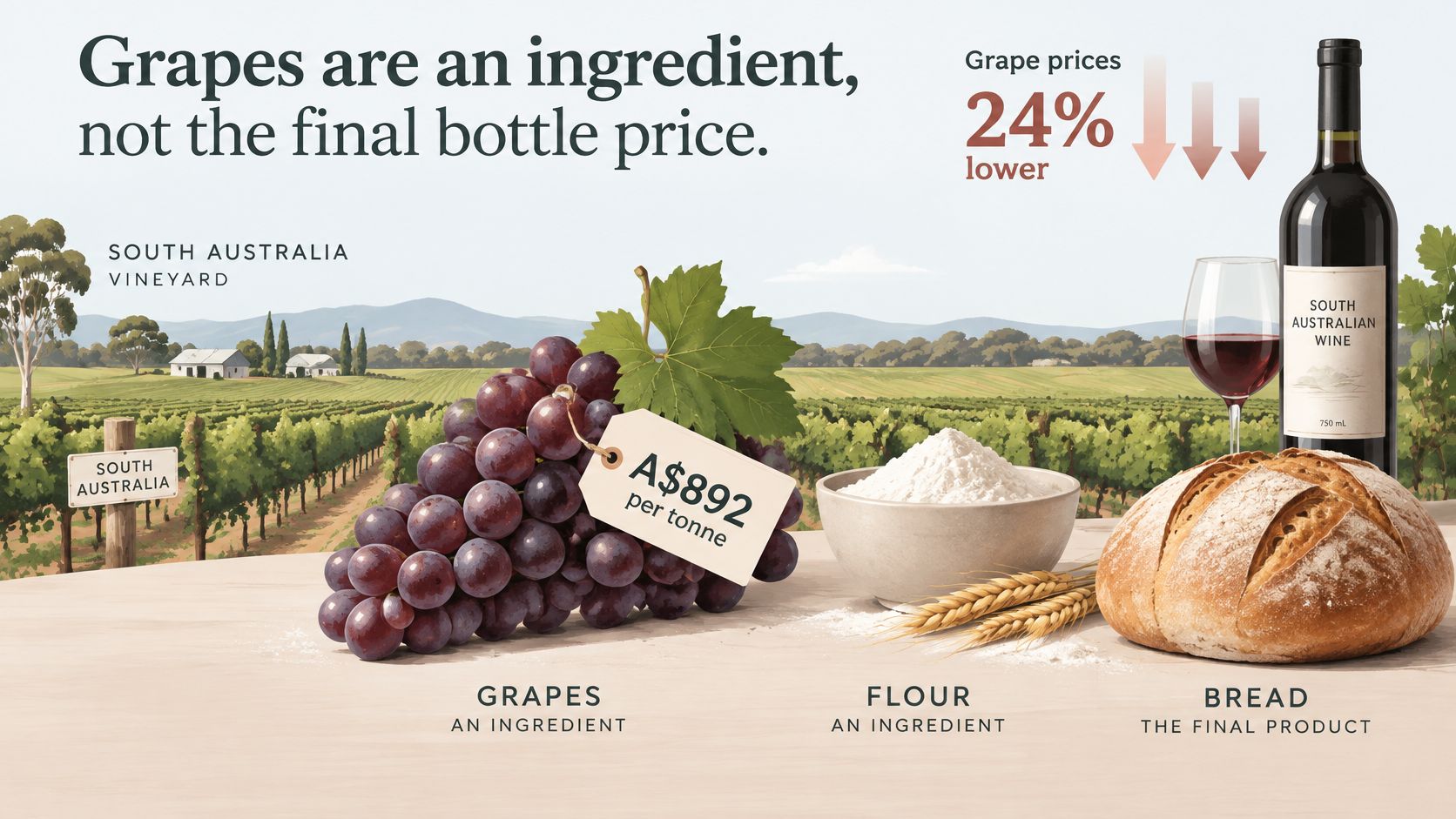
A tonne of grapes is only the starting ingredient in a bottle of Cabernet, much like flour is only one part of a loaf. The grower's price matters, but harvesting, winemaking, packaging and selling all add costs before the wine reaches the shelf.
The South Australian winegrape survey reported that Coonawarra Cabernet Sauvignon declined 24% to A$892 per tonne. It also put the statewide crush value at A$403 million, down 24%, and the overall average purchase value at A$1,173 per tonne, down 5%. These are South Australian benchmarks, not the national Cabernet grape average. Assuming a tonne yields approximately 650 to 750 litres of finished wine, A$892 per tonne works out to about A$1.19 to A$1.37 per litre, or roughly A$0.89 to A$1.03 per 750 mL bottle, before the costs of making and selling it, according to the South Australian winegrape survey summary.
What happens after harvest
The grape figure covers only a small part of the eventual shelf price. The winery must harvest and transport the fruit, ferment it, and account for losses along the way. Bottling, labelling, compliance, distribution and retail sales add further costs, even when grapes are cheaper.
Maturation can add another layer. French or American oak barrels cost money, as do the space and time needed to hold wine until it is ready. Hand harvesting, lower yields, careful sorting and longer cellaring can also raise production costs. These choices may shape the wine's character, so look for a clear explanation on the label or in the tasting note.
McLaren Vale and Coonawarra fruit can have different prices in a given year. Yields, concentration, regional reputation and winery purchasing decisions all play a part. That is why grape cost alone cannot explain the gap between an entry-level Cabernet and a $30 or $60 bottle.
Above the entry band, look for a reason for the price: selective fruit, oak, cellar time, certified regional origin or a vintage the producer has chosen to highlight. A higher shelf price does not necessarily mean the grapes cost more.
What Moves the Price Besides the Grape
Two Cabernets can share a shelf and a grape variety yet sit in very different price bands. Compare region, vintage, producer, maturation and format to see what may account for the difference.
Grape purchase values help explain the cost of fruit, but they do not set the shelf price of a bottle. Region and style, the producer's decisions about stock and sale timing, and the wine's presentation all shape what shoppers pay.
| Factor | Usual price effect | What to look for |
|---|---|---|
| Region | Large | Coonawarra, Margaret River and McLaren Vale can command more than a generic blend |
| Vintage | Medium to large | A tight, low-yield year may support higher reserve prices; oversupply can prompt commercial discounts |
| Producer | Large | Established cellar names with strong demand can price above unknown labels of a similar style |
| Oak and bottle age | Medium | New barrels and extra cellar time add costs beyond the grape price |
| Format | Medium | Halves can cost more per millilitre, magnums may carry a premium and case deals can lower the bottle price |
Compare like with like
A region name tells you where the grapes come from, but check whether the wine is from a named site, a regional blend or a broader Australian blend. Place names can add value through recognition. They matter most when the producer explains what that origin brings to the wine, such as darker fruit, herbal lift or a different tannin shape.
Vintage and producer reputation can shift the price too. A winery may keep a reserve wine at the same price even when fruit costs less, while a retailer may discount commercial stock that is harder to sell. A familiar name can command a premium because buyers know its style. An unfamiliar label may still offer good value, so check its tasting notes and production details.
Oak and bottle age are less obvious than a region name. “Oak matured” is a starting point: the type of oak, its influence and time in barrel all affect the wine. The art and science of wine barrels helps explain how barrels shape both flavour and production choices.
Format changes the comparison. A small bottle may suit a lighter occasion but cost more per millilitre; a case deal may bring the bottle price down. Compare region, vintage and format before deciding whether a Cabernet is a bargain or a splurge.
Why Less Cabernet Does Not Mean Dearer Wine
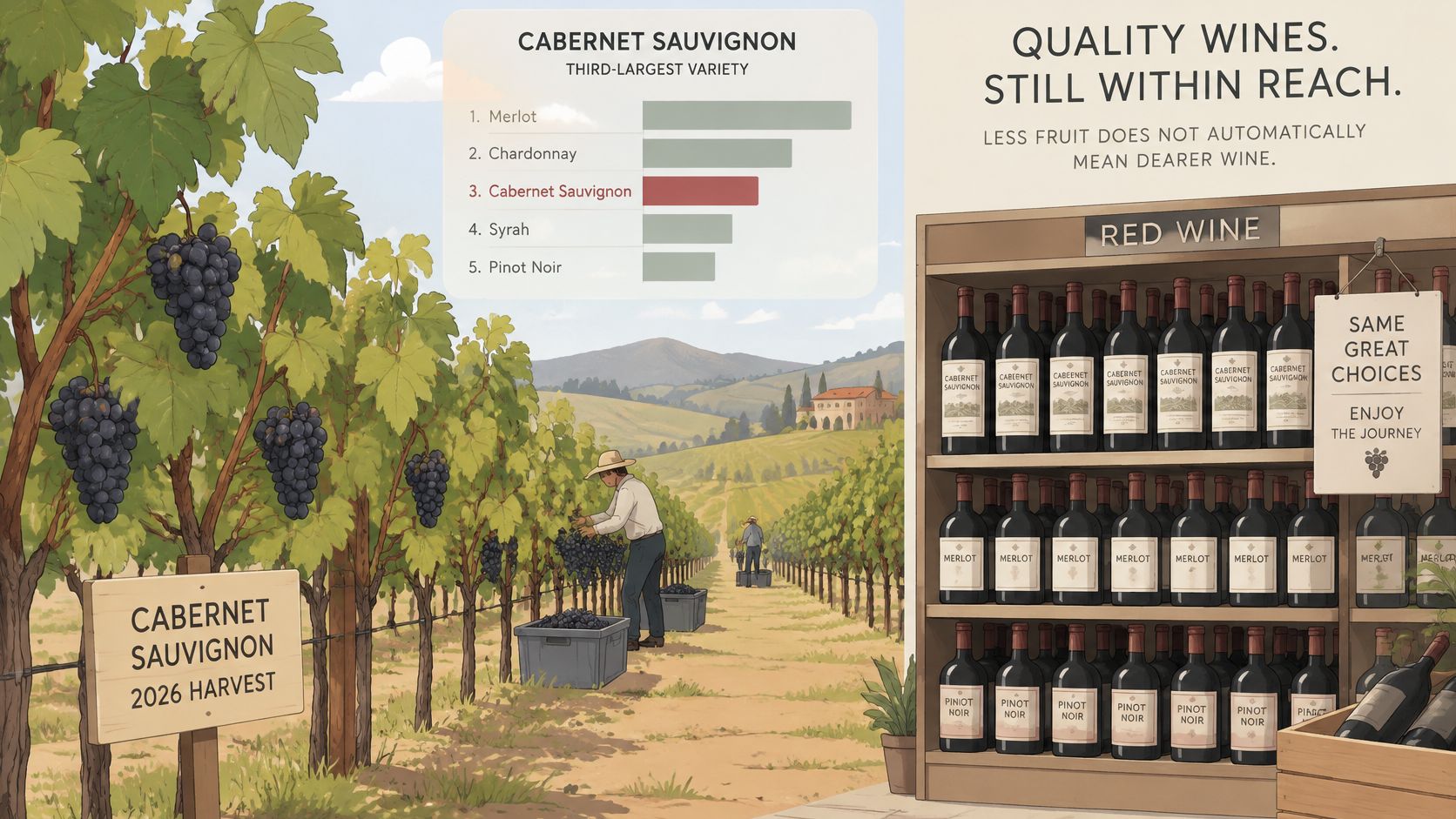
Australia's 2026 Cabernet crush fell 27%, while the average grape price dropped 6% to $570 per tonne. The Wine Australia market bulletin also reported an Australian Cabernet bulk offer price of US$0.49 per litre in June 2026, among the lowest country-level prices. These figures track grapes and bulk wine, not finished bottles on a shop shelf. The bulletin links low commercial pricing to excess red-wine supply and softer global red consumption.
Two lanes, not one price escalator
Cabernet travels along two market lanes. Oversupplied commercial fruit can become discounted wine, while regionally distinctive bottles may reflect a more involved production or ageing program. A smaller crush does not remove pressure from every commercial bottle, just as it does not automatically raise the price of every premium one.
Packaged premium Cabernet generally earns more per litre in export markets than bulk commercial wine. Those export values are not Australian shelf prices, though. They show how the market can value packaged Cabernet differently from bulk wine, but cannot tell you what a particular local bottle should cost.
A McLaren Vale Cabernet can therefore remain competitively priced even when premium export demand is strong. Each bottle's price reflects what it is, how it was made and where it is sold. Ask whether you're paying for a particular place, a more involved production and ageing program, or a bottle competing in a crowded commercial market.
Here's a short video to accompany the vineyard story:
Value Bottles Beside Premium Cabernet
On a Friday night, a regional value Cabernet can make sense beside sausages, a burger or a tray of roast vegetables. Pour it and look for cassis and blackberry, perhaps a touch of mint or bay, with enough tannin to stand up to food. It should be enjoyable without asking you to put it away for years.
That's the kind of bottle shoppers often find in the $15 to $25 regional value band. A dozen deal can bring down the bottle cost, making this tier a practical place to explore a region or producer. If you're still learning Cabernet, focus on whether the fruit is fresh and clear, whether the tannins feel firm or drying, and how comfortably the wine sits alongside the meal.
When the premium price earns its place
Now set a premium regional bottle beside it, perhaps with lamb, hard cheese or a dinner that calls for something more deliberate. You might find darker fruit, cedar or cocoa from oak, finer tannins and a finish that lingers. That extra detail can make the wine feel more composed, rather than more powerful.
A bottle in the $45 to $90 premium reserve band makes the most sense when the producer can explain what's behind it. Maybe the fruit comes from a defined vineyard; perhaps the oak is measured, or the winery has already given the wine time to settle in bottle. Those details won't guarantee that you'll prefer it, but they give you something specific to assess against the price.
Icon wines above that band are a different sort of purchase. You may be buying cellar potential, rarity, a back vintage or a gift with a sense of occasion. That can be worthwhile if it's what you want, but it isn't automatically a better weeknight choice.
Compare the two wines over a meal, not just side by side in a tasting glass. If the more expensive Cabernet brings no noticeable difference in flavour, texture or finish that matters to you, save the extra money for a bottle you'll enjoy more.
Buying McLaren Vale Cabernet on a Budget
A budget works best when you decide what the wine is for before you browse. Use this path to find a bottle that fits the occasion, rather than letting the word “reserve” or a discount sticker make the choice for you.
- Choose your band. For a weeknight pour, start with regional value at $15 to $25. A mid-tier bottle at $25 to $45 can suit sharing over dinner, while the $45 to $90 premium band is an option for a gift or a more special meal.
- Check the case price. A six- or twelve-bottle deal can bring down the per-bottle cost. It also gives you a chance to compare styles at home, especially if you choose more than one producer rather than committing to a case of a wine you haven't tried.
- Try a mixed pack if you're still learning. If one label doesn't suit you, the rest of the pack can still teach you what you like. Notice the fruit, tannin and oak in each bottle, then use those preferences to guide your next purchase.
- Read the delivery and loyalty terms before you add another bottle. Delivery thresholds and rewards conditions can change, so check the current terms at checkout. Don't buy a wine you don't want just to reach a threshold unless the full order still makes sense for your budget.
- Match the tasting note to the meal. Look for clues about fruit, oak and whether the wine is ready to drink or intended for further cellaring. If the description doesn't fit the food or the occasion, a reserve label isn't a reason to stretch your budget.
- Ask what the extra money buys. Above the entry band, look for a clear point of difference such as selective regional fruit, oak, cellar time or a more specific vineyard origin. If you can't find a reason in the listing or tasting note, consider whether a simpler bottle would give you just as much pleasure.
For a weeknight dinner or a mixed crowd, a six- or twelve-bottle purchase in the regional value band is a practical place to begin. Choose a premium bottle for a birthday roast or a gift when the oak and age are part of the appeal. If you're weighing up several options, this guide to value wines in McLaren Vale under $50 can help you narrow your shortlist.
McLaren Vale Cellars offers Cabernet Sauvignon by the bottle and in multi-bottle packs, so you can compare a regional value wine with a more premium style. Choose a half case or a mixed pack to explore the range, then visit McLaren Vale Cellars to find a bottle that suits your budget and table.
Comments (0)
There are no comments for this article. Be the first one to leave a message!