
Pinot Grigio is one of Australia's most popular white wines for a few simple reasons: it's reliably crisp, incredibly refreshing, and just so easy to drink. It's become the go-to choice for everything from a casual weeknight dinner to a sunny weekend get-together, cementing its place as a firm favourite across the country.
Why Pinot Grigio is Australia's Go-To White Wine

If the wine world has a dependable, easy-going friend, it’s Pinot Grigio. This much-loved grape has made the journey from classic Italian import to a homegrown Aussie staple, winning over a massive audience along the way. Its reputation is built on consistency; when you pick up a bottle, you pretty much know you’re in for a treat.
This reliability has translated into some serious growth. While the overall white wine market actually saw a bit of a downturn recently, the 'Pinot Gris and Pinot Grigio' category grew by 9% in retail volume over a two-year period. That’s not a small jump—it shows a real connection with Australian drinkers.
To get why it has become such a staple, it helps to zoom out by understanding broader beverage industry trends. This wine’s success is no accident. It perfectly meets the demand for something that is both high-quality and wonderfully straightforward.
The Allure of Simplicity and Refreshment
So, what’s the secret sauce? A few key things make Pinot Grigio a consistent winner:
- Approachable Flavour: It doesn’t hit you with overly complex or challenging notes. Instead, you get clean, bright flavours of pear, green apple, and a twist of citrus.
- Ultimate Versatility: This is a wine that plays well with others. It pairs beautifully with a huge range of foods, from delicate seafood and fresh salads to light pasta dishes. Easy.
- Refreshingly Crisp: Its zesty acidity and light body make it exceptionally refreshing, especially on a warm Aussie arvo.
You could think of Pinot Grigio as the perfect white t-shirt of the wine world. It’s classic, versatile, and effortlessly stylish. It just fits in, no matter the occasion.
To help you get better acquainted, we've put together a handy summary of why this wine is such a crowd-pleaser.
Why Pinot Grigio Is A National Favourite
| Attribute | Description |
|---|---|
| Easy-Drinking Nature | Its light body and crisp acidity make it incredibly easy to sip and enjoy. |
| Food-Friendly | Pairs effortlessly with a wide variety of dishes, from seafood to chicken. |
| Reliable Quality | Delivers a consistently refreshing and clean taste profile, bottle after bottle. |
| Affordable Price Point | Generally offers excellent value, making it an accessible choice for everyday drinking. |
| Perfect for the Climate | Its zesty character is ideally suited to Australia's warm weather. |
These factors combined create a wine that's simply hard to beat for sheer drinkability and versatility.
This guide will walk you through everything else you need to know about this popular drop. We'll explore its signature taste, decode the difference between the Grigio and Gris styles, and give you practical tips for choosing, serving, and enjoying your next bottle.
Understanding the Crisp Taste of Pinot Grigio

So, what is it about Pinot Grigio that has everyone reaching for a bottle? To really get it, we need to look past the chilled glass and dive into what makes it tick. It’s a brilliant mix of fruit, texture, and a zesty finish that makes it so incredibly popular.
Ever bitten into a perfectly crisp, cold green apple on a hot day? That first snap of clean, refreshing flavour is the very heart of a great Pinot Grigio. Its whole personality is built around these bright, easy-to-love fruit notes.
The Core Flavour Profile
The real magic of Pinot Grigio is its straightforward, delicious nature. You don't need a wine dictionary to enjoy it; it’s all about pure, simple refreshment.
Here’s what you’ll typically find swirling in your glass:
- Green Apple & Pear: These are the stars of the show. They give the wine its crisp, juicy, and slightly sweet core.
- Citrus Zest: Think fresh lemon, lime, and maybe even a bit of grapefruit. This is what gives the wine its vibrant, zesty kick.
- Subtle Floral & Nutty Notes: In the really good stuff, you might pick up on delicate hints of honeysuckle, white flowers, or even a whisper of almond on the finish. It just adds that extra touch of class.
It’s this simple yet elegant combination that makes Pinot Grigio such a dependable, go-to white.
What Is Acidity in Wine?
When you hear wine lovers talking about acidity, they’re not talking about something sour. Acidity is the ‘zing’ or ‘zest’ in the wine—it’s what makes your mouth water just a little after a sip, leaving your palate feeling clean and ready for another bite of food.
Analogy: Think of acidity in Pinot Grigio like a fresh squeeze of lemon over a piece of grilled fish. It doesn’t mask the flavour; it lifts it, brightening everything up and making the whole experience feel more alive.
This bright acidity is exactly why Pinot Grigio is hailed as a phenomenal food wine. It effortlessly cuts through rich sauces, complements delicate flavours, and never feels heavy.
Texture and Body: A Light Touch
Finally, let's talk about how it feels in your mouth. Pinot Grigio is a classic light-bodied wine. If you were to compare wines to milk, a light-bodied wine is like skim milk—it's lean, clean, and smooth, with none of that heavy, creamy feeling.
An oaked Chardonnay, on the other hand, would be more like full cream milk—richer and much fuller. Pinot Grigio is nimble and refreshing, making it incredibly easy to drink, especially when the sun is out.
This winning trio—crisp fruit, lively acidity, and a light body—is what defines the classic Pinot Grigio experience we all know and love.
Pinot Grigio vs Pinot Gris Explained
One of the biggest points of confusion for wine lovers is the relationship between Pinot Grigio and Pinot Gris. Are they different grapes? Maybe distant cousins? The answer is beautifully simple: they are the exact same grape.
The name on the bottle isn't about the grape itself, but about the winemaker’s intention and the style they're aiming for. Think of it like a humble potato. A chef can turn it into crispy, salty chips or a rich, creamy mash. It's the same core ingredient, but the final result is worlds apart. That's precisely what's happening here.
So, the name is your first and most important clue to what's waiting inside the bottle. Each one signals a distinct personality and a different winemaking philosophy.
The Lean and Zesty Italian Style
When you see Pinot Grigio on a label, it’s a direct nod to the classic Italian style. This approach is all about capturing the grape's natural crispness and zesty energy.
To achieve this, winemakers will typically ferment the juice in stainless steel tanks at cool temperatures. This technique prevents the wine from developing broader, richer flavours, instead locking in all those bright, citrusy notes that make it so incredibly refreshing.
The result is a wine that is:
- Light-bodied and exceptionally easy to drink.
- Bursting with flavours of green apple, lemon, and lime.
- Known for a steely minerality and a clean, mouth-watering finish.
This is the style that took the world by storm, loved for its straightforward, invigorating character. It’s the perfect drop for a sunny afternoon, a partner to light seafood, or a fresh garden salad.
The Rich and Aromatic French Style
On the other hand, when a bottle says Pinot Gris, it's signalling an allegiance to the French style, especially from the Alsace region. Here, the goal is completely different: to craft a wine with more texture, weight, and aromatic complexity.
Winemakers might let the grapes hang on the vine a little longer to build up more sugar and flavour. The wine might also be fermented at slightly warmer temperatures or even see some time in old oak barrels to build texture and body.
This creates a wine that is:
- Fuller-bodied with a richer, more rounded mouthfeel.
- Showcasing notes of stone fruit like peach and apricot, often with hints of honey and spice.
- More aromatic and sometimes with a slightly oily, textural quality.
This style, often adopted by fantastic winemakers here in Australia, is a brilliant match for richer dishes like roast chicken, creamy pasta, or even mildly spiced Asian food. For a deeper dive, you can explore more about the key differences between Pinot Grigio and Pinot Gris in our detailed guide.
To make it even clearer, let's break down the two personalities side-by-side.
Pinot Grigio Style vs Pinot Gris Style At a Glance
| Characteristic | Italian 'Pinot Grigio' Style | French 'Pinot Gris' Style |
|---|---|---|
| Body | Light-bodied and crisp | Medium to full-bodied, richer |
| Primary Flavours | Green apple, pear, lemon, lime | Peach, apricot, nectarine, honey |
| Acidity | High, zesty, mouth-watering | Medium, softer |
| Texture | Clean, lean, steely | Rounded, sometimes slightly oily |
| Winemaking | Stainless steel, cool fermentation | Can include oak, warmer fermentation |
| Best For | Aperitifs, light seafood, salads | Roast chicken, creamy pasta, pork |
Ultimately, knowing the difference between these two styles unlocks a whole new level of enjoyment, helping you pick the perfect bottle for any meal or mood.
In short: Pinot Grigio is the lean, crisp sprinter, while Pinot Gris is the richer, more powerful marathon runner. Both come from the same great athletic stock, but they've trained for entirely different events. Understanding this helps you pick the perfect style for any occasion.
Where The Best Pinot Grigio Grows
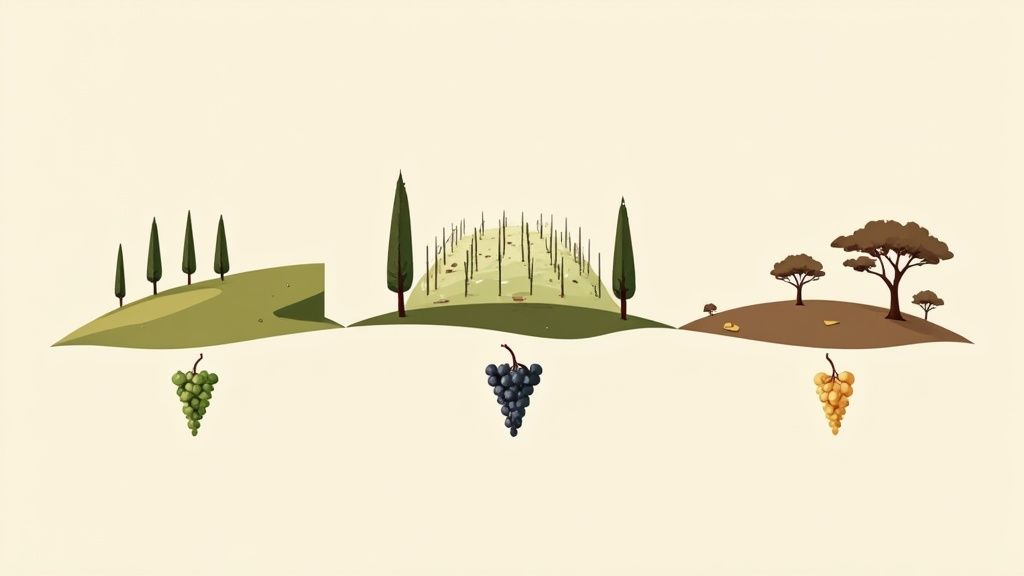
Just like a great coffee bean, a wine grape's flavour is profoundly shaped by where it’s grown. The soil, climate, and elevation—what the wine world calls terroir—all leave their unique signature on the final product. For Pinot Grigio, this sense of place is everything, defining whether a bottle will be zesty and lean or fruity and vibrant.
To really get to the heart of this grape, we have to travel to its spiritual home in Northern Italy. This is where the classic "Pinot Grigio" style was perfected, creating the benchmark for that crisp, dry white wine the world fell in love with.
The Italian Heartland
The cool, alpine-influenced climates of Northern Italy are the perfect incubator for producing that signature lean and minerally style. Two regions, in particular, set the gold standard.
- Veneto: As one of Italy's largest wine-producing regions, Veneto is responsible for a huge volume of the Pinot Grigio we see on shelves. These wines are typically light, crisp, and made for easy, everyday drinking.
- Friuli-Venezia Giulia: Tucked away in the northeast, Friuli is celebrated for producing more complex and aromatic expressions. Wines from here often have a bit more body and texture, with lovely stone fruit notes complementing the classic citrus profile.
These Italian regions set the stage, but the story of Pinot Grigio didn't stop there. It has since expanded across the globe, with Australian winemakers adding their own exciting chapter.
Australia's Cool-Climate Champions
While Italy provides the blueprint, Australia has proven to be an exceptional place for this versatile grape. Our winemakers have found that specific cool-climate pockets are ideal for cultivating high-quality Pinot Grigio, often with a distinctly vibrant, fruit-forward character.
Think of it this way: if Italian Pinot Grigio is a crisp, classic linen shirt, Australian Pinot Grigio is a bright, colourful one. It’s made from the same great material but cut for a different, sunnier mood.
These homegrown styles have become incredibly popular, thanks to their consistent quality and approachability. The key regions leading the charge include:
- Adelaide Hills, SA: Known for its high altitude and cool breezes, this region produces elegant wines with zesty acidity and intense fruit flavours.
- King Valley, VIC: This area has a strong Italian heritage and excels at producing crisp, European-style whites, including outstanding Pinot Grigio.
- Mornington Peninsula, VIC: The maritime climate here yields wines with delicate aromatics and a refreshing, almost saline minerality.
The success of these regions is a huge part of why Pinot Grigio is a fixture in Australia. Our local industry has embraced the grape on a significant scale, making it one of the top white varieties crushed each year. This means a fantastic bottle is never far away, offering reliable quality for wine lovers across the country. You can dive deeper into the stats by checking out Wine Australia’s market snapshots.
Perfect Food Pairings for Pinot Grigio

One of the biggest reasons Pinot Grigio is so incredibly popular is its chameleon-like ability to pair with almost anything on the dinner table. It’s the ultimate food-friendly white wine.
Its crisp acidity, subtle fruit notes, and lighter body mean it doesn’t steamroll your food. Instead, it plays a beautiful supporting role, lifting flavours and cleansing your palate between bites.
The secret weapon here is that zesty acidity we keep mentioning. Think of it like a squeeze of fresh lemon over a dish – it cuts through fats and oils, makes fresh ingredients pop, and gets you ready for the next delicious mouthful.
Classic Fresh and Light Pairings
The most timeless matches for a classic Pinot Grigio are dishes that share its own bright, clean personality. These pairings just work because the wine complements the ingredients rather than competing, creating a seamless and satisfying experience.
- Seafood and Shellfish: This is a no-brainer. Grilled prawns, freshly shucked oysters, or a simple pan-fried fish with a squeeze of lemon are all heavenly. The wine’s own citrus notes are a natural partner, and its acidity slices through any richness with ease.
- Light Pasta Dishes: A beautiful pasta tossed with fresh pesto, sweet cherry tomatoes, and basil finds its soulmate in Pinot Grigio. The wine is delicate enough not to overwhelm the fresh herbs and vegetables.
- Fresh Salads: A crisp garden salad with a light vinaigrette dressing meets its perfect match. The wine’s zesty character mirrors the dressing and elevates the taste of the fresh greens.
Getting a Bit More Adventurous
But don’t just stick to the classics! Pinot Grigio's clean, adaptable nature makes it a fantastic partner for some more creative and exciting food pairings. Its crisp profile can cool the palate and balance more complex flavours, making it a surprisingly versatile choice for a whole world of cuisines.
A great rule of thumb in the wine world is "what grows together, goes together." The classic Italian style of Pinot Grigio naturally clicks with Mediterranean flavours. But its refreshing profile also provides a brilliant contrast to richer or spicier foods.
For instance, Pinot Grigio can be a fantastic companion for mildly spicy Asian dishes. The subtle fruitiness offers a lovely counterpoint to the aromatic herbs in Vietnamese or Thai food, while its crisp finish is a welcome relief after a hint of chilli.
It's also an absolute star on a cheese board. Forget the heavy reds for a moment and try it with:
- Fresh Goat's Cheese: The wine’s acidity cuts straight through the creamy tang of the cheese.
- Mozzarella or Burrata: Its clean profile is the perfect foil for the milky freshness of these soft cheeses.
- Feta: The salty bite of feta is beautifully balanced by the wine’s crisp fruitiness.
These pairings just scratch the surface of how adaptable this wine truly is. For even more ideas and detailed recipes, you can unlock the versatility of Pinot Grigio with our complete food pairing guide.
How to Choose and Serve Your Next Bottle
With a world of fantastic Pinot Grigio at your fingertips, picking the perfect bottle can feel a bit overwhelming. But a few simple tips can turn a guess into a confident choice, ensuring you bring home a winner every time. The label is your best friend here, offering crucial clues about the wine's character.
First up, look for the region. As we've seen, a wine from the Adelaide Hills will likely be vibrant and fruit-forward, while one from Veneto, Italy, will probably be leaner and more minerally. Also, check the vintage—the year the grapes were harvested. For Pinot Grigio, fresher is almost always better, so look for a recent year to guarantee that zesty, bright profile we all love.
Getting It Just Right at Home
Once you’ve chosen your bottle, serving it correctly is the key to unlocking its full potential. While it’s tempting to serve it ice-cold straight from the back of the fridge, over-chilling can mute its delicate aromas and flavours.
The sweet spot for Pinot Grigio is chilled, not frozen, ideally between 8-10°C. An easy way to nail this is to take it out of the fridge about 20 minutes before you plan to pour. This small step makes a huge difference.
The right glassware also plays a vital role. A standard white wine glass with a slightly tapered opening is perfect. It helps concentrate the wine’s subtle floral and citrus aromas, delivering them straight to your senses for the full experience. For a complete walkthrough, check out our guide on unlocking the secrets of Pinot Grigio temperature, glassware, and storage tips.
Your Perfect Bottle Awaits
The growing popularity of Pinot Grigio in Australia means you'll find an expanded selection everywhere you look, from local retailers to online cellars. It's a clear shift in buying habits, and it's exciting to see so many great options available.
Ready to explore? At McLaren Vale Cellars, we've curated a selection of premium South Australian Pinot Grigio that we're genuinely proud of. Try one of our sample packs to find a new favourite, or grab a half-case deal for exceptional value. And if you're looking for inspiration for fellow wine lovers, you might find some unforgettable wine gifts for the connoisseur to share the experience.
Best of all, every purchase is backed by our Taste Guarantee. If you don’t love it, we’ll sort it out. It's the risk-free way to discover your next perfect bottle.
Your Pinot Grigio Questions, Answered
Even with a wine as friendly and approachable as Pinot Grigio, a few questions always seem to pop up. We’ve pulled together the most common ones we hear to give you quick, clear answers. Think of it as your cheat sheet to pouring the perfect glass every time.
Is Pinot Grigio a Sweet or a Dry Wine?
The short answer? It’s almost always dry. When you see a popular Aussie or Italian Pinot Grigio on the shelf, you can bet it's been made in a dry style.
This just means the winemakers let the fermentation process convert virtually all the natural grape sugars into alcohol, leaving behind a crisp, refreshing, non-sweet wine. You’ll definitely taste bright fruit flavours like green apple, pear, or citrus, but that’s the flavour of the grape, not leftover sugar.
What's the Best Temperature to Serve Pinot Grigio?
Like most crisp whites, Pinot Grigio is at its best when it's nicely chilled, right around 8-10°C.
If it’s too warm, the flavours can feel a bit flat and dull. But if it's served ice-cold straight from the freezer, all those lovely delicate aromas get locked away. A handy trick is to pull it out of the fridge about 20 minutes before you plan to pour. That little bit of time lets it warm up just enough to be perfect.
Our top tip: Aim for chilled, not frozen. Over-chilling is a common mistake that masks all the beautiful, subtle notes that make a quality Pinot Grigio so enjoyable. Letting it warm up just slightly in the glass really lets its personality shine through.
How Long Does an Opened Bottle of Pinot Grigio Last?
Once you’ve opened a bottle, you’ve got about 3 to 5 days to enjoy it before it starts to lose its charm.
The key is to seal it up tightly—a wine stopper or the original screw cap works perfectly—and pop it straight back in the fridge. This slows down the oxidation that makes wine taste flat. For best results, though, it’s always best enjoyed soon after opening while it's still vibrant and fresh.
At McLaren Vale Cellars, we've handpicked a fantastic selection of premium South Australian Pinot Grigio that really showcases what our region can do.
You can dive into our curated sample packs or grab a bargain with our half-case deals. Plus, with our Taste Guarantee, you can explore with total confidence. Find your next favourite white wine today at https://www.mclarenvalecellars.com.


Comments (0)
There are no comments for this article. Be the first one to leave a message!