
You're standing in front of the wine shelf with dinner already in mind, but not quite decided. It's warm outside, the seafood is ready, and a chilled white sounds right. Or the evening's turned cool, there's something savoury on the menu, and a light red suddenly makes more sense.
Pinot Grigio or Pinot Noir isn't a contest between white and red. It's a choice about the meal, the weather and the kind of glass you want. Pinot Grigio is usually crisp and refreshing, while Pinot Noir is a lighter-bodied red with more savoury depth. Australian regional differences matter, too, so the label can tell you as much as the grape name.
| Occasion or preference | Pinot Grigio | Pinot Noir |
|---|---|---|
| You want | Freshness, chill and easy drinking | A light red with savoury detail |
| A natural match | Seafood, salad, light pasta | Poultry, mushrooms, barbecue |
| Best starting point | Crisp or citrus-led style | Cool-climate origin |
| Serve it | Well chilled | Slightly cool |
What You're Really Choosing Between
Start with the moment, not the colour. Ask yourself whether you want a cold, lively glass to refresh the palate, or a softer red that brings gentle fruit and savoury character to the table. That simple distinction will usually point you in the right direction before you compare labels.
Pinot Grigio and Pinot Noir are different grape varieties, though they're genetically related. Pinot Grigio makes a white wine, often pale and bright, with citrus, pear or green apple notes. Pinot Noir is a red wine, commonly lighter in body than many familiar Australian reds, with cherry and berry fruit, gentle tannin and, in some examples, an earthy edge.

Think about a summer lunch: a cold bottle beside seafood, salads or a light pasta dish is where crisp Pinot Grigio feels most at home. For a cool evening dinner, Pinot Noir is often the more satisfying call, especially with chicken, mushrooms or grilled food. Neither wine has to be saved for a formal occasion, but each has a different centre of gravity.
Make the choice in three steps
- Start with the food. Bright, fresh dishes usually favour Pinot Grigio; savoury or grilled dishes tend to give Pinot Noir more room to show its character.
- Consider the weather and serving plan. If you want a wine poured straight from the fridge, choose Grigio. If you're happy to let a red cool slightly before dinner, Noir is an easy option.
- Choose the style you want in the glass. Look for a crisp Grigio when refreshment matters most, or a lighter Pinot Noir when you want red fruit and structure without a heavy feel.
If you're still split, decide what the first sip should do. Pinot Grigio refreshes; Pinot Noir gives the meal a softer, more savoury companion. That's a more useful answer than asking which grape is better.
Side by Side Flavour and Structure
Pinot Grigio is the clearer choice when freshness is the priority. Expect a light, brisk feel, with citrus, pear and green apple as familiar flavour anchors. The acidity gives the wine lift and makes it a natural match for dishes with lemon, herbs or seafood. Some bottles are lean and crisp; others have more texture and a rounder, riper finish.
Pinot Noir brings a different kind of appeal. Its body is often light to medium, with juicy red cherry or raspberry, and a softer, sometimes earthy finish. Tannin gives it a gentle drying sensation, but it's generally not the firm grip you might expect from a fuller-bodied red. That makes it more flexible at the table than its colour might suggest.
| Attribute | Pinot Grigio | Pinot Noir |
|---|---|---|
| Weight | Light, often crisp | Light to medium, sometimes more textured |
| Acidity | Fresh and lively | Fresh, usually balanced by red fruit |
| Tannin | None in the usual white-wine style | Gentle, sometimes softly drying |
| Alcohol | Varies by producer and style | Varies by producer and style |
| Dominant fruit | Citrus, pear, green apple | Cherry, raspberry, red berries |
| Serve temperature | Well chilled | Slightly cool |
Gris and Grigio are style clues, not separate grapes
Pinot Gris and Pinot Grigio are French and Italian names for the same grape. In Australia, the names can hint at a producer's preferred style, but don't treat them as a strict rule. Australian Wine outlines that naming distinction and the variety's place in local wine ranges in its Pinot Grigio and Pinot Gris overview.
When you're shopping, use the bottle description and origin to judge whether the wine is likely to be lean and crisp or more rounded and textural. The Pinot Grigio label often points buyers towards a fresher, lighter profile, while Pinot Gris may suggest a richer expression, but the winemaker's choices matter more than the name alone.
At the bottle shop: Pinot Grigio refreshes with crisp white-fruit brightness; Pinot Noir brings red fruit, gentle tannin and a savoury edge.
Australian Regionality and Why It Matters
Start with the region when choosing an Australian Pinot Noir. Cooler sites preserve acidity and aromatic detail; warmer growing conditions tend towards riper fruit and a broader feel. For a lighter red with freshness, put cool-climate origins at the top of your shortlist. The grape name alone won't tell you how the bottle will drink.
The Adelaide Hills is a useful starting point for South Australian buyers. Wine Australia describes its Pinot Noir as generally medium-bodied, with ripe cherry and berry characters, and identifies it as a principal region for the variety. It gives shoppers a cool-climate reference within a state that also includes much warmer growing areas. Nationally, Pinot Noir remains a relatively small planting: Wine Australia's Pinot Noir variety snapshot records 4,948 hectares in 2019–20, representing 3.7% of Australia's vineyard area.
Read the climate behind the label
Tasmania provides another cool-climate benchmark, while the warmer, irrigated Riverland shows how broad Australia's growing conditions are. Those differences affect ripeness, aromatic lift and structure. Wine Australia's Pinot Noir facilitator guide also describes the grape's sensitivity to excessive sun exposure and spring frost, reinforcing why the vineyard site deserves attention.
Use climate as a starting point, then check the producer's style description.
McLaren Vale gives you another option when the occasion calls for a softer red and you aren't committed to Pinot Noir. At McLaren Vale Cellars, look for lighter McLaren Vale reds as an alternative to more structured styles. Ask for a bottle with the weight and texture you want. Expect its own regional character rather than the same expression as a cool-climate Pinot.
Pinot Grigio and Gris also reward a regional check. Wine Australia's Australian Pinot Gris snapshot outlines production concentrated in irrigated regions including the Riverina, Murray–Darling–Swan Hill and Riverland, alongside cool-climate examples. For local shopping, the Australian Pinot Grigio regions leading the way provides a closer look at origins. Match that regional clue with the tasting description: choose crisp Grigio for refreshment or a richer Gris when you want more texture.
Two bottles of the same grape can behave like different wines. Let the region set your expectation, then use the producer's description to narrow the choice.
Matching Each Wine to Real Meals and Moments
At a long lunch with prawns, grilled fish, leafy salad or lemony pasta, reach for Pinot Grigio. Its acidity keeps each mouthful feeling fresh, and its lighter body won't crowd out delicate flavours. A crisp style is the safest match when the meal is built around seafood, herbs and bright dressings.
For roast chicken, mushrooms or barbecue, Pinot Noir usually takes the lead. Red fruit and gentle tannin suit savoury food, and a lighter-bodied bottle can work where a heavier red would dominate. If the evening is cool, the combination feels especially natural. McLaren Vale Cellars' Pinot Noir food-pairing guide offers more ideas, from poultry to mushroom dishes.
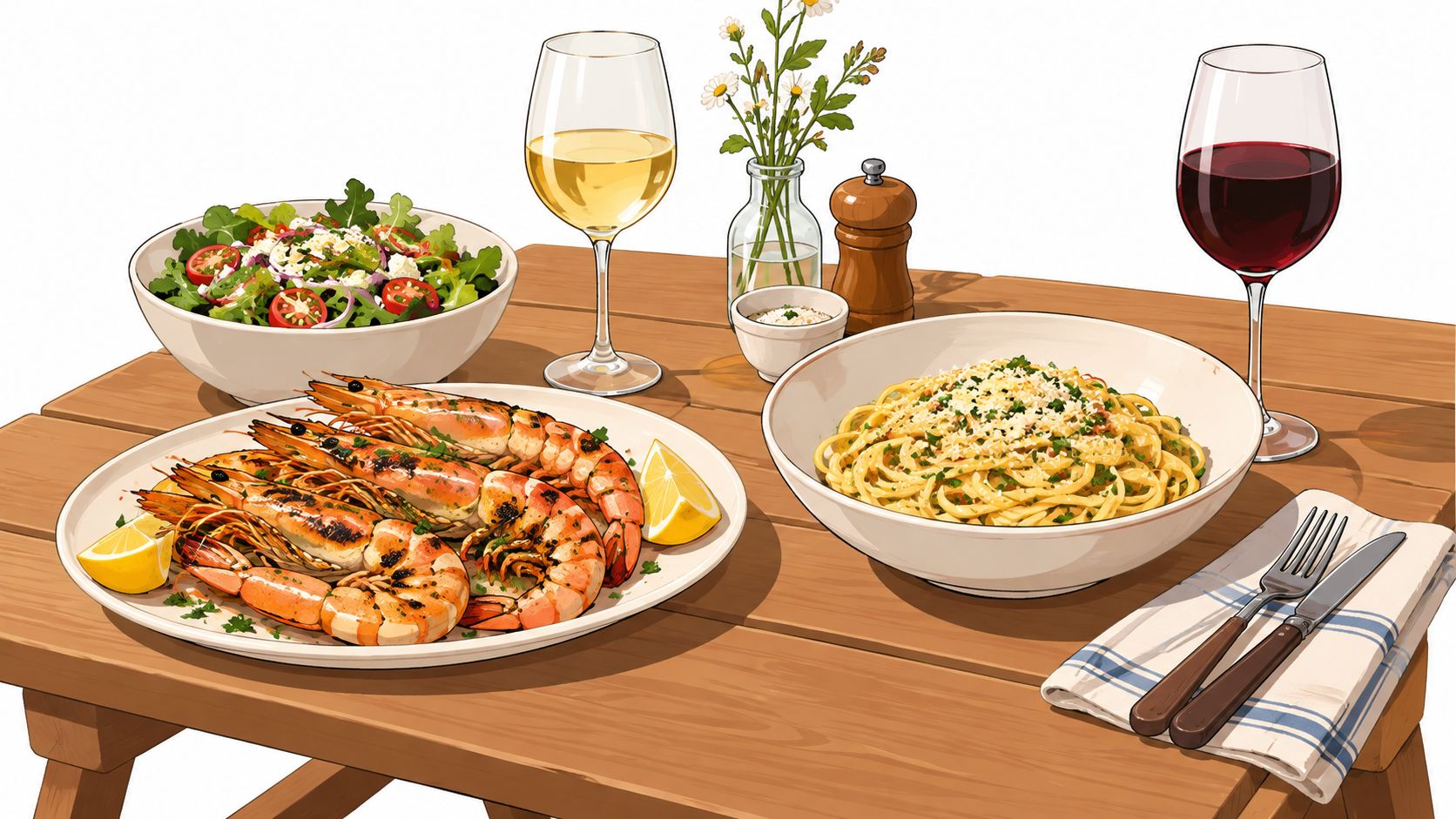
The overlap is where style matters
A picnic, cheese board or casual Friday dinner doesn't belong exclusively to either grape. A crisp Pinot Grigio is a natural partner for fresh cheeses, olives and lighter snacks. A cool-climate Pinot Noir can also work well, especially if the board includes mushrooms, mild cured meats or something grilled. If you're serving a mixed menu, choose the bottle that best suits the dish with the strongest flavour.
The same practical thinking helps when you're planning a larger meal or reception. For a different regional perspective on matching wine to a celebration menu, Apulian wedding wine picks offers ideas for choosing bottles around the food and occasion, rather than selecting by colour alone.
For a mixed table, ask what the wine needs to do. If it should refresh the palate and keep the meal light, pour Grigio. If it should meet savoury flavours and add gentle red-fruit depth, choose Pinot Noir. And if your menu moves from seafood to grilled poultry, serving both can be more practical than searching for one bottle to do everything.
Once you've narrowed the choice to these wines, the food should decide before the grape does. A crisp Grigio and a light Pinot Noir can both suit casual meals; the dish and the bottle's style determine which one fits better.
Serving, Temperature and Glassware That Lift Each Wine
Temperature is the easiest way to improve either wine at home. Serve Pinot Grigio well chilled, around 7 to 10 degrees, so it stays lively without becoming so cold that its aroma disappears. If the bottle's been over-chilled, let it sit briefly before pouring.
Pinot Noir is better slightly cool, around 13 to 15 degrees. That keeps the fruit bright and the wine feeling fresh, rather than making it seem warm or heavy. If your bottle has been sitting in a warm room, a short time in the fridge can help bring it into better balance.
Keep the glassware simple
A standard white wine glass is entirely suitable for Pinot Grigio. It holds the aromas close and makes the wine easy to enjoy at the table. For Pinot Noir, choose a glass with a slightly larger bowl; the extra space helps you notice its aromas and gives the wine room as you swirl it.
Most everyday Pinot Noir doesn't need a long decant. If a bottle seems closed or tightly wound when first opened, pour a glass and give it a little time to breathe. Skip elaborate decanting for a straightforward bottle you're opening with dinner.
The common mistake: Serving both wines too cold. Extreme chill can mute Grigio's fruit and make Pinot Noir feel harder and less expressive.
For more practical tips on chilling and pouring, see McLaren Vale Cellars' guide to Pinot Grigio temperature, glassware and storage.
Buying and Value in the Australian Market
Buy for the job the bottle needs to do. An everyday white for a casual lunch calls for a different spending decision from a Pinot Noir bought for its aroma and savoury detail. Set your budget around that expectation before comparing labels.
Pinot Grigio is often the easier everyday buy, with Australian bottles available across different price points. Wine Australia's Pinot Gris snapshot records 70,757 tonnes crushed in 2024, equal to 5.0% of Australia's total grape crush, with much of the volume coming from irrigated inland regions. That supply supports keenly priced options. Use origin and the producer's description to distinguish a straightforward white from a bottle offering more texture or flavour detail.
For Pinot Noir, start with a region and a stated style. Adelaide Hills or Tasmania are sensible choices when you want cool-climate aromatic detail and finer structure. A cheaper bottle can be enjoyable, but choose one whose description matches the character you're buying it for. If you're considering McLaren Vale's lighter red options, look for an explicitly lighter style rather than assuming the region alone guarantees it.
Buy for the comparison you want
Read the style description before committing. Crisp, citrus-led Grigio and richer, textural Gris serve different expectations, even when they sit beside each other on the shelf. For Pinot Noir, look for lightness, red fruit or savoury character according to what you want from the bottle. Spend more only when the description gives you a clear reason.
Keep your first purchase small.
McLaren Vale Cellars offers Pinot Grigio selections, mixed packs and half-case bundles. Use those formats to compare styles before committing to a dozen. Entry-level Grigio dozen offers make sense once you know you enjoy that style and want several bottles for regular use; a mixed selection is the better first purchase when you're still deciding.
A good-value bottle is one that delivers the style you wanted at a price you're comfortable paying. Judge the purchase by that standard, rather than the lowest shelf price or the prestige of the label.
Which One to Choose and When
Use this quick guide when you're deciding what to open tonight:
- Midweek dinner with seafood or a fresh salad: Choose Pinot Grigio. Look for crisp, citrus-led language on the label.
- Midweek dinner with chicken or mushrooms: Choose Pinot Noir. A cool-climate origin is a helpful place to start.
- Weekend lunch outdoors: Go for Pinot Grigio if the food is light and the weather is warm.
- Dinner party with mixed dishes: Choose the wine that suits the main course, or offer both if the menu moves from seafood to savoury mains.
- Picnic or casual Friday night: Either can work. Pick crisp Grigio for refreshing ease, or lighter Pinot Noir if the food includes grilled or earthy flavours.
- A solo glass: Follow your appetite. Choose Grigio when you want something bright and chilled; choose Noir when you want a softer, savoury red.
Don't let the colour do all the decision-making. The label's region and style description, the food in front of you and the serving temperature will tell you more about the experience to expect.
Pick by occasion first, grape second. Choose Pinot Grigio for chilled freshness and lighter food, or Pinot Noir for red-fruit depth and savoury meals.
The most useful comparison is a bottle of each, opened with food that suits their different strengths. Taste a crisp Pinot Grigio beside a lighter Pinot Noir, and you'll quickly learn which one belongs in your fridge or on your dinner table.
Browse Pinot Grigio, regional reds and mixed packs at McLaren Vale Cellars, where you can compare South Australian wines and find options for trying both styles. Choose a crisp white for the next seafood lunch or a lighter red for dinner, then explore the range and place an order when you find your fit.

Comments (0)
There are no comments for this article. Be the first one to leave a message!