
Choose a dry, high-acid Australian Pinot Grigio, ideally with a pH around 3.2–3.4, and use it both in the pan and in the glass. Its acidity lifts butter, cheese and stock without making the risotto taste sweet or heavy.
You're standing over a pot of rice, the grains have started to smell nutty, and the stock is warming beside you. This is the moment when a small pour of white wine can either give the risotto freshness or leave it sharp, sweet and oddly disconnected. The bottle matters because reduction concentrates whatever you add.
For Pinot Grigio for risotto, look for a clean, dry Australian style with enough acidity to balance creamy ingredients. Add it after toasting the rice, reduce it almost completely, then continue with stock. The same wine should be good enough to serve with the finished dish.
Why Pinot Grigio for Risotto Works Better Than Cooking Wine
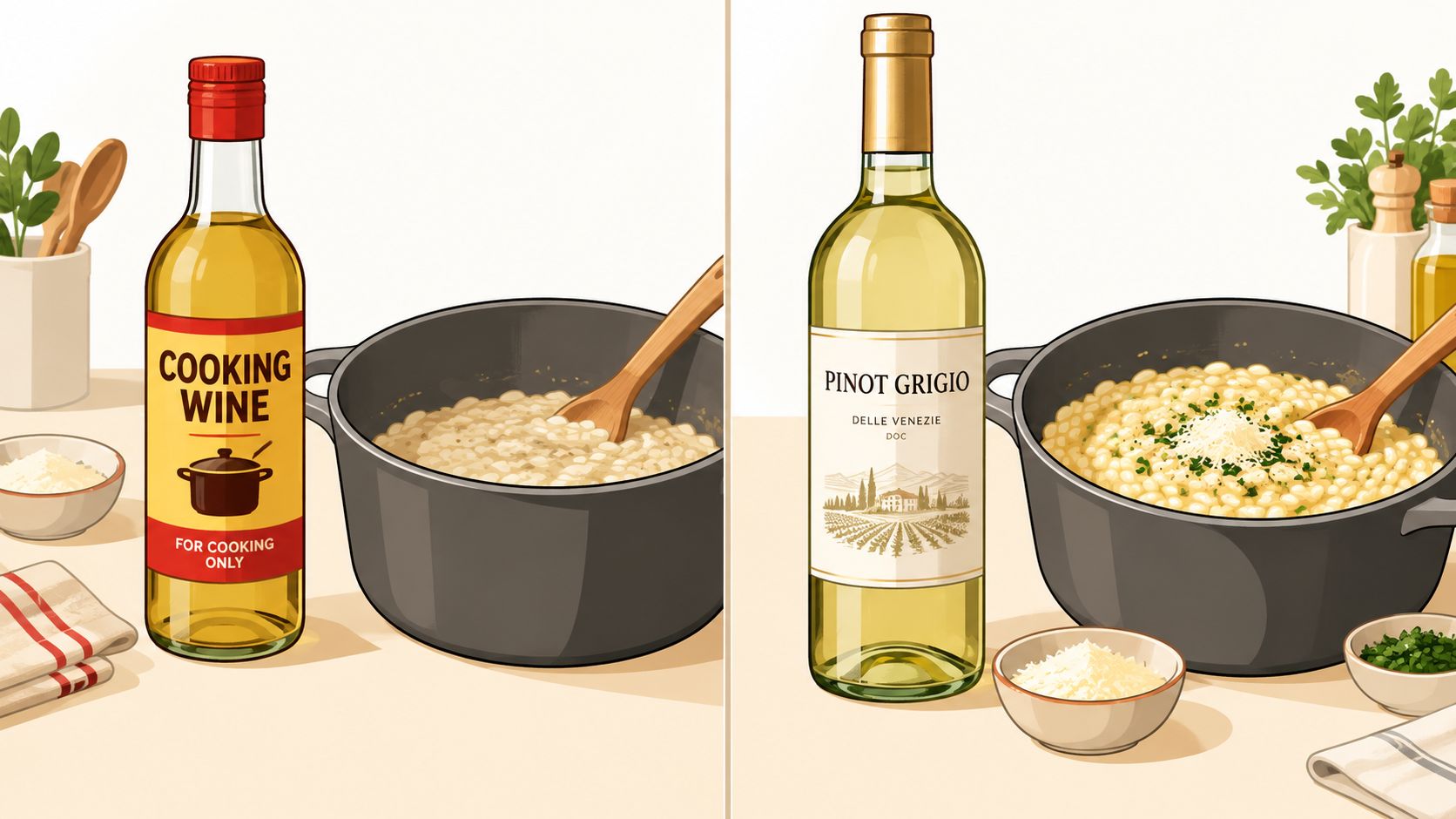
A salty cooking wine can make an otherwise careful risotto taste harsh and flat. As the rice absorbs the liquid and the wine reduces, its rough flavours become more concentrated. Leaving wine out is workable, but the dish can lose the freshness that keeps butter, parmesan and stock from feeling heavy.
A dry Pinot Grigio behaves like a cooking ingredient rather than a shortcut. Its acidity cuts through fat, while restrained citrus and orchard-fruit notes support the rice without taking over. The wine does not need to be dramatic in the glass. It needs to leave the pan balanced after reduction.
What changes in the pot
Use two batches of mushroom risotto to see the difference. With salty cooking wine, the toasted rice can develop a sharp, savoury edge after reduction, forcing you to adjust the seasoning. With a crisp Pinot Grigio, the liquid reduces into a lightly acidic base. The mushrooms stay earthy, and butter and cheese taste round instead of dense.
The same bottle also works at the table with prawn, asparagus, chicken or lemon risotto. Choose a wine you would happily serve with the finished dish, because reduction magnifies its character. This also avoids buying a separate product labelled only for cooking.
Practical rule: If you would not willingly drink the wine with dinner, do not reduce it into the rice.
Pinot Gris and Pinot Grigio are now established choices rather than obscure alternatives. Pinot Gris/Grigio overtook Merlot in 2025 to become Australia's fifth-largest grape variety overall, according to Wine Australia's 2025 National Vintage Report. That production context makes a dry Australian bottle a practical pantry choice for risotto, not merely a specialist recommendation.
A visitor guide to a Sonoma winery offers broader context on how regional setting, production and tasting shape a wine's identity. For the saucepan, the useful test is immediate: after reduction, does the wine leave freshness, or does it leave salt and harshness?
How to Choose a Pinot Grigio Style for Cooking
The varietal name is only the starting point. In the pan, freshness, dryness and acidity matter more than an expressive aroma or an impressive label. Heat and evaporation concentrate flavour, so a wine that seems pleasantly sweet or heavily perfumed at the table can become clumsy once reduced.
Analysis of 119 Australian Pinot Grigio wines found a mean pH of 3.27, mean titratable acidity of 5.97 g/L, and median residual glucose-plus-fructose of 2.8 g/L, supporting a generally dry, acid-driven style (Australian Wine Research Institute analysis). Those figures provide a useful cooking reference rather than a rigid buying rule.
A practical label-reading framework
Aim for approximately 5.5–6.5 g/L titratable acidity and a pH near 3.2–3.4 when the technical information is available. That range should provide enough lift for butter, stock and cheese without pushing the finished rice towards an aggressively sour finish. The AWRI analysis is more useful here than relying on a regional stereotype, because the wines covered areas including Adelaide Hills, King Valley, Tasmania and Clare Valley.
Look for:
- Dry wording: Choose a wine without obvious sweetness. A little fruit is welcome, but residual sweetness can become more noticeable after reduction.
- Unoaked freshness: Stainless-steel or lightly handled styles usually keep the focus on acidity and clean fruit.
- Moderate intensity: Citrus, green apple and mineral notes can support risotto. Strong perfume may dominate delicate seafood or herbs.
- A bottle you'll serve: The cooking wine should make sense with the finished meal, not sit apart from it.
Avoid heavily oaked whites when the risotto is light. Oak can add weight and toastiness that compete with parmesan, browned butter or mushrooms. Very aromatic wines can also become concentrated and distracting after the liquid reduces.
For a practical Australian comparison of bottles intended for both the pan and the table, this guide to dry white wines for cooking and drinking in Australia is a useful place to refine your choice.
The best bottle won't rescue overcooked rice or weak stock, but it can make the first layer of flavour more precise. Choose acidity first, then consider body and aroma.
Grigio Versus Pinot Gris for Different Risotto Types
Pinot Grigio and Pinot Gris come from the same grape, but the names often signal different stylistic directions. Grigio usually suggests a lighter, brisker expression, while Pinot Gris can indicate more texture, ripeness and body. Australian producers don't all follow one formula, so taste and technical information still matter.
A zesty Grigio from the King Valley or an elegant, mineral-driven Adelaide Hills example suits risottos built around freshness. Prawns, scallops, lemon, asparagus and soft herbs benefit from a wine that acts almost like a squeeze of citrus. It cuts through butter and keeps seafood from tasting dulled by starch.
Match the wine's weight to the ingredients
| Risotto style | More suitable wine direction | Why it works |
|---|---|---|
| Prawn, scallop or lemon | Crisp Pinot Grigio | Bright acidity sharpens delicate flavours |
| Asparagus or herb | Zesty, mineral-fresh Grigio | Freshness supports green, savoury notes |
| Chicken and leek | Dry Grigio with moderate body | Acidity balances stock and creamy texture |
| Mushroom or pumpkin | Fuller Pinot Gris-leaning style | Rounder texture integrates with earthy or sweet ingredients |
A mushroom risotto shows where the distinction matters. A very lean Grigio can make earthy mushrooms taste more austere, especially if the dish has little butter or cheese. A slightly fuller Pinot Gris style can meet the mushrooms at the same level, adding shape without needing oak or sweetness.
Pumpkin creates a similar issue because its natural sweetness can make a sharp wine feel even sharper. Choose a bottle with some fruit and texture, but keep it dry. Heavy oak still tends to distract from the rice and the finishing cheese.
The broader pairing principle is straightforward. Lighter ingredients need brightness, while earthy or naturally sweet ingredients can handle a little more body. More detail on the naming and stylistic distinction appears in this guide to Pinot Grigio versus Pinot Gris.
How Much Pinot Grigio to Use and When to Add It
The right quantity isn't a fixed splash. It depends on the amount of rice, the width of the pan, the heat beneath it and how quickly the wine evaporates. The useful target is enough wine to coat the toasted grains and create a concentrated acidic base, not enough to turn the risotto into wine-flavoured broth.
The deglaze and reduce method
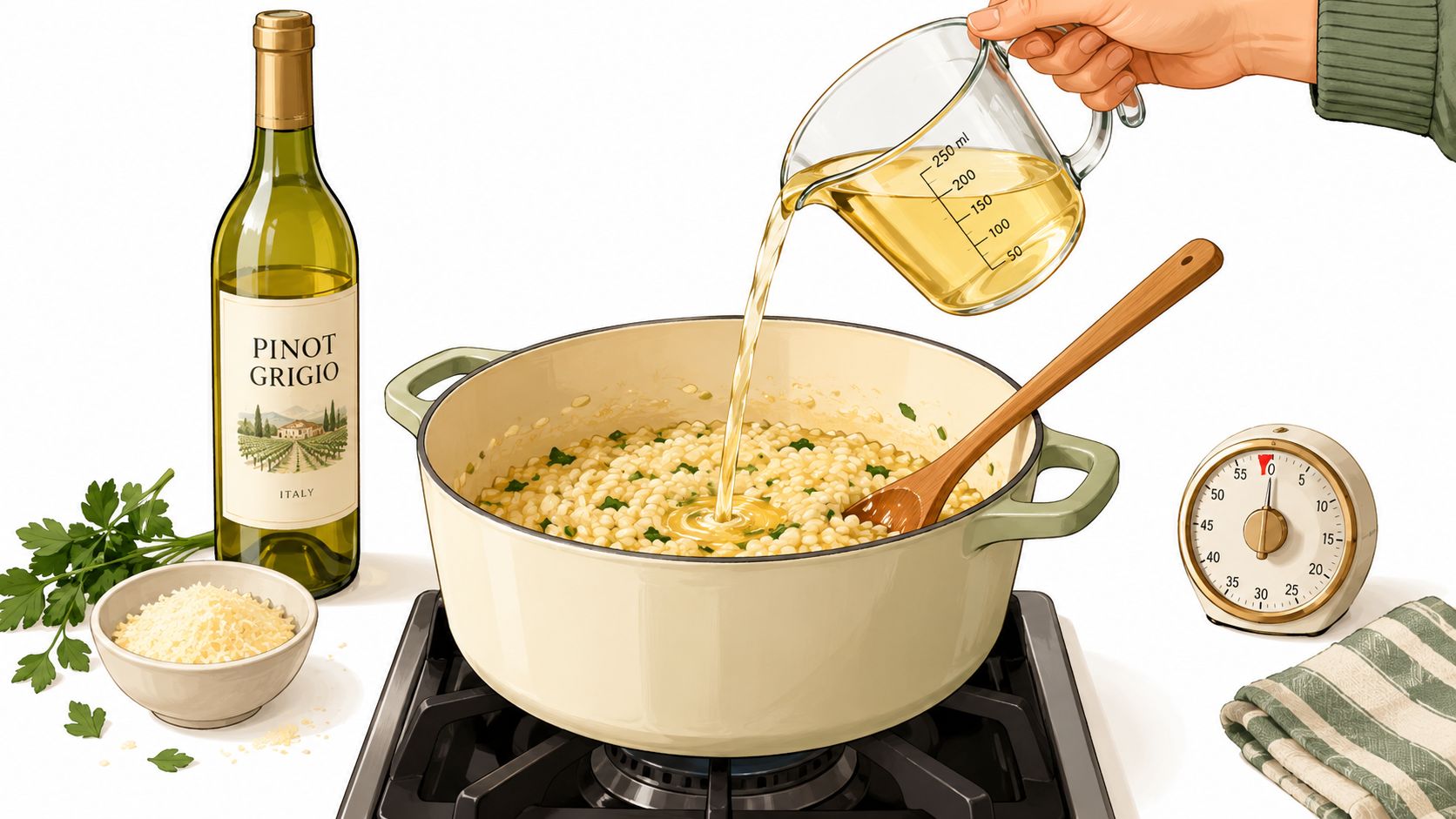
Toast the rice in butter or olive oil until the grains look slightly translucent at the edges and smell nutty. Add a modest pour of Pinot Grigio, stir immediately, and let the liquid bubble while it loosens the toasted coating from the pan.
Keep stirring as the wine reduces. You're ready for stock when the pan is almost dry, the strong raw-wine smell has faded, and the rice looks glossy rather than wet. Don't wait until the rice catches on the base, but don't add stock while a generous pool of wine remains either.
The reduction concentrates both good and bad flavours. A clean wine becomes integrated acidity. An overly sweet, oaky or intensely aromatic wine becomes more obvious, which is why style matters more than adding more liquid.
This short demonstration is useful for observing the sequence of toasting, deglazing and gradual stock addition:
Adjusting for alcohol and alternatives
Cooking reduces alcohol, but it doesn't justify promising that all alcohol disappears. If you need strict avoidance because of pregnancy, medication, faith or personal preference, leave the wine out rather than relying on an assumption about complete evaporation.
Verjuice is a practical substitute, but it usually has more concentrated acidity than table wine. Add less at first, taste the base, and balance with stock. You can also deglaze with a small amount of stock and finish with a measured touch of lemon juice, although lemon gives a more direct citrus flavour than Pinot Grigio.
A responsible approach recognises that recipe quantities vary. The useful cue is visual and aromatic: reduce until the wine has coated the rice and nearly vanished, then begin adding stock gradually.
Why South Australian Pinot Grigio Fits Australian Risotto Cooking
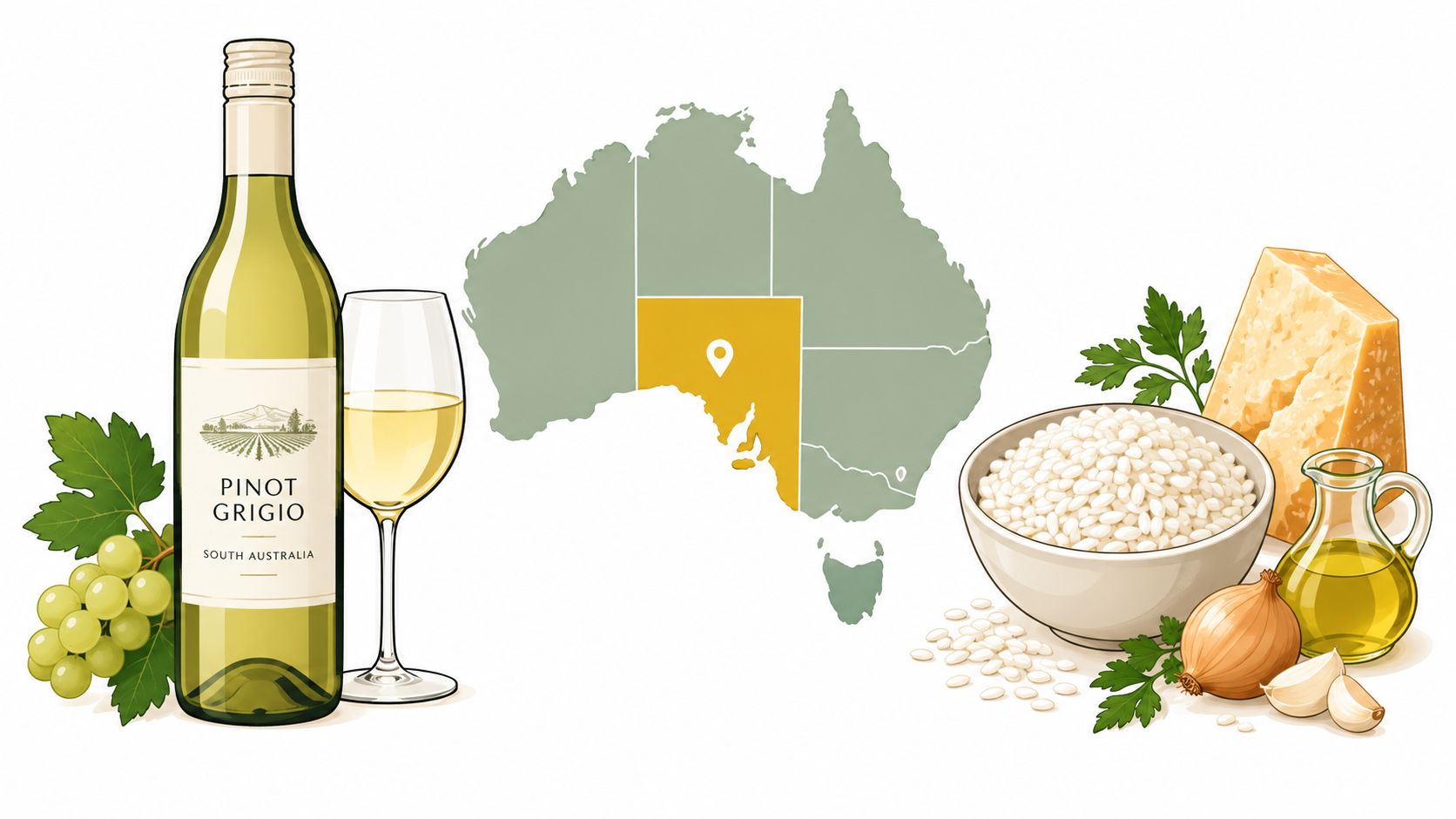
South Australia has a strong place in Australia's premium-wine identity. The state produces 50% of Australia's bottled wine and almost 80% of its premium wine. The South Australian International Wine Tourism Strategy also reports that 27% of international visitors who visit South Australian wine regions visit McLaren Vale.
That regional context helps when choosing wine for risotto. The bottle needs to work in the pan, then remain suitable beside the finished dish. A crisp South Australian Pinot Grigio can deglaze toasted rice, supply freshness and sit comfortably with seafood, vegetables, chicken or parmesan.
Regional character in the kitchen
Adelaide Hills examples are often associated with elegant, mineral-driven freshness. That profile suits lemon, herbs, asparagus and seafood, where sharpness keeps the rice tasting lively. McLaren Vale has a broader regional wine identity, yet a local white can still perform well if it is dry, fresh and not dominated by oak.
Regional origin should guide the choice, not replace it. Read the label and taste the style: a clean, dry wine with noticeable acidity is more useful in the pan than a bottle selected only for its postcode.
A local bottle becomes a good cooking wine when its regional character supports the dish, not when the label does all the work.
South Australian plantings also give cooks a practical reason to look beyond a single regional stereotype. White varieties are an established part of the state's wine production, and Australian Pinot Grigio regions offer useful context for comparing styles. Adelaide Hills freshness may suit a seafood risotto, while a rounder local white can better support mushrooms or chicken.
Choose the bottle by its acidity, dryness and texture first. Its South Australian origin then adds context to the meal rather than dictating the recipe.
Quick Pinot Grigio Risotto Pairings and Meal Ideas
Start with the main ingredient and the texture it brings to the pan. A crisp Pinot Grigio suits prawns and lemon, while pumpkin and mushrooms usually benefit from a wine with more body. Butter and stock alone do not determine the match.
Prawn and lemon risotto works best with a dry, lively Grigio. Add garlic sparingly, then finish with lemon zest and parsley. Serve the wine chilled enough to refresh beside the hot rice. Its acidity cuts through the butter and sharpens the flavour of the prawns.
For scallop and herb risotto, choose a clean, mineral-fresh bottle with restrained aroma. Scallops bring delicate sweetness, so avoid a wine with noticeable residual sweetness. Chives, parsley and tarragon complement citrus and savoury notes without covering the seafood.
Match by ingredient direction
- Asparagus: Choose a zesty, dry style. Use cheese sparingly so the vegetable's green flavour stays clear.
- Chicken and leek: A moderate-bodied Grigio suits the creamy stock base. Acidity keeps the dish focused, while some texture stops the wine disappearing beside the chicken.
- Mushroom: A fuller Pinot Gris-leaning bottle often fits better than an extremely lean Grigio. Earthy mushrooms need texture, although heavy oak can compete with them.
- Pumpkin: Select a dry wine with soft fruit rather than sweetness. That fruit suits the pumpkin, while acidity keeps the finished risotto from tasting cloying.
- Parmesan-led risotto: Look for enough freshness to cut through the cheese. Firm cow's-milk cheeses, including Grana Padano, are recognised partners for Pinot Grigio in Australian wine guidance (pairing guidance for Pinot Gris and Pinot Grigio).
Serve the wine chilled but not ice-cold, around 8–10°C, so citrus, mineral and savoury notes remain noticeable beside the hot risotto. If you are comparing bottles for a dinner or purchase, resources that compare regional wine price trends can add market context. The practical checks still come first: dryness, acidity and fit with the dish.
Use this quick rule: crisp Grigio for seafood, lemon, herbs and green vegetables; a slightly fuller Pinot Gris style for mushrooms and pumpkin. Add enough wine to coat and deglaze the rice, reduce it almost dry, then continue with stock.
McLaren Vale Cellars offers South Australian Pinot Grigio alongside other regional wines, including sample packs, mixed cases and wine education for shoppers comparing styles. Visit McLaren Vale Cellars to choose a bottle for both the risotto pot and the dinner table.

Comments (0)
There are no comments for this article. Be the first one to leave a message!