
You're standing in a bottle shop, or scrolling an online store, staring at labels that all sound worthy. Organic. Biodynamic. Natural. Sustainable. Preservative-free. You want something delicious, not a homework assignment. But the more labels you read, the less clear it gets.
That confusion is normal. South Australia produces some of the country's most exciting wines, and many of the most interesting bottles now come with farming and winemaking terms that aren't always explained well. If you love McLaren Vale Shiraz, fresh Grenache, or a bright Chardonnay with plenty of character, you don't need to memorise a rulebook. You just need to know what each label means, what it changes in the glass, and how to spot the bottles worth trying.
Your Guide to South Australian Organic Wine
You spot a McLaren Vale Grenache on the shelf, then another bottle from the Barossa, then a cloudy-looking pétillant naturel with “organic” splashed across the label. All three suggest they might suit the same kind of buyer. They do not.
That is why this subject trips people up. South Australian organic wine is easier to find than it used to be, but the language around it has become crowded. “Organic” can refer to how grapes are grown. “Biodynamic” adds a stricter whole-farm philosophy. “Natural” usually points more to winemaking choices in the cellar than to a formal farming standard. If those terms blur together, buying confidently gets harder.
South Australia sits right in the middle of that shift, and McLaren Vale is one of the clearest places to see it. Producers here have not abandoned regional character in pursuit of a trend. The best bottles still taste like where they come from. You can pour an organic McLaren Vale Shiraz and still get the dark fruit and savoury depth people love. You can open an organic Grenache and find brightness, spice, and a more lifted shape than many drinkers expect.
That matters because many buyers still carry a few myths into the bottle shop. Some expect organic wine to taste rustic or unstable. Some assume it will cost far more. Others read “sustainable” or “minimal intervention” and treat those phrases as if they mean the same thing as certified organic. They do not.
A useful way to sort the shelf is to treat the label like a map key. One part tells you about farming. Another may hint at cellar technique. A third may be marketing language unless a certification mark backs it up.
If you want a broader starting point before narrowing down regions and styles, this guide to organic wines in Australia gives helpful national context. The same principle shows up in agriculture more broadly. The practical challenges of certification and land management are not unique to wine, as seen in discussions of transitioning to organic in New York.
Here is the simple filter I use with customers and cellar door visitors:
- Check what the claim is attached to. “Organic” should describe farming, not just a vague brand story.
- Look for evidence. Certification logos carry more weight than soft terms such as “clean”, “pure”, or “sustainable”.
- Choose by style first. If you love plush Shiraz, fragrant Grenache, or crisp whites, start there and let the farming method refine the shortlist.
- Do not assume funkiness. Plenty of South Australian organic wines are polished, stable, and very easy to enjoy.
Most guides stop at naming wineries. A better guide helps you read the bottle in front of you and predict what will be in the glass. That is where South Australia shines. The region offers enough range, and enough serious producers, for organic wine to be less of a niche curiosity and more of a practical, delicious buying option.
Understanding Organic Wine Certification and Standards
Organic wine sounds romantic, but in Australia it's also practical and tightly defined. The important part for buyers is that certified organic means more than a nice-looking label. It points to a farming system with rules, records, and restrictions.

According to Curtis Family Vineyards' overview of organic wines in South Australia, organic wine certification requires grapes to be grown without synthetic fertilisers, herbicides, insecticides, or fungicides, under Australian Certified Organic standards, which also exclude genetically modified organisms.
What that means in the vineyard
Think of organic soil as a living pantry for the vine. Healthy soil stores organic matter, supports microbial life, and helps the plant feed itself more naturally. Conventional chemical fertilisers can act more like fast food. They deliver quick inputs, but they don't build the same long-term soil ecosystem.
In practice, growers lean on tools such as compost, cover crops, manure, mineral amendments like rock phosphate, and non-synthetic pest management. The point isn't to “do nothing”. Organic viticulture is active farming. It just avoids the synthetic shortcuts banned under certification.
Organic doesn't mean hands-off. It often means more observation, more record-keeping, and better timing in the vineyard.
What certification does for the buyer
Certification gives you a checkpoint. It helps separate a regulated claim from a vague one.
When readers ask me what to look for on the bottle, I tell them to focus on the certification logo first. If you're trying to understand how these transitions work on the farm side, even outside Australia, this explainer on transitioning to organic in New York is helpful because it shows how much planning and compliance growers have to manage before a vineyard can market itself as organic.
A certified organic bottle tells you the producer has worked within a defined system. A bottle that only says “minimal intervention” or “naturally made” may still be excellent, but it's making a different kind of claim.
Organic is not the same as natural
Readers often misunderstand this distinction. Organic is about standards you can verify. Natural is a looser philosophy. A natural wine can be farmed organically, but it doesn't have to be certified. A certified organic wine might also be very clean, classic, and technically precise in style.
That distinction matters if you want confidence at the shelf. If your priority is proof, look for certification. If your priority is a particular style, the front label alone won't tell you enough.
Key Regions and Wineries Leading the Organic Movement
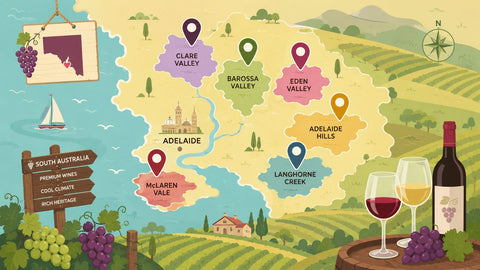
South Australia's organic story isn't limited to one valley, but some places make the shift feel especially vivid. The Barossa brings its own heritage and depth. Clare offers a different rhythm and setting. McLaren Vale stands out because the region manages to honour its classic reds while pushing into fresher, more agile styles.

Local growers in McLaren Vale have increasingly prioritised organic practices, and the region's style is shifting beyond only bold Shiraz toward softer expressions and varieties such as Grenache. That's one reason the area feels so alive right now. You can taste tradition and change in the same afternoon.
McLaren Vale as the proving ground
McLaren Vale suits this movement because producers here are often willing to experiment without losing their regional accent. A grower can farm for healthier soils, pick a touch earlier, use less obvious oak, and still make a wine that unmistakably tastes like McLaren Vale.
That's also why the region attracts drinkers who think organic wine will be austere or strange. It usually isn't. In the Vale, organic bottles can still be generous, dark-fruited, and thoroughly satisfying. The difference often shows up in detail. Better lift, more spice, cleaner fruit definition, and a sense that the wine hasn't been pushed too hard.
For readers interested in local producers taking this path, this guide to sustainable organic McLaren Vale wineries leading the way offers a solid overview.
A few names worth knowing
Rather than handing you a long directory, it's more useful to understand the styles and philosophies that keep appearing.
Gemtree is often part of the conversation because it represents the biodynamic side of the region's evolution. Wines from this school tend to appeal to drinkers who want generosity without heaviness. Think dark fruit, spice, and a more savoury frame than old-school blockbuster reds.
Angove is another important name when people discuss organic and biodynamic work in South Australia. Producers in this lane often show that responsible farming doesn't lock a winery into one flavour profile. You can still find polished bottlings made for broad appeal, but with more attention paid to the vineyard ecosystem.
Then there are smaller McLaren Vale vineyards and labels working with Grenache, Shiraz, and Chardonnay in a less formulaic way. These are often the bottles that surprise seasoned red wine drinkers. They expect power. Instead, they find fragrance, brightness, and texture.
The easiest way to spot quality in this category isn't the farming term by itself. It's when the wine still speaks clearly of McLaren Vale while feeling a little more transparent and alive.
Why these wines feel different
Organic-minded producers often farm with the goal of balance rather than maximum output. In tasting terms, that can mean:
- Shiraz with definition rather than sheer weight
- Grenache with spice and red fruit rather than jamminess
- Chardonnay with tension and clarity instead of obvious oak dominance
That shift isn't unique to Australia. If you enjoy seeing how growers elsewhere describe a place-first approach, Cobham House's viticulture philosophy is an interesting comparison from a very different climate and wine culture.
The big takeaway is simple. South Australia's organic movement isn't about making one “healthy” style of wine. It's about giving familiar varieties a more vivid voice.
Organic vs Biodynamic vs Natural Wine
If these three terms have ever seemed interchangeable, you're not alone. They overlap, but they don't mean the same thing. I explain them to customers like this: organic is the rulebook, biodynamic is the expanded extension, and natural is the improvisational artist in the cellar.

A simple side-by-side view
| Term | What it mainly refers to | What buyers should know |
|---|---|---|
| Organic | Certified vineyard and production standards | Best if you want a claim you can verify |
| Biodynamic | Organic farming plus a broader whole-farm philosophy | Often attracts growers focused on vineyard balance and rhythm |
| Natural | Minimal intervention winemaking philosophy | May be exciting and fresh, but isn't automatically certified organic |
Organic gives you the clearest compliance framework. Biodynamic usually starts from that base and adds a more integrated farming perspective. Natural wine often shifts the focus to fermentation, additives, native yeasts, and lower-intervention handling in the cellar.
Why natural wine feels more accessible to many drinkers
According to the earlier cited Wine Australia market bulletin, certified organic wine accounts for 0.3% of sales, while natural wine is growing 15% annually in Australia, with lighter styles like Grenache helping make it an easier entry point for new drinkers. That gap tells you something important about behaviour, not just labels.
Many newer drinkers encounter natural wine first because the style can feel less formal. Bottles may feature brighter fruit, lower perceived heaviness, more crunch, and less oak emphasis. In South Australia, that often lines up neatly with the region's move toward lively Grenache and fresher reds.
If you want a fuller explainer of how these categories overlap and diverge, this article on organic, biodynamic, and natural wine explained is worth reading.
What changes in the glass
A certified organic Shiraz can still taste classic, structured, and polished. A biodynamic Grenache might feel especially aromatic and finely textured. A natural red may lean juicier, cloudier, or more savoury depending on how the winemaker handled fermentation and additions.
That's why label terms should guide your expectations, not replace tasting notes.
A short visual explainer can help if you prefer hearing these differences discussed aloud.
Buy by style first, method second. If you love fragrant Grenache, start there. Then decide whether you want certified organic structure, biodynamic farming philosophy, or natural wine spontaneity.
My practical buying shortcut
Use this mental checklist when you're choosing:
- Need certainty. Choose certified organic.
- Interested in farming philosophy. Explore biodynamic producers.
- Chasing energy and experimentation. Try natural wine, but read the producer notes carefully.
Once you separate the label language from the flavour question, the shelf becomes much easier to read.
Finding and Tasting Your Perfect Organic Wine
You are standing in a bottle shop, looking at two South Australian reds. One says certified organic. The other uses words like pure, minimal, and honest. Both are close in price. The key question is not which one sounds better. It is which one is more likely to taste like something you already enjoy.
That is the point where many buyers get stuck. Organic wine can feel harder to choose because the farming language is clear to producers but less clear to drinkers. The easiest way through is to treat the bottle like a map. Start with the parts that tell you something concrete, then work toward style.
Read the bottle in the right order
First, check whether the wine is certified organic. Certification is evidence. Marketing language is mood. If the front label says “clean” or “low intervention” without naming certification, read that as a clue about the winemaker's approach, not proof about how the grapes were grown.
Next, move to variety and region. Through these, the wine starts telling you how it may taste.
- Shiraz usually suits drinkers who like dark fruit, spice, fuller body, and firmer structure.
- Grenache often appeals to people who want red fruit, perfume, softer tannins, and a lighter feel on the palate.
- Chardonnay can give you texture and generosity while still feeling bright, especially in fresher South Australian styles.
- Rosé is often the easiest entry point because the fruit is easy to read and the style is usually straightforward.
If labels have ever felt confusing, use this simple rule. Certification tells you how the vineyard was farmed. Variety and region tell you far more about what will end up in your glass.
Match the wine to your usual taste
A good organic wine should still meet the same test as any other bottle. You should want to finish the glass.
So begin with your normal drinking habits. Someone who enjoys richer reds will usually feel at home with an organic McLaren Vale Shiraz. A drinker who wants less oak and more lift may prefer Grenache. If white wine is your comfort zone, look for Chardonnay with freshness and texture rather than too much winemaking weight.
That approach works like choosing bread before toppings. If you start with a base you already like, the rest becomes much easier.

Taste with three simple checks
You do not need formal jargon to judge whether a wine is good for you. Three questions will usually tell you enough.
- Does it smell fresh and distinct? You might notice plum, cherry, spice, herbs, flowers, or earth. The key is clarity.
- Does it feel balanced in the mouth? Fruit, acidity, tannin, and body should feel like they belong together.
- Do you want another sip? This is the most useful test of all.
If you are new to the category, compare two or three wines side by side. The contrast teaches you quickly. A Shiraz next to a Grenache makes structure and fruit shape much easier to spot than tasting either one alone. The same principle is why guided tastings are so helpful when you travel. If that sounds appealing, these ideas on curated wine experiences in Northern Spain show how a little structure can make tasting more enjoyable.
Let one bottle speak for itself. Do not ask it to stand in for the whole category.
A practical shortlist for buying with confidence
Use this if you want a quick decision in a shop or on a wine list.
-
You usually drink classic reds
Start with an organic McLaren Vale Shiraz. It stays close to familiar ground. -
You want something brighter and more approachable
Choose Grenache. South Australia is producing some of its most exciting, drinkable examples in this style. -
You are buying for a mixed table
Rosé or Chardonnay is often the safest call because both can handle different palates and food styles. -
You are curious but cautious
Buy a mixed selection instead of a full case of one wine. A small comparison gives you more confidence than one blind bet.
The best organic wine for you will rarely be the loudest label or the most extreme style. It will be the bottle that fits your palate, feels honest in the glass, and makes you want to keep exploring South Australia's newer wave of organic wine.
Embrace the Future of South Australian Wine
South Australia has made organic wine far more interesting than many people expect. The category isn't just about avoiding synthetic inputs. It's about farming with intention, protecting vineyard character, and producing wines that still feel rooted in place. When it works well, you taste that clarity.
McLaren Vale captures that spirit beautifully. The region still honours its classic strengths, especially Shiraz, but it also welcomes brighter Grenache, more transparent winemaking, and a broader conversation about how vineyards should be farmed. That combination is why so many drinkers who start out curious end up becoming loyal fans.
If labels have confused you in the past, the useful distinction is now clear. Organic gives you a verifiable standard. Biodynamic builds on that with a more integrated farming philosophy. Natural usually tells you more about cellar approach and style. Once you separate those ideas, choosing a bottle becomes much simpler.
Organic wine from South Australia isn't something you need to admire from a distance. It's a category to enjoy. Start with a grape variety you already love, check the certification if that matters to you, and let the region do the rest. The best bottles don't lecture. They invite you back for another glass.
If you're ready to explore premium South Australian bottles with confidence, McLaren Vale Cellars makes that easy. You can browse regional favourites, discover curated sample packs, compare value bundles, and shop with the reassurance of a Taste Guarantee, all while learning more through practical wine guides built for Australian drinkers.
Comments (0)
There are no comments for this article. Be the first one to leave a message!