
At its heart, an organic red wine is simply one made from grapes grown without any synthetic pesticides, herbicides, or artificial fertilisers. It’s more than just a label, though; it’s a commitment to a farming philosophy that puts the health of the entire vineyard ecosystem first, giving you a purer expression of the grape in your glass.
What Exactly Is Organic Red Wine?
It’s easy to see "organic red wine" on a shelf and think of it as just another marketing term. But the reality is that it represents a profound difference in how wine is made, starting right from the soil.
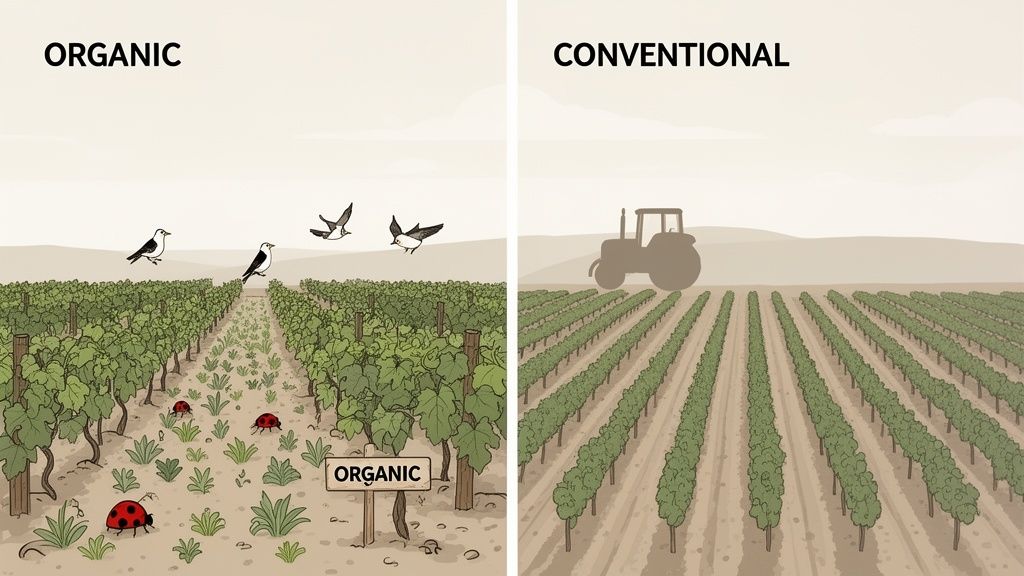
Picture the difference between a small, lovingly tended home garden and a massive industrial farm. One works in harmony with nature, encouraging biodiversity and life. The other often relies on chemical intervention to maximise yield above all else. That’s the core of organic winemaking.
It’s all about creating a healthy, self-sustaining vineyard where the vines can thrive naturally. Instead of spraying synthetic chemicals to kill weeds or pests, organic winemakers use natural methods like planting cover crops to enrich the soil and introducing beneficial insects to keep pests in check. It's a hands-on approach that takes more work, but the payoff is grapes that truly reflect their environment, or terroir.
Beyond the Vineyard
That commitment doesn’t end when the grapes are picked. The organic standards follow the fruit right into the winery, guiding every step of the winemaking process. This generally means:
- Minimal Intervention: The goal is to let the incredible quality of the organic grapes do the talking, with as little tinkering as possible.
- Prohibited Additives: Things like genetically modified yeasts and certain artificial clarifying agents are strictly off-limits.
- Sulphite Limits: While nearly all wine has some naturally occurring sulphites, organic regulations put a firm cap on how much can be added as a preservative.
The result is a wine that’s not only better for the planet but also offers a cleaner, more vibrant taste that feels alive and authentic.
The essence of organic wine is transparency. It’s a promise that what’s in your glass is the product of healthy soil, clean farming, and minimal interference, allowing the grape's natural character to take centre stage.
To really grasp this promise, it helps to understand the importance of organic certifications. These official seals are your guarantee that a winery is sticking to strict standards, from the vineyard to the bottle.
Here in Australia, organisations like Australian Certified Organic (ACO) provide that assurance, giving you real confidence in the bottle you choose. To get a better handle on this, you can learn more about organic wines in Australia in our detailed guide. It's this foundation that helps explain why world-class regions like McLaren Vale have become such leaders in producing brilliant organic red wine.
How Organic Red Wine Is Made
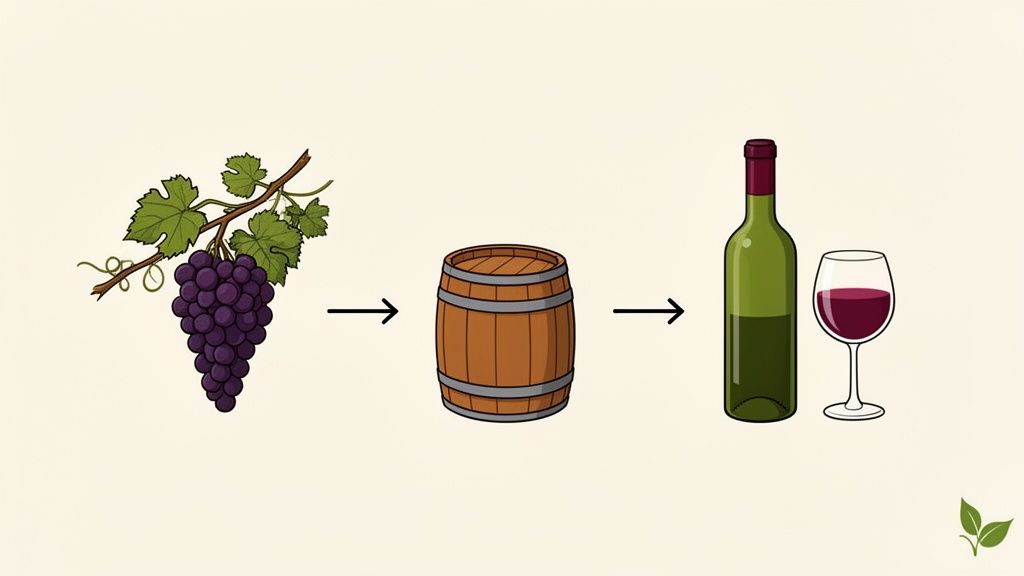
Making a brilliant bottle of organic red wine is a journey that starts long before any grapes get near a winery. It’s a process built on a deep respect for the land, focusing on creating a healthy, balanced vineyard ecosystem from the ground up. Think of it less like manufacturing and more like holistic farming, where every choice is made to boost the vineyard's natural life force instead of controlling it with chemicals.
This journey begins with the soil. In organic viticulture, the goal is to build living, breathing earth. Instead of pumping in artificial fertilisers, organic grape growers turn to nature’s own toolkit.
They plant cover crops like clover and legumes between the vine rows. These plants are essentially a "green manure," fixing nitrogen in the soil and improving its structure, which helps the vines grab all the nutrients they need. This also stops soil erosion and encourages a thriving underground world of microbes and beneficial life.
A Gentle Hand In The Winery
Once those perfectly ripe organic grapes arrive at the winery, the "less is more" philosophy continues. The whole point is to let the pure quality of the fruit take centre stage, preserving its natural character without any unnecessary meddling. This is where the real artistry of the organic winemaker comes into play.
Fermentation is the magical step where grape juice becomes wine, and here, many organic winemakers opt for native or wild yeasts. These are the yeasts that naturally hang out on the grape skins and in the vineyard air. Using them often leads to wines with more complex, unique flavours—a true expression of their specific home, or terroir.
This is a world away from conventional winemaking, which typically relies on predictable, lab-grown yeasts. And, of course, genetically modified organisms (GMOs) are strictly banned in certified organic wine production.
The core idea behind organic winemaking is guidance, not control. The winemaker is a careful guardian, allowing pristine grapes to become wine with as little interference as possible. The result is a wine that’s both pure and full of personality.
Key Differences At A Glance
The differences between organic and conventional methods are pretty stark at every stage. Getting your head around them helps clarify what makes an organic red wine special, from its environmental footprint to the final taste in your glass.
If you're curious about how this connects to other sustainable approaches, our guide dives deeper into the differences between organic, biodynamic, and natural wine.
To make things even clearer, let's put the two methods side-by-side.
Organic vs Conventional Winemaking Differences
This table breaks down the main distinctions you’ll find from the vineyard to the bottle. It highlights the fundamental shift in philosophy: working with nature versus trying to control it.
| Practice | Organic Red Wine | Conventional Red Wine |
|---|---|---|
| Pest Control | Relies on beneficial insects, predator birds, and natural deterrents. | Often uses synthetic chemical pesticides and insecticides. |
| Weed Management | Uses manual tilling, cover crops, and animal grazing. | Commonly employs synthetic chemical herbicides for control. |
| Fertilisation | Enriches soil with compost and cover crops for natural vitality. | Applies synthetic, chemical-based fertilisers for rapid growth. |
| Yeast Usage | Prefers native yeasts from the vineyard or certified organic yeasts. | Frequently uses commercially cultured, often GMO, yeasts. |
| Additives | Strictly limits additives; many common agents are prohibited. | Allows a wide range of additives like fining agents and colours. |
| Sulphur Dioxide | Added sulphites are strictly limited to lower levels. | Higher levels of added sulphites are permitted for preservation. |
As you can see, the entire process of making organic red wine is about honouring the grape. By working in harmony with nature in the vineyard and taking a hands-off approach in the winery, producers create a wine that is a pure, unadulterated reflection of where it came from. This commitment ensures every glass tells a story of healthy soil, meticulous care, and authentic character.
The True Taste of Organic Red Wine
Does organic red wine really taste different? It’s a fair question, and the answer isn’t a simple ‘yes’ or ‘no’. While ‘organic’ isn’t a flavour you can pinpoint, the farming practices behind the bottle absolutely create wines that are often more vibrant, expressive, and true to where they come from.
It’s time to bust the old myth that organic wines are somehow rustic or unpredictable. Modern organic winemaking is the best of both worlds, blending generations of agricultural wisdom with precise, clean cellar techniques. The result? Reds that are not only beautifully complex but also have the structure to age gracefully. This purity all starts in the vineyard, where healthy, living soil lets the grapes develop a full spectrum of flavours that just can’t be faked with synthetic inputs.

What to Expect in Your Glass
So, what are you actually going to taste when you pour a glass of organic red? Think of it like the difference between a bland hothouse tomato and one picked ripe from a rich garden plot. One is predictable, the other just bursts with concentrated flavour and personality. Organic wines often have that same elevated intensity.
You can often expect:
- Brighter Fruit Notes: The flavours feel more focused and alive. Instead of muted fruit, you might get vivid notes of fresh raspberry, black cherry, or ripe plum that practically jump out of the glass.
- Defined Tannins: Tannins give red wine its structure and texture. In a well-made organic red, these tannins are often finer and more integrated, giving a smoother, more elegant mouthfeel without any harshness.
- Nuanced Earthiness: Because the grapes are a direct reflection of their healthy environment, organic reds often reveal subtle, intriguing notes of damp earth, forest floor, or wild herbs.
These characteristics come together to create a wine that speaks clearly of its terroir—that unique combination of soil, climate, and place that gives a wine its identity. It’s a taste of authenticity you just can’t manufacture.
How McLaren Vale Varietals Express Themselves Organically
The McLaren Vale region, with its perfect climate and deep commitment to sustainable viticulture, is the ideal place to explore the genuine taste of organic red wine. Our local winemakers have mastered the art of letting the region’s hero grapes shine through minimal-intervention practices.
Take McLaren Vale Shiraz, for instance. When it's grown organically, its signature bold, dark fruit character becomes even more pronounced. You can expect layers of rich blackberry and dark chocolate, but with an added lift of spice and a savoury complexity that is incredibly compelling. The wine feels both powerful and pure.
An organic Cabernet Sauvignon from the area often shows a more vibrant profile. Classic notes of blackcurrant and cedar are complemented by fresher herbal tones like mint or bay leaf, and the tannins provide a firm yet graceful backbone. The finish is often long and clean, showcasing the pristine quality of the fruit.
When you taste an organic red from a region like McLaren Vale, you are tasting more than just grapes. You are experiencing the health of the soil, the clarity of the air, and the dedicated craftsmanship of a winemaker committed to purity.
Ultimately, the best organic red wine offers a clearer, more articulate expression of the grape and its home. It’s a taste that’s less about what’s been added in the winery and more about what’s been carefully nurtured in the vineyard from the very beginning.
Why More People Are Choosing Organic Wine
The buzz around organic red wine is so much more than just a passing phase. It’s a genuine shift in how we think about what we pour into our glasses, driven by a desire for products that are better for us and the planet. This isn't some niche trend; it reflects a broader move towards health, sustainability, and real, honest winemaking.
At its heart, it all comes down to transparency. We're all asking more questions about what's in our food and drink, actively seeking out things with fewer chemicals. Seeing an organic certification on a bottle of wine is basically a guarantee—it tells you the grapes were grown without synthetic pesticides, herbicides, or fertilisers. It’s peace of mind in every sip.
A Commitment to Health and Planet
One of the biggest drivers here is a collective lean towards more mindful living. We're finally connecting the dots between our own health and the health of the environment, realising they’re two sides of the same coin. Choosing an organic red wine fits this mindset perfectly.
Here's what's motivating people:
- Fewer Chemical Residues: By skipping synthetic chemicals in the vineyard, organic wines mean you're less likely to be exposed to unwanted residues. Simple as that.
- Supporting Sustainable Farming: Organic grape growing is a win for the environment. It boosts biodiversity, improves soil health, and protects our precious water sources.
- Authenticity and Craftsmanship: There’s a growing love for wines that truly taste like where they come from, made by vintners who care more about quality and stewardship than mass production.
This isn't just a feeling; the numbers back it up. In 2023, Australia's organic wine market hit USD 158.0 million in revenue. And leading the charge? Organic red wine, grabbing an incredible 61.27% of that. This huge preference for reds makes total sense, especially in a country that worships iconic drops from regions like South Australia’s McLaren Vale.
Even more telling, organic red wine is set to be the engine behind the market’s growth, which is projected to rocket to USD 301.5 million by 2030. You can explore more data on this significant market growth and its future projections.
Investing in the Future of Wine
Ultimately, picking up a bottle of organic red is a conscious choice that goes way beyond just what's in your glass. It’s an investment in a better way of doing things—a system that values the long-term health of our vineyards and the unique character of places like McLaren Vale.
When you select an organic red wine, you're not just buying a beverage; you're casting a vote for sustainable agriculture and supporting winemakers who are dedicated to preserving the land for future generations.
This choice helps ensure that the distinct terroir—the very soul of the vineyard—is protected so it can keep producing wines with incredible character and purity. It’s a delicious way to enjoy a great glass of wine today while helping build a healthier, more sustainable world for tomorrow.
How to Choose Your Perfect Bottle
Diving into the world of organic red wine can feel a bit like exploring a new city—exciting, but you're not quite sure where to start. The good news? Finding a bottle you’ll love is much simpler than you think. It's all about starting with what you already enjoy and letting your palate be the guide.
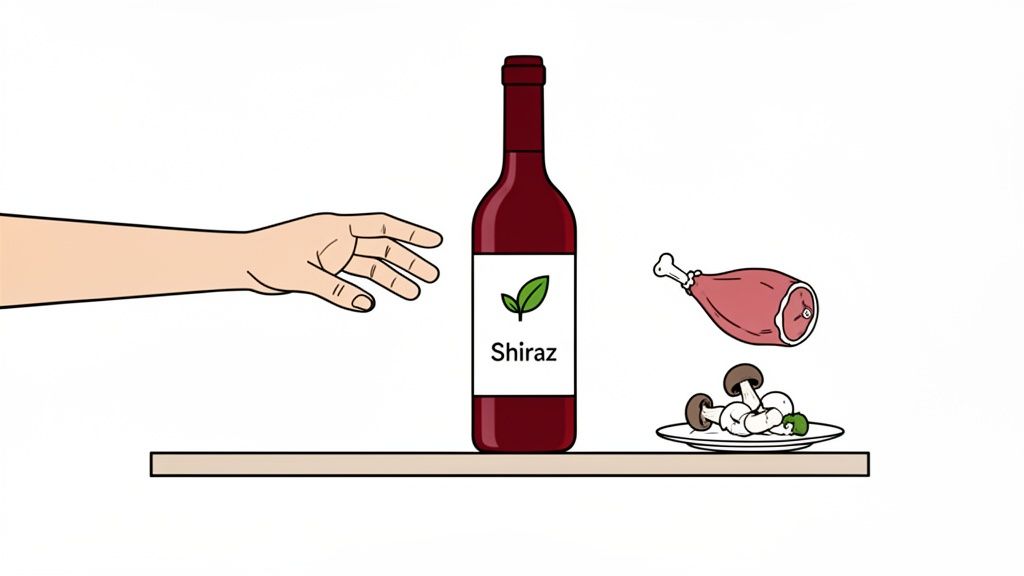
A great way to begin is by picking a varietal you’re familiar with. If you're a fan of big, flavourful reds, why not start with an organic Shiraz? This lets you compare it directly to what you know, making it easier to notice the vibrant, pure fruit flavours and smoother textures that organic winemaking can bring to the table.
This simple approach gives you a solid reference point, turning your tasting experience into a fun discovery rather than a random guess.
Decoding the Label
Think of the wine label as your treasure map, filled with clues that lead to the perfect bottle. Beyond just the grape and the region, there are a few key things to look out for when you're choosing an organic red. Knowing what they mean will give you real confidence in your selection.
- Certification Logos: Keep an eye out for official seals, like the one from Australian Certified Organic (ACO). This logo is your guarantee that the wine has met strict standards from the vineyard right through to the winery.
- Producer's Story: Many organic winemakers are incredibly passionate about what they do. A quick blurb on the back label about their sustainable farming practices is a brilliant sign they’re committed to quality.
- Sulphite Statements: You'll often see phrases like "minimal sulphites added." This points to the hands-off, minimal intervention approach that's at the heart of organic winemaking. If you're curious about wines that take this even further, our guide explains the world of preservative-free wine.
These little details really do paint a bigger picture, telling you a story about the care and commitment that went into crafting what's inside the bottle.
Choosing an organic red is about more than just taste; it's about connecting with a wine's origin. The label is your first introduction to the story of the vineyard, the vintage, and the winemaker's passion for sustainable viticulture.
Perfect Pairings for Organic Reds
The vibrant, often earthy character of organic red wine makes it a fantastic partner for food. Because these wines aren’t masked by additives, their pure fruit and terroir-driven notes really get a chance to shine alongside the right dishes. The goal is always to complement, not conquer.
A classic McLaren Vale organic Shiraz, with its bold blackberry and spice, is an absolute dream with slow-roasted lamb and rosemary. The wine’s structure cuts through the richness of the meat, while its earthy undertones echo the herbs perfectly. For a slightly lighter red like an organic Grenache, think about dishes with a bit of savoury depth.
A wild mushroom risotto is a brilliant match. The earthy flavours of the mushrooms create a beautiful harmony with the wine’s nuanced profile, while the creamy risotto is balanced by the wine's fresh acidity. It’s a pairing that lets both the food and the wine sing.
Your Guide to Getting Started
Armed with this knowledge, you're ready to confidently explore. The organic red wine movement in Australia isn't just growing; it's reshaping the entire industry. The market is projected to potentially triple, swelling from USD 158 million in 2023 to over USD 450 million by 2030. This incredible growth is driven by drinkers like you who value authenticity and quality, even paying 20-30% more for a bottle they believe in.
Here’s a simple plan for your first foray:
- Start with a Sampler: If you're not sure where to begin, a curated sample pack is the perfect introduction. It lets you try different varietals from top McLaren Vale producers without having to commit to a full case.
- Look for Bundle Deals: Once you find a style you love, keep an eye out for dozen or half-case deals. It’s an economical way to stock up on your newfound favourite.
- Read Tasting Notes: Pay attention to the flavour descriptions. If they mention notes you enjoy in other foods—like cherry, chocolate, or spice—chances are you’ll love the wine.
Choosing your perfect bottle of organic red wine is a rewarding journey. By starting with the familiar, understanding the label, and experimenting with a few food pairings, you'll soon discover the incredible depth and character these wines have to offer.
Your Questions About Organic Red Wine Answered
Diving into the world of organic red wine can bring up a few questions. As this more thoughtful approach to winemaking takes off, it’s only natural to be curious about what really sets it apart.
We’ve pulled together the most common queries we hear, clearing up some myths and offering straightforward insights to help you pour your next glass with complete confidence.
Are Organic Red Wines Healthier?
This is usually the first question on everyone's lips, and it’s a good one. While any wine should be enjoyed in moderation, organic reds do offer a few distinct advantages if you’re health-conscious.
The biggest plus is what's not in the bottle. Grapes grown without synthetic pesticides, herbicides, or fertilisers mean you’re avoiding any potential residues from those chemicals. For a lot of people, that peace of mind is reason enough to go organic.
Certified organic wines also have much stricter limits on added sulphites (sulfur dioxide), a common preservative that can trigger sensitivities in some people. While sulphites are a natural part of fermentation, an organic red will have far lower levels, making it a great option if you're sensitive. Ultimately, nurturing healthy, living soil often leads to grapes richer in the good stuff, creating a more wholesome wine from the ground up.
Do Organic Red Wines Age Well?
Absolutely. This is one of the most stubborn myths out there—that organic wines don't have the staying power of conventional ones. It’s simply not true. A wine's ability to age gracefully comes down to its structure—acidity, tannin, and fruit concentration—not its certification.
A well-crafted organic red wine from a premium region has all the building blocks it needs for long-term cellaring. The quality of the fruit and the skill of the winemaker are what truly matter.
Top organic producers, especially in renowned regions like McLaren Vale, are meticulous. They craft robust, structured wines that are designed to evolve, developing complex new notes over many years. The minimal intervention approach actually helps preserve the wine's natural structure, making it perfectly suited for the cellar. Think of it this way: healthy, vibrant grapes create strong, stable wines built for the long haul.
Is Organic Wine the Same as Natural or Biodynamic?
It's easy to see why these terms get grouped together, but they all mean slightly different things. The best way to think of it is a spectrum of sustainable and minimal-intervention winemaking.
- Organic: This is your foundation. It’s a legally certified standard focused on farming grapes without synthetic chemicals and limiting additives like sulphites in the winery.
- Biodynamic: This takes all the organic principles and goes a step further. It treats the vineyard as a single, self-sustaining ecosystem, using homeopathic preparations and cycles aligned with a cosmic calendar to boost soil and vine health.
- Natural: This is more of a philosophy than a strict certification. The idea is "nothing added, nothing taken away." It usually starts with organic or biodynamic farming, followed by extreme minimal intervention in the winery—often no added yeasts, no fining or filtration, and little to no added sulphites.
So, while most biodynamic and natural wines are also organic, not every organic red wine falls into the other two camps. Organic certification gives you a clear, reliable baseline you can trust.
Why Do Organic Wines Sometimes Cost More?
You might notice a slightly higher price tag on an organic red, and that’s a direct reflection of the hands-on, labour-intensive work that goes into producing it. This isn't about marketing; it's about the real costs of farming with nature.
Instead of just spraying for weeds and pests, organic grape growers have to get creative. This means things like manual weeding, tilling the soil between vine rows, or planting special cover crops to attract beneficial insects. All of that takes more time, more effort, and a bigger team on the ground.
Organic vineyards also tend to have lower yields. By focusing on quality over quantity and not pushing the vines with synthetic fertilisers, the winemaker gets fewer grapes, but the ones they do harvest are packed with more concentrated flavour. The price of an organic red wine is simply an honest reflection of a deep investment in the land, the health of the vineyard, and the exceptional quality in your glass.
Ready to explore the pure, vibrant flavours of McLaren Vale? At McLaren Vale Cellars, we’ve curated a stunning selection of the region's best organic red wines. Discover your next favourite and taste the difference that sustainable craftsmanship makes. Shop Our Organic Wine Collection
Comments (0)
There are no comments for this article. Be the first one to leave a message!