
You're standing in the bottle shop staring at labels that all sound worthy. Organic. Biodynamic. Minimal intervention. Preservative free. Natural. One bottle looks serious and polished, another looks like it was designed by an art student after two espressos, and both seem to promise authenticity.
That's usually the moment people ask the same question. What am I buying?
I hear it all the time from drinkers who are curious about natural wine in Australia but don't want the sales pitch. They want the plain-English version. They want to know why some bottles cost more, why some look cloudy, why one person calls a wine “alive” and another calls it “funky”, and whether the word natural means anything at all on an Australian label.
The short answer is yes and no. Yes, natural wine can be one of the most exciting, character-filled styles you'll drink. No, the label alone doesn't always tell you enough.
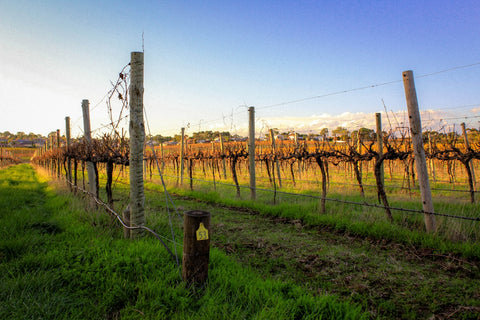
That matters in Australia, because this is a category full of energy but not always full of clarity. It also matters in McLaren Vale, where thoughtful growers and makers have the climate and vineyard conditions to produce excellent low-intervention wines, but where shoppers still need to know how to separate substance from branding.
Welcome to the Wild Side of Wine
A lot of people arrive at natural wine the same way. Not through a textbook, but through a slightly confusing first encounter.
Maybe it's a dinner with friends where someone pours a hazy pink fizz that tastes nothing like the sparkling wine you expected. Maybe it's a wine bar list full of words that sound half agricultural, half philosophical. Or maybe it's a shelf talker in a shop promising purity, energy and zero nonsense, while somehow saying very little about how the wine was made.
That confusion is fair. Wine already comes with enough language to make normal people feel like they've missed a briefing. Add a word like natural, which sounds simple but isn't legally fixed in Australia, and it's easy to feel as if everyone else got the memo except you.
The good news is that natural wine doesn't need to be mysterious. At its heart, it's wine made with a strong preference for less intervention in the vineyard and cellar. The appeal is easy to understand. Many drinkers are chasing flavour that feels less standardised, less polished for mass appeal, and more connected to a place, a season and a grower's choices.
Natural wine often feels closer to fresh bread from a local baker than sliced supermarket loaf. It can be less uniform, but it has more personality.
In Australia, that personality has helped natural wine carve out cultural visibility far bigger than its production size. One report described it as “just a few drops” of the roughly 600 million litres Australians consume annually, which tells you how small the category still is in volume terms, even while it attracts outsized attention in wine circles (ABC on natural wine in Australia).
Why drinkers get hooked
Some people love natural wine for the farming philosophy. Others love the flavour. Others enjoy the sense of discovery.
A bottle might be bright, savoury, herbal, textural, gently cloudy, or unexpectedly energetic. It might smell a little wild when first opened, then settle into something beautiful in the glass. That unpredictability is part of the attraction, provided you know what you're looking for.
Why drinkers get sceptical
The same looseness that makes the category exciting can also make it slippery.
- The term sounds reassuring. Buyers can assume “natural” means certified, verified or tightly regulated.
- Labels often lean on mood. They may tell a story without giving practical detail.
- The style can vary a lot. One bottle is pristine and vibrant. Another might feel rough-edged.
That's why the smartest way into natural wine Australia isn't blind trust. It's informed curiosity.
What Exactly Is Australian Natural Wine
You pick up a bottle that says natural wine. The front label feels earthy and honest. Then the questions start. Does that mean organic? Is it preservative-free? Is it cloudy on purpose? And in Australia, who checks any of that?
That confusion is normal, because natural wine in Australia is more of a shared winemaking philosophy than a protected legal category. At its simplest, the idea is this. Start with carefully farmed grapes, then interfere as little as possible in the winery so the fruit, site and season can speak more clearly.
Bread offers a useful comparison. A factory loaf is designed to taste the same every week. A handmade sourdough reflects the flour, the weather, the starter and the baker. Natural wine works in a similar way. The goal is not polish at all costs. The goal is character, even if that character sometimes comes with rough edges.
The core idea in plain language
In practical terms, Australian natural wine usually points to grapes grown with organic or biodynamic principles, then fermented and matured with minimal intervention. That often means native yeasts rather than selected commercial strains, fewer additives, and little or no fining or filtration. Some producers also keep sulphur very low, though that part varies.
The tricky part is the label. Natural wine has no formal legal definition in Australia, so there is no single national rulebook that every producer must follow to use the term. That is why buying well matters. A thoughtful bottle and a trendy bottle can both wear the same language.
For drinkers, that means one thing above all. Treat natural as a starting point for questions, not a guarantee of quality or method.
Wine philosophies at a glance
| Practice | Conventional Wine | Organic Wine | Biodynamic Wine | Natural Wine |
|---|---|---|---|---|
| Farming | May use synthetic inputs | Avoids synthetic inputs under organic rules | Organic farming plus biodynamic methods | Usually begins with organic or biodynamic ideals |
| Fermentation | Cultured yeasts commonly used | Can vary | Can vary | Often uses wild or native yeasts |
| Additives | Broad range permitted | More restricted than conventional | Often restrained, depending on producer and certification | Usually kept to a minimum |
| Fining and filtration | Common for clarity and stability | Can be used | Can be used | Often reduced or avoided |
| Style goal | Consistency and control | Cleaner farming approach | Farm-as-ecosystem approach | Site expression with minimal handling |
| Legal clarity in Australia | Clear category | Clearer through certification | Clearer through certification | No formal legal definition |
That table also explains why people mix these terms up. Organic, biodynamic and natural overlap, but they are not interchangeable. If you want the distinctions set out more fully, our guide to organic, biodynamic and natural wine explained makes the differences much easier to see.
Why this matters in Australia
Because the term is loose, Australian natural wine can be exciting and slippery at the same time. One producer may farm meticulously and use the word with real discipline. Another may use it more as a style signal than a precise description. Cutting through that marketing haze means looking past the mood of the label and asking how the wine was grown and made.
This is one reason McLaren Vale stands out. The region has deep strength in sustainable farming, small-batch production and growers who are comfortable talking plainly about what is, and is not, in the bottle. For anyone trying to buy authentic Australian natural wine with confidence, that honesty matters just as much as the romance.
Behind the Unfiltered Label Production and Pitfalls
The phrase unfiltered gets a lot of airtime, but it's only one small part of the natural wine story. To understand the bottle, it helps to think in two stages. First, what happens in the vineyard. Second, what the winemaker chooses not to do in the cellar.

What low-intervention production usually looks like
In the vineyard, the aim is healthier fruit rather than corrective winemaking later. If the grapes come in balanced and clean, the producer doesn't need to rely as heavily on additions, adjustments or polishing techniques.
In the winery, common natural wine practices often include:
- Wild fermentation using native yeasts already present on the grapes or in the winery environment.
- Minimal additions rather than a long list of corrective inputs.
- Little or no fining which means fewer agents used to pull particles out of the wine.
- Little or no filtration which is why some bottles look cloudy.
- Careful sulphur use or, in some cases, none at bottling.
Cloudiness isn't automatically a flaw. It can mean the wine retains fine solids because the producer chose not to strip them out for cosmetic brightness. In some styles, that can add texture and a sense of movement in the glass.
If you're sorting out the difference between natural and preservative-free language, this article on preservative-free wine helps untangle one of the most common points of confusion.
Where the label stops being useful
Here's the problem. In Australia, natural isn't a formal regulatory standard. That creates room for honest, transparent producers. It also creates room for fuzzy marketing.
A Macquarie University article highlighted the gap clearly, noting the absence of clear guidance on whether natural wine labels in Australia reflect verified certification or merely branding, because there is no formal regulatory standard defining “natural” (Macquarie Lighthouse on organic wine and consumer trust).
That's why a natural-looking label, handwritten font and earthy language shouldn't be your only buying criteria.
Practical rule: trust details, not vibes.
How to spot substance over hype
When a bottle says natural, ask better questions.
- Look for farming specifics. Does the producer mention organic or biodynamic farming in a concrete way?
- Check cellar transparency. Do they explain wild ferment, no fining, no filtration, or sulphur choices?
- Read the back label carefully. Vague lifestyle language is less useful than actual production notes.
- Ask the retailer or venue. A good seller should be able to tell you how the wine was grown and made.
Pitfalls worth knowing
Natural wine can be excellent. It can also be unstable if made carelessly.
That doesn't mean the category is faulty. It means low-intervention winemaking leaves less room to hide behind cosmetic fixes. A skilled producer has to be cleaner, more attentive and more precise, not less.
So if a wine smells a little wild on opening, give it air. If it tastes tired, mousy or flat, that's not proof natural wine is a sham. It may just be a poor example. The category rewards discernment.
Key Regions and the McLaren Vale Advantage
Australia's natural wine scene isn't confined to one postcode. Adelaide Hills has played an influential role in shaping the conversation. Margaret River has producers committed to low-intervention farming and expressive styles. Tasmania and other cooler regions also attract drinkers who like aromatic tension and precision.
But regarding conditions that support serious low-intervention winegrowing, McLaren Vale stands out.

Why McLaren Vale suits the style
McLaren Vale's appeal isn't just fashion. It's practical.
The region's Mediterranean climate, coastal influence and varied soils create conditions that can make lower-input viticulture more achievable than in wetter, higher-pressure regions. If disease pressure is lower, growers don't need to fight the vineyard as aggressively. That matters when your whole philosophy depends on restraint.
Wine Australia's regional material states that McLaren Vale holds the highest number of certified organic and biodynamic vineyards in the country, with spray and agro-chemical use significantly lower than other Australian regions. That's a strong foundation for wines made with minimal intervention (Wine Australia on McLaren Vale viticulture).
What that means in the glass
Healthy fruit changes everything.
When grapes come in balanced, flavour-packed and physiologically sound, the winemaker can step back. You're more likely to get wines with brightness, savoury detail and honest texture, rather than wines that feel pushed into shape later.
In McLaren Vale, that can show up in several ways:
- Grenache with fragrance, spice and lift rather than heaviness.
- Shiraz that leans vibrant and detailed, not just dense.
- Skin-contact whites with texture but still enough freshness to stay drinkable.
- Rosé and pét-nat styles that feel sunny, energetic and food-friendly.
A region that rewards exploration
McLaren Vale also works well for drinkers because it offers range. You can taste classic regional reds alongside wines that break from convention. That makes it easier to understand natural wine not as a separate universe, but as one expression within a broader regional identity.
If you're planning to compare styles across regions with friends, organised group transport for wine tours can be useful inspiration for how to structure a day safely and sensibly, even if your own route is closer to South Australia than the Hunter.
McLaren Vale isn't important because it shouts louder about natural wine. It's important because the vineyard conditions give careful producers a better chance of making it well.
Pioneering Producers and Must-Try Styles
Natural wine in Australia still sits firmly in boutique territory. One directory of the scene records 56 dedicated natural winemakers operating nationally, which shows how small the movement remains inside the broader wine industry (Raisin's listing of natural winemakers in Australia).
That small scale is part of the fun. The category often moves through personal projects, experimental bottlings and growers willing to put flavour ahead of polish.

Styles worth trying first
If you're new to natural wine Australia, style matters more than slogans. Start with a format that matches what you already enjoy.
-
Pét-nat
Short for pétillant naturel. This is sparkling wine made in a less conventional way, often finishing fermentation in bottle. Expect softness, energy, and sometimes a light haze. It can feel playful rather than formal. If you want a primer, this guide to pét-nat wines breaks down why the style has captured so much attention. -
Orange wine
Not made from oranges. It's white grapes fermented on skins, which gives colour, tannin and texture. Think tea grip, citrus peel, herbs and savoury complexity. -
Unfined light reds
Often juicy, bright and best with a slight chill. These can win over people who think red wine has to be heavy to be serious. -
Textural whites
Less about fruit sweetness, more about mouthfeel, savouriness and shape. Great with food.
How pioneering producers changed the conversation
The most influential natural producers in Australia didn't just release different labels. They changed how drinkers think about wine style, farming and fault tolerance.
They helped normalise cloudy sparkling wines, skin-contact whites, chillable reds and bottles that ask for curiosity instead of the usual checklist of brilliance, oak and technical perfection. Some are uncompromising. Others make cleaner, more precise wines that still hold to low-intervention principles.
What seasoned drinkers often miss
Experienced wine drinkers sometimes expect natural wine to behave like conventional premium wine with a scruffier label. That's the wrong frame.
Natural wine often values vitality over uniformity. The best examples aren't “unfinished”. They're finished according to a different idea of balance.
A good natural wine shouldn't taste like a winemaking shortcut. It should taste like a deliberate choice.
If you're trying the category for the first time, don't start with the most extreme bottle on the shelf. Start with a well-made pét-nat, a clean skin-contact white, or a bright unfined Grenache. That gives you a fair read on the style without diving straight into the deep end.
How to Buy Store and Savour Natural Wine
Buying natural wine gets easier once you stop shopping by buzzword alone. Look for clues that a producer or retailer can explain what's in the bottle and why it tastes the way it does.

How to buy with confidence
A good first purchase isn't the bottle with the loudest story. It's the bottle with the clearest information.
Use this quick filter when you shop:
- Producer transparency matters. Choose wines where the maker shares farming and cellar choices clearly.
- Start with a style you already enjoy. Love sparkling? Try pét-nat. Love savoury whites? Try skin-contact.
- Buy from curated selections. Retailers with a strong point of view usually do some of the sorting for you.
- Ask how the wine was stored. Heat is the enemy, especially for delicate low-intervention styles.
For collectors who want to show off special bottles properly at home, these luxury wine display solutions are a useful example of how presentation and stable storage can work together, especially when your collection includes more sensitive wines.
How to store it properly
Natural wine isn't automatically fragile, but some bottles are less buffered by additions and heavy processing. That means storage matters.
Keep bottles somewhere cool, dark and stable. Avoid hot rooms, direct sunlight and the boot of the car for any longer than necessary. Once opened, reseal promptly and refrigerate if the style suits it.
Cloudy wine doesn't need special treatment, but sediment-bearing bottles benefit from gentle handling. If you want those fine lees distributed, a soft swirl before pouring can help. If you'd rather leave sediment in the bottle, stand it upright first and pour carefully.
How to savour it without overthinking
Natural wine often rewards a little patience.
Open the bottle. Smell it. Taste it. Then give it a few minutes. Some wines arrive slightly reduced or shy, especially if they've been tightly sealed and made with minimal sulphur. Air can do wonders.
This video gives a useful visual companion for anyone still getting their bearings with style and service:
A simple tasting approach
Try this sequence:
-
First pour
Take a small glass immediately after opening. Note fruit, savoury tones and texture. -
Second look after air
Return after a few minutes. Many natural wines settle and open noticeably. -
Food pairing
Don't judge the bottle in isolation. These wines often shine at the table. -
Serve temperature check
Too warm and the wine can feel sloppy. Too cold and it can seem mute.
If a bottle is a little fizzy when it shouldn't be, or smells unusual at first, don't panic. Some of that can be stylistic and some can blow off. Trust your palate after the wine has had time to show itself.
Your Natural Wine Questions Answered
Is natural wine healthier
That's not a claim worth making in blanket terms. Natural wine is better understood as a farming and winemaking philosophy, not a health category. If you care about cleaner farming or fewer additions, look for transparent producers and verified organic or biodynamic credentials where relevant.
Why is some natural wine cloudy
Usually because the producer didn't fine or heavily filter it. Haze can come from yeast, grape solids or sediment left in the wine. It's often a stylistic result, not a sign something is wrong.
Why does some natural sparkling seem softer or wilder
Because styles like pét-nat are made differently from more standard sparkling wines. They can feel looser, more textural and less sharply polished. That's part of their charm.
Does natural wine mean no sulphites
Not always. Some producers add none, some add a small amount, and some use the language loosely. Natural doesn't automatically mean sulphite-free, and sulphites aren't the only reason people feel rough after drinking.
Does natural wine always taste funky
No. Some bottles are pristine and precise. Others lean savoury, earthy or oxidative. “Natural” tells you more about approach than flavour certainty.
If you're unsure, ask two questions. How was it farmed, and what did the winemaker add or avoid in the cellar?
How long does it last once opened
That depends on the style, but many natural wines are best enjoyed sooner rather than later after opening. Reseal them, keep them cool, and treat fresher, lower-intervention styles as wines to enjoy promptly rather than leave lingering on the bench.
If you're ready to explore bottles with real regional character, browse the curated range at McLaren Vale Cellars. You'll find classic McLaren Vale favourites alongside adventurous styles, plus mixed packs, wine education and a Taste Guarantee that makes trying something new feel far less risky.
Comments (0)
There are no comments for this article. Be the first one to leave a message!