
You're choosing wine for an outdoor lunch, but the options don't quite fit. A dozen of your usual red feels too narrow. A discounted assortment looks tempting, yet you can already see bottles you wouldn't normally open. You want variety without buying a cupboard full of good intentions.
A mixed wine box can solve that problem, provided you choose it around the occasions ahead. Start with who'll be drinking, what you'll be eating and how you like your wine to feel. Then consider the less glamorous details, including bottle weight, delivery conditions and serving temperature.
What a Mixed Wine Box Actually Is
Standing in front of a wall of wine, you might reasonably wonder what makes a box “mixed”. Does it contain different grapes, different colours or different labels?
In everyday shopping terms, it's a carton containing an assortment of bottled wines, rather than repeated bottles of the same wine. The assortment might cross red, white and sparkling styles. It might also stay entirely within reds while introducing different varieties or producers.
A mixed wine box is like choosing a tasting menu instead of ordering the same dish for everyone. You get several expressions of something you enjoy, with room to discover a preference you couldn't have named beforehand.
The bottles inside, rather than the carton itself, determine how useful the selection will be.
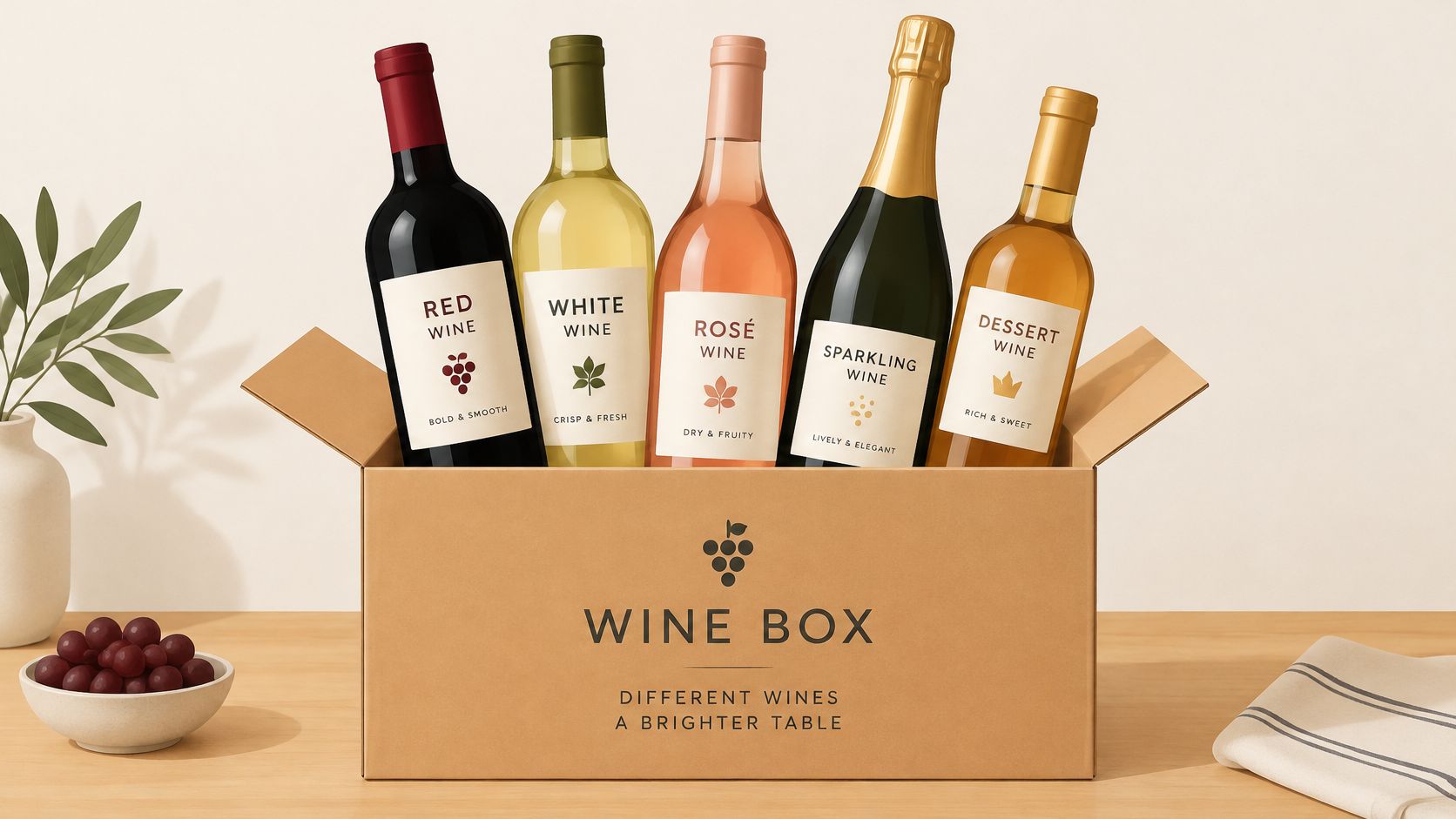
Mixed bottles aren't the same as cask wine
The terminology can be confusing. A mixed box holds separate bottles. Bag-in-box wine, commonly called cask wine in Australia, holds wine in an inner bladder fitted inside a cardboard outer.
Australia's boxed-wine history began when South Australian winemaker Thomas Angove patented a polyethylene bladder inside a cardboard box in 1965, with commercial packs released later that year. Later tap improvements helped the format develop, and the collapsing inner bag limited air contact as wine was poured, as documented in the University of Adelaide's history of Australian wine packaging.
That's an important local packaging tradition, but it isn't the invention of the modern mixed-bottle assortment. The formats share a cardboard exterior, not the same contents or dispensing system.
What to check before ordering
A photograph may suggest more variety than the actual bottle list provides. Read the contents rather than relying on the word “mixed”.
- Different wines: Check whether you're getting distinct wines or repeated bottles within a smaller selection.
- Style balance: Look beyond red and white to the weight and character described in the tasting notes.
- Choice and substitutions: Establish whether the contents are fixed, a mystery selection or subject to replacement.
A mixed box suits you if you want guided exploration or several useful options at home. If you already know exactly which wine you want, a straight dozen may be the simpler purchase.
Red-Only, Half and Half and Themed Packs Compared
Red-only, Half and Half and themed packs answer different shopping questions. None is automatically better value. The right format depends on whether you want depth within a favourite style, coverage across different tastes or a selection for a particular event.
Start with what your household opens. A balanced-looking assortment isn't balanced for you if everyone prefers reds.
Mixed Wine Box Formats at a Glance
| Box format | Best for | Main trade-off |
|---|---|---|
| Red-only | Exploring red wines while staying within familiar territory | Doesn't cover guests who prefer white or sparkling |
| Half and Half | Households and gatherings with different preferences | An even split may not match actual demand |
| Themed packs | A regional tasting, celebration or food-focused occasion | The theme may matter more than your personal preferences |
Red-only offers depth rather than breadth
Choose a red-only selection when your curiosity sits within a familiar family. For example, you might enjoy Shiraz and want to compare it with Cabernet Sauvignon, rather than adding whites for variety.
Read the tasting descriptions closely. A box containing different grape names can still feel repetitive if every wine is described as rich and full-bodied. Ask for contrast in wine weight, meaning how light or substantial the wine feels in your mouth.
The trade-off is flexibility. A red-only carton can be a thoughtful choice for your own meals, but a less useful choice when you're hosting people whose preferences you don't know.
Half and Half covers different preferences
A Half and Half pack typically divides the selection between red and white wines. It's a practical starting point when your household has separate favourites or when you want an adaptable supply for guests.
Still, “half” is a packaging decision, not a recommendation for your household. If white wine usually remains untouched, an even split won't fix that. Check which styles occupy each side before committing.
Buying rule: Choose the split your guests will enjoy, not the split that looks most orderly in the carton.
Themed packs need a useful theme
A regional showcase can help you explore wines connected by place. A sparkling-focused pack can suit celebrations. A meal-led assortment might be more useful for someone planning food-pairing evenings.
The theme should help you make a decision. If the description sounds appealing but you can't say when you'd open the bottles, keep looking.
For budget comparisons, consider the delivered cost of the complete selection. Don't assume a themed pack is discounted, or that a larger carton costs less per bottle. Compare the stated contents, delivery charges and any conditions before deciding.
Benefits of Sampling, Gifting and Buying by the Dozen
The appeal of a mixed box isn't just that someone else has chosen the wine. It's that you can make a manageable decision today without committing every future occasion to the same label.
That convenience has different value for a curious beginner, a gift buyer and someone replenishing their wine rack.
Sampling helps you describe your preferences
For someone learning about wine, an assortment provides reference points. You might discover that you prefer a lighter-feeling wine, or that a style you enjoy with dinner isn't what you'd choose on its own.
Treat that as useful information, not a test. Make a short note after opening a bottle: whether you enjoyed it, what you ate with it and whether you'd buy it again.
- Keep a familiar anchor: Include a style you already like so the whole purchase doesn't feel uncertain.
- Choose a clear contrast: Look for differences you can describe, rather than collecting unfamiliar grape names.
- Record the exact label: Keep a photograph so you can find the wine again instead of relying on memory.
Sampling doesn't require opening the entire carton together. Explore it over suitable occasions, at your normal pace.
Gifting benefits from a little direction
A curated assortment can feel considered without requiring detailed knowledge of the recipient's cellar. But variety doesn't remove every guess. Establish whether the recipient drinks alcohol and whether they have strong style preferences before choosing.
For wedding-related shopping, the gift registry examples from EasyRegistry are a useful starting point for thinking about how recipients communicate what they'd welcome. Apply that same preference-first approach to wine rather than treating an assortment as a universal gift.
Corporate and client gifting needs an additional check. Confirm the organisation's gift policy, the recipient's delivery details and whether alcohol is appropriate. A personalised message should explain the thank-you, rather than asking the carton to do all the work.
A dozen is useful only when the contents fit
Buying a mixed dozen can reduce the effort of selecting bottles individually. It can also provide wines for different meals without requiring a separate shopping trip for each occasion.
However, a dozen isn't automatically a saving. Compare the offer with the listed wines and delivery conditions; the guide to buying wine by the case provides further context for that purchasing decision.
An unwanted bottle doesn't become useful because it arrived in a discounted carton.
Choose a quantity that suits your storage and usual drinking pace. There's no need to finish a box quickly to justify buying it.
How to Choose the Right Box for Your Occasion
Write down the next occasion before browsing wine names. “Lunch outdoors with friends who prefer chilled styles” gives you a more useful shopping brief than “something mixed”.
The selection should suit the people around your table.

Start with people and food
Count the guests who want wine, rather than assuming everyone will drink it. Consider preferences, planned serving sizes and alcohol-free alternatives. Guest count helps establish the scale of the purchase, but it doesn't determine the mix on its own.
Next, describe the meal. For a weeknight seafood dinner, you might prioritise the chilled white styles you already enjoy. For a small dinner party, choose wines around the menu and guests' tastes rather than buying an assortment designed for a much broader gathering.
Australian off-trade research identifies smaller, more meaningful occasions alongside stronger expectations around value and convenience. That supports an occasion-first approach, rather than treating greater volume as the main goal, in Wine Australia's Australian off-trade market insights.
Add season, weight and timing
An outdoor lunch calls for different preparation from a cool-evening dinner. Consider whether you can keep the selected styles at their intended serving condition, especially if you're travelling or hosting away from home.
Also separate lighter in style from lower in alcohol. If alcohol strength matters to your decision, check the individual bottle information rather than assuming a pale colour or refreshing description answers that question.
Finally, decide whether the box is for upcoming meals or longer-term keeping. Don't assume a wine is suitable for cellaring because it's red or expensive. Ask for bottle-specific drinking guidance.
Use this short checklist when comparing packs:
- People: Do the styles match the guests who want wine?
- Food: Can you name a meal or occasion for each part of the selection?
- Season: Can you store and serve it appropriately?
- Preference: Does the wine's described weight appeal to you?
- Timing: Are you buying for now, or seeking specific cellaring advice?
For an occasion-focused buying break, you can also view the video below.
If you're buying for someone else, the Australian guide to wine gift packs for different occasions offers another way to organise the choice around the event.
Packaging Weight and the Environmental Trade-Off
A recyclable carton is useful, but it doesn't tell you the environmental story of everything inside. The glass bottles and the journey to your door matter too.
Wine Australia's life-cycle assessment estimates an indicative footprint of 1.05 kg CO2e per litre of still wine, identifying glass packaging and product distribution as major emissions hotspots in its Australian wine-industry life-cycle assessment.
Why bottle weight matters
Think of sending books through the post. The protective box matters, but the weight of what you put inside still determines how much material must travel.
Heavier glass adds transport mass without adding more wine. Rigid, cylindrical bottles also leave spaces that a carton designer must manage. For a mixed assortment, differences in bottle shape make fit and protection especially relevant.
Wine Australia separately reports that packaging contributes an estimated 44% of wine-sector emissions, with heavy glass bottles responsible for 34.4% of total emissions, in its market bulletin on wine packaging and emissions.
Those figures explain why a substantial bottle shouldn't automatically be treated as a sign of better purchasing value. Ask about lightweight glass where it's available and suitable for the wine.
What a consolidated delivery can achieve
A well-designed corrugated carton uses internal fibre dividers to keep bottles apart. The aim is protection without unnecessary packing material or excessive empty space.
Combining bottles in an appropriately engineered shipment can avoid separate parcel movements. It doesn't guarantee a particular environmental saving, because carrier routing, total carton weight and delivery distance still affect the result.
Packaging perspective: A single delivery is worth considering, but it doesn't cancel out the burden of heavy glass.
When comparing options, look for practical details rather than broad green claims:
- Bottle choice: Prefer fit-for-purpose lightweight bottles where offered.
- Carton design: Look for secure separation and sensible dimensions.
- Order planning: Consolidate purchases you already need, rather than adding unwanted wine.
- Disposal: Check local guidance for recycling glass, cartons and inserts.
Recycling remains worthwhile. It doesn't remove the manufacturing and transport impacts already associated with the packaging.
McLaren Vale Cellars Mixed Box Bundles in Practice
Consider a shopper who enjoys reds with dinner but wants to move beyond repeatedly ordering the same Shiraz. A red-leaning assortment built around Shiraz and Cabernet Sauvignon would be a sensible option to discuss.
That's a suggested shopping scenario, not a claim about the contents of a particular current bundle. Always check the live bottle list, especially when choosing a mystery pack.
The available formats offer different ways to organise that purchase.
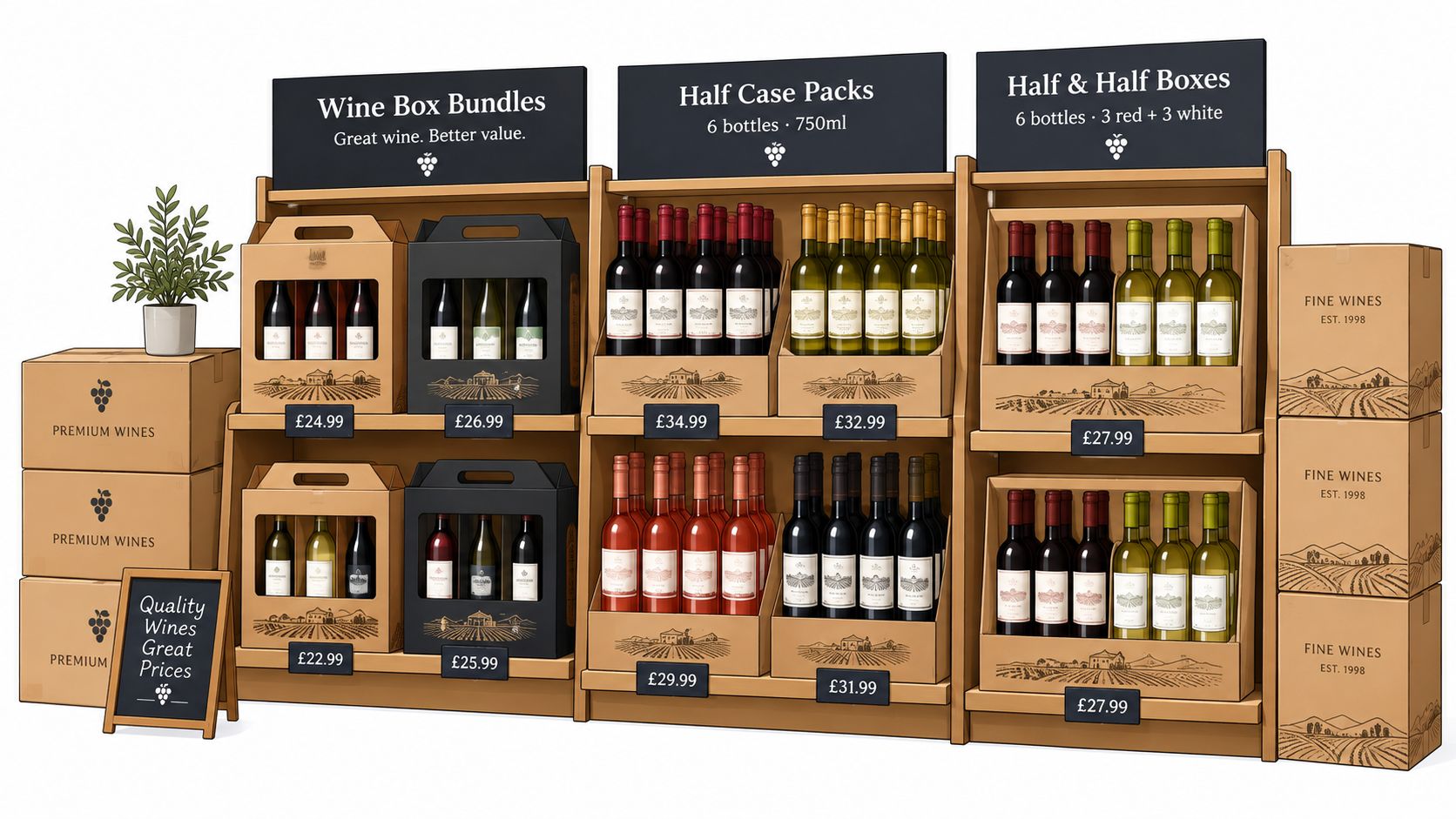
A red-leaning selection for familiar meals
For this shopper, the useful question isn't how many different labels can fit in a carton. It's whether the wines provide an enjoyable comparison within the styles they already like.
The store's dozens, half-case bundles and curated sample packs provide different starting points. A sample pack makes sense for exploration. A larger bundle is more appropriate once the shopper knows which descriptions appeal.
Before ordering, they could ask whether the proposed selection includes meaningful differences in weight and intended drinking window. That turns a broad request for “some reds” into a clearer recommendation.
A white and sparkling selection for an outdoor lunch
Another shopper might be planning warm-weather lunches and prefer a combination of Sauvignon Blanc, Pinot Grigio and Blanc de Blanc sparkling. Those named styles provide a concrete starting brief, without assuming every current bundle contains them.
A white-focused selection could fit better than a balanced red-and-white carton in that situation. A mixed Half and Half pack becomes more useful if the household also wants reds for separate meals.
The choice might look like this:
- Exploring unfamiliar labels: Start with a curated sample pack and read the included descriptions.
- Covering different preferences: Compare Half and Half contents against the household's tastes.
- Replenishing known favourites: Consider dozen or half-case offers after checking the exact wines.
Check the support as well as the selection
Purchase support includes a Taste Guarantee, secure encrypted checkout and an Australia-wide delivery offer subject to its qualifying order conditions. Read the current terms before purchasing, particularly the guarantee process and delivery eligibility.
The Grape-ful Rewards program is another detail to check if you expect to return. It should support an already suitable purchase, not persuade you to buy more than you need.
For learning between purchases, the Tasting Guide and Wine 101 articles are useful next reads. Use them to turn a promising first selection into a more informed follow-up order.
Tasting Tips and Your Next Step with a Mixed Box
Good selection is only part of the experience. A mixed carton needs style-specific handling, because the bottles aren't all intended to arrive in the glass at the same temperature.
Whites, rosé and sparkling wines generally need chilling before opening. Full-bodied McLaren Vale reds are typically served less cold, at an appropriate cool-room temperature. Excessive heat can increase the perception of alcohol and reduce freshness, while excessive chilling can suppress aroma and flavour, as explained in the Australian Wine Research Institute's transport and storage guidance.
Prepare the bottles you intend to open
Don't interpret room temperature as whatever temperature your home happens to reach during summer. Follow bottle-specific advice where it's provided, and ask the retailer if the serving guidance is unclear.
On delivery, move the carton out of direct sun rather than leaving it on a warm doorstep. Keep the internal bottle separation in place until you've unpacked it safely.
For an uncomplicated tasting:
- Label by style: Mark which bottles need chilling and which are intended for later occasions.
- Choose a progression: Try lighter-feeling wines before fuller ones when making a comparison.
- Pour modestly: You don't need a full glass to decide what you notice or enjoy.
- Write plainly: Record your own impressions, including whether you'd choose the wine again.
Make the comparison useful
You don't need professional vocabulary. “I preferred this with dinner” is a more useful buying note than an elaborate description you don't understand.
For a more organised approach, follow the step-by-step guide to tasting wine like a sommelier. If the box is part of a wedding thank-you, browsing thoughtful gifts for your bridal party can also help you consider a personal finishing touch alongside the wine.
Bring your next purchase back to a concrete occasion. Use what you've learnt about your preferred styles, then check the contents and purchase conditions before choosing a sample pack or Half and Half selection.
McLaren Vale Cellars offers curated sample packs, Half and Half selections and case bundles for exploring different wines. Visit McLaren Vale Cellars today, choose the format that fits your next meal or gathering, and review the Taste Guarantee before placing your order.

Comments (0)
There are no comments for this article. Be the first one to leave a message!