
So, you're standing in the wine aisle, staring at two bottles: Merlot and Cabernet Sauvignon.What's the real difference? It's simpler than you think. Merlot is the soft, plush, easy-going one, full of ripe plum and cherry flavours. Cabernet Sauvignon is its bolder, more structured sibling, packing a punch with firm tannins and deeper notes of blackcurrant and cedar.
Your choice really boils down to mood and meal. Are you after something smooth and immediately enjoyable, or a powerful, complex red that makes a statement?
A Tale of Two Bordeaux Icons

When you get into red wine, the Merlot vs Cabernet Sauvignon conversation is one of the first you'll have. These two are global superstars, both tracing their noble roots back to Bordeaux, France, where they're often blended together. In a fascinating twist of family history, they're actually related—both are descendants of Cabernet Franc—yet they offer completely different experiences when bottled on their own.
Merlot has built its reputation on being soft and rounded. Its grapes have thinner skins and naturally lower tannin levels, which gives the wine a smoother, less grippy mouthfeel. This makes it a fantastic starting point for anyone just dipping their toes into the world of red wine.
Cabernet Sauvignon, on the other hand, is famous for its power and complexity. Its thick-skinned grapes are loaded with tannins, creating wines with a full body, a firm structure, and an incredible ability to age and develop new character over many years in the cellar.
Comparing Key Characteristics
Getting to know their fundamental differences is the best way to pick the right bottle for your palate or the occasion. While they're both considered dry red wines, their personalities diverge in everything from taste and texture to what they pair with best.
This gets even more interesting when you factor in where the grapes are grown—the terroir. A Merlot from a cool climate in France will taste quite different from one grown in the warm, sunny vineyards of McLaren Vale. Likewise, a classic Cabernet from Bordeaux is a world away from its rich, fruit-forward cousins from South Australia. Exploring these regional nuances is where the real fun begins.
Key Takeaway: Merlot is your go-to for a smooth, fruit-driven red that gets along with almost any food. Reach for a Cabernet Sauvignon when you want a bold, complex wine with a firm backbone, perfect for rich, hearty dishes or for laying down in the cellar.
To make things even clearer, here’s a quick side-by-side look at what sets these two Bordeaux icons apart.
Key Differences Merlot vs Cabernet Sauvignon
This table offers an at-a-glance summary of the defining characteristics of Merlot and Cabernet Sauvignon, from flavour profile to ideal food pairings.
| Characteristic | Merlot | Cabernet Sauvignon |
|---|---|---|
| Primary Flavours | Black cherry, plum, raspberry, chocolate, bay leaf | Blackcurrant, black cherry, cedar, graphite, mint |
| Body | Medium to full-bodied | Full-bodied |
| Tannins | Softer, smoother, lower levels | Firm, powerful, higher levels |
| Acidity | Medium | Medium to high |
| Finish | Velvety and smooth | Long and persistent |
| Ideal Pairings | Roast chicken, pork, mushroom dishes, burgers | Grilled steak, lamb, hearty stews, aged cheeses |
Ultimately, this table helps illustrate why Merlot is often seen as the more approachable of the two, while Cabernet Sauvignon appeals to those who enjoy a more robust and age-worthy red.
A Tale of Two Grapes and Their Bordeaux Roots
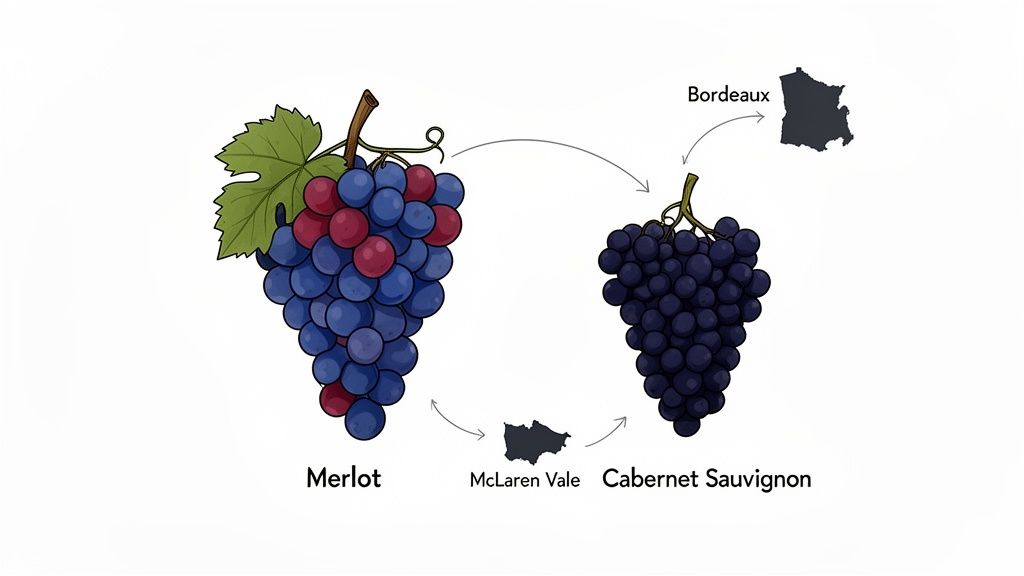
To really get to the heart of the Merlot vs Cabernet Sauvignon debate, you have to go back to where it all began: Bordeaux, France. These two grapes are practically siblings, both descending from the same parent, Cabernet Franc. This shared DNA is precisely why they work so beautifully together, forming the foundation of the world’s most legendary red blends.
But like any siblings, they’ve grown into their own distinct personalities. These differences aren’t just subtle notes for wine nerds; they are fundamental traits shaped by their physical makeup and what they like in a vineyard. And those traits follow them all the way into your glass.
The Cabernet Sauvignon Grape
Cabernet Sauvignon’s story starts in the 17th century with a happy accident—a natural crossing of Cabernet Franc and Sauvignon Blanc. The result was a grape that was practically built for greatness. If you're curious about its journey, you can dive into the origins of the Cabernet Sauvignon wine grape in our detailed guide.
In the vineyard, Cabernet Sauvignon berries are small, dark, and tough. The key is their thick, deep blue skin, which is loaded with two things that define the final wine:
- Tannins: This is what gives the wine that drying sensation on your tongue. It provides structure, backbone, and the ability to age for years.
- Pigment: The skin is packed with colour, which is why Cabernet wines have that deep, almost opaque ruby and garnet look.
Because the grapes are so small and the skins so thick, there's a high skin-to-pulp ratio. During fermentation, all that colour and tannin gets pulled into the juice, creating a wine that is naturally bold, structured, and made for the long haul.
The Merlot Grape
Merlot, whose name is said to come from the French word merle for the blackbirds that loved to eat it, also shares Cabernet Franc as a parent. But in the vineyard, it couldn't be more different from its famous cousin. Merlot grapes are much bigger, with noticeably thinner skins.
This simple physical difference is the number one reason for Merlot's softer, more generous profile. Thinner skins mean a lower skin-to-pulp ratio, which translates directly to fewer tannins and a slightly lighter colour in the finished wine.
Key Insight: Think of the grape's skin as a preview of the wine's personality. Cabernet Sauvignon's thick skin builds a powerful, tannic wine. Merlot's thinner skin creates a softer, fleshier wine.
This difference also dictates where each grape truly thrives. Cabernet Sauvignon's tough exterior helps it handle different weather patterns, and its slow ripening is perfect for developing deep, complex flavours in warmer climates like ours in South Australia. Merlot, on the other hand, ripens earlier and loves cooler, clay-heavy soils that help it hold onto its acidity and develop its classic plush, fruity character. From Bordeaux to McLaren Vale, this is why the dirt matters so much.
How Viticulture and Winemaking Shape Each Wine
The distinct personalities of Merlot and Cabernet Sauvignon aren’t born in the bottle. They start their life out in the vineyard, shaped by the watchful eye of the viticulturist. Every decision made long before the grapes are even picked—from where the vines are planted to how they’re tended—dictates the final character of the wine in your glass. These choices all come down to one central idea: terroir, that magic combination of soil, climate, and topography that gives a wine region its identity.
Merlot, for instance, finds its ideal home in cooler climates with clay-based soils. Clay is fantastic at retaining water, which keeps the vine’s roots cool and slows down ripening just enough to develop those signature plush, fruity flavours without sacrificing acidity. Because Merlot ripens earlier than its famous cousin, it thrives in regions where a shorter growing season might challenge other red varieties.
In stark contrast, Cabernet Sauvignon demands a completely different environment to hit its full potential. It flourishes in warmer climates with well-drained, gravelly soils. This kind of soil forces the vine’s roots to dig deep for water, stressing it just enough to produce small, thick-skinned berries packed with intense flavour and tannin.
Key Differentiator: Merlot’s preference for cooler, water-retentive clay soils results in a softer, earlier-ripening grape. Cabernet Sauvignon’s need for warmer, well-drained gravel soils and a longer season builds its powerful structure and tannic backbone.
This fundamental difference in the vineyard is exactly why Cabernet Sauvignon has become such a star in many of Australia’s warmer wine regions, including our own McLaren Vale. The long, sunny days here allow the grapes to ripen fully, developing deep black fruit notes while softening its famously firm tannins into something much more polished and approachable.
From the Vineyard to the Winery
Once the harvest is in, the winemaker’s craft takes centre stage, further defining the final style of each wine. The journey from grape to glass is a series of crucial decisions, and the choice of oak barrels for ageing is one of the most impactful. The specific techniques used can dramatically alter a wine's flavour, aroma, and texture. If you're curious about the nitty-gritty, our guide on how red wine is made offers a step-by-step look into this fascinating process.
Winemakers often choose between two main types of oak, and each one brings something unique to the party:
- French Oak: Known for its tight grain, French oak lends more subtle and elegant flavours. Think notes of baking spice, cedar, and a refined, silky texture. It’s a popular choice for premium expressions of both Merlot and Cabernet Sauvignon where nuance is key.
- American Oak: With a wider grain, American oak tends to deliver bolder, more pronounced flavours. It typically introduces sweeter notes of vanilla, coconut, and dill, contributing to a richer, more robust style of wine.
The decision to use French or American oak—and for how long—is a purely stylistic one. A winemaker might use French oak to complement the powerful structure of a Cabernet Sauvignon, adding layers of complexity without overpowering its natural character. Conversely, American oak could be used to enhance the rich, fruit-forward profile of a Merlot, adding a lovely creamy vanilla finish.
Market Dynamics and Regional Success
These choices in the vineyard and winery also ripple out to influence market trends, especially in premium regions. Here in South Australia, production shifts really highlight Cabernet Sauvignon's rise over Merlot. While the national 2024 red grape crush bounced back from a low 2023 vintage, Cabernet Sauvignon has shown steady growth. Merlot, on the other hand, saw a 7% slump in retail sales.
This trend is driven by Shiraz and Cabernet, which are projected to fuel a 20% overall surge in red wine demand. Regionally, the numbers tell the story: McLaren Vale's Cabernet plantings grew to over 500 hectares by 2023—a huge jump from 300 hectares in 2000. Meanwhile, Merlot's presence has remained stagnant at around 120 hectares, showcasing Cabernet's dominant commercial and critical success.
A Detailed Flavour Profile Comparison
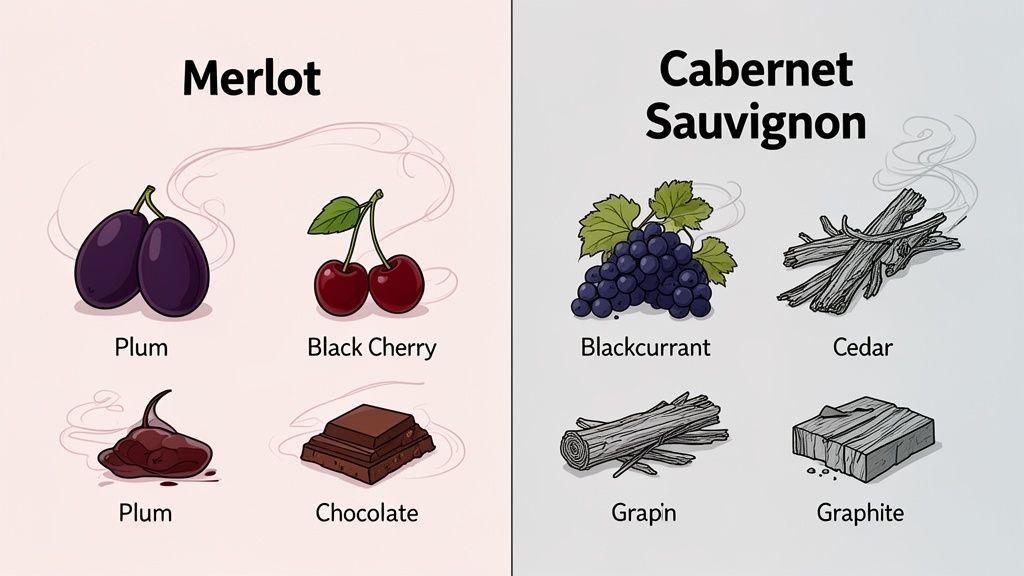
While their shared Bordeaux heritage ties them together, the real story of Merlot versus Cabernet Sauvignon unfolds on the palate. This is where their personalities truly diverge, and where you can immediately feel the difference in fruit, structure, and finish. It’s what makes one perfect for a casual Tuesday night pizza and the other the star of a celebratory dinner.
Merlot is all about generous, fruit-forward charm and a plush, rounded texture. It typically greets you with a bouquet of ripe red and black fruits—think soft plum, juicy black cherry, and raspberry. These primary notes are often layered with hints of mocha, vanilla, and sometimes even a little bay leaf or fruitcake spice, especially after some time in oak.
Cabernet Sauvignon, on the other hand, brings a more savoury and layered aromatic profile to the table. It leans toward darker, more intense fruits like blackcurrant (cassis), blackberry, and dark cherry. But beyond the fruit, you’ll find intriguing non-fruit notes of cedar, graphite, mint, or even a classic touch of green bell pepper, which adds to its complexity.
Mouthfeel: The Role of Tannins
The most dramatic difference you'll feel is the texture in your mouth, a sensation dictated almost entirely by tannins. Merlot’s tannins are generally softer and more rounded, giving it what’s often described as a velvety or silky mouthfeel. It coats the palate smoothly, making it friendly and approachable right from the first sip.
Cabernet Sauvignon is built on a foundation of firm, powerful tannins. This creates a more structured, full-bodied wine with a characteristic "grip" or astringency that dries out your mouth. This tannic backbone is precisely what gives Cabernet its remarkable ability to age. To get a better handle on this sensation, check out our guide on unraveling the mystery of tannins and why they matter in wine.
Merlot offers a rounded, fleshy mouthfeel, whereas Cabernet Sauvignon delivers a powerful, structured palate. This textural contrast is the single most reliable way to distinguish between the two when tasting them side-by-side.
Comparing the Finish
The finish—how long the taste lingers after you swallow—is another key battleground in the Merlot vs Cabernet Sauvignon showdown. It’s the final impression the wine leaves, and it speaks volumes about its quality and character.
- Merlot's Finish: Typically smooth and gentle. The fruit flavours fade gracefully, often leaving a soft, pleasant aftertaste of chocolate or plum. The finish is satisfying but generally shorter and less intense than Cabernet's.
- Cabernet Sauvignon's Finish: Known for being long and persistent. Those firm tannins carry the flavours, allowing notes of dark fruit, spice, and oak to linger on the palate for a considerable time. This enduring finish is a hallmark of high-quality Cabernet.
This difference in structure and flavour also plays out in the market. In Australia, Cabernet Sauvignon's bold style holds a stronger position, particularly in retail. While still reds hold 32% of retail volume, Cabernet consistently outperforms Merlot in value. Recent data shows Cabernet Sauvignon sales (including blends) fell by 5%, while Merlot saw a steeper drop of 7%, confirming Cabernet's more resilient market presence.
Ultimately, appreciating these wines means recognising their distinct sensory journeys. Merlot charms with its immediate softness and ripe fruit, while Cabernet Sauvignon commands attention with its structural power and lasting finish, offering a more contemplative tasting experience.
Mastering Food Pairings for Each Wine
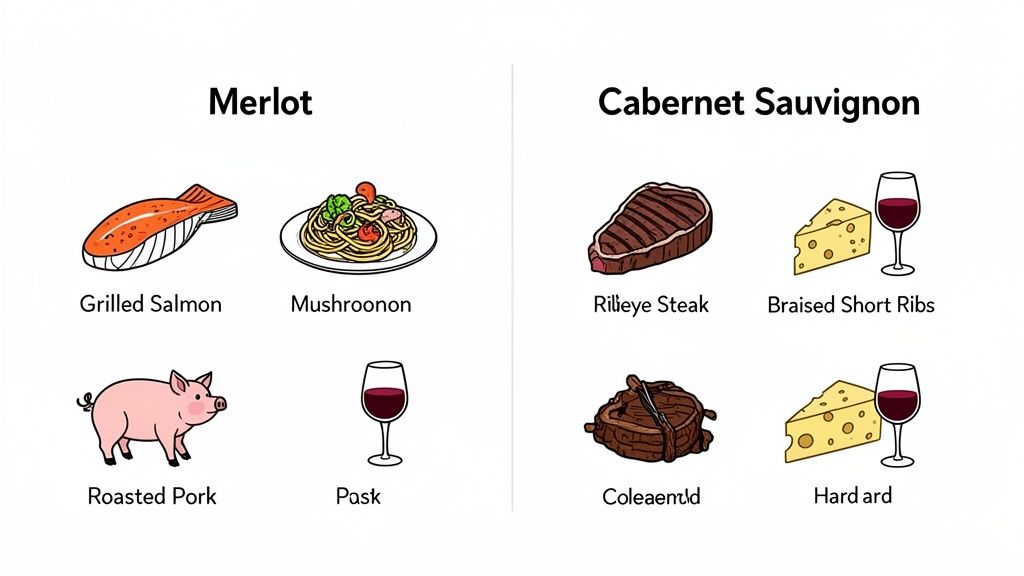
Choosing the right wine can turn a simple dinner into a truly memorable occasion. It’s all about understanding how a wine’s structure—its tannins, acid, and body—dances with the flavours on your plate.
Merlot, with its friendly fruitiness and softer tannins, is a versatile partner for a huge range of dishes. On the other hand, Cabernet Sauvignon’s bold structure and powerful tannins practically demand richer, more robust meals. Let's get past the old "red wine with red meat" rule and really dig into why certain pairings just work.
Finding the Perfect Match for Merlot
Merlot’s charm lies in its plush fruit and gentle tannins, which means it harmonises beautifully with a whole host of foods without stealing the show. Its inherent softness ensures it won't clash with leaner meats or delicate herbs, making it a wonderfully reliable and flexible choice for many meals.
Give these classic pairings a try:
- Roasted Pork or Chicken: Merlot’s cherry and plum notes are a brilliant complement to the savoury flavours of white meats, especially when they're cooked with herbs like rosemary or thyme.
- Mushroom-Based Pasta: The earthy, umami character of mushrooms is a perfect match for the subtle savoury side of a good Merlot.
- Grilled Salmon: Now, this might surprise you. While many reds would steamroll fish, a lighter-bodied Merlot with good acidity can stand up to the richness of salmon without creating that unpleasant metallic taste.
The secret to pairing Merlot is its incredible balance. The wine’s fruitiness lifts savoury dishes, while its soft tannins cleanse the palate without adding any bitterness. It’s a surprisingly adaptable dinner companion.
Ideal Pairings for Cabernet Sauvignon
Cabernet Sauvignon is built for big, bold flavours. Simple as that. Its high tannin content is like a powerful palate cleanser, cutting right through rich, fatty foods and refreshing your taste buds with every sip. There's a reason it's the undisputed king of the steakhouse.
You'll want to pair your Cabernet with dishes that can match its intensity:
- Grilled Ribeye Steak: This is the ultimate pairing, hands down. The wine's firm tannins slice through the fat and protein of the steak, creating a perfectly balanced mouthful every single time.
- Braised Short Ribs: Those deep, savoury notes of slow-cooked meat are beautifully mirrored by the dark fruit and cedar complexity found in an aged Cabernet.
- Aged Hard Cheeses: Think sharp cheddar, Gouda, or Parmesan. They have the fat and salt content needed to stand up to Cabernet’s formidable structure, making for a sublime after-dinner moment.
Pairings to Sidestep
Knowing what not to do is just as important as knowing what works. A bad match can make both the food and the wine taste completely off.
- For Merlot: Try to avoid very spicy foods, as the alcohol can amplify the heat. Also, be careful with delicate, flaky white fish, which the wine’s body can easily overwhelm.
- For Cabernet Sauvignon: Steer clear of light salads, delicate seafood, or anything overly acidic. The wine's powerful tannins will simply dominate and create a jarring, unpleasant experience.
Beyond the bottle on the table, understanding how different beverages can enhance a dish is a skill in itself. For instance, many chefs are masters at unlocking flavor with dry sherry, proving that the right splash of alcohol can be a transformative ingredient.
How to Choose and Age Your Bottle
So, how do you make the final call between a Merlot and a Cabernet Sauvignon? It really boils down to a few simple things: your budget, when you're planning to crack open the bottle, and the specific style you’re in the mood for. Both wines offer fantastic options at every price point, but their ageing potential and how they're seen in the market create some real differences on the bottle shop shelf.
Cabernet Sauvignon often comes with a higher price tag, especially for top-shelf bottles from celebrated regions like McLaren Vale or Coonawarra. This is mostly because of its incredible structure and longevity. The high tannin and acidity are like natural preservatives, allowing the wine to evolve beautifully in the cellar for a decade or more. Over time, it develops those complex, savoury flavours of leather, tobacco, and dried fruit that collectors dream of.
Merlot, on the other hand, is generally much more approachable when young and often a bit kinder to your wallet. Its softer tannins and plush, fruity character mean it's ready to drink and enjoy almost immediately. While there are certainly high-end Merlots that can age with grace, the vast majority are at their peak within 3-5 years of vintage, when their vibrant, fruity personality is front and centre.
Cellaring Potential: A Side-By-Side Look
Figuring out whether to "drink now" or "lay down" a bottle is a lot easier when you know how each wine is likely to develop.
- Merlot: This one is all about enjoying the here and now. Its charm is in that fresh, ripe fruit and velvety texture. If you cellar a typical Merlot for too long, you risk those lovely primary notes fading away without being replaced by anything more interesting.
- Cabernet Sauvignon: This wine is truly built for the long haul. Those firm tannins that can feel a bit full-on in a young Cab will slowly soften and melt into the wine over time. This is when the magic happens, allowing all those secondary and tertiary flavours to come forward. A well-aged Cabernet is a masterclass in complexity and elegance.
Key Takeaway: If you need a great bottle for a dinner party this weekend, a quality Merlot is a superb and reliable choice. But if you're looking for something special to tuck away for a future celebration, a premium Cabernet Sauvignon is an investment in future flavour.
Navigating Australian Styles and Market Trends
In Australia’s top wine regions, Cabernet Sauvignon has long been a powerhouse. Recent data shows it has a significant edge over Merlot in both how much is made and how much is exported. This trend points to a strong global appetite for its bold, structured profile, which is perfect for ageing. According to one 2024 export report, Cabernet Sauvignon exports jumped 12% to 70 million litres. In contrast, Merlot lags behind, with domestic sales dropping 7% year-on-year compared to Cabernet Sauvignon's 5% dip. You can learn more about these market shifts and see what makes it the best-selling red wine in Australia.
When you're browsing bottles from McLaren Vale, look for Merlots that deliver rich plum and chocolate notes with that signature velvety finish. For Cabernet Sauvignon, expect powerful, concentrated wines with deep blackcurrant, mint, and savoury undertones that are a true reflection of the region’s warm climate.
Ultimately, the choice is yours. Are you craving the immediate, juicy appeal of a Merlot, or the deep, cellar-worthy complexity of a Cabernet Sauvignon? Armed with this knowledge, you can walk into any bottle shop and pick your next red with total confidence.
Common Questions About Merlot and Cabernet Sauvignon
To wrap things up in the Merlot vs Cabernet Sauvignon debate, let's tackle some of the questions we hear all the time. Think of this as the final word to help you grab your next bottle with total confidence.
Which Wine Is Generally Sweeter?
Technically, neither. Both Merlot and Cabernet Sauvignon are fermented to be dry wines, meaning there's little to no residual sugar left.
However, Merlot often gives the impression of sweetness. Its flavour profile is loaded with juicy plum and black cherry notes, which our brains often associate with sweetness. In contrast, Cabernet Sauvignon brings a more savoury character to the table, with hints of cedar and graphite alongside its dark fruit, making it taste inherently drier. So, while both are dry, Merlot often tastes fruitier and less dry thanks to its softer tannins and ripe flavours.
Is Merlot or Cabernet Sauvignon Better For Beginners?
For anyone just dipping their toes into the world of red wine, Merlot is almost always the friendlier starting point. Its lower tannin levels and smooth, velvety texture make for a much gentler introduction—it's less likely to feel abrasive or overwhelming. The generous fruit flavours are also immediately appealing and don't require a seasoned palate to enjoy.
Cabernet Sauvignon, with its bold structure and powerful tannins, can be a bit of a shock to the system for a newcomer. That intense, mouth-drying sensation can be challenging if you're not used to it.
Our Recommendation: Start your journey with a quality Merlot. It’s a great way to get comfortable with the body and flavour of red wine. Once your palate adjusts, you’ll be in a much better position to appreciate the layered complexity of a great Cabernet Sauvignon.
Why Is Cabernet Sauvignon Often More Expensive?
A few key things drive up the price tag on a good bottle of Cabernet Sauvignon. First off, the grapes themselves demand a longer growing season to ripen properly, which means more time, effort, and risk for the vineyard crew. Second, premium Cabernet is built to last, often spending a good chunk of time ageing in pricey French oak barrels to soften its powerful tannins and build complexity.
Finally, its stellar reputation as one of the world's most prestigious and cellar-worthy reds keeps demand high, especially for bottles from top-tier regions. If you're looking for a special bottle for yourself or as a gift, you might want to explore some curated wine gift box selections.
When Should I Use One Over The Other For Cooking?
Your choice here really depends on how big and bold your dish is. For rich, hearty meals like a beef bourguignon or braised short ribs, reach for Cabernet Sauvignon. Its robust structure is strong enough to stand up to those intense flavours without getting lost.
Merlot is a better fit for slightly more delicate dishes. Think pan sauces, tomato-based pasta dishes, or a classic coq au vin. Its softer profile adds a wonderful depth of flavour without overpowering everything else in the pot.
Ready to explore the best of McLaren Vale? At McLaren Vale Cellars, we've curated a stunning collection of both Merlot and Cabernet Sauvignon for you to discover. Shop our red wine selection today and find your new favourite.
Comments (0)
There are no comments for this article. Be the first one to leave a message!