
You're standing in a bottle shop with a weeknight dinner to plan and a wall of red wine in front of you. Merlot can be a sensible place to start: it often has a rounded, plummy feel and gentler tannins than Cabernet Sauvignon, but bottles can range from fresh and easy-drinking to concentrated, oak-influenced wines built for the table.
The trick is to choose by style, not just by the grape name. Once you know what body, tannin and fruit to expect, it's easier to match a bottle to dinner, decide whether to open it now, and spot the difference between an everyday pour and a more structured Merlot.
Merlot Red Wine at a Glance and Its Main Styles
Merlot is often described as Cabernet Sauvignon's easygoing sibling. Its thinner skins and earlier ripening can contribute to softer tannins and a rounder, plummy impression, though climate and winemaking still shape the finished wine. Think of tannin as the gentle drying sensation of strong tea: a softer Merlot usually leaves less grip on your gums than a firmly structured Cabernet.
| Style | Body and Tannin | Typical Flavours | Where You Usually Find It |
|---|---|---|---|
| Fresh and fruit-led | Light to medium body, soft tannin | Red cherry, plum, hints of mint | Everyday bottles, often from warm inland regions |
| Regional classic | Medium body, supple tannin | Plum, blackberry, cedar, dried herbs | McLaren Vale and South Australian single-region bottles |
| Oak-aged premium | Full body, firm but ripe tannin | Black plum, dark chocolate, vanilla, toast | Reserve and single-vineyard bottles, often aged 12 to 18 months in oak |
| Bordeaux-style blend | Full body, structured tannin | Blackcurrant, cassis, graphite, cedar | Merlot blended with Cabernet Sauvignon or Cabernet Franc |
Australian Merlot is significant but remains a minority red variety. Wine Australia's 2024–25 snapshot records 8,477 hectares planted, equal to 6.3% of all Australian grapevine area, and reports that the Riverland supplied 36% of the 2025 Merlot crush; the figures show a strong inland presence alongside premium South Australian districts such as Coonawarra and McLaren Vale (Wine Australia's Merlot snapshot).
Use the table to narrow your choice by the meal. Fresh and fruit-led Merlot suits a casual pasta night, while an oak-aged bottle is a better fit for a roast or another richer dish.
How Ripeness Sets the Colour and Fruit of Merlot
Sugar ripeness is the clock that helps a winemaker judge when to pick. Colour ripeness is more like paint on the fruit, and the two don't always move in step: a grape can reach a sugar target without developing the colour or flavour profile the winemaker wants.
Australian Wine Research Institute (AWRI) analysis found average total anthocyanins, the pigments behind red-wine colour, of 1.00 mg/g fresh grape weight in Merlot samples at 20.1–22.0 °Brix, 1.26 mg/g at 22.1–24.0 °Brix, and 1.46 mg/g at 24.1–26.0 °Brix. That's an increase of about 46% across the measured ripeness range, but it isn't a guaranteed straight-line result in a commercial vineyard (AWRI's analysis of grape colour and ripeness).
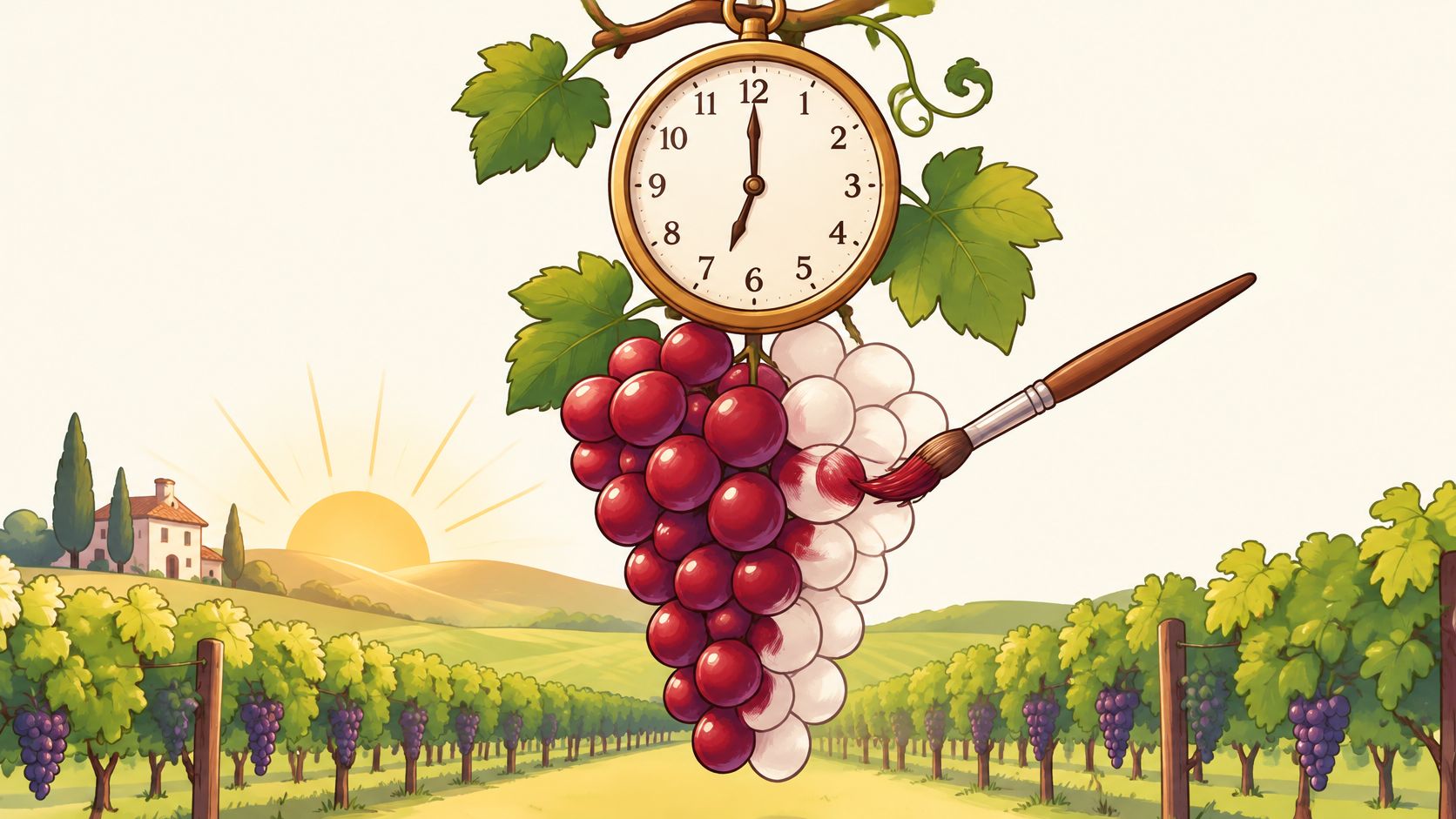
Why the paint doesn't follow the clock
Crop load, canopy exposure, water status and heat events all affect pigment development. So a winemaker doesn't rely on sugar readings alone. In a warm South Australian region such as McLaren Vale, berry colour checks and small-lot fermentations can help show whether the fruit has enough colour and flavour to benefit from more skin contact, or whether extra extraction would bring out harshness instead.
Riper fruit can offer more colour reserves and a plush, generous fruit profile. But excessive heat or delayed picking can reduce freshness and push alcohol higher, so picking later isn't automatically a route to a better-balanced wine.
Colour reads the fruit. Alcohol can help you read the season.
For a shopper, the useful habit is to consider the wine's appearance alongside its alcohol level and tasting notes. Deep colour may suggest ripe fruit, but it can't tell you whether the wine will feel fresh or heavy on its own. An alcohol figure above about 14.5% can be a clue to a warmer, riper style, but it isn't proof of a hot season or a quality verdict. Read the label as a set of signals rather than letting colour make the decision.
Why Skin Contact and Oak Decide Merlot Structure
Steeping tea longer draws more flavour from the leaves, but it can also bring bitterness. Fermenting Merlot on its skins and seeds works on a similar principle: the longer the contact, the more compounds the winemaker can extract.
An AWRI technical review cites Merlot research in which total phenolics rose from 724 mg/L on day one to a peak of 1,733 mg/L by day 32. Colour intensity, astringency and bitterness climbed steeply during the first eight days, while longer contact increased tannin extraction and shifted pigments towards more stable forms (AWRI's technical review of maceration).
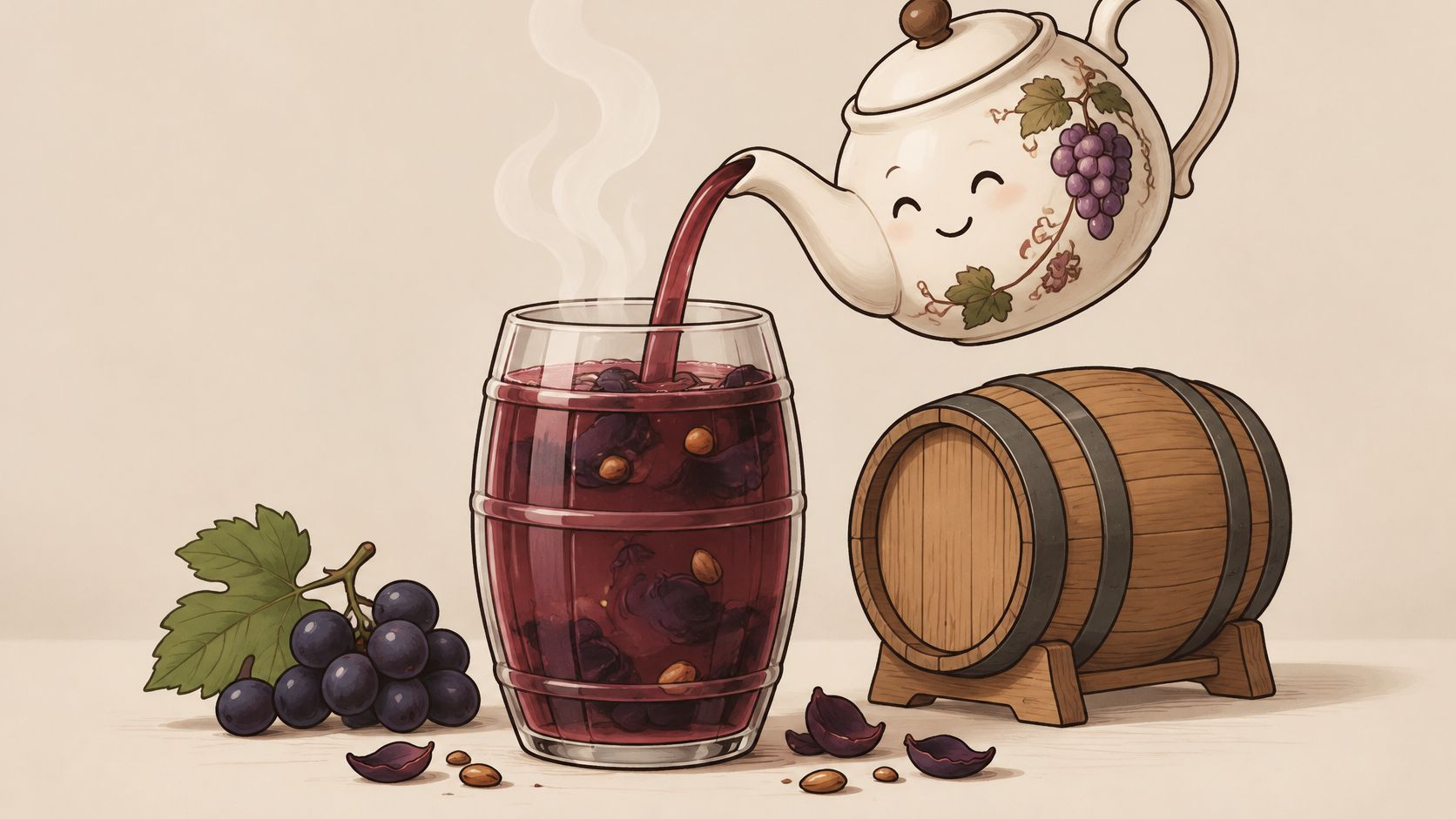
Extraction is a balancing act
Longer skin contact can build palate length and help a wine develop ageing capacity. It can also make the finish more bitter, particularly if seed tannins are extracted. The same AWRI review notes that broader research found seeds supplied 73–79% of the tannin in 30-day Cabernet Sauvignon and Merlot macerations.
That's why careful winemakers don't use a fixed, long extraction time for every batch. They taste the fermenting wine and consider fruit condition, seed maturity, fermentation temperature and the style they want to make. A softer, approachable Merlot usually needs less post-fermentation contact than a wine intended to be fuller and more structured.
What oak contributes
Oak barrels can add vanilla and toast notes, along with extra tannin and a broader texture. In a premium Merlot, those qualities can frame dark fruit and make the wine feel more layered. Oak isn't automatically a sign of quality, though: if it dominates the fruit or leaves the wine tasting dry and woody, the balance may not suit your palate.
Try a simple sensory check when tasting. Notice whether the finish feels smooth and rounded, or whether a grippy, bitter dryness lingers at the back of your mouth. A little grip can give a red wine shape; a bitter finish that overwhelms the fruit suggests the extraction may be too much for the style.
How Long to Cellar and How Cold to Serve
A warm vintage doesn't automatically make a poor Merlot. Warmer conditions can produce riper fruit and a plush, immediately appealing wine, while cooler or wetter conditions can preserve freshness but call for careful site and harvest decisions. The right question is whether the wine's fruit, acidity, tannin and alcohol feel balanced together.
Wine Australia's 2024–25 Merlot snapshot reports 40.402 million litres of Australian Merlot and Merlot-blend exports, down 9% year on year, with an average export value of A$4.43 per litre, compared with A$9.36 for all packaged wine exports. Export averages aren't retail prices, but they help explain why a modest price alone doesn't tell you whether a bottle is well made (Wine Companion's Merlot overview and export figures).
| Style | Drink From | Peak Window |
|---|---|---|
| Fresh and fruit-led | Now | Up to 2 years |
| Regional classic | Now | 3 to 6 years |
| Oak-aged premium | About 2 years | 5 to 10 years |
| Bordeaux-style blend | About 4 years | 8 to 15 years |
These windows are practical guides, not guarantees. Check the producer's vintage note and the label together: higher alcohol, plush fruit and soft tannin often point towards earlier drinking, while firmer tannin and a structured blend may benefit from time. For a deeper look at storage and timing, see this guide to how long you can store Merlot before drinking.
Serving and storage
“Room temperature” isn't one fixed condition. A warm room can make Merlot seem hotter and less lively, so try a fuller bottle slightly chilled to 15–16°C in summer; cooling can bring the fruit and tannin into better focus. A lighter, fruit-led style may need less chilling, but it should still feel cool and fresh rather than warm.
Keep bottles you intend to age in a steady, dark place around 12–15°C, away from sunlight and temperature swings. Write the purchase or opening date on the capsule, or add it to a note on your phone. That small habit makes it easier to remember what you have and decide when to open it.
Food Pairings That Match Each Merlot Style
Three simple rules make Merlot easier to pair with dinner:
- Match weight to weight. A full-bodied wine can stand up to a substantial roast; a lighter Merlot suits a casual meal.
- Let tannin meet fat or protein. Richness in the food softens the wine's drying grip.
- Match fruit to sauce. Plum and cherry flavours can echo fruit in a dish, while savoury Merlot often sits naturally beside mushrooms or grilled vegetables.
| Dish | Best Merlot Style | Why It Works |
|---|---|---|
| Roast lamb with rosemary | Oak-aged premium | Ripe fruit and firm tannin cut through fat |
| Beef tenderloin or steak | Bordeaux-style blend | Structure matches protein and char |
| Mushroom risotto or pasta | Regional classic | Savoury earth echoes the dish |
| Duck with cherry sauce | Regional classic | Cherry fruit matches the sauce |
| Margherita pizza or tomato pasta | Fresh and fruit-led | Bright fruit and soft tannin suit tomato acidity |
| Aged cheddar or parmesan | Bordeaux-style blend | Firm tannin balances salt and fat |
| Grilled eggplant or capsicum | Regional classic | Savoury notes suit char and smoke |
The wine's weight matters more than trying to find a perfect flavour match. For instance, a leaner Merlot can get lost beside a rich roast, while a structured blend may overwhelm simple pizza. For more regional ideas, explore this guide to pairing McLaren Vale Merlot with food.
Two tricky matches, and a menu to try
Chilli heat can make alcohol feel more prominent, so choose a fresh, fruit-led Merlot with lower alcohol for a mildly spicy dish, and avoid pairing a heavily structured bottle with a very hot sauce. Oily fish is generally a poor match for Merlot, as the fish's richness and texture can leave the wine tasting out of balance.
For an easy three-course menu, begin with mushrooms on toast alongside a regional classic, serve roast lamb with rosemary and an oak-aged Merlot, then finish with a small piece of dark chocolate. The sequence moves from earthy and savoury to richer, deeper flavours without requiring a new bottle for every course.
Buying McLaren Vale and South Australian Merlot
A low-priced Merlot isn't automatically poor quality. Wine Australia's 2024–25 variety snapshot gives Australian Merlot and Merlot-blend exports an average value of A$4.43 per litre, less than half the A$9.36 average for all packaged wine exports. Those figures describe export value, not the price of a bottle in an Australian shop, so use them as market context rather than a price target.
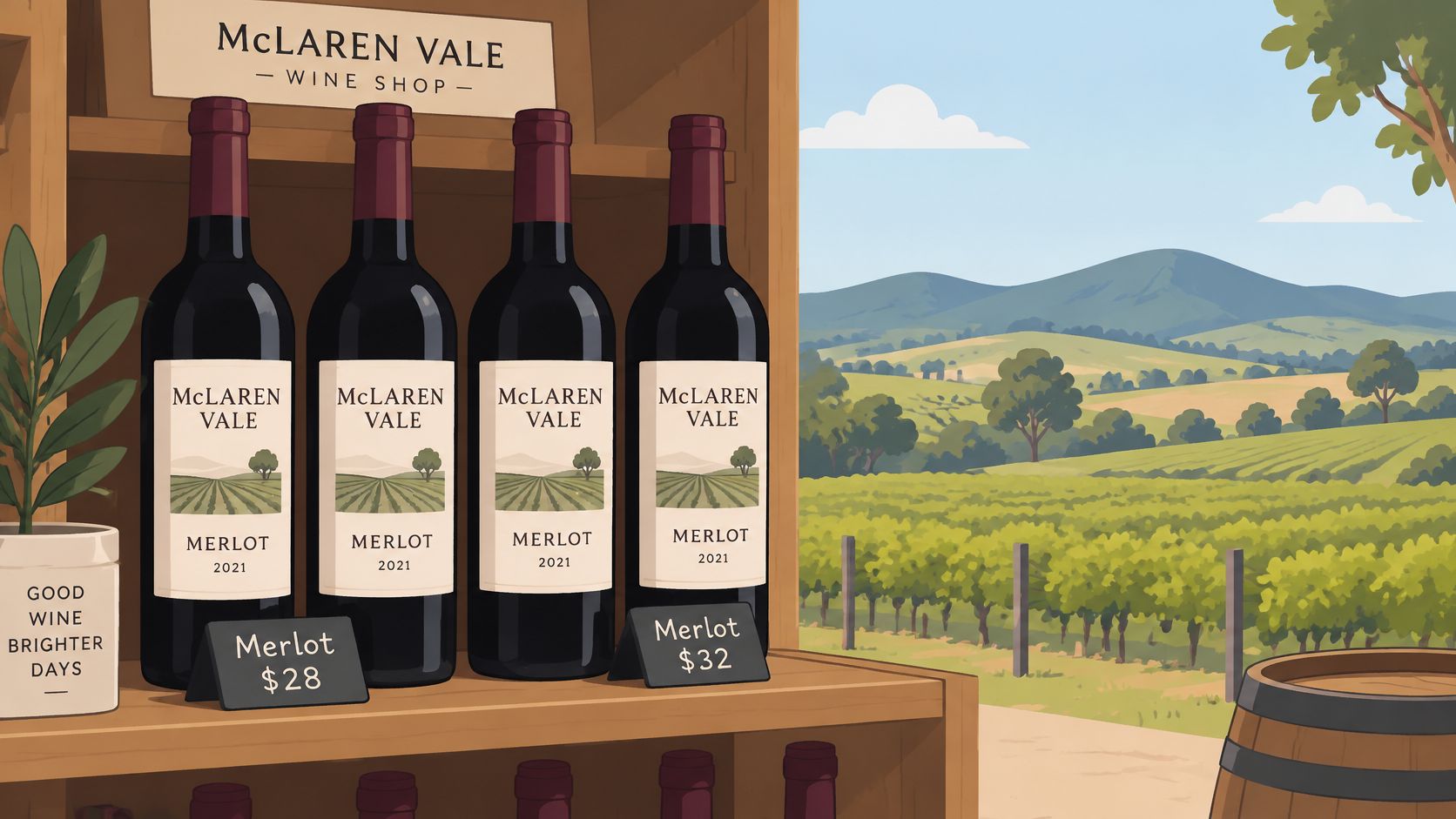
When you're choosing a bottle in person or online, work through these checks:
- Confirm the region. Look for McLaren Vale or another named South Australian district if you want a sense of place. A generic blend can still be enjoyable, but it tells you less about where the grapes were grown.
- Check the vintage note. Look for clues about warmth, freshness and harvest conditions. A vintage note adds context; it doesn't replace tasting the wine.
- Read the alcohol level. Use it as one clue to ripeness and weight, not a quality score. Pair it with the producer's descriptions of acidity, tannin and fruit.
- Identify the style. Is it single-region, blended or oak-aged? A fresh, fruit-led bottle serves a different purpose from a structured Merlot-Cabernet blend.
- Look for winemaking details. Notes on skin contact or oak can help you anticipate tannin, texture and flavour.
- Compare bottles by style, not just price. A simple, fruit-forward Merlot and a reserve wine can differ in body and cellar potential even when they share the same grape name.
Choose in the order you'll use it
Start with dinner, because the dish often points you towards a style. For weeknight pasta or pizza, choose fresh and fruit-led; for a mixed dinner table, try a regional classic; for roast meat, look for oak-aged premium; and for steak or aged cheese, consider a Bordeaux-style blend.
Then check that the bottle's alcohol, tannin and producer notes fit the weight of the meal. A deeply coloured wine isn't necessarily more balanced, and a higher price doesn't guarantee that you'll prefer it. If you're exploring McLaren Vale, this guide to how the region's soils affect Merlot and Pinot Noir offers another useful way to think about regional differences.
If you're comparing bottles, try two styles side by side rather than buying a large quantity of one before you know what you like. Sample packs and Half & Half packs at McLaren Vale Cellars offer a way to compare wines, and the store also lists free delivery on orders over $100 and a Taste Guarantee.
A useful first choice is a regional classic from McLaren Vale or another South Australian district. Once you know whether you prefer softer fruit or firmer structure, you can move towards an oak-aged premium bottle with more confidence.
For a quick visual recap, watch this guide before choosing your next bottle.
Explore Merlot bottles and mixed packs at McLaren Vale Cellars, where you can compare South Australian styles and find a bottle to suit your meal. Start with a regional classic, then try an oak-aged Merlot once you've worked out which structure you enjoy.
Comments (0)
There are no comments for this article. Be the first one to leave a message!